The Malaise Era, usually defined as the mid-1970s through the early 1980s, was a transitional period in automotive history when American and many global carmakers faced tightening emissions rules, fuel crises, insurance pressure, changing buyer expectations, and quality challenges all at once. In classic car education, the term matters because it explains why vehicles built between the muscle car peak and the modern performance revival often delivered lower horsepower, heavier curb weights, softer suspensions, and more conservative styling than the cars that came before or after them. I have spent years helping buyers decode these misunderstood models, and the first lesson is always the same: the Malaise Era was not simply a low point. It was a reset that reshaped engineering, regulation, manufacturing, and collector values.
For anyone studying popular classic car eras, this period serves as a critical hub because it connects the chrome-heavy optimism of the 1950s and 1960s to the efficiency, electronics, and aerodynamic thinking that defined the 1980s and 1990s. The phrase itself is informal, but enthusiasts generally use it to describe roughly 1973 to 1983, sometimes extending a few years in either direction depending on the brand or model line. During that decade, the 1973 oil embargo, the 1979 energy crisis, new federal emissions standards, Corporate Average Fuel Economy requirements, catalytic converters, unleaded fuel adoption, and rising safety demands forced manufacturers to redesign cars quickly and often imperfectly. Buyers who understand those forces can judge Malaise Era classics fairly instead of repeating broad stereotypes.
This article covers the Malaise Era comprehensively as a gateway to the broader study of popular classic car eras. It explains what caused the period, how the cars changed mechanically and stylistically, which models best represent the era, what collectors should watch for, and why these vehicles are gaining respect today. If you want a plain-language definition, here it is: a Malaise Era car is typically a mid-1970s to early-1980s vehicle shaped by emissions and fuel economy rules, usually less powerful than its predecessor, but often more comfortable, more usable, and more historically important than critics admit. That mix of compromise and innovation is exactly why this era deserves careful study.
What Created the Malaise Era
The Malaise Era did not appear because automakers suddenly forgot how to build exciting cars. It emerged from overlapping economic and regulatory shocks. The 1973 Arab oil embargo caused fuel shortages, long lines at gas stations, and a sudden consumer shift toward smaller, more efficient vehicles. Then the 1979 energy crisis reinforced the same trend. At the same time, the U.S. Environmental Protection Agency tightened tailpipe standards, especially for hydrocarbons, carbon monoxide, and nitrogen oxides. Compression ratios dropped to accommodate emissions tuning and lower-octane unleaded fuel, ignition timing became more conservative, and carburetors were recalibrated for compliance rather than peak output. The result was familiar on paper and on the road: horsepower fell sharply.
Insurance companies added another constraint by penalizing youthful buyers who wanted high-output performance cars. Safety requirements also changed design priorities. The federally mandated 5-mph bumpers introduced in the 1970s added visible bulk and weight. Manufacturers that once relied on cubic inches and aggressive camshafts now had to deliver cleaner exhaust, better economy, lower noise, and acceptable drivability while working with old engine families never designed for these rules. Some brands adapted better than others, but no major automaker avoided the pressure. This is why a 1970 model and a 1975 model from the same nameplate can feel as though they belong to different worlds.
How Malaise Era Cars Changed in Design and Engineering
The easiest way to recognize a Malaise Era car is by its proportions and specifications. Many cars grew outward with thicker bumpers and larger overhangs even as their engines became less potent. Full-size coupes remained long and comfortable, but acceleration slowed. Intermediate cars gained luxury trim. Pony cars such as the Ford Mustang II became smaller and more efficiency-focused, while others, including the Chevrolet Camaro and Pontiac Firebird, retained dramatic styling but suffered from reduced output in base forms. Vinyl roofs, opera windows, landau treatments, velour interiors, fake wire wheel covers, and plush bench seats became common because automakers leaned into comfort and personal luxury when outright speed became harder to sell.
Under the skin, however, the era was more innovative than its reputation suggests. Electronic ignition spread widely, improving reliability over breaker points. Catalytic converters became standard after 1975 on many U.S. vehicles, a major emissions milestone. Overdrive transmissions and lockup torque converters improved highway fuel economy. Front-wheel drive expanded, especially at General Motors and Chrysler, changing packaging and interior space efficiency. Imported cars and domestic compacts pushed better four-cylinder design, while turbocharging began to reappear as a path back to performance. In the shop, I often point out that many enthusiasts praise later electronic fuel injection and drivetrain control without realizing that the Malaise Era laid the groundwork for both.
Representative Models and What They Teach Collectors
No single car explains the entire period, so it helps to study representative models. The Chevrolet Corvette illustrates the emissions transition clearly. Early C3 Corvettes still carried some muscle-era energy, but mid-1970s versions saw output fall dramatically as compression and tuning changed. Yet these cars remained visually striking and increasingly refined as grand tourers. The Pontiac Trans Am tells a similar story with more cultural impact. Even when power dropped from earlier highs, bold graphics, shaker hoods, and movie exposure kept demand alive. Buyers learned that image, sound, and road presence could matter as much as quarter-mile times.
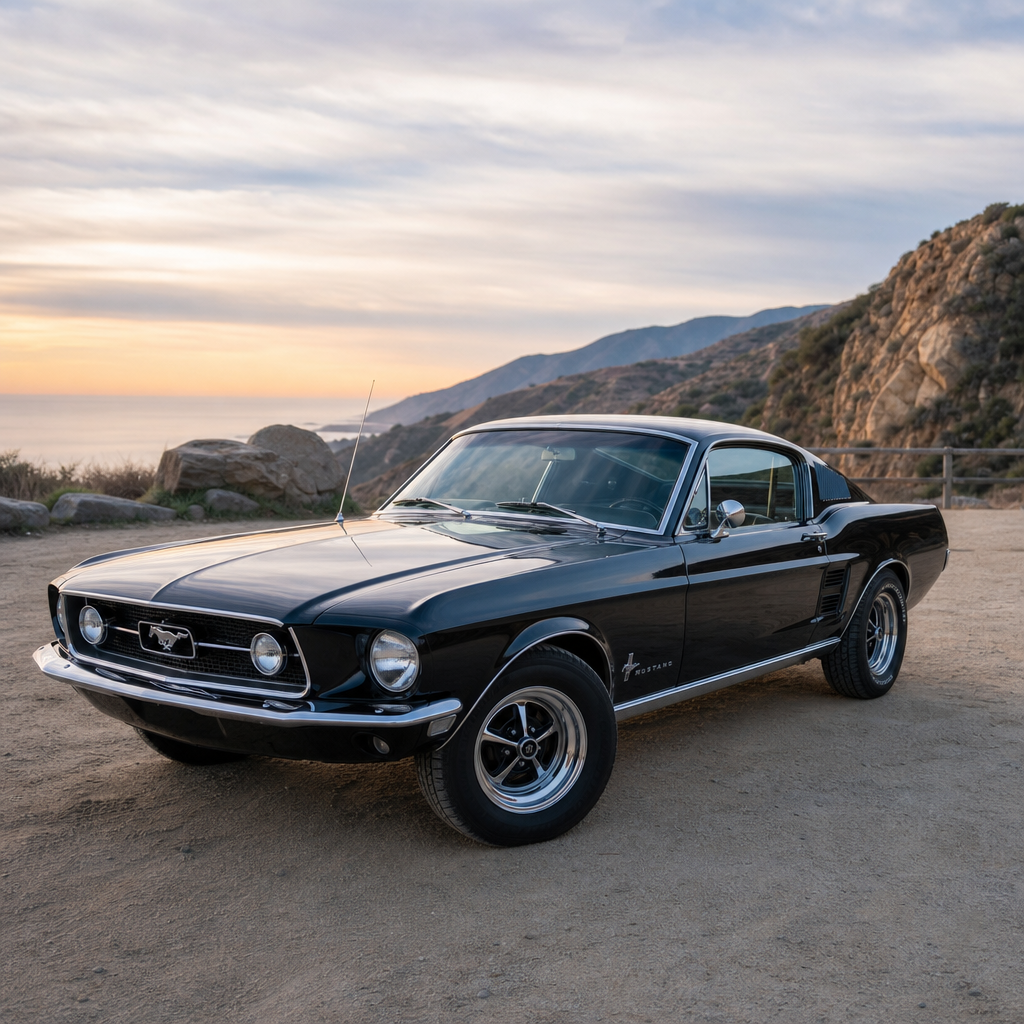
The Ford Mustang II is often mocked, but that judgment ignores context. Launched for 1974 on a smaller platform during a fuel crisis, it matched market demand far better than a heavy, thirsty continuation of the original formula would have. It sold strongly because buyers wanted maneuverability and economy. Chrysler’s Cordoba demonstrated the rise of personal luxury, emphasizing comfort, isolation, and upscale trim over hard performance numbers. Meanwhile, the Buick Regal, Chevrolet Monte Carlo, Oldsmobile Cutlass Supreme, and Pontiac Grand Prix showed how the intermediate coupe became one of the defining American body styles of the era. For European and Japanese contrast, cars such as the BMW 320i, Datsun 280Z, and Honda Accord reflected a parallel shift toward efficiency, handling, and engineering precision.
| Model | Why It Matters | Typical Malaise Era Lesson |
|---|---|---|
| Ford Mustang II | Right-sized for the fuel crisis | Market success did not always mean enthusiast approval |
| Pontiac Trans Am | Strong image in a low-power period | Styling and identity can outweigh raw specs |
| Chevrolet Corvette C3 | Performance icon under regulation | Emissions rules changed familiar nameplates dramatically |
| Chrysler Cordoba | Personal luxury peak | Comfort became a major selling point |
| Datsun 280Z | Imported sports car evolution | Efficiency and usability gained importance |
Performance, Emissions, and the Horsepower Debate
When people ask why Malaise Era cars were “slow,” the short answer is that published horsepower numbers fell because engines were detuned for emissions, fuel quality, and drivability. The longer answer is more nuanced. In 1972, the industry switched from gross horsepower ratings to net horsepower ratings in the United States. Gross figures were measured without many accessories attached, while net figures reflected real installed conditions. That accounting change alone makes year-to-year comparisons misleading. A car that looks catastrophically weaker on paper may not be as different in practice as the numbers suggest. Still, real performance declines were substantial in many cases, particularly for heavy V8 cars with smog-era carburetion and tall gearing.
Yet it is wrong to treat every Malaise Era car as equally compromised. Some platforms were tuned intelligently and remain satisfying today. The best examples offer relaxed cruising, distinctive styling, and mechanical simplicity. Others became important test beds for future recovery. Buick’s turbocharged V6 development in the late 1970s and early 1980s helped lead to the Grand National and GNX. Chevrolet’s Cross-Fire Injection on early C4 Corvettes was imperfect, but it pointed toward the fuel injection future. By the mid-1980s, improvements in engine management, combustion efficiency, and materials began reversing the worst performance losses. In that sense, the Malaise Era is the bridge between carbureted muscle and modern electronically managed power.
What to Inspect Before Buying a Malaise Era Classic
Condition matters more than reputation when buying a car from this era. Rust is the first priority because many 1970s vehicles had mediocre corrosion protection compared with later standards. Inspect frame rails, floor pans, trunk floors, lower fenders, quarter panels, rocker panels, windshield channels, and vinyl-roof cars for trapped moisture damage. I have seen seemingly attractive coupes with excellent interiors hide severe structural rust under padded tops and decorative trim. Interiors also deserve close inspection because replacement plastics, seat fabrics, and model-specific trim can be harder to source than buyers expect.
Mechanically, check for vacuum hose deterioration, carburetor wear, brittle emissions plumbing, weak catalytic converter history, and cold-start issues. Many drivability complaints on these cars come from deferred maintenance rather than flawed design. Verify whether the engine, ignition, and emissions equipment remain stock or have been modified poorly. A carefully sorted original car often runs better than one with random aftermarket parts. Also inspect automatic transmission shift quality, rear axle noise, accessory function, and aging suspension bushings. If the car uses early electronic controls, confirm that replacement modules are available. Documentation matters too. Build sheets, window stickers, service records, and emissions labels help prove authenticity and support value, especially on limited trims or special editions.
Why Collectors Are Reassessing the Era
Malaise Era cars are gaining attention because collectors are broadening their definition of significance. Not every classic needs to be the fastest version of a famous nameplate. Many buyers now want attainable entry points, period design, analog driving feel, and strong nostalgia value. People who grew up riding in Cutlasses, Monte Carlos, Thunderbirds, El Dorados, or Trans Ams are entering the collector market with affection for the very cars earlier generations dismissed. Affordability also plays a role. While top-tier muscle cars, air-cooled Porsches, and first-generation Broncos have climbed steeply, many 1970s and early-1980s coupes and sedans still offer classic ownership at lower prices.
Reassessment is also coming from historians and restorers who see the era as culturally honest. These cars reflect inflation, regulation, energy anxiety, and the move toward technology-driven solutions. They document the moment when Detroit’s old formulas stopped working and the industry had to adapt. That makes them essential within any guide to popular classic car eras. If you are building out your knowledge of the category, this period links naturally to articles on the chrome era, muscle car era, personal luxury era, and 1980s performance revival. Study those adjacent eras and the Malaise years become clearer: they were not an ending, but the difficult middle chapter that made the comeback possible.
The Lasting Place of the Malaise Era in Classic Car Education
Understanding the Malaise Era means understanding why classic cars changed so dramatically between the early 1970s and the mid-1980s. The era was defined by fuel shortages, emissions controls, safety mandates, insurance pressure, and shifting consumer tastes, all of which forced automakers to rethink performance, luxury, packaging, and engineering. The result was a generation of cars that can look overstyled, underpowered, or compromised when judged only by peak muscle-era standards. But that is the wrong benchmark. Judged in context, these vehicles reveal how the industry survived a hard transition and developed the tools that later restored power, efficiency, and reliability.
For enthusiasts, the benefit of learning this era is practical as well as historical. You become a better buyer, restorer, and critic. You can spot which models were merely detuned and which were genuinely innovative, which options add value, and which maintenance issues define ownership. Most important, you learn to read a classic car as a product of its time rather than a caricature. As you explore the broader landscape of popular classic car eras, keep the Malaise years at the center of the timeline. They explain more than most people realize. Use this hub as your starting point, then continue into the surrounding eras and model-specific guides to build a smarter, more complete view of classic car history.
Frequently Asked Questions
What does the term “Malaise Era” mean in automotive history?
The “Malaise Era” is an informal label enthusiasts use for the period roughly spanning the mid-1970s through the early 1980s, when the auto industry went through a major transition. It generally refers to the years after the peak of the classic muscle car period and before the return of stronger factory performance in the 1980s and 1990s. During this time, automakers faced multiple pressures at once: stricter emissions regulations, fuel economy concerns caused by oil crises, rising insurance costs for high-performance cars, changing safety expectations, and growing consumer demand for comfort and practicality. As a result, many cars became heavier, less powerful on paper, and more softly tuned than what had come just a few years earlier.
The term matters because it helps explain why vehicles from this period often feel different from both the raw, high-compression cars of the late 1960s and the more refined, efficient performance cars that followed. It does not mean every car built during those years was bad or unimportant. In fact, the era is historically significant because it marks the point where manufacturers had to rethink engineering priorities. New ignition systems, emissions equipment, overdrive transmissions, fuel-saving engine designs, and more aerodynamic thinking all began to shape the future. So while the nickname can sound negative, the Malaise Era is best understood as a bridge period in which the old automotive formula stopped working and the modern one had not fully arrived yet.
Why did cars from the Malaise Era usually have less horsepower than earlier muscle cars?
The drop in horsepower came from a combination of regulatory, engineering, and market changes rather than a single cause. One of the biggest factors was emissions control. In the late 1960s and 1970s, governments required cleaner exhaust, and automakers had to lower emissions quickly, often before they had fully optimized the technology. Many manufacturers responded by reducing engine compression ratios, retarding ignition timing, leaning out fuel mixtures, and adding early emissions devices that were not always well integrated. Those changes made engines cleaner, but they also reduced power and throttle response compared with the high-compression V8s of the muscle car peak.
Fuel economy was another major reason. The oil shocks of the 1970s changed buyer behavior and forced automakers to take efficiency more seriously. Large-displacement engines tuned only for straight-line performance became harder to justify when gasoline prices rose and supply felt uncertain. Insurance companies also raised rates on performance models, making high-horsepower cars more expensive to own. On top of that, manufacturers began using net horsepower ratings instead of the older gross ratings, which made published output numbers look even smaller. The result is that many Malaise Era cars appeared dramatically weaker than their predecessors, and in many cases they truly were, but part of the perceived decline also came from more realistic measurement standards and a new set of design priorities.
Were all Malaise Era cars slow and poorly made?
No, and that is one of the biggest misconceptions about the period. Many Malaise Era cars were slower than what came before, especially if someone compares them directly to the highest-output muscle cars of the late 1960s and early 1970s. However, that does not mean every vehicle from the era was undesirable, unreliable, or devoid of character. Some cars remained stylish, comfortable, durable, and enjoyable in ways that are easy to overlook if the discussion focuses only on quarter-mile times. Luxury coupes, personal luxury cars, sporty compacts, and certain specialty models all developed loyal followings. There were also standout performers, especially turbocharged cars, lightweight imports, and a handful of V8 models that preserved some enthusiast appeal despite the changing rules.
Quality is also more nuanced than the stereotype suggests. Yes, many manufacturers struggled during this period with inconsistent assembly, rust protection, vacuum-hose complexity, drivability issues, and cost-cutting. At the same time, the era pushed companies to improve in areas that became essential later, including fuel efficiency, packaging, ergonomics, and long-distance comfort. Some Japanese and European brands gained ground precisely because they adapted more quickly to the new environment, while American automakers gradually improved their engineering responses as the period progressed. For collectors and students of automotive history, the Malaise Era is best approached as uneven rather than uniformly bad. It produced plenty of compromises, but it also produced important experiments, memorable styling, and vehicles that make much more sense when judged in their original context.
How did emissions laws and fuel crises change car design during the Malaise Era?
Emissions laws and fuel crises reshaped the automobile from the engine bay outward. To reduce pollution, automakers introduced catalytic converters, exhaust gas recirculation systems, evaporative emissions controls, air pumps, and more sophisticated ignition and fuel-delivery strategies. In the early years, many of these systems were added quickly and sometimes awkwardly, which could hurt reliability and drivability. But over time, they forced the industry to become more precise. Engine tuning could no longer rely on brute displacement and high compression alone. Manufacturers had to think more carefully about combustion efficiency, exhaust chemistry, and long-term operating behavior.
The fuel crises had just as much impact. Consumers started paying closer attention to miles per gallon, and governments pushed manufacturers toward better economy standards. That led to smaller engines, taller gearing, lighter-duty performance tuning, and increased interest in compact and midsize platforms. Vehicle shapes also began to evolve, though the full aerodynamic revolution would become more obvious in the 1980s. Interiors shifted as well, with more attention paid to convenience, quieter cabins, and everyday usability. In practical terms, the period taught automakers that future success would require balancing performance, efficiency, emissions compliance, and comfort all at once. That balancing act became a defining feature of modern car design.
Why is the Malaise Era important to classic car enthusiasts and collectors today?
The Malaise Era is important because it fills in a critical chapter between two more celebrated automotive periods. Without understanding it, it is difficult to understand why the classic muscle car formula faded, why imports rose in influence, or how the modern performance car eventually returned in a cleaner, more efficient, and more technologically advanced form. For enthusiasts, this era explains the mechanical and cultural shifts that changed everything from horsepower ratings and carburetor tuning to body size, safety design, and consumer expectations. It is the missing link between old-school Detroit excess and the later era of fuel injection, overdrive transmissions, electronic engine management, and factory performance comebacks.
Collectors are also beginning to value these cars more seriously because rarity, nostalgia, and historical perspective have changed the conversation. Vehicles once dismissed as underpowered or unfashionable are now appreciated for their styling, period-correct features, and place in the broader story of automotive evolution. Many are more affordable entry points into classic car ownership than earlier muscle cars, and they can be appealing for drivers who want vintage looks with somewhat more relaxed road manners. Most importantly, the Malaise Era reminds people that not every collectible car has to be the fastest or most famous. Some are valuable because they document how the industry adapted under pressure, and that makes them deeply relevant to anyone who wants a complete understanding of automotive history.