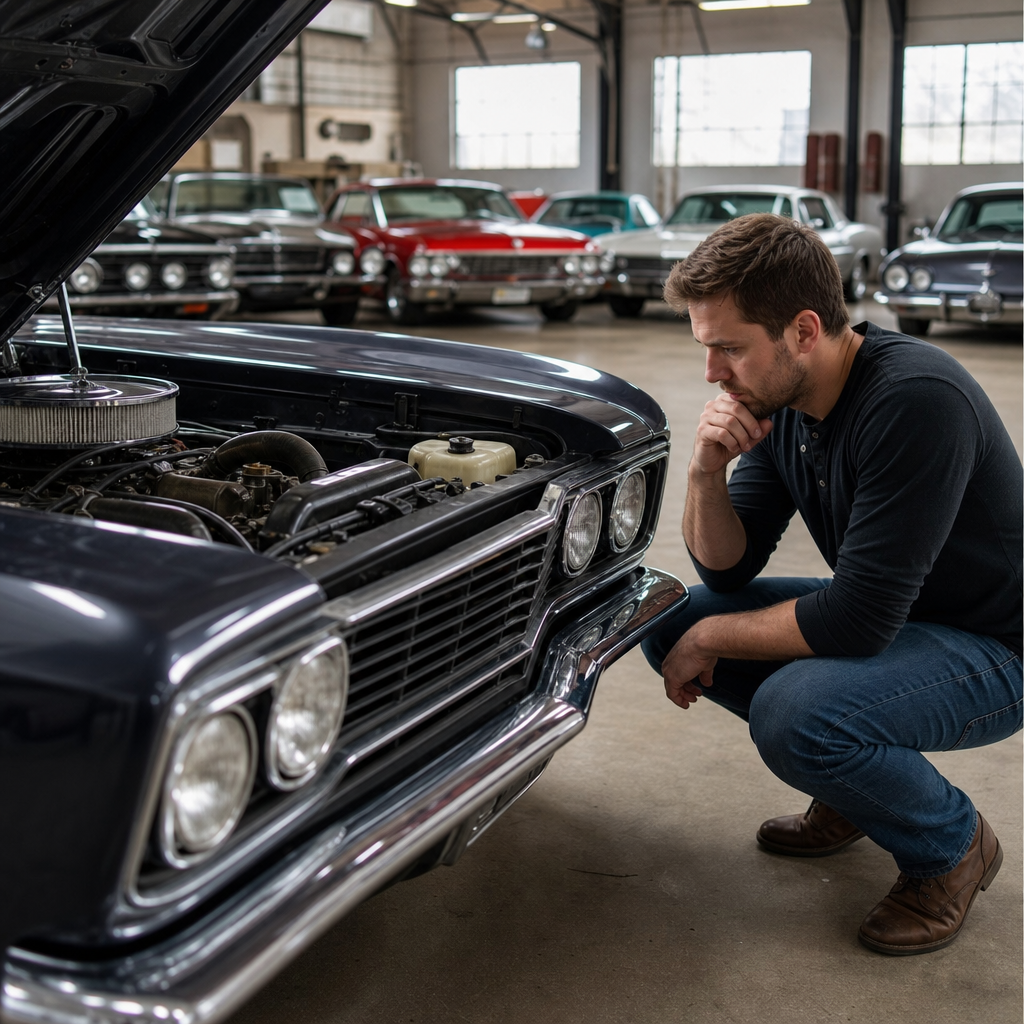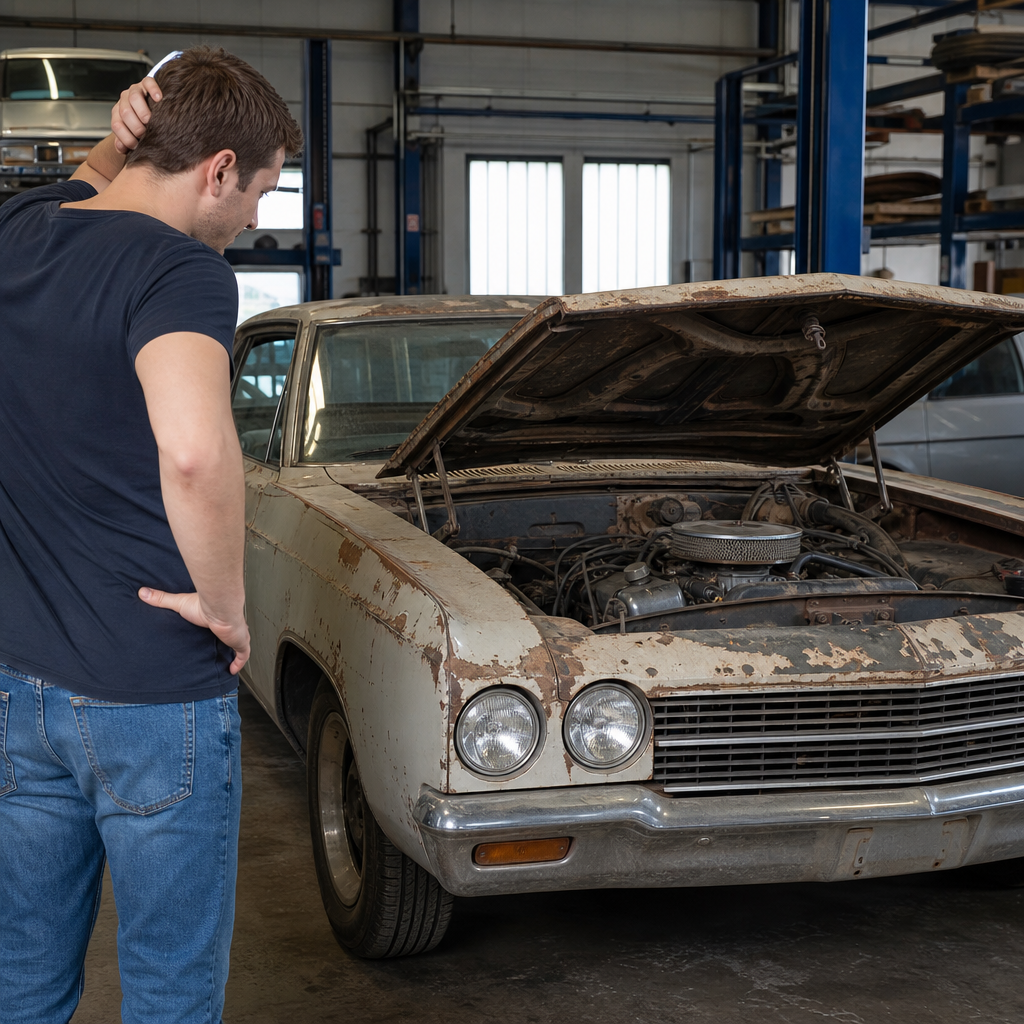
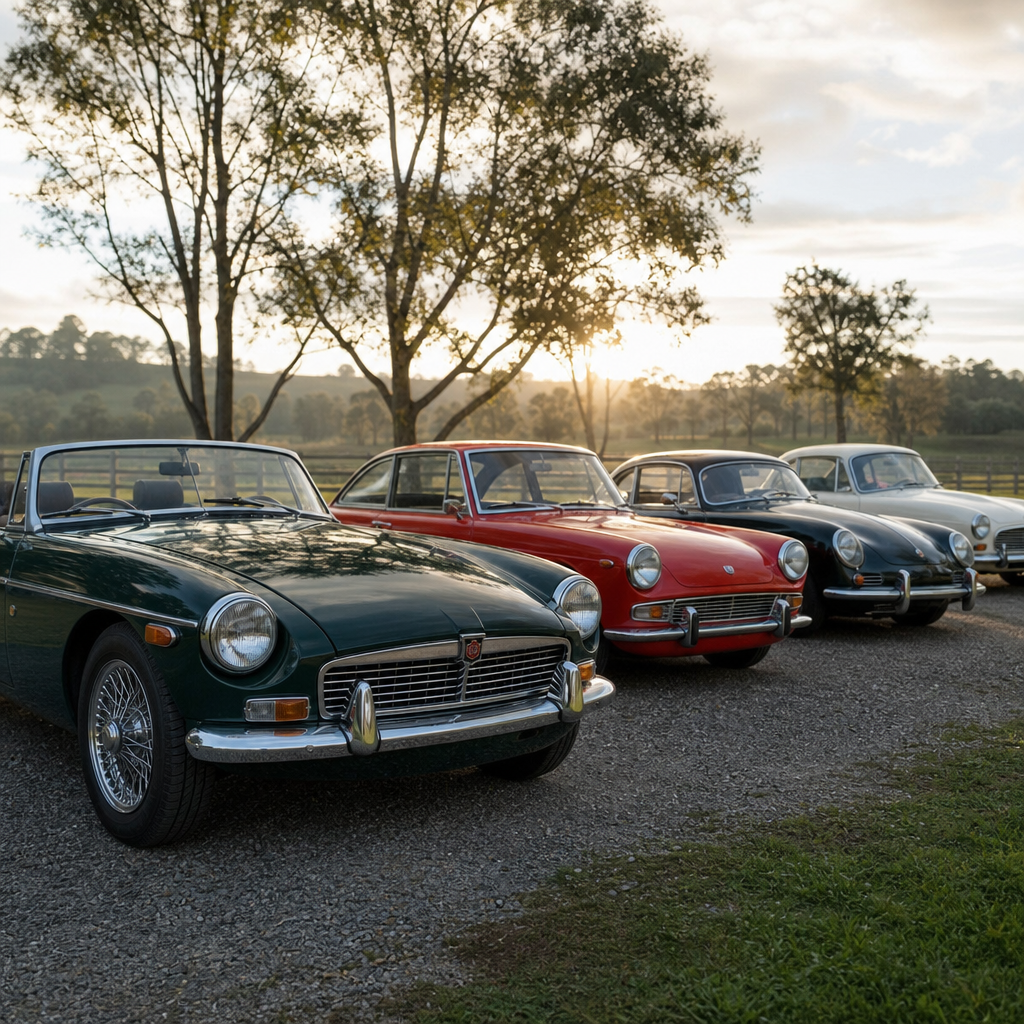
Buying a first classic car is exciting, but beginners do best when they treat the decision as an education project, not just an emotional purchase. A classic car, in practical terms, is usually an older vehicle valued for design, history, mechanical character, or cultural significance rather than modern convenience. For a new owner, the best first classic cars for beginners are not necessarily the rarest, fastest, or most expensive models. They are the cars that combine strong parts support, straightforward mechanical systems, reasonable purchase prices, active owner communities, and predictable running costs. After helping new enthusiasts inspect, buy, and revive entry-level classics, I have seen the same pattern repeatedly: the right first car builds confidence, while the wrong one drains time, money, and enthusiasm.
This matters because a beginner’s first classic sets the tone for the entire hobby. A manageable car teaches core skills such as reading maintenance records, checking for corrosion, understanding carburetors or simple fuel injection, sourcing reproduction parts, and budgeting for restoration work. A poor first choice can introduce overwhelming electrical faults, impossible-to-find trim, and body repairs that cost more than the vehicle. The smartest approach is to start with a model that is forgiving, well documented, and widely understood by mechanics and enthusiasts alike. That is why beginner guides in the classic car world focus less on badge prestige and more on ownership reality: how easy the car is to inspect, insure, store, repair, drive, and enjoy on ordinary roads. When those basics line up, a novice can learn safely, preserve value, and genuinely enjoy classic motoring.
What Makes a Classic Car Beginner Friendly
A beginner-friendly classic car has five traits: availability, simplicity, community support, affordability, and usability. Availability means there are enough surviving examples on the market that you can compare condition and price instead of feeling forced to buy the first car you see. Simplicity means routine jobs such as tune-ups, brake service, cooling-system repairs, and ignition troubleshooting can be handled without obscure tools or specialized training. Community support matters because forum archives, club newsletters, factory manuals, and video walkarounds often solve problems faster than any generic repair guide. Affordability includes more than the purchase price; it covers trim parts, weather seals, tires, insurance, registration, and the cost of correcting deferred maintenance. Usability is the final filter. A classic that starts reliably, cruises comfortably, stops predictably, and fits modern traffic is far more likely to be driven and enjoyed.
In practice, I advise beginners to favor cars built in large numbers by manufacturers with strong aftermarket support. Cars such as the MGB, Volkswagen Beetle, first-generation Ford Mustang coupe, Mercedes-Benz W123, Volvo 240, and 1960s through 1980s American full-size sedans remain popular because ownership information is everywhere. The key point is not that every example is cheap or easy. It is that the ownership ecosystem is healthy. You can usually find service manuals, replacement bushings, brake components, upholstery kits, carburetor rebuild parts, and practical advice from owners who have already solved the same issues.
Another factor is construction type. Body-on-frame American cars can be straightforward to work on mechanically, but rusted frames are serious. Unibody cars may drive better and feel more modern, yet hidden corrosion in floors, sills, shock towers, or subframes can turn an affordable purchase into a costly structural repair. Mechanical condition is usually easier to fix than body condition. An engine can be rebuilt or replaced. Severe rust consumes budgets quickly because it requires skilled labor, fabrication, and refinishing. For that reason, beginners should almost always buy the most rust-free, complete car they can afford rather than the cheapest running example.
Best First Classic Cars for Beginners by Type
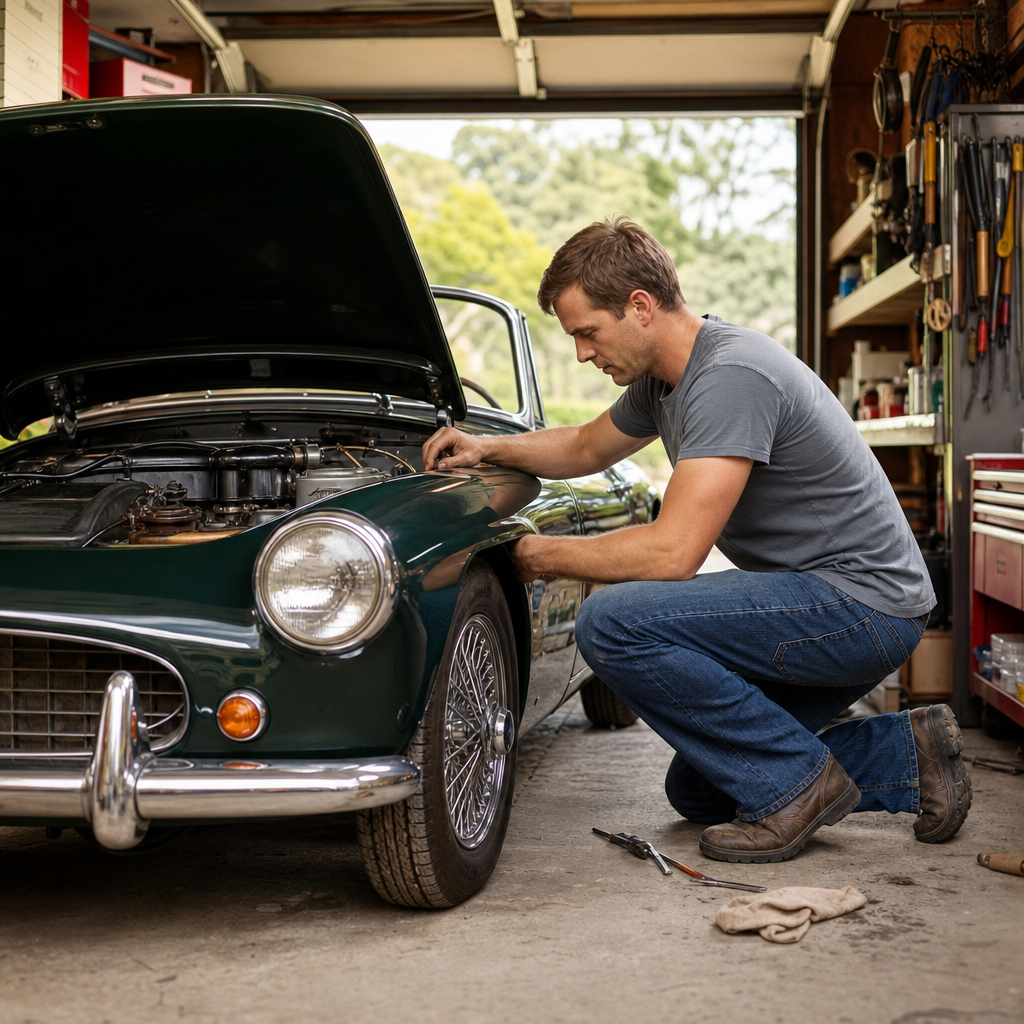
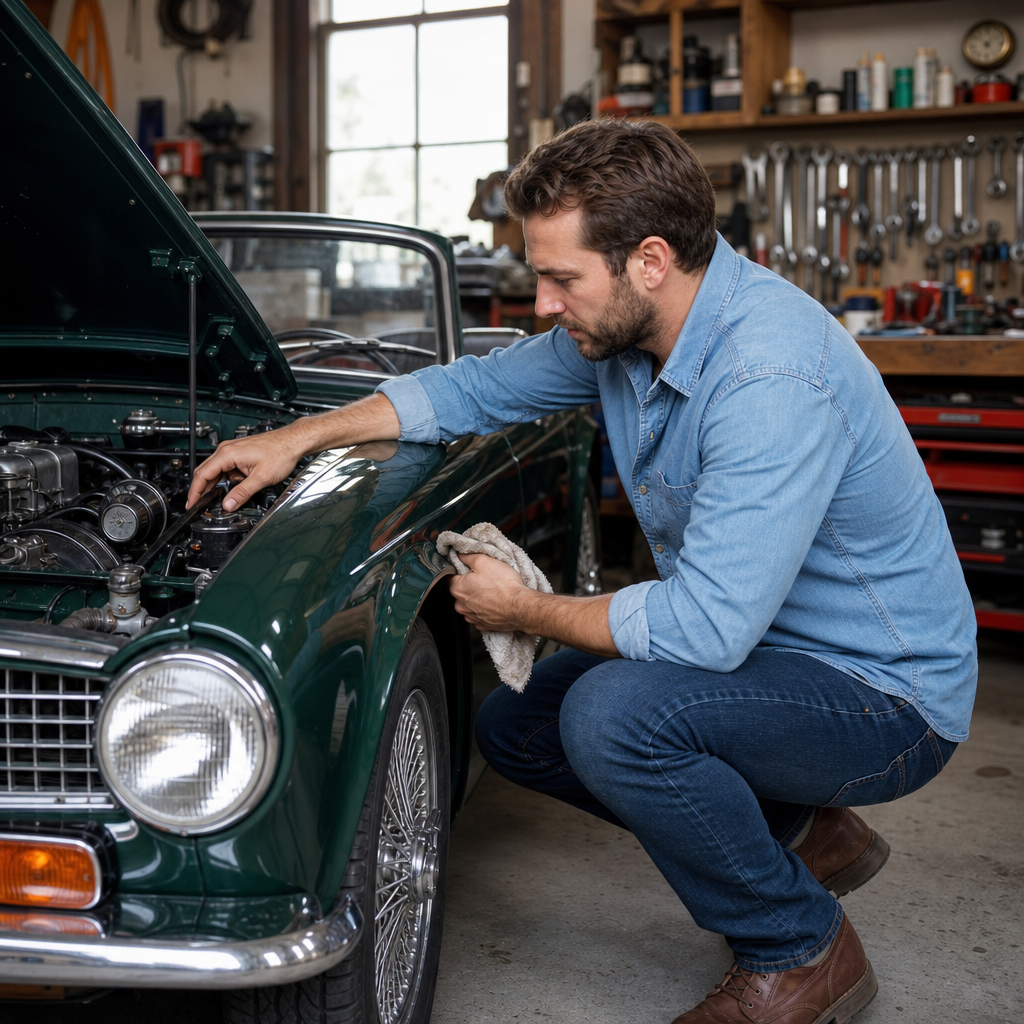
The best first classic cars for beginners vary by taste, but a few categories consistently make sense. British roadsters, especially the MGB, are popular because they are mechanically simple, supported by specialists, and enjoyable at sane speeds. The MGB’s B-series engine is well documented, parts are plentiful, and trim support is excellent. Rust still matters, particularly in sills and floors, but a solid MGB can teach basic maintenance without overwhelming complexity. Triumph Spitfires share many strengths, though buyers should inspect frame condition and suspension mounting points carefully.
The Volkswagen Beetle is another strong choice. Air-cooled simplicity, huge aftermarket coverage, and a global enthusiast network make it one of the easiest classics to learn on. Valve adjustments, ignition service, fuel-line inspection, and carb tuning are approachable jobs for a motivated owner. The tradeoff is safety and highway refinement. A Beetle is charming, but it is still an old, light car with modest crash protection and limited comfort at sustained modern interstate speeds.
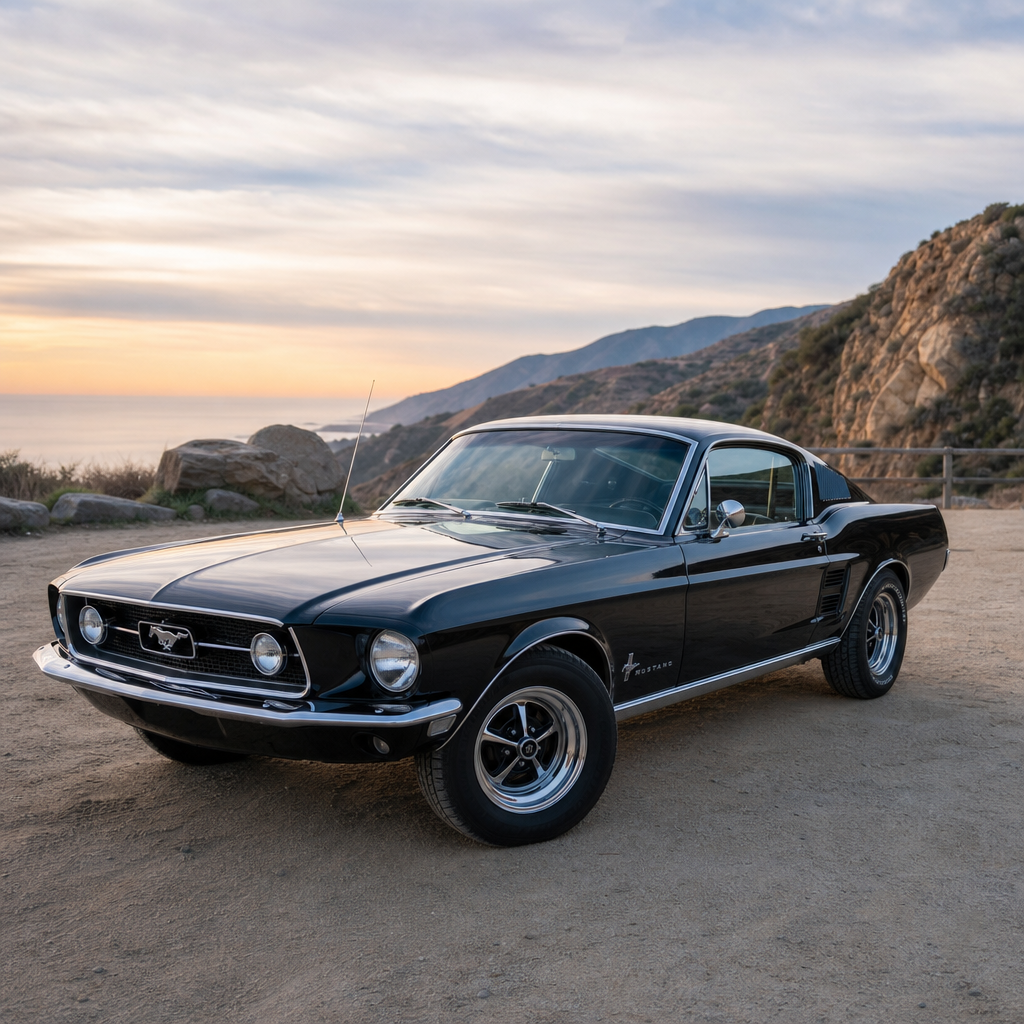
For buyers who want American styling and easy parts access, a six-cylinder Ford Mustang coupe from the mid-1960s is often a smarter first buy than a V8 fastback. Coupes are typically less expensive, less stressed, and easier to insure, while still offering excellent aftermarket support. Chevrolet Nova sedans and coupes from the late 1960s and early 1970s can also work well if rust and previous modifications are under control. In the American market, availability of reproduction sheet metal, interior kits, and mechanical components is a major ownership advantage.
If reliability is the top priority, late 1970s to 1980s sedans often outperform more glamorous choices. The Mercedes-Benz W123 and Volvo 240 are classics in the practical sense: durable, well engineered, and still usable. Both have broad parts support, knowledgeable owner communities, and reputations for mechanical longevity when maintained correctly. They may not feel exotic, but they let beginners focus on learning maintenance and ownership habits instead of chasing rare trim pieces or fixing decades of neglect.
| Model | Why beginners like it | Main watch-outs | Ownership profile |
|---|---|---|---|
| MGB | Simple mechanics, strong parts support, active clubs | Sill rust, electrical age, worn interiors | Hands-on weekend roadster |
| Volkswagen Beetle | Huge knowledge base, easy engine access, affordable parts | Rust, fuel-line safety, limited highway comfort | Entry-level DIY classic |
| Ford Mustang coupe | Excellent aftermarket, broad mechanic familiarity | Rust, poor-quality restorations, rising prices | American classic with upgrade options |
| Mercedes-Benz W123 | Durable engineering, real-world usability, strong documentation | Vacuum issues, climate-control repairs, diesel age-related wear | Usable classic daily or tourer |
| Volvo 240 | Robust drivetrains, good parts supply, simple ownership | Wiring age, suspension bushings, cosmetic wear | Practical first classic |
Japanese classics can also be excellent starter cars, but prices have risen sharply. Cars such as the Datsun 510, early Toyota Corolla, and first-generation Mazda RX-7 have strong enthusiast followings. The challenge is finding complete, rust-free examples at rational prices. Beginners should not dismiss these cars, but they need patience and strict inspection standards. If a model is fashionable, the premium often exceeds the ownership benefit.
How to Choose the Right First Classic for Your Budget and Skill Level
Budgeting for a first classic should start with total cost of ownership, not auction headlines. A realistic beginner budget includes purchase price, inspection, transportation, immediate safety repairs, fluids, tires, battery, insurance, registration, and a reserve fund. I usually tell first-time buyers to keep at least 20 to 30 percent of their total budget back for the first year. On nearly every vintage car, something will need attention after purchase. Brake hydraulics may be weak, fuel hoses may be old, cooling systems may be marginal, and suspension bushings may be past their useful life.
Your mechanical skill level should guide your shortlist. If you have only basic hand-tool experience, choose a model known for straightforward maintenance and clear documentation. If you are comfortable rebuilding carburetors, setting ignition timing, and diagnosing charging systems, you can consider a broader range. Beginners often overestimate how much restoration work they want to do. A car that “only needs paint and interior” can easily become a multi-year project. Cosmetic work is expensive, and disassembly without a plan leads to stalled restorations. For a first classic, the ideal car is complete, running, structurally solid, and honest about its age.
Use the intended purpose as a filter. Weekend scenic drives call for a different car than commuter use, family outings, or long-distance touring. A small British roadster is engaging on back roads, but a W123 Mercedes or Volvo 240 is better for regular use in varied weather. If you plan to learn by wrenching, pick a model with room under the hood and wide parts availability. If your goal is immediate enjoyment, pay more for a sorted driver. That decision alone prevents many beginner mistakes.
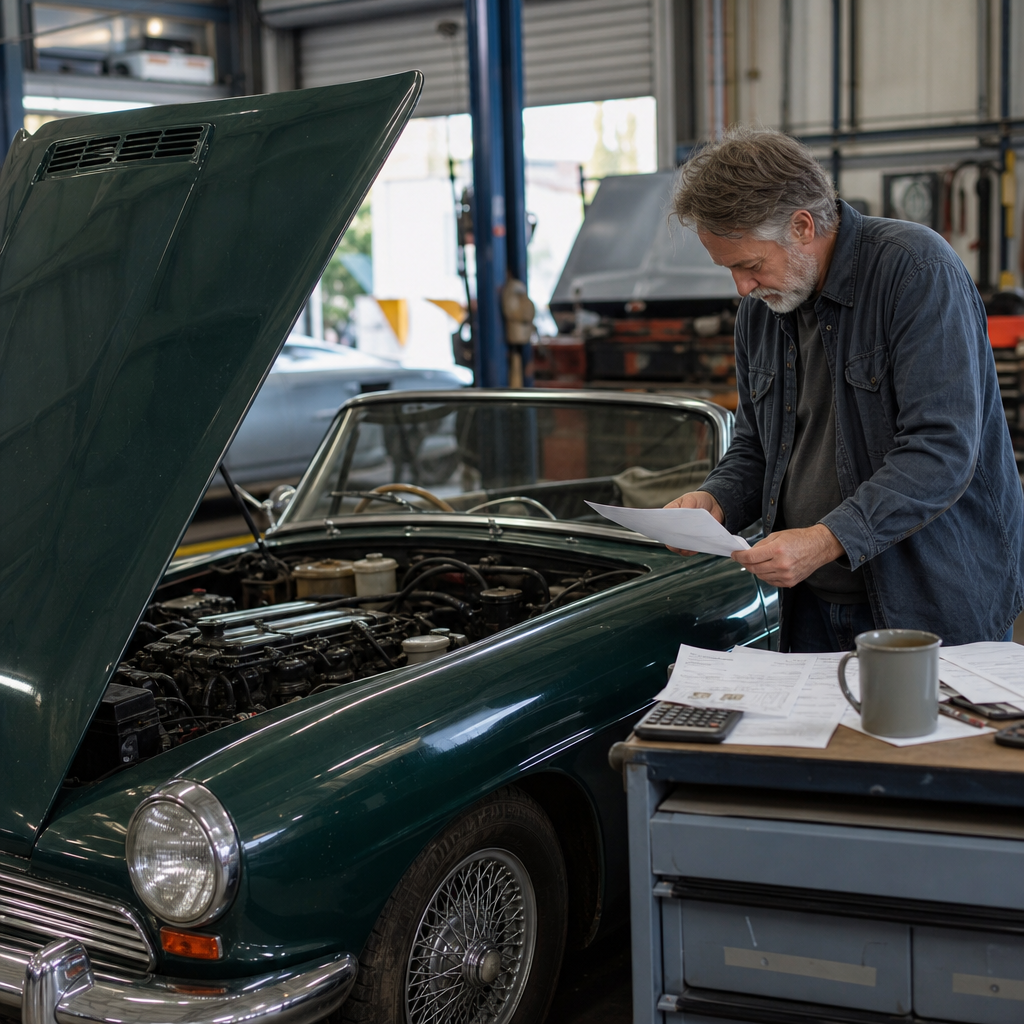
Documentation should influence price and confidence. Look for service receipts, restoration photos, ownership history, factory literature, and evidence of recent maintenance. Compression figures, leak-down tests, and cold-start videos are useful, but they do not replace an in-person inspection. When records match the visible condition of the car, the risk level drops significantly. When the story is vague and the seller relies on phrases like “easy fix” or “just needs tuning,” caution is justified.
Inspection, Common Mistakes, and the Best Next Steps for New Owners
The inspection process is where beginner guides become practical. Start with the body and structure because rust and accident damage are the costliest problems to correct. Bring a flashlight, magnet where appropriate, paper towels, and a checklist. Inspect floors, rocker panels, wheel arches, battery trays, trunk wells, lower fenders, windshield channels, and suspension mounting points. Look for bubbling paint, fresh undercoating used to hide corrosion, mismatched panel gaps, overspray on trim, and signs of filler. On a lift, examine frame rails, jacking points, brake lines, and fuel lines. If the seller refuses a pre-purchase inspection, move on.
Mechanically, verify cold-start behavior, idle quality, oil pressure, charging voltage, coolant condition, brake response, steering play, clutch take-up, transmission operation, and differential noise. During a road test, watch temperature stability and observe whether the car tracks straight under braking. Blue smoke points to oil consumption, white smoke can indicate coolant intrusion, and fuel smells often signal deteriorated hoses or carburetor issues. Electrical systems deserve special attention. Test lights, gauges, heater fan, wipers, horn, indicators, and charging system operation. Older wiring is often repairable, but hacked modifications create long troubleshooting sessions.
The most common beginner mistake is buying with the eyes instead of the checklist. Shiny paint can hide severe corrosion. A rough-looking car with strong structure and documented maintenance is usually the better buy. The second mistake is choosing rarity over support. Rare cars can be rewarding, but they are poor teachers when simple trim pieces take months to source. The third mistake is assuming every old car is an investment. Some classics appreciate, but first-time buyers should prioritize drivability, parts supply, and enjoyment. Preservation of value follows smart ownership habits, not speculation.
Once you buy the car, establish a baseline immediately. Change engine oil, coolant if appropriate, brake fluid, gearbox and differential fluids where applicable, inspect belts and hoses, replace old fuel lines, check tire age codes, service ignition components, and verify charging performance. Buy a factory workshop manual and a parts catalog. Join a model-specific club and bookmark specialist suppliers. Then drive the car regularly, but within reason. Short local trips reveal issues before longer journeys do. A well-chosen first classic teaches mechanical sympathy, deepens automotive knowledge, and makes every later purchase smarter. If you are building your path through classic car basics and education, start with a solid, supported model, inspect carefully, and choose a car that lets you learn by driving rather than recovering from someone else’s unfinished project. That is how beginners become confident long-term owners.
Frequently Asked Questions
What makes a classic car a good first choice for a beginner?
A good first classic car for a beginner is one that makes ownership manageable, affordable, and educational rather than stressful. The best starter classics usually have strong parts availability, a large and active owner community, straightforward mechanical systems, and a reputation for reliability when properly maintained. These qualities matter because a first-time classic owner is not just buying a car—they are learning how older vehicles work, how to inspect condition, how to budget for upkeep, and how to build confidence with maintenance and repairs.
Beginners are usually best served by cars with simple engineering, widely available service information, and broad aftermarket support. That means common models often make better first purchases than rare or highly collectible ones. A car that was produced in large numbers is typically easier to restore, repair, and live with because replacement parts, specialist advice, and used components are easier to find. It also helps if the car has a reputation for forgiving ownership, meaning it can tolerate regular use without constantly demanding expensive specialist work.
It is also important to think about your goals. If you want a weekend cruiser, your ideal first classic may be different from someone who wants to attend shows, learn DIY maintenance, or join driving events. In most cases, the smartest beginner choice is a model that balances charm and usability. A classic car should be exciting, but for a first purchase, it should also be practical enough that you can spend more time enjoying it than rescuing it from the garage.
Should beginners buy a fully restored classic car or a project car?
For most beginners, a solid, well-maintained driver-quality car is the better choice than either an expensive show restoration or a rough project car. A fully restored classic can be attractive because it appears turnkey, but it often carries a premium price, and new owners may be hesitant to use it regularly for fear of damaging it. On the other hand, a project car can seem affordable at first, but restoration costs, missing parts, hidden rust, and mechanical surprises can quickly make it far more expensive than buying a better car to begin with.
The sweet spot for many first-time owners is a car that is complete, mechanically sound, structurally healthy, and cosmetically presentable, even if it is not perfect. Minor flaws are actually helpful for beginners because they reduce anxiety and create opportunities to learn. You can improve the car gradually, tackle small repairs, and develop hands-on knowledge without being overwhelmed by a full rebuild. This approach turns ownership into an education project, which is exactly how many experienced enthusiasts recommend approaching a first classic.
If you are considering a project, be realistic about your tools, workspace, skills, budget, and available time. A beginner with a garage, patience, and genuine mechanical interest may enjoy a light recommissioning project. But a car with severe rust, major engine issues, or incomplete trim can become a long-term burden. In classic car buying, buying the best condition you can afford is usually cheaper than buying the cheapest car available.
How much should a beginner budget beyond the purchase price of a classic car?
Beginners should always budget significantly beyond the asking price because the true cost of classic car ownership starts after the sale. Even a well-kept car may need immediate baseline maintenance such as fluids, filters, hoses, belts, tires, ignition components, battery service, brake inspection, or fuel system cleaning. Older cars often have deferred maintenance, and one of the first steps after purchase is establishing a known starting point so you can trust the car and understand its condition.
A sensible beginner budget should include pre-purchase inspection costs, registration, insurance, transport if needed, initial repairs, routine maintenance, and a contingency fund for unexpected issues. It is wise to reserve a healthy amount specifically for the first year of ownership because that is when hidden problems usually appear. Things like leaking seals, worn suspension parts, charging issues, cooling system weaknesses, and aging rubber components may not be obvious during a quick test drive but often show up once you begin using the car regularly.
Storage and tools can also become part of the ownership equation. If you plan to do basic maintenance yourself, you may need jack stands, a quality toolkit, a battery maintainer, manuals, and cleaning supplies. If you rely on specialist shops, labor rates should be factored in from the beginning. A classic car does not have to be financially overwhelming, but beginners do best when they avoid spending their entire budget on the purchase itself. Leaving room for maintenance and learning expenses is one of the smartest decisions a new owner can make.
What are the biggest mistakes beginners make when buying their first classic car?
One of the most common mistakes is buying emotionally instead of strategically. It is easy to fall in love with styling, nostalgia, or rarity, but beginners often underestimate how much condition, parts support, and mechanical simplicity matter. A rare model may look exciting, but if trim pieces are impossible to source, specialist knowledge is limited, and repair costs are high, the ownership experience can become frustrating very quickly. The best first classic cars for beginners are usually popular, well-supported models rather than obscure dream cars.
Another major mistake is underestimating rust and structural problems. Cosmetic flaws can be manageable, but corrosion in floors, sills, frame rails, suspension mounts, or other structural areas can become extremely expensive and difficult to correct. Beginners sometimes focus too heavily on paint and interior appearance while missing the fact that body and rust repairs often cost more than mechanical work. This is why inspections, documentation, and getting underneath the car matter so much.
Skipping a pre-purchase inspection is another costly error. Even if a seller seems honest and the car drives well, a knowledgeable mechanic or model specialist can identify hidden issues, previous accident damage, poor restoration work, fluid leaks, or signs of future trouble. Beginners also make mistakes by failing to research ownership realities such as insurance requirements, storage needs, fuel compatibility, and the availability of local specialists. In short, the biggest mistake is treating a classic car like a modern used car purchase. A first classic requires more research, more patience, and a stronger focus on long-term ownership than impulse buying.
Which qualities should beginners prioritize over performance or rarity in a first classic car?
Beginners should prioritize usability, serviceability, affordability, and support. Performance and rarity may sound appealing, but they often introduce complexity, cost, and stress. High-performance classics may have more demanding maintenance schedules, more expensive parts, and a greater chance of being driven hard in the past. Rare cars can be difficult to repair properly because certain components may be scarce, expensive, or only available through specialist networks. For a first-time owner, those factors can turn enthusiasm into frustration.
Instead, look for a classic with proven mechanical durability, simple construction, a strong enthusiast following, and excellent parts supply. Cars with carbureted engines, basic electrical systems, and conventional drivetrains are often easier for beginners to understand and maintain. A healthy owner community is especially valuable because forums, clubs, and specialists can provide troubleshooting advice, buying guidance, parts sources, and maintenance knowledge that saves both time and money. This support network can make a huge difference during the first year of ownership.
Comfort and drivability should also be high on the list. A good beginner classic should start reliably, drive predictably, stop safely, and be easy to use on local roads. You want a car that encourages regular enjoyment and steady learning. The ideal first classic is not necessarily the one that gets the most attention at a show—it is the one that teaches you the hobby in an approachable way, builds confidence, and makes you want to keep coming back for the next drive.