Classic car travel turns a drive into a ritual of sound, scenery, and mechanical connection, and no setting suits that ritual better than the coast. For owners of vintage roadsters, grand tourers, muscle cars, and elegant saloons, a coastal route offers exactly what these machines were built to enjoy: moderate speeds, changing light, sweeping curves, and places worth stopping. In practical terms, classic car travel means planning journeys around the strengths and limits of older vehicles, from cooling capacity and fuel range to luggage space and weather protection. A hub article on top coastal drives for classic car owners therefore needs to do more than list beautiful roads. It should explain which routes reward period-correct motoring, how to choose between them, what preparation matters, and why coastal touring remains one of the richest experiences in classic car culture.
I have planned and driven long-distance trips in older cars enough times to know that the best route is rarely the fastest one. A good classic car road favors rhythm over haste. You want forgiving gradients, frequent fuel stops, scenic pull-offs, and towns where parking a Triumph, Pagoda SL, Alfa Spider, C2 Corvette, or Jaguar XJ-S feels like part of the day rather than a security risk. Coastal drives matter because they naturally deliver this cadence. Oceanside roads were often engineered to connect fishing villages, resort towns, and trading ports before the interstate era flattened travel into pure efficiency. That older road logic matches the pace, visibility, and braking performance of classic vehicles unusually well.
For readers exploring classic car culture and lifestyle, this article serves as the central guide to classic car travel. It covers route selection, notable drives across different regions, trip planning, reliability strategy, and etiquette on scenic roads. Whether you own a chrome-bumpered British convertible, an air-cooled Porsche, a full-size American cruiser, or a meticulously restored prewar tourer, the same principle applies: the right coastal drive allows the car’s character to emerge. Instead of fighting traffic and temperature, you experience steering feel, engine note, and body motion in the environment that best flatters them. That is why the top coastal drives for classic car owners deserve serious consideration, and why thoughtful preparation can turn a weekend run into a memory you repeat for years.
What Makes a Coastal Drive Ideal for a Classic Car
The best coastal drives for classic car owners share a few measurable traits. First, they maintain average speeds that sit comfortably below modern highway flow. Many classics are happiest between 40 and 60 mph, where engine temperatures remain stable, overdrive gearing is usable, and cabin noise stays tolerable. Second, they provide reliable services. A route with fuel every 30 to 50 miles is far better for a carbureted car with a small tank than an isolated mountain road, even if both are scenic. Third, they include frequent turnouts and destination towns. Older cars invite conversation, photography, and cooling pauses. A route with places to stop keeps the trip enjoyable rather than fatiguing.
Road surface also matters more than many first-time planners realize. Classics with narrower tires, recirculating-ball steering, drum brakes, or original suspension geometry react strongly to mid-corner bumps and rutted pavement. Coastal roads that are well maintained but not overly trafficked strike the ideal balance. Weather is the final variable. Salt air itself is not catastrophic on a short trip, but prolonged exposure to sea mist, parking near surf, and overnight condensation can accelerate corrosion on vulnerable cars. Convertibles can also face sudden fog banks and side winds. Choosing season, time of day, and overnight storage is therefore part of route selection, not an afterthought.
North America’s Standout Coastal Routes
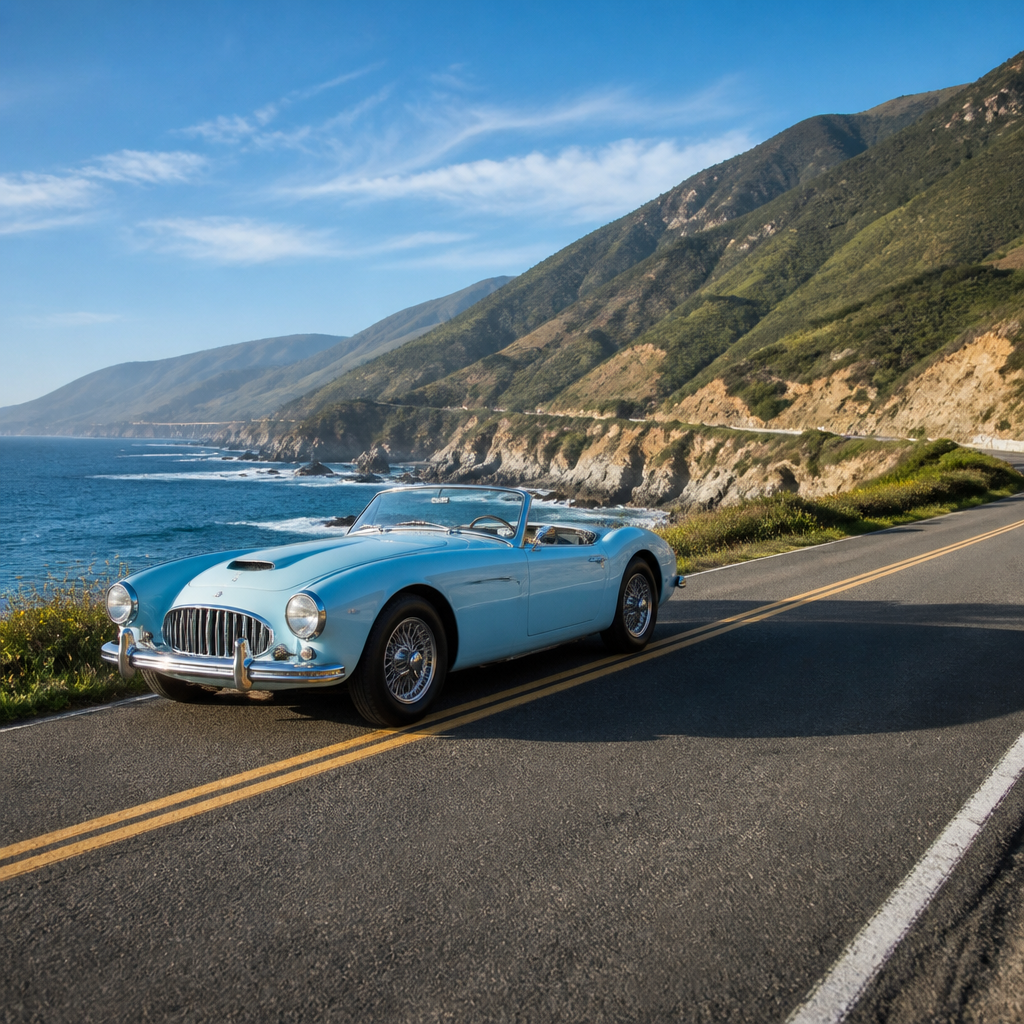
California’s Pacific Coast Highway remains the benchmark because it combines cinematic scenery with enough infrastructure to support older cars. The Big Sur section between Carmel and San Simeon is the iconic stretch, but for classics it works best when approached strategically. Weekday mornings outside peak summer reduce congestion, and shorter segments allow time for temperature checks and photo stops. A 1960s Mercedes-Benz SL, early Mustang convertible, or Jaguar E-Type feels at home here because the road rewards torque, open-top visibility, and grand-touring composure rather than outright pace. Fuel and lodging are available, but reserve ahead because limited supply can turn a beautiful route into a stressful one.
On the opposite coast, U.S. Route 1 through the Florida Keys offers a very different kind of classic car experience. This is not a technical driver’s road; it is a long, relaxed ribbon over the water where style matters as much as handling. Full-size American convertibles, 1950s cruisers, and later classics with strong air conditioning suit the Keys particularly well. Heat management is critical, especially in traffic approaching Key Largo or Marathon. Owners of older cooling systems should verify fan clutch operation, radiator efficiency, and ignition timing before the trip. The payoff is unmatched atmosphere: pastel motels, bridge crossings, seafood stops, and the sort of unhurried miles that make even a large classic feel effortless.
Nova Scotia’s Cabot Trail deserves more attention from classic car travelers because it offers dramatic ocean views, manageable distances, and a touring culture that welcomes road trips. It suits lighter, nimble classics such as MGBs, BMW 2002s, and Alfa Romeo coupes, but larger GT cars also work well. The route has elevation changes and tighter sections, so brake condition matters. Fresh fluid, correctly adjusted rear drums where applicable, and good-quality tires transform confidence on descents. The region’s cooler temperatures are a practical advantage for older engines, and the local hospitality makes it easy to build a multi-day itinerary around inns, lobster shacks, and national park viewpoints.
Europe’s Best Coastal Drives for Vintage Touring
Europe offers some of the world’s most natural classic car routes because many of its coastal roads evolved before modern expressways took over. The Amalfi Coast in Italy is famous, and for good reason, but it is best suited to compact classics and patient drivers. A Fiat 124 Spider, Alfa Giulia, Lancia Fulvia, or classic Mini can thread through narrow lanes and crowded villages more gracefully than a wide American coupe. The key is timing. Early morning departures outside high season transform Amalfi from a stop-start ordeal into an extraordinary drive of cliffside villages, citrus groves, and sea views. Parking is limited, so choosing hotels with secure off-street storage is non-negotiable.
France’s Côte d’Azur routes between Saint-Tropez, Cannes, Antibes, and Menton deliver elegant touring rather than raw road drama. These roads suit period European luxury and GT machinery exceptionally well. A Citroën DS, Mercedes W111 coupe, Porsche 356, or Ferrari 308 feels contextually perfect here. The advantage of the Riviera is density: excellent restaurants, short driving stages, specialist workshops, and many places where a classic car is appreciated rather than treated as an inconvenience. The tradeoff is traffic. Shoulder-season travel in late spring or early autumn provides the best mix of weather and road access. For a hub page on classic car travel, this route represents the ideal blend of destination appeal and mechanical practicality.
In the United Kingdom, the North Coast 500 in Scotland has become widely known, but classic owners should treat it as a framework rather than a single uninterrupted blast. The west coast sections near Applecross, Torridon, and Ullapool are the standouts for scenic motoring. Older cars with healthy cooling systems thrive in Scotland’s generally temperate climate, yet fuel planning is essential because distances between stations can stretch unexpectedly. I recommend carrying a simple spares kit here: fan belt, ignition parts if your car uses points, upper radiator hose, wire, fuses, and a compact tire inflator. The scenery is immense, the roads can be single track, and patience is part of the experience.
How to Match the Route to the Car
Not every classic car suits every coastal drive, and this is where many owners either elevate the trip or make it unnecessarily hard. The first question is cooling capacity. A big-block muscle car with marginal airflow may be glorious on open sections of Highway 1 but miserable in dense Mediterranean traffic. The second question is dimensions. Wide cars become stressful on roads lined with stone walls or buses, while tiny roadsters can disappear in modern traffic if the route includes urban connectors. The third factor is weather protection. If your convertible top leaks or your heater demists poorly, foggy Atlantic routes may be less romantic than they sound.
| Route type | Best-suited classics | Main advantage | Primary caution |
|---|---|---|---|
| Open scenic highway | Grand tourers, V8 convertibles, air-cooled coupes | Stable cruising and long sightlines | Heat buildup in slow traffic |
| Narrow Mediterranean coast road | Compact roadsters, small saloons, lightweight coupes | Agility and easy parking | Width, clutch wear, tourist congestion |
| Remote Atlantic loop | Well-sorted touring cars with proven reliability | Cool temperatures and low traffic | Fuel gaps and limited repair support |
| Resort-town island route | Comfort-oriented cruisers and cars with strong A/C | Relaxed pace and social atmosphere | Sun exposure and stop-start conditions |
Vehicle range is another overlooked factor. Many classics have optimistic fuel gauges and surprisingly small tanks. If your car gets 14 mpg and holds 15 gallons, your practical range may be under 150 miles once traffic, hills, and reserve are considered. That shapes not just where you fuel, but where you stay. Luggage is equally important. Hard luggage that fits the trunk opening of an MGA or 911 can make a weeklong trip comfortable, while generic roller bags often do not. Matching route to car means respecting the machine’s design era rather than forcing it to mimic a modern crossover.
Preparation, Safety, and On-the-Road Strategy
The best classic car travel starts in the garage a week before departure. Begin with a baseline inspection: coolant strength, hose condition, belt tension, oil level, brake fluid age, tire date codes, spare tire pressure, and charging voltage. If the car still runs breaker points, verify dwell and carry replacements. If it uses SU, Stromberg, Weber, or Rochester carburetion, check for leaks and ensure hot starts are consistent. Coastal routes often involve repeated starts after scenic stops, and vapor lock or weak batteries reveal themselves at exactly the wrong moment. I also advise cleaning battery terminals and confirming that all exterior lights work, especially if fog is possible.
Recovery planning is where experienced owners separate inconvenience from crisis. Join a roadside assistance program that explicitly covers older vehicles and flatbed towing. Save specialist shops along your route, not just general garages. A modern tire store may not know how to jack a car with delicate sills or where to tow from on a low valance classic. Bring a fire extinguisher, gloves, paper maps in case signal drops, and a soft car cover if overnight parking is outdoors. Security matters because classics draw attention. Choose lodging with visible, well-lit parking or enclosed storage, and never leave registration documents openly displayed inside the car.
Driving technique on coastal roads should be smooth and mechanical-sympathy focused. Leave more following distance than you would in a modern car. Use engine braking on long descents to preserve drums or lightly sized discs. Watch crosswinds on bridges and cliffside sections, especially in tall classics with soft suspension. If the car begins to run hotter than normal, reduce load immediately by turning off air conditioning, increasing heater output if necessary, and taking the next safe turnout. Most roadside failures in classic touring are preceded by small warnings: a faint fuel smell, a slightly lazy hot restart, or a temperature needle creeping above its usual mark. Pay attention early and the trip usually continues.
Building a Memorable Classic Car Travel Itinerary
A strong itinerary for classic car travel balances driving time, maintenance margin, and destination quality. Plan shorter daily stages than you would in a new car. Two hundred scenic miles in a 1967 Austin-Healey or 1973 Corvette can feel full and satisfying, while four hundred quickly becomes tiring. Build each day around one signature driving section, one meaningful meal stop, and one destination worth photographing. This structure keeps the car central without making the trip feel like a mechanical endurance test. It also creates natural points for content if you document your travels through club newsletters, social media, or a personal archive.
This hub page should also direct readers toward deeper topics within classic car travel. The most useful supporting articles typically include pre-trip inspection checklists, packing guides for small trunks, advice on driving carbureted cars in hot weather, route planning apps, classic-friendly hotels, and insurance considerations for touring abroad. Those subtopics matter because a coastal drive succeeds through details, not wishful thinking. The route may attract attention, but reliability, pacing, and storage determine whether the memory is joyful. Start with a route that suits your car, prepare carefully, and book the trip. Coastal miles are where classic ownership makes the most sense.
The top coastal drives for classic car owners are not simply the most beautiful roads on a map. They are the routes where scenery, road design, traffic patterns, climate, and service access align with the capabilities of older machines. Pacific Coast Highway rewards grand touring style, the Florida Keys celebrate relaxed cruising, the Cabot Trail adds cool-weather drama, the Amalfi Coast favors compact agility, the Riviera blends elegance with convenience, and Scotland’s western shores offer remote immersion. Each route proves the same point: classic car travel works best when the journey respects the car’s character.
For anyone building a richer life around classic car culture and lifestyle, coastal touring is one of the smartest places to start. It combines manageable daily mileage with strong visual payoff, welcoming stop points, and the kind of roads that highlight steering feel, engine sound, and open-air motoring. Just as important, it encourages disciplined preparation and better ownership habits. Inspect the car thoroughly, pack the right spares, choose the right season, and plan around fuel, lodging, and weather. Then use this hub as the starting point for more detailed guides on inspections, packing, route planning, and touring technique. Pick one coastline, set a realistic itinerary, and let your classic do what it was built to do.
Frequently Asked Questions
What makes a coastal drive especially well suited to classic car owners?
Coastal roads tend to match the character of classic cars better than high-speed motorways or congested urban routes. Many older vehicles were designed for relaxed touring rather than sustained modern freeway speeds, so a shoreline drive with moderate pace, scenic bends, and frequent stopping points lets the car operate in its natural rhythm. Instead of treating the journey as a race from one destination to another, coastal touring encourages a style of motoring that suits vintage roadsters, grand tourers, elegant saloons, and classic muscle cars alike: windows down, engine note present, steering alive, and the landscape constantly changing.
There is also a practical advantage. Coastal drives often include villages, overlooks, cafés, and fuel stops at sensible intervals, which helps owners manage temperature, fuel range, and driver fatigue. Older cooling systems, carbureted engines, drum brakes, and less forgiving suspensions all benefit from a route that allows regular pauses. Add in sea light, open views, and roads with a natural flow, and the result is a driving environment that turns the strengths of a classic car into part of the experience rather than something to work around.
How should I prepare a classic car before taking it on a long coastal route?
Preparation should begin with reliability, not cosmetics. Before any substantial coastal trip, inspect the essentials: cooling system, belts, hoses, oil level and condition, brake fluid, tire age and pressure, charging system, and fuel delivery. On older cars, small weaknesses that seem manageable during local use can quickly become trip-ending problems once heat, distance, and stop-start terrain are added. Check for coolant seepage, cracked vacuum lines, loose battery connections, brake pull, worn wheel bearings, and signs of fuel vapor issues if the route includes warmer stretches or traffic near seaside towns.
It is also wise to think like a period touring driver. Carry a compact tool roll, spare fuses, bulbs, ignition components if applicable, extra fluids, and any model-specific items your car is known to need. If the vehicle uses points, twin carburetors, or an older charging setup, bring what you would want on hand for a roadside adjustment. Map your fuel strategy in advance as well, especially if your classic has a modest tank, optimistic fuel gauge, or requires premium fuel. Finally, test the car on a shorter run before departure. A successful coastal trip usually starts with discovering rattles, overheating tendencies, or charging issues close to home rather than at a distant cliffside lay-by.
What types of coastal routes are best for different kinds of classic cars?
The best route depends on the personality of the car as much as the scenery. Lightweight roadsters and nimble sports cars often shine on winding coastal roads with elevation changes, tighter bends, and opportunities to enjoy precise steering and open-air motoring. Grand tourers, by contrast, are at their best on longer shoreline stretches where the road opens out, the engine can settle into a smooth cruise, and comfort becomes part of the pleasure. Larger saloons and vintage luxury cars usually benefit from routes with good surfaces, gentler curves, and enough stop-off points to make the day feel unhurried rather than demanding.
Classic muscle cars occupy their own category. They are often rewarding on broader coastal highways with sweeping turns and strong sight lines, where torque and presence matter more than delicacy. Whatever the vehicle, the ideal route is one that flatters its strengths rather than exposing its weaknesses. A car with heavy steering and marginal brakes may not enjoy repeated steep descents and hairpins, while a delicate pre-war or early post-war car may be happiest on shorter scenic sections with frequent rests. In practical terms, the best coastal drives are those that combine beautiful scenery with road conditions your car can handle confidently and repeatedly.
How can I protect a classic car from salt air, moisture, and other coastal conditions during a trip?
Salt air is less aggressive than direct winter road salt, but coastal conditions still deserve respect, especially on older metal, chrome, wiring, and trim. The first line of defense is starting with a clean, well-protected car. A fresh coat of wax, properly treated chrome, and attention to door seals, weatherstripping, and drainage points can make a significant difference. If your classic is already vulnerable to corrosion, inspect wheel arches, rocker panels, trunk seals, and lower body seams before the trip. Moist sea air can find its way into neglected areas quickly, particularly if the car is parked overnight near the shoreline.
During the drive, avoid leaving the car coated in sea mist, sand, or grime for long periods. If possible, rinse the vehicle after the trip, paying attention to the underside, wheel wells, grille area, and any exposed metal components. Dry the car thoroughly, including around brightwork and inside jambs. Convertible owners should also be mindful of soft-top condition and interior moisture, as damp air can affect fabrics, leather, wood trim, and older adhesives. Parking choices matter too. A breezy cliffside view may be attractive, but extended exposure to direct spray or overnight dampness is not ideal. Protecting a classic at the coast is really about reducing exposure, cleaning promptly, and staying ahead of the small issues that become expensive corrosion later.
What should I pack and plan for to make a classic coastal road trip more enjoyable and less stressful?
The most successful classic car trips are planned with realism. Pack for comfort, visibility, and contingencies. That means water, sun protection, a phone charger or power bank, basic first aid supplies, paper maps as backup, and layers for changing coastal weather. In the car itself, bring essential tools, spare fluids, a tire inflator or pressure gauge, and emergency items such as a flashlight, gloves, warning triangle, and jumper pack if appropriate for the vehicle. If your classic has limited luggage space, prioritize mechanical support items first and personal extras second.
Route planning matters just as much as packing. Build the day around manageable mileage rather than ambitious distance. Older cars are more enjoyable when there is time for photographs, cooling-off stops, meals, and unplanned detours. Identify fuel stations, parking options, and rest stops ahead of time, especially in remote or seasonal coastal areas. It also helps to book accommodations with secure parking if the trip includes an overnight stay. Most importantly, allow the car to set the pace. A classic coastal drive should feel measured and rewarding, not pressured. When you plan around the machine’s age, needs, and temperament, you usually get a better journey, a happier car, and a far more memorable experience behind the wheel.