Classic car events in the U.S. are where automotive history becomes a living, moving culture, not a static museum display. For enthusiasts, collectors, restorers, and first-time spectators, the best classic car events offer more than polished sheet metal. They combine concours judging, swap meets, road tours, auctions, vintage racing, club gatherings, and the shared language of design, engineering, and nostalgia. In practical terms, a classic car event is any organized gathering centered on older vehicles, usually with a focus on preservation, authenticity, performance, or period style. That broad definition matters because “best” depends on what kind of experience you want: elite concours lawns, hands-on restoration parts hunting, historic race weekends, or accessible community shows where owners gladly raise the hood and talk.
I have covered and attended events across this spectrum, and the difference between a good show and a great one usually comes down to curation, crowd quality, vehicle diversity, and whether the event gives context to the cars. The strongest events do all four. They present significant vehicles, attract informed owners and judges, balance prestige with approachability, and explain why a Duesenberg, split-window Corvette, air-cooled Porsche, tri-five Chevy, or early Bronco matters in American car culture. These gatherings also drive the market. Auction results influence insurance valuations. Concours awards affect provenance. Swap meets keep restoration projects alive by circulating rare trim, glass, and drivetrain parts. Club meets preserve brand-specific knowledge that never made it into factory manuals.
This hub covers the best classic car events in the U.S. through the lens that matters most to readers planning trips, building collections, or simply wanting to understand where classic car culture is most alive. It focuses on major event categories, standout examples, and what each type of gathering does best. If you are deciding where to go next, start by matching your goal to the event format. That is the fastest way to move from general interest to the right calendar, the right crowd, and the right experience.
Concours Events: The Highest Standard of Preservation and Presentation
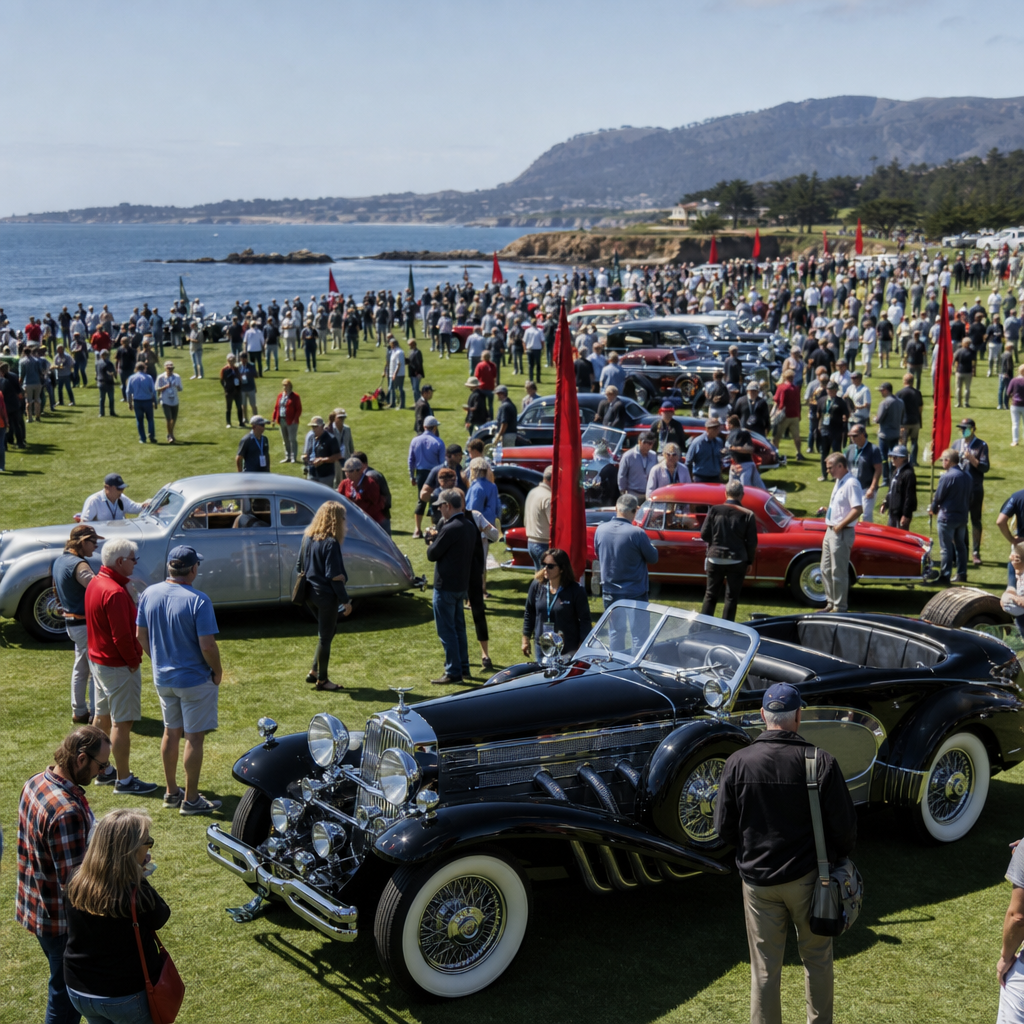
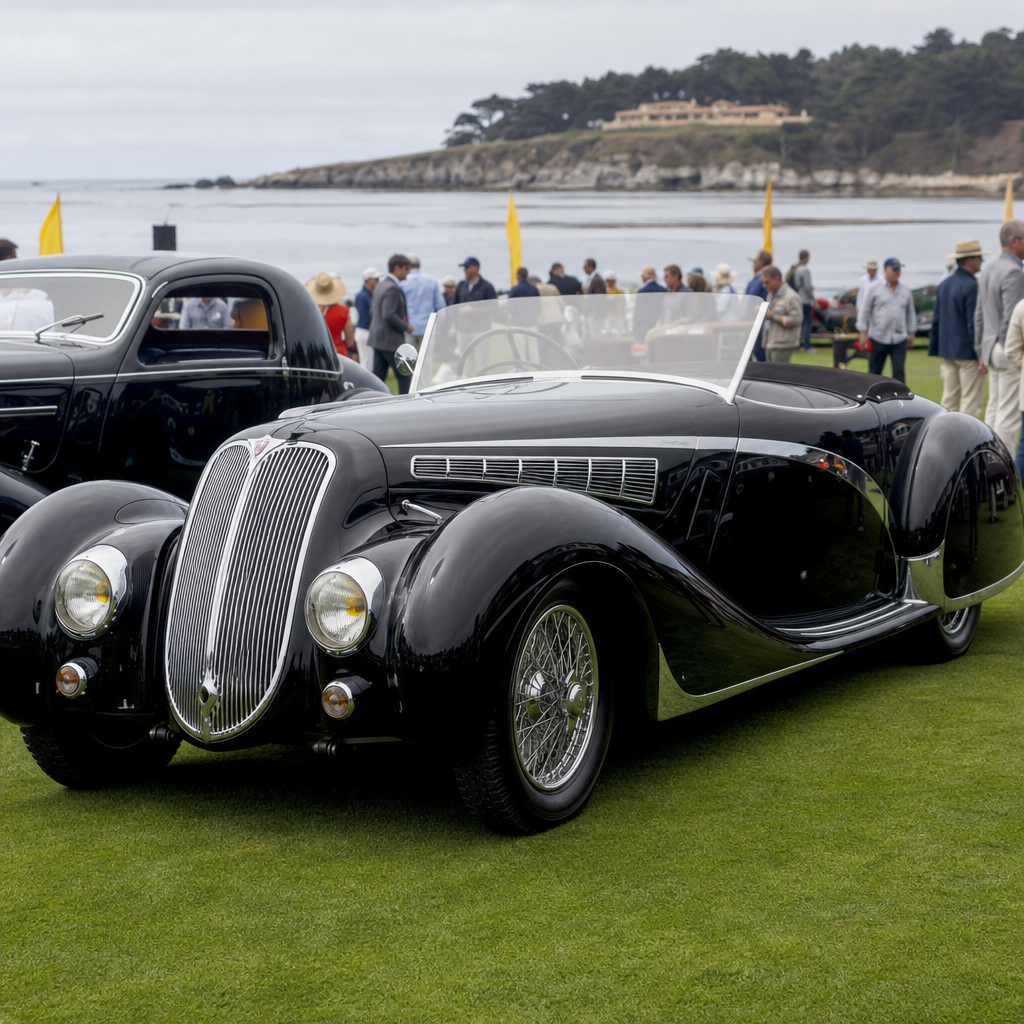
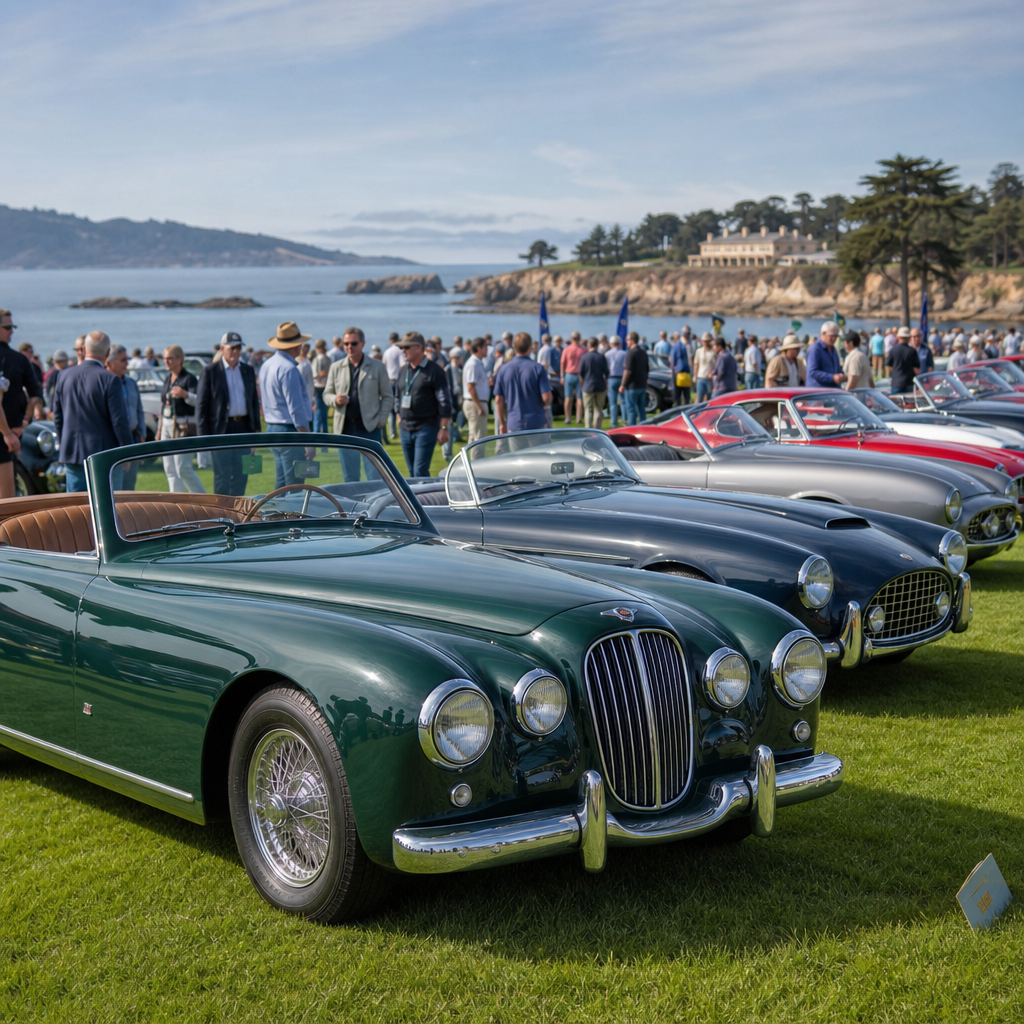
Concours events are the most prestigious end of the classic car spectrum. The benchmark is Pebble Beach Concours d’Elegance in California, which remains the most influential concours in America because of its global field, rigorous judging, and ability to elevate coachbuilt classics, milestone sports cars, and historically important race cars into headline stories. A Best of Show result at Pebble Beach can materially change a car’s status in the market because the event rewards documented originality, restoration accuracy, and significance. Amelia, now branded The Amelia, serves a similar role on the East Coast. Its field is often broader in tone, mixing elite prewar and postwar cars with racing legends and enthusiast favorites, while maintaining top-tier standards.
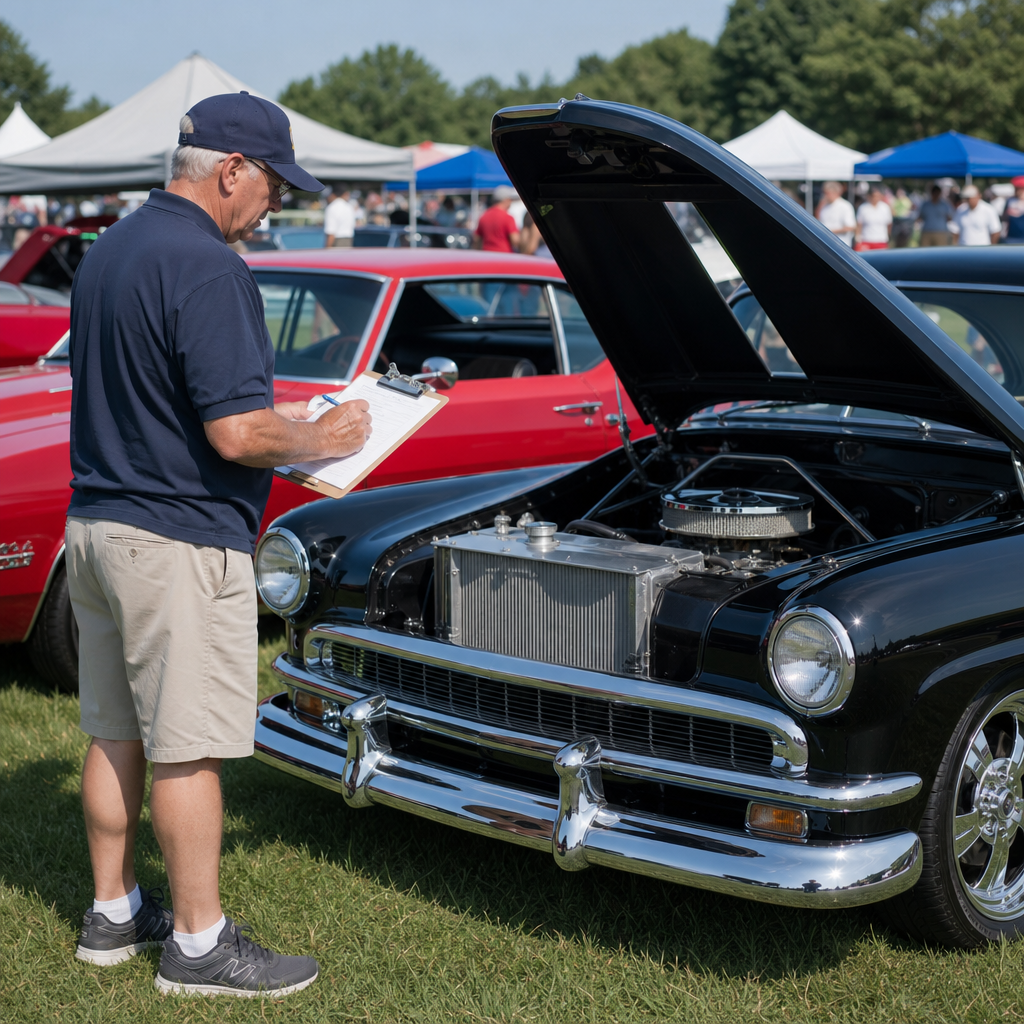
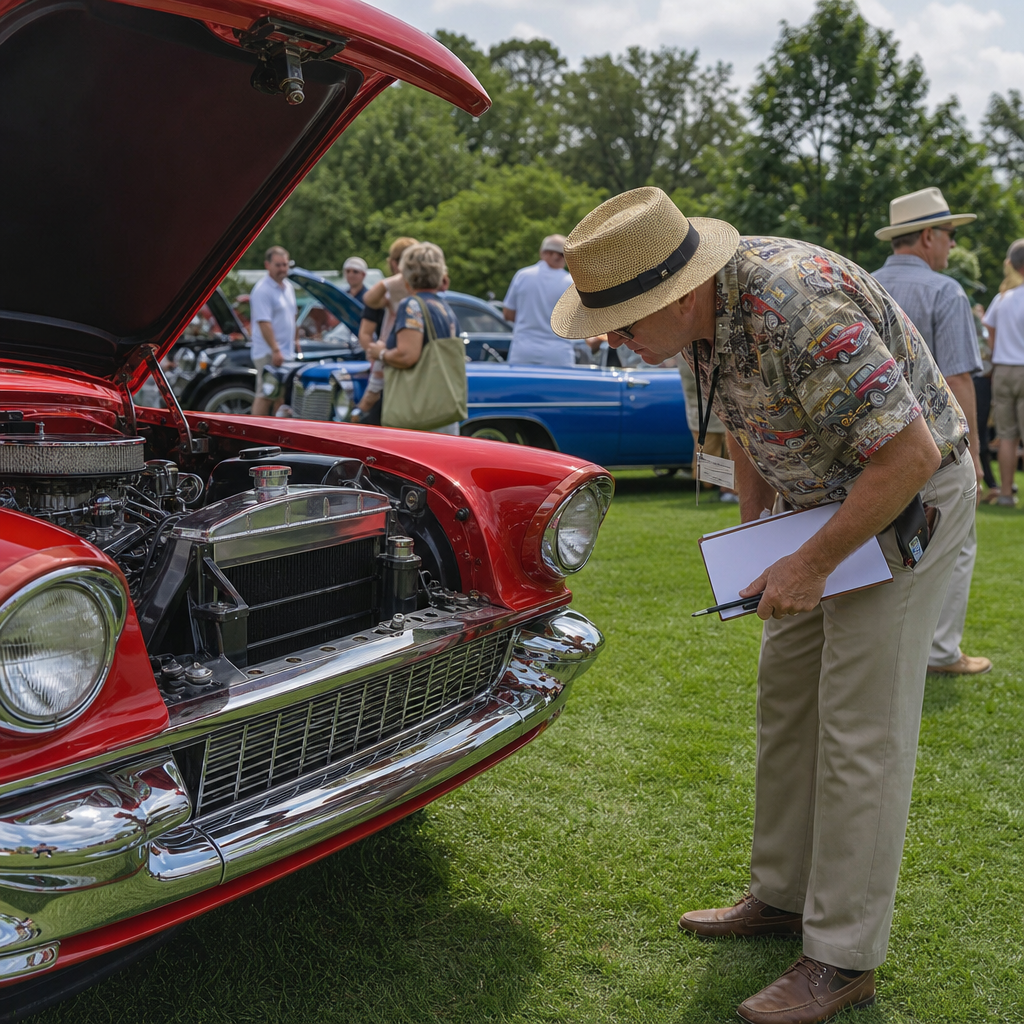
What makes concours events valuable to ordinary enthusiasts is not only spectacle. They teach visual literacy. After one serious concours weekend, you start to recognize panel fit quality, correct finishes, period hardware, factory color accuracy, and the difference between over-restoration and authentic preservation. Good concours programming also adds seminars, marque spotlights, and curated classes that explain why one year, body style, or engineering solution matters. If you want to understand the upper tier of judging, provenance research, and restoration craftsmanship, concours events are the clearest classroom in the hobby.
Auction Weeks and Market Events: Where Demand Becomes Visible
Some of the best classic car events in the U.S. are attached to major auctions because they put the collector market in plain view. Scottsdale in January, anchored by Barrett-Jackson, RM Sotheby’s, Bonhams, Gooding Christie’s, and other sales depending on the year, is not a single event so much as a concentrated season. It attracts muscle cars, customs, blue-chip European classics, trucks, resto-mods, and first-time bidders. Monterey Car Week performs a similar function every August, combining auctions with concours, brand activations, club gatherings, and luxury hospitality. If you want to see how rarity, documentation, restoration quality, and market timing affect prices, there is no better classroom than an auction preview followed by the actual sale.
These events also reveal the segmentation inside the hobby. A numbers-matching Hemi ’Cuda, a Ferrari 275 GTB, and a well-built square-body Chevy truck may all perform well, but for different reasons. One trades on scarcity and original driveline correctness. Another trades on international blue-chip demand. The truck may benefit from generational taste, usability, and lower entry barriers. Watching bidders respond in real time teaches an essential lesson: value in the classic market is never about age alone. It is about story, condition, provenance, and relevance to today’s buyers.
Swap Meets and Parts-Focused Gatherings: The Infrastructure of Restoration
Every serious restorer eventually learns that the hobby runs on parts access and tribal knowledge. That is why swap meets belong on any list of the best classic car events in the U.S. The Hershey Fall Meet in Pennsylvania, organized by the Antique Automobile Club of America, is the giant in this category. It combines an enormous flea market, car corral, and show field, making it one of the few places where obscure trim pieces, literature, emblems, lenses, instruments, and hard-to-find hardware appear in meaningful volume. Spring Carlisle and other Carlisle Events gatherings play a similar role for domestic classics, trucks, and performance cars.
For owners, swap meets save projects that online shopping cannot. Search platforms are useful, but they do not replace walking rows of vendors, comparing original castings by hand, and asking a seller whether a part came off a 1967 big-block car or a visually similar small-block variant. At the best parts events, people bring decades of memory. They know casting date ranges, fastener finishes, and interchange details that are often absent from catalogs. These gatherings are less glamorous than concours lawns, but they are the practical backbone of classic car culture.
Vintage Racing Events: Seeing Historic Cars Do Their Real Job
Static display has value, but some classics only make complete sense at speed. Vintage racing events show race cars, sports cars, and homologation specials in their natural environment. The Rolex Monterey Motorsports Reunion at WeatherTech Raceway Laguna Seca is the most celebrated example. Its grids often include historic Formula One cars, Can-Am monsters, Trans-Am icons, endurance racers, and production-based competition cars driven in period-correct style. The event’s value is sensory as much as educational. You hear the difference between a high-revving flat-plane V8 and a torquey American pushrod engine. You see weight transfer, braking behavior, and tire sidewall movement that photos can never explain.
Other important vintage race weekends, including events at Road America and Watkins Glen, provide a more regional but still deeply rewarding experience. For owners, participation keeps mechanical history functional rather than ornamental. For spectators, it explains why certain road cars became legends in the first place. A Shelby Cobra, Porsche 356 Carrera, Jaguar E-Type, or Alfa Romeo GTA is easier to understand after you watch related machines attack a corner under load. Vintage racing is where engineering history becomes visible.
Regional Festivals and Community Shows: The Most Accessible Entry Point
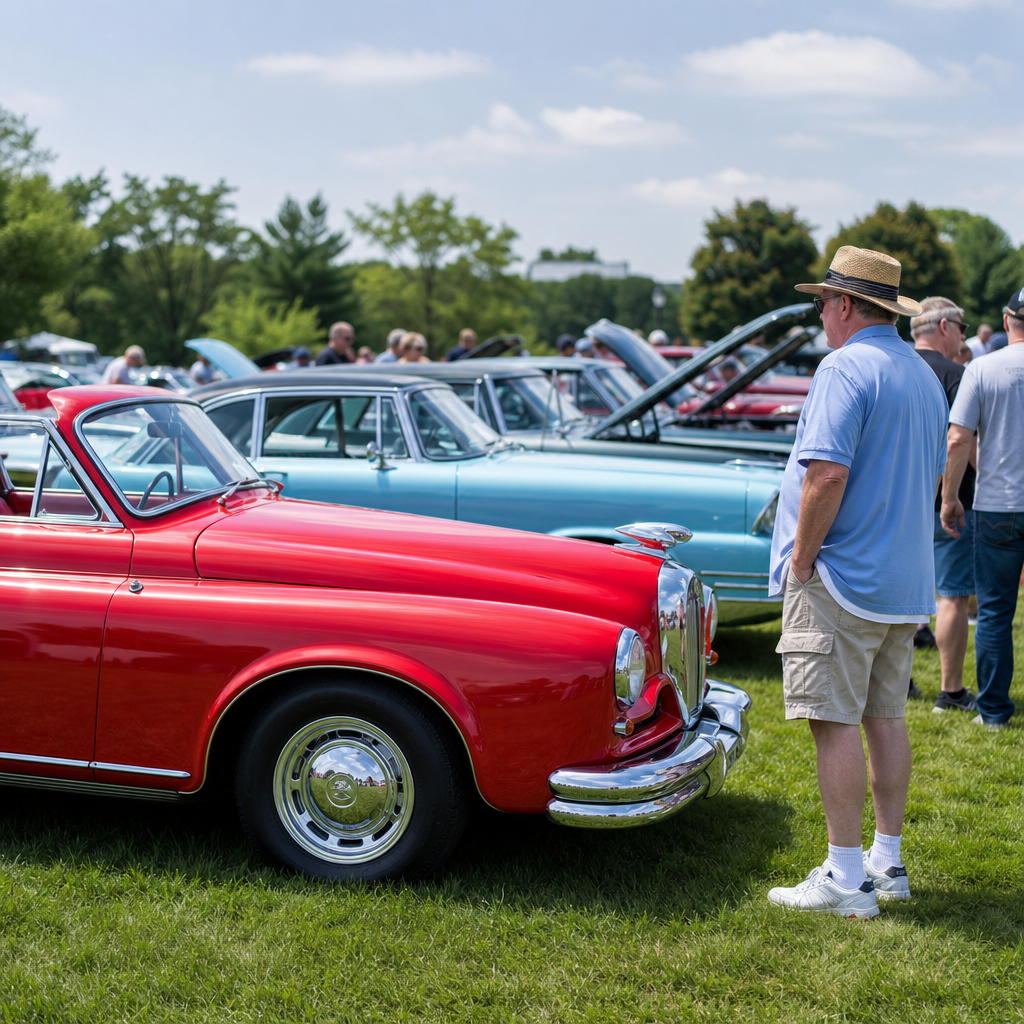
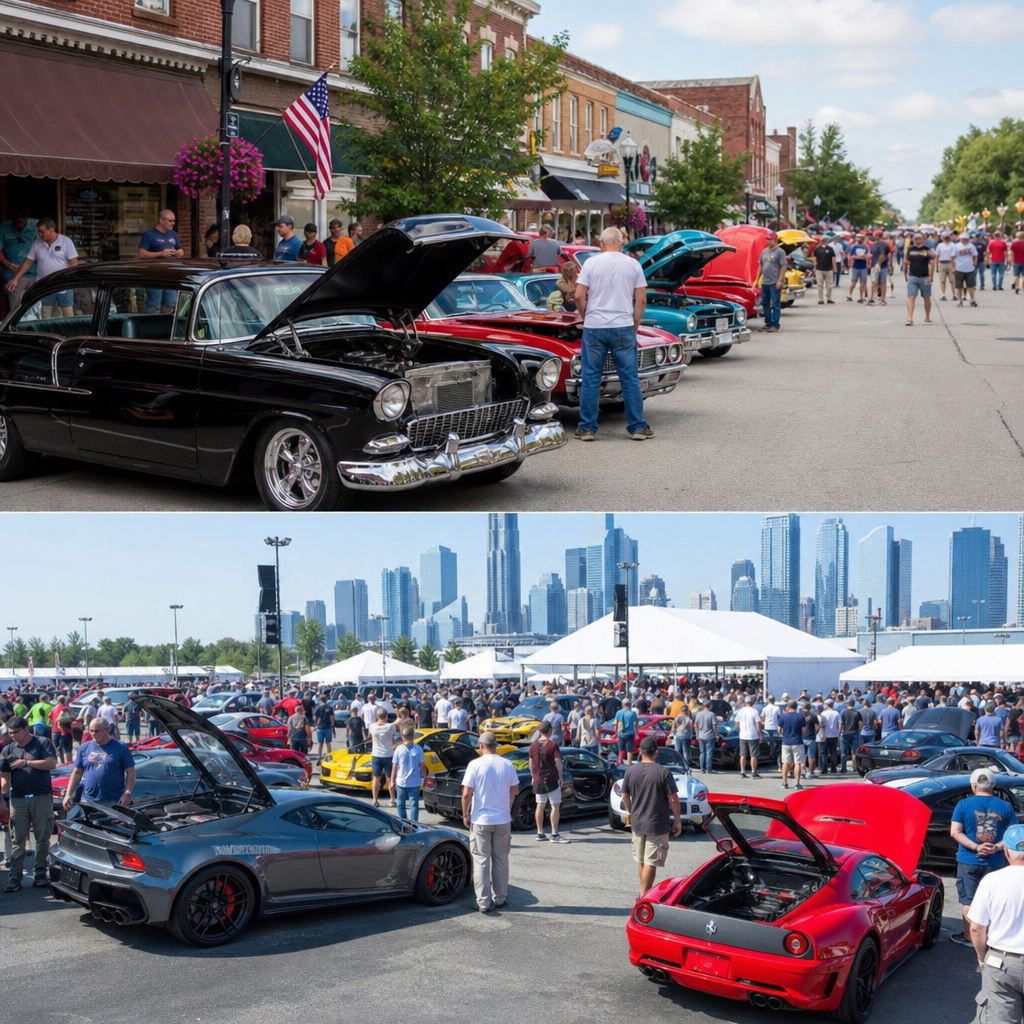
Not every great classic car event is exclusive or expensive. Regional festivals and local shows remain the entry point for most enthusiasts, and they deserve more respect than they often receive. Events such as Back to the 50’s Weekend in Minnesota, NSRA street rod shows, Goodguys gatherings, and countless downtown summer cruises create the broad base of the hobby. These are the places where families attend together, teenagers encounter old cars up close, and owners of driver-quality vehicles feel welcome. They also reflect the diversity of American enthusiasm better than many elite events do. On one field you may see a restored 1940 Ford coupe, a patina C10 pickup, a pro-touring Camaro, a low-mileage Riviera, and a handmade gasser tribute.
The educational value here is personal access. Owners at community-centered events usually talk freely about purchase price, repair struggles, paint decisions, parts availability, and what it actually costs to keep a carbureted car on the road. That honesty is useful. It counters the idea that classic car culture is only for six-figure collections. In reality, healthy events serve both the top and the middle of the market, because sustainability depends on broad participation.
What to Look for When Choosing a Classic Car Event
The right event depends on your purpose, budget, and tolerance for crowds. Use the guide below to match event type to outcome.
| Event type | Best for | Signature U.S. examples | Main advantage |
|---|---|---|---|
| Concours | Design history, elite restorations, judging standards | Pebble Beach, The Amelia | Highest level of curation and provenance |
| Auction week | Market insight, buying, selling, trend spotting | Scottsdale, Monterey Car Week sales | Real-time pricing and buyer behavior |
| Swap meet | Restoration parts, literature, owner knowledge | Hershey Fall Meet, Carlisle | Best access to rare components and expertise |
| Vintage racing | Performance history, engineering context | Monterey Motorsports Reunion, Road America events | Cars seen operating as intended |
| Regional show | Family visits, affordable travel, broad enthusiast mix | Goodguys, NSRA, Back to the 50’s | Most accessible and welcoming atmosphere |
Before booking travel, check whether the event is spectator-first or participant-first. Some are ideal for walking and learning; others are designed around consignors, racers, or club members. Study ticket tiers, parking logistics, weather patterns, and whether cars are displayed on grass, pavement, or paddock surfaces. If you plan to photograph, morning light and early-entry tickets are often worth the extra cost. If you plan to buy parts, bring measurements, photos, casting numbers, and cash, because the best pieces often sell before noon.
How These Events Connect the Entire Classic Car Culture Ecosystem
The reason this topic works as a hub is that car shows and events connect every other part of classic car culture. Restoration shops use events to demonstrate craftsmanship and meet clients. Insurers such as Hagerty gather valuation data and engage owners directly. Auction houses identify emerging segments by watching turnout and conversation long before prices fully move. Media outlets, clubs, and museums use event calendars to shape coverage and exhibitions. Even manufacturers participate. Ford, General Motors, Porsche, and Mercedes-Benz regularly activate heritage programs because classic vehicles reinforce brand identity in a way modern advertising cannot.
Events also influence what gets saved. When certain classes become popular at concours or vintage races, cars that were once neglected gain attention, parts support, and documentation. That pattern has played out repeatedly with woodies, brass-era cars, Japanese classics, analog supercars, and 1980s and 1990s performance models. The best classic car events in the U.S. do not merely celebrate the hobby. They help determine its future by telling collectors, restorers, and younger enthusiasts which vehicles deserve time, money, and historical care.
For anyone exploring classic car culture and lifestyle, attending the right event is the fastest way to build real understanding. Concours teach standards. Auctions reveal value. Swap meets sustain restorations. Vintage races explain performance. Regional shows keep the community open and growing. Together, these formats form the complete landscape of car shows and events in America, from top-tier collecting to grassroots ownership. If you want to go deeper into this subtopic, use this hub as your starting point, then choose the event style that matches your interest and put one major show on your calendar this year.
Frequently Asked Questions
What are the most popular types of classic car events in the U.S.?
The best classic car events in the U.S. usually fall into several distinct categories, and each offers a different experience for enthusiasts and casual visitors. Concours d’elegance events are among the most prestigious, focusing on carefully judged vehicles that are restored or preserved to an exceptional standard. These events highlight automotive design, historical significance, authenticity, and craftsmanship. At the other end of the spectrum are large car shows and cruise-ins, which tend to be more relaxed and community-driven, bringing together a wide variety of classics, muscle cars, hot rods, and vintage trucks.
Swap meets and automotive flea markets are another major part of the classic car world. These events are especially valuable for restorers and collectors looking for rare parts, period-correct accessories, memorabilia, and hard-to-find tools. Vintage racing festivals add even more excitement by letting spectators see historic cars in motion rather than parked on a show field. Road tours and rallies are also popular because they celebrate the driving experience itself, proving that classic cars are meant to be enjoyed on the road as well as admired in person.
Many of the best-known U.S. events combine several of these formats into one weekend. It is common to find judged concours classes, vendor areas, club corrals, educational seminars, auctions, and scenic driving events all happening together. That mix is what makes classic car events so compelling: they are not just exhibitions of old vehicles, but living gatherings where automotive history, mechanical knowledge, and enthusiast culture all come together.
Which classic car events in the U.S. are best for first-time attendees?
For first-time attendees, the best classic car events are usually the ones that offer variety, easy access, and a welcoming atmosphere. Large, well-established events with a broad range of vehicles are often ideal because they let newcomers explore many corners of the hobby at once. Instead of focusing narrowly on one make, era, or restoration standard, these events may include everything from prewar luxury cars and postwar convertibles to muscle cars, customs, and vintage race machines. That kind of range helps first-time visitors figure out what styles and eras interest them most.
Events that include more than just a show field are especially useful for beginners. A first-time attendee can learn a great deal by walking through a swap meet, watching judging, visiting club displays, and listening to owners explain restoration choices or vehicle history. Some of the most approachable gatherings also include parades, demonstrations, or downtown cruise nights, which create a more casual environment than formal judging-only events. For many people, that balance between high-quality cars and relaxed social interaction makes the experience more enjoyable and less intimidating.
If you are attending for the first time, it helps to choose an event with good amenities and a clear schedule. Look for gatherings that publish maps, class lists, parking guidance, and featured activities ahead of time. Comfortable walking shoes, sun protection, water, and a little extra time are always smart, since the best events are much bigger than they first appear. A first visit is often the moment people realize classic car culture is not just about the cars themselves, but also about storytelling, restoration skill, and a shared appreciation for automotive history.
What should I expect to see and do at a major classic car event?
At a major classic car event, you should expect far more than rows of parked vehicles. Most top-tier gatherings are designed as immersive experiences where visitors can engage with the cars, the owners, and the broader culture surrounding them. You may see concours-level restorations displayed with museum-quality attention to detail, survivor cars that still wear much of their original finish, and driver-quality classics that are admired for their authenticity and road use rather than perfection. That diversity is part of the appeal, because it shows the many ways people preserve and enjoy automotive history.
Beyond the cars, many events include activities that deepen the experience. Judging sessions let you observe how experts evaluate originality, condition, provenance, and workmanship. Swap meet areas give you a glimpse into the parts-and-restoration side of the hobby, while auction tents reveal current market trends and collector demand. Club displays are often especially informative because members are usually happy to share technical knowledge, model history, and ownership stories. If the event includes vintage racing or road tours, you also get the rare chance to see and hear these machines in action, which brings their engineering and personality to life in a way static displays cannot.
Food vendors, merchandise booths, guest speakers, restoration seminars, and awards ceremonies are also common. Some events are highly polished and formal, while others feel more like community festivals centered on old cars. In either case, the real value comes from the combination of visual beauty, mechanical interest, and human connection. A major classic car event is as much about conversation and shared enthusiasm as it is about chrome, paint, and horsepower.
Are classic car events only for serious collectors and restorers?
No, classic car events are not only for serious collectors and restorers. While many prestigious U.S. events do attract high-level collectors, judges, historians, and restoration professionals, the hobby itself is much broader and more inclusive than that. Plenty of attendees are casual fans, families, photographers, first-time spectators, or people who simply have fond memories of the cars they grew up with. In fact, one of the strongest features of the classic car community is that it welcomes people with different levels of knowledge, budget, and involvement.
Some participants bring nationally recognized concours cars, but others arrive in well-loved driver vehicles, project cars, or family heirlooms that matter because of personal history rather than market value. Many local and regional events are built around that spirit. They emphasize participation, conversation, and appreciation over strict competition. Even at more formal events, spectators do not need technical expertise to enjoy the design, craftsmanship, and historical context on display. A beautifully restored car can be admired by an expert for its authenticity and by a newcomer for its elegance and emotional pull.
This accessibility is one reason classic car events remain so popular across generations. They create a space where someone can discuss carburetors, bodywork, provenance, and factory options in one conversation, then share memories of a first car or a childhood road trip in the next. Whether you are shopping for a project, researching a marque, taking photos, or just spending a weekend around remarkable vehicles, there is a place for you at a classic car event.
How can I choose the best classic car event to attend in the U.S.?
Choosing the best classic car event depends on what you want from the experience. If your interest is high-end automotive design, rare coachbuilt cars, and historically important restorations, a respected concours event is likely the best fit. If you enjoy buying parts, hunting memorabilia, and talking with restorers, a major swap meet or combined show-and-market event may be more rewarding. If your priority is excitement and sound, vintage racing weekends offer the chance to experience historic machines in motion. For a more social, grassroots atmosphere, regional shows, club meets, and downtown cruise events can be excellent choices.
It is also important to think about scale, location, and season. Some of the biggest U.S. events draw visitors from across the country and require advance planning for hotels, tickets, and transportation. Others are more local and flexible, making them ideal for a spontaneous weekend outing. Reviewing an event’s schedule in advance can tell you a lot about its character. An event with seminars, tours, auctions, and judged classes will feel very different from one centered mainly on informal parking-lot displays and evening cruising.
Finally, consider whether you want to attend as a spectator or participant. Owners may need to register early, meet eligibility requirements, or prepare vehicles for judging. Spectators should look at accessibility, parking, walking distances, and whether the event is family-friendly. The best event for you is the one that matches your interests, whether that means deep historical research, social interaction, restoration inspiration, or simply spending a day surrounded by the sights, sounds, and stories of America’s classic car culture.