The muscle car era of the 1960s was a uniquely American automotive movement that combined midsize bodies, large-displacement V8 engines, accessible pricing, and a youth-focused image into one of the most influential chapters in the history of classic cars. In practical terms, a muscle car was usually a fairly ordinary coupe or sedan fitted with an engine borrowed from a larger, more expensive model, then marketed on quarter-mile times, street presence, and value. I have spent years studying factory brochures, option sheets, homologation rules, and surviving examples, and the pattern is clear: these cars were not created by a single company or a single model, but by a convergence of postwar prosperity, Detroit competition, and a rapidly changing consumer culture. Understanding the muscle car era matters because it explains how performance became mainstream, how manufacturers used motorsport and advertising to shape identity, and why certain 1960s models now anchor the collector market. It also serves as the best entry point into the broader history of classic cars, since the same forces that built muscle cars—design trends, engineering innovation, regulation, and popular taste—also shaped nearly every important American classic of the period.
What Defined a 1960s Muscle Car
A 1960s muscle car was defined less by a strict rulebook than by a repeatable formula. The essential ingredients were a relatively lightweight intermediate platform, a powerful V8, straight-line acceleration, and a sticker price reachable by middle-class buyers. That formula differed from a pony car, which emphasized compact dimensions and sporty style, and from a full-size performance car, which prioritized comfort or prestige. In the field, however, the categories often overlapped. A 1964 Pontiac GTO is widely treated as the template because it placed a 389 cubic-inch V8 into the Tempest/LeMans line and sold performance as a package rather than as a niche engineering exercise. Chevrolet answered with the Chevelle SS, Oldsmobile with the 442, Buick with the Gran Sport, and Mopar with the Road Runner, Super Bee, Coronet R/T, and GTX. By the late 1960s, buyers understood the code: four-barrel carburetors, dual exhaust, heavy-duty suspensions, close-ratio manual gearboxes, and axle ratios steep enough to transform modest family cars into weekend racers.
Horsepower figures from the period require interpretation. Many manufacturers quoted gross horsepower, measured on an engine dyno without accessories and under ideal conditions, so factory numbers often appear optimistic compared with modern net ratings. Even so, the performance was real. A well-tuned 1969 396 Chevelle SS, 440 Road Runner, or 428 Cobra Jet Mustang could run the quarter mile in the low 14-second range, and some factory combinations dipped lower with traction and gearing. The appeal was not only speed but accessibility. Young buyers could order these cars through ordinary dealerships, finance them, and modify them with parts from Holley, Edelbrock, Hurst, Hooker, and Cragar. That direct connection between factory production and garage culture is central to the history of classic cars because it linked mass manufacturing with personal identity in a way few earlier vehicles had done.
How the Muscle Car Era Began
The roots of the muscle car era stretch back to the 1950s, when overhead-valve V8 development accelerated across Detroit and automakers discovered that performance sold even in conservative body styles. Oldsmobile’s Rocket 88, Chrysler’s Hemi-powered letter cars, and Chevrolet’s fuel-injected small-block experiments proved that Americans responded to speed. Still, the decisive shift came in the early 1960s. Insurance was manageable, fuel was cheap, suburban growth expanded commuting and leisure driving, and the first wave of baby boomers reached driving age. Manufacturers saw a growing market that wanted more than transportation. They wanted image, sound, and measurable performance.
Pontiac played the catalytic role. Under General Manager Pete Estes and performance advocate John DeLorean, the division pushed beyond General Motors’ official restrictions on racing promotion and large engines in smaller cars. The 1964 GTO was technically an option package on the Pontiac LeMans, a workaround that helped it slip through internal policy barriers. It paired a 389 V8 with styling cues, upgraded suspension components, and aggressive marketing. Pontiac expected modest volumes; instead, sales far exceeded projections. The lesson was immediate: there was substantial demand for midsize performance cars with factory backing. Other divisions and rival companies responded quickly, and competition intensified model by model, engine by engine, and brochure by brochure.
The period from 1964 to 1970 is usually regarded as the core muscle car window, though this article focuses on the 1960s because the foundations, peak innovation, and cultural definition all occurred then. During those years, displacement climbed, special editions multiplied, and drag strip credibility became a serious selling tool. Manufacturers offered ram-air induction, shaker hoods, high-lift camshafts, limited-slip differentials, and increasingly specialized engine packages. What began as a clever option package turned into an arms race that shaped showroom traffic across the industry.
Iconic Models and the Brands Behind Them
No overview of the history of classic cars in the muscle era is complete without identifying the major players and what each contributed. Pontiac established the formula with the GTO and sustained it with Judge variants and Ram Air packages. Chevrolet translated its broad parts bin into multiple answers, including the Chevelle SS and high-performance Nova combinations. Oldsmobile’s 442 started as a police-oriented package and matured into a refined but serious performer, while Buick’s GS models blended torque with an upscale cabin that appealed to buyers wanting speed without sacrificing comfort.
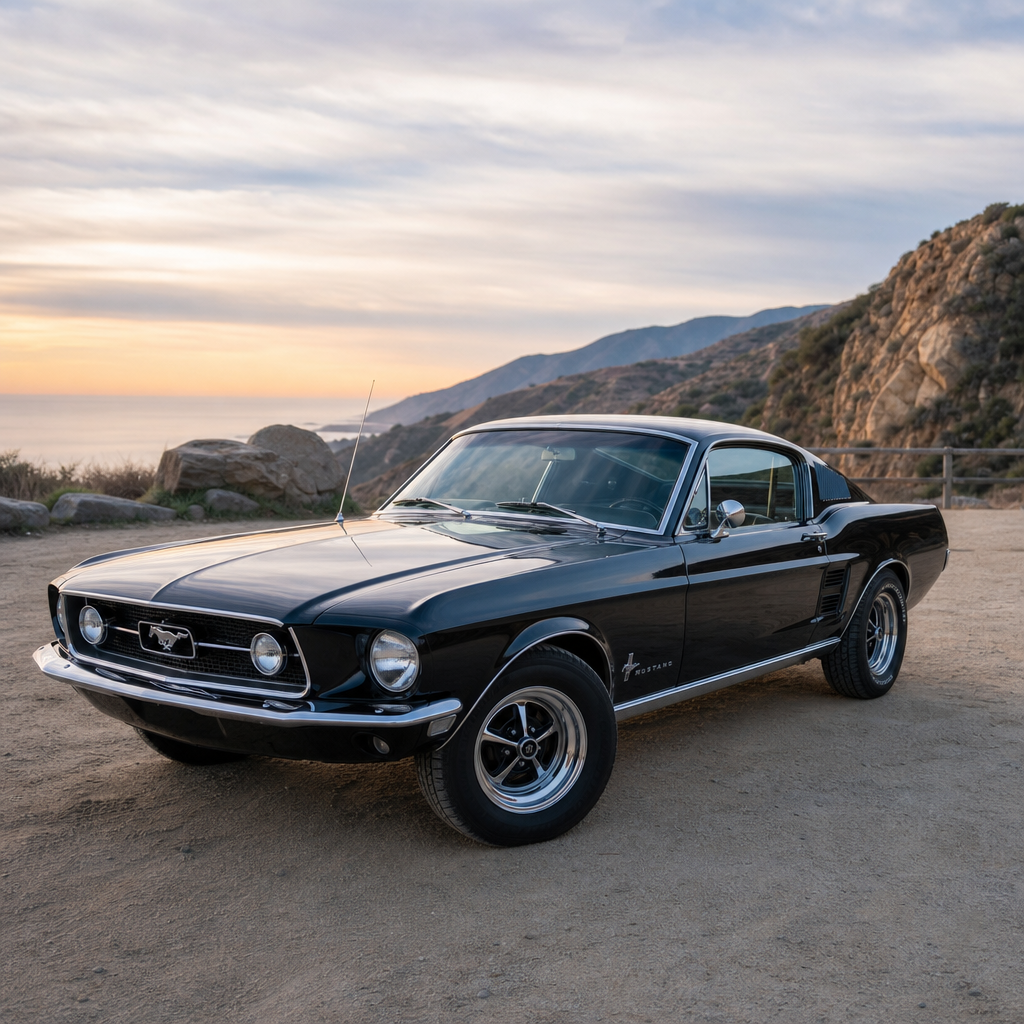
Chrysler Corporation was especially aggressive. Plymouth’s Road Runner stripped away unnecessary trim and focused on value, making big-block performance attainable for younger buyers. Dodge created parallel offerings such as the Super Bee and Coronet R/T, then expanded the visual drama with “Scat Pack” branding. Ford occupied a slightly different position because many of its best-known performance cars of the late 1960s, especially the Mustang, are more precisely categorized as pony cars. Yet Mustang big-block variants, the Fairlane/Torino Cobra, and Mercury Cyclone performance models clearly intersected with the muscle car market. In dealership practice and popular memory, buyers cross-shopped them all.
| Model | Introduced | Signature Engine | Why It Mattered |
|---|---|---|---|
| Pontiac GTO | 1964 | 389 V8 | Established the mainstream midsize performance formula |
| Chevrolet Chevelle SS | 1965 | 396 big-block V8 | Brought broad GM appeal and huge aftermarket support |
| Oldsmobile 442 | 1964 | 400 V8 | Balanced comfort, engineering polish, and strong torque |
| Plymouth Road Runner | 1968 | 383 big-block V8 | Made muscle performance affordable and highly marketable |
| Dodge Super Bee | 1968 | 383 big-block V8 | Delivered Mopar performance with bold youth branding |
These models matter today because they illustrate how each brand targeted a specific buyer. Some emphasized raw speed, some balanced luxury and performance, and some competed almost entirely on value. For collectors and historians, the details are crucial: engine codes, transmission pairings, rear axle ratios, and documented factory options often determine a car’s rarity and market value. A real 1969 COPO Chevrolet, Ram Air IV GTO Judge, or Hemi-equipped Mopar occupies a different tier from a visually similar clone, and those distinctions are part of what makes muscle cars such an important study within classic car education.
Engineering, Racing, and the Performance Arms Race
The muscle car era was not just advertising theater. It was driven by tangible engineering changes. Compression ratios rose, cylinder heads improved, intake and exhaust flow increased, and camshaft profiles became more aggressive. Automakers offered heavy-duty cooling packages, stronger rear axles, power front disc brakes, and manual transmissions such as the Muncie four-speed, Chrysler A833, and Ford Toploader. Automatic gearboxes also became performance tools when paired with shift kits, high-stall converters, and numerically high final-drive ratios.
Racing played an enormous role. National Hot Rod Association classes rewarded factory-backed experimentation, and stock or super stock competition translated directly into showroom credibility. Manufacturers learned to build just enough examples to qualify special engine combinations under sanctioning rules. That is why homologation specials and dealer-installed packages are so important in muscle car history. Cars like the Ford 428 Cobra Jet, Chevrolet COPO Camaros and Chevelles, and Chrysler’s 426 Hemi street models were shaped by the logic of competition as much as street use. In conversations with restorers and longtime owners, the same theme always surfaces: the strip on Sunday sold cars on Monday.
One nuance often missed is that handling was usually secondary to acceleration. Most muscle cars retained front-engine, rear-wheel-drive layouts with solid rear axles and suspensions tuned more for straight-line traction than cornering precision. Compared with contemporary European sports cars, they were less sophisticated on a winding road. Yet that tradeoff was deliberate. American roads, buyer expectations, and local racing culture valued torque, launch, and passing power. By matching engineering decisions to how customers actually drove, manufacturers created a category that was coherent even when the individual models varied widely.
Why Muscle Cars Became a Cultural Phenomenon
The muscle car era became larger than the cars themselves because it aligned perfectly with 1960s American culture. Television expanded national advertising reach. Car magazines such as Car and Driver, Hot Rod, and Motor Trend turned acceleration data into entertainment. Drive-ins, cruising strips, and local dragways gave owners visible social spaces to compare machines. A muscle car was transportation, but it was also a public statement about age, taste, and ambition.
Design amplified that message. Hood scoops, blackout grilles, rally wheels, stripes, tachometers, bucket seats, and floor shifters made performance visible before the engine even started. Manufacturers understood that buyers wanted recognizable signals. The Plymouth Road Runner’s cartoon branding and horn, Pontiac’s Judge package, and Dodge’s color palettes were carefully built identities, not random styling exercises. Insurance companies and parents may have viewed these cars with suspicion, but that friction actually strengthened their appeal among younger buyers.
Muscle cars also occupied an important place in the broader history of classic cars because they democratized enthusiasm. Earlier high-performance vehicles often carried premium prices or limited production. The muscle formula brought excitement to buyers who could not afford a Corvette, Thunderbird, or imported GT car. Even used examples quickly entered local performance scenes, where owners swapped intake manifolds, changed jets, advanced ignition timing, and experimented with tire compounds in home garages. That hands-on accessibility still shapes the collector world today, where many enthusiasts began as mechanics, not investors.
The End of the Golden Era and Its Lasting Legacy
By the end of the 1960s, the same conditions that fueled muscle cars began to shift. Insurance premiums rose sharply for high-horsepower models, especially for younger drivers. Federal safety and emissions regulations tightened. High compression and aggressive tune-ups became harder to sustain as fuel quality changed and unleaded gasoline entered the market. Manufacturers also faced internal cost pressures and changing consumer priorities. The result was not an overnight disappearance, but a steady erosion. Early 1970s models still looked dramatic and sometimes remained quick, yet compression ratios, advertised horsepower, and the freewheeling spirit of the mid-1960s peak all declined.
Even so, the legacy of the 1960s muscle car era is immense. It permanently changed product planning by proving that performance could define a brand. It established collector benchmarks that still influence auction results at Mecum, Barrett-Jackson, and RM Sotheby’s. It created a restoration ecosystem built around numbers-matching drivetrains, trim-tag decoding, broadcast sheets, and marque-specific registries. It also continues to guide modern performance cars. Contemporary Dodge, Ford, and Chevrolet halo models still borrow names, styling cues, and marketing language from the original era because the emotional formula remains powerful.
For anyone exploring the history of classic cars, the 1960s muscle car era is the ideal hub topic because it connects engineering, design, economics, youth culture, racing, collecting, and preservation in one story. Learn the differences between a GTO and a Chevelle SS, understand why a 426 Hemi mattered, study how option codes affect authenticity, and the entire classic car landscape becomes easier to read. That knowledge helps you evaluate cars more accurately, appreciate them more deeply, and follow the rest of this classic car education series with a stronger foundation. Start with the major models, compare factory specifications, and then dive into the marque-specific histories that branch from this era.
Frequently Asked Questions
What exactly defined a muscle car in the 1960s?
A 1960s muscle car was generally defined by a very specific formula: a relatively affordable American midsize car fitted with a large-displacement V8 engine, tuned and marketed for straight-line performance. The idea was simple but powerful. Automakers took a body that was not especially exotic or expensive, then installed an engine often associated with a bigger or more upscale model. That combination gave buyers strong acceleration, serious torque, and a bold visual identity without requiring sports-car money.
What made the formula so important was its accessibility. These were not hand-built specialty machines intended only for the wealthy. They were cars aimed at ordinary drivers, especially younger buyers who wanted speed, style, and status. In period advertising, manufacturers emphasized quarter-mile times, horsepower ratings, optional performance packages, and the thrill of street performance. That youth-oriented image was a major part of the muscle car identity.
It is also useful to distinguish muscle cars from related categories. Pony cars such as the Ford Mustang often overlapped with muscle car culture, especially in high-performance versions, but the original pony car concept focused more on compact dimensions and sporty styling. Full-size performance cars existed as well, but they were not the standard muscle car template. The classic 1960s muscle car was most often an intermediate or midsize platform with a big engine, rear-wheel drive, aggressive styling cues, and a strong emphasis on affordable power.
How did the muscle car era begin in the 1960s?
The muscle car era is often traced to the early and mid-1960s, when American manufacturers recognized that there was a growing market for high-performance cars that were still attainable for mainstream buyers. One of the most frequently cited turning points was the 1964 Pontiac GTO. Rather than creating a completely new vehicle from scratch, Pontiac effectively used an existing midsize platform and gave it a large V8, turning a practical car into a performance statement. That approach captured the market’s imagination and showed the rest of the industry just how much demand existed.
Several factors helped the movement take hold. Postwar prosperity meant many Americans had more disposable income, and a younger generation of drivers wanted cars that felt exciting and rebellious. Gasoline was inexpensive by later standards, insurance pressures had not yet become as severe, and public fascination with drag racing and high-horsepower performance was growing fast. Automakers responded by creating optional engine packages, upgraded suspensions, heavy-duty drivetrains, and appearance packages that made their cars feel faster even before they left the dealership lot.
The competitive nature of Detroit accelerated the trend. Once one brand found success with a powerful midsize car, rival manufacturers quickly developed their own interpretations. By the second half of the 1960s, the segment was evolving rapidly, with ever-larger engines, more aggressive factory packages, and increasingly sophisticated marketing. In that sense, the muscle car era was not born from one isolated model alone, but from a perfect cultural and industrial moment in which automakers, buyers, and performance trends all aligned.
Why were muscle cars so popular with young buyers and enthusiasts?
Muscle cars became hugely popular because they offered something that felt almost too good to be true: real high-performance driving at a price that was still within reach for many middle-class buyers. For a young enthusiast in the 1960s, a muscle car represented freedom, identity, and speed all in one package. Instead of saving for an expensive European sports car or a luxury performance model, a buyer could walk into a local American dealership and order a car with a powerful V8, manual transmission, and performance options that made it competitive on the street and strip.
The image mattered almost as much as the performance. Muscle cars projected confidence through long hoods, hood scoops, bold badging, racing stripes, and the unmistakable sound of a big V8. Manufacturers marketed these cars in a way that spoke directly to a younger audience, linking them with excitement, competition, and individuality. Car magazines, drag strips, and local cruising scenes all reinforced that appeal. Ownership was not just about transportation; it was about being part of a broader culture.
Another reason for their popularity was flexibility. Many muscle cars could serve as everyday transportation while still delivering impressive acceleration when called upon. They were practical enough to drive regularly, spacious enough for passengers, and straightforward enough to modify. That last point was especially important. Enthusiasts loved the simplicity and tunability of American V8 engines, and aftermarket support quickly expanded. The result was a car culture built around personalization, rivalry, and the constant search for more speed, which helped muscle cars become a defining symbol of the decade.
Which cars are considered the most important muscle cars of the 1960s?
Several models stand out as central to the story of the 1960s muscle car era. The Pontiac GTO is often placed near the top because it helped establish the formula in a way that the market immediately understood. It showed that a midsize platform with a large V8 and performance-focused marketing could become a major success. The Chevrolet Chevelle SS quickly became another benchmark, offering a wide range of powerful engines and a reputation for both street and strip performance.
The Plymouth Road Runner deserves attention because it emphasized value-oriented performance, proving that buyers did not need luxury trim to get serious speed. Dodge added its own important entries with cars such as the Charger and Super Bee, while Oldsmobile contributed with the 4-4-2, a model that blended comfort and muscular performance in a very appealing package. Buick’s Gran Sport models also played a major role, especially for buyers who wanted strong torque and upscale character in the same car.
It is also impossible to discuss late-1960s muscle cars without mentioning the Ford Torino Cobra and other Ford performance intermediates, even though Ford’s performance identity is often more strongly associated in the public mind with the Mustang. The broader point is that the era was shaped by multiple manufacturers competing intensely with one another. The “most important” cars are not only the rarest or most valuable today. They are the ones that influenced design, marketing, engine development, and public perception. Together, these models created the blueprint that defines the classic muscle car in the minds of collectors and historians.
Why did the 1960s muscle car era eventually come to an end?
The classic muscle car era began to fade in the early 1970s because the conditions that had allowed it to flourish started to change. Rising insurance premiums were one major factor. As high-horsepower cars became associated with youthful drivers and increased accident risk, insurers began charging much more for coverage. That alone made many of the most powerful models harder to justify for the exact audience they had originally targeted.
At the same time, government regulations were tightening. New emissions standards forced manufacturers to rethink engine tuning, compression ratios, and fuel requirements. Safety regulations also added complexity and cost. Then came the fuel concerns of the 1970s, including the oil crisis, which sharply changed public attitudes toward large engines and poor fuel economy. A car built around a big-displacement V8 suddenly looked less practical in a market that was becoming more cautious and efficiency-conscious.
There was also a shift in how performance was measured and delivered. Manufacturers moved away from the raw, lightly restricted horsepower race that had defined the late 1960s. Compression dropped, advertised horsepower figures changed, and many once-dominant nameplates lost some of their edge. Muscle cars did not disappear entirely, but the original formula of inexpensive midsize cars with oversized engines and a youth-driven marketing identity no longer existed in quite the same way. That is why historians usually refer to the late 1960s as the peak and treat the muscle car era as a distinct chapter rather than an unbroken tradition. Its legacy, however, remains enormous, influencing everything from modern performance cars to collector culture and automotive nostalgia.