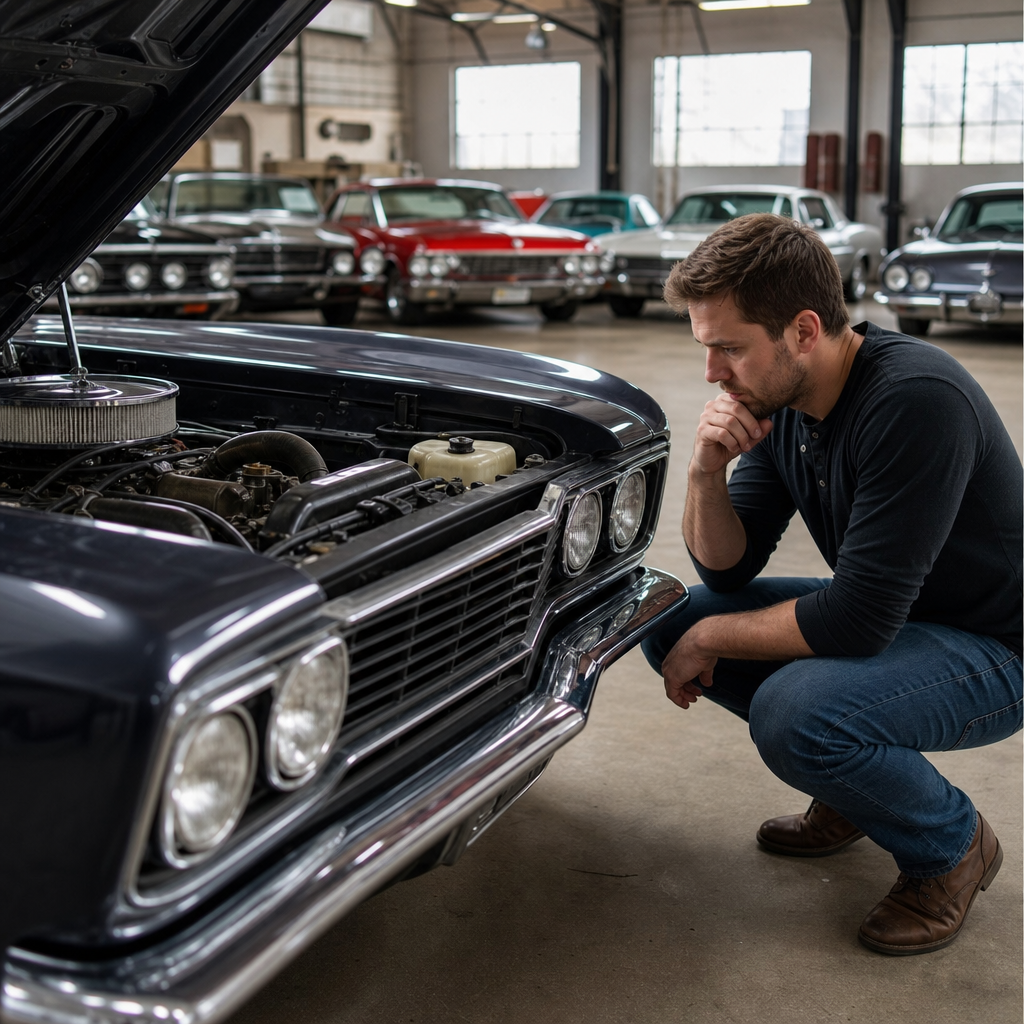
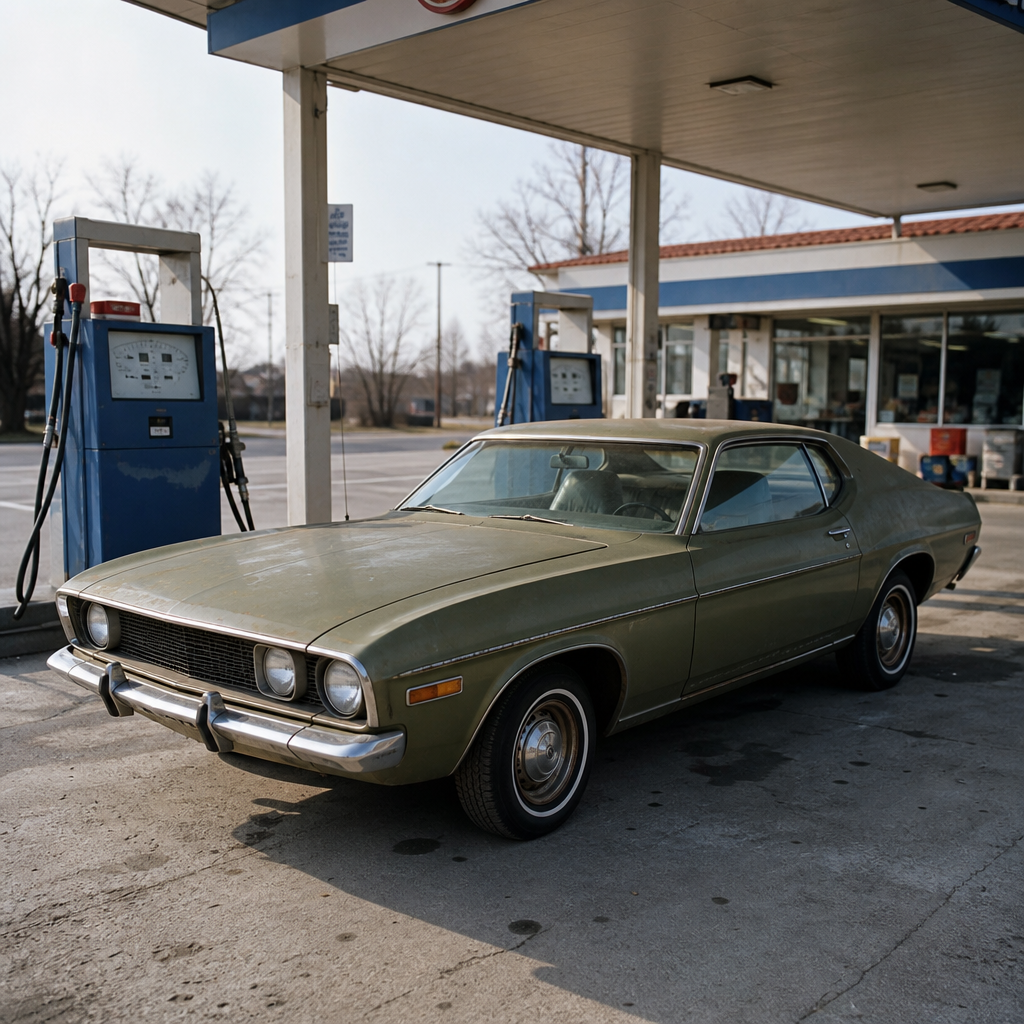
The 1970s malaise era describes a period when many American cars became slower, heavier, and less engaging than the muscle machines that defined the late 1960s. In practical terms, it was the decade when tightening emissions rules, fuel crises, insurance surcharges, safety mandates, and changing buyer priorities collided. Performance did not disappear, but it was constrained by engineering compromises and business realities. If you are studying the history of classic cars, this period matters because it explains why a 1971 big-block coupe can feel entirely different from a 1977 version wearing the same badge.
I have spent years around unrestored survivors, factory literature, dyno sheets, and owner communities, and the same question always comes up: what actually happened to performance in the 1970s? The short answer is that manufacturers had to recalibrate engines, drivetrains, and vehicle design to satisfy new federal rules and a new market. Compression ratios fell. Horsepower ratings changed from gross to net. Catalytic converters, exhaust gas recirculation, and retarded ignition timing altered engine behavior. Cars also gained weight through reinforced structures and added equipment. At the same time, the 1973 oil embargo and the 1979 energy crisis pushed fuel economy from a minor concern to a buying priority.
As a hub article for the history of classic cars, this guide places the malaise era in context. It links together the end of the muscle car age, the rise of emissions-era engineering, the shift toward personal luxury coupes, and the seeds of the 1980s performance comeback. Understanding this era helps collectors evaluate originality, helps buyers interpret published horsepower numbers, and helps enthusiasts avoid easy myths. The malaise era was not simply a decade of bad cars. It was a transitional period when automakers learned, often awkwardly, how to build cleaner, safer, and more efficient vehicles without entirely abandoning power.
Before going deeper, define the key term clearly. Enthusiasts generally use malaise era to describe roughly 1973 through the early 1980s, especially in the United States. The label is informal, but it captures a broad sense of disappointment compared with the high-compression V8 age. It also overlaps with a wider historical storyline in classic car history: postwar growth, the horsepower race, regulatory intervention, and eventual technological adaptation. To understand classic cars well, you need this middle chapter, because it explains why the market, the engineering, and the culture changed so sharply in one decade.
Why performance declined so quickly
Performance declined because several pressures arrived at once, and each one affected the internal-combustion engine differently. The federal Clean Air Act set stricter limits on tailpipe emissions. To reduce nitrogen oxides, hydrocarbons, and carbon monoxide, manufacturers lowered compression ratios so engines could run on lower-octane unleaded fuel and tolerate less aggressive ignition timing. Lower compression reduced thermal efficiency and power. Engineers also leaned mixtures, added vacuum-operated controls, and used early emissions hardware that was not yet fully refined. The result was weaker throttle response, rougher drivability, and less top-end output than buyers expected from familiar nameplates.
Fuel quality changed at the same time. Leaded gasoline had supported high-compression engines by increasing octane and protecting valve seats. As the industry transitioned toward unleaded fuel to accommodate catalytic converters, many engines lost the knock resistance that previous calibrations relied on. A 10.5:1 compression muscle car engine from 1970 simply could not continue unchanged into the middle of the decade. Manufacturers detuned camshafts, reduced valve overlap, and selected rear axle ratios aimed at economy rather than acceleration. Even when displacement stayed large, the character of the engine changed dramatically.
Horsepower figures also seemed to collapse because the measurement standard changed. Earlier gross horsepower ratings were recorded on an engine dyno without production accessories, full exhaust restrictions, or stock air cleaners. Beginning in the early 1970s, net horsepower reflected a more realistic installed condition. That means some apparent drops were accounting changes, but not all. Real output absolutely fell. Chevrolet’s 1970 Corvette LT-1 was rated at 370 gross horsepower, while later small-block performance packages in the decade looked far weaker on paper and felt weaker on the road. The numbers became more honest just as the engines became less potent.
Weight worked against every gain. Safety bumpers, door beams, additional sound deadening, air conditioning, emissions hardware, and more luxurious interiors added mass. During this period, many automakers saw greater profit in personal luxury coupes than in stripped performance models. Cars like the Chevrolet Monte Carlo, Ford Thunderbird, and Chrysler Cordoba sold an image of comfort and status. They often used V8 engines, but they were not tuned like the earlier muscle cars. Performance became less about quarter-mile bragging rights and more about smooth cruising, plush seats, and formal styling.
Regulations, fuel crises, and the end of the muscle car formula
The muscle car formula of the late 1960s depended on a relatively permissive environment. Manufacturers could install big engines in midsize bodies, advertise impressive power numbers, and sell the result to young buyers at attainable prices. By the early 1970s, that formula was under pressure from Washington, insurers, and fuel markets. The 1973 oil embargo exposed the vulnerability of large, thirsty cars when gasoline lines stretched around blocks. Suddenly, miles per gallon mattered politically and personally. Buyers who had once accepted single-digit fuel economy became far more cautious about operating costs.
Insurance companies accelerated the shift. High-performance models carried surcharges that made them expensive, especially for younger drivers. A big-block intermediate with aggressive gearing was no longer just a thrilling purchase; it was also a financial liability. I have reviewed period dealer brochures and road tests where manufacturers clearly softened the language around street performance and emphasized comfort, features, or broad torque instead. This was not accidental marketing drift. It was a direct response to a market in which conspicuous performance had become harder to sell profitably.
Federal safety rules changed vehicle design as well. The five-mile-per-hour bumper standards introduced substantial, often awkward structures that increased curb weight and altered styling. Converting to radial tires, improving braking systems, and reinforcing passenger compartments were worthwhile changes, but they did not help acceleration figures. The classic car historian has to resist simplistic nostalgia here. Many 1970s cars were safer and more comfortable than their predecessors. The tradeoff was that manufacturers had not yet developed the engine-management technology needed to preserve strong performance under the new constraints.
General Motors, Ford, and Chrysler each illustrate the pattern. Pontiac’s GTO, once a defining muscle car, became an option package and then faded. Ford’s Mustang shrank into the Mustang II for 1974, prioritizing economy and market timing after the fuel crisis. Chrysler leaned heavily into luxury and image while its performance identity weakened. These decisions were not random failures of courage. They reflected the reality that the old high-compression, carbureted, emissions-uncontrolled V8 formula was no longer sustainable in its previous form.
How engines were detuned in the 1970s
Detuning was not one single modification. It was a stack of engineering decisions that collectively dulled performance. Lower compression ratios reduced cylinder pressure and power. Milder camshafts limited high-rpm breathing. Exhaust gas recirculation introduced inert gases into the intake charge to reduce combustion temperatures and emissions, but it could blunt responsiveness. Early catalytic converters added backpressure before converter technology improved. Thermostatic air cleaners, vacuum advance controls, and complex hose routing made engines harder to tune and easier to compromise if any component failed or drifted out of specification.
Carburetion became a balancing act between emissions compliance and drivability. Rochester Quadrajet, Motorcraft, and Carter carburetors were sophisticated pieces when properly calibrated, but they now had to work alongside evaporative controls, distributor curves designed around emissions targets, and often conservative factory jetting. Owners remember these engines as sluggish not only because peak horsepower was lower, but because transient response suffered. Tip-in hesitation, hot-start issues, and part-throttle softness became common complaints. Many of the worst reputations came from neglected cars with cracked vacuum lines or maladjusted choke systems, which made the basic design seem even worse.
Rear axle ratios and transmissions reinforced the move away from outright speed. Manufacturers increasingly selected taller gears to improve highway economy and reduce noise. Automatic transmissions dominated, and lockup converters were still evolving. A large-displacement V8 could still feel smooth and effortless at low speeds, but it no longer delivered the urgent shove associated with the classic muscle era. Quarter-mile times that had once been in the low 14s or better for street machines slipped into the high 16s or even slower for some mainstream V8 coupes by the middle of the decade.
| Factor | What changed | Effect on performance |
|---|---|---|
| Compression ratio | Dropped to suit unleaded fuel and emissions needs | Less power and weaker efficiency |
| Horsepower rating | Shifted from gross to net measurement | Numbers looked lower and became more realistic |
| Camshaft tuning | Milder profiles with less overlap | Reduced high-rpm breathing and top-end pull |
| Vehicle weight | Safety, luxury, and emissions equipment added mass | Slower acceleration and softer handling |
| Final drive ratios | Taller gearing for economy | Improved cruising, dulled launch feel |
One important nuance is that torque never vanished completely. Large engines like Oldsmobile’s 455, Pontiac’s 400, and Chevrolet’s 350 still produced usable low-speed torque, especially in heavy coupes and wagons. That is why many malaise-era cars feel better in ordinary driving than their horsepower ratings suggest. They were not sports cars, but they could be relaxed long-distance cruisers. For the history of classic cars, that distinction matters. Performance changed shape; it did not simply fall off a cliff in every measurable way.
The cars that defined the malaise era
Several models became symbols of the period because they showed how automakers adapted old performance names to new realities. The 1975 Chevrolet Corvette is a useful example. It retained the styling and image of America’s sports car, but its small-block V8 output was far below the heights reached only a few years earlier. Yet the Corvette still sold because buyers valued the badge, the design, and the experience. In other words, identity outlasted peak performance, a recurring theme in 1970s classic car history.
The Pontiac Firebird Trans Am offers a more complicated story. On paper, many mid-to-late-1970s Trans Ams were not especially fast by muscle car standards. In practice, they remained desirable because they preserved visual drama, V8 sound, and a sense of rebellion. Special editions, hood decals, shaker scoops, and media exposure kept the model culturally important. The 1977 film Smokey and the Bandit turned the Trans Am into a sales phenomenon. That tells historians something crucial: during the malaise era, image, personalization, and lifestyle marketing often mattered as much as raw acceleration.
Ford’s Mustang II is often mocked, but it deserves context rather than dismissal. Introduced for 1974 on a smaller platform, it arrived at exactly the moment when buyers wanted thriftier cars after the oil crisis. It sold well because it matched the market, even if it disappointed enthusiasts expecting a continuation of the original pony car formula. Likewise, Chevrolet’s Monza and Ford’s later Fox-platform cars showed that manufacturers were searching for a new balance of size, efficiency, and drivability. Those experiments laid groundwork for the 1980s rebound.
Cadillac, Lincoln, and Chrysler demonstrate another side of the era. Their large coupes and sedans often carried enormous displacement numbers, but actual power was modest compared with earlier years. Buyers were purchasing quiet cabins, velour, opera windows, and highway comfort rather than stoplight dominance. In showroom terms, this was not irrational. The market had broadened beyond young performance enthusiasts. The classic car record from the 1970s is therefore not only about decline. It is also about segmentation, where luxury, economy, and style increasingly overtook traditional horsepower as the primary selling points.
Why the era still matters to collectors and enthusiasts
Malaise-era cars matter because they are accessible entry points into classic car ownership and because they document a pivotal engineering transition. Values for many 1970s coupes, sedans, and personal luxury cars remain lower than equivalent 1960s icons, which makes them attainable for newer enthusiasts. Parts support is often decent, especially for GM A-body, F-body, and Ford intermediates. These cars also teach practical lessons. When I inspect them, the same themes recur: vacuum leaks, heat management, lean factory calibrations, catalytic converter condition, axle ratio selection, and the importance of preserving original emissions hardware when legality requires it.
Collectors also need to interpret specifications carefully. Net horsepower figures from this era are honest, but they do not tell the whole story about drivability. A 180-horsepower V8 in a heavy coupe may feel respectable at low speed, while a small high-strung engine with a similar rating can feel weaker in daily use. Originality influences value, yet tasteful upgrades such as electronic ignition, improved cooling, modern radial tires, and better exhaust components can make a car far more usable without erasing its period character. The smartest restorations respect the historical context instead of pretending a 1976 car was engineered like a 1969 one.
This period also sits at the hinge point of the broader history of classic cars. The lessons learned in emissions control, electronic ignition, fuel metering, and combustion efficiency eventually enabled the return of credible factory performance. By the 1980s, models such as the Buick Grand National, Ford Mustang 5.0, Chevrolet Camaro IROC-Z, and tuned-port Corvette showed that power could recover with better technology. The malaise era was painful, but it forced the industry to modernize. For anyone building knowledge in classic car history, that makes it essential, not optional.
The best next step is to use this hub as a foundation for deeper study: compare gross versus net horsepower, trace the impact of the 1973 and 1979 fuel crises, examine how emissions systems evolved, and look model by model at survivors from the decade. Once you understand why performance changed, the 1970s stop looking like a lost decade and start looking like a crucial chapter in automotive development. That perspective makes you a better buyer, restorer, and enthusiast, and it helps every classic car tell a more accurate story.
Frequently Asked Questions
What does the term “malaise era” actually mean in classic car history?
The “malaise era” is an informal label enthusiasts use to describe the period, mainly in the 1970s and stretching into the early 1980s, when many American cars lost the straight-line speed, sharp throttle response, and high-compression power that had defined the muscle car peak of the late 1960s. It does not mean every car from the period was bad, nor does it mean performance vanished completely. Instead, it refers to a broad industry-wide slowdown caused by several pressures hitting at once. Automakers had to respond to tougher emissions standards, new safety requirements, rising insurance costs for high-performance models, and the fuel shocks that made buyers suddenly care much more about efficiency.
That combination forced manufacturers to rethink engine tuning, vehicle design, and even marketing. Compression ratios dropped, camshaft profiles became milder, horsepower ratings fell, and cars often gained weight from added equipment and structural changes. At the same time, many companies shifted away from openly promoting speed because powerful cars had become harder to sell politically, financially, and practically. For students of automotive history, the phrase matters because it marks a transition point: the industry was moving away from the simple, brute-force formula of the classic muscle era and toward a more regulated, efficiency-conscious future.
Why did American cars become slower in the 1970s?
American cars became slower in the 1970s because several separate trends all pushed in the same direction. The biggest technical factor was emissions regulation. To reduce pollutants, manufacturers lowered compression ratios, retarded ignition timing, leaned out fuel mixtures, and added early emissions-control hardware that often hurt drivability and peak output. Engines that had once been tuned for maximum power were now being recalibrated to meet federal standards, and that usually came with a real performance penalty, especially before electronic engine management became sophisticated enough to recover lost power.
Fuel economy also became a much bigger concern after the oil crisis. Buyers who might once have wanted a big-block V8 started looking for cars that were cheaper to run, and automakers responded by emphasizing economy over acceleration. Insurance companies added another layer of pressure by charging high premiums for youthful drivers and high-horsepower cars, which made muscle models less appealing and less profitable. On top of that, safety requirements and growing expectations for comfort added weight. So the problem was not just that engines made less power; it was that cars often had less power while carrying more mass. That is why so many 1970s models felt softer, slower, and less exciting than their predecessors from only a few years earlier.
Did emissions regulations alone kill muscle car performance?
No, emissions regulations were important, but they were only one part of the story. It is common to blame federal emissions rules for the end of peak muscle car performance, and those rules absolutely changed engine design in major ways. However, the decline was really the result of multiple forces overlapping. Insurance surcharges made high-performance cars expensive to own, especially for the younger buyers who had helped fuel the muscle car market. The 1973 oil crisis and broader concerns about fuel supply changed consumer behavior and made thirsty performance cars seem out of step with the times. Automakers also had to meet safety standards, and the design changes required to comply often added weight and complexity.
There was also a business and cultural shift happening inside the industry. Manufacturers began prioritizing broader-market vehicles that offered comfort, luxury, and easier drivability over raw speed. In many cases, advertising changed too. Instead of leading with quarter-mile bragging rights, brands leaned into smoothness, personal luxury, and convenience features. So while emissions compliance certainly reduced horsepower and made performance tuning more difficult, it did not act alone. The malaise era was created by regulation, economics, consumer demand, and corporate strategy all interacting at the same time.
Were all 1970s performance cars disappointing, or are there exceptions?
Not all 1970s performance cars were disappointing, and it is a mistake to treat the entire decade as uniformly dull. There were definitely standout machines and worthwhile performance packages, even if they did not always match the raw numbers of the late 1960s. Some cars still offered strong torque, attractive styling, and satisfying road manners, while others became important transitional models that hinted at the performance revival of the 1980s. Pontiac Trans Ams, certain Chevrolet Corvette variants, and select big-cube V8 cars still delivered a performance image and a real level of engagement, even when official horsepower figures looked modest.
Part of the confusion comes from the way horsepower was measured. Around the early 1970s, the industry shifted from gross horsepower ratings to net horsepower ratings, which produced lower published numbers because engines were tested in more realistic installed conditions. That means some apparent declines on paper were partly a change in measurement rather than a complete collapse in real-world output. Even so, the broader performance drop was real. The best way to understand the exceptions is to look at them within context. A strong 1970s performance car may not outrun a top-tier 1969 muscle car, but it can still be historically significant, enjoyable to drive, and representative of how manufacturers tried to keep performance alive under difficult conditions.
Why is the malaise era important if it was a low point for performance?
The malaise era is important precisely because it shows how the automotive world adapts under pressure. If you study classic cars, this period helps explain why American performance changed so dramatically from one decade to the next. It was not just a decline; it was a restructuring. Engineers had to learn how to work within emissions and fuel economy limits. Automakers had to rethink engine architecture, gearing, aerodynamics, and vehicle mission. Consumers also changed, and the cars they bought reflected new concerns about operating costs, safety, comfort, and social image. Understanding the malaise era gives you a much clearer view of how the industry evolved into the electronically managed, more efficient performance cars that came later.
It also matters because the era is often oversimplified. Enthusiasts sometimes dismiss the entire decade as a dead zone, but that misses its historical value. The 1970s were a bridge between the raw, loosely regulated muscle car years and the more advanced, technology-driven performance culture that followed. The struggles of the period pushed manufacturers toward catalytic converters, improved ignition systems, fuel injection, overdrive transmissions, and eventually computer-controlled engines that could produce both cleaner emissions and stronger performance. In other words, the malaise era was not just about what was lost. It was also about the groundwork for what came next, which makes it essential for anyone trying to understand the full story of classic American cars.