The 1950s transformed the American automobile from simple transportation into a rolling statement of optimism, status, and industrial confidence. In the decade after World War II, buyers wanted more than reliability. They wanted motion, glamour, and proof that the future had arrived in their driveway. That desire reshaped car design, dealership culture, manufacturing, and the language enthusiasts still use when discussing classic cars today. If you want to understand the history of classic cars, the 1950s are not a side chapter. They are the central turning point that made the collector car world possible.
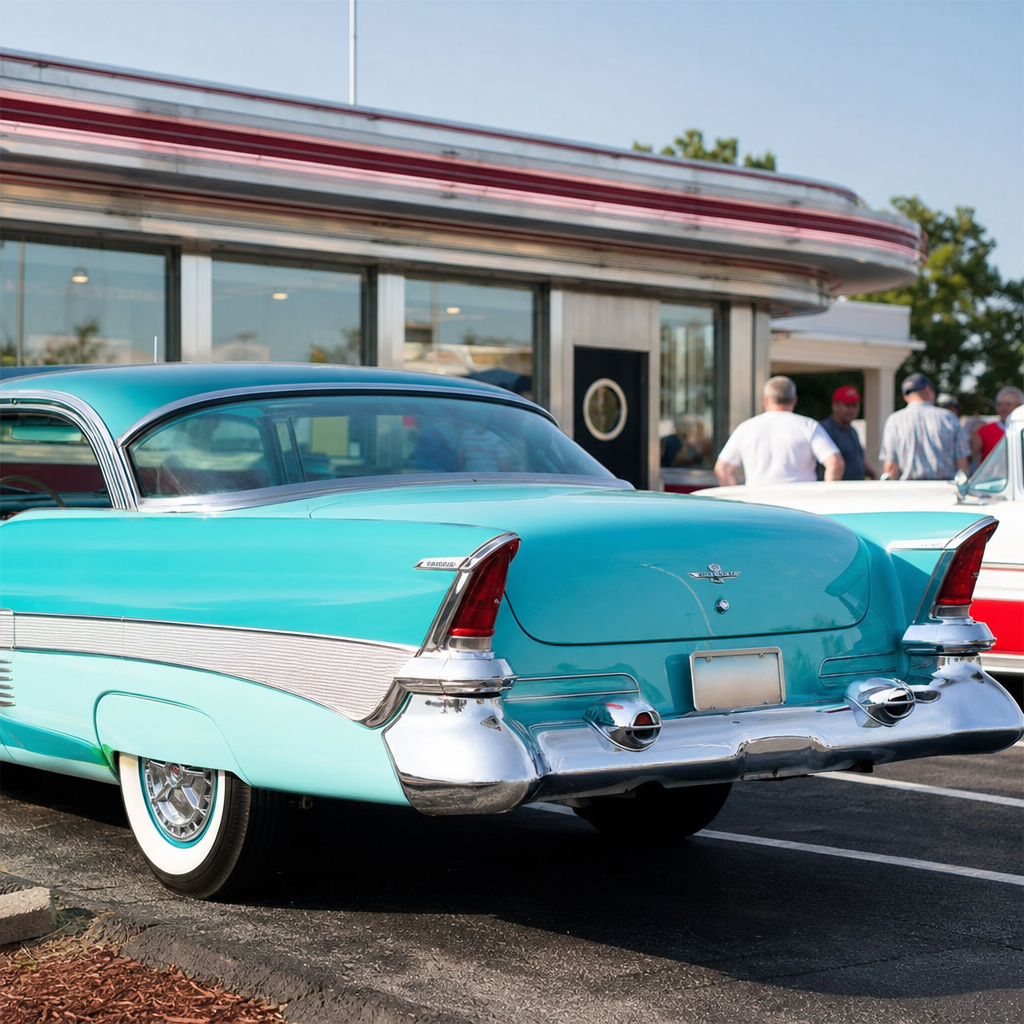
When people picture American automotive style from this period, they usually think of three visual signatures: chrome, tailfins, and sweeping body lines. Chrome referred to the bright metal trim used on grilles, bumpers, window surrounds, and dashboard details. Fins were raised rear body extensions inspired partly by aircraft styling and partly by the industry’s race to create instantly recognizable silhouettes. American automotive style in the 1950s also included two-tone paint, wraparound windshields, hood ornaments, wire wheel covers, hardtop rooflines, and interiors designed to feel like modern living rooms.
I have spent years working through factory brochures, restoration notes, auction catalogs, and survivor cars, and one fact becomes clear every time: 1950s cars mattered because they translated economic growth into visible design. The cars of the Depression and war years were constrained by scarcity and function. By contrast, the postwar market rewarded excess, novelty, and annual model changes. General Motors, Ford, and Chrysler did not simply build vehicles. They built aspirations, and they taught Americans to expect every new model year to look fresh.
This era is also the foundation for the broader history of classic cars because it established the categories collectors still use: luxury cruisers, family sedans, dream cars, performance V8s, convertibles, and limited halo models. It introduced styling leadership as a competitive weapon and normalized features that now seem inseparable from the classic car image. Understanding the 1950s helps explain why certain models became blue-chip collectibles, why restoration standards focus so heavily on trim and authenticity, and why later decades either embraced or rejected the excess of these years.
Why the 1950s changed the history of classic cars
The 1950s changed automotive history because consumer demand, manufacturing capacity, and design ambition aligned at exactly the same time. American factories had expanded during wartime production, and after the war those capabilities were redirected into civilian goods. Rising suburbanization, highway development, and a growing middle class gave families both the means and the need to own newer cars. Automakers responded with a product strategy based on annual styling revisions, upgraded engines, and more visible differentiation between brands and trim levels.
Harley Earl at General Motors played a defining role by turning styling into a boardroom priority. His design organization and concepts such as the Motorama dream cars helped condition buyers to expect dramatic visual change. Virgil Exner at Chrysler later pushed the “Forward Look,” making lower, longer, sleeker forms central to the company’s recovery in the middle and late 1950s. Ford and Mercury answered with equally bold grilles, roof treatments, and color combinations. This competition made style itself a market force.
The decade also matters because it was when the V8 became a mainstream symbol of American motoring. Oldsmobile’s Rocket V8 had arrived in 1949, Cadillac had an overhead-valve V8, and by the mid-1950s Chevrolet’s small-block V8 changed the market with affordable, tunable performance. That mechanical progress gave the style era substance. These were not only decorative machines. They were faster, smoother, and more powerful than many earlier cars, which is one reason they remain central in classic car education.
For readers exploring the history of classic cars as a hub topic, this decade links directly to muscle car development, coachbuilt luxury, preservation standards, and collector value trends. The 1950s explain why chrome quality, body line integrity, and matching trim pieces are restoration priorities. They also explain why period-correct accessories, dealer documentation, and original paint codes matter so much in judging and auction descriptions. In practical terms, this is the decade where classic car culture learned how to admire a car as an object of style, engineering, and social meaning all at once.
Design language: chrome, fins, glass, and proportion
American automotive style in the 1950s was built around visible abundance. Chrome trim served several functions. It highlighted body lines, conveyed luxury, and made cars sparkle under dealership lights. On many models, chrome became a visual map guiding the eye from grille to rear quarter panel. Designers used it to separate color fields in two-tone paint schemes and to frame vents, headlights, and side spears. Today, restorers know that missing or incorrect trim can change a car’s entire character, which is why rechroming and locating original pieces are often among the most expensive parts of a project.
Tailfins became the decade’s most recognizable flourish. The 1948 Cadillac is often cited as an early fin influence, and by the late 1950s fins had grown into architectural features, especially on Cadillacs. They were not purely decorative. They signaled speed, jet-age ambition, and model-year identity. A buyer could identify a 1957 Chevrolet Bel Air, a 1959 Cadillac, or a 1957 Chrysler 300C from a distance because the rear profile was so distinctive. In marketing terms, that is powerful brand differentiation.
Glass area expanded dramatically during the decade. Wraparound windshields, panoramic rear windows, and slimmer roof pillars created a lighter, airier cabin feel. Hardtop coupes, which imitated the clean side profile of convertibles without a fixed center pillar, became especially desirable. The 1955-1957 Chevrolet Bel Air hardtops and the Ford Fairlane Victoria are classic examples. These cars offered an upscale look even when sold in broad numbers, reinforcing the idea that style was no longer reserved only for luxury brands.
Proportion changed too. Cars became lower, longer, and visually wider, even when actual dimensional changes were modest. Designers used beltlines, wheel openings, and horizontal trim to exaggerate scale. The effect was theatrical, and that was intentional. In the showroom, the car needed to look new before anyone asked about horsepower or fuel economy. That formula shaped the decade and remains essential when evaluating why certain 1950s models became icons.
Brands, breakthrough models, and what made them important
Several manufacturers defined the era, but they did so in different ways. General Motors dominated by market segmentation and styling leadership. Chevrolet captured mainstream buyers with the tri-five models of 1955, 1956, and 1957, especially once the small-block V8 arrived. Those cars combined tasteful chrome, manageable size, and strong parts support, which helps explain why they remain some of the most restored and modified classics in America. Pontiac, Oldsmobile, Buick, and Cadillac each targeted a higher income level with progressively richer trim and more power.
Ford’s answer was broad and aggressive. The 1955 Ford and 1957 Ford lines sold strongly, while the Thunderbird redefined the personal luxury car. Introduced in 1955, the Thunderbird was not a direct sports car rival to the Corvette. It was more comfortable, more refined, and aimed at buyers who wanted image with ease of use. That formula proved hugely influential and created a category that would matter for decades.
Chrysler’s story is especially important in any serious history of classic cars. Under Virgil Exner’s design leadership, Chrysler, DeSoto, Dodge, and Plymouth gained dramatic new styling credibility. The 1955 C-300, often regarded as one of the first true American high-performance luxury cars, combined a powerful Hemi V8 with restrained but confident styling. By 1957, Chrysler products looked suddenly modern, with clean lines and strong fins. The “Forward Look” did more than sell cars. It showed that design could rehabilitate an entire corporate image.
| Model | Year | Why it mattered | Collector relevance today |
|---|---|---|---|
| Chevrolet Bel Air | 1955-1957 | Introduced accessible V8 performance and iconic styling | Extensive parts support, broad enthusiast demand |
| Ford Thunderbird | 1955 | Defined the personal luxury car segment | Strong historical significance, recognizable design |
| Chrysler C-300 | 1955 | Blended Hemi power with premium image | Important milestone in American performance history |
| Cadillac Eldorado Biarritz | 1959 | Peak fin-era luxury and visual drama | High-end collectible with design-icon status |
Cadillac represented the upper limit of 1950s visual ambition. The Eldorado models, especially convertibles, distilled the decade’s confidence into chrome-heavy, finely trimmed statements of success. Studebaker also deserves mention, particularly through the 1953 Starliner coupe designed under Raymond Loewy’s influence. It proved that elegance and restraint could coexist with postwar optimism. For hub readers moving deeper into specific model guides, these examples show the range of the era: practical, luxurious, sporty, and avant-garde.
Technology, engineering, and the driving experience
Although styling gets most of the attention, 1950s cars advanced mechanically in ways that shaped the classic car hobby. Overhead-valve V8 engines became central to American performance. Chevrolet’s 265-cubic-inch small-block in 1955 is one of the most important engines in automotive history because it was compact, durable, and easy to modify. Chrysler’s FirePower Hemi delivered strong output and engineering prestige. Automatic transmissions such as GM’s Hydra-Matic and Chrysler’s PowerFlite made larger, more powerful cars easier to drive, especially in growing suburban traffic.
Power steering, power brakes, electric windows, improved heaters, and factory air conditioning became more available through the decade, though often on upscale models first. Tubeless tires arrived mid-decade and improved puncture safety. Twelve-volt electrical systems increasingly replaced six-volt systems, supporting more reliable starting and additional accessories. These changes mattered because they made daily use more convenient and helped reinforce the idea that a new car was not merely newer-looking, but materially better.
Driving a 1950s car today quickly reminds you that progress came with compromises. Steering is usually slower than in later cars, braking distances are longer unless the system has been carefully rebuilt, and suspension tuning favors comfort over precision. Bias-ply tires can follow road grooves, and visibility, despite generous glass, can be affected by mirrors and body height. Yet the experience has a charm modern vehicles cannot duplicate: broad bench seats, thin-rim steering wheels, hooded dashboards, and a sense of mechanical pace rather than instant response.
For classic car education, that nuance matters. Not every 1950s car is easy to own or simple to restore. Electrical systems require careful grounding. Pot metal trim can pit badly. Rust in rocker panels, floor pans, trunk wells, and lower fenders is common. Early automatic transmissions may need specialists, and original fabrics can be difficult to source. A realistic understanding of these engineering strengths and weaknesses is essential for buyers, restorers, and historians alike.
Cultural impact, collector value, and why the decade still resonates
The cultural power of 1950s American automotive style extends far beyond the original buyers. These cars became symbols in film, television, diner culture, rock and roll imagery, Route 66 nostalgia, and postwar Americana. A pink-and-white 1957 Chevrolet, a black 1956 Continental Mark II, or a towering-finned 1959 Cadillac immediately signals an era. That instant recognition gives 1950s classics unusual strength in the collector market because they appeal even to people who are not deep hobbyists.
Values, however, vary widely by model, body style, originality, and documentation. Convertibles, hardtop coupes, fuel-injected variants, and limited-production halo cars generally command stronger prices than four-door sedans. Provenance matters. Original window stickers, dealer invoices, build sheets, and period photos can materially improve confidence and saleability. In judging environments such as AACA standards or marque-specific clubs, details like correct finishes, hose clamps, upholstery grain, and accessory combinations influence both scores and value.
From practical experience, the smartest way to approach 1950s classics is to separate emotional appeal from ownership reality. Buy the best body and trim you can afford. Mechanical parts are often easier to replace than rare moldings or model-specific interior pieces. Join a marque club, consult factory literature, and verify reproduction part quality before ordering. If you are studying the history of classic cars, these habits are not side notes. They are how history is preserved accurately, one car at a time.
The decade still resonates because it captured a rare moment when design, engineering confidence, and consumer optimism all pointed in the same direction. Later eras delivered faster cars, safer cars, and more efficient cars. Few delivered a stronger visual identity. That is why 1950s models remain a gateway into the larger classic car world and a natural hub for exploring what came before and after.
The 1950s were the decade when the American car became an icon. Chrome expressed prosperity, fins dramatized the future, and V8 power gave style credible substance. More importantly, the period established the habits, categories, and expectations that define the history of classic cars today: annual redesigns, model-year identity, enthusiast restoration, and collector fascination with originality. Whether you are drawn to a Chevrolet Bel Air, a Ford Thunderbird, a Chrysler 300, or a Cadillac Eldorado, you are looking at machines that helped create the modern classic car hobby.
As a hub within Classic Car Basics and Education, this overview should serve as your starting point for deeper study. From here, the next useful steps are to explore individual marques, compare restoration standards, learn body-style terminology, and study how the 1960s evolved from 1950s foundations. The benefit of understanding this era is simple: you will read the market better, evaluate cars more accurately, and appreciate why these vehicles still command attention at shows, auctions, and on the road. Use this guide as a reference point, then continue into the wider history of classic cars with a sharper eye.
Frequently Asked Questions
Why did American cars change so dramatically in the 1950s?
American cars changed so dramatically in the 1950s because the country itself changed dramatically after World War II. Wartime manufacturing had sharpened industrial capacity, consumer confidence was rising, suburbs were expanding, and more families had the income to see a car as both a necessity and a symbol of success. Before the war, many buyers focused primarily on durability and basic transportation. In the 1950s, that mindset broadened. People wanted cars that looked modern, felt prestigious, and reflected the optimism of a nation convinced that technology and prosperity would keep advancing.
Automakers responded by transforming the car into an emotional product. Styling became a major selling tool, with lower bodies, wraparound windshields, panoramic glass, dramatic grilles, heavy chrome trim, two-tone paint, and increasingly sculpted rear fenders. Design studios took on new importance, and manufacturers competed fiercely to make each model year look newer, sleeker, and more exciting than the last. This was also the era when annual restyling became a powerful marketing strategy, encouraging buyers to associate the newest car with modern taste and social progress.
Just as important, the automobile became central to American identity. Highways expanded, drive-ins flourished, motels multiplied, and car ownership shaped daily life in ways previous decades had only begun to suggest. The 1950s car was not simply transportation to work or town. It was a family room on wheels, a weekend escape vehicle, a status marker in the driveway, and a public expression of personal style. That combination of economic growth, industrial confidence, and consumer aspiration explains why the decade produced such a dramatic and lasting design shift in American automotive history.
What made chrome and tailfins such defining features of 1950s automotive style?
Chrome and tailfins became defining features of 1950s automotive style because they visually captured the era’s fascination with speed, abundance, and the future. Chrome gave cars sparkle, presence, and a sense of luxury, even on relatively affordable models. It highlighted body lines, drew attention to grilles and bumpers, and made a car stand out under dealership lights or on a suburban street. In an age that celebrated polished appliances, streamlined trains, and modern household goods, chrome fit perfectly into the larger design language of postwar America.
Tailfins served a different but equally important role. While they are often linked to aviation and the jet age, their significance was not purely functional. They were theatrical. Fins suggested motion even when a car was parked, making vehicles appear longer, lower, and more dynamic. Designers used them to turn the rear of the car into a signature visual statement, and by the middle and late 1950s, some manufacturers pushed them into dramatic sculptural elements that were impossible to ignore. Cadillac, in particular, helped make fins into a symbol of prestige and futuristic styling, prompting other automakers to follow with their own interpretations.
These features also mattered because they were memorable. In a market where brands and model lines competed intensely, chrome and fins created instant visual identity. Buyers could recognize certain makes from blocks away. Enthusiasts today still describe 1950s cars using styling cues first, and mechanical details second, which says a great deal about how powerful those design elements were. Chrome and fins were more than decoration. They were a way of translating national confidence, aerospace imagination, and consumer spectacle into sheet metal.
How did 1950s car design reflect broader American culture and values?
1950s car design reflected broader American culture by turning national ideals into visible, everyday objects. The decade emphasized prosperity, domestic stability, mobility, and faith in technological progress, and all of those themes appeared in the cars Americans bought and admired. Larger bodies suggested comfort and confidence. Bright trim and dramatic proportions communicated abundance. New features such as power steering, automatic transmissions, push-button controls, improved heating systems, and more elaborate interiors signaled that convenience and modern living were becoming part of the mainstream consumer experience.
The car also mirrored the social geography of the era. As suburbs spread farther from city centers, the automobile became essential to commuting, shopping, leisure, and family routines. Manufacturers therefore marketed cars not only as machines but as lifestyle enablers. Advertisements showed elegant couples, successful businessmen, and smiling families, all reinforced by the message that the right car meant belonging to the modern American middle class. Dealerships adopted increasingly sophisticated sales environments, and model names, trim packages, and accessories helped buyers feel they were choosing an identity as much as a vehicle.
At the same time, 1950s automotive style reflected the era’s contradictions. The optimism was real, but so was the pressure to display success. Cars became a highly visible measure of status, encouraging consumers to chase annual updates and more elaborate styling. That tension is part of what makes the decade so important to classic car history. It shows the moment when the automobile fully evolved into a cultural language—one that communicated ambition, taste, class, and technological faith as clearly as it delivered people from one place to another.
Were 1950s cars all about looks, or were there important mechanical and manufacturing changes too?
1950s cars were certainly famous for their looks, but the decade also brought important mechanical and manufacturing developments that shaped the future of the American automobile. Under the hood, V8 engines became increasingly prominent, offering more power and smoother high-speed performance. Automatic transmissions gained popularity, making driving easier and more appealing to a broader audience. Improvements in suspension, steering, braking, and electrical systems helped cars feel more refined, even if modern standards would still judge them as heavy and less precise than later vehicles.
Manufacturing also evolved in major ways. Automakers had learned immense lessons from wartime production, and those lessons carried into postwar assembly methods, supply coordination, and volume output. The major companies became even more capable of producing huge numbers of vehicles while differentiating them through trim, body styles, and annual cosmetic updates. This ability to combine mass production with the illusion of constant novelty was one of the decade’s defining industrial achievements. A manufacturer could build on a familiar platform while making the car appear thoroughly new to the public.
There was also a growing emphasis on comfort and convenience technology. Features like power windows, power seats, improved radios, air conditioning on some models, and more carefully designed dashboards reinforced the idea that the car was becoming a rolling consumer environment. So while the styling often gets the most attention in discussions of 1950s classics, it would be a mistake to see the decade as superficial. The visual excess sat alongside genuine advances in engineering, production scale, and feature development, all of which helped define what buyers came to expect from modern automobiles.
Why do 1950s American cars remain so influential in classic car culture today?
1950s American cars remain influential in classic car culture because they represent a peak moment when design, industry, and national mythology aligned in a particularly vivid way. Few eras produced vehicles so immediately recognizable. Even casual observers can identify the broad themes: sweeping lines, glittering chrome, bold colors, two-tone paint, whitewall tires, and unmistakable fins. That visual clarity gives the decade a lasting appeal, especially in collector circles where style, identity, and storytelling matter as much as specifications.
They also endure because they symbolize more than their mechanical reality. To many enthusiasts, a 1950s American car evokes the rise of the open road, the glamour of dealership showrooms, the energy of postwar prosperity, and the beginnings of automotive enthusiasm as a mainstream hobby. Car shows, restorations, memorabilia, and media portrayals have all reinforced the decade as a golden age of optimism and excess. Whether someone is drawn to a restrained early-1950s sedan or a flamboyant late-decade hardtop, these vehicles carry cultural meaning that extends far beyond sheet metal and horsepower.
Finally, the 1950s still matter because the vocabulary of classic car appreciation was shaped in that period. Enthusiasts still talk about body lines, trim levels, factory options, dealership presentation, and model-year styling in ways that reflect the values established then. The era taught both manufacturers and consumers that cars could be emotional, aspirational objects. That idea continues to define collector markets and restoration culture today. If someone wants to understand the history of classic cars, the 1950s are essential because they reveal when the automobile became not just a machine to use, but a statement to admire, compare, preserve, and remember.