The post-war automotive boom transformed the car from a practical machine into a cultural symbol, and that shift explains how classic cars took off. In the years following World War II, factories that had produced tanks, aircraft parts, and military trucks returned to civilian manufacturing with improved tooling, stronger supply chains, and a public eager to spend. By the late 1940s and throughout the 1950s, car ownership expanded rapidly across the United States and influenced buyers in Europe, Australia, and Japan. Understanding this era is essential to the history of classic cars because many of the vehicles collectors prize today were born during these years of growth, experimentation, and optimism.
When people ask what makes a car “classic,” the answer depends on age, design significance, rarity, cultural impact, and enthusiast demand. Insurance companies often use age thresholds, while clubs and auction houses weigh originality, production numbers, engineering milestones, and historical relevance. In practice, the history of classic cars is not just about old vehicles. It is about why certain cars became memorable, how manufacturers responded to changing markets, and why some models still command attention decades later. From my experience working around restorers, auction listings, and marque clubs, the cars that endure are usually those that capture a moment: a breakthrough V8, a dramatic tailfin body, a racing pedigree, or a shape people never forgot.
The post-war period matters because it created the conditions that allowed iconic automobiles to flourish. Rising wages, suburban development, highway construction, easier consumer credit, and aggressive advertising pushed the automobile into daily life. Automakers also learned to sell aspiration, not just transportation. They used annual styling changes, chrome-heavy trim packages, power accessories, and performance upgrades to make each model year feel new. That strategy laid the groundwork for modern collector markets. Today, anyone researching the history of classic cars will repeatedly return to the same core question: why did certain post-war cars become classics while others faded? The answer lies in economics, engineering, design, motorsport, and culture working together.
Economic Prosperity and Mass Production Changed Everything
The first driver of the post-war automotive boom was economic expansion. In the United States, pent-up consumer demand met growing household income and a manufacturing base ready for scale. Soldiers returned home, families formed quickly, and home construction surged. Cars became necessary for commuting, shopping, and leisure, especially as suburbs spread beyond city centers. Europe followed a more uneven path because rebuilding took time, but the same broad trend appeared there as industrial recovery accelerated. In both regions, automobiles became markers of progress and personal freedom.
Manufacturing methods improved sharply because wartime production had forced companies to master logistics, interchangeable parts, and high-volume assembly discipline. Ford, General Motors, Chrysler, Volkswagen, Citroen, Mercedes-Benz, Jaguar, and others used these capabilities differently, but the result was similar: more cars, better reliability, and wider market segmentation. Buyers could now choose between economy sedans, family wagons, stylish coupes, luxury cruisers, and sports cars. That variety is central to the history of classic cars because it expanded the number of vehicles with future collector appeal. A market with more niches creates more legends.
Credit also mattered. Dealer financing and installment plans made new vehicles accessible to households that could not pay cash. That increased production volumes and encouraged manufacturers to release distinctive yearly updates to stimulate repeat purchases. As I have seen in period brochures and dealer albums, automakers sold identity as much as horsepower. Chevrolet promoted attainable style, Cadillac sold prestige and innovation, and Volkswagen built loyalty around durability and simplicity. Those brand narratives still shape today’s collector communities.
Styling, Innovation, and the Birth of Automotive Desire
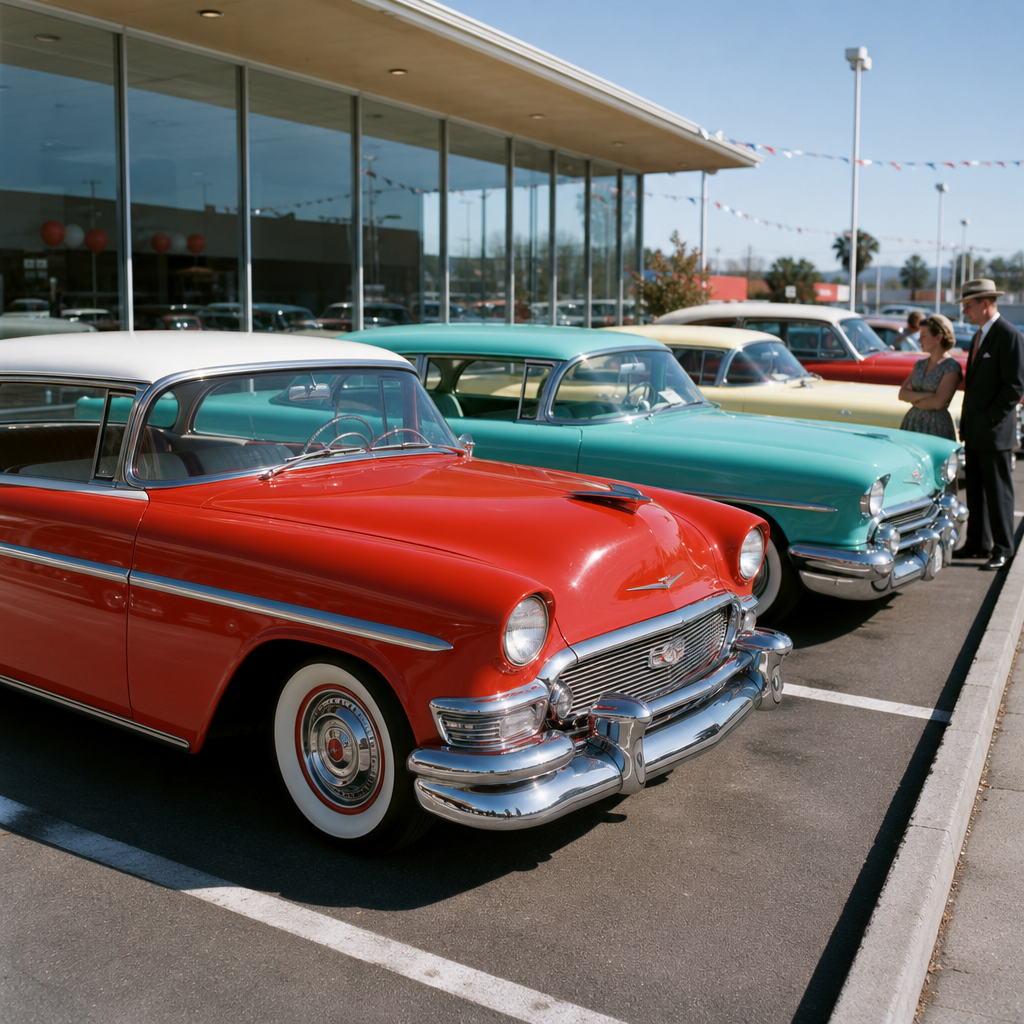
Design turned transportation into desire. Before the war, many cars were upright, conservative, and visibly functional. After the war, integrated fenders, lower rooflines, panoramic windshields, wraparound glass, two-tone paint, and increasing chrome made cars look modern and fast even when parked. Harley Earl at General Motors helped popularize annual styling updates and the idea of the dream car. Concept vehicles influenced production models, and tailfins inspired by aviation became a defining look of the 1950s. These details matter in the history of classic cars because collectors often buy shapes first and specifications second.
Engineering changes reinforced that appeal. Overhead-valve V8 engines, automatic transmissions, power steering, power brakes, and improved heating and ventilation made driving easier and more comfortable. Safety was still underdeveloped by modern standards, but road manners generally improved as suspension geometry, tire construction, and braking systems advanced. The small-block Chevrolet V8, introduced in 1955, is one of the clearest examples of a post-war breakthrough that became a pillar of classic car culture. Its compact design, tunability, and durability made it common in hot rods, race cars, and restored street machines for decades.
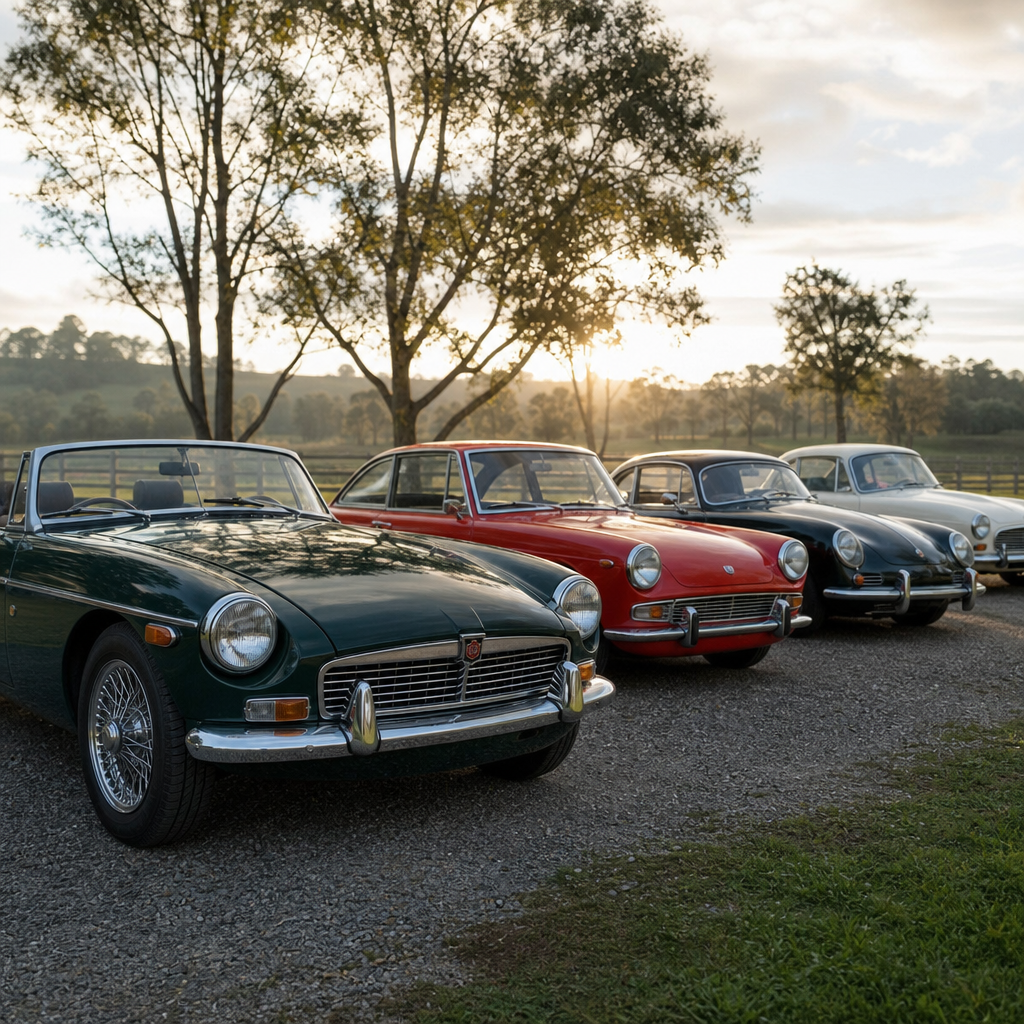
European manufacturers took a different path, often emphasizing efficiency, handling, and engineering sophistication over size and chrome. Cars such as the Jaguar XK120, Mercedes-Benz 300SL, Porsche 356, and Alfa Romeo Giulietta showed that performance and elegance could coexist in lighter packages. Meanwhile, practical icons like the Volkswagen Beetle and Citroen 2CV proved that a classic car does not need high horsepower. It needs significance. In the collector world, significance can come from beauty, rarity, mechanical innovation, social impact, or all four at once.
Key Segments That Defined the History of Classic Cars
Several vehicle categories emerged during the post-war years and became the backbone of the collector market. Full-size American sedans and convertibles represented prosperity and styling excess. Chevrolet Bel Airs, Cadillac Series 62 models, Buick Roadmasters, and Chrysler 300 letter cars are still widely recognized because they symbolize the confidence of the 1950s. Sports cars appealed to enthusiasts who valued speed and handling, with the Chevrolet Corvette, Ford Thunderbird in its early form, Triumph TR series, Austin-Healey 100, and Porsche 356 establishing enduring identities.
Luxury and grand touring models created another layer of desirability. Mercedes-Benz built engineering-led prestige with cars such as the 300 Adenauer and 300SL Gullwing. Ferrari linked road cars to racing mythology, which remains one of the strongest forces in the high-end classic market. Family cars, once overlooked, now receive greater respect because historians and collectors increasingly value everyday mobility. A well-preserved Ford Customline, Morris Minor, or Peugeot 403 can tell the social history of motoring just as effectively as an exotic coupe.
| Segment | Representative Models | Why Collectors Care |
|---|---|---|
| American full-size | Chevrolet Bel Air, Cadillac Series 62, Buick Roadmaster | Bold styling, V8 power, strong cultural recognition |
| Sports cars | Jaguar XK120, Porsche 356, Corvette C1, Austin-Healey 100 | Performance heritage, attractive design, motorsport links |
| Economy cars | Volkswagen Beetle, Citroen 2CV, Fiat 500 | Mass appeal, social importance, simple mechanicals |
| Luxury and GT | Mercedes-Benz 300SL, Ferrari 250 series, Facel Vega | Engineering significance, rarity, top-tier auction demand |
These segments show why the post-war era matters so much to any hub on the history of classic cars. It produced not one type of collectible vehicle, but an entire ecosystem of machines with different ownership experiences, restoration costs, and historical narratives. That diversity is why classic car education should start here.
Racing, Youth Culture, and Media Turned Cars into Legends
Classic status is rarely earned by engineering alone. Cultural visibility makes certain cars unforgettable. Post-war motorsport played a major role. Success at Le Mans, Mille Miglia, NASCAR, rally events, and local drag strips gave manufacturers credibility that advertising could not buy. Mercedes-Benz, Jaguar, Ferrari, Aston Martin, Porsche, and Chevrolet all benefited when competition success translated into road-car prestige. Even today, a documented racing connection can dramatically change a vehicle’s value.
Youth culture also reshaped the market. By the 1950s, teenagers and young adults in the United States had growing spending power and saw cars as extensions of personality. Hot rodding expanded because pre-war Fords were cheap, lightweight, and easy to modify. Southern California became especially influential, linking dry lakes racing, custom bodywork, and speed equipment from brands like Edelbrock, Offenhauser, and Iskenderian. This is a crucial branch of the history of classic cars because it established a lasting tension between originality and modification. Some collectors insist on factory-correct restorations, while others prize period-correct customs and performance builds.
Film, television, magazines, and music amplified this shift. Publications such as Hot Rod and Road & Track helped enthusiasts compare models, learn technical details, and follow racing developments. Hollywood used convertibles, coupes, and rebellious drivers to project glamour and freedom. By the early 1960s, this cultural groundwork supported the next phase of the collector story: muscle cars, pony cars, and a broader enthusiast marketplace. In other words, the post-war boom did not end with the 1950s. It created the audience that made later classics possible.
Why Some Post-War Cars Became True Classics
Not every old car becomes collectible. Across auctions, private sales, and restoration shops, the same selection criteria appear repeatedly. First is design distinction. A car with instantly recognizable lines, such as a 1957 Chevrolet or a 300SL Gullwing, has a lasting advantage. Second is mechanical significance. Breakthrough engines, innovative chassis layouts, fuel injection systems, or landmark transmissions give historians and buyers a reason to remember a model. Third is rarity, but rarity alone is not enough. A forgotten car built in low numbers may remain obscure if it lacks design, performance, or story.
Provenance is another major factor. Original documentation, matching-numbers drivetrains, ownership history, and factory build records can materially affect value. Auction houses such as RM Sotheby’s, Gooding Christie’s, and Bonhams place heavy emphasis on these details because serious buyers want authenticity. Condition matters too, but “condition” is more nuanced than shiny paint. A sympathetically preserved survivor with original trim, interior materials, and factory finishes can be more historically important than an over-restored example that looks better than it did when new.
Finally, parts support and club networks influence which cars thrive in the hobby. Models with active owners’ clubs, strong reproduction parts supply, and available technical knowledge are easier to preserve. That is one reason the Ford Thunderbird, Tri-Five Chevrolet, Volkswagen Beetle, and Porsche 356 remain visible. Enthusiast infrastructure keeps history alive.
The Lasting Impact on Collecting, Restoration, and Education
The post-war automotive boom still shapes how people buy, restore, insure, and study classic cars. Today’s restoration standards often rely on factory literature, trim tags, chassis records, and judging manuals developed by marque clubs and organizations such as the Antique Automobile Club of America. Valuation guides, auction archives, and registries help owners understand rarity and specification differences. I have watched minor details such as carburetor codes, wheel finishes, upholstery grain, and date-correct glass change the outcome of inspections and sales. For beginners, this is the biggest lesson in classic car education: history is practical. The better you understand a car’s era, the better decisions you make about purchase, preservation, and use.
The era also taught the hobby an important balance. Cars were built to be driven, yet time turns them into artifacts. Owners now navigate originality, safety upgrades, and usability. Radial tires, electronic ignition hidden inside stock distributors, and discreet seat belts may improve drivability, but every modification changes historical character. There is no universal answer. The right choice depends on rarity, intended use, and long-term stewardship.
The history of classic cars begins in earnest with the post-war boom because that period created the modern relationship between automaker, driver, and machine. It delivered scale, style, competition, aspiration, and community all at once. If you want to understand why classic cars still matter, start with the years after 1945 and trace how prosperity, innovation, and culture turned ordinary transportation into enduring icons. Use this hub as your starting point, then explore the individual marques, decades, and models that grew from this remarkable foundation.
Frequently Asked Questions
Why did the post-war automotive boom happen so quickly after World War II?
The post-war automotive boom happened quickly because several powerful economic and social forces came together at the same time. During World War II, many automakers had shifted away from consumer vehicles and focused on military production, building trucks, engines, aircraft components, and other wartime machinery. When the war ended, those same factories were able to return to civilian production with better equipment, more advanced manufacturing techniques, and a highly disciplined industrial workforce. In practical terms, that meant automakers could build cars more efficiently and at greater scale than before the war.
Just as important, consumer demand was enormous. Many families had postponed major purchases during the war years due to rationing, production limits, and economic uncertainty. Once peace returned, people were ready to spend. Rising employment, growing wages, easier access to credit, and expanding suburbs all made car ownership more achievable and more necessary. In the United States especially, a car was no longer viewed as a luxury for a small segment of society. It became a realistic goal for the average household and, increasingly, a central part of daily life.
The broader cultural environment also mattered. Post-war optimism encouraged people to embrace products that symbolized progress, freedom, and modern living. Cars fit that mood perfectly. They offered mobility, convenience, personal identity, and status all at once. That combination of industrial capacity, pent-up demand, stronger household finances, and cultural enthusiasm explains why the automotive market surged so rapidly in the late 1940s and throughout the 1950s.
How did cars change from practical transportation into cultural symbols during the post-war era?
In the post-war years, the automobile evolved from a tool of transportation into a powerful cultural symbol because it became tied to lifestyle, aspiration, and identity. Before the war, many people still thought of cars mainly in functional terms: they were machines that helped families travel, commute, or move goods. After the war, however, manufacturers and advertisers began selling something much bigger than transportation. They marketed cars as expressions of success, taste, independence, and even personality.
This shift was visible in both design and messaging. Automakers introduced bolder styling, chrome-heavy trim, tailfins, panoramic windshields, two-tone paint, and larger body shapes that made cars look modern and exciting. These visual changes turned vehicles into objects people admired and talked about, not just used. Advertising reinforced the idea that the right car said something meaningful about its owner. A family sedan suggested stability and prosperity, a sporty coupe hinted at youth and energy, and a luxury model signaled achievement.
The car also became woven into everyday post-war life. Expanding suburbs, drive-in restaurants, roadside motels, highways, and family road trips made the automobile a centerpiece of leisure as well as work. Teen culture, dating culture, and weekend travel all became closely associated with car ownership. As a result, the automobile gained emotional value. It represented freedom, modernity, and personal possibility. That emotional connection is one of the key reasons classic cars from the era still hold such appeal today: they are remembered not only as machines, but as symbols of a transformative moment in social history.
What role did manufacturing improvements play in the rise of classic cars?
Manufacturing improvements played a foundational role in the rise of classic cars because they allowed automakers to produce more vehicles, introduce more features, and create more distinctive designs than had been possible in earlier decades. Wartime production had pushed factories to become more efficient, precise, and organized. Companies learned to manage large-scale output, streamline assembly processes, and improve quality control under intense pressure. After the war, those capabilities were redirected toward civilian automobiles.
Improved tooling meant manufacturers could experiment more confidently with body styles, trim variations, and engineering updates. Better stamping equipment and assembly systems made it easier to produce cars with eye-catching contours and design elements that would later become iconic. Supply chains were also stronger and more coordinated, which helped automakers keep production moving and respond to high consumer demand. In short, the industry was not simply restarting after the war; it was returning with greater technical capability.
These advances helped define many of the qualities now associated with classic cars. Vehicles from the late 1940s and 1950s often featured stronger visual identities, more comfortable interiors, and increasingly sophisticated mechanical systems. Even when judged by modern standards, they stand out because they reflected an era when manufacturers were eager to showcase innovation. The result was a generation of automobiles that combined mass production with memorable styling and strong cultural presence. That is a major reason so many vehicles from this period became collectible and celebrated later on.
Why are so many post-war vehicles considered classic cars today?
Many post-war vehicles are considered classic cars today because they sit at the intersection of historical importance, distinctive design, and cultural memory. They come from a period when the automobile industry was expanding rapidly and when car ownership became a major part of everyday life for millions of people. These vehicles are not remembered solely because they are old. They matter because they represent a turning point in how society viewed mobility, consumer goods, and personal freedom.
Design is a major part of their appeal. Post-war cars often had recognizable silhouettes, dramatic styling cues, generous use of chrome, and interiors that reflected the optimism of the era. Manufacturers were competing aggressively for attention, and that competition produced cars with strong visual personalities. Unlike many purely utilitarian vehicles, these automobiles were built to make an impression. Enthusiasts today are drawn to that craftsmanship and character, especially in a market where many modern cars can feel more standardized in appearance.
Nostalgia also plays a significant role. For many collectors and fans, post-war cars are connected to family history, national prosperity, and the imagery of the 1950s and early motoring culture. They evoke road trips, neighborhood car culture, and a time when the automobile occupied a more central place in public imagination. In addition, surviving examples have become more valuable because they are tangible pieces of industrial and cultural history. A post-war classic car is not just a restored vehicle; it is often seen as a preserved artifact from the era that helped define modern automotive culture.
Did the post-war automotive boom influence car buyers outside the United States?
Yes, the post-war automotive boom had a meaningful influence beyond the United States, even though its strongest and most visible effects were often centered in the American market. In the years after World War II, the United States became a global symbol of mass car ownership, large-scale manufacturing, and automotive styling trends. American brands and design ideas attracted attention in Europe and elsewhere, where buyers, engineers, and manufacturers closely watched what was happening across the Atlantic.
The influence appeared in different ways depending on the region. In Europe, economic recovery, fuel costs, road conditions, and urban density often favored smaller and more practical cars. Even so, the broader idea of the car as a marker of freedom, progress, and modern living gained traction there as well. European automakers developed their own responses to rising consumer demand, often blending efficiency with style in ways suited to local conditions. In some cases, American styling elements or marketing approaches influenced how European vehicles were designed and sold, even if the final products looked very different from large American sedans.
More broadly, the post-war boom helped establish the automobile as a defining feature of modern consumer society. It showed what could happen when industrial recovery, rising incomes, and strong public demand aligned. That example shaped global expectations around mobility and ownership. So while the exact form of the boom varied from country to country, its cultural and commercial impact reached far beyond the United States. It helped set the stage for the worldwide enthusiasm that would eventually support both collector markets and the lasting appeal of classic cars.