The most influential classic cars in automotive history did more than turn heads on boulevards or dominate concours lawns; they changed how cars were engineered, built, marketed, raced, and remembered. In the classic car world, “influential” means a vehicle that altered the direction of the industry, shaped popular taste, introduced technology that became standard, or created a template other manufacturers rushed to copy. A “classic car” is also broader than many newcomers assume. In practice, historians, insurers, collectors, and clubs use different cutoffs, but the term usually refers to important older vehicles with lasting cultural, technical, or design significance. Understanding the history of classic cars matters because every major trend in modern motoring—mass production, safety engineering, aerodynamic styling, muscle performance, luxury branding, motorsport development, and even the collector market—has roots in these landmark machines.
I have spent years around restorers, auction catalogs, marque specialists, and owner clubs, and one lesson always stands out: the cars that endure are rarely memorable only because they were expensive or beautiful. They matter because they solved a problem, captured a cultural moment, or redefined what buyers expected. The Ford Model T made personal transportation accessible. The Jaguar E-Type proved high performance could also be elegant and comparatively attainable. The Porsche 911 created a sports-car formula so durable that it still guides product planning decades later. Looking at influential classics this way turns automotive history from a list of old models into a map of progress. This hub article explains that history clearly, from foundational early automobiles to postwar icons and collectible performance legends, so readers can understand not just which classics matter, but why they matter.
How Classic Cars Shaped the Modern Automobile
The history of classic cars begins with function before glamour. Early influential cars mattered because they changed manufacturing, reliability, and access. The Ford Model T, introduced in 1908, remains the defining example. It was not the first car, nor the most advanced, but Henry Ford’s moving assembly line transformed it into the first truly democratized automobile. By dramatically reducing build time and cost, Ford brought car ownership within reach of ordinary families. More than 15 million were built, and the effect was enormous: roads improved, fuel distribution expanded, suburbs grew, and competing automakers had to modernize production. In practical terms, the Model T taught the industry that industrial efficiency could be as historically important as mechanical innovation.
Europe produced its own early milestones. The Austin Seven, launched in 1922, played a role in Britain similar to the Model T’s role in America, but on a smaller and more urban scale. Compact, affordable, and simple to maintain, it helped normalize small-car ownership and inspired licensed or derivative versions abroad, including early BMW and Nissan developments. Meanwhile, luxury marques such as Rolls-Royce established a different kind of influence. The 1907 Silver Ghost set a benchmark for smoothness, durability, and engineering precision that defined the premium segment for decades. I often tell new enthusiasts that classic car history is not only a story of speed. It is equally a story of standard-setting: one car proves refinement matters, another proves affordability matters, and the whole market shifts.
Design also emerged as a force early on. Prewar coachbuilt cars from Bugatti, Duesenberg, Delahaye, and Alfa Romeo showed that styling could create prestige beyond horsepower figures. The Bugatti Type 35, for example, was not just successful in racing; it established how lightness, balance, and visual identity could work together. Its horseshoe grille became instantly recognizable branding. Duesenberg’s Model J, by contrast, represented American opulence and custom body craftsmanship at a level few manufacturers have ever matched. These cars influenced aspiration. Even makers far below them in price borrowed long hoods, prominent grilles, brightwork, and performance messaging. By the 1930s, the car had become more than transportation. It was already a statement of status, nationality, engineering philosophy, and personal taste.
Postwar Classics That Redefined Style, Performance, and Demand
After World War II, the most influential classic cars reflected a changed world. Consumers wanted modern styling, better performance, and symbols of optimism. In the United States, the 1955 Chevrolet Bel Air became a landmark because it combined accessible pricing with visual flair and V8 power. Chevrolet’s small-block V8, introduced that same year, would become one of the most important engines in automotive history, used across countless models, racing categories, and aftermarket builds. The Bel Air helped establish a formula Detroit repeated for years: annual styling updates, broad trim hierarchies, and powertrain choices that let buyers move from practical transportation to aspirational motoring without leaving the brand.
In Europe, the Volkswagen Beetle proved influence can come from persistence as much as novelty. Its rear-engine layout, air-cooled flat-four, simple controls, and remarkable durability made it a global car before “global platform” became industry language. The Beetle’s impact stretched from postwar German recovery to export success in the United States, Latin America, and beyond. It also demonstrated the commercial power of a consistent identity. Few shapes in automotive history are as instantly recognizable. At the same time, the Citroën DS showed how radically different innovation could succeed. Introduced in 1955, it stunned audiences with aerodynamic styling, hydropneumatic suspension, power-assisted controls, and advanced braking. Even today, restorers and engineers regard the DS as a reminder that breakthrough comfort and systems engineering can matter just as much as raw speed.
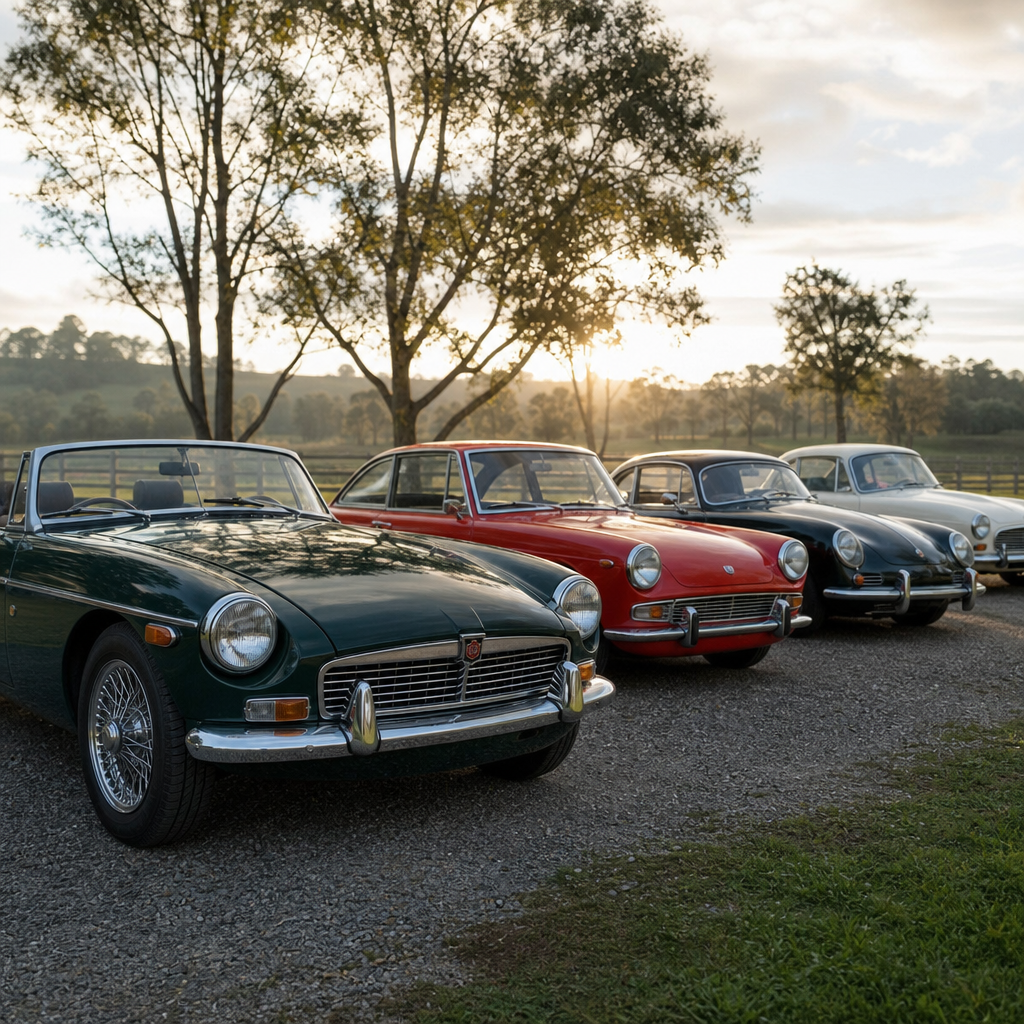
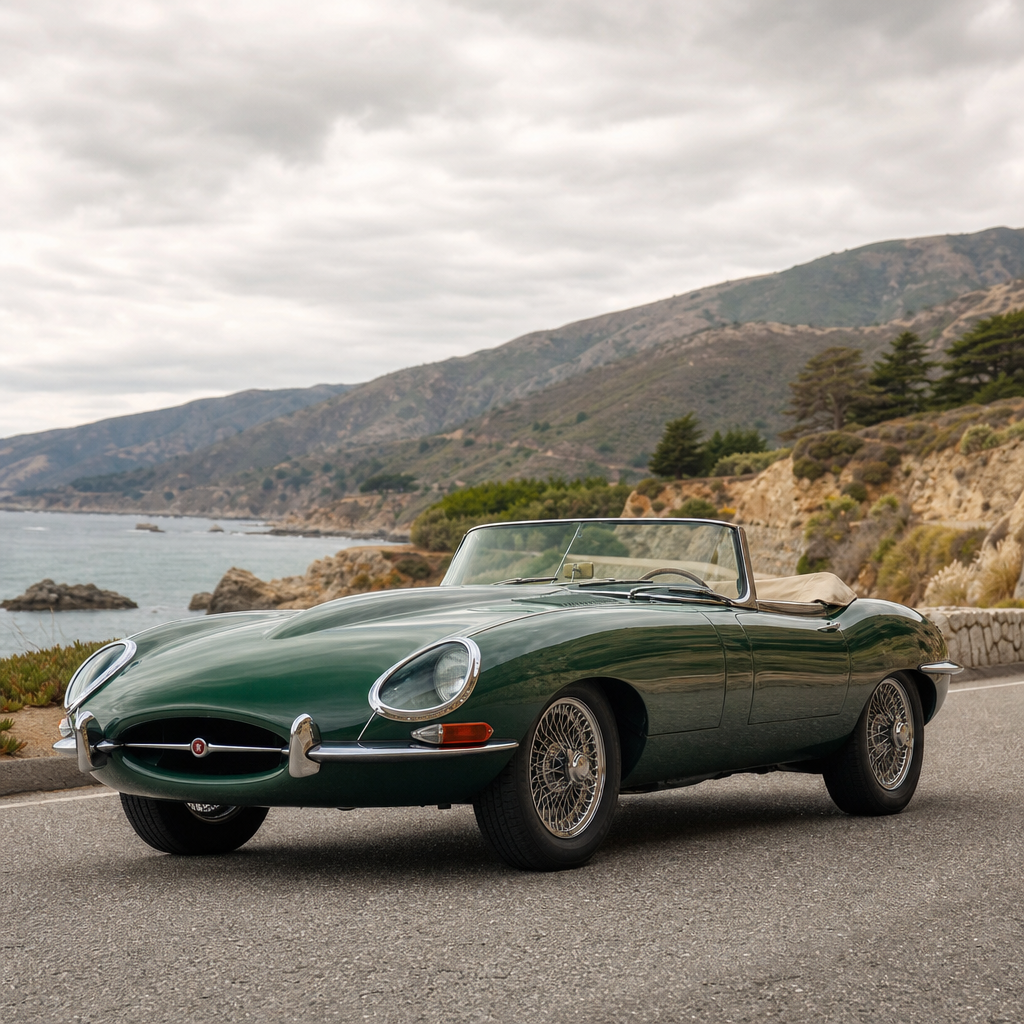
British sports cars reshaped another critical category: the enthusiast road car. The MG T-Series and Austin-Healey 3000 introduced generations of drivers, especially in America, to affordable open-top motoring. Then came the Jaguar E-Type in 1961, a car Enzo Ferrari reportedly admired for its beauty. Its long bonnet, monocoque construction, independent rear suspension, and strong straight-six performance made it a sensation. What made the E-Type influential was not only its looks, but its value proposition. It delivered exotic style and high-speed capability at a price far below many continental rivals. That changed expectations permanently. Buyers no longer accepted the idea that design excellence and serious performance had to remain exclusive to the ultra-wealthy.
Muscle Cars, Sports Cars, and the Performance Revolution
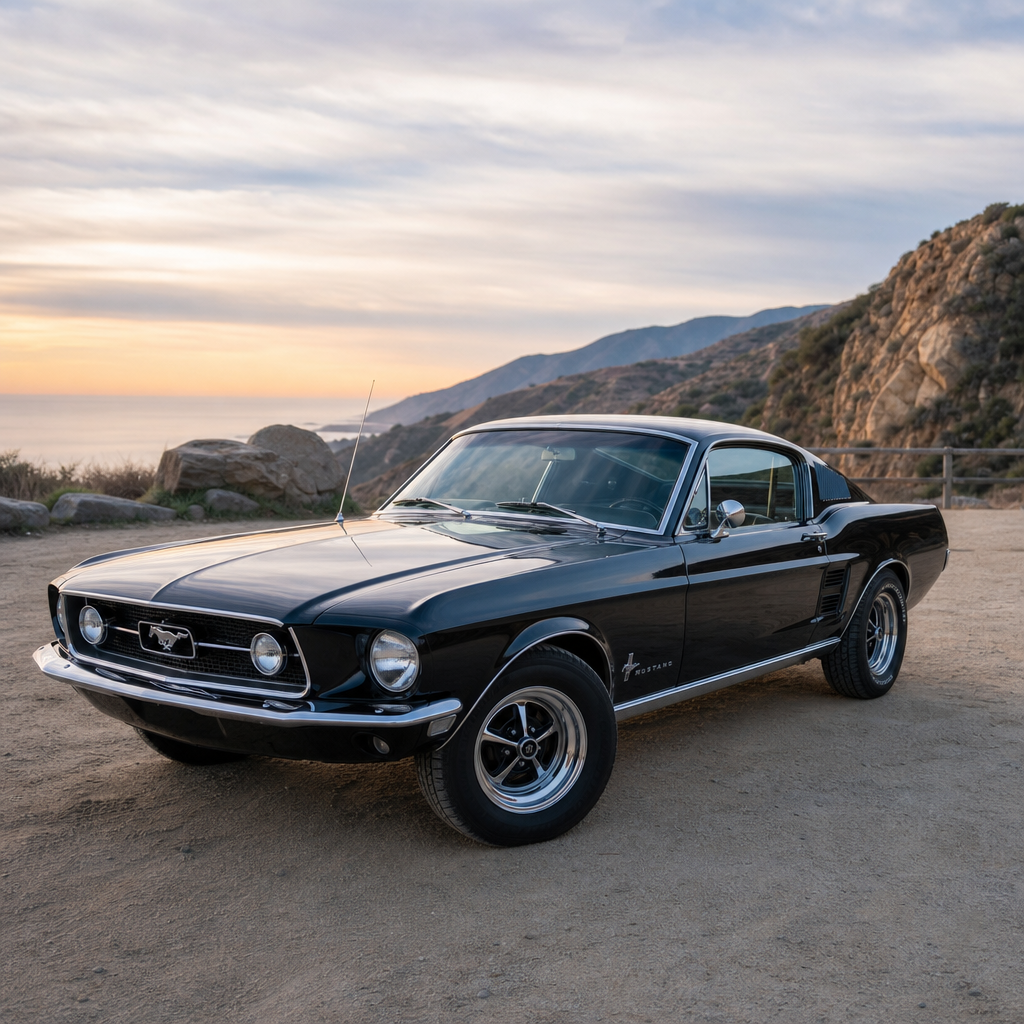
By the 1960s and early 1970s, influential classic cars increasingly centered on performance, identity, and youth culture. In the United States, the Ford Mustang changed the market almost overnight after its 1964 debut. It created the “pony car” segment by combining sporty styling, a long-hood short-deck profile, broad option lists, and relatively low entry pricing. Ford sold more than 400,000 Mustangs in its first year, proving that emotional design and personalization could be commercial weapons. Chevrolet answered with the Camaro, Pontiac with the Firebird, and Dodge with the Challenger. The Mustang’s influence went beyond sales. It taught manufacturers how to build lifestyle around a car through trim packages, engine upgrades, motorsport visibility, and youth-oriented marketing.
The muscle car movement expanded that formula. The Pontiac GTO is often credited with igniting the classic muscle era by placing a large-displacement V8 into a midsize body and marketing the result aggressively. Soon buyers could choose from icons such as the Chevrolet Chevelle SS, Plymouth Road Runner, Dodge Charger R/T, and Oldsmobile 442. These cars mattered because they made straight-line performance accessible. They also changed dealership culture, insurance patterns, aftermarket parts demand, and weekend drag racing. Yet influence is not the same as perfection. Many muscle cars were crude by modern handling standards, and emissions and fuel economy pressures curtailed the era quickly. Still, they cemented the idea that performance could define a brand’s halo and create loyalty far beyond unit volume.
At the same time, Europe and Japan were refining sports-car influence in different ways. The Porsche 911, introduced in 1964, became one of history’s most important performance cars because Porsche continually evolved a distinct rear-engine formula rather than abandoning it. Across decades, the 911 showed how disciplined engineering development can turn an unconventional layout into a competitive advantage. The Datsun 240Z performed a different revolution. Launched for the 1970 model year, it offered attractive styling, reliable six-cylinder power, and everyday usability at a price that undercut many European rivals. I have seen countless enthusiasts trace their first serious interest in collector cars to the 240Z because it made the sports-car dream realistic. It also accelerated the rise of Japanese credibility in enthusiast markets, something that would shape everything from reliability expectations to global competition.
| Car | Year Introduced | Main Influence | Why It Matters Today |
|---|---|---|---|
| Ford Model T | 1908 | Mass production | Defined affordable car ownership and industrial assembly methods |
| Volkswagen Beetle | 1938/1945 postwar scale | Global accessibility | Proved simple engineering and strong identity could win worldwide |
| Jaguar E-Type | 1961 | Style plus value | Reset expectations for attainable performance design |
| Ford Mustang | 1964 | Market segmentation | Created a profitable youth-oriented performance category |
| Porsche 911 | 1964 | Continuous evolution | Established a lasting sports-car benchmark still relevant today |
| Datsun 240Z | 1969 | Reliable affordability | Expanded sports-car access and elevated Japanese enthusiast brands |
Design, Safety, and Engineering Breakthroughs That Became Standards
Some influential classic cars changed history not through sales volume or racing wins, but by introducing ideas the entire industry eventually adopted. The Mercedes-Benz 300SL Gullwing is an excellent example. Its fuel injection helped demonstrate the production potential of advanced induction systems, while its spaceframe construction showed how racing-derived engineering could shape road-car design. Decades later, fuel injection would become the norm globally for efficiency, emissions control, and drivability. The Mini, launched in 1959, was equally transformative. Alec Issigonis packaged a transverse engine and front-wheel drive in a way that maximized cabin space in a very small footprint. That packaging logic became the blueprint for countless compact cars worldwide. Nearly every modern hatchback owes something to the Mini’s layout.
Safety innovation created another line of influence. The Volvo Amazon and later the Volvo 240 helped normalize safety as a core selling point rather than a niche concern. Volvo engineer Nils Bohlin’s three-point seat belt, introduced in 1959, remains one of the most important life-saving features ever fitted to a car. Volvo’s decision to make the patent broadly available accelerated its adoption across the industry. Mercedes-Benz also advanced crash engineering, crumple-zone thinking, and occupant protection in ways that filtered steadily into mainstream vehicles. When people romanticize classic cars, I always add an important reality check: many old vehicles are beautiful but objectively less safe than modern cars. The truly influential classics are often the ones that moved the industry toward better outcomes, not just better brochures.
Styling influence deserves equal weight. Harley Earl’s work at General Motors, particularly on cars like the 1953 Chevrolet Corvette, institutionalized concept-car thinking, wraparound windshields, tailfins, and annual visual change as market strategy. The Corvette itself became America’s enduring sports-car symbol, but its wider influence was cultural and organizational: design studios gained power. In Italy, Pininfarina, Bertone, Zagato, and Ghia turned coachbuilding into global design leadership, shaping Ferraris, Alfa Romeos, Maseratis, Lancias, and even mass-market brands. Their work taught manufacturers that form could embody national identity. A classic Alfa Romeo coupe communicates something different from a 1950s Cadillac or a German Mercedes sedan. Those visual languages still guide collector values today, because buyers respond not only to specifications, but to the story a shape tells.
Why Certain Classic Cars Became Cultural and Collector Icons
Not every old car becomes influential, and not every influential car becomes collectible at the same level. Cultural reach matters. Film, racing, celebrity ownership, and generational nostalgia often elevate certain models beyond their mechanical significance. The Aston Martin DB5 gained an almost permanent aura through the James Bond franchise, while the 1968 Ford Mustang GT fastback from Bullitt attached cinematic cool to an already popular platform. The Porsche 356 and early 911 gained strength from motorsport credibility, club support, and a design lineage people could instantly follow. When a car appears repeatedly in media, on posters, in toy form, and at major auctions, it moves from historical object to shared cultural shorthand.
Racing success is especially powerful. The Ferrari 250 GTO is the most obvious example: extremely limited production, outstanding competition record, beautiful Scaglietti-built bodywork, and direct association with Ferrari’s golden era. It is influential not because its price records alone matter, but because it crystallizes how motorsport pedigree drives collectibility. The same pattern appears at more accessible levels. The BMW 2002 became a cult favorite because it linked practical usability with lively sporting character, helping establish the sports sedan template. The Lancia Stratos became legendary through rallying. The Shelby Cobra merged British lightweight chassis thinking with American V8 power to unforgettable effect. These cars became reference points. Even people who have never driven one often understand what each represents.
Collector markets also reward survivability, documentation, and community. Cars with strong club networks, robust parts supply, and clear production histories remain visible and usable, which reinforces their status. I have watched models once ignored become prized once enthusiasts recognized their historical place and restoration support improved. That is why hub-level classic car education matters. Buyers need context: originality versus sympathetic restoration, matching numbers, build sheets, coachbuilder provenance, homologation significance, and market cycles all affect how influence translates into value. A historically important car with poor support may remain obscure, while a slightly less groundbreaking model with excellent clubs, archives, and specialist vendors can thrive. In the end, classic-car history is not frozen. It is continuously reinterpreted by collectors, museums, journalists, restorers, and the next generation of enthusiasts.
The most influential classic cars in automotive history earned their place by changing expectations. Some made car ownership possible for the masses, like the Ford Model T and Volkswagen Beetle. Others redefined design and desire, like the Jaguar E-Type and Chevrolet Corvette. Some taught the world new engineering lessons, from the Mini’s packaging efficiency to Volvo’s safety leadership. Performance icons such as the Ford Mustang, Pontiac GTO, Porsche 911, and Datsun 240Z reshaped enthusiast culture and proved that a car could become a movement, not just a product. Together, these vehicles explain the history of classic cars more clearly than any simple timeline because each one marks a decisive shift in what buyers, engineers, and manufacturers believed a car could be.
For anyone exploring classic car basics and education, this history is the foundation. It helps you judge why certain models matter, why collectors pursue them, and how today’s automotive standards were built over time. Use this hub as your starting point for deeper study into design eras, body styles, restoration principles, auction trends, and marque-specific histories. The more context you have, the better you can appreciate every badge, engine layout, and silhouette. Start with the landmark cars above, then keep tracing the connections across the broader history of classic cars.
Frequently Asked Questions
What makes a classic car truly “influential” in automotive history?
An influential classic car is not simply a beautiful, rare, or expensive vehicle. In historical terms, influence means a car changed the industry in a lasting way. That change might have come through engineering, such as introducing a new drivetrain layout, safety concept, manufacturing method, or performance benchmark. It could also come through design, where a car’s styling language reshaped what the public expected automobiles to look like for years afterward. In other cases, influence came from marketing and culture, with certain models redefining who cars were for, how they were sold, or what they represented socially.
Some classic cars were influential because they made advanced ideas accessible to ordinary buyers. Others mattered because they created an entirely new category, such as the affordable sports car, the muscle car, or the people’s car. A vehicle can also be influential if it proved itself in racing and pushed manufacturers to adopt lessons from competition for road use. In short, influence is measured by ripple effects. If other companies copied it, if consumers changed their buying habits because of it, or if its innovations became normal across the market, then that classic car earned its place in automotive history.
Which classic cars are often considered the most influential ever built?
Several models appear again and again in any serious discussion of influential classic cars because their impact was broad, visible, and long-lasting. The Ford Model T is one of the clearest examples because it transformed the automobile from a luxury object into a product that ordinary families could realistically own. Its connection to assembly-line production changed manufacturing forever. The Volkswagen Beetle is another landmark, not only because of its global popularity but because it became a symbol of practical, durable, mass-market transportation with unmistakable identity.
The Jaguar E-Type is frequently cited for its styling and performance, proving that exotic looks and serious speed did not have to be reserved only for the very wealthy. The Porsche 911 deserves inclusion because it established a sports-car formula that remained relevant across decades while influencing performance engineering and brand loyalty in a unique way. The Mini changed packaging by showing how a small car could maximize interior space and efficiency through its front-wheel-drive layout and transverse engine design, a combination that later became standard across much of the industry.
In the American market, the 1964–1965 Ford Mustang is almost impossible to ignore because it created the pony car segment and demonstrated the power of lifestyle-based automotive marketing. The Chevrolet Corvette also shaped the idea of an American sports car, while models such as the Mercedes-Benz 300SL introduced advanced technology and elevated performance aspirations worldwide. Depending on the lens used—mass production, performance, design, engineering, affordability, or cultural significance—the list can vary, but these are among the names most historians, collectors, and enthusiasts consistently return to.
Why are some affordable or mass-produced cars considered more influential than rare exotic classics?
Influence is not the same thing as exclusivity. In fact, many of the most influential classic cars were important precisely because so many people experienced them directly. A rare exotic may introduce a brilliant technical idea, but a mass-produced car often changes the world more deeply because it affects daily life at scale. When millions of drivers adopt a certain type of vehicle, layout, or feature, the industry has to respond. That is why affordable cars such as the Ford Model T, Volkswagen Beetle, Citroën 2CV, BMC Mini, and Fiat 500 are often discussed in the same breath as more glamorous classics.
These cars influenced not only engineering but also society. They gave broader populations access to mobility, reshaped cities and suburbs, and changed how families worked, traveled, and lived. Affordable classics also tended to force innovation in packaging, fuel efficiency, ease of maintenance, and manufacturing cost control. Those practical breakthroughs often had more long-term relevance than limited-production performance experiments. Exotic classics certainly matter—especially in aerodynamics, racing technology, and prestige branding—but the cars that reached ordinary buyers often had the strongest and widest historical footprint. In many cases, the true measure of influence is not how few were built, but how much the world changed because they existed.
How did classic cars influence modern automotive design and engineering?
Modern cars owe an enormous debt to classic vehicles because many of today’s standard ideas began as breakthroughs in earlier eras. Front-wheel drive, unibody construction, aerodynamic shaping, fuel-efficient small-displacement engines, independent suspension, disc brakes, and performance-oriented lightweight design all have roots in influential classic models. Some classics introduced technologies that seemed unusual at first but later became everyday expectations. Others established layouts or proportions that continue to define categories even now.
Classic cars also influenced how automakers think about identity. For example, certain brands built long-term reputations around cues established decades ago: Porsche with the 911 silhouette, Jeep with its upright utility design, or Mercedes-Benz with its engineering-led luxury image. Muscle cars helped create a lasting formula of accessible straight-line performance, while grand tourers defined the balance between speed, comfort, and style. Sports cars from Britain, Germany, Italy, and the United States each pushed different philosophies of handling, power, and driver engagement that still inform vehicle development.
Even beyond hardware, classic cars shaped the emotional side of modern car design. Automakers continue to draw on nostalgia, heritage styling, and historical nameplates because earlier influential models created strong emotional bonds with buyers. The reason so many modern vehicles revive old badges, echo vintage proportions, or reference historic racing success is simple: classic cars established the archetypes. They did not just solve engineering problems in their own time; they provided a vocabulary the industry still speaks today.
Does racing success make a classic car more influential, or is road-car impact more important?
Racing success can absolutely increase a classic car’s influence, but competition results alone are not enough. A racing car or race-bred model becomes historically influential when its achievements affect production vehicles, public perception, or broader engineering trends. Motorsport has long served as a testing ground for ideas involving engines, braking, aerodynamics, materials, and handling. When a classic car dominated at Le Mans, in Formula One, in rallying, or on American stock car circuits, it often elevated its manufacturer’s reputation and accelerated the transfer of performance technology to the road.
That said, road-car impact is usually more important when judging overall influence on automotive history. A model that won races but had little effect on mainstream engineering, design, or consumer behavior may be significant within motorsport history without being one of the most influential cars ever built. By contrast, a road car that changed mass production, pricing, vehicle layout, or public taste may have a much bigger legacy even if it never turned a wheel in competition. The most important classics often did both: they proved themselves publicly and then translated that success into road-going relevance.
Cars such as the Jaguar E-Type, Porsche 911, Ford GT40, Ferrari’s landmark V12 grand tourers, and the Shelby Cobra illustrate how motorsport and road-car culture can reinforce each other. Racing gave these cars credibility, excitement, and technical momentum, while production versions carried that influence into showrooms, garages, and popular imagination. In the end, racing can amplify influence dramatically, but the greatest classic cars are usually the ones that left a mark far beyond the track.