How to pack for a classic car road trip starts with understanding that vintage travel is not modern travel with older styling. A classic car asks more of the driver, the planner, and the luggage strategy because space is limited, mechanical systems are simpler, and roadside support is less predictable. Packing well means balancing safety, preservation, comfort, and self-sufficiency without overloading the car or damaging irreplaceable trim, upholstery, and weather seals.
In practical terms, classic car travel covers any leisure or long-distance driving in vehicles generally older than twenty-five years, from a carbureted British roadster to a full-size American coupe or an air-cooled German grand tourer. The packing plan changes by vehicle, but the principles stay consistent: protect the car, prepare for minor failures, keep weight controlled, and bring only what supports the trip. I have learned this the hard way after seeing trunks filled with loose tools, oil bottles tipped into carpets, and heavy coolers stacked against spare tires that were impossible to reach when needed.
This matters because a poorly packed classic car creates three risks at once. First, it can cause breakdown stress when basic supplies are buried or missing. Second, it can damage the vehicle itself through shifting cargo, fuel fumes, moisture, or scratched interior panels. Third, it can ruin the experience that makes classic car travel special: the rhythm of scenic roads, conversations at fuel stops, and confidence that you can handle small problems without ending the day on a flatbed. A good packing system turns the car into a reliable touring companion rather than a gamble.
For a hub page on classic car travel, packing is the foundation because it touches every other topic in the journey: route planning, weather strategy, overnight storage, emergency preparedness, passenger comfort, and vehicle preservation. If you know what to bring, where to place it, and what to leave home, you make every downstream decision easier. The best classic car road trips are rarely the ones with the most gear. They are the ones where every item has a purpose, every bag has a location, and nothing in the cabin becomes a distraction.
Start with the car: capacity, condition, and weight distribution
Before you pack a single bag, assess the car itself. Classic cars differ wildly in trunk shape, cabin storage, spare-tire access, cooling reserve, and payload capacity. A 1960s roadster with a shallow boot needs a different approach than a 1970s sedan with a full trunk and rear parcel shelf. Check your owner’s manual if available, especially for tire pressures under load, jack storage, and any warnings about luggage placement. If the manual is missing, marque clubs and factory literature archives often have scanned copies.
I always begin with a pre-trip mechanical baseline because packing cannot compensate for neglected maintenance. Inspect belts, hoses, clamps, tire age, brake fluid level, coolant condition, battery hold-down, charging output, and fluid leaks. Confirm that the spare is inflated, the jack works, and the wheel wrench actually fits the lug nuts; many classic cars have aftermarket wheels that render original tools useless. Weight also matters more than many owners realize. Overloading can worsen braking distance, steering response, and rear suspension sag, especially in cars with older shock absorbers or leaf springs. Place heavier items low and as close to the axle centerline as possible, and avoid stacking weight high in the trunk where it can shift.
Pack the mechanical essentials you are realistically likely to need
The smartest classic car tool kit is not a mobile workshop. It is a compact set built around the failures most likely to happen on the road and the fast checks that diagnose them. For most classics, that means ignition, fuel delivery, charging, cooling, and tires. Bring a basic metric or SAE socket and wrench set that matches your car, screwdrivers, pliers, locking pliers, adjustable wrench, test light or multimeter, electrical tape, zip ties, mechanics wire, fuses, a flashlight or headlamp, gloves, and shop towels. Add a small fire extinguisher rated for automotive use and mount it securely rather than letting it roll in the trunk.
Spare parts should reflect your car’s known habits. On points-ignition cars, I pack points, condenser, rotor, cap, spare coil if space allows, and pre-gapped spark plugs. For cars with electric fuel pumps, a spare pump and relay can save a trip. V-belts, upper and lower radiator hoses, hose clamps, fuel hose, bulbs, and a quart of the correct engine oil are common sense. If your classic uses uncommon coolant, brake fluid, or transmission fluid, label and pack those specifically. Membership in Hagerty Drivers Club, AAA Plus, or a specialty roadside plan is useful, but roadside coverage is not a substitute for carrying the ten items that solve eighty percent of roadside issues.
Use a packing system that protects the interior and speeds up access
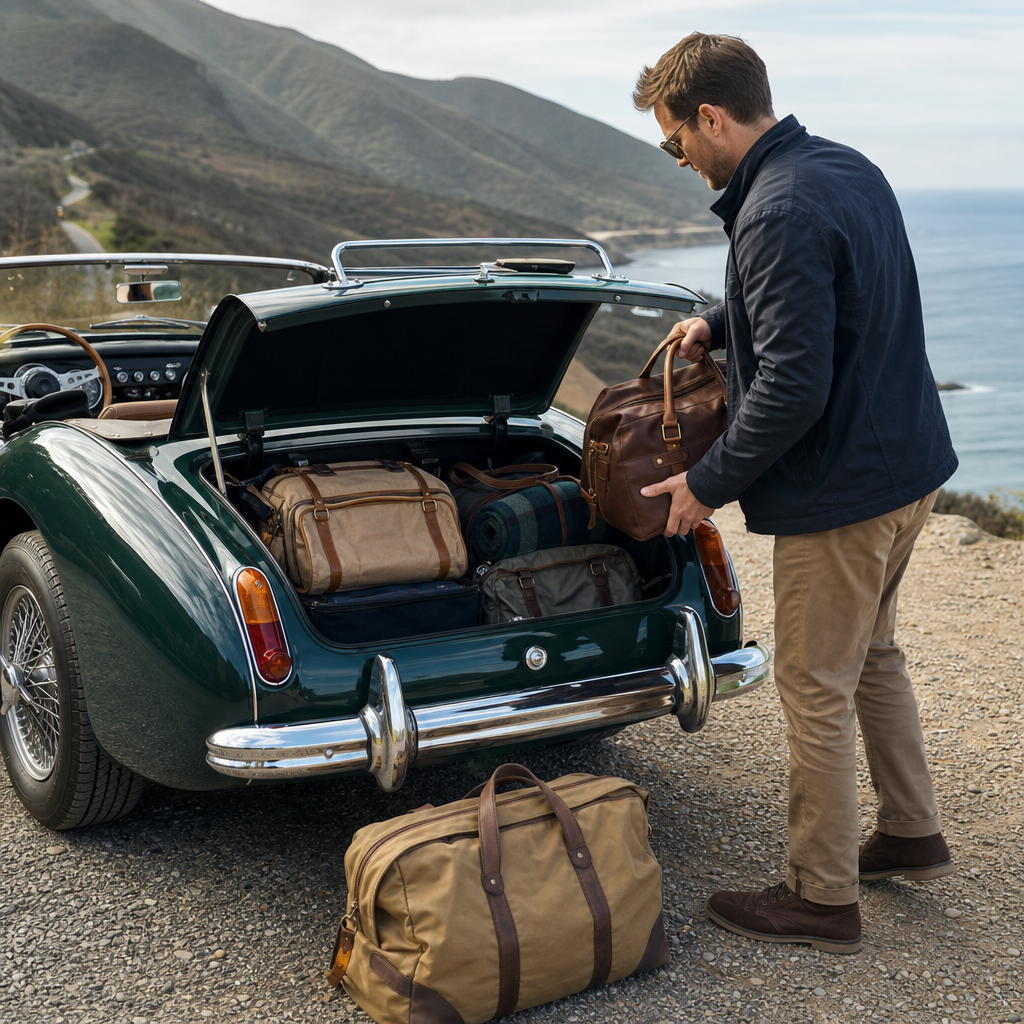
How you organize gear matters as much as what you bring. Loose items become projectiles in hard braking and can mar painted trunk panels, chip trim, and stain original carpeting. Use soft-sided bags, zip pouches, and lidded plastic bins only where their edges will not damage interior surfaces. In cars with delicate trunk finishes, I prefer canvas tool rolls, oil bottles in sealed secondary bags, and microfiber blankets to isolate hard edges. Divide the load into categories: tools and spares, fluids and dirty items, personal luggage, weather gear, and valuables. Each category should have one home.
Accessibility is the test. The items you may need roadside should be reachable without unloading the entire car. That means tools, flashlight, warning triangles, rain shell, and tire gear go closest to the opening. Overnight bags should not block the spare tire or jack. If your trunk can only be opened with the battery connected, never bury jump leads beneath luggage. I have also found that keeping a simple laminated inventory card in the trunk prevents duplicate packing and saves time when repacking at hotels or show fields.
| Category | What to Pack | Best Location | Why It Matters |
|---|---|---|---|
| Roadside repair | Tool roll, fuses, belt, hoses, test light, gloves | Top layer of trunk | Fast access during minor breakdowns |
| Safety | Fire extinguisher, first-aid kit, warning triangles | Cabin mount or trunk edge | Immediate response in emergencies |
| Fluids | Oil, coolant, brake fluid, funnel, absorbent pads | Sealed tote upright | Prevents leaks onto carpets and trim |
| Personal luggage | Soft duffels, toiletries, layered clothing | Rear shelf or trunk center | Fits irregular spaces without damage |
| Documents and valuables | Registration, insurance, ID, cash, charger | Small cabin bag | Needed at every stop, never leave exposed |
Clothing, comfort, and weather planning for vintage cabins
Packing clothing for a classic car road trip is less about fashion than temperature management. Many vintage cars have weak heaters, marginal ventilation, no air conditioning, or weather seals that perform poorly in prolonged rain. Dress in layers that can handle a forty-degree morning and an eighty-degree afternoon. I recommend moisture-wicking base layers, a light insulating mid-layer, a compact rain shell, sunglasses, a cap, and driving shoes with thin soles for pedal feel. If your route includes mountain passes or open-top driving, gloves and a neck buff can make long hours far more comfortable.
Passenger comfort items deserve trunk space because discomfort causes fatigue, and fatigue leads to bad decisions. A refillable water bottle, snacks that tolerate heat, sunscreen, lip balm, tissues, medication, and a compact blanket are worth carrying. Earplugs can help in especially loud cars at overnight stops, while a phone mount and power bank reduce cabin clutter. For convertibles and targa cars, pack towels and a quick-detail spray to wipe moisture or dust before it settles into vinyl and chrome. If you expect multiple hotel nights, use two smaller duffels instead of one large suitcase; they fit odd trunk contours better and are much gentler on original interior trim.
Documents, navigation, and security on the road
Classic car travel works best when analog backup supports digital convenience. Bring registration, proof of insurance, roadside-assistance information, license, health insurance card, and a printed list of emergency contacts. I also carry a concise vehicle information sheet with tire size, fluid types, belt part number, ignition type, and key service history. If the car is unusual, that sheet helps a local shop understand what they are dealing with quickly. Keep originals protected in a zip pouch and store photocopies separately.
Navigation should never depend on one phone with one charging cable. Download offline maps through Google Maps or a dedicated navigation app, and bring a paper road atlas or printed route pages for rural areas with unreliable reception. Fuel planning is equally important. Some classics have inaccurate fuel gauges or short range, so note likely refueling points before departure. Security also deserves attention because classic cars attract curiosity. Pack a steering wheel lock, battery cutoff knowledge, a discreet GPS tracker such as an Apple AirTag or dedicated vehicle tracker, and a simple car cover if overnight parking is exposed. Most theft prevention is about making your car a harder target than the next one.
What not to pack, and how to adjust for trip type
Overpacking is one of the most common mistakes in classic car travel. Do not bring a full chest of tools if you lack the parts, time, or roadside conditions to do major repairs. Do not carry loose fuel in the cabin. Avoid hard coolers unless the car has truly adequate space and tie-down points. Skip bulky “just in case” clothing, multiple shoes, and heavy duplicates of toiletries. Every unnecessary pound reduces usable room and increases the chance that needed gear becomes inaccessible. A lighter car is usually a happier classic car.
Adjust your packing list to the trip itself. A one-day scenic drive needs water, basic tools, documents, and weather layers. A weekend rally adds overnight bags, detailing supplies, and event paperwork. A multi-state tour justifies deeper spares, extra fluids, and more robust navigation backups. Match the list to the known weaknesses of your specific car. An MG may justify more electrical spares; a big-block American car may deserve cooling attention; an older diesel Mercedes may need fuel-system contingencies. Pack for probability, not imagination. The goal is not to prepare for every breakdown conceivable, but to support the most likely issues while preserving space, safety, and enjoyment.
Packing for a classic car road trip is really an exercise in respect: respect for the machine, the route, and the limits of old hardware. The right approach is simple to state and valuable to practice. Inspect the car first, pack by category, protect the interior, keep essentials reachable, and tailor spares to the vehicle’s actual failure points. When those basics are handled, classic car travel becomes far less stressful and far more rewarding.
The biggest benefit of a disciplined packing strategy is confidence. You stop worrying about whether the spare is buried, whether oil will leak onto original carpet, or whether a small ignition problem will derail the weekend. Instead, you can enjoy the things that make classic car travel memorable: the sound of the engine settling into a long cruise, the stories from people at fuel stops, and the satisfaction of arriving under your own power in a car with history.
If you are planning your next drive, build your packing list now, test-fit it in the car, and revise it after every trip. That habit will improve every journey in your classic car travel calendar, from local tours to long-distance adventures.
Frequently Asked Questions
What should you pack first for a classic car road trip?
The first items to pack for a classic car road trip are the things that protect safety, reliability, and the car itself. Unlike a modern vehicle, a classic car may not have abundant cargo space, advanced warning systems, or easy access to replacement parts on the road. That means your packing list should begin with a compact tool kit, basic spare parts, fluids, emergency supplies, and protective materials for the interior. A sensible starter list includes screwdrivers, pliers, adjustable wrenches, a socket set, electrical tape, zip ties, a flashlight, work gloves, spare fuses, belts, bulbs, hoses if practical, engine oil, coolant or water if appropriate for the car, and a tire inflator or pressure gauge. You should also carry jumper cables, warning triangles or flares where legal, a first-aid kit, and a fire extinguisher rated for automotive use.
Just as important, pack items that help preserve the car. Soft blankets, seat covers, trunk liners, and small padded bags can prevent metal hardware, luggage corners, and tool edges from scuffing fragile trim, painted surfaces, or original upholstery. If the weather is uncertain, include a car cover or at least a windshield cover and absorbent towels in case of rain leaks. Once the essentials are accounted for, add clothing, toiletries, snacks, water, navigation materials, charging accessories, and any comfort items. The key is to pack in order of importance: mechanical and emergency needs first, preservation items second, and personal convenience items third. That approach keeps the trip practical and protects both the occupants and the vehicle.
How do you pack efficiently when a classic car has very limited space?
Efficient packing in a classic car starts with accepting that every item must earn its place. Older cars often have smaller trunks, irregular cargo shapes, spare tires mounted inside the luggage area, and less tolerant suspensions that do not benefit from excess weight. The best strategy is to use soft-sided bags instead of hard suitcases because they conform better to odd spaces and are less likely to damage trim. Pack in small duffels, canvas bags, or structured packing cubes that can be stacked, shifted, and removed easily. It also helps to separate gear by function, such as tools in one low, secure bag, emergency items in one quick-access kit, and clothing in lightweight containers.
Weight distribution matters just as much as space management. Heavier items should be placed low and as close to the center of the car as possible to help maintain balance and avoid stressing the suspension or affecting handling. Avoid piling luggage against delicate trunk liners, wiring, jack compartments, or fuel system components. In the cabin, do not place loose objects where they can become dangerous under braking or cornering. Keep only the items you may need during the day within easy reach, such as maps, water, sunglasses, paperwork, and a phone charger. Everything else should be secured. It is also smart to edit your wardrobe and personal items aggressively. Multi-use clothing, travel-size toiletries, and limited duplicates free up room for the items a classic car truly needs, such as spare parts and emergency gear. Packing efficiently is really about discipline: travel lighter than you think you need so the car can carry what you cannot do without.
What tools and spare parts are most important to bring in a vintage car?
The most important tools and spare parts are the ones most likely to solve common roadside issues without taking up excessive space. While the exact list depends on the make, model, age, and condition of the vehicle, most classic car owners benefit from carrying a basic hand-tool kit, spare ignition and electrical items, and consumables that address minor failures. A practical tool kit usually includes combination wrenches, sockets, screwdrivers, pliers, locking pliers, wire cutters, a test light or multimeter, electrical tape, duct tape, mechanic’s wire, zip ties, and a knife or multi-tool. A flashlight or headlamp is essential, especially if a repair happens after dark.
For spare parts, prioritize the known weak points of your particular car. Commonly useful items include spare fuses, bulbs, fan belts, radiator hoses, hose clamps, spark plugs, ignition points or condenser if applicable, extra wire, a fuel filter, and a few critical fasteners. If your car uses parts that are difficult to source quickly, such as a specialized ignition component or fuel pump, bringing a spare can turn a trip-saving decision into a minor inconvenience instead of a breakdown-ending problem. Also carry fluids appropriate to the vehicle, including engine oil, brake fluid if you know how to handle it properly, and coolant or water depending on the system. The smartest approach is to build your travel kit around the car’s history. If it has recently shown tendencies toward overheating, charging issues, fuel delivery quirks, or minor leaks, pack specifically for those scenarios. Classic car road trip packing is never generic at its best; it is informed by the personality and maintenance record of the vehicle you are driving.
How can you protect the interior and original materials while packing?
Protecting the interior of a classic car is one of the most overlooked parts of trip preparation, yet it matters enormously because original upholstery, trim panels, carpets, weather seals, and painted surfaces may be fragile, expensive, or impossible to replace exactly. Start by assuming that anything with a hard edge can cause damage. Suitcase feet, metal zippers, tool corners, cooler latches, and even shoe soles can mark older materials quickly. Use blankets, towels, quilted pads, or purpose-made protective liners on seats, parcel shelves, and trunk floors before loading anything. Soft covers over seatbacks and armrests can prevent abrasion during repeated loading and unloading.
It also helps to package items thoughtfully. Tools and spare parts should be kept in padded tool rolls or reinforced soft bags so they do not rattle against bodywork. Liquids should be sealed inside secondary containment bags or plastic bins to reduce the risk of leaks onto carpet or painted metal. If the car is prone to water intrusion, avoid placing absorbent items directly against vulnerable areas and bring extra microfiber towels to manage moisture. Sun protection matters too. Prolonged heat and ultraviolet exposure can fade dashboards, dry out leather, and stress old adhesives, so sunshades and strategic parking choices make a difference during a multi-day trip. Finally, avoid overpacking to the point where trunk lids, doors, or seat frames are forced closed against luggage. Compression can deform seals, wrinkle upholstery, and cause unnecessary wear. The safest mindset is to treat every interior surface as if replacement were difficult and restoration were costly, because with many classic cars, that is exactly the case.
Should you pack differently for a classic car trip than for a modern car trip?
Yes, absolutely. Packing for a classic car road trip should be approached differently because the vehicle itself changes the priorities of travel. In a modern car, many drivers assume dependable climate control, strong charging systems, readily available replacement parts, stable highway manners, and roadside assistance that can handle most problems quickly. A classic car may offer none of those conveniences in the same way. That means you need to pack more intentionally for self-sufficiency, changing weather, mechanical unpredictability, and physical comfort. You are not just packing for your destination; you are packing for the demands of the machine carrying you there.
In practice, that means a classic car traveler should bring more maintenance support items, more weather contingency items, and fewer unnecessary personal belongings. It also means considering the route and the car’s temperament. If the vehicle runs hot in traffic, carry cooling-related supplies and plan lighter luggage loads. If cabin ventilation is limited, pack for heat management with water, hats, and light clothing. If the electrical system is older or lower output, do not assume you can run multiple devices all day without issue. Paper copies of key information, including directions, insurance, registration, and service contacts, are wise backups. Most importantly, packing for a classic car is about respecting limitations rather than fighting them. When you travel lighter, organize better, and prepare for small mechanical problems before they become major ones, the experience becomes far more enjoyable. A well-packed classic car does not feel under-equipped; it feels ready for the kind of road trip it was built to make.