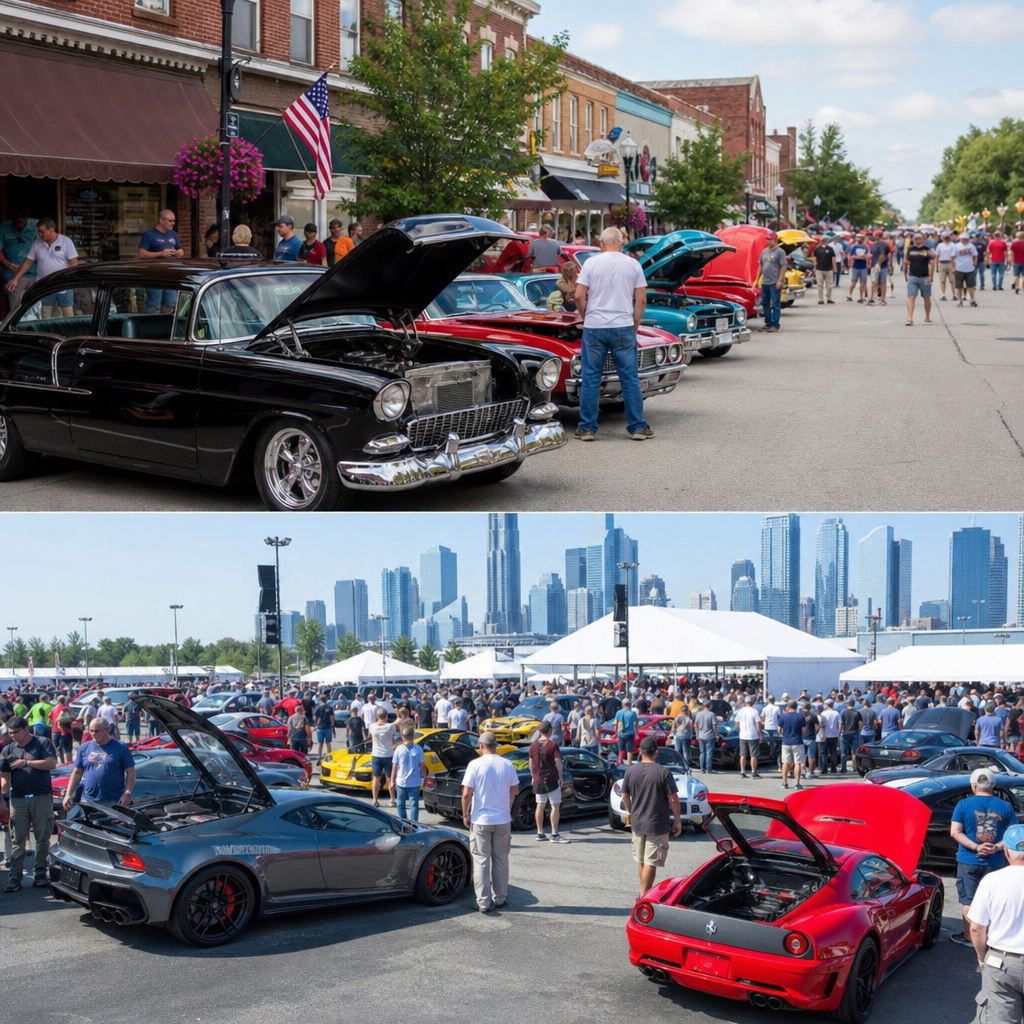
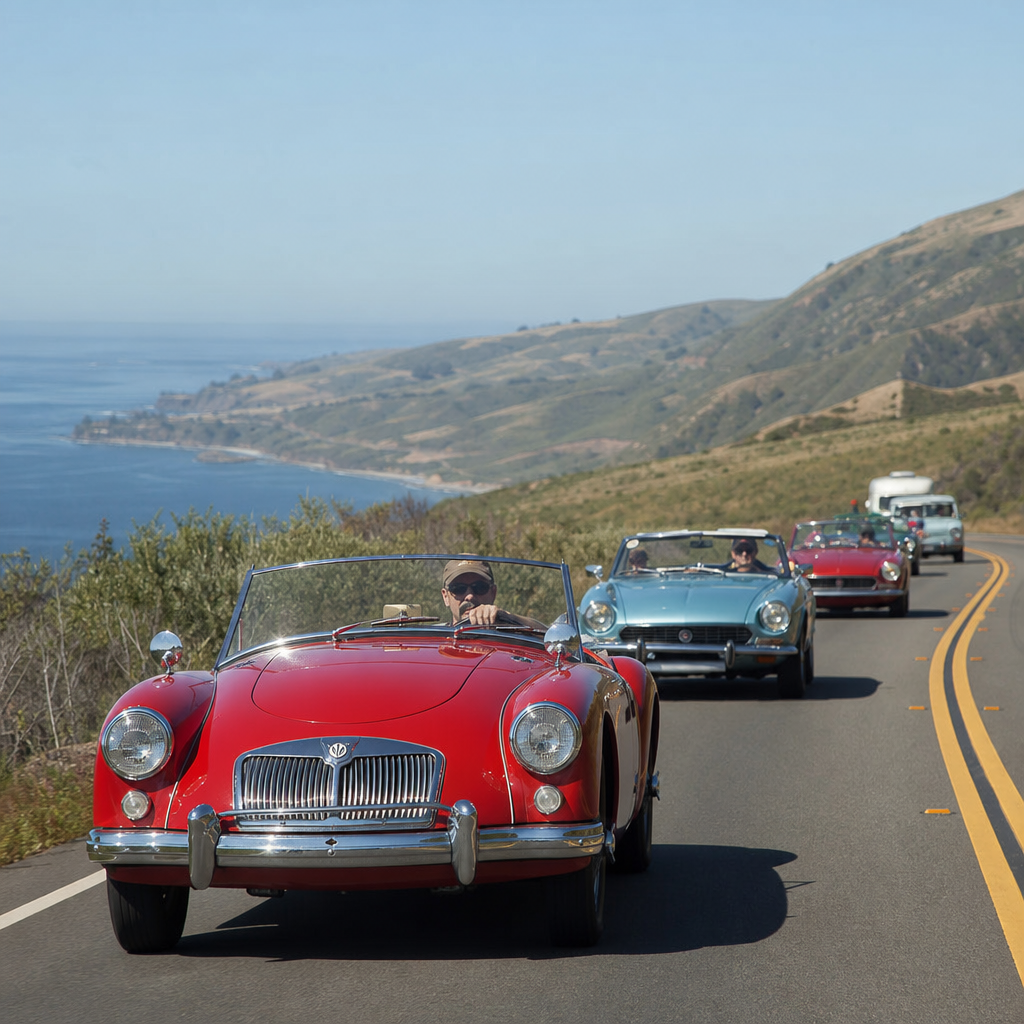
Classic car caravan trips blend mechanical nostalgia, slow travel, and group logistics into one distinctly rewarding form of road adventure. In practical terms, classic car travel means using vintage or heritage vehicles for touring, often on multi-day routes that prioritize scenery, community, and careful planning over speed. A caravan trip adds another layer: several cars traveling together with shared stops, agreed pacing, and mutual roadside support. I have planned and driven these trips with mixed groups of British roadsters, American cruisers, and air-cooled German coupes, and the difference between a stressful convoy and a memorable tour always comes down to preparation. For owners, this topic matters because classic cars are not modern appliances. They run hotter in traffic, brake longer, need different fuel considerations, and demand daily mechanical attention. Yet that effort is exactly why classic car travel has lasting appeal. It turns a drive into an event, creates stronger club culture, and gives owners a practical reason to keep older vehicles exercised rather than parked. This hub explains how classic car caravan trips work, what makes them different from ordinary road trips, and how to organize routes, maintenance, safety, packing, accommodations, and group etiquette so the experience stays enjoyable and dependable for everyone involved.
What Classic Car Caravan Trips Involve
A classic car caravan trip is a coordinated road tour where two or more vintage vehicles travel the same itinerary with planned rest points, mechanical checks, and social stops. Some groups run tight convoys with visible spacing and radio communication, while others use a looser touring format where each crew follows a route book and meets at checkpoints. The second model is usually better. It reduces pressure, keeps modern traffic flowing, and avoids the accordion braking effect that can overheat drums or clutches. In my experience, a staggered departure by vehicle type works best: slower prewar or small-displacement cars leave first, midrange tourers next, and faster grand tourers last.
The core appeal is shared experience. A solitary classic drive can be wonderful, but a caravan adds community knowledge and practical backup. If one MGB loses a condenser or one W108 sedan starts vapor locking, another driver often has the spare, the tool, or the memory of the exact fix. That peer support is part of why owners join marque clubs such as the Antique Automobile Club of America, the Vintage Sports-Car Club, or regional Porsche, Mercedes-Benz, and Triumph associations. These groups normalize travel in older cars and help turn mechanical uncertainty into manageable routine.
Classic car travel also changes how people think about distance. In a modern crossover, 300 miles can feel routine. In a carbureted coupe with limited cabin cooling, non-overdrive gearing, and a 12-gallon tank, 300 miles is a full day. Route design should reflect that reality. A good baseline for many 1950s through 1970s cars is 150 to 250 miles per day, adjusted for weather, altitude, and traffic density. The objective is not to prove endurance; it is to arrive with enough energy to inspect the car, enjoy the destination, and do it again tomorrow.
Route Planning for Reliability and Enjoyment
The best classic car road trip routes balance scenery, mechanical sympathy, and access to services. That means favoring secondary highways over congested interstates, avoiding long grades in extreme heat when cooling systems are marginal, and identifying fuel, lodging, and repair options in advance. Navigation tools like Google Maps, Roadtrippers, and MyRoute-app are useful for planning, but they should be cross-checked with paper maps because mobile coverage can fail exactly where scenic driving gets best. For older cars without charging ports or strong alternators, every device on board should have a power plan.
Elevation and climate deserve special attention. Carbureted engines may run rich or lean as altitude changes, while older cooling systems struggle during mountain climbs and stop-and-go town crossings. When I map a caravan through hilly territory, I schedule summit stops so cars can cool naturally after long pulls. A route that looks efficient on a screen may be miserable in reality if it forces repeated urban congestion or construction detours. For this reason, advance reconnaissance by one organizer is ideal. Even one preview drive can reveal road surfaces, station availability, and turnaround space for low cars.
Waypoint design matters too. Every stop should have a purpose: fuel, lunch, photo opportunity, regroup point, or mechanical inspection. Undefined stops waste time and scatter the group. A written route sheet should list mileage intervals, turn descriptions, emergency contacts, and fallback meeting locations. If someone becomes separated, the rule should be simple: continue safely to the next official stop rather than improvising. That one policy prevents half the confusion that ruins group tours.
Preparing the Car Before Departure
Reliable classic car touring starts in the workshop weeks before departure, not in the hotel parking lot. A proper pre-trip inspection covers fluids, ignition, fuel delivery, brakes, charging, tires, belts, hoses, cooling, lighting, and fasteners. On cars with breaker points, dwell and timing should be checked, and any suspect condenser or coil should be replaced proactively. On SU, Stromberg, Carter, Weber, or Rochester carburetors, idle quality and throttle response need to be confirmed under load, not just at idle in the driveway. A car that starts nicely at home can still stumble after an hour of heat soak.
Tires deserve more respect than they usually get. Many classics wear old-looking-new tires with deep tread but aged sidewalls. Date codes matter more than appearance. Anything older than six to ten years, depending on storage conditions and manufacturer guidance, should be treated cautiously. Wheel bearings, kingpins, tie-rod ends, and alignment also affect touring stability, especially when cars are loaded with luggage. On drum-brake cars, a full brake adjustment before travel can transform confidence on descents. On automatic-transmission cars, transmission fluid condition and cooler line integrity are nonnegotiable checks.
Spare parts should match the car’s known weak points. An Alfa may want ignition components and a fuel pump; an old Chevrolet might need belts, hoses, and a starter solenoid; an air-cooled Volkswagen should carry fan belt tools and cable spares. Basic consumables include engine oil, coolant if applicable, brake fluid, fuses, bulbs, hose clamps, fuel line, wire, terminals, and electrical tape. A compact tool roll with metric and SAE coverage is usually necessary on mixed-era tours because hardware standards vary by make and origin.
Essential Logistics for a Smooth Caravan
Group travel succeeds when responsibilities are assigned clearly. One lead organizer should manage route materials and lodging, one sweep driver should stay near the rear, and at least one participant should be designated as the primary mechanical contact. Communication plans should be settled before wheels move. Handheld radios are useful in remote areas, but they are not universal solutions because battery life, terrain, and legal channel use vary. Mobile messaging works well for stop updates, provided no driver is expected to read messages while moving. The safest method is still a driver briefing each morning and a printed sheet in every car.
Insurance and documents are equally important. Owners should verify roadside assistance terms, agreed-value policy conditions, mileage restrictions, and territorial coverage if crossing state or national lines. Some collector policies assume limited-use scenarios; a multi-day tour can still fit, but only if the use is declared accurately. Registration, proof of insurance, emergency contacts, and any club membership roadside numbers should be easy to reach. International trips may require extra equipment such as warning triangles, reflective vests, or emissions stickers depending on jurisdiction.
| Planning Area | Best Practice | Why It Matters for Classic Car Travel |
|---|---|---|
| Daily mileage | Keep most days between 150 and 250 miles | Reduces fatigue, overheating risk, and rushed repairs |
| Fuel stops | Stop when tanks reach half full | Older gauges are inaccurate and stations may be sparse |
| Departure order | Send slower cars first | Prevents bunching and dangerous passing within the group |
| Morning checks | Inspect oil, coolant, tires, and leaks daily | Small faults are easier to correct before they escalate |
| Communication | Use printed route sheets plus one group message channel | Creates redundancy when signals or radios fail |
| Breakdown response | Pull one support car over, send others to next stop | Keeps the roadside clear and limits convoy disruption |
Accommodation choices should account for security and practicality, not just aesthetics. Ground-floor rooms, well-lit lots, and permission for trailer parking if needed are valuable. I prefer hotels with visible parking from the room side and enough maneuvering area that cars with heavy steering or poor reverse visibility are easy to place. For premium classics, covered parking can be worth a higher nightly rate.
Driving Techniques, Safety, and Group Etiquette
Classic cars demand a different driving rhythm. Following distances should be longer because braking performance, tire grip, and lane-change visibility are often inferior to modern vehicles. Drum brakes fade, non-assisted steering reacts poorly to sudden inputs, and older headlights underperform after dark. That is why daylight-focused scheduling is smart. Even experienced owners who maintain their cars meticulously should avoid proving what a sixty-year-old machine can do in heavy rain at night among modern SUVs.
Within the caravan, etiquette keeps everyone safer. No driver should feel pressured to exceed a comfortable cruising speed. Fast drivers can always catch up at the next stop; slower drivers cannot magically gain cooling capacity or shorter stopping distances. Passing should occur only when normal road conditions allow it, never to maintain formation. Hazard lights are not a substitute for proper spacing. If the group includes convertibles, remind drivers that fatigue, dehydration, and sun exposure accumulate faster than expected. Hearing protection on long drives in loud cabins is also wise.
Breakdowns should be treated as planned events, not crises. Every classic eventually teaches patience. If a car stops, move it to the safest possible location, assess fire risk first, and then diagnose systematically: spark, fuel, air, compression, and charging. Random parts swapping wastes time. I have seen fifteen-minute fixes stretch into two hours because too many well-meaning helpers crowded around before one person took control of the diagnosis. A calm protocol protects both the car and the group schedule.
Packing, Comfort, and Making the Trip Memorable
Packing for a classic car caravan trip is an exercise in restraint. Trunk space is often shallow, oddly shaped, or partly occupied by a spare wheel and tool kit. Soft bags fit better than hard cases. Weight should be distributed low and securely because abrupt shifts can affect handling, especially in short-wheelbase cars. Essentials include layered clothing, rain gear, microfiber cloths, drinking water, sunscreen, paper towels, nitrile gloves, and a flashlight. If the car is known for oil mist or fuel smell, pack accordingly rather than pretending it will behave differently on tour.
Comfort improvements can dramatically extend enjoyment without compromising originality. Period-correct seat cushions, discreet USB battery packs, removable cup holders, and vent-mounted fans are practical additions many owners quietly appreciate. Earplugs for highway stretches, a lumbar cushion, and a simple windshield cleaner often matter more than cosmetic accessories. Food planning matters too. Heavy lunches and long afternoon heat can make older cars and older drivers equally unhappy, so lighter meals and frequent hydration stops are sensible.
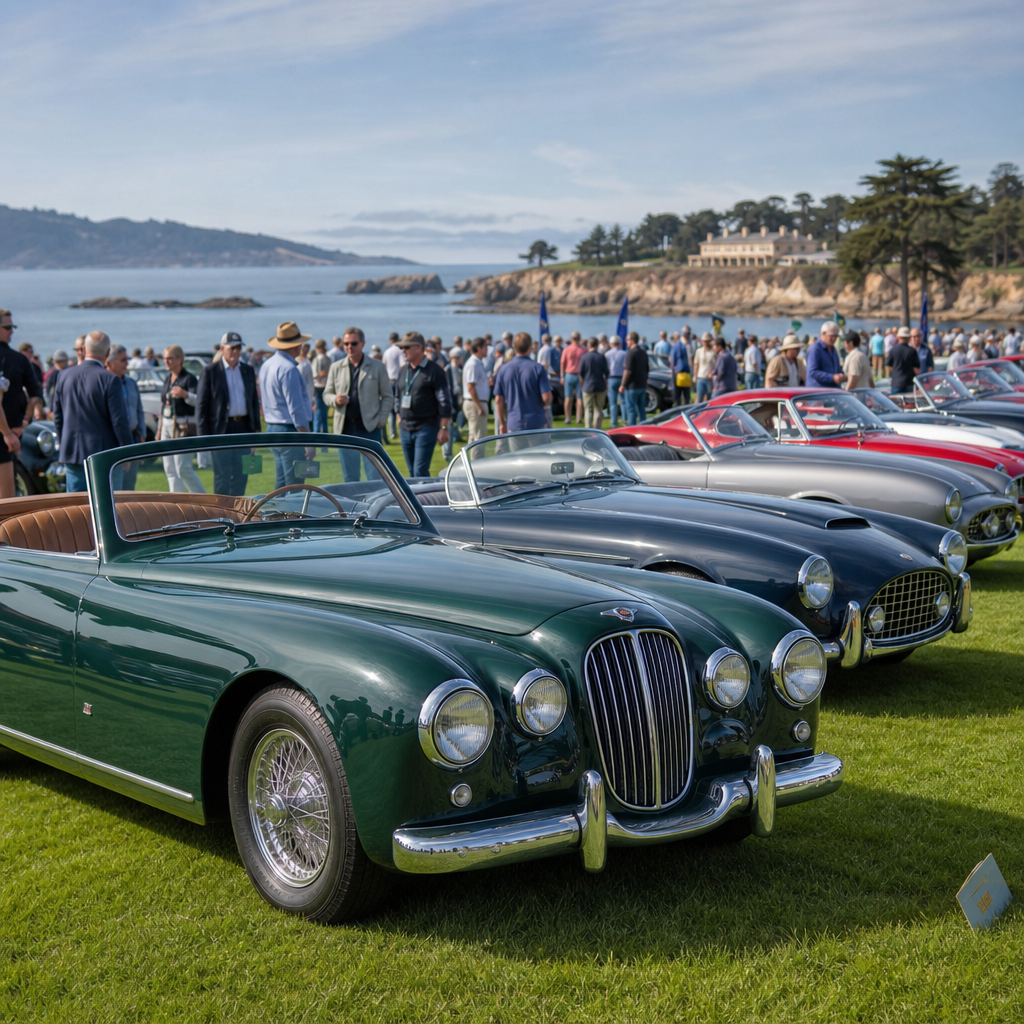
The most successful tours also build in reasons to remember the journey beyond the driving itself. Good hubs for classic car travel include heritage museums, concours weekends, factory archives, rural inns, and scenic overlooks with easy parking. Photographs work best when organizers preselect pull-offs large enough for multiple cars without blocking traffic. Some groups create a trip booklet with vehicle bios, owner stories, and route history. That transforms a drive into shared documentation of classic car culture, which is exactly what keeps the hobby vibrant across generations.
Classic car caravan trips work best when romance is supported by disciplined planning. The essential lesson is simple: older cars can travel well, but they reward owners who respect their limits and prepare for their quirks. Define the route carefully, inspect the vehicle thoroughly, carry the right spares, communicate clearly, and adopt group rules that prioritize safety over convoy theatrics. Those practices are not bureaucratic extras; they are what make classic car travel relaxing enough to enjoy the landscape, the machines, and the company. For a sub-pillar within classic car culture and lifestyle, this subject matters because travel is where preservation becomes lived experience. A restored car that never leaves the garage remains an object. A well-prepared touring car becomes a story generator, a social connector, and a moving piece of history. If you are building your own classic car travel plans, start with one realistic overnight route, assemble a compatible group, and treat the first trip as a learning run. Done properly, a caravan tour will teach you more about your car in three days than months of casual local driving, and it will likely become the tradition that anchors your entire ownership experience for years ahead.
Frequently Asked Questions
What is a classic car caravan trip, and how is it different from a normal road trip?
A classic car caravan trip is a coordinated tour where multiple vintage, antique, or heritage vehicles travel together along a planned route, usually over several days. Unlike a standard road trip that may focus on covering distance quickly, a classic car caravan emphasizes the experience of the drive itself: scenic roads, manageable daily mileage, regular rest stops, social connection, and respect for the mechanical limits of older vehicles. The pace is intentionally slower, not because the trip is less ambitious, but because classic cars reward patience, observation, and preparation.
The caravan format also changes the travel dynamic in important ways. Instead of each driver operating independently, the group usually agrees on departure times, fuel stops, lunch breaks, overnight lodging, and communication methods before the trip begins. There is often a lead car, a sweep car, and a shared understanding of what to do if someone pulls over with a mechanical issue. That structure creates a sense of confidence and camaraderie that you do not typically get on a modern solo road trip. In short, a classic car caravan is part touring event, part rolling community, and part mechanical stewardship exercise, all built around the pleasure of traveling in cars with history and character.
How do you plan a successful classic car caravan route?
Planning a successful classic car caravan route starts with accepting that the needs of older vehicles should shape the itinerary. The best routes are not necessarily the fastest or shortest. They are the ones that balance beautiful driving roads with practical support, including frequent fuel availability, easy roadside pull-offs, realistic daily mileage, and lodging that can accommodate multiple specialty vehicles. A strong route usually avoids heavy urban congestion, extreme grades if possible, and long stretches without services, especially when several cars with different ages and reliability profiles are traveling together.
Daily distances should be conservative. Many experienced organizers prefer routes that allow enough time for photo stops, cooling breaks, small repairs, and the occasional delay without turning each day into a race against the clock. It also helps to pre-drive or thoroughly research the route, identify alternate roads, confirm fuel stations, and note where cell coverage becomes unreliable. Sharing printed directions or a road book is smart, because relying only on mobile navigation can create confusion when signals drop or the group becomes spread out.
Group logistics matter just as much as geography. Set clear meet-up points instead of expecting every car to remain nose-to-tail all day. Decide in advance how the group will communicate, who carries key tools and spares, and what the procedure will be if one car needs more time. The most enjoyable caravan routes are those built around margin. When the schedule has breathing room, the trip feels relaxed, the drivers stay alert, and the classic cars are much more likely to complete the journey happily.
What should you check on a classic car before joining a caravan trip?
Before a classic car joins a caravan trip, it should receive a practical touring inspection rather than a cosmetic once-over. Reliability matters far more than presentation on a multi-day drive. Start with the fundamentals: engine oil, coolant if the car is water-cooled, transmission fluid, brake fluid, and differential fluid where applicable. Check for leaks, inspect belts and hoses, verify that the battery is secure and charging properly, and make sure the ignition and fuel systems are behaving consistently under load. If the car has shown even minor overheating, hard starting, vapor lock, charging, or braking issues recently, those problems should be resolved before departure rather than managed on the road.
Tires deserve special attention. On classic cars, age can be just as important as tread depth. Inspect sidewalls for cracking, confirm pressures including the spare, and make sure the jack and lug tools actually fit the car. Brakes should feel strong and predictable, steering should be free of alarming play, lights should all work, and the cooling system should be tested in conditions similar to the trip if possible. For long routes, many owners also carry essential spares such as points, condenser, fan belt, fuel hose, fuses, bulbs, a spare coil, and basic hand tools, depending on the era and design of the vehicle.
Just as important is knowing the car honestly. A classic that performs perfectly on local drives may behave differently after several consecutive hot hours on unfamiliar roads. A short shakedown run before the main trip is one of the best things you can do. It reveals weak batteries, loose clamps, marginal cooling, and fuel delivery issues before you are three towns away with a group waiting. The goal is not to make an old car perfect. The goal is to make it dependable enough that the journey becomes memorable for the right reasons.
How do groups handle breakdowns and roadside problems during a classic car caravan?
Breakdowns are part of classic motoring reality, which is exactly why the caravan format works so well when it is organized properly. The best groups expect occasional roadside issues and plan for them calmly instead of treating them as disasters. Typically, one vehicle acts as the lead car to maintain the route and pace, while another serves as the sweep car to stay aware of anyone falling behind. If a car develops a problem, the group does not need to descend into confusion. Drivers should already know whether the nearest safe pull-off becomes the regroup point, whether only one or two support cars stop, and how the rest of the caravan proceeds without creating additional hazards.
Most roadside problems on classic trips are manageable if the group carries the basics: tools, fluids, belts, ignition parts, fuel line materials, jumper cables, tire equipment, and good flashlights. Practical experience matters here. Sometimes a loose wire, vapor lock issue, clogged fuel filter, or overheated engine can be sorted in minutes if the right person and parts are nearby. For larger failures, roadside assistance coverage, trailer options, and a list of repair shops along the route can save a trip from becoming a logistical mess. That is why seasoned organizers build support planning into the trip from the start.
Equally important is attitude. A classic car caravan is smoother when everyone accepts that delays are possible and that helping another driver is part of the shared experience. In many cases, the small roadside pauses become part of the story people remember most fondly. The difference between a stressful breakdown and a manageable interruption is usually preparation, communication, and realistic expectations. When those three things are in place, even a mechanical hiccup does not have to derail the adventure.
Is a classic car caravan trip suitable for beginners, or do you need a lot of vintage car experience?
Classic car caravan trips can absolutely suit beginners, provided the trip is chosen wisely and the driver arrives prepared. You do not need decades of vintage motoring experience to enjoy one, but you do need respect for what makes old cars different from modern vehicles. That means understanding that braking distances may be longer, cabin comfort may be lower, cruising speeds may be more modest, and minor adjustments on the road may occasionally be necessary. A beginner who is patient, observant, and willing to learn often does very well in a caravan because the group structure provides support that solo travel cannot.
For a first trip, it is smart to join a well-organized caravan with moderate daily distances, reliable rest intervals, and a mix of experienced participants. Ask in advance about expected speeds, road types, weather conditions, and what tools or spares you should bring. It also helps to spend time with your car before the trip so you know its starting behavior, fuel range, temperature patterns, and any quirks in shifting, steering, or electrical systems. Familiarity builds confidence quickly.
What beginners often discover is that a caravan is one of the best ways to learn classic touring in real conditions. You pick up practical knowledge about pacing, roadside etiquette, preventive checks, and mechanical troubleshooting simply by traveling with others who have done it before. As long as the trip is not over-ambitious and the vehicle is properly prepared, a newcomer can have an excellent experience. In fact, many lifelong classic touring enthusiasts start with exactly this kind of group journey because it combines guidance, community, and adventure in a very approachable way.