Classic car tires demand a maintenance approach that respects age, materials, storage conditions, and the driving habits unique to vintage vehicles. In restoration shops and private collections alike, I have seen immaculate paint and perfect chrome undermined by neglected tires that were underinflated, badly stored, or simply too old to trust on the road. Maintaining classic car tires means preserving safety, ride quality, steering feel, and historical correctness at the same time. It includes routine pressure checks, inspection for structural aging, proper cleaning, alignment awareness, seasonal storage practices, and informed replacement decisions. Because many classic cars are driven infrequently, their tires often age out before they wear out, making maintenance very different from modern daily-driver care. Done correctly, tire maintenance protects the vehicle, the occupants, and the originality of a restoration while reducing vibration, irregular wear, and preventable roadside failures.
For a classic car owner, tires are not just consumables. They are load-bearing structural components made from rubber compounds, fabric or steel reinforcement, beads, sidewalls, and tread patterns that all respond to time and environment. Vintage cars may run bias-ply tires, reproduction bias-look radials, or modern radials sized to preserve appearance and gearing. Each option changes handling, steering effort, and inflation needs. That is why a maintenance plan must start with the exact tire type, wheel specification, and intended use of the car. A concours vehicle that moves from trailer to show field needs a different schedule than a weekend tourer that sees highway miles in summer heat. This hub covers the full range of maintenance tips so owners can build a practical routine and make better decisions before problems become expensive or dangerous.
Know Your Tire Type, Age, and Load Requirements
The first rule in classic car tire maintenance is simple: know exactly what is mounted on the car. I always start with sidewall information, because it tells you the tire size, construction, load index or ply rating, speed capability, and manufacturing date code on most modern and reproduction tires. Bias-ply tires have different carcass construction than radials, so they flex differently and often require different pressures and alignment expectations. On older domestic cars, for example, a period-correct 7.10-15 bias-ply tire will track and wear differently than a radial replacement sized for the same wheel. Owners who assume modern tire behavior from a bias-ply setup often mistake normal tramlining or steering feel for a defect.
Age matters even more than tread depth on classic cars. Many collector vehicles cover fewer than 1,000 miles per year, so the tread may look excellent while the internal structure has hardened, cracked, or degraded from ozone and heat cycles. The Department of Transportation date code identifies the week and year of production on tires made under the current coding system. In practice, I advise owners to inspect closely after six years and plan replacement around seven to ten years depending on storage, climate, and use. A perfectly stored tire in a dark, climate-controlled garage may remain serviceable longer than one exposed to sunlight and concrete heat, but age is never irrelevant. If the tire’s age is unknown, cautious replacement is smarter than gambling with an irreplaceable car.
Load capacity is equally important. Classic cars, especially full-size American sedans, convertibles, and station wagons, can be much heavier than they appear. Add passengers, luggage, or a trunk full of tools for a road tour, and an underspecified tire becomes a safety issue. Use the vehicle weight, axle ratings if available, and manufacturer recommendations from factory manuals or trusted tire suppliers to confirm that each tire can support the car at the intended pressure. This is one area where authenticity should never override engineering.
Build a Reliable Inspection and Inflation Routine
If you do only one thing consistently, check tire pressure with a quality gauge before every drive. Tire pressure drops gradually through normal permeation, and collector cars often sit for weeks between outings. Even a few pounds low can increase sidewall flex, generate heat, flatten the contact patch unevenly, and make steering feel vague. Low pressure also encourages flat spotting during storage and accelerates shoulder wear. Overinflation has its own penalties, including a harsher ride and reduced central tread life. The correct pressure is not always the number molded on the sidewall; it should come from the vehicle manufacturer, a trusted tire maker’s fitment guidance, and real-world evaluation of wear and handling.
During inspection, look at all visible surfaces, not just the tread face. Sidewall checking, weather cracks between tread blocks, bulges, exposed cords, embedded objects, and bead-area damage all matter. I also run my hand across the tread to feel for cupping or feathering, because irregular wear patterns often show up by touch before they photograph clearly. On cars with fender skirts or tight wheel openings, use a light and mirror if needed. Do not forget the spare. On touring classics, the spare is part of the safety system, yet it is often the oldest tire on the car.
| Maintenance task | How often | What to check | Why it matters |
|---|---|---|---|
| Pressure check | Before every drive or monthly in storage | Cold PSI at all four tires and spare | Prevents heat buildup, poor handling, and uneven wear |
| Visual inspection | Before every drive | Cracks, bulges, punctures, foreign objects, valve stems | Finds age damage and impact damage early |
| Tread and wear review | Every 500 to 1,000 miles | Cupping, feathering, shoulder wear, flat spotting | Reveals alignment, balance, and suspension issues |
| Rotation and balance | Every 3,000 to 5,000 miles if applicable | Wear rate and vibration at speed | Extends tire life and preserves ride quality |
| Age audit | Annually | Date code and storage history | Prevents running unsafe old tires with good tread |
Valve stems deserve special attention. Old rubber stems crack just like tires do, and a failed stem can deflate a tire quickly. Whenever I replace classic car tires, I replace stems or service metal stems at the same time. Use caps as well; they help keep dirt and moisture out of the valve core. This small habit prevents slow leaks that are frustrating to diagnose after the car has sat for a month.
Prevent Wear with Proper Alignment, Balance, and Suspension Care
Tires do not wear in isolation. When I see premature wear on a classic car, the root cause is often alignment drift, worn kingpins or ball joints, weak shocks, sagging bushings, bent wheels, or brake drag. Classic steering and suspension systems have more compliance and more service points than many modern cars, so they need periodic inspection. Toe settings that are only slightly off can scrub an expensive set of tires in surprisingly few miles. Excessive negative or positive camber creates edge wear, while weak dampers allow cupping. If a car pulls, wanders, or shimmies, the tire may be the victim rather than the cause.
Wheel balance matters even on cars that rarely exceed 55 mph. An out-of-balance tire can create vibration that accelerates wear in steering components and makes the car unpleasant on the road. Bias-ply tires sometimes need a shop familiar with older vehicles, because mounting technique, wheel condition, and balancing expectations differ from late-model service work. If the car uses wire wheels, center-lock wheels, or wheels that require adapters to balance correctly, choose a specialist. I have watched owners chase vibrations by replacing tires when the actual problem was a bent rim or poor mounting on a restored wheel.
Rotation can help, but it is not universal. On a square setup with same-size tires front and rear, rotation may even out wear. On staggered setups or highly original cars where owners want to preserve directional wear patterns, rotation may be limited or skipped. The key is documenting current positions and wear patterns so you can make a deliberate choice rather than following a generic schedule that does not fit the car.
Protect Tires During Storage and Seasonal Downtime
Storage is where many classic car tires suffer the most damage. Rubber degrades faster when exposed to ultraviolet light, ozone from electric motors and battery chargers, moisture, and temperature swings. A garage is better than outdoor parking, but not all garages are equal. Tires stored near welders, furnaces, compressors, or running motors can be exposed to ozone that attacks sidewalls over time. Direct sunlight through windows can age one side of a car more quickly than the other. Concrete floors can also contribute to moisture transfer and temperature cycling, which is why I prefer parking on clean tire cradles, squares of sealed plywood, or purpose-made mats during long storage periods.
For seasonal storage, start by washing the tires with mild soap and water, not petroleum-based dressings. Solvent-heavy products can strip protective compounds or leave residues that attract dust. Once clean and dry, inflate to the upper end of the recommended storage pressure, but do not exceed the safe limit specified by the manufacturer. If the car will sit for months, move it periodically to change the contact patch, or support it correctly to reduce flat spotting without leaving suspension hanging in an unnatural position. There is debate about jack stands for long-term storage; in practice, partial unloading done carefully can help, but poor support placement can damage suspension bushings or frame points. The service manual should guide lifting and support locations.
Indoor covers help the car, but breathable tire covers are useful too, especially near windows. Avoid storing the car with contaminated tires after a drive through oil, fuel, or road salt. Those materials accelerate deterioration and should be washed off promptly. If the vehicle is stored in freezing conditions, expect the ride to feel harder when first moved. Let the tires warm gradually in use rather than making abrupt maneuvers immediately.
Clean Correctly, Replace Wisely, and Match Tires to How the Car Is Used
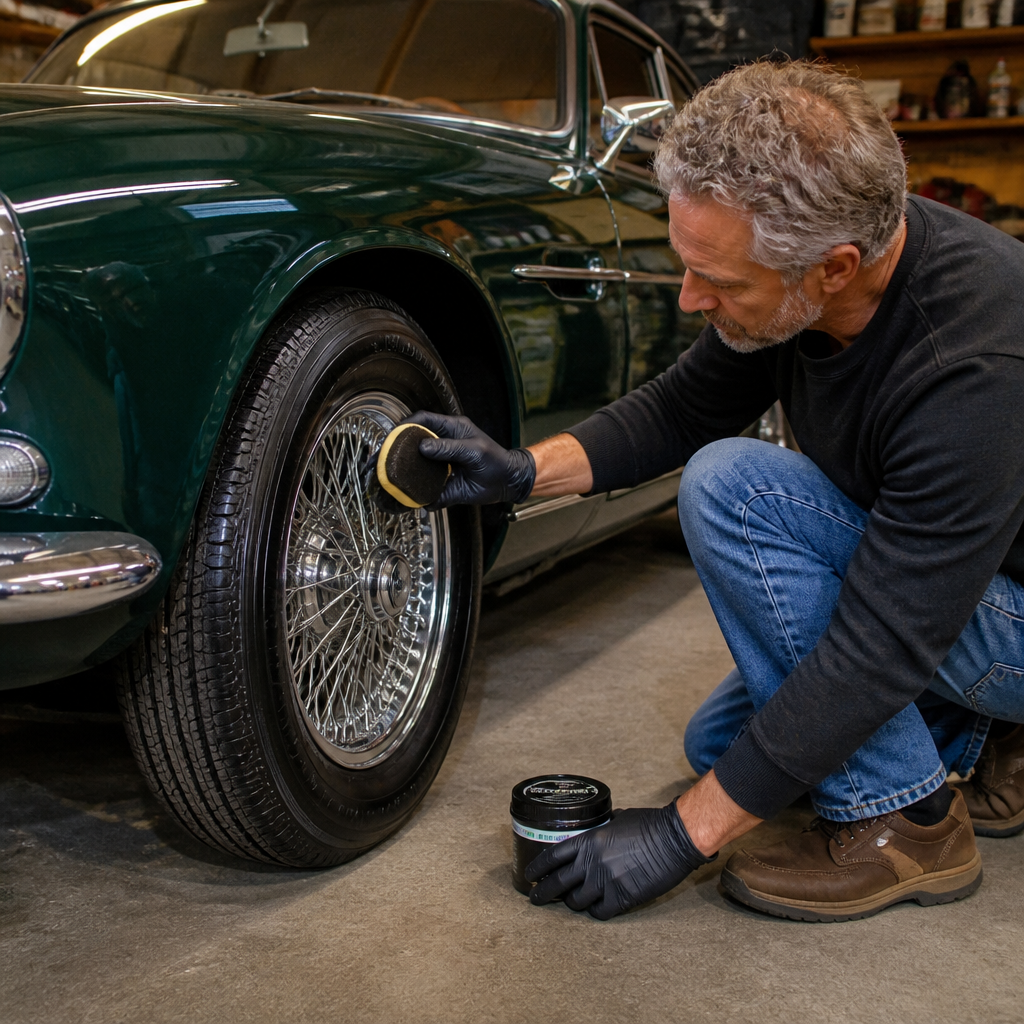
Cleaning classic car tires sounds straightforward, but mistakes are common. Use pH-neutral soap, soft brushes, and water. Avoid harsh degreasers, silicone sling products, and anything that leaves the sidewalls unnaturally glossy. On a restored car, a satin finish is usually both safer and more accurate than a wet shine. Whitewalls require extra care. I use dedicated whitewall cleaner sparingly and rinse thoroughly, because aggressive scrubbing can stain or roughen the surface. If a tire has raised lettering or period sidewall markings, treat those areas gently to preserve appearance.
Replacement decisions should be based on safety first, then originality, then cost. If a tire shows sidewall cracking deep enough to catch a fingernail, repeated air loss, vibration that cannot be balanced out, exposed cords, impact bulges, or advanced age, replace it. Do not mix radically different constructions on the same axle. Mixing bias-ply and radial tires can create unstable handling unless a tire manufacturer explicitly approves a configuration, and even then it is usually a compromise. For owners who want vintage appearance with better road manners, bias-look radial products from specialty manufacturers can be a strong middle ground. They are not identical to original equipment, but they often improve stability and braking feel on cars driven regularly.
Think honestly about use case. A concours car can justify historically correct tires that are driven minimally and inspected constantly. A touring car headed on interstate events needs modern reliability, heat tolerance, and readily serviceable sizes. A muscle car with upgraded power may need wider, stronger tires and careful clearance checks. Matching the tire to the mission is one of the most important maintenance choices you can make, because the wrong tire will always be harder to maintain successfully.
This maintenance hub should anchor the rest of your restoration and maintenance planning. Tire care connects directly to wheel restoration, suspension inspection, brake service, alignment setup, safe storage, and seasonal recommissioning. When owners treat tires as part of the whole chassis system, problems become easier to diagnose and prevent. The basic habits are straightforward: know the tire type and age, maintain correct pressure, inspect before every drive, store the car intelligently, and respond early to uneven wear or vibration. Those steps preserve safety, protect expensive restorations, and make a classic car drive the way it should. Review your current tires this week, note the date codes and pressures, and build a maintenance log that keeps your car roadworthy and ready for the next drive.
Frequently Asked Questions
How often should classic car tires be inspected, even if the car is rarely driven?
Classic car tires should be inspected far more often than many owners expect, especially because low annual mileage can create a false sense of security. A vintage vehicle that spends most of its life in a garage can still develop serious tire issues from age, temperature changes, flat spotting, dry rot, ozone exposure, and improper inflation. As a practical rule, perform a quick visual inspection before every drive and a more thorough inspection at least once a month during the storage or driving season. If the car is part of a collection or sits for long stretches, checking tire pressure monthly is especially important because slow air loss is common and underinflation can damage the casing over time.
During inspection, look for cracks in the sidewalls and between tread blocks, bulges, cuts, embedded debris, uneven tread wear, discoloration, and signs that the rubber is hardening. Also examine the valve stems, as old stems can leak or split just like old tires can. Run your hand across the tread to feel for irregular wear that may point to alignment or suspension issues. Because classic cars often have older steering geometry, bias-ply construction, or period-style suspension setups, even minor tire problems can noticeably affect ride quality and handling. Regular inspection is not just about preserving appearance. It is one of the simplest and most important ways to protect the car, its occupants, and its originality.
What is the right tire pressure for a classic car, and why is it so important?
The correct tire pressure for a classic car is the pressure recommended for that specific vehicle and tire combination, not necessarily the number molded on the tire sidewall. The sidewall figure usually represents the tire’s maximum pressure, not the ideal operating pressure. For an accurate starting point, use the vehicle manufacturer’s specification from the owner’s manual, factory literature, or door jamb placard if available. If the car has been fitted with reproduction tires, radial replacements, or a size different from original, pressure may need to be adjusted carefully based on load, tire construction, and driving behavior. When originality and drivability intersect, it is worth consulting both the tire manufacturer and a specialist familiar with vintage applications.
Maintaining correct pressure is essential because classic cars are especially sensitive to inflation errors. Underinflation causes excess flex, heat buildup, vague steering, accelerated shoulder wear, and a higher risk of sidewall damage. Overinflation can make the ride harsh, reduce the contact patch, increase center tread wear, and upset the period-correct steering feel. On many vintage vehicles, tire pressure also influences how the suspension behaves and how accurately the car tracks on the road. Always check pressures when the tires are cold, using a quality gauge, and recheck after seasonal temperature changes. A tire that looks fine can still be significantly low, and with older vehicles, that small difference can have an outsized effect on safety and performance.
How long do classic car tires last, and when should they be replaced even if the tread looks good?
Classic car tires often age out long before they wear out. Tread depth alone is not a reliable measure of safety on a vintage vehicle because many collector cars are driven so infrequently that the rubber deteriorates with time rather than mileage. In general, tires should be evaluated very carefully once they reach six years of age, and many experts recommend replacement by around ten years from the date of manufacture regardless of remaining tread. For cars driven at highway speeds, in warm climates, or under show-and-go conditions where appearance matters but road use is still expected, a more conservative replacement schedule is wise.
The date of manufacture can be found in the DOT code on the tire sidewall. The last four digits indicate the week and year the tire was made. Beyond age, replace a classic car tire immediately if it shows cracking, cord exposure, bulges, persistent air loss, vibration that cannot be balanced out, or signs of internal separation. Tires may also need replacement if they have been stored improperly, exposed to chemicals, or allowed to sit flat for prolonged periods. This is one area where preserving originality should never come before safety. A tire can still look attractive enough for shows and yet be completely unsuitable for real driving. If there is any doubt about structural integrity, replacement is the responsible choice.
What is the best way to store and protect classic car tires during long periods of inactivity?
Proper storage is one of the most overlooked parts of classic car tire maintenance, and it has a major impact on service life. Tires age faster when exposed to sunlight, ozone, extreme temperature swings, moisture, and prolonged static loading. The best storage environment is cool, dry, dark, and clean, away from electric motors, welders, furnaces, battery chargers, and other equipment that can generate ozone, which accelerates rubber cracking. If the car will sit for an extended period, clean the tires with mild soap and water only, avoiding harsh dressings or petroleum-based products that can dry or degrade the rubber.
To reduce flat spotting and stress, store the car on clean, dry flooring and maintain proper inflation. If the vehicle will remain stationary for months, move it periodically so the tire contact patch changes, or use cradles designed to reduce flat spotting. Some owners place the car on jack stands to remove weight from the tires, but if you do this, support the vehicle correctly according to factory or specialist guidance and avoid leaving the suspension hanging improperly for long periods. Tire covers can help block light if the storage area is bright. In private collections and restoration settings, the cars that retain the best tire condition are usually those stored intentionally rather than simply parked and forgotten. Storage conditions matter just as much as road use.
Should classic cars use bias-ply tires or modern radials, and how does that affect maintenance?
The choice between bias-ply and radial tires depends on how the car is used, how important factory-correct appearance is, and what kind of driving experience the owner wants to preserve. Bias-ply tires are often the historically correct option for many older classics, and they deliver the period-authentic look and road feel expected in judged restorations. However, they typically track differently, may follow road grooves more noticeably, and can develop flat spots more easily after sitting. Radials generally offer better ride comfort, improved traction, more stable handling, and longer wear, making them a practical option for drivers who regularly take their classics on the road.
From a maintenance standpoint, each type deserves slightly different expectations. Bias-ply tires often require closer attention to pressure, storage, and flat-spot prevention because their construction reacts differently to prolonged parking and road forces. Radials may be more forgiving in everyday driving, but they still need proper inflation, regular age checks, and compatibility with the vehicle’s wheel size and suspension setup. It is also important not to mix tire constructions on the same vehicle unless a knowledgeable specialist specifically approves it for that application. The wrong combination can create unpredictable handling. The best choice is the one that balances authenticity, safety, and intended use. If the car is a concours restoration, bias-ply may make sense. If it is driven regularly on modern roads, radials may be the smarter long-term solution.