Frame-off vs frame-on restoration describes two very different ways to rebuild a classic vehicle, and choosing the right approach affects cost, time, originality, safety, and long-term value. In restoration basics, the “frame” is the structural foundation that supports the body, drivetrain, suspension, and steering on body-on-frame vehicles such as many classic trucks, full-size American cars, and early SUVs. A frame-off restoration separates the body from that chassis so each major system can be repaired, refinished, or replaced independently. A frame-on restoration keeps the body mounted to the frame while work is completed around it. I have planned, scoped, and evaluated both types of projects, and the difference is not academic. It determines whether hidden corrosion is discovered, whether brake and fuel lines are truly renewed, and whether the finished vehicle is built for concours judging, reliable driving, or profitable resale. For anyone learning restoration basics, this distinction matters because it shapes every decision that follows, from inspection and budgeting to parts sourcing and labor sequencing. If you understand what frame-off and frame-on actually involve, you can set realistic expectations, avoid expensive mid-project surprises, and choose a restoration path that matches the vehicle, your goals, and your budget.
What a Frame-Off Restoration Involves
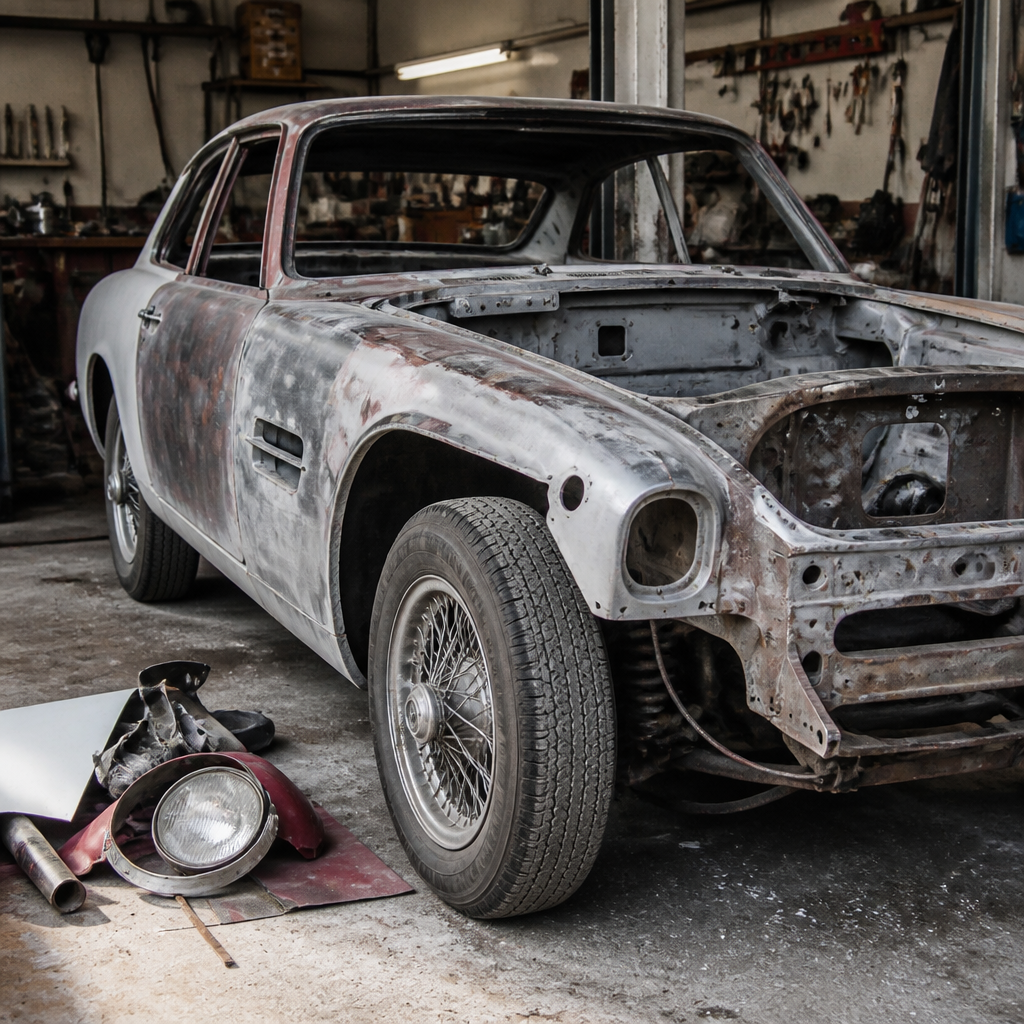
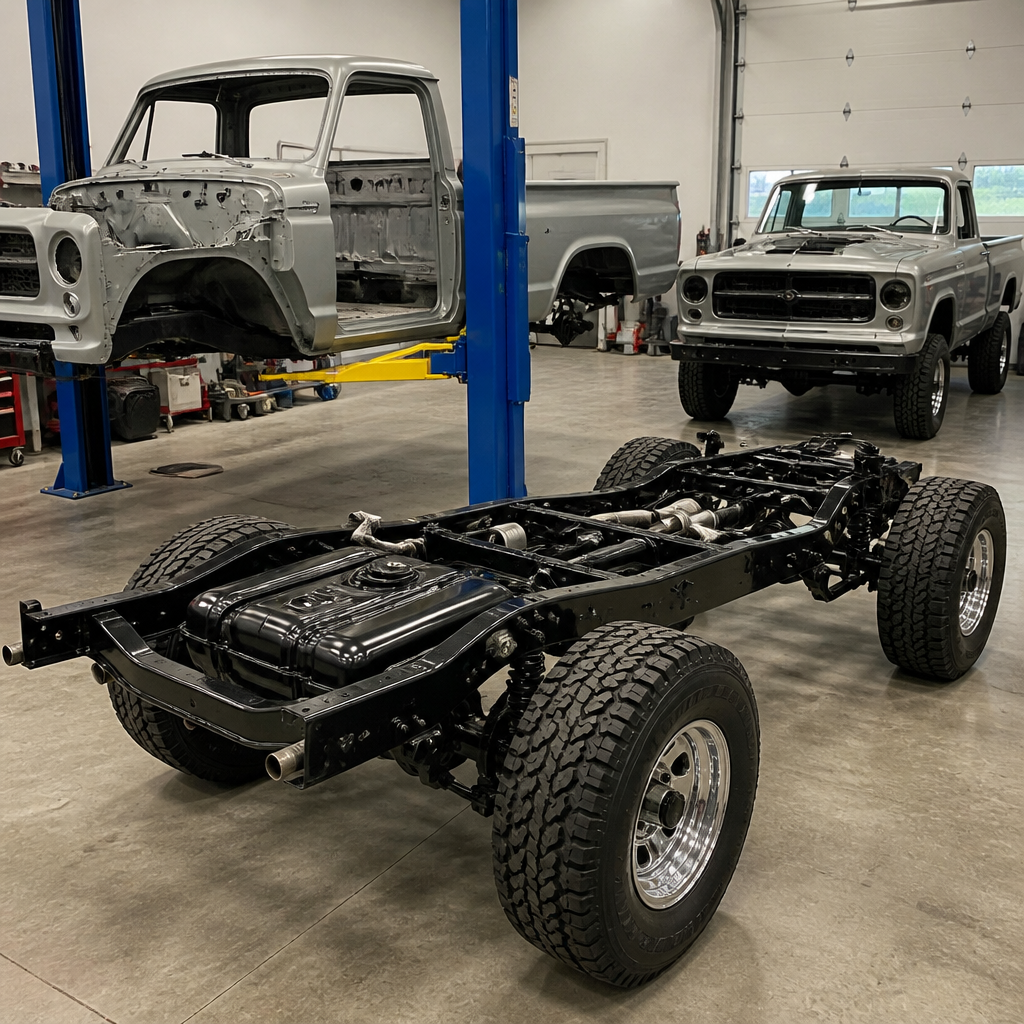
A frame-off restoration is the most comprehensive method used on vehicles built with a separate body and frame. The body is removed from the chassis, typically with a lift, gantry, or reinforced body cart, and the project is divided into major assemblies: frame, suspension, axles, brakes, drivetrain, body shell, interior, trim, and electrical. Once separated, the restorer can media blast or chemically strip the frame, inspect welds and crossmembers, check for collision damage, measure squareness, and repair rust in areas that are otherwise inaccessible. Fuel and brake lines can be routed cleanly, body mounts replaced, and underbody coatings applied correctly. This level of access is why frame-off restoration is the benchmark for show-level work and for vehicles with significant corrosion.
In practice, a true frame-off project is not just a body lift followed by paint. It usually includes disassembly to bare frame, cataloging parts, photographing reference points, tagging hardware, and deciding which components will be restored, replated, rebuilt, or replaced. On a classic pickup, for example, the chassis may get new bushings, springs, shackles, shocks, steering components, wheel bearings, and hard lines before the body is reunited. The body shell may need floor pans, cab corners, rocker panels, and patch panels repaired while off the frame, because access is dramatically better. If the vehicle is intended for judged competition, details such as factory overspray patterns, phosphate-and-oil finishes, and correct fastener markings also become part of the plan.
What a Frame-On Restoration Involves
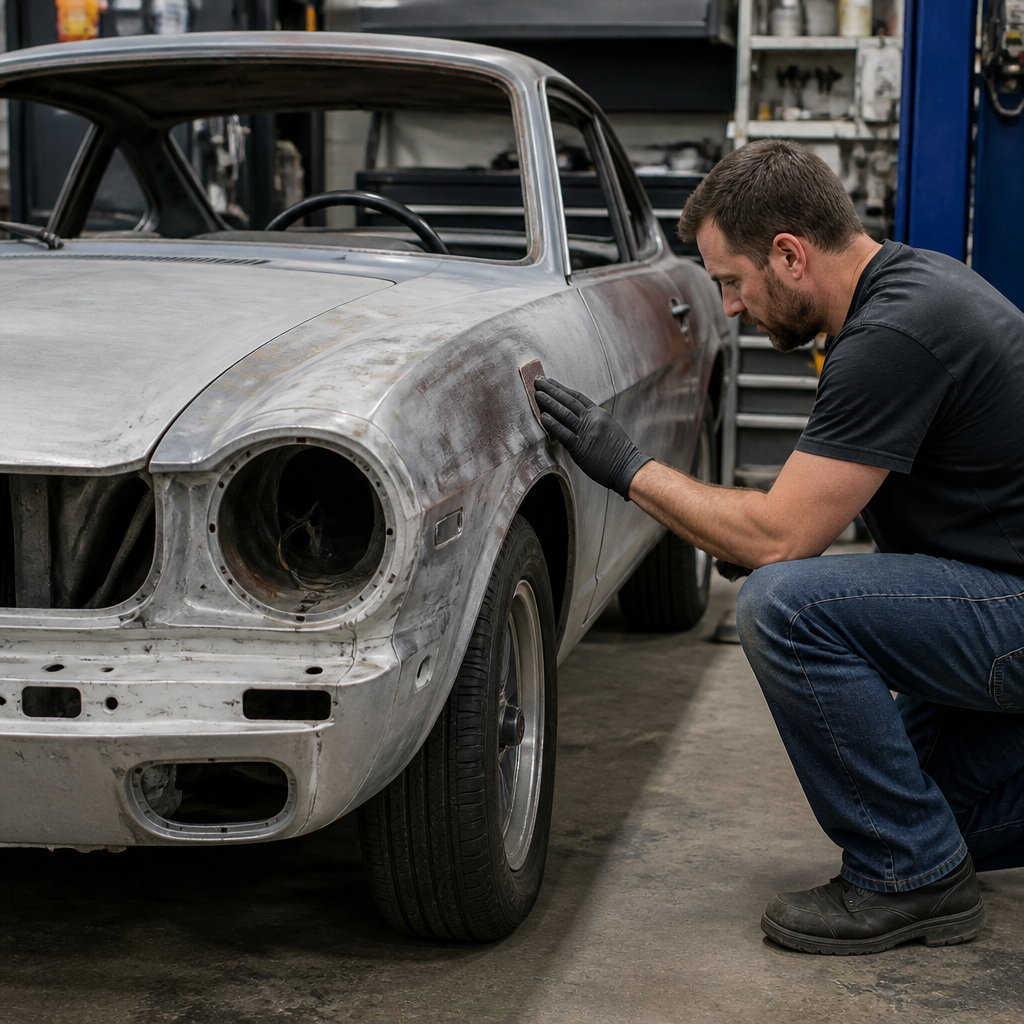
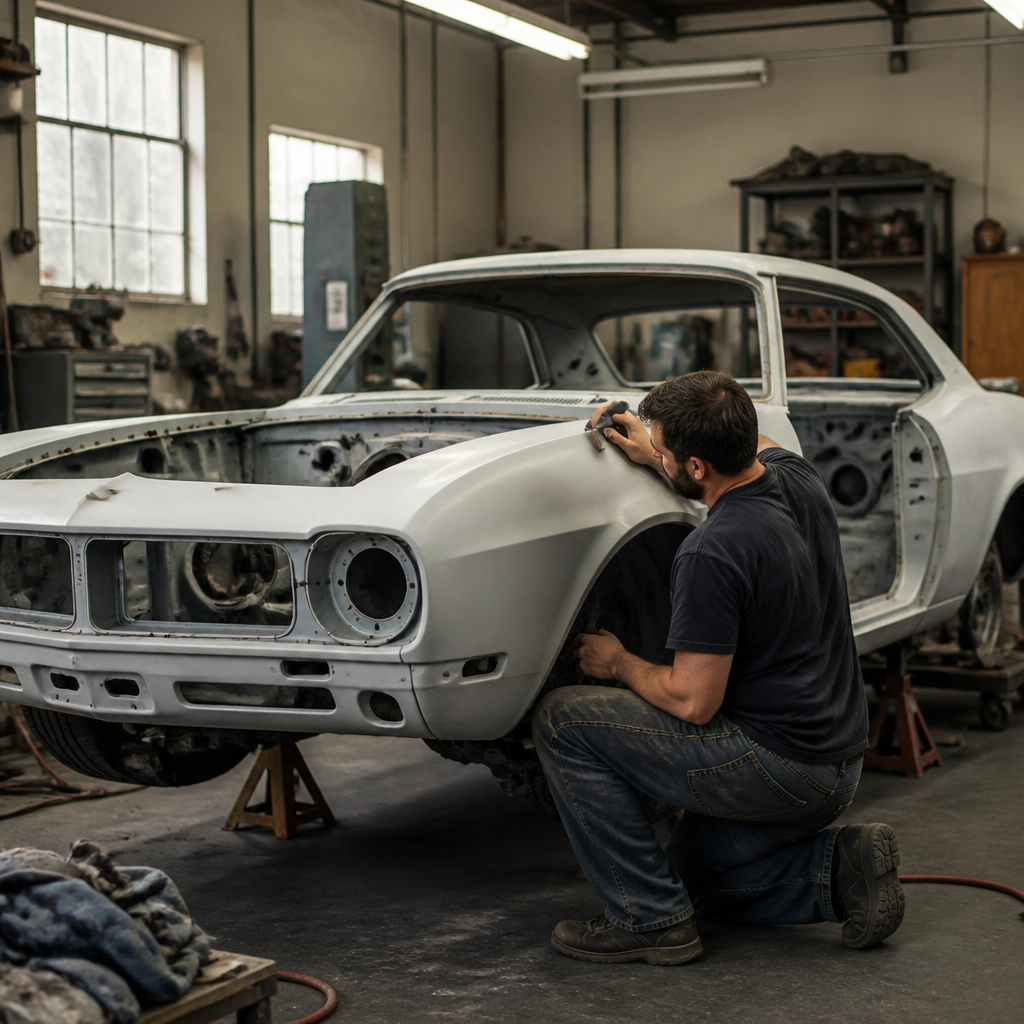
A frame-on restoration keeps the body attached to the chassis and restores the vehicle in place. This approach is common when the goal is a strong driver-quality result rather than a body-off rebuild, or when the vehicle’s structure is fundamentally sound and the owner wants to control costs. A frame-on project may still be extensive. The drivetrain can be removed, suspension serviced, body panels repaired, interior redone, wiring updated, and paint refinished without lifting the body from the frame. Shops often choose frame-on restoration for lower-mileage survivors, partial restorations, or cosmetic renewals where hidden underbody rust is limited and the frame has already been evaluated as serviceable.
Frame-on does not mean careless or incomplete. A quality frame-on restoration includes disciplined inspection, rust mitigation, and mechanical sorting. On a classic muscle car with a solid floor, for example, a restorer may drop the fuel tank, remove the front clip, rebuild the front suspension, replace bushings and brakes, detail the engine bay, and repaint the exterior while leaving the body mounted. This saves labor and reduces the risk of disturbing factory panel fit. It is also practical when preserving original seam sealer, date-coded glass, factory undercoating, and production-line character matters more than making every hidden surface look new. The limitation is access: some corrosion, line routing, and frame repairs remain harder to address completely.
Key Differences in Scope, Cost, and Results
The simplest answer to “What’s the difference between frame-off and frame-on restoration?” is this: frame-off restores the vehicle from the chassis up with total access, while frame-on restores it largely assembled with selective access. That difference changes scope, budget, schedule, and finish quality. Frame-off projects take longer because teardown, documentation, blasting, subassembly work, and reassembly all expand labor hours. They also cost more in consumables, storage, replating, coatings, and replacement hardware. Frame-on projects move faster and can deliver excellent results, but they usually involve strategic compromise. Areas above the frame rails, body mount pockets, and enclosed seams may be cleaned and treated, not fully refinished.
| Factor | Frame-Off Restoration | Frame-On Restoration |
|---|---|---|
| Body removal | Body separated from chassis | Body remains mounted |
| Access to frame and underbody | Excellent, including hidden areas | Limited by body position |
| Typical cost | Highest due to labor and parts | Lower, though still substantial |
| Project duration | Longest, often many months or years | Shorter when corrosion is limited |
| Best use case | Severe rust, concours builds, full rebuilds | Driver restorations, preservation, partial rebuilds |
| Originality preservation | May replace more factory finishes | Often preserves more untouched details |
Results depend on execution, not just method. I have seen expensive frame-off builds with poor gaps, incorrect hardware, and low-quality bodywork, and I have seen frame-on restorations that drove beautifully and looked right because the shop was realistic about the car’s condition. Still, if two shops work to the same standard, frame-off gives the better chance of uncovering problems early and correcting them comprehensively. It is especially valuable when the vehicle has old collision damage, rust around body mounts, cracked suspension brackets, or contaminated undercoating hiding metal loss.
How to Choose the Right Restoration Approach
The right choice starts with the vehicle type, the condition of the structure, and the intended outcome. First, confirm whether the vehicle actually has a separate frame. Many classics, especially postwar trucks and large domestic cars, do. Many others use unibody construction, where “frame-off” is not technically applicable in the same way. On a unibody vehicle, the comparable decision is between a complete shell rotisserie restoration and a more limited in-place restoration. For body-on-frame vehicles, inspect the frame rails, body mounts, floor pans, trunk floor, rocker panels, suspension pickup points, and known corrosion traps. A borescope, magnet, paint thickness gauge, lift inspection, and compression test all help define scope before you spend money.
Then match the method to the mission. If the goal is concours competition, major horsepower upgrades, or a long-term keep-forever build, frame-off often makes the most sense. If the vehicle is a largely complete survivor that needs paint, mechanical refreshing, weatherstrips, and interior work, frame-on may be smarter. Budget matters, but so does stopping point discipline. Many owners begin with a frame-on budget and drift into frame-off spending after hidden rust appears or the “while we’re here” list grows. The best shops write a restoration plan with assumptions, exclusion notes, milestones, and a change-order process. That level of project control prevents emotion from driving the estimate.
Inspection, Planning, and Common Mistakes
Restoration basics begin with inspection, not wrenching. Before any disassembly, document trim fit, panel gaps, wiring routes, hose routing, shim locations, body mount stack-up, brake line clips, and fastener finishes. Use hundreds of photos, labeled bags, and a spreadsheet or project management app. I strongly prefer creating a parts condition matrix that marks each component as reusable, rebuildable, restorable, or replaceable. This avoids duplicate purchases and helps sequence machine work, plating, upholstery, and paint. For rare models, check parts support early through suppliers such as Ames Performance, LMC Truck, Steele Rubber Products, Original Parts Group, or marque-specific clubs. Availability often determines whether a project stays faithful to factory specification or shifts toward restomod decisions.
The most common mistake is underestimating hidden damage. Old undercoating can conceal perforation, and shiny paint can hide filler over rusted seams. Another frequent error is removing the body without proper bracing, especially on convertibles or rust-weakened shells. Door openings can shift, creating costly alignment problems later. Shops should measure reference points before disassembly and brace the shell as needed. Other mistakes include mixing hardware, discarding date-coded parts too quickly, blasting thin body panels too aggressively, and painting the frame before test-fitting suspension and body mounts. Good restoration work follows sequence: inspect, measure, disassemble, repair structure, mock up, finish, then assemble. Skipping mock-up is how fresh paint gets chipped and panel gaps end up uneven.
Originality, Safety, and Resale Value
Owners often assume frame-off automatically produces the highest value, but the market is more nuanced. For top-tier collector vehicles sold through Mecum, Barrett-Jackson, Bring a Trailer, or marque-focused auctions, documentation quality matters almost as much as the restoration level itself. A photo book showing body separation, metal repairs, drivetrain rebuild invoices, and casting-number verification builds confidence. However, originality still carries weight. A well-preserved survivor with factory spot welds, chalk marks, and matching driveline may be worth more than an over-restored example finished beyond factory standards. That is why the best restorers decide early whether the project is preservation, restoration, or modification. Mixing those goals usually confuses buyers.
Safety should carry equal importance. A frame-on cosmetic refresh can look impressive while leaving brittle fuel hoses, corroded hard lines, worn steering joints, or cracked body mounts untouched. Conversely, a frame-off rebuild creates the opportunity to renew braking, steering, and suspension systems to a very high standard. If the vehicle will be driven regularly, ask whether the project includes dual-circuit master cylinders where appropriate, correct brake line routing, modern tire selection, cooling system upgrades, and electrical protection such as fusible links or properly rated fuses. Resale value follows from honesty. Buyers pay for quality workmanship, thorough records, and coherent choices. They discount shiny vehicles that present well online but show shortcuts underneath.
Building a Restoration Hub Strategy
As a hub topic under Restoration & Maintenance, frame-off vs frame-on restoration should guide readers into the wider restoration basics journey. The natural next subjects are rust repair fundamentals, body-on-frame versus unibody construction, how to inspect a project car before purchase, paint preparation steps, engine rebuild planning, suspension bushing selection, wiring harness replacement, weatherstrip installation, and how to budget a classic car restoration realistically. Each of those topics supports better decision-making on this page because restoration method is never isolated. It affects labor sequence, tool needs, parts ordering, and how originality is judged.
The core takeaway is straightforward. Frame-off restoration is the right choice when a body-on-frame vehicle needs comprehensive structural, mechanical, and cosmetic work, or when the goal is top-tier finish and total access. Frame-on restoration is the right choice when the structure is sound, the budget is tighter, the timeline matters, or preserving factory character is part of the appeal. Neither method is universally better. The best method is the one that honestly fits the vehicle’s condition and the owner’s objective. Start with a rigorous inspection, insist on a written plan, and document every step. If you are building your restoration roadmap, use this page as your baseline and move next into rust assessment, budgeting, and project-car inspection so every later decision rests on solid fundamentals.
Frequently Asked Questions
What is the main difference between a frame-off restoration and a frame-on restoration?
The main difference comes down to how far the vehicle is disassembled and whether the body is separated from the chassis. In a frame-off restoration, the body is removed from the frame so the restorer can access, inspect, repair, and refinish the frame, suspension, steering, brakes, fuel system, drivetrain mounting points, and underside of the body as individual assemblies. This is the most comprehensive approach and is often used when a vehicle has widespread rust, old accident damage, significant structural wear, or when the goal is a near-total rebuild to factory-correct or show-quality standards.
In a frame-on restoration, the body stays attached to the frame. The vehicle is still restored, but the work is performed with the body in place. That usually means repairs are more targeted and less invasive, focusing on visible bodywork, interior, engine bay, mechanical refreshes, paint, trim, and selected undercar components that can be accessed without lifting the body. Frame-on restoration is often the practical choice when the vehicle is solid overall, the frame is in decent condition, and the owner wants to improve appearance, safety, and drivability without taking the project completely apart.
In simple terms, frame-off is a full separation and rebuild strategy, while frame-on is a more limited restoration method that preserves the vehicle’s basic assembled structure during the work. Neither approach is automatically better in every case. The right choice depends on the vehicle’s condition, your goals, your budget, and how original or detailed you want the finished restoration to be.
When should you choose a frame-off restoration instead of a frame-on restoration?
A frame-off restoration makes the most sense when the vehicle needs deep structural, mechanical, and cosmetic attention that cannot be properly addressed with the body still mounted. This is especially true for body-on-frame classics with severe corrosion on the frame, floor supports, body mounts, suspension attachment points, or hidden underside areas. If rust is trapped between the body and frame, or if years of grease, scale, cracked bushings, worn brake lines, and deteriorated fuel lines have built up underneath, removing the body allows those issues to be corrected thoroughly instead of patched around.
It is also the better choice when accuracy and completeness matter. If the goal is a high-end restoration, concours-style presentation, or a long-term keeper that you want rebuilt to a very high standard, frame-off work gives access to details that simply cannot be refinished or rebuilt properly during a frame-on project. The restorer can strip and coat the frame, rebuild suspension and steering systems off the vehicle, replace body mounts, restore the underside of the body, and verify the integrity of parts that are otherwise hard to inspect. That level of access usually leads to better workmanship and a cleaner final result.
Another reason to choose frame-off is safety and longevity. If a classic truck, full-size American car, or early SUV has been sitting for decades, it may have hidden structural weaknesses that only become obvious after disassembly. A frame-off process reduces guesswork. It allows every major system to be evaluated individually, which is important if you plan to drive the vehicle regularly, tow with it, or keep it for many years. While it costs more and takes longer, it can prevent expensive surprises later and often results in a stronger, more reliable restoration overall.
Is a frame-on restoration ever the better option?
Yes, absolutely. A frame-on restoration can be the better option when the vehicle is fundamentally solid and does not require a full structural teardown. Many classics have decent frames, intact body mounts, and manageable surface rust, but still need substantial work in paint, interior, weatherstripping, trim, engine tuning, brakes, suspension service, or electrical cleanup. In those cases, leaving the body on the frame saves labor, simplifies the project, and allows money to be spent where it will make the biggest difference.
Frame-on restoration is also a smart choice when preserving originality matters more than fully reengineering every component. Some owners want a survivor-style restoration or a clean, honest driver that keeps much of its factory character intact. A frame-on approach can support that goal by avoiding unnecessary disassembly, reducing the risk of disturbing factory seams and fitment, and maintaining more of the vehicle’s assembled history. For unrestored classics with good bones, less invasive work can sometimes be the more respectful and sensible path.
It is also better for many real-world budgets and timelines. A frame-off project can escalate quickly once the body is lifted and hidden problems are uncovered. A frame-on restoration is often more predictable because the scope is narrower from the start. If your objective is dependable road use, solid cosmetics, and mechanical confidence rather than a show-field-level rebuild, frame-on restoration can deliver excellent results. The key is being honest about the vehicle’s condition and not using a frame-on approach to avoid problems that really need full disassembly to fix properly.
How do cost and project time compare between frame-off and frame-on restoration?
In most cases, a frame-off restoration costs significantly more and takes substantially longer than a frame-on restoration. That is because labor increases at nearly every stage. The body must be removed safely, cataloged, stored, and later refitted. The frame and body are restored separately, which means more parts handling, more disassembly time, more blasting or stripping, more refinishing, and more reassembly detail. Once everything is apart, additional worn or damaged components are usually discovered, which expands both the parts list and the labor hours.
A frame-on restoration is generally less expensive because it limits how much of the vehicle is dismantled. Even when the work is still extensive, the labor involved in separating and reuniting body and chassis assemblies is avoided. That can make a major difference in shop rates, parts replacement decisions, and overall project management. It also reduces the chance of “while we’re in here” cost creep, where every exposed component suddenly becomes a candidate for replacement or refinishing during a full teardown.
Time follows the same pattern. A frame-on project may be completed in a much shorter window if the vehicle is solid and the work scope is disciplined. A frame-off restoration can stretch into many months or even years depending on parts availability, fabrication needs, outside vendor schedules, and the level of finish expected. For owners, the best way to think about cost and time is not just in totals, but in value. A cheaper restoration is not automatically the smarter one if it leaves serious issues unresolved. Likewise, the most expensive approach is not always necessary if the vehicle does not need that level of intervention. Matching the restoration method to the condition of the vehicle is what prevents wasted money and frustration.
Which restoration method is better for originality, safety, and long-term value?
The answer depends on which of those priorities matters most and on the starting condition of the vehicle. For safety and long-term durability, a frame-off restoration often has the advantage because it allows a complete inspection and rebuilding of the chassis, suspension, steering, brake system, fuel lines, mounts, and structural contact points. If there is hidden rust or fatigue in critical areas, a frame-off process is much more likely to catch and correct it. For a vehicle that will be driven regularly, especially one that has questionable history or visible underbody deterioration, that level of access can be extremely valuable.
For originality, the answer is more nuanced. A frame-off restoration can restore a vehicle to very accurate factory specifications, but it can also lead to over-restoration if the work becomes more perfect than the vehicle would have been when new. A frame-on restoration sometimes preserves more authentic assembly details, finishes, and factory relationships simply because less of the vehicle is disturbed. For collectors who value survivor character or period-correct aging, that can matter. Originality is not only about replacing parts correctly; it is also about knowing when not to take something apart unnecessarily.
As for long-term value, buyers usually respond best to quality, documentation, and suitability of method. A well-documented frame-off restoration on the right vehicle can command strong money because it suggests thoroughness and major investment. But a poor frame-off restoration is not automatically more valuable than a carefully executed frame-on restoration on a solid, honest car or truck. Ultimately, the best value comes from choosing the restoration level that fits the vehicle’s actual needs. If a frame-off was necessary and done correctly, it can add confidence and appeal. If a frame-on restoration was the appropriate method and the results are clean, safe, and well documented, it can also hold value very well. Quality of workmanship always matters more than the label alone.