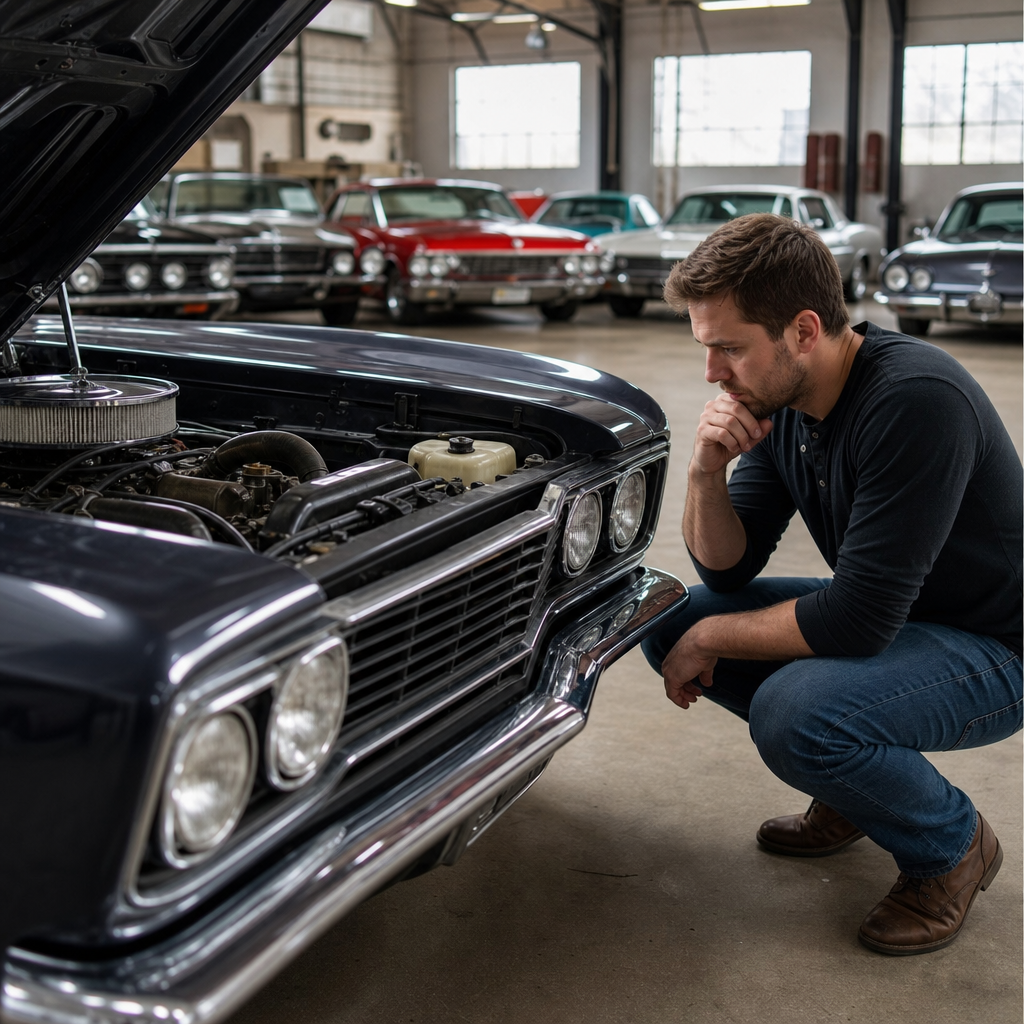
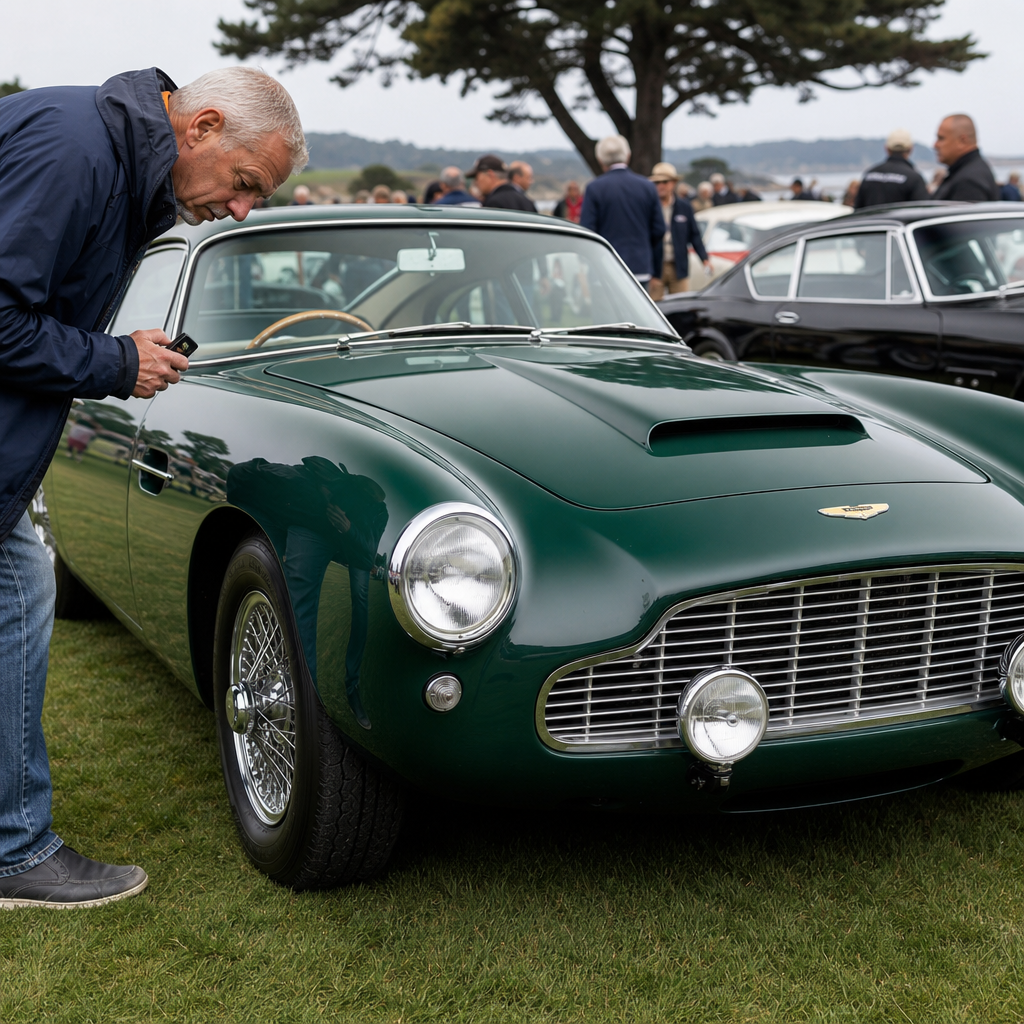
Identifying a rare classic car model starts with separating appearance from provenance, because rarity is rarely obvious from paint, badges, or seller claims alone. In practical terms, a classic car is generally an older vehicle valued for historical significance, design, engineering, or cultural impact, while a rare model is one with unusually low production, survival, or specification counts. Those distinctions matter because two cars that look nearly identical can differ in value by tens or hundreds of thousands of dollars based on body style, engine code, trim package, factory options, build date, or competition history. I have inspected cars that wore convincing emblems and period-correct parts yet turned out to be clones, dealer-modified variants, or later replacements built from common donor cars. Learning how to identify a classic car accurately is therefore not just a hobby skill; it protects buyers, guides restorations, helps insurers set agreed values, and preserves automotive history. The most reliable approach combines serial-number research, factory documentation, component casting dates, marque-specific reference material, and a careful physical inspection. When those pieces align, you can move from guessing what a car resembles to proving exactly what it is. This guide explains the full process, from decoding tags and spotting rare production features to verifying originality and using trusted records when authenticity is contested.
Start with the Vehicle Identity Numbers and Factory Tags
The fastest way to identify a rare classic car model is to locate and decode every factory identification point on the car. Depending on era and manufacturer, that includes the VIN, chassis number, body plate, trim tag, firewall tag, engine stamp, transmission stamp, axle code, and sometimes a hidden or confidential number stamped on the frame or cowl. On post-1981 cars sold in the United States, the 17-character VIN follows a standardized format, but many sought-after classics were built earlier, when serial-number conventions varied widely by marque. Chevrolet muscle cars, Porsche sports cars, Jaguar saloons, Mercedes-Benz coupes, and early Ford performance models all use different numbering logic. That means you need a model-specific decoder rather than a generic VIN app.
During inspections, I start by confirming whether the visible VIN plate appears original. Incorrect rivets, disturbed paint around the plate, mismatched fonts, or modern fasteners are immediate warning signs. Then I compare the VIN to title paperwork, registration records, service documents, and, where available, manufacturer archives. For example, a 1969 Chevrolet Camaro Z/28 has clues in the cowl tag and drivetrain codes, but the trim tag alone cannot prove a genuine Z/28 because Chevrolet did not explicitly designate that package there. In contrast, many Mopar performance cars can be validated using the fender tag and broadcast sheet if both survive. Porsche’s Kardex or Certificate of Authenticity, BMW Group Archive documentation, and Mercedes-Benz Classic Center records can also confirm original engine, paint, and delivery information. The key lesson is simple: rare model identification begins with numbers, and every number must agree with the rest of the car.
Decode Production Details That Separate Common Cars from Rare Variants
Once the identity numbers are recorded, the next step is decoding the production details that distinguish an ordinary classic from a rare factory variant. Rarity often comes from a specific combination rather than the nameplate itself. A Ford Mustang may be common, but a Boss 429, Shelby GT350 with documented provenance, or low-production special-order color car is not. A Porsche 911 may be desirable, yet a homologation-focused Carrera RS, limited-production Speedster, or documented M-code example occupies a different market entirely. In British and European marques, rarity can hinge on coachbuilder involvement, left-hand-drive versus right-hand-drive production totals, or a short-run engine specification introduced midyear.
Manufacturers usually tracked these distinctions through option codes, body codes, market designations, and engine numbers. Build sheets, dealer invoices, warranty cards, and production certificates help decode them. I have seen valuable cars misidentified because owners focused only on model badges while overlooking a replacement engine block or an interior trimmed in a color never offered for that year. Conversely, I have seen understated cars dismissed as ordinary despite carrying highly unusual factory combinations verified by paperwork. This is why production numbers alone are not enough. A model may have been produced in large volume overall but remain rare in a particular body style, transmission pairing, emissions specification, or export-market trim. Serious identification work means understanding where the exact car fits within the manufacturer’s production hierarchy.
| Verification Point | What to Check | Why It Matters |
|---|---|---|
| VIN or chassis number | Format, location, matching paperwork | Confirms model series, year range, assembly plant |
| Body or trim tag | Paint, interior, body style, option codes | Separates standard cars from special trims or packages |
| Engine and transmission stamps | Date codes, partial VIN, suffix codes | Shows whether major components are original or period-correct |
| Casting dates and parts numbers | Block, heads, intake, carburetor, axle | Validates build chronology and catches replacement parts |
| Factory documents | Build sheet, invoice, archive certificate | Provides the strongest proof of original specification |
| Physical features | Brakes, suspension, gauges, trim, welds | Supports documentation and exposes clones or conversions |
Inspect Body, Chassis, and Trim for Model-Specific Features
Physical inspection is where paper claims either hold up or collapse. Every rare classic car model has construction details that are difficult to fake perfectly. Those details may include reinforcement plates, unique shock towers, larger sway bars, brake cooling ducts, aluminum body panels, homologation fender flares, unique gauge clusters, special seat patterns, or manufacturer-specific weld patterns. On air-cooled Porsche 911s, for example, the right combination of chassis stamping, seam sealer appearance, underbody details, and option labels tells an experienced inspector far more than an exterior ducktail spoiler. On first-generation Camaros and Firebirds, cowl details, subframe characteristics, and factory spot-weld patterns often reveal whether a desirable drivetrain package is authentic or recreated. Jaguar E-Type series changes can be tracked by switches, bonnet latches, seat design, and engine bay layout, not just by registration year.
Trim is another critical clue. Rare cars are often identified by subtle details such as wheel width, tachometer redline, seat upholstery grain, dash veneer, mirror shape, hubcap stamping, or the presence of model-specific scripts and fasteners. Reproduction parts complicate this work because modern suppliers can replicate many visible pieces convincingly. That is why I inspect hidden areas: underside finishes, backside stampings, date codes on glass, and hardware plating consistency. If a supposed low-production competition variant has generic underpinnings, inconsistent aging, or features that were never combined by the factory, it deserves skepticism. Cosmetics can imitate a rare model, but the shell and structure usually tell the truth.
Verify Originality, Matching Numbers, and Restoration Quality
The phrase matching numbers is often used loosely, so it helps to define it carefully. In most markets, it means the car retains the engine, and sometimes the transmission and rear axle, installed or designated by the factory. However, standards vary by marque. Ferrari Classiche, Porsche archive records, Corvette judging standards, and Mopar registries all evaluate originality with different emphasis. A rare classic can still be genuine without every original component, but value, collectability, and historical standing change significantly when key parts are missing. An original high-performance engine replaced in the 1970s with a service block may be acceptable for driving enjoyment, yet it is not equivalent to a verified original drivetrain car.
Restoration quality also affects identification because over-restoration can erase evidence. Fresh undercoating can conceal repairs, re-stamped engine pads can imitate original numbers, and replacement body shells can blur identity altogether. I look for consistency between wear patterns, component dates, and restoration invoices. A car built in March should not carry a drivetrain cast in July unless there is documented factory or warranty history explaining it. Likewise, a car advertised as unrestored should not show reproduction seat foam, modern seam sealer, and recently installed wiring with incorrect colors. Good restorers document their work with photographs, invoices, and notes about replaced components. Those records are valuable because they show exactly what remains original and what was renewed. When originality cannot be preserved, transparent documentation is the next best thing.
Use Documentation, Registries, and Experts to Confirm Rarity
No single source should carry the whole burden of authentication. The strongest conclusions come from stacking evidence across factory records, marque registries, auction archives, club expertise, period road tests, and known production statistics. For American muscle cars, resources such as NCRS judging manuals, Marti Reports for many Fords, Pontiac Historic Services documents, and Galen Govier-style Mopar decoding references are common starting points. For European classics, factory heritage departments, brand clubs, FIVA-affiliated organizations, and specialist historians often provide production verification and specification guidance. Auction houses such as RM Sotheby’s, Gooding Christie’s, Broad Arrow, and Bonhams can also be useful, not as final authorities, but because prior catalog descriptions often summarize known provenance, chassis history, and comparable examples.
Owner forums and registries deserve careful but serious attention. The best ones maintain chassis databases, note surviving examples, and record known colors, options, and ownership chains. They are especially helpful for rare coachbuilt cars, homologation specials, and limited-run performance editions where enthusiasts may know surviving numbers more accurately than broad market databases. Still, registry claims should be cross-checked. I have encountered cars listed as one of ten or one of three with no supporting production bulletin or archive letter behind the statement. Ask what source established the rarity figure and whether the count refers to total production, current survivors, or cars in a specific market. Precision matters. A trustworthy identification file includes copies of archive letters, clear photos of tags and stampings, restoration documentation, expert inspection notes, and a chronology of ownership. That file is what turns a story into evidence.
Recognize Common Red Flags and Market Pitfalls
The classic car market rewards rarity, which is exactly why misrepresentation is common. The most frequent problem is the clone: a standard car upgraded cosmetically or mechanically to resemble a more valuable version. Tribute builds are not inherently unethical if disclosed clearly, but undisclosed clones can mislead buyers and insurers. Other red flags include missing title history, tampered VIN plates, inconsistent fonts on stampings, suspiciously perfect documentation created all at once, and sellers who refuse third-party inspections. Be cautious with statements like barn find, all original, one-owner, or factory prototype unless they are supported by records. Genuine prototypes and pilot-build cars usually have unusually strong paper trails because manufacturers tracked them closely.
Imported classics require extra diligence. Grey-market vehicles may have replacement tags, non-native engines, or registration histories that begin long after production. Cars rebuilt from multiple donors can carry legitimate paperwork but questionable physical identity. Corrosion repairs, shell swaps, and re-body work are particularly important in monocoque cars because the chassis is the car. If too much original structure is gone, the legal and collector identity may become debatable. The safest habit is to slow the process down. Before purchase, compare the car against factory literature, inspect it in person or through a marque specialist, and verify every number independently. Rare classic car identification is less about intuition than discipline. The buyers who avoid costly mistakes are the ones who insist on evidence, understand model-specific details, and treat extraordinary claims with measured skepticism.
Identifying a rare classic car model becomes manageable when you follow a repeatable process: decode the numbers, confirm the factory specification, inspect the physical car for model-specific features, verify originality, and support everything with documentation from credible sources. That process matters because rarity lives in details, not just badges. A truly rare car will show consistency between VIN data, tags, casting dates, body features, trim, paperwork, and provenance. When one of those elements conflicts, further research is required before any confident conclusion is made. For enthusiasts, this skill prevents expensive mistakes and deepens appreciation of automotive history. For restorers and collectors, it protects value and guides correct preservation decisions. If you are learning how to identify a classic car, use this page as your starting framework, then move into model-specific guides, marque archives, and expert inspections. The more evidence you gather, the closer you get to the truth of the car in front of you.
Frequently Asked Questions
How can I tell whether a classic car is actually rare or just old?
The first step is to separate age from rarity. A car can be decades old and still be relatively common, while a truly rare classic usually stands out because of low production numbers, limited surviving examples, unusual factory specifications, or documented historical significance. In other words, rarity is not something you confirm by paint color, trim pieces, or a seller’s description alone. Two cars may appear almost identical at a glance, yet one may be a standard production model and the other a short-run variant, special homologation edition, export-only specification, or coachbuilt version with dramatically different collectibility.
To identify true rarity, start with the model designation, production year, engine type, body style, and original market. Then compare that information against factory records, marque registries, club archives, period brochures, and recognized reference guides. Pay close attention to VIN or chassis numbers, body tags, engine stamps, transmission codes, and option plates, because these often reveal whether the car was built in a scarce configuration. Survival rate matters too. Some models were produced in reasonable numbers but are now rare because few remain intact. A smart approach is to ask not only, “How many were built?” but also, “How many still exist in this exact configuration?” That is often where real rarity begins.
What documents and identification numbers are most important when verifying a rare classic car model?
The most important evidence is always the documentation that ties the physical car to its original factory identity. That usually begins with the VIN or chassis number, but it should not end there. On many classic cars, especially older or specialty models, the chassis plate, body plate, engine number, transmission number, axle tag, and trim or paint codes can all provide critical clues. A rare model may be defined by a specific engine series, a narrow production sequence, a special body code, or a unique combination of options that only appears in the records when the numbers are checked carefully.
Beyond the car itself, provenance documents are essential. These can include build sheets, factory production records, heritage certificates, dealer invoices, original registrations, service records, ownership history, restoration receipts, and period photographs. If the vehicle is claimed to be a limited-production or high-performance variant, look for documentation that confirms it left the factory that way rather than being converted later. Matching-numbers status can also matter, particularly for cars where originality strongly affects value. However, matching numbers alone do not automatically make a car rare; they simply strengthen authenticity. The best verification comes from consistency: the identification numbers, paperwork, factory references, and physical features should all support the same story without contradictions.
Can badges, trim, or cosmetic details be trusted when identifying a rare model?
They can be helpful, but they should never be your sole source of proof. Badges, grilles, stripes, wheels, interior trim, and even entire body panels are often swapped during restorations or added later to imitate a more desirable version. That is especially common with muscle cars, competition-inspired variants, luxury trims, and limited-edition classics where the visual differences are easy to copy. A convincing cosmetic presentation may suggest what the car is supposed to be, but it does not establish what it actually was when it left the factory.
That is why experienced buyers and collectors use cosmetic details as supporting evidence rather than final evidence. If a car carries rare-model emblems, those details should align with the VIN sequence, body code, engine stamping, original color and trim records, and documented production data. For example, a special-performance model might require a certain carburetion setup, braking system, suspension specification, or interior package that would be expensive and difficult to fake accurately across the entire car. The more components that line up correctly and consistently, the more credible the identification becomes. In short, appearance can point you in the right direction, but provenance and factory-correct identifiers are what confirm the car’s true identity.
Why do production numbers and surviving examples matter so much in determining rarity?
Production numbers tell you how uncommon a model was when new, while survival numbers help explain how uncommon it is today. Both are important, and they are not always the same story. Some classics were built in low numbers from the start, making them inherently rare. Others were built in much larger quantities but became scarce over time because they were raced, scrapped, neglected, modified, or simply used up. As a result, a car’s market rarity may depend as much on how many correct examples remain as on how many originally left the factory.
This is also where specification counts become especially valuable. A model may seem common overall, but the exact configuration may be rare. For example, there may have been thousands of a certain model produced, but only a small fraction with a particular engine, transmission, body style, right- or left-hand-drive arrangement, export-market setup, performance package, or factory color combination. Serious identification therefore goes beyond headline production totals. It asks detailed questions about how the car was equipped and where it fits within the production run. The more precisely you define the configuration, the better you can judge whether the vehicle is genuinely rare or simply part of a well-known, visually similar model family.
What is the safest way to authenticate a rare classic car before buying or valuing it?
The safest approach is to combine your own research with expert verification. Start by gathering every available detail from the seller: VIN or chassis number, engine and transmission numbers, ownership history, restoration records, and any factory or heritage documentation. Then compare that information with trusted marque resources, registries, auction archives, club experts, and model-specific reference books. If the car is valuable enough for rarity to be a major selling point, do not rely on verbal assurances or generic appraisals. Rare classics deserve model-specific scrutiny.
It is also wise to hire an independent specialist who knows that exact make and model family. A marque expert, experienced restorer, or qualified inspector can often spot inconsistencies that a general enthusiast would miss, such as incorrect stamp fonts, replacement tags, altered spot welds, non-original body shells, restamped engines, or parts from a more common donor car. In high-value cases, the goal is not merely to confirm that the car looks right, but to confirm that its identity, components, and history hold up under close examination. That level of due diligence protects you from overpaying, helps establish accurate value, and gives you confidence that the rarity being claimed is real, documented, and defensible.