A classic car VIN is the fastest reliable starting point for identifying what a vehicle is, where it was built, when it was produced, and whether its major components still match the story on the title. If you want to decode a VIN on a classic car, you are really learning how to identify a classic car correctly, because the VIN ties together the body, engine family, assembly plant, production sequence, and the documentation that proves authenticity. In the collector market, those details affect value, insurability, registration, parts sourcing, and restoration decisions.
VIN stands for Vehicle Identification Number, but with classic cars the term needs context. Modern cars use the standardized 17-character VIN mandated for the 1981 model year onward. Earlier vehicles often used shorter serial numbers, manufacturer-specific identification tags, body plates, engine stampings, trim tags, and frame numbers. In day-to-day appraisal work, I treat all of those identifiers as part of the VIN decoding process, because owners usually need one practical answer: what exactly is this car, and is it represented honestly?
This matters because classic car identification errors are common. Sellers confuse model years, titles follow state-issued engine numbers instead of body serials, replacement cowl tags muddy originality, and internet decoders often fail on pre-1981 formats. A Mustang with a correct-looking badge can actually be a converted coupe. A Chevrolet with SS emblems may have started life as a base Malibu. A Porsche 356 body number does not tell the same story as its chassis number. Accurate identification protects buyers from overpaying, helps restorers order the right components, and gives owners a factual basis for valuation and historical research.
The good news is that decoding a classic car VIN is systematic. You locate the primary number, confirm the plate is original, break the characters into manufacturer-defined meanings, compare them to trim tags and drivetrain stampings, and verify the findings with factory references, marque registries, and title documents. Once you understand that process, you can identify most classic cars with confidence, even when the numbering system predates the modern 17-digit standard.
Start with the right identifier: where classic car VINs are found and what they mean
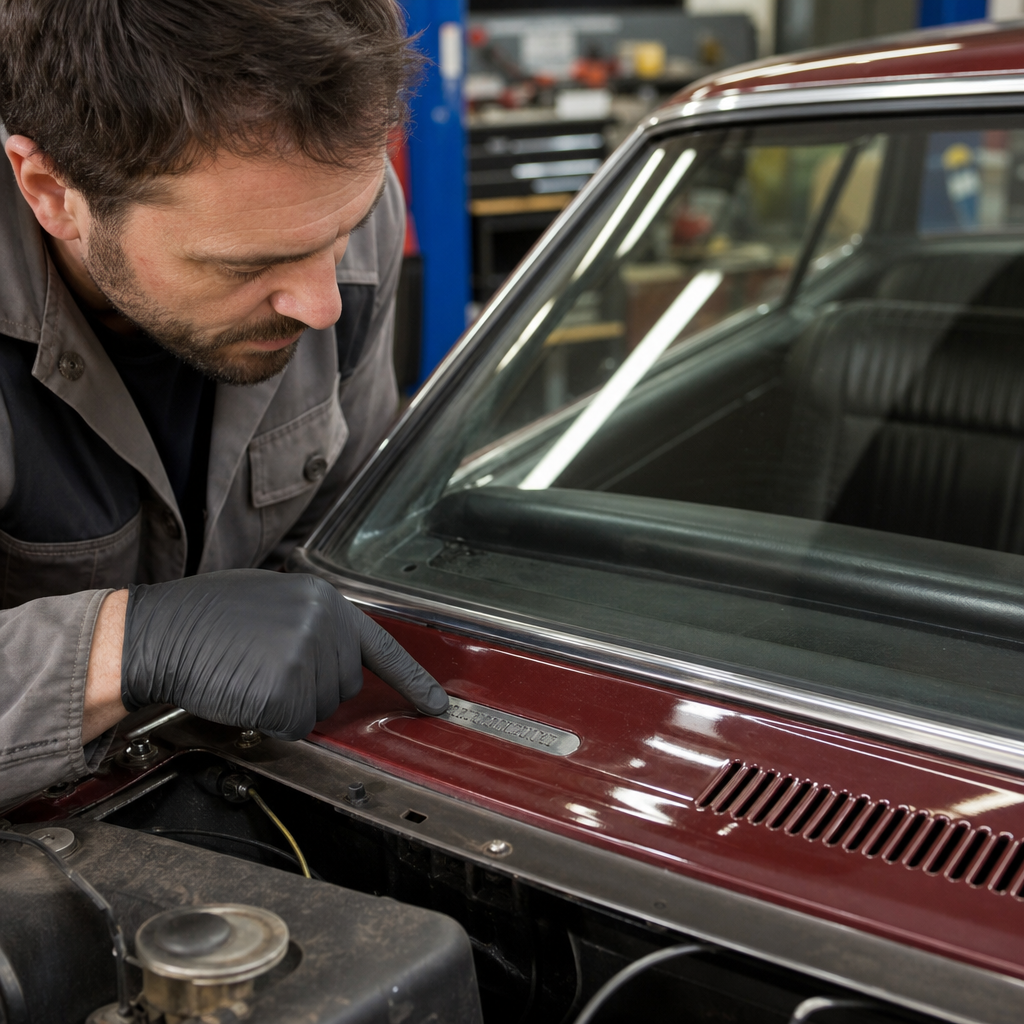
The first step is knowing which number counts as the primary identifier for your specific vehicle. On many American classics from the 1950s through 1970s, the VIN or serial number appears on the dashboard, driver-side door pillar, hinge pillar, A-pillar, firewall, or cowl. On some prewar cars it may be on the frame rail or a patent plate. European classics often use a chassis number plate in the front trunk, engine bay, bulkhead, or inner fender. British cars can have commission numbers, chassis numbers, and body numbers that are related but not interchangeable.
Use a flashlight, inspection mirror, camera, and gentle cleaning materials. Do not sand or aggressively wire-brush a plate, because original fasteners, stamp depth, and plate finish are clues to authenticity. I start by photographing the plate in place, then compare the font, rivets, alignment, and mounting location against factory references. Rosette rivets on a 1960s GM plate, for example, look different from hardware-store pop rivets. If the plate appears recently installed, crooked, or attached with the wrong fasteners, stop and investigate before assuming the number is valid.
You also need to separate the VIN from supporting tags. A Fisher Body cowl tag on a Chevrolet, a buck tag on a Ford, or a body plate on a Mopar contains useful information about body style, trim, paint, and build scheduling, but it usually is not the legal VIN. Likewise, an engine stamping can confirm whether the engine is original or period-correct, yet it may not match the title in states that once titled cars by engine number. Correct identification comes from reading the primary serial number in context with every other factory marking.
How pre-1981 VIN decoding works on classic cars
Before 1981, there was no single universal VIN structure across all manufacturers. Instead, each brand created its own serial format, often varying by division, year, plant, and market. That means classic car VIN decoding is not about memorizing one chart. It is about obtaining the correct factory decoding reference for the exact make and model year, then interpreting each character in order.
On many American cars, the serial can include a division code, series designation, body style, engine code, model year, assembly plant, and sequence number. For example, a 1967 Chevrolet Camaro VIN beginning 124377N tells you a great deal: 1 for Chevrolet, 24 for V8 Camaro series, 37 for sport coupe body style, 7 for 1967, and N for Norwood assembly. The remaining digits are the production sequence. A 1965 Ford Mustang VIN such as 5F07C123456 decodes as 1965 model year, Dearborn assembly, hardtop body, C-code 289 V8, then the unit number. Mopar, AMC, Volkswagen, Mercedes-Benz, Jaguar, and Porsche each use different logic.
The sequence number itself matters. It can reveal rough production timing, support claims about early or late build examples, and help match drivetrain stampings on cars where the partial VIN was stamped on the engine block or transmission case. However, a sequence number alone never proves rarity. Sellers often advertise “low VIN” examples as inherently valuable, but value depends on specification, authenticity, condition, options, and provenance more than serial order.
For pre-1981 vehicles, the best sources are factory service manuals, assembly manuals, marque club publications, Standard Catalog references, Marti Auto Works reports for many Fords, GM documentation services, Chrysler historical resources, Porsche Kardex or Certificate of Authenticity alternatives, and registries maintained by recognized owners’ clubs. Generic decoder websites are useful for orientation, but they frequently omit running changes and regional exceptions.
Decode the number, then verify body style, engine, trim, and plant data
Once you break down the VIN, cross-check every decoded element against the car itself. If the VIN identifies a coupe, but the car is presented as a factory convertible, you may be looking at a conversion. If the VIN indicates a six-cylinder base model, but the car now carries big-block badges and premium trim, the upgrades may be cosmetic rather than original. This is where classic car identification becomes detective work rather than simple number reading.
Body tags add critical context. On General Motors products, the cowl tag can confirm body style, original paint color, trim code, and build date. On Mopars, the fender tag and broadcast sheet can reveal option packages, axle ratios, transmission type, and interior details. Ford products may have a door data plate listing body, color, trim, date, district sales office, axle, and transmission. None of these tags should override the VIN, but they should agree with it.
The engine and transmission are the next checkpoint. Many muscle-era cars carry partial VIN stampings on the engine pad and transmission case. Matching numbers means those stampings align with the vehicle serial and the date codes are logically earlier than final assembly. It does not mean every casting date is identical, only that the parts fit a believable production timeline. In practical terms, a numbers-matching car generally commands a premium because it supports originality, especially on high-value models like big-block Corvettes, Hemi Mopars, Boss Mustangs, and air-cooled Porsches.
| Identifier | Typical Location | What It Confirms | Common Problem |
|---|---|---|---|
| VIN or chassis plate | Dash, pillar, firewall, trunk, bulkhead | Legal identity, year, plant, series | Replacement plate or title mismatch |
| Cowl or trim tag | Firewall or cowl area | Body style, paint, trim, build date | Reproduction tag with altered codes |
| Engine stamping | Block pad, flange, or machined boss | Engine type and possible VIN derivative | Restamp or non-original replacement engine |
| Transmission stamping | Case pad or housing | Original drivetrain pairing | Unreadable stampings after rebuilds |
| Frame or hidden number | Frame rail, body seam, hidden panel | Anti-theft verification | Corrosion, paint, or poor access |
When all identifiers agree, you have a strong foundation for authentication. When they conflict, the car may still be legitimate, but it needs a documented explanation such as a state-assigned VIN, warranty replacement engine, or earlier retitle under an old numbering practice.
Red flags, fraud risks, and title issues every buyer should check
The most expensive mistakes happen when a VIN is read without checking whether it belongs to the car. Fraud usually follows value. High-performance muscle cars, rare convertibles, limited-production homologation models, and desirable trim packages are common targets for rebodying and cloned identities. A clone is not automatically illegal if represented honestly, but a rebodied or retagged car sold as an original factory example can create major financial and legal exposure.
Watch for fresh rivets, disturbed paint around plates, inconsistent fonts, unusually clean tags on otherwise aged cars, and titles that use numbers not found anywhere on the vehicle. Check hidden or confidential VIN locations where the manufacturer stamped anti-theft numbers. On many 1960s and 1970s American cars, partial VINs appear on the frame or body in concealed areas. These are essential when a public tag looks suspicious.
Title practices complicate older vehicles. Some states historically titled by engine number. Imported classics may have customs paperwork using a chassis number format that differs slightly from local registration records. Early cars can have abbreviated serials, while reconstructed vehicles may carry state-issued identification plates. None of these situations automatically signals fraud, but they do require careful paper trails. Before purchase, compare the title, bill of sale, registration, insurance documents, and physical stampings character by character.
Professional help is worth the cost on valuable cars. A marque expert, appraiser, or forensic inspector can identify restamps, reproduction tags, and impossible combinations faster than most buyers. In my experience, spending a few hundred dollars on an inspection is cheaper than discovering after purchase that a supposed SS, GTO Judge, or Shelby has no factory basis.
Best sources for classic car VIN decoding and broader vehicle identification
The best decoding source is always a manufacturer-specific reference tied to the exact year and model. Factory shop manuals, assembly manuals, parts books, and dealer data books are stronger than generic lists because they reflect how the company actually coded vehicles. Owners’ clubs are equally valuable because long-time registrars know exceptions, midyear changes, and known fraud patterns.
For American cars, useful sources include the NCRS for Corvettes, the Shelby American Automobile Club, the Pontiac-Oakland Club International, the AACA library, and marque-specific judging manuals. Ford owners often rely on Marti Reports for 1967-up vehicles covered by Ford production databases. Mopar restorers use fender tag decoding guides and original broadcast sheets when available. European enthusiasts often consult factory archives, club registries, and specialists familiar with chassis number sequences for Jaguar, Mercedes-Benz, Alfa Romeo, Porsche, BMW, and Volkswagen.
You should also use this VIN process as the center of a broader identification workflow. To identify a classic car fully, confirm the make and model from the serial, verify year-specific styling cues, check body tag data, inspect casting and date codes, review original literature, and compare the car against documented factory specifications. That broader approach is what turns this page into a hub topic: VIN decoding is the anchor, but accurate identification also depends on trim tags, matching numbers, body features, drivetrain details, and paperwork provenance.
If you are organizing content or research for a restoration, keep separate files for VIN photos, tag transcriptions, title copies, casting numbers, and source references. That record will help with resale, insurance agreed-value policies, concours judging, and future maintenance. It also makes internal cross-checking easier when you move from decoding the VIN to evaluating originality, date codes, factory options, and production rarity.
Conclusion: use the VIN as the foundation, not the final answer
Decoding a VIN on a classic car is the most efficient way to identify what a vehicle truly is, but the number only becomes meaningful when you verify it against tags, stampings, documents, and the car’s physical features. Classic car VINs are not standardized like modern 17-digit numbers, so successful decoding depends on using year- and manufacturer-specific references. Done correctly, the process confirms model year, assembly plant, body style, engine family, and often whether the drivetrain is original.
The practical benefit is simple: better decisions. Buyers avoid clones misrepresented as factory performance cars. Owners register and insure their vehicles correctly. Restorers order parts with confidence. Sellers document authenticity and protect value. Whether you are evaluating a first-project Mustang, a Tri-Five Chevrolet, a Mopar E-body, or a European sports car, the same rule applies: read the primary number, verify every supporting identifier, and treat inconsistencies as questions that need answers, not details to ignore.
If you are learning how to identify a classic car, start by photographing the VIN plate and decoding it with a trusted factory or marque-specific source, then build outward to trim tags, engine stampings, title history, and originality checks. That method will give you a factual foundation for every next step in classic car ownership.
Frequently Asked Questions
What information can a classic car VIN actually tell you?
A classic car VIN can reveal a surprising amount, but the exact details depend on the vehicle’s year, manufacturer, and country of origin. In general, a VIN is your quickest starting point for identifying the make, model line, body style, engine family or series designation, assembly plant, and production sequence number. On many classic American cars, especially those built before the standardized 17-character VIN system introduced in 1981, the VIN may be shorter and less uniform than modern numbers, but it still carries key identification clues. For example, one section may identify the manufacturer, another may indicate the car series or trim level, another may point to the engine type originally installed, and another may show the plant where the car was assembled.
That said, a classic VIN usually does not tell the whole story by itself. Many older vehicles require you to compare the VIN with cowl tags, trim tags, firewall plates, engine stampings, transmission codes, axle tags, and factory documentation such as build sheets or dealer invoices. That is especially important in the collector market, where authenticity can affect value significantly. A VIN can confirm that a car began life as a particular model, but verifying whether it is still numbers-matching or correctly restored often requires cross-checking every available code. In practical terms, the VIN gives you the framework of the car’s identity, and the supporting tags and paperwork fill in the finer details.
How is decoding a classic car VIN different from decoding a modern 17-digit VIN?
Decoding a classic car VIN is different because older VIN systems were not standardized across all manufacturers the way they are today. Modern vehicles built since 1981 use a federally standardized 17-character VIN format, which makes decoding more consistent. Classic cars, by contrast, often have shorter VINs, different character counts, and manufacturer-specific coding systems that changed not only from brand to brand but also from year to year. A 1965 Ford VIN, for example, follows a different logic than a 1965 Chevrolet VIN, and both differ from Mopar, GM Canada, European, or imported models from the same era.
This means you cannot rely on a single universal VIN decoder for every classic vehicle. You need the correct decoding guide for the exact manufacturer and model year range. In some cases, the VIN may identify only the series, body type, engine category, plant, and serial number, while options such as transmission type, paint color, interior trim, and special equipment may appear only on separate data plates or factory records. That is why experienced collectors and restorers treat classic VIN decoding as a research process rather than a quick lookup. The VIN opens the door, but originality and authenticity are often confirmed through multiple pieces of evidence working together.
Where can I find the VIN on a classic car, and how do I know it is original?
The VIN on a classic car is commonly found on a metal plate or tag attached to the dashboard, door jamb, A-pillar, firewall, steering column area, or engine compartment, depending on the make and year. On some older cars, it may be visible through the windshield, while on others it may be mounted in a less obvious location such as the hinge pillar or a body plate under the hood. Because placement varied widely before modern regulations standardized VIN location, the correct answer depends on the specific manufacturer and production year. Factory service manuals, marque-specific guides, and restoration references are often the best resources for confirming where the identification plate should be located.
To determine whether the VIN appears original, look closely at the tag, the fasteners, and the surrounding surface. Factory-installed VIN tags typically use specific rivets, fonts, spacing, stamp depths, and placement methods that are difficult to replicate perfectly. Warning signs include mismatched rivets, signs of repainting or tampering around the plate, uneven stamping, misshapen characters, or a tag that does not match known factory examples for that make and year. You should also compare the VIN to title documents, registration records, trim tags, and any secondary stamped numbers on the body or frame if applicable. If there is any doubt, especially on a high-value collector vehicle, a professional inspection by a marque expert or appraiser is well worth the cost.
Can a VIN confirm whether a classic car is numbers-matching?
A VIN can help, but by itself it usually cannot fully confirm a numbers-matching classic car. In collector terminology, “numbers-matching” generally means that the major components, especially the engine and often the transmission, are original to the car or are stamped in a way that corresponds correctly to the car’s factory identity. On some classic vehicles, part of the VIN or a derivative of it is stamped on the engine block or transmission case, which allows a direct comparison. On others, the VIN only identifies the original engine type or series, not the exact engine installed, so you must also verify casting numbers, date codes, suffix codes, assembly stamps, and production timing.
The key is consistency. The VIN should align with the model, body style, plant, and engine family the car was supposed to have. Then the engine and transmission codes should fit the vehicle’s build date and factory specifications. For example, an engine casting date that postdates the car’s final assembly by a long margin may indicate a replacement. Likewise, a VIN that shows a six-cylinder car paired with a big-block engine may mean the car was modified later, even if the current setup looks period-correct. For buyers, restorers, and sellers, VIN decoding is the first step in proving originality, but a true numbers-matching determination always requires examining all related component stampings and documentation together.
Why does VIN decoding matter so much when buying or valuing a classic car?
VIN decoding matters because it helps establish identity, authenticity, and market credibility before money changes hands. In the classic car world, small differences in a car’s original configuration can create major differences in value. A vehicle that was born as a high-performance model, rare body style, special trim package, or limited-production factory V8 can be worth substantially more than a visually similar clone or tribute car. The VIN is often the fastest reliable way to determine whether the car started life as what the seller claims it is. It also helps uncover inconsistencies between the vehicle, its title, and its equipment, which can protect buyers from overpaying for a misrepresented car.
Beyond value, VIN decoding also matters for legal and practical reasons. It can help identify title problems, confirm production year for registration and insurance, and support parts sourcing by verifying the correct platform and drivetrain family. For restorers, it provides a baseline for returning the car to factory-correct condition. For collectors, it is part of the due diligence that separates a documented investment-grade vehicle from one with unanswered questions. In short, decoding a classic car VIN is not just about reading a number. It is about understanding the car’s origin story, checking whether its current condition matches that story, and making smarter decisions about authenticity, pricing, and long-term ownership.