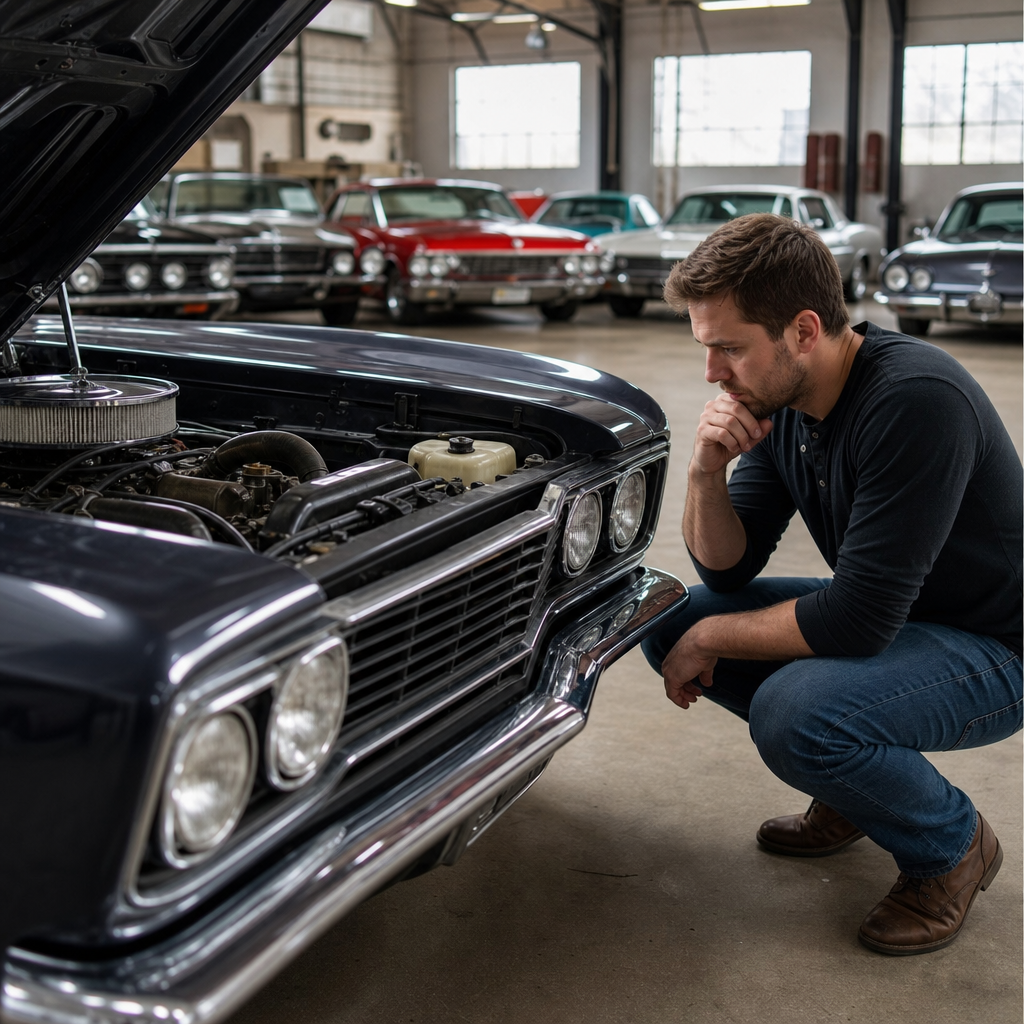

Numbers matching is the shorthand collectors use when a classic car still retains the major factory-installed components it was born with, and understanding that concept is essential if you want to identify a classic car accurately, buy wisely, and judge originality with confidence. In practical terms, “numbers matching” usually means the vehicle identification number, engine stampings, transmission codes, axle tags, body data plates, and date-coded parts all align with the car’s build period and factory records. I have evaluated survivor cars, restored drivers, and auction consignments where a single stamped pad changed value by five figures, so this is not trivia; it is one of the most important foundations of classic car identification. For anyone learning how to identify a classic car, numbers matching sits alongside body style, trim level, provenance, and restoration quality as a core checkpoint. It matters because originality affects authenticity, collectibility, insurability, and resale. It also matters because the phrase is often misused. Sellers may call a car “matching” when only the engine is period-correct, or when a restamped block merely appears right. A clear framework helps separate factory-original from replacement, re-stamp, clone, and tribute build.
To identify a classic car properly, start by defining the terms. A VIN is the primary identifier assigned by the manufacturer. A trim tag or data plate records build information such as paint, interior, body style, and assembly plant. Casting numbers identify the type of engine block, heads, intake, or transmission case. Casting dates and assembly stamps show when those parts were made or assembled. A “born-with” component is the actual original part installed when the car was new. A “date-code correct” part is not the original one, but it was manufactured within the proper time window for that model. A “period-correct” part comes from the right general era, though not necessarily the correct build window or application. Those distinctions are critical because buyers pay very different prices for each category. If you are building knowledge around classic car basics and education, this page is the hub: it explains how numbers matching works, how to verify it, where it fits into broader classic car identification, and what limits you should keep in mind when records are incomplete or manufacturers used inconsistent stamping practices.
How numbers matching fits into identifying a classic car
When people ask how to identify a classic car, they often think first about styling cues: grille shape, taillights, roofline, badging, wheel covers, and interior trim. Those clues matter, but they are only the visible layer. Proper identification combines visual inspection with documentary and mechanical verification. Numbers matching bridges those two worlds. It connects the body you can see to the drivetrain and major components you cannot authenticate by appearance alone. On a 1969 Chevrolet Camaro Z/28, for example, stripes and badges can be reproduced easily; the engine suffix code, partial VIN stamp, cowl tag details, transmission stamp, and rear axle code tell you whether the car is genuinely configured like a Z/28 or merely dressed like one.
This is why numbers matching matters beyond price. It helps prevent fraud. It helps confirm whether a rare engine option was factory-installed. It supports accurate insurance agreed-value policies. It also guides restoration decisions. If a car still has its born-with engine but is missing its original carburetor and intake, the owner may choose preservation over heavy modification because originality is still meaningfully intact. By contrast, if the engine, transmission, and rear axle were all replaced decades ago, the identification focus shifts toward correctness, drivability, and documentation rather than strict originality. In other words, numbers matching is one part of a larger classic car identification method: identify the make, model, year, assembly plant, trim, drivetrain, options, and authenticity level, then compare that profile against available records and component markings.
What counts as numbers matching on different classic cars
There is no universal standard across all marques. American muscle cars from the 1960s and early 1970s often carry partial VIN derivatives stamped on engines and transmissions, but not always in the same locations or formats. Mopar, GM, Ford, and AMC each used distinct systems, and those systems changed by year and plant. Corvette buyers may expect a high level of drivetrain documentation, especially for big-block and fuel-injected cars. Porsche collectors often verify engine and gearbox numbers against a Kardex or Certificate of Authenticity. Jaguar, Mercedes-Benz, Ferrari, and Alfa Romeo enthusiasts may rely on chassis plates, engine tags, body numbers, and heritage certificates rather than American-style VIN stampings. Prewar cars can be even less standardized, sometimes requiring club registries and factory archive research.
Because of that variation, the best definition is practical: a numbers matching classic car retains the major components that factory documentation or accepted marque research indicates should correspond to that specific chassis. On some cars, that means matching VIN derivatives. On others, it means correct serial-number sequences, engine type designations, gearbox numbers, and date ranges that align with the production record. If a 1970 LS6 Chevelle has a replacement engine block cast six months after the build date, it is not numbers matching, even if the block is the right displacement. If a 1957 Porsche 356 has the original engine case recorded by the factory but a replacement transmission from the same year, many buyers will call it partially matching. Precision in language protects both buyer and seller.
| Term | Meaning | Impact on value and identification |
|---|---|---|
| Born-with | Original factory-installed component still in the car | Strongest proof of originality; usually highest value |
| Numbers matching | Major identifiers correspond correctly to the specific chassis | Key benchmark for authenticating collectible cars |
| Date-code correct | Replacement part made within the proper build window | Better than generic replacement, but not original |
| Period-correct | Part from the right era, not necessarily right application | Acceptable for drivers; weaker for high-end judging |
| Restamped | Identifier altered to imitate an original marking | Serious authenticity and legal concern |
| Clone or tribute | Lesser model made to resemble a rarer specification | Can be enjoyable, but must be disclosed clearly |
Where to find the numbers and how to verify them
The process starts with the VIN plate, usually visible through the windshield on later cars or mounted on the door pillar, hinge pillar, firewall, or dashboard on earlier ones. Confirm that the VIN format matches the manufacturer’s system for the claimed year. Then inspect the trim tag or data plate, which may list body style, paint code, trim code, build date, and assembly plant. Next move to drivetrain identifiers. Engine block stampings may be on a machined pad near the cylinder head, timing cover, oil filter, or bellhousing flange depending on make and year. Transmission numbers can appear on case bosses, tags, or machined pads. Rear axles often use stamped tubes, differential tags, or axle codes on the housing.
Verification means more than finding a number that looks plausible. Compare fonts, alignment, depth of stamp, machining marks, and surface texture. Factory stampings were produced before decades of wear, paint, corrosion, and machining, and they have patterns familiar to marque experts. Freshly milled pads, inconsistent character spacing, or numerals that do not match known plant dies are warning signs. Casting dates should logically precede the vehicle build date, usually by days to a few months, not after the assembly date. Parts books, factory service manuals, NCRS judging manuals for Corvette, the Pontiac Historical Services archive, the Marti Report for Ford, and marque-specific registries are invaluable here. On many cars, the original broadcast sheet, Protect-O-Plate, window sticker, warranty booklet, or dealer invoice can connect component codes directly to the chassis. Good verification uses several sources, not one.
Numbers matching, originality, and market value
Collectors pay premiums for originality because original cars are harder to fake comprehensively than restored ones. A factory-installed engine connects the car to its documented production identity. That matters most on low-production, high-performance, or historically significant models. A matching 426 Hemi Mopar, Ram Air IV Pontiac, Boss 429 Mustang, or big-block Corvette can command a large premium over a similar car with a replacement drivetrain. Auction houses and appraisers know this, which is why catalog descriptions often separate “matching numbers,” “correct replacement engine,” and “non-original drivetrain.” Insurance underwriters also distinguish among those categories when setting agreed value.
Still, numbers matching is not the only determinant of worth. Condition, rarity, body integrity, options, documentation, color combination, restoration quality, and provenance can outweigh pure drivetrain originality. I have seen documented race history and celebrity ownership move the market more than a missing original transmission. Likewise, a rust-free, well-restored car with a date-code-correct engine may be more desirable than a neglected, heavily corroded matching-numbers example. Buyers should think in tiers. First is authenticity: is the car what it claims to be? Second is originality: how much of its born-with content remains? Third is quality: how well has it survived or been restored? Numbers matching primarily influences the first two tiers, but buying decisions should account for all three.
Common mistakes, myths, and red flags
The biggest mistake is assuming “matching numbers” means the same thing on every classic car. It does not. The second is trusting a seller’s statement without documentation or physical inspection. Many cars are described loosely. An engine casting number that matches the model family is not enough. A 396 block in a Chevelle does not prove it is the original 396 block. Another common myth is that every missing original part destroys collectibility. In reality, many desirable classics have replacement alternators, carburetors, distributor housings, or even service replacement blocks installed under warranty early in life. Those cars can still be highly collectible if the history is transparent.
Red flags deserve close attention. Be cautious if the VIN rivets look disturbed, the tag style does not match the year, the stamping pad appears freshly decked, or the claimed build date conflicts with casting dates. Watch for trim tags that have been removed and reattached, especially on cars where rare option packages are encoded there. Be skeptical of overrestored surfaces around stampings, because polishing can hide machining. On unibody cars, inspect hidden VIN derivatives on aprons, cowls, trunk gutters, or frame sections if the marque provides known locations. Also remember legal and ethical boundaries: altering VINs is criminal in many jurisdictions, while restamping non-VIN engine pads may occupy a gray area but still raises major disclosure issues. If doubt remains, hire a recognized marque expert before money changes hands.
How to use numbers matching when buying, selling, or restoring
For buyers, start with the car’s identity claim and test it methodically. Ask for the VIN, trim tag photos, engine and transmission stamp photos, casting dates, and all paperwork before traveling. Request images taken in natural light, not heavy filters. Compare them to factory references. If the car is expensive, budget for a pre-purchase inspection by a specialist in that exact make and year. For sellers, accuracy builds trust and protects value. If the car retains its original engine but not transmission, say so clearly. If it has a date-code-correct service block, disclose that and provide evidence. Ambiguity kills deals more often than imperfect originality.
For restorers, numbers matching should guide decisions rather than force ideology. Preserve original stampings and tags carefully. Do not machine or refinish numbered surfaces unnecessarily. Photograph every identifier before disassembly and keep a restoration file with invoices, casting photos, serial numbers, and correspondence from archives or clubs. If the original engine is damaged, consider whether repair is feasible before replacing it, because repaired original castings usually preserve more value than unstamped substitutes. Most important, remember that identifying a classic car comprehensively means looking at the whole vehicle. Numbers matching is the backbone of authenticity, but the best results come from combining it with body inspection, documentation review, and marque-specific research. If you want to identify a classic car with confidence, learn the numbers, verify the story, and document everything before you buy, sell, or restore.
Numbers matching matters because it turns classic car identification from guesswork into evidence-based evaluation. It tells you whether the car’s major components belong to that specific chassis, whether the story being sold is credible, and how originality should influence value. As this hub for classic car basics and education shows, learning how to identify a classic car means understanding visible features, factory records, component codes, build dates, and the language collectors use to describe authenticity. A true numbers matching car is usually more desirable, but honest disclosure and correct terminology matter just as much as originality itself.
The practical takeaway is simple. Start with the VIN and data plate, verify engine, transmission, and axle numbers, compare dates to the build window, and support every claim with reliable documents or expert inspection. Use marque-specific references, not generic advice, because each manufacturer handled numbering differently. Treat terms like born-with, date-code correct, and period-correct as distinct categories, and be alert to restamps, clones, and incomplete paperwork. If you are buying, insist on proof. If you are selling, document the car thoroughly. If you are restoring, preserve original identifiers whenever possible. Build your knowledge from this hub, then apply the same disciplined process to every classic you inspect.
Frequently Asked Questions
What does “numbers matching” actually mean on a classic car?
“Numbers matching” is the collector-car term used to describe a vehicle that still retains the major components it was built with at the factory, or components that can be proven to be correct to that exact car and build period. In most cases, that means the VIN or serial number aligns with the engine, transmission, rear axle, body tags, trim/data plates, casting numbers, assembly dates, and other factory identifiers. The exact definition can vary by manufacturer and model year because different automakers stamped and recorded information differently, but the basic idea is always the same: the car’s most important parts are consistent with its original factory configuration.
That matters because originality is one of the biggest drivers of authenticity in the classic-car world. A car can look beautifully restored, but if the engine was swapped decades ago or the transmission is from another vehicle, it may no longer qualify as truly numbers matching. Some sellers also use the phrase loosely, so it is important to understand that “numbers matching” is not always a single yes-or-no label. On some cars, the VIN may appear on the engine pad. On others, you may have to rely on date codes, suffix stamps, casting numbers, partial VINs, and factory documentation. In other words, numbers matching is really about confirming that the car’s identity and major components make sense together, based on how that particular vehicle was originally built.
Why does numbers matching matter so much to collectors and buyers?
Numbers matching matters because it directly affects value, confidence, and historical integrity. For many collectors, a classic car is not just transportation or a weekend toy; it is a piece of automotive history. When a car still has the engine, transmission, axle, and other major assemblies it left the factory with, that originality makes it more desirable. In the market, originality often translates into stronger resale value, especially for rare models, high-performance variants, limited-production cars, and vehicles with strong documentation. Two cars may look nearly identical on the outside, but the one with factory-original major components is usually considered more collectible.
It also matters because numbers matching helps buyers avoid expensive mistakes. A seller may present a car as rare, highly optioned, or unusually authentic, but the stampings and data plates may tell a different story. Verifying these details can reveal whether a car was born as the model it claims to be, whether the drivetrain is original, and whether the restoration respected factory-correct specifications. Even if a buyer is not obsessed with concours-level originality, understanding numbers matching helps them judge what they are actually paying for. Simply put, it gives you a clearer picture of a car’s authenticity, its place in the market, and whether the asking price truly reflects what is being offered.
Which numbers and codes should you check when verifying a numbers-matching classic car?
The first place to start is the vehicle identification number, or VIN, because it establishes the car’s identity. From there, you typically compare the VIN to any partial VIN stampings on the engine block, transmission case, and sometimes the rear axle or frame, depending on the make and model. You should also examine the body or cowl tag, trim tag, and data plate, which can confirm factory build information such as body style, assembly plant, paint color, trim, engine family, and production sequence. Beyond those headline identifiers, casting numbers, suffix codes, assembly stamps, axle tags, carburetor numbers, intake and exhaust component markings, and date codes on parts can all help determine whether the major components are original or at least period-correct.
Date codes are especially important because even when a part does not carry the full VIN, it should still fit logically within the car’s production timeline. For example, an engine casting date should generally precede the vehicle’s final assembly date by a reasonable period, not by months or years that would make no factory sense. The same goes for heads, intake manifolds, alternators, distributors, wheels, glass, and even seat belts on some cars. Because every manufacturer had its own coding system, the right checklist depends on the specific brand, year, plant, and drivetrain. That is why factory literature, marque experts, original dealer paperwork, build sheets, and broadcast sheets are so valuable. The goal is not just to find numbers, but to see whether all of those numbers tell a consistent, believable story.
Does a car lose all value if it is not numbers matching?
No, a non-numbers-matching car does not automatically lose all value, and in many cases it can still be an excellent car to own. What changes is how the car is positioned in the market and how buyers evaluate it. A classic car with a replacement engine, service-block motor, later transmission, or non-original rear axle may still be mechanically strong, visually stunning, and enjoyable to drive. In fact, for some enthusiasts, a car that is not numbers matching can be more approachable because it may cost less than a fully original example. That can make it appealing for touring, weekend driving, or modified use where preserving absolute originality is not the main goal.
What does matter is honesty and documentation. A non-matching car should be represented accurately, not dressed up with vague claims that imply a higher level of originality than it really has. The market usually distinguishes between “numbers matching,” “period-correct,” “correct replacement,” and “restamped” or “non-original” components, and those distinctions can significantly affect price. A car with a factory-correct engine of the right type and date range may still command respect, even if it is not the exact engine installed at birth. On the other hand, a car with mismatched or questionable components may require more scrutiny and a lower valuation. So while non-matching status can reduce collectibility, it does not make a car undesirable; it simply changes the conversation about originality, purpose, and fair market value.
How can you protect yourself from mistakes or misleading claims when buying a numbers-matching car?
The best protection is a careful, evidence-based inspection. Do not rely solely on a seller’s description, an auction listing, or a casual statement that the car is “matching numbers.” Ask for clear photographs of the VIN plate, engine stampings, transmission numbers, axle tags, body tags, and casting dates. Compare those details against factory reference materials and marque-specific decoding guides. Look closely at the physical appearance of stampings as well. Uneven fonts, suspiciously fresh machining, altered surfaces, or stamp locations that do not match factory practice can be warning signs. If a car carries documentation such as a build sheet, Protect-O-Plate, original invoice, warranty booklet, dealer order form, or restoration records, that paperwork can be extremely helpful in confirming authenticity.
It is also wise to bring in a qualified expert, especially for high-value cars or rare performance models where originality has a major effect on price. A knowledgeable appraiser, marque specialist, or restoration expert can often spot inconsistencies that a general buyer would miss. They understand how specific manufacturers stamped components, what date ranges are realistic, and which parts are commonly replaced or faked. Most importantly, buy the story only when the evidence supports it. A truly numbers-matching car should present a consistent chain of facts: the VIN, component stampings, date codes, tags, paperwork, and overall build characteristics should all align. When they do, you can buy with much more confidence. When they do not, you have the information you need to renegotiate, walk away, or at least understand exactly what you are getting.