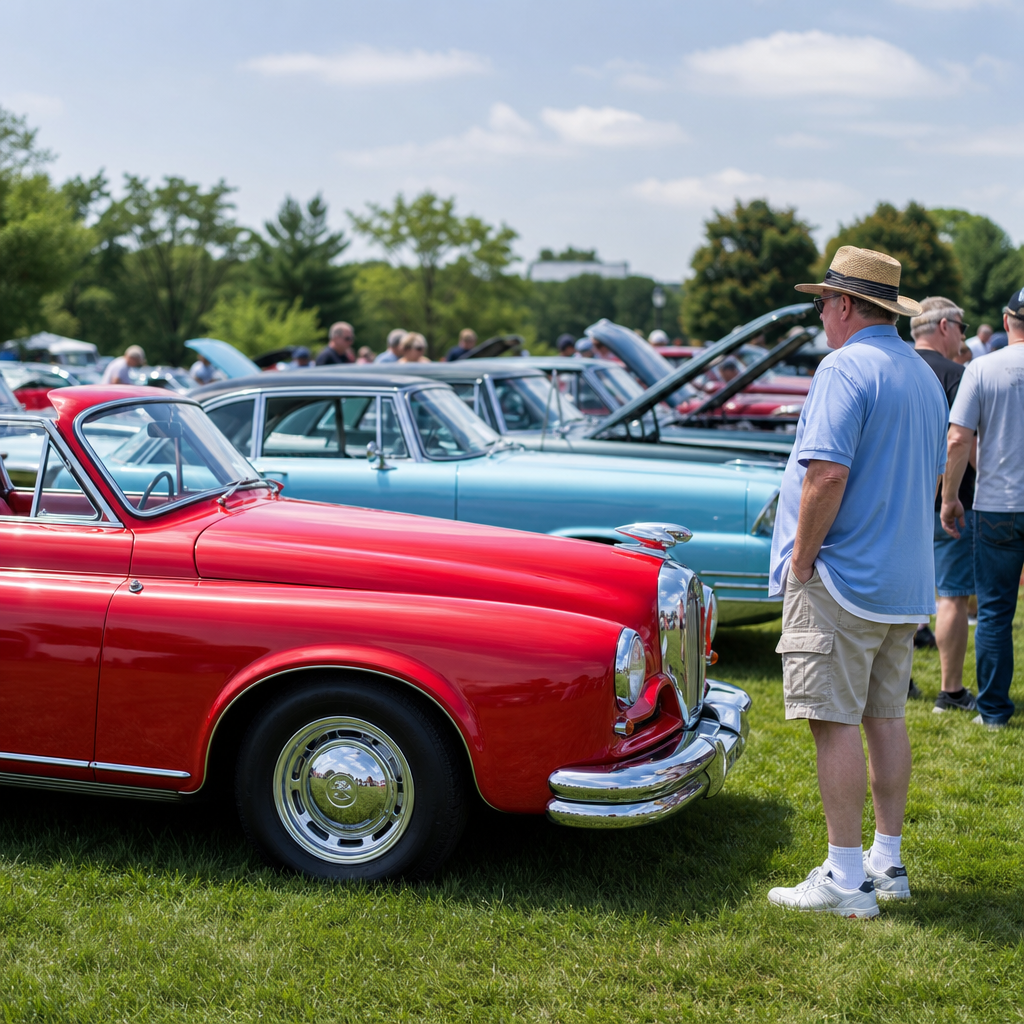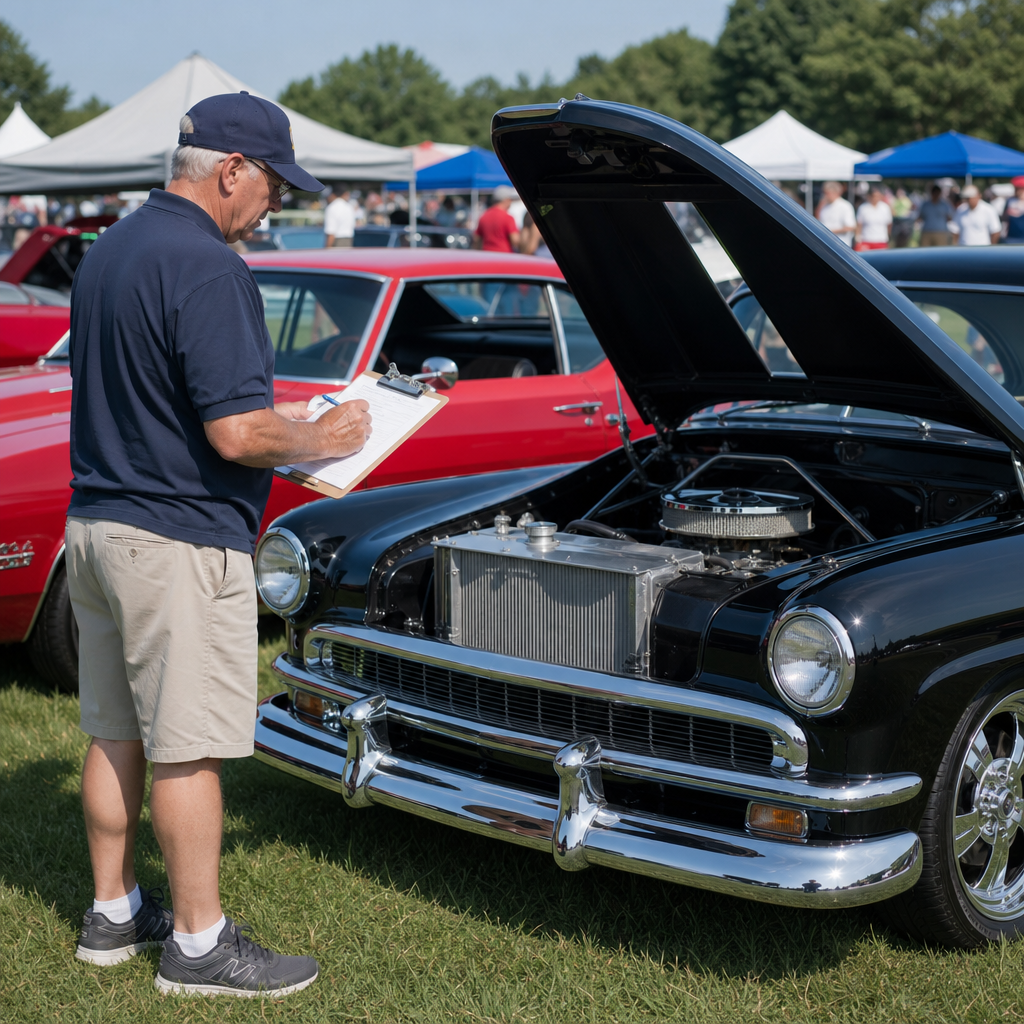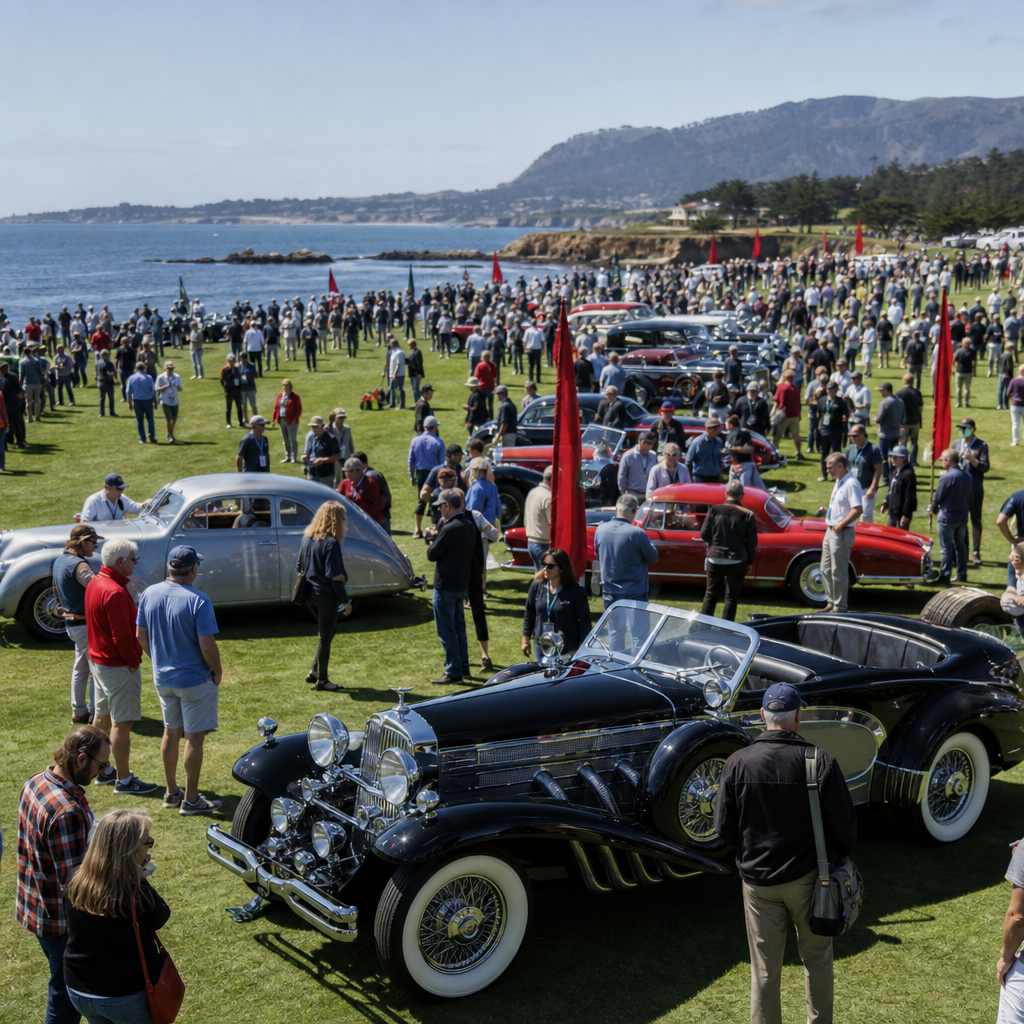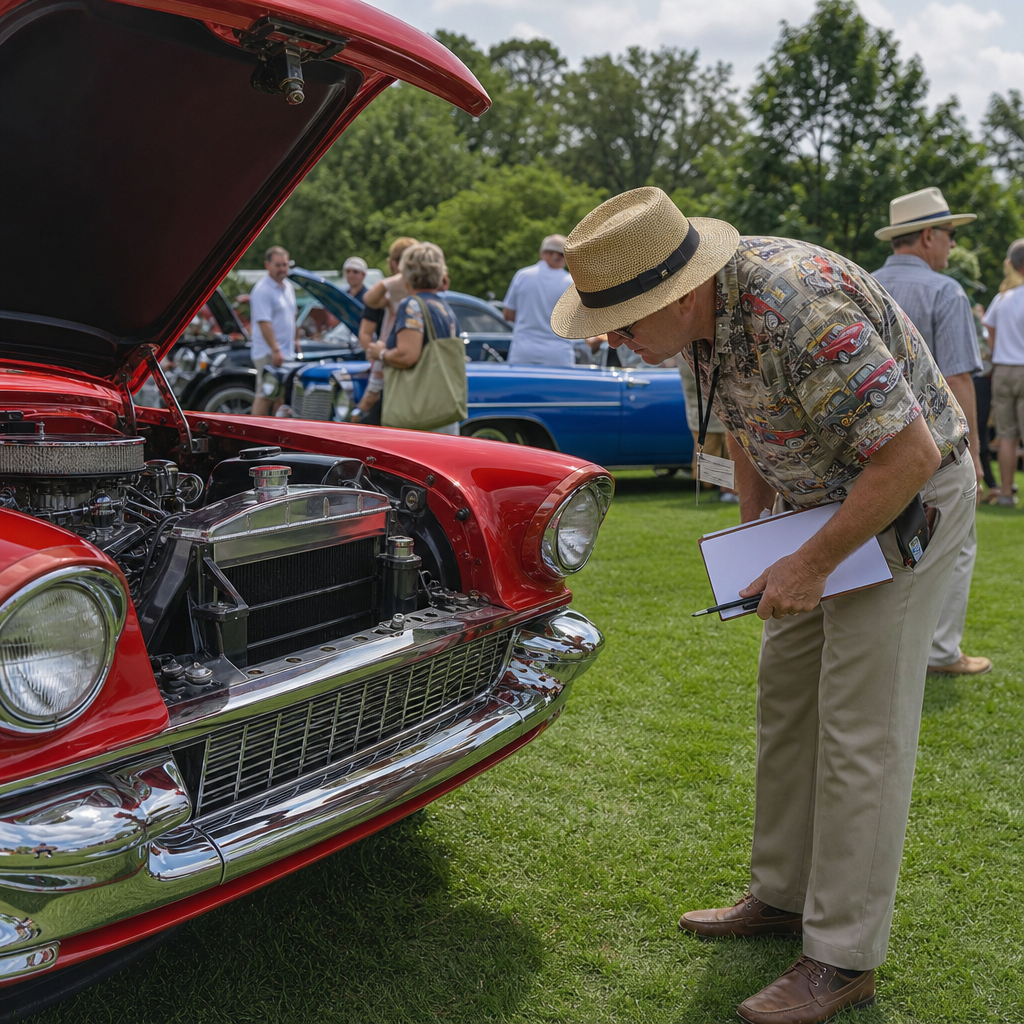
Classic cars are woven into film production because they do more than move actors from one location to another: they establish period, signal character, support plot, and create memorable visual identity. In practical terms, a classic car in movies is usually defined as a vehicle old enough to represent a specific era, desirable enough to be recognized on screen, and significant enough that its use must be managed by transport coordinators, picture car specialists, insurers, and often historians. Within the broader world of classic car culture and lifestyle, movies and media form one of the strongest bridges between enthusiast interest and mainstream awareness. A single chase scene, quiet arrival shot, or hero close-up can turn a forgotten model into a cultural touchstone.
I have worked around picture vehicle planning, and the lesson becomes obvious fast: the car is never just a prop. Directors use body shape, paint, chrome, ride height, and even door-closing sound as storytelling tools. A 1959 Cadillac projects excess, a 1968 Mustang fastback implies speed and rebellion, and a weathered 1970s pickup can communicate class, geography, and occupation before a line is spoken. This matters because audiences read vehicles instantly, even when they cannot name the make and model. For producers, that means vehicle choices influence authenticity, marketability, continuity, and budget all at once.
This hub article explains how classic cars are used in film production across development, sourcing, on-set operation, stunts, legal compliance, promotion, and preservation. It also serves as a foundation for related articles about iconic movie cars, restoration for screen use, TV productions, and collecting trends shaped by cinema. If you want a direct answer, here it is: classic cars are used in film production to build believable worlds, define characters, execute action, support branding, and create lasting audience recall. The best productions treat them as narrative assets with technical requirements, not decorative background objects.
Why Classic Cars Matter to Story, Setting, and Character
Film is a visual medium, so transportation becomes instant exposition. A period drama set in postwar America cannot rely on dialogue alone when architecture, wardrobe, and street traffic must all align. Picture cars anchor that illusion. When a scene features a 1949 Mercury coupe parked outside a diner, viewers receive time-period information, regional flavor, and social context in one image. Production designers coordinate this with costumes, signage, and color palette, but the car often becomes the most mobile, most photographed indicator of setting.
Character construction is just as important. Screenwriters may describe a protagonist as disciplined, flamboyant, struggling, old-money, or newly successful, yet those traits become concrete when matched with the right vehicle. Think of the difference between a restrained black Mercedes-Benz 300SEL and a bright red Alfa Romeo Spider. Both can place a character in a certain class bracket, but they project entirely different psychology. In practice, directors, transportation captains, and prop departments discuss not just make and model but trim, condition, modifications, and how the actor interacts with the car. A spotless concours restoration tells a different story than a survivor with cracked leather and faded lacquer.
Classic cars also solve a structural storytelling problem: they are shorthand. A few seconds of screen time can communicate biography, aspiration, and conflict more efficiently than extended dialogue. That economy is one reason movie cars become so iconic. The vehicle becomes a repeatable symbol audiences can remember, merchandise, and discuss long after release.
How Productions Source, Prep, and Manage Picture Cars
Most productions do not simply buy one old car and start filming. They source vehicles through picture car houses, marque specialists, museums, private collectors, auction contacts, restoration shops, and enthusiast clubs. In major markets such as Los Angeles, Atlanta, London, and Toronto, specialized vendors maintain fleets of camera-ready classics with documentation on year-correct features and mechanical condition. For rare models, producers may contract directly with owners and negotiate transport, daily rental rates, storage standards, and restrictions on driving or weather exposure.
Before cameras roll, each car is assessed for visual accuracy and operational reliability. I have seen productions reject beautiful restorations because the paint was too modern in gloss level or the engine note did not match the intended period feel. Conversely, a less pristine car might be ideal if it reflects the economic reality of a character. Prep often includes fluid checks, brake inspection, battery isolation options, hidden tow points, detachable mirrors for camera clearance, and duplicate keys controlled by the transportation department. Continuity photos document wheel covers, dirt patterns, dashboard items, and fuel level position if gauges are visible on camera.
Hero cars, background cars, and stunt doubles are usually separated. The hero car appears in close-up and receives the highest cosmetic attention. Background vehicles fill streets and parking lots, often sourced in batches to match a period. Stunt doubles may use replicas, modified shells, or less valuable examples prepared for hard driving, breakaway panels, or pyrotechnics. This layered approach protects rare originals while preserving visual consistency.
| Picture Car Type | Primary Use | Typical Preparation | Key Risk |
|---|---|---|---|
| Hero car | Close-ups, actor interaction, promotional stills | High-detail cosmetic finish, period-correct interior, quiet operation | Damage to irreplaceable trim or paint |
| Background car | Street dressing, parking scenes, crowd realism | Reliable starts, visual variety, basic safety checks | Anachronisms that break period accuracy |
| Stunt double | Chases, slides, impacts, rigged shots | Roll protection, suspension tuning, camera mounts, safety cutoffs | Mechanical failure under extreme load |
| Process trailer car | Dialogue scenes while being towed | Steering control access, rigging points, removable glass if needed | Actor safety and sound contamination |
On-Set Filming Techniques for Classic Cars
How a classic car is filmed affects how the audience feels about it. A low tracking shot exaggerates presence and speed; a static wide shot can make a vehicle feel lonely or stately. Cinematographers and transportation teams collaborate on lens choice, mount placement, reflections, and ride quality. Chrome-heavy cars are notorious for reflecting crew, lights, and modern surroundings, so the production may use polarizers, black cloth, temporary dulling products approved by the owner, or carefully planned camera angles. Windshield glare, dashboard reflections, and mirror line issues become daily concerns.
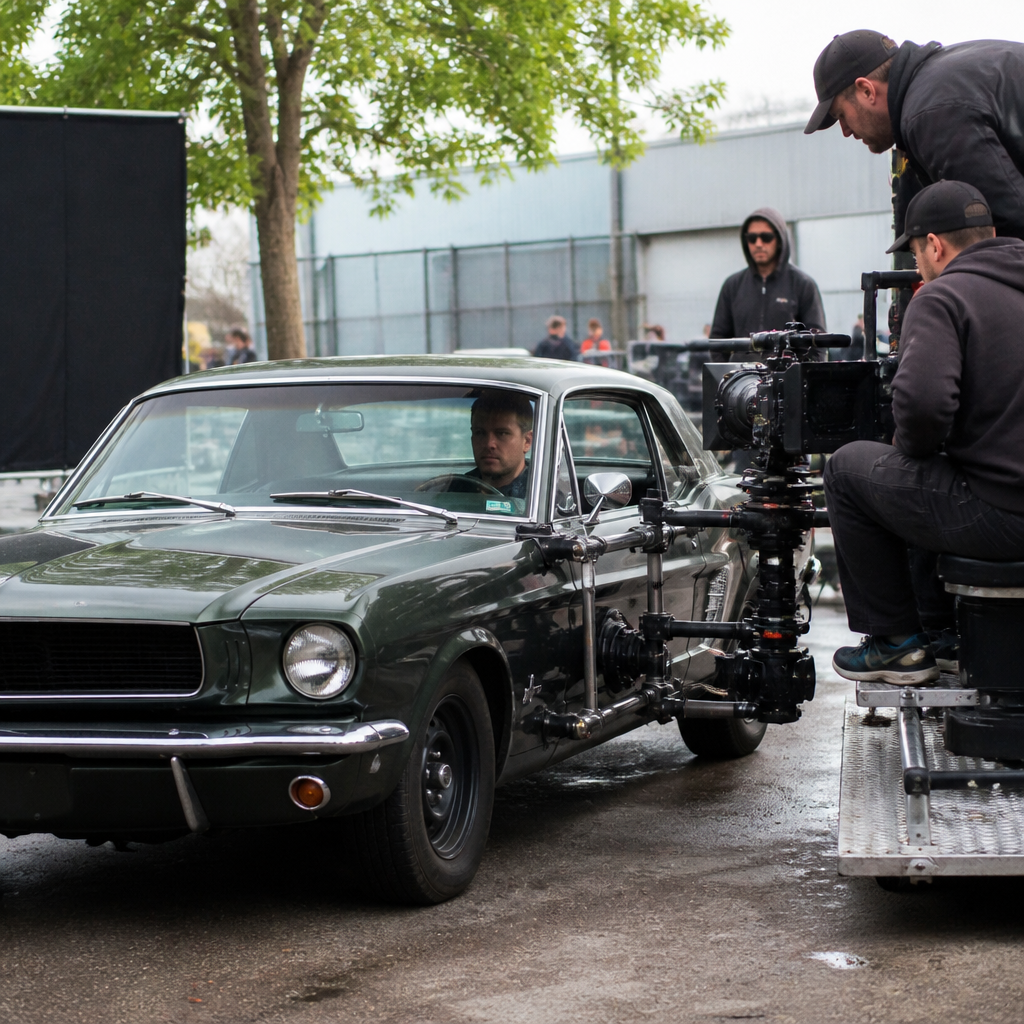
For dialogue scenes, productions frequently use a process trailer, where the picture car is towed on a stabilized platform while actors perform. This keeps performers safer and gives the director more control over sound, eyelines, and pacing. Insert shots may use poor-man’s process, with lighting effects and controlled movement in a stage environment. More dynamic work relies on pursuit vehicles such as the Russian Arm system, modern gimbal rigs, suction mounts, and stabilized remote heads. The challenge with classics is that many have softer suspensions, weaker brakes, non-assisted steering, and cabins not designed for hidden microphones or compact camera bodies.
Sound is another underappreciated factor. Authentic engine note matters, especially for enthusiasts, but live recording inside vintage cabins is difficult because of rattles, fan noise, gear whine, and thin insulation. Productions often capture wild tracks of starts, idles, gear changes, and pass-bys for use in post-production. Accurate sound design can elevate a car scene as much as the visual image.
Stunts, Replicas, and Safety Standards
Action scenes create the biggest gap between audience fantasy and production reality. When a classic car jumps, spins, or collides on screen, the vehicle is often a purpose-built replica or a modified donor built to resemble the original. That is not deception; it is risk management. Authentic classics may be too valuable, too fragile, or too mechanically unpredictable for repeated stunt work. Productions will fabricate body panels in fiberglass, install modern brakes, reinforce chassis points, fit fuel cells, and add roll cages hidden from camera. On higher-budget productions, multiple copies are built: pristine, mid-level, and sacrificial versions.
Safety standards are strict. In the United States, stunt coordination and vehicle rigging commonly align with studio safety bulletins, union rules, state labor requirements, and insurer conditions. Fire suppression, battery kill switches, seat harnesses, and route lockdowns are routine. If minors are present, restrictions increase. If roads are public, permitting authorities and police coordination become central. I have seen the entire shot list change because a classic car’s drum brakes heated beyond a safe threshold after repeated takes. Good productions adapt; careless ones lose time or worse.
There is also an ethical consideration around destroying historically significant vehicles. Today, many filmmakers avoid sacrificing rare originals if replicas can achieve the same visual result. This shift reflects both collector awareness and market values. A once-cheap 1970s coupe may now be worth enough that demolition is financially irrational and culturally tone-deaf.
Period Accuracy, Continuity, and the Details Enthusiasts Notice
Nothing pulls informed viewers out of a film faster than an incorrect car detail in a period scene. The wrong hubcaps, a later-model side mirror, radial tire sidewall styling inappropriate for the year, or a visible modern stereo head unit can undermine credibility. Continuity supervisors and picture car coordinators track these details obsessively. If a scene spans one in-story afternoon but is shot over three weeks, mud splatter, window position, hood ornament angle, and even cigarette ash near the shifter may need to match across takes.
Accuracy also involves geography. A production set in rural France in the 1960s should not be dominated by cars more common to Southern California collector circles. Registration plates, dealer badges, inspection stickers, and fuel brand labels need matching regional logic. For premium historical productions, researchers consult factory brochures, period photographs, transport history archives, and marque clubs. This level of rigor matters because audiences have become more visually literate, pausing 4K streams and sharing mistakes online within hours of release.
At the same time, perfect originality is not always the goal. Directors may choose a slightly anachronistic or idealized vehicle because it reads better emotionally. Film is interpretation, not museum curation. The best teams know when strict accuracy serves the story and when selective deviation is justified.
The Business Impact of Movie Cars on Classic Car Culture
Film exposure changes collector demand. After a breakout movie or series, search volume, auction interest, and restoration requests often rise for featured models. The 1968 Ford Mustang GT fastback benefited for decades from association with famous chase sequences. The DeLorean DMC-12 became far more culturally durable because of science-fiction cinema than because of its original commercial success. More recently, 1980s and 1990s vehicles have gained status as younger audiences connect nostalgia with streaming-era rediscovery. Media attention can raise values, but it can also distort them by prioritizing a screen image over broader historical merit.
Studios understand this commercial power. A well-chosen classic car supports posters, trailers, toys, apparel, and social media clips. It can even become part of location tourism, with fans visiting filming sites or museums displaying surviving screen-used vehicles. For owners and restoration shops, film work offers income and prestige, but it also brings wear, scheduling pressure, and insurance complexity. Policies must address agreed value, transport risk, third-party operation, and possible diminished value after screen use or modification.
This is why the movies and media segment deserves hub status within classic car culture and lifestyle. It connects enthusiasts, collectors, restorers, historians, prop houses, stunt teams, and general audiences in one ecosystem. Screen exposure shapes what cars people dream about, buy, restore, and preserve.
How This Movies and Media Hub Connects to Related Topics
As a hub page, this article points toward several deeper conversations. One branch is iconic movie cars: individual case studies that explain why certain vehicles became inseparable from specific films. Another is restoration for screen use, where originality, reliability, and camera-readiness sometimes conflict. A third is television and streaming production, where longer shooting schedules and tighter per-episode budgets create different demands than feature films. There is also a growing topic around replicas and tribute builds, especially when fans want the look of a famous movie car without risking an authentic high-value example.
Documentaries, auctions, museum exhibitions, and branded content also belong in this media ecosystem. They influence public knowledge and often correct myths established by fictional works. For example, a documentary about homologation specials or coachbuilt touring cars can reframe a model previously known only as a background prop in a movie. Likewise, auction catalogs frequently emphasize screen provenance because media association has become a recognized value driver.
If you are building internal coverage under classic car culture and lifestyle, start with the practical questions readers ask: How are movie cars sourced? Are screen-used classics real? Who insures them? Why are multiple copies built? Which films changed collector values? Those questions lead naturally into specialist articles while this page remains the broad, authoritative entry point.
Classic cars are used in film production to tell stories faster, make worlds feel real, and leave audiences with images they remember for years. Their value on screen comes from a combination of design language, historical context, mechanical presence, and cultural memory. When productions handle them well, they become narrative tools, not set dressing.
The key lessons are straightforward. First, vehicle choice shapes character and period as clearly as costume or dialogue. Second, professional sourcing and preparation protect authenticity, budget, and safety. Third, filming a classic car requires technical planning around reflections, sound, continuity, and stunt limitations. Fourth, movie exposure has real effects on collector demand, restoration trends, and public perception across the classic car market.
For anyone exploring the Movies and Media side of classic car culture and lifestyle, this hub is the place to begin. Use it to understand the full production process, then branch into deeper articles on iconic screen cars, restoration for camera, television workflows, and replica ethics. The next time a vintage coupe, sedan, or roadster appears on screen, look past the badge and notice the storytelling choices behind it.
Frequently Asked Questions
What role do classic cars play in film production beyond simple transportation?
Classic cars are used in film production for far more than getting a character from one location to another. They help establish time period immediately, often faster than dialogue or exposition can. When a specific make, model, or body style appears on screen, viewers instantly understand whether the story is set in the 1930s, postwar America, the muscle car era, or another distinct moment in history. That visual shorthand is one of the main reasons filmmakers rely on classic vehicles when building believable worlds.
They also communicate character. A carefully chosen car can suggest wealth, ambition, rebellion, nostalgia, discipline, vanity, practicality, or decline. A polished luxury sedan, a weathered pickup, or a restored convertible each tells the audience something different about the person behind the wheel. In many productions, the vehicle functions almost like costume design for the character, reinforcing personality and social status without needing to say it directly.
Classic cars can also support the plot itself. They may serve as the centerpiece of a chase, a symbol of inheritance, a clue in a mystery, or a recurring object tied to memory and emotion. Some become part of a film’s visual identity and remain memorable long after the credits roll. In that sense, a classic car is often treated as a narrative tool, a design element, and a brand asset for the production all at once.
How do filmmakers decide which classic car is right for a movie scene or character?
Choosing the right classic car is usually a collaborative decision involving the director, production designer, picture car coordinator, costume department, and sometimes historians or subject-matter specialists. The first question is whether the vehicle fits the period accurately. If a scene is set in a specific year, the production must avoid using a model that did not exist yet or a version with details that belong to a later release. Even small inaccuracies, such as trim packages, hubcaps, paint colors, or dashboard layouts, can undermine authenticity.
The second factor is character alignment. Filmmakers ask what the car says about the person using it. Does the character drive something aspirational, neglected, practical, flashy, or inherited? A vehicle can suggest class background, profession, geography, and emotional state. The car should feel like a believable extension of the character’s life rather than just an attractive prop placed in the frame.
Visual impact matters too. Some cars are selected because they read well on camera, have strong silhouettes, or are widely recognized by audiences. Others are chosen because they are unusual enough to stand out without distracting from the scene. Practical considerations are equally important: availability, mechanical reliability, whether duplicates can be sourced, whether the car can safely perform required action, and how expensive it will be to insure and transport. In professional filmmaking, the ideal classic car is one that serves the story, suits the era, fits the character, and can actually survive production demands.
What is considered a “classic car” in movies, and why does that definition matter?
In film production, a classic car is not defined only by age. It is usually a vehicle old enough to represent a particular era, distinctive enough to be recognized on screen, and important enough that its use requires planning and oversight. That means a production may classify a car as “classic” because it carries historical or cultural meaning, even if the strict automotive collector definition varies by market or organization.
The definition matters because it affects how the car is sourced, handled, and presented. If a vehicle is being used to anchor a time period, it must be correct for that setting and consistent with the world around it. Productions may consult marque experts, historians, or specialized rental companies to verify that the car’s year, modifications, and condition align with the story. A car that is technically old but visually wrong for the scene can create continuity problems or break the illusion of authenticity.
It also matters from a logistical and legal standpoint. The more significant or valuable the vehicle, the more carefully the production must manage insurance, transportation, storage, maintenance, and on-set supervision. Many classic cars used in movies are privately owned, rented from specialist fleets, or maintained by picture car companies with staff who understand preservation as well as performance. In short, the label “classic car” in movies signals not just age, but screen value, historical function, and production responsibility.
How are classic cars sourced, prepared, and managed on a film set?
Classic cars are typically sourced through picture car companies, specialty rental houses, private collectors, dealerships, museums, and industry contacts built by transport coordinators. Once a vehicle is identified, the production usually confirms period accuracy, mechanical condition, ownership terms, insurance requirements, and whether the car can be used for static scenes, background placement, or active driving. Some productions need multiple versions of the same car: a pristine hero car for close-ups, a stunt version for action, and sometimes lightweight or modified variants for camera rigs.
Preparation is detailed and highly technical. The car may be cleaned, cosmetically aged, or lightly modified to match the script and the design language of the film. Safety inspections are essential, especially if the vehicle will be driven on public roads, on a closed set, or during precision action work. Modern hidden upgrades are sometimes added for safety or filming practicality, such as improved brakes, battery cutoffs, tow points, kill switches, or temporary camera mounting solutions, while still preserving the car’s period appearance on screen.
On set, management is handled by professionals who understand both filmmaking and vehicle care. Transport coordinators schedule arrivals and movement, picture car specialists supervise usage, and drivers or stunt performers operate the vehicles under controlled conditions. Insurers and production managers assess risk, while continuity teams ensure the car looks the same from shot to shot unless the script requires visible change. For historically important or high-value classics, owners or dedicated handlers may remain with the vehicle throughout filming. The overall goal is to protect the car, protect the crew, and capture the exact visual result the story requires.
Why do some classic cars become unforgettable parts of a film’s identity?
Some classic cars become inseparable from a film because they succeed on several levels at once. They fit the era, complement the character, support the story, and create a striking visual signature. When that happens, the car stops being background dressing and becomes part of the audience’s memory of the movie. Viewers may forget a line of dialogue, but they remember the shape, sound, color, and attitude of the car that defined a key scene.
These vehicles often become symbolic. They can represent freedom, status, danger, romance, loss, or transformation. Because cars are objects people know intimately in real life, they carry emotional associations that transfer easily to the screen. A classic car can feel aspirational, familiar, or mythic all at once, which gives filmmakers a powerful storytelling tool. When a production uses that tool well, the car contributes to the film’s tone just as much as music, lighting, or costume design.
There is also a branding effect. Memorable classic cars help shape posters, trailers, publicity stills, and audience recall. They can become visual shorthand for the entire project, extending the film’s cultural footprint long after release. That is why filmmakers invest so much care in selecting and presenting them. An unforgettable classic car does not just appear in a movie; it helps define the movie’s world, identity, and lasting appeal.