Fuel injection vs carburetors in classic cars is one of the most important decisions any owner faces when planning engine and mechanical work, because the choice affects drivability, originality, tuning strategy, maintenance costs, fuel economy, and even how often the car actually gets used. In restoration and maintenance, “carburetor” refers to the mechanical device that meters fuel through airflow and pressure differentials, while “fuel injection” describes systems that deliver fuel under pressure through injectors, whether in period mechanical setups or modern electronic throttle-body and multi-port conversions. I have worked on both types in classic Mustangs, Tri-Five Chevrolets, MGBs, air-cooled Volkswagens, and vintage trucks, and the same pattern keeps appearing: neither system is universally better, but one may be clearly better for your goals. That is why this comparison matters within engine and mechanical work. It connects directly to ignition tuning, camshaft selection, intake manifold design, cold-start behavior, vapor lock prevention, emissions compliance, fuel tank condition, wiring quality, and long-term reliability. Owners usually ask simple questions: Which starts easier, which feels more authentic, which makes more power, and which is easier to maintain? The short answer is that carburetors excel in period correctness, simplicity, and tactile tunability, while fuel injection wins in consistency, altitude compensation, cold starts, and adaptability to modern driving. The better answer requires looking at how each system works in real use, where each one fails, and how each choice shapes a restoration plan. For anyone building a dependable classic, this topic sits at the center of practical engine decisions.
How carburetors and fuel injection actually work in classic cars
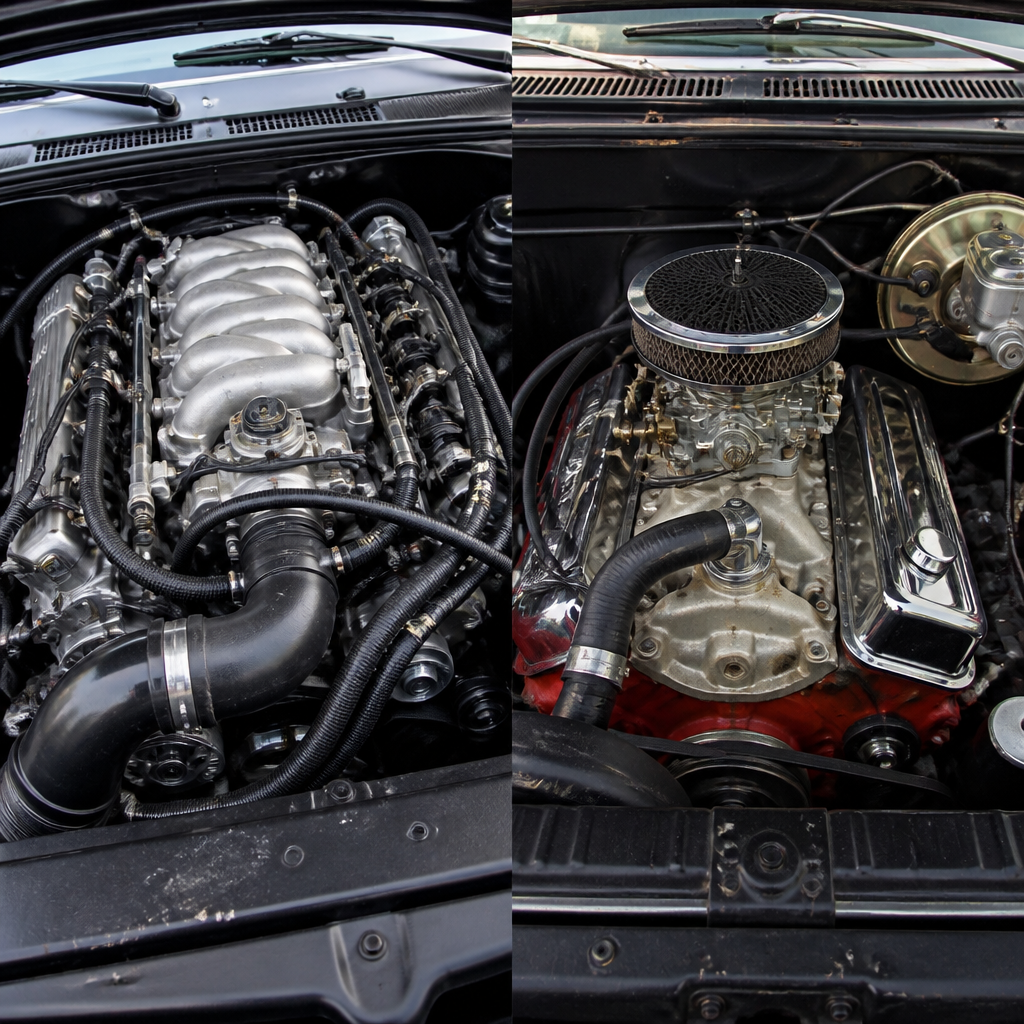
A carburetor mixes air and fuel by using the pressure drop created as air passes through a venturi. That pressure difference pulls fuel through circuits such as idle, transition, main metering, accelerator pump, and power enrichment. Common classic units include Rochester Quadrajet, Holley 4150, Carter AFB, SU, Zenith-Stromberg, and Weber sidedrafts. Each has distinct strengths. A Quadrajet offers excellent street manners and fuel economy when correctly rebuilt, while a Holley is modular and easy to re-jet for camshaft or intake changes. In day-to-day driving, a carburetor’s behavior depends on float level, fuel pressure, ignition timing, manifold vacuum, and temperature. Small deviations in any of those can show up as hesitation, flooding, rich idle, or stumble.
Fuel injection meters fuel through injectors supplied by an electric or mechanical pump at controlled pressure. On classic cars, owners usually encounter three versions. First, period systems such as Bosch D-Jetronic, Kugelfischer, Lucas mechanical injection, or Rochester mechanical fuel injection appeared on some European and American performance cars. Second, throttle-body injection conversions mount one or more injectors above the intake plenum in a carburetor-like position, making them popular on V8 restorations. Third, multi-port electronic fuel injection places injectors near each intake port and uses sensors, an ECU, and fuel maps for more precise delivery. In practical terms, EFI uses data from coolant temperature, manifold pressure or mass airflow, throttle position, oxygen sensors, and engine speed to adjust fueling in real time. That feedback loop is why a properly designed injection system usually starts faster and tolerates weather changes better than a carburetor.
Performance, drivability, and tuning tradeoffs
Classic car owners often assume carburetors automatically make more power, but that is only partly true. On a traditional V8 with a healthy intake manifold, a correctly sized four-barrel carb can support excellent horsepower and strong throttle response. Carburetors still dominate many vintage racing classes because rules require them and because experienced tuners know how to tailor boosters, jets, bleeds, squirters, and power valves for a narrow operating range. On a weekend muscle car that sees fair weather and occasional strip passes, a well-set-up carburetor can feel immediate and charismatic in ways owners value.
However, fuel injection usually delivers a wider usable operating window. It compensates for morning cold, summer heat, stop-and-go traffic, and altitude changes without requiring screwdriver adjustments. That matters more than peak dyno numbers for most road-driven classics. I have seen a throttle-body EFI conversion transform a big-block Chevelle from a hot-start nightmare into a car that behaved like a late-model truck, with steady idle in traffic and no loading up after ten minutes of heat soak. Multi-port systems improve cylinder-to-cylinder fuel distribution further, which can sharpen throttle response and reduce the rich compromises often built into single-carb street tunes.
| Factor | Carburetor | Fuel Injection |
|---|---|---|
| Cold starting | Depends on choke adjustment, pump shot, and temperature | Usually immediate with sensor-based enrichment |
| Altitude changes | Can run rich or lose crispness | Automatically compensates on most systems |
| Tuning method | Jets, screws, springs, floats, mechanical changes | Software, fuel maps, sensors, pressure control |
| Original appearance | Best for factory-correct restorations | Varies from discreet to obviously modern |
| Street reliability | Good when maintained, but more weather-sensitive | Excellent when wiring and fuel delivery are done correctly |
| Service complexity | Mechanical and hands-on | Requires electrical and diagnostic competence |
The tradeoff is complexity. With a carburetor, tuning is visible and mechanical. With EFI, tuning is more exact, but you must understand sensor calibration, grounding, injector sizing, fuel pressure, and ECU strategy. A poor EFI installation can be worse than a decent carb, especially when bargain wiring, noisy grounds, or mismatched components create unstable readings. Good results come from system design, not just from replacing one fuel metering method with another.
Originality, restoration goals, and vehicle value
For a numbers-matching restoration, carburetors usually remain the correct choice. Judges in marque-specific shows look for date-coded castings, proper finishes, correct choke hardware, factory linkages, and original air cleaner fitment. A 1967 Corvette with the right Holley list number or a Jaguar E-Type with properly sorted SUs carries a level of authenticity that modern EFI cannot duplicate. In this context, originality is part of the vehicle’s historical and financial value. The fuel system is not just functional hardware; it is evidence of how the car was built and how faithfully it has been restored.
That does not mean fuel injection reduces value in every case. Restomods, touring builds, and driver-quality classics often benefit from well-executed EFI, especially when owners prioritize frequent use. Many buyers now appreciate hidden conversions that preserve the engine bay’s period look while improving starting and drivability. Throttle-body systems from Holley, FiTech, and Edelbrock are commonly chosen because they fit standard four-barrel intake patterns and can be reversed later. For some collectors, reversibility is the key principle. If you store the original carburetor, fuel lines, and air cleaner assembly, you protect future options.
The best restoration and maintenance strategy starts with an honest use case. If the car will attend concours events, preserve the carburetor and restore it correctly. If the car will cross states in changing weather, EFI may increase enjoyment far more than any minor authenticity loss. Engine and mechanical work should serve the mission of the vehicle, not a generic internet preference.
Maintenance, diagnostics, and reliability in real-world use
Carburetors are often called simpler, and in pure mechanical terms that is true. You can remove a float bowl, inspect a needle and seat, change jets, reset the float, and rebuild the unit with common tools. For owners comfortable with hands-on tuning, that simplicity is empowering. Common problems include varnish from stale fuel, worn throttle shafts causing vacuum leaks, dried accelerator pump diaphragms, warped air horns, sticking floats, and heat-related percolation. Ethanol-blended fuel has made some classic carburetor issues more frequent by attacking old rubber compounds and encouraging evaporation in vented systems.
Fuel injection has different failure modes. Instead of a stuck float or power valve issue, you may face a failing coolant sensor, poor ground, clogged injector, weak high-pressure pump, relay fault, or corrupted calibration. Diagnosis is usually faster when the system provides live data. On modern aftermarket EFI, you can often see coolant temperature, air-fuel ratio, RPM signal quality, throttle position, and fuel pressure in one interface. That visibility is a major advantage. On the other hand, if the installer routed wiring near ignition noise, undersized the alternator, or ignored proper return-style fuel plumbing, reliability suffers quickly.
In shop practice, I have found that carburetors reward regular use and routine adjustment, while EFI rewards careful installation. A carbureted classic that sits for six months tends to need more recommissioning. An injected classic with a sealed tank, proper filters, and quality electrical work tends to wake up more easily after storage. Neither system is maintenance-free. The difference is the kind of maintenance each one asks of the owner.
Supporting engine and mechanical work around the fuel system
This subject also acts as a hub for wider engine and mechanical work because fuel metering never operates alone. If you are choosing between fuel injection and carburetors in classic cars, you also need to inspect ignition health, compression, valve adjustment, vacuum integrity, cooling system performance, and exhaust design. Many “carb problems” are actually timing curve issues, vacuum leaks, or low fuel delivery from a weak mechanical pump. Many “EFI problems” are poor grounds, inadequate charging voltage, or bad crank signal quality. The fuel system only performs as well as the engine platform beneath it.
That broader perspective should guide related projects. Rebuilding a classic engine means selecting camshaft duration that matches idle vacuum and intended fuel system. Upgrading to an aluminum intake changes plenum behavior and sometimes hood clearance. Converting to EFI may require a baffled tank or surge tank to prevent fuel starvation under cornering, plus return lines rated for pressure. Swapping from points ignition to an HEI, PerTronix, or crank-trigger setup can stabilize spark enough to improve either system. Likewise, diagnosing rough running should include leak-down testing, distributor advance verification, and manifold vacuum readings before changing fuel hardware. The most successful restorations treat carburetion, injection, ignition, and airflow as one package. That systems approach saves money, shortens troubleshooting time, and produces classics that run as well on the road as they look in the garage.
Choosing the right system for your classic car
The right choice comes down to how you drive, what you value, and how much change you are willing to make. Choose a carburetor if factory appearance, period-correct feel, mechanical simplicity, and easy reversibility rank highest. Choose fuel injection if you want reliable cold starts, better behavior in traffic, automatic compensation for weather and elevation, and less seasonal fiddling. If your classic rarely leaves local roads and you enjoy tuning with vacuum gauges and jet kits, a carburetor remains a satisfying and effective solution. If you want to road-trip a vintage pickup through mountain passes or commute occasionally in a classic pony car, EFI often justifies its cost.
Whichever route you take, success depends on parts quality and proper setup. Rebuild original carburetors with correct calibration data, not generic settings. If converting to EFI, use matched components, proper fuel plumbing, sound electrical grounding, and a charging system that can support pumps and controllers. Keep records, preserve original parts when possible, and tune the whole engine combination rather than chasing one symptom at a time. Fuel injection vs carburetors in classic cars is not a culture war. It is a practical restoration and maintenance decision within engine and mechanical work. Make that decision based on use, originality, and reliability goals, then build the supporting systems accordingly. If you are planning your next project, start by defining how the car will be driven and inspect the entire engine package before buying parts.
Frequently Asked Questions
Is fuel injection better than a carburetor for a classic car?
There is no universal winner, because the better choice depends on how the car is used, how original you want it to remain, and how much time you are willing to spend tuning and maintaining the fuel system. Fuel injection generally offers better cold starts, more consistent drivability, smoother idle quality in changing weather, improved altitude compensation, and often better fuel economy. For owners who want a classic car to start easily, run predictably in traffic, and behave more like a modern vehicle, fuel injection can be a major upgrade. It is especially attractive for cars that are driven regularly rather than stored as showpieces.
Carburetors, however, still make excellent sense in many classic applications. They are mechanically simple, period-correct, easier to understand for many hobbyists, and often cheaper to repair or rebuild. A properly tuned carburetor can deliver strong performance, great throttle response, and the authentic under-hood appearance many restorers value. For concours restorations, historically accurate builds, and owners who enjoy hands-on tuning, a carburetor may be the more satisfying choice. In short, fuel injection is often better for convenience and consistency, while carburetors remain highly relevant for originality, simplicity, and traditional character.
How does the choice between fuel injection and a carburetor affect drivability in a classic car?
Drivability is one of the biggest practical differences between the two systems. Fuel injection meters fuel much more precisely, which means the engine typically responds better during cold starts, hot restarts, stop-and-go traffic, and sudden throttle changes. In a classic car that gets driven on modern roads, this can translate into less hesitation, fewer stumbles off idle, smoother cruising, and more confidence in varying temperatures or elevations. Electronic fuel injection systems can also adapt to changing conditions in ways a fixed carburetor setup cannot, making the car feel more refined and more usable day to day.
Carburetors can still deliver very good drivability, but they are more sensitive to setup and environmental conditions. Choke adjustment, float level, jetting, ignition timing, vacuum leaks, and fuel pressure all influence how well a carbureted engine behaves. A carbureted classic that is dialed in by someone experienced can run exceptionally well, but it may need seasonal adjustments or more regular attention to stay that way. Some owners consider that part of the hobby, while others find it frustrating. If your goal is to jump in the car and drive without much drama, fuel injection usually has the edge. If you enjoy mechanical involvement and accept that tuning is part of ownership, a carburetor can still be a very rewarding setup.
Does converting a classic car from a carburetor to fuel injection reduce originality or hurt value?
It can, but the impact depends heavily on the type of car, the quality of the conversion, and the expectations of the market for that specific vehicle. On highly collectible, numbers-matching, historically important classics, originality often carries significant value. In those cases, replacing a factory carburetor setup with modern fuel injection may make the car less appealing to purists, judges, and certain buyers. Even if the conversion improves reliability, it can still be seen as a departure from the car’s authentic configuration. For investment-grade restorations, originality usually matters more than convenience.
On the other hand, many classic cars are driven, modified, or restomodded rather than preserved for strict originality. In those cases, a well-executed fuel injection conversion may actually make the car more desirable to buyers who want classic styling with modern manners. The key is reversibility and workmanship. If the original intake, carburetor, linkage, and related components are retained so the car can be returned to stock later, the downside is often reduced. Clean installation, proper wiring, safe fuel system upgrades, and a calibration suited to the engine are essential. A sloppy conversion can hurt value more than the fuel injection itself. So yes, fuel injection can affect originality, but whether that hurts value depends on the car’s mission, audience, and execution.
What are the maintenance and tuning differences between carburetors and fuel injection in classic cars?
Carburetors require a more hands-on maintenance style. Over time, gaskets can dry out, floats can stick, accelerator pumps can wear, passages can varnish, and adjustments can drift. They also tend to be more sensitive to stale fuel, vacuum leaks, and long periods of sitting, all of which are common issues with classic cars. Tuning a carburetor involves mechanical adjustments such as idle mixture screws, float levels, choke settings, and jet changes. Many enthusiasts appreciate that these adjustments can be made with basic tools and experience rather than software or sensors. The system is visible, understandable, and often repairable in a home garage.
Fuel injection usually needs less frequent manual adjustment once installed and calibrated correctly, but it introduces more components and greater system complexity. Sensors, wiring, pumps, pressure regulators, injectors, and control modules all have to work together properly. When everything is sorted, maintenance can be minimal and performance very consistent. However, diagnosing a problem may require a different skill set, including electrical testing and sometimes laptop-based tuning. For some owners, that is a worthwhile trade for reliability and precision. For others, the simplicity of rebuilding a carburetor on a workbench feels much more practical. The real difference is not that one system is maintenance-free and the other is troublesome, but that they demand different kinds of attention and expertise.
Which option is more cost-effective for a classic car owner: staying with a carburetor or switching to fuel injection?
In most cases, keeping or rebuilding a carburetor is the less expensive path upfront. A quality carburetor rebuild, along with proper tuning and possibly a refreshed ignition system, is often far cheaper than a complete fuel injection conversion. For owners working within a restoration budget, that matters. Carbureted setups also tend to be easier to source for many common classic engines, and replacement parts are widely available. If the existing system is basically sound and the goal is to preserve character while controlling expenses, staying with a carburetor is often the most cost-effective choice in the short term.
Fuel injection can become cost-effective over the long term for certain owners, especially those who drive their classic frequently. Better starting, improved drivability, fewer weather-related tuning issues, and potential fuel savings can make the car more usable and enjoyable. That increased usability often means the car spends less time parked and more time on the road, which is an important but often overlooked benefit. Still, the initial conversion cost can be substantial because it may involve a high-pressure fuel system, return lines, wiring changes, sensors, an ECU, and tuning labor. The decision ultimately comes down to ownership goals: if you want affordable originality and mechanical simplicity, a carburetor usually wins on cost; if you want regular-use reliability and modern behavior, fuel injection may justify the investment.