
Collector stories sit at the emotional center of classic car culture because they explain why one machine becomes a lifelong pursuit, another becomes a family heirloom, and a third becomes the rare find that reshapes a collection. In this collector spotlight, rare finds and stories are more than entertaining anecdotes; they are practical case studies in how enthusiasts discover, authenticate, restore, insure, and ultimately preserve historically important vehicles. A collector story can begin at an estate sale, a rural barn, a dealer warehouse, an online auction, or a chance conversation at a local cars and coffee. What matters is not only the vehicle itself, but the context around it: provenance, originality, documentation, condition, rarity, and the personal decisions that determine whether the car remains a survivor, becomes a restored showpiece, or is sold to fund the next hunt.
Within classic car culture, “rare finds” usually refers to vehicles with limited production, unusual factory specifications, competition history, low-survival rates, or exceptional documentation. “Collector stories” refers to the lived experiences around acquiring and caring for those cars. I have seen average cars become extraordinary because their paper trail was intact, and supposedly valuable cars lose appeal when their histories unraveled under inspection. That is why this hub matters. It gives readers a structured view of the collector landscape, from barn finds and auction discoveries to preservation ethics and market realities, so every deeper article in the topic connects back to a clear foundation.
Collectors are not a single type of buyer. Some focus on American muscle with matching-numbers drivetrains. Others chase air-cooled Porsches, coachbuilt European grand tourers, Japanese homologation specials, prewar brass-era cars, or unrestored trucks with regional history. Many begin with nostalgia, then develop discipline. Over time, they learn that collecting is equal parts passion and process. Successful collectors study factory production records, trim tags, casting dates, ownership files, restoration invoices, and market comps. They know when to trust experts, when to walk away, and when a rough but complete car is a better purchase than a glossy restoration with unanswered questions.
As a hub within classic car culture and lifestyle, this page maps the major themes behind collector stories. It answers the questions newcomers ask, gives experienced enthusiasts language for evaluating opportunities, and highlights what makes rare finds meaningful beyond price alone. The best stories are not only about expensive cars. They are about discovery, judgment, stewardship, and the human connections that keep automotive history alive.
What Makes a Classic Car a Rare Find
A rare find is not simply an old car that appears infrequently. Rarity has layers, and serious collectors separate true scarcity from temporary market excitement. Production numbers are the starting point. A 1970 Plymouth Hemi ’Cuda convertible is rare because very few were built, and even fewer survive with original drivetrains and documented histories. A Mercedes-Benz 300SL Gullwing remains significant not just because of limited production, but because of its engineering importance, racing lineage, and global collector demand. By contrast, a common model finished in an unusual color may be interesting without being meaningfully rare.
Originality matters as much as production totals. In the muscle car world, “matching numbers” generally means the engine and major components correspond correctly to the car’s serial and build data. In European circles, originality often extends to body panels, gearbox, carburetion or injection systems, interior materials, and factory options verified by marque archives. Survivorship also creates rarity. I have inspected cars that were objectively less glamorous than concours restorations, yet far more compelling because they retained factory spot welds, chalk marks, date-coded glass, and decades of service records. Those details cannot be recreated with perfect honesty.
Documentation transforms a car’s story from rumor into evidence. Build sheets, window stickers, Kardex or heritage certificates, ownership chains, period photographs, racing logbooks, and maintenance ledgers all strengthen desirability. A limited-production car with no history can still be valuable, but a documented example will usually command greater confidence and stronger bidding. Condition, too, changes the meaning of rarity. Some collectors prioritize pristine restorations, while others place a premium on unrestored cars that reveal how the factory originally assembled them. Both categories attract interest, but they speak to different collecting philosophies.
How Collector Stories Usually Begin
Most collector stories start long before money changes hands. They begin with pattern recognition: a buyer notices a short-wheelbase body shape under dusty tarps, sees rare option codes on a cowl tag, or hears that a retired mechanic kept a complete but dormant Jaguar E-Type in dry storage for thirty years. Opportunity often comes through relationships. Local club members, marque specialists, restoration shops, estate attorneys, and long-established dealers know which cars exist before public listings appear. That network effect is one reason community involvement remains so important in classic car culture.
Barn finds are the most romantic example, but the reality is usually less cinematic and more methodical. A true discovery requires title verification, VIN confirmation, rust assessment, parts completeness, and an honest estimate of recommissioning costs. I have watched buyers become captivated by dust and folklore while ignoring missing trim, seized engines, rodent damage, and impossible-to-source components. The best collectors stay calm. They photograph every detail, compare stampings, consult registries, and calculate transportation, storage, and restoration costs before making an offer.
Auctions produce a different kind of story. In live rooms run by companies such as RM Sotheby’s, Gooding Christie’s, Mecum, and Barrett-Jackson, bidders are buying not only the car but the credibility of the catalog description, specialist vetting, and market theater. Online platforms like Bring a Trailer and Cars & Bids have widened access and improved transparency with comment threads, underbody photos, and third-party inspections. Still, presentation can conceal flaws. Paint depth readings, compression tests, leakdown numbers, and cold-start videos often tell a truer story than polished listing copy.
Private sales remain the channel where many of the best collector stories unfold. They allow for longer conversations, access to file folders, and candor about what the car needs. Sellers who have owned a car for decades can explain why a panel was repainted, when the gearbox was rebuilt, and which parts are original versus replaced. Those details are invaluable because they help a collector decide whether the vehicle fits a preservation strategy, a driving-focused ownership plan, or a full restoration program.
Authenticity, Provenance, and Due Diligence
If there is one rule experienced collectors repeat, it is simple: buy the story only when the evidence supports it. Authenticity begins with identity. The VIN, chassis number, engine stampings, trim tags, body numbers, and date codes must align with factory records and period-correct specifications. On high-value cars, even small discrepancies can have six-figure consequences. Rebody claims, restamps, replacement tags, and undocumented engine swaps are not rare in the upper tiers of the market, especially where scarcity creates strong incentives to “improve” a car’s identity.
Provenance is the ownership and event history that explains where the car has been and why it matters. A Porsche 356 owned by a known racer, a Ferrari with Classiche certification, or a Shelby documented in the SAAC registry carries a stronger market position because the car’s place in history is easier to verify. Registries, marque clubs, factory archives, and specialist inspectors are essential tools. The National Corvette Restorers Society, Mustang Club of America judging standards, Porsche Certificate of Authenticity pathways, and Jaguar Daimler Heritage Trust records all help build factual confidence.
Due diligence also means understanding what documents cannot prove. A stack of receipts confirms spending, not correctness. A restoration photo album may show effort, not craftsmanship. Third-party pre-purchase inspections remain nonnegotiable for serious acquisitions. Good inspectors check structural rust, previous collision repair, panel fit, weld quality, driveline numbers, suspension wear, braking systems, electrical integrity, and whether modifications were done reversibly. They also identify hidden costs. A bargain Alfa Romeo GTV can become expensive quickly if its interior trim, brightwork, and carburetor setup all require specialist sourcing.
| Evaluation Area | What Collectors Verify | Why It Matters |
|---|---|---|
| Identity | VIN, chassis, engine, gearbox, tags, date codes | Confirms authenticity and protects value |
| Provenance | Ownership chain, certificates, photos, registries, race history | Turns claims into documented history |
| Condition | Rust, paint, interior, driveline, completeness, hidden damage | Determines true cost of ownership |
| Market Position | Comparable sales, rarity, originality, restoration quality | Prevents overpaying in emotional purchases |
Restoration Stories Versus Preservation Stories
One of the most important debates in collector circles is whether a rare find should be restored or preserved. The answer depends on significance, condition, and purpose. A heavily deteriorated but complete 1963 split-window Corvette may need a full restoration to survive long term. An unusually original BMW 2002tii with worn paint, intact interior, and documented mileage may be worth preserving because its authenticity is its greatest asset. Collectors increasingly understand that “better than new” restorations can erase production details that historians value.
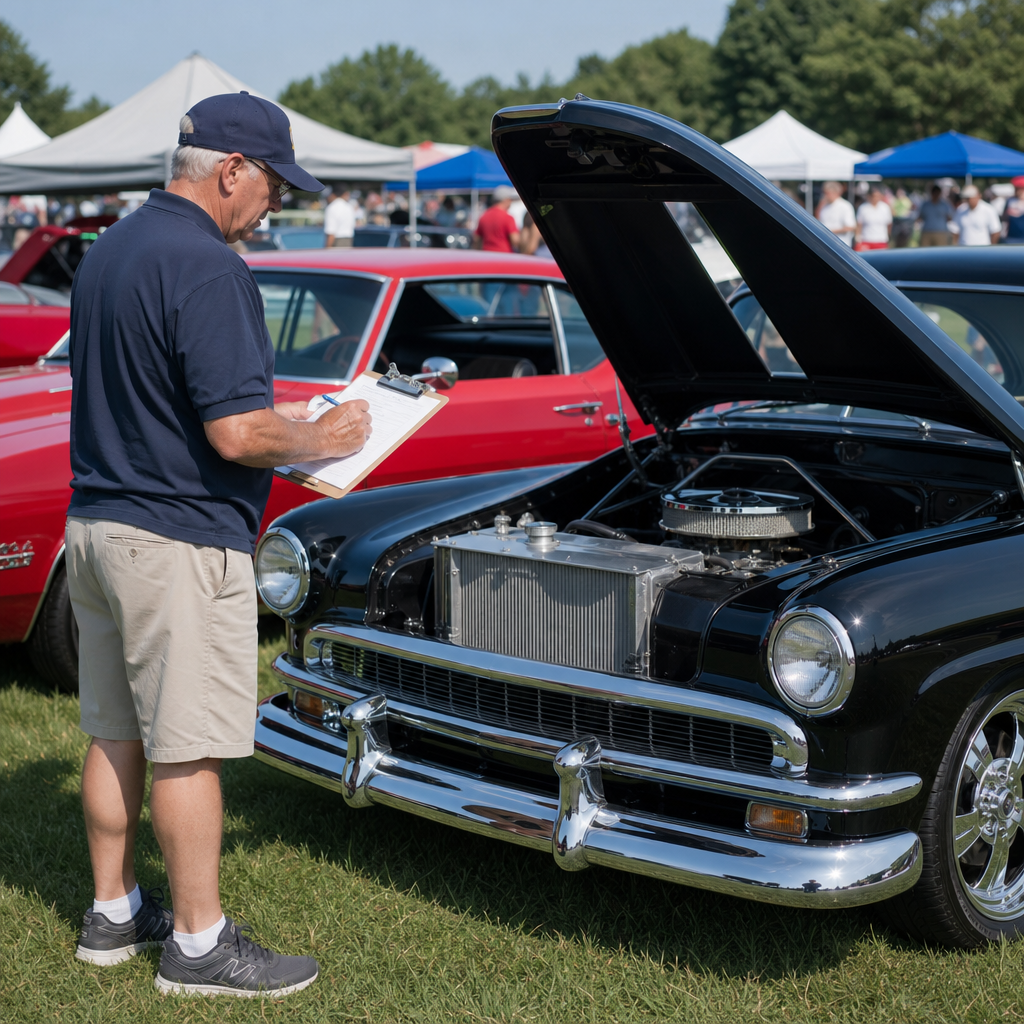
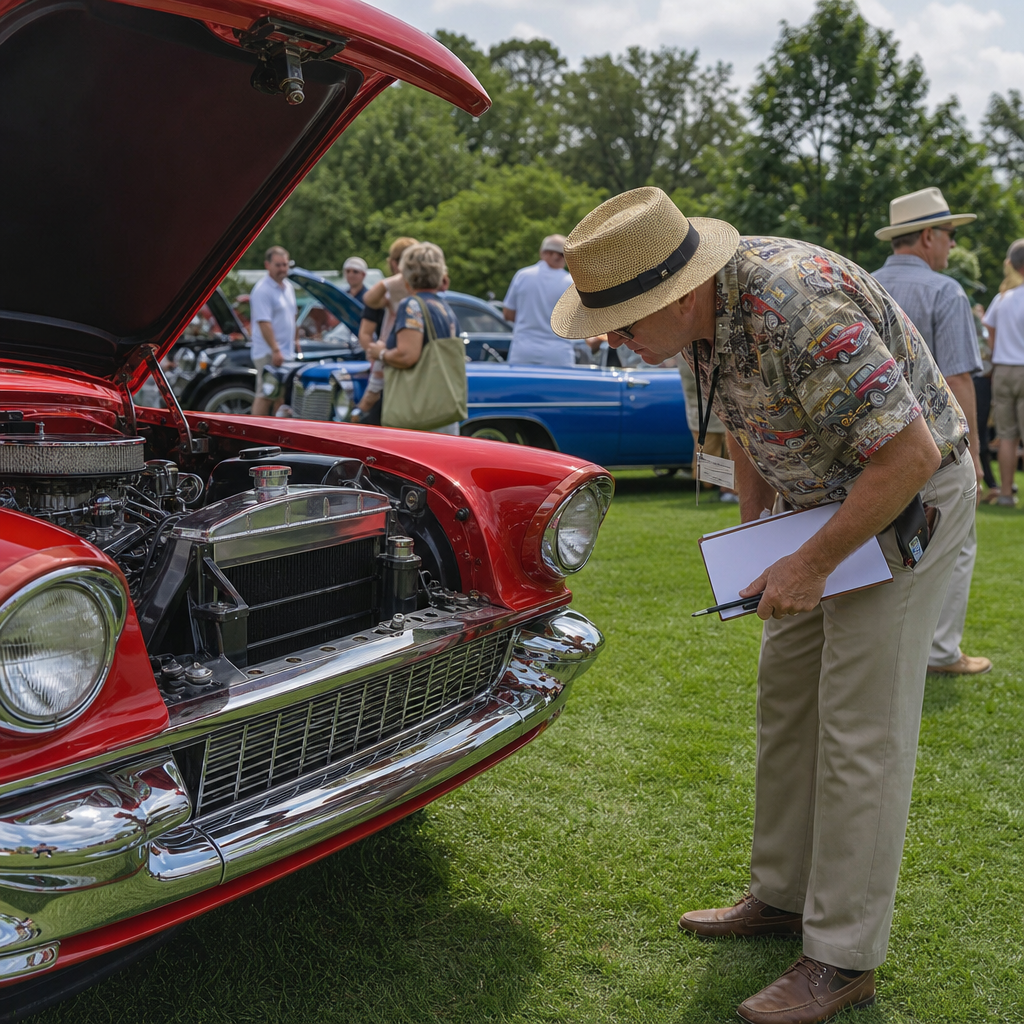
Restoration stories often involve years of research and specialist labor. Correct finishes, hardware plating, upholstery grain, hose clamps, decals, and fastener markings all matter in top-tier work. On American cars, judges may look closely at casting dates and assembly-line details. On European exotics, craftsmanship standards and known factory variations carry weight. The best restorations are transparent. They include photographs, invoices, and a rationale for what was repaired, replaced, or replicated. That transparency protects future owners and strengthens the car’s credibility at concours events and resale.
Preservation stories can be just as powerful. A survivor car tells the truth about materials, wear patterns, and manufacturing methods in ways a restored car cannot. I have seen collectors choose careful mechanical recommissioning over cosmetic renewal because the car’s worn steering wheel, faded carpets, and stone-chipped nose documented decades of actual use. Preservation does not mean neglect. It means stabilizing deterioration, servicing systems responsibly, and keeping irreplaceable original elements whenever possible. In many segments of the market, especially postwar sports cars and significant muscle cars, thoughtfully preserved examples now command serious respect.
The Human Side of Collecting
The most memorable collector spotlight stories are rarely just about values. They are about families, mentors, road trips, and the moment a car connects generations. A father may spend ten years locating the exact trim and drivetrain combination he remembers from childhood. A daughter may inherit a 1966 Mustang coupe, learn its maintenance routines, and discover that the car’s importance comes less from auction estimates than from the notes her parents kept in the glovebox. These stories sustain the culture because they turn ownership into stewardship.
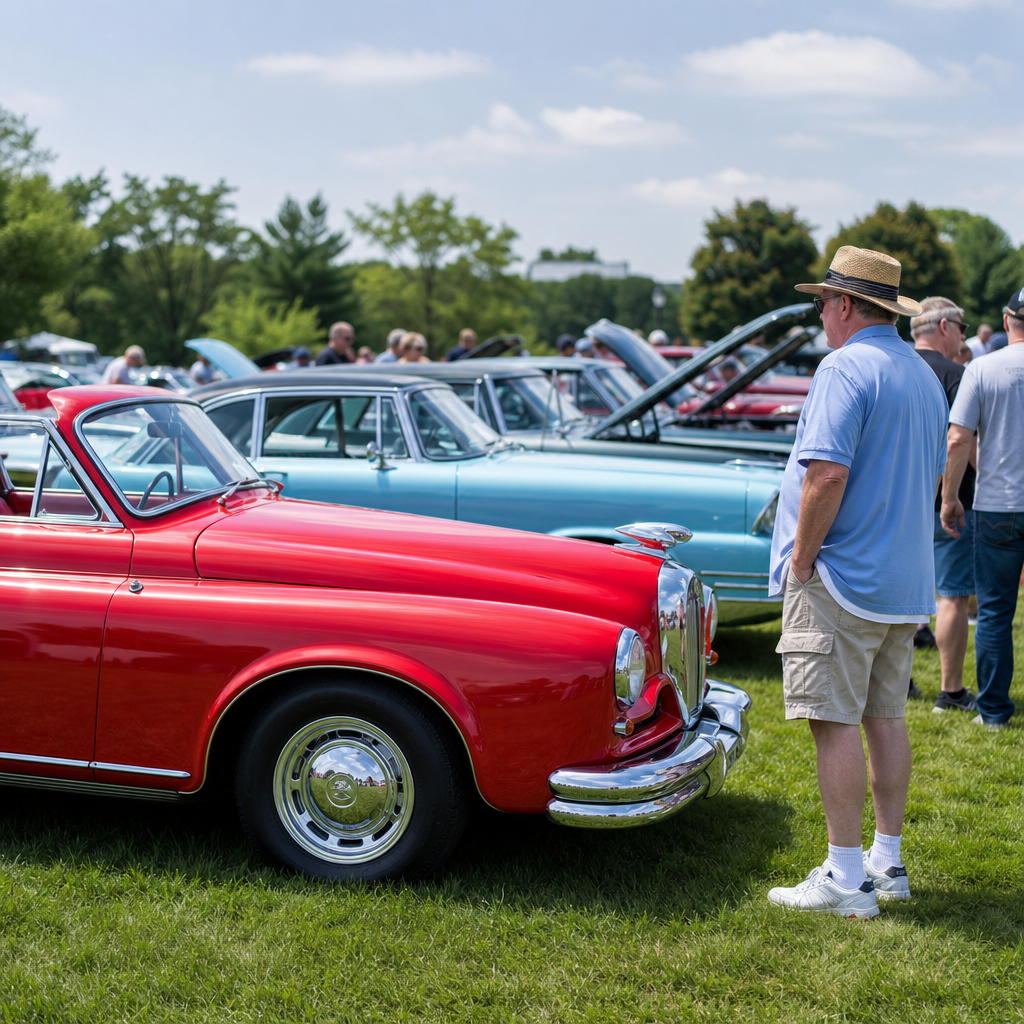
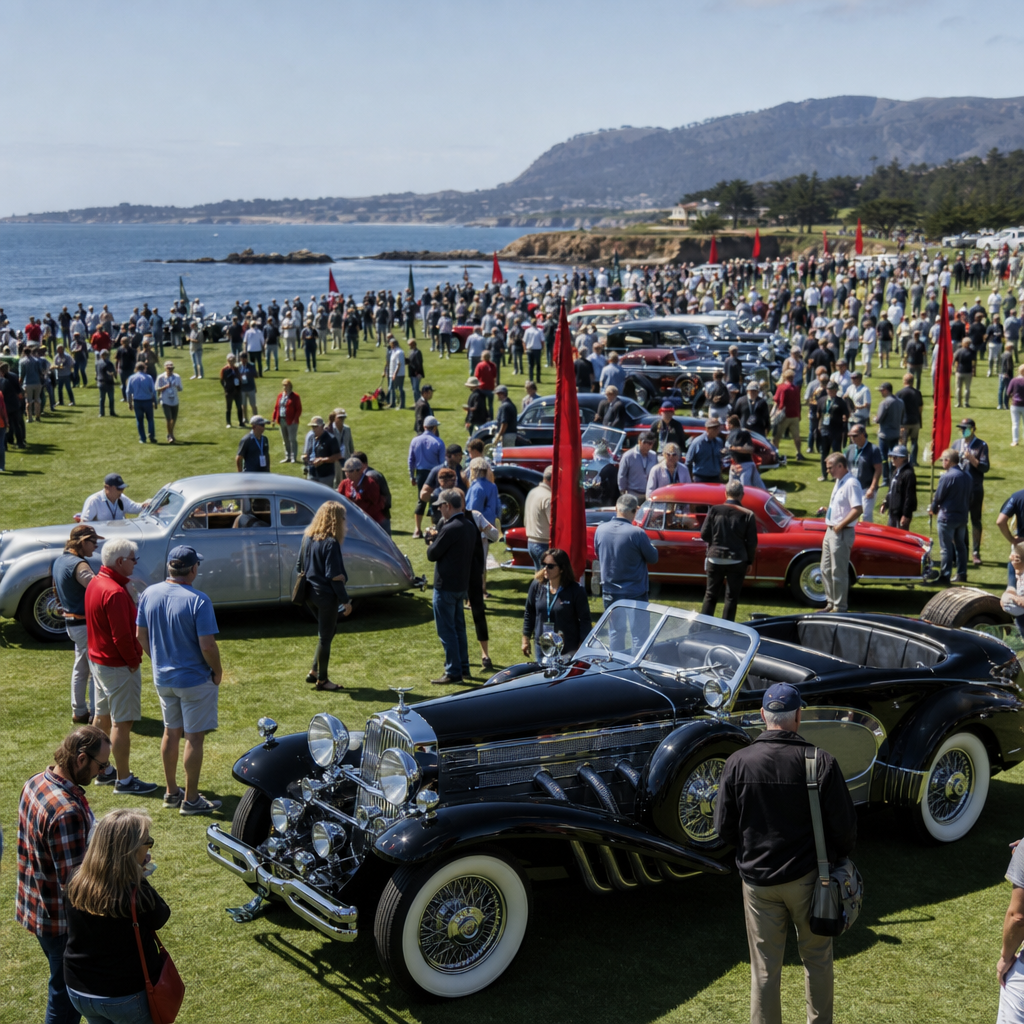
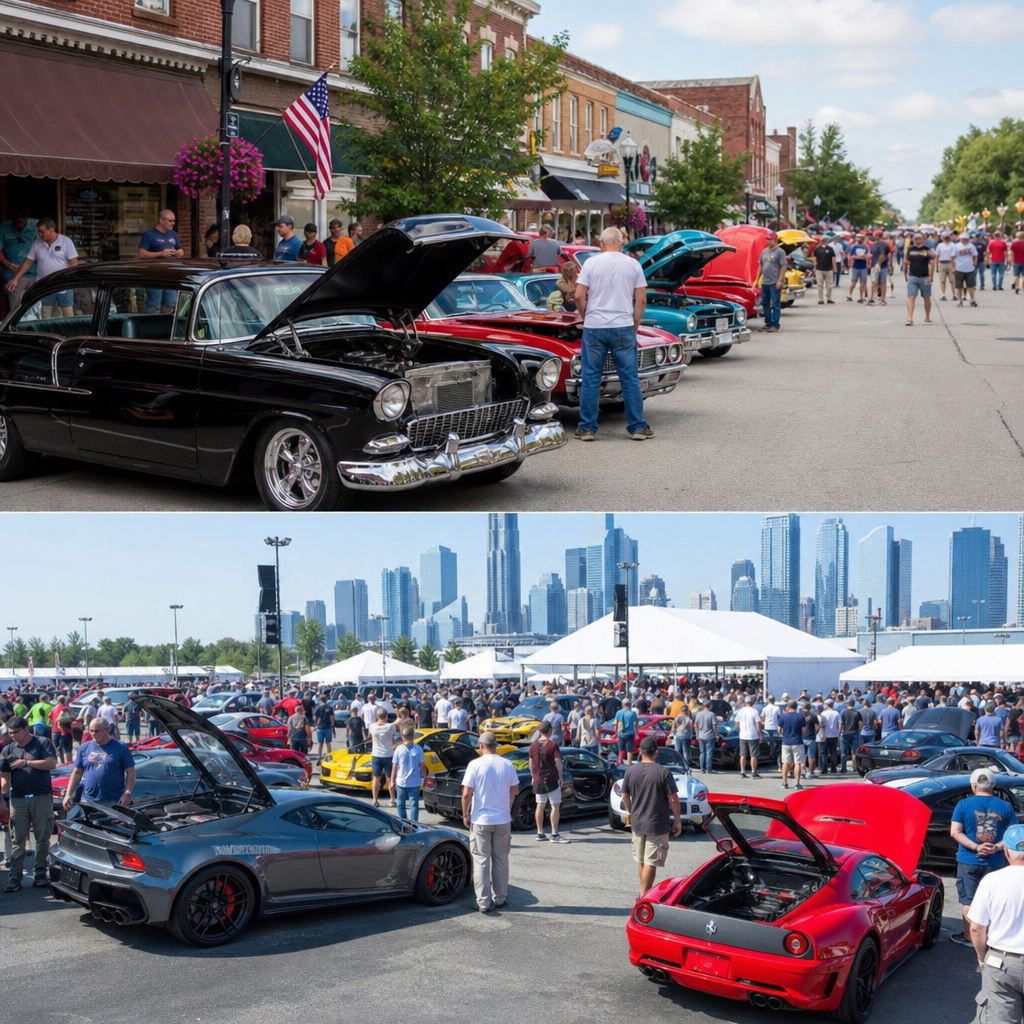
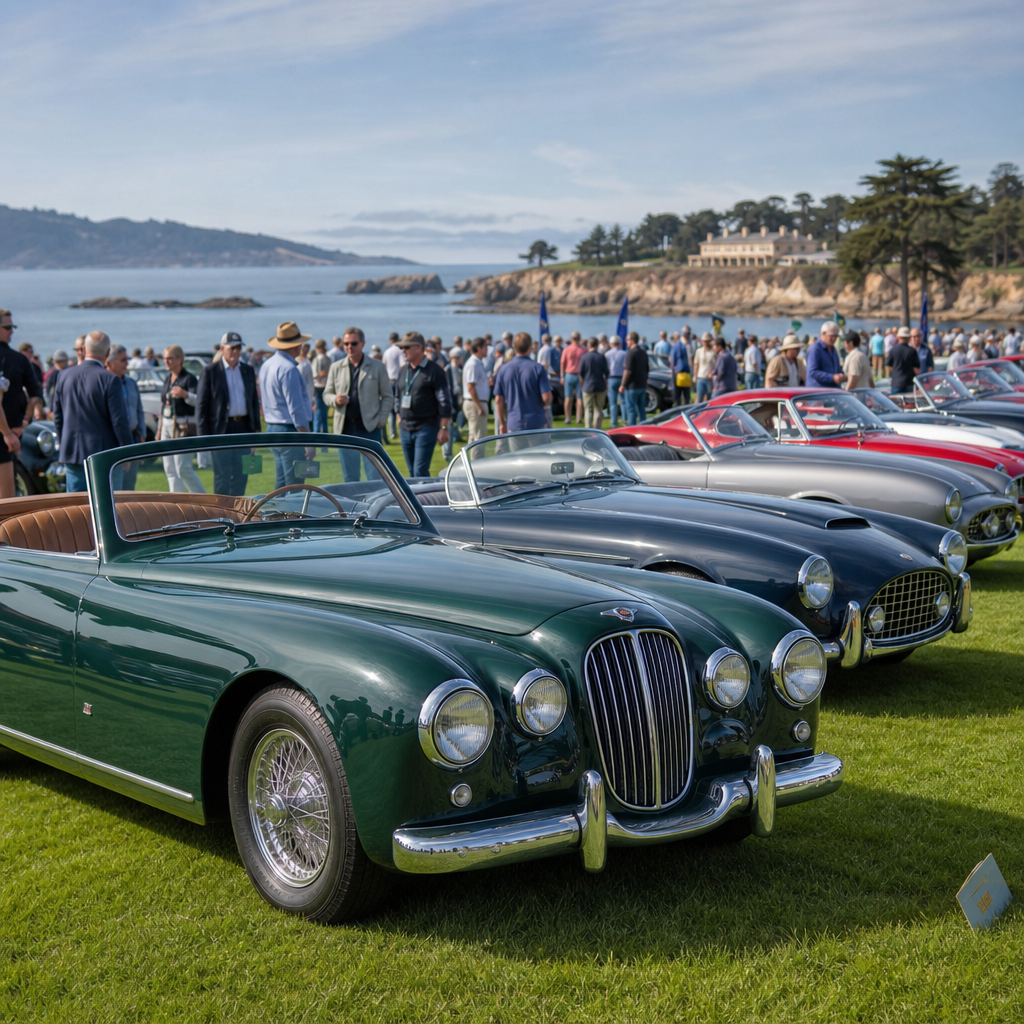
Community plays a practical role as well. Club networks help source impossible parts, decode factory anomalies, and confirm whether a rare option package is genuine. Events such as Amelia Island, Pebble Beach, Hershey, and regional marque meets create spaces where collectors compare details and share institutional knowledge. For newer enthusiasts, these settings compress years of learning into a weekend. You can see the difference between restored and preserved finishes, hear why one car’s documentation is stronger than another’s, and meet specialists who know where hidden costs usually emerge.
There is also a lifestyle dimension that outsiders often miss. Collectors organize garages around battery tenders, dehumidification, tool storage, literature shelves, and archival files. They plan transport, insurance appraisals, title logistics, and seasonal driving schedules. They think about fuel compatibility, tire age, fluid intervals, and fire suppression. In that sense, collector stories are operational stories. The romance of the hunt matters, but ownership discipline is what keeps rare cars healthy and historically legible for the next custodian.
Building a Smart Collector Journey
For readers using this page as a hub, the next step is to treat collecting as a skill set rather than a shopping impulse. Start by narrowing focus. Choose a decade, marque, body style, or use case, then learn the difference between the best-known model and the best buy within that niche. Study auction archives from Hagerty, RM Sotheby’s, and Bring a Trailer. Read buyer guides. Join a club. Talk to restorers before you need one. The market rewards preparation because informed buyers recognize quality quickly and avoid expensive myths.
Budget beyond purchase price. Storage, transport, insurance, taxes, sorting costs, and deferred maintenance can easily reshape the economics of ownership. Buy documentation with the car whenever possible, and if the story seems too perfect, slow down. The strongest acquisitions usually combine rarity, condition, and believable history rather than relying on a single selling point. Whether your interest is barn finds, preservation candidates, auction cars, or family-kept survivors, the principle remains the same: the best collector stories come from disciplined decisions made in service of long-term stewardship.
Classic car culture thrives because every rare find carries two values at once: market value and meaning. The market changes, tastes shift, and trends cool, but a well-documented, honestly represented car always stands on firmer ground than one built on exaggeration. That is the core lesson behind collector stories. Learn how rarity works, verify authenticity, respect provenance, and decide carefully between restoration and preservation. If you are building your own path in collector stories, use this hub as your starting point, then explore the deeper guides that help you buy smarter, preserve more faithfully, and enjoy every chapter of the chase.
Frequently Asked Questions
Why do collector stories matter so much in the world of rare and classic cars?
Collector stories matter because they reveal the human side of preservation, and that is often what gives a vehicle its deepest meaning. In classic car culture, a rare find is not just a product of market value, production numbers, or factory documentation. It is also the result of timing, knowledge, persistence, and emotional connection. One car may represent a decades-long search for a specific trim, drivetrain, or coachbuilt body style, while another may become significant because it has stayed in one family for generations. These stories help explain why a machine becomes more than transportation and instead becomes a piece of personal and automotive history.
They are also practical. A strong collector story often includes lessons about how a vehicle was located, how its originality was verified, what documentation supported the purchase, what restoration choices were made, and how the owner decided to insure and preserve it. That makes each story a useful case study for newer enthusiasts and seasoned collectors alike. By paying attention to the details behind rare finds and ownership journeys, readers learn how to identify authentic cars, avoid common mistakes, respect provenance, and make more informed decisions when adding historically important vehicles to a collection.
What usually makes a classic car a truly rare find?
A truly rare find is defined by more than simple scarcity. Low production numbers certainly matter, but rarity becomes more meaningful when combined with originality, documented history, unusual specifications, historical significance, or exceptional preservation. For example, a car built in limited numbers may still be less compelling than a well-documented example with matching numbers, original body tags, period-correct options, factory paperwork, known ownership history, and an unbroken connection to an important moment in automotive history. In many cases, the rarest car is not just the one that few people have seen, but the one that still tells its original story clearly and convincingly.
Condition and context also play major roles. A forgotten coupe discovered in long-term storage may be especially important if it retains hard-to-find components, factory finishes, unique racing modifications from its era, or dealer-installed equipment that was common at the time but rarely survives today. Sometimes rarity comes from regional history, such as a car sold through a specific dealership, campaigned locally, or owned by a notable enthusiast. Other times it comes from configuration, like a one-year engine combination, transitional model, or special-order color. Serious collectors evaluate all of these factors together, because a rare find is usually the result of multiple layers of significance rather than a single headline feature.
How do collectors authenticate a rare vehicle before buying or restoring it?
Authentication starts with identity and documentation. Collectors typically examine the vehicle identification number, chassis stampings, body tags, engine and transmission numbers, and any factory plates or labels that help confirm whether the car is what it claims to be. These details are then compared against marque-specific registries, factory records, build sheets, historical references, and expert literature. In many segments of the hobby, especially where values are high, small inconsistencies in numbers, stamp fonts, rivets, casting dates, trim codes, or body construction methods can reveal whether a vehicle is original, re-bodied, heavily altered, or inaccurately represented.
From there, experienced buyers look at provenance. Old registrations, service receipts, ownership records, restoration invoices, photographs, period race documentation, auction descriptions, and correspondence with previous owners can help establish continuity over time. Physical inspection is equally important. Signs of hidden corrosion, replacement panels, modified welds, non-original fasteners, or reproduction components may not automatically disqualify a car, but they do affect how it should be understood and valued. For especially important cars, collectors often bring in marque experts, appraisers, restoration specialists, and historians before finalizing a purchase. Authentication is best treated as a disciplined process, not a quick opinion, because getting the story right at the beginning protects both the investment and the integrity of the vehicle.
What should collectors consider when deciding whether to restore a rare car or preserve it as found?
The decision between restoration and preservation depends on the car’s condition, significance, originality, and intended use. A highly original vehicle with intact finishes, factory materials, and strong documentation may deserve preservation, even if it shows age, wear, or cosmetic imperfections. In today’s collector world, originality often carries tremendous value because it provides direct evidence of how the car was built, used, and maintained over time. Patina, if honest and well-documented, can be part of the car’s historical character rather than a flaw to erase. Preserving such a vehicle may involve careful mechanical recommissioning, corrosion stabilization, gentle cleaning, and archival documentation instead of a full cosmetic overhaul.
Restoration becomes more appropriate when the car has suffered severe deterioration, missing components, unsafe mechanical systems, or prior repairs that obscured its identity and quality. Even then, the best restorations are guided by research and restraint. Collectors should establish whether the goal is concours-level accuracy, period-correct drivability, or long-term conservation with sympathetic repairs. Original parts should be retained whenever possible, and any replacement work should be documented in detail. A thoughtful restoration respects the car’s history instead of rewriting it. In many cases, the smartest path is somewhere in the middle: preserve what remains authentic, restore only what is necessary, and make every intervention reversible or well recorded for future caretakers.
How can collectors properly insure and preserve historically important vehicles for the long term?
Long-term protection starts with understanding that rare collector cars require specialized insurance and storage strategies. Standard auto policies are usually not enough for vehicles with historical significance, limited use, or values shaped by provenance and rarity. Collectors typically seek agreed-value coverage, which establishes a documented insured value in advance rather than leaving reimbursement to standard market interpretations after a loss. It is also wise to confirm whether the policy covers spare parts, transportation, show participation, restoration-in-progress situations, and losses tied to theft, fire, weather, and transit damage. Detailed records, professional appraisals, photographs, and documentation files strengthen both underwriting and claims handling.
Preservation itself is an ongoing discipline. Proper storage should include a clean, dry, secure environment with stable temperature and humidity, good ventilation, and protection from sunlight and contaminants. Fluids, seals, tires, battery systems, and fuel components all need regular attention, even when a vehicle is not driven often. Historically important cars benefit from scheduled exercise or professional recommissioning practices that keep systems functional without introducing unnecessary wear. Just as important, collectors should maintain an organized archive of the car’s paperwork, images, restoration notes, ownership chain, and event history. That archive becomes part of the vehicle’s provenance and can be as valuable as the hardware itself. In the long run, preserving a rare car means caring for both the machine and the story that makes it significant.