
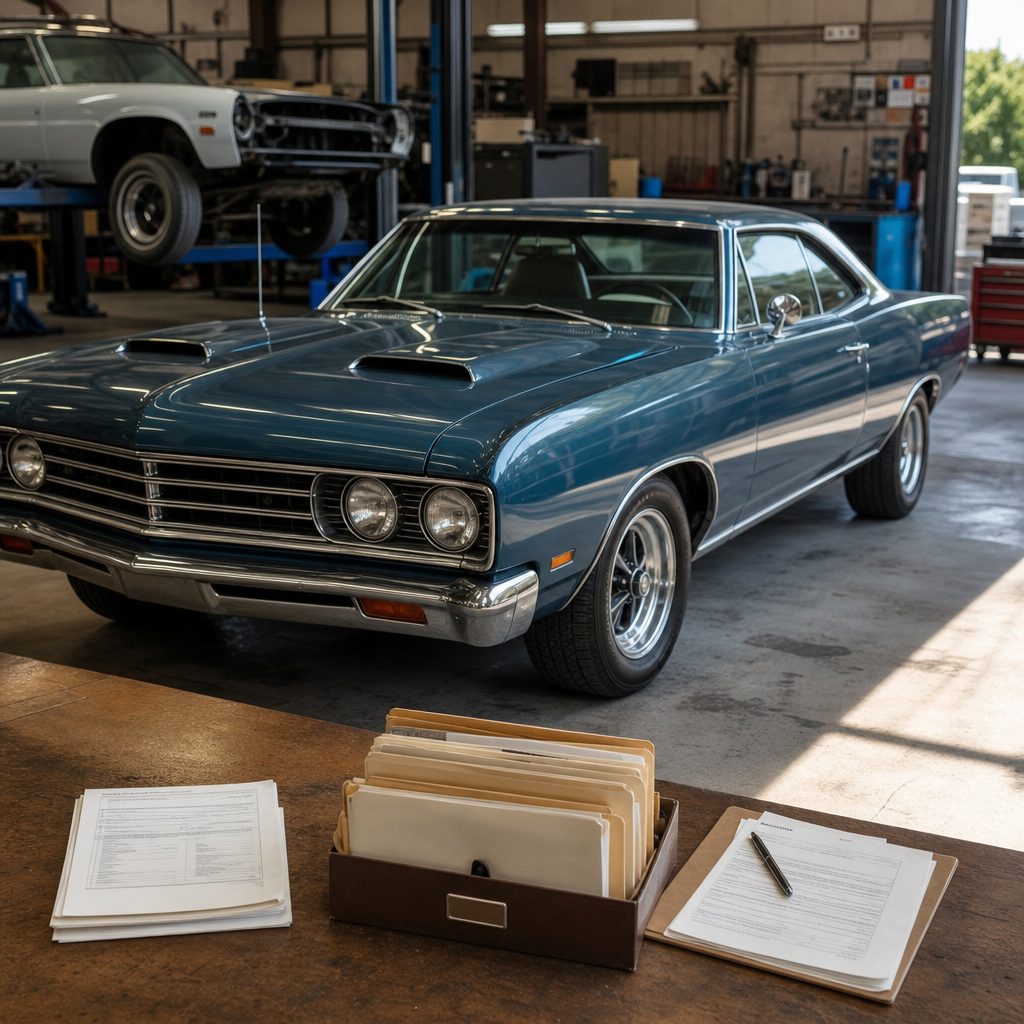
Buying, restoring, or selling a vintage vehicle gets much easier when you understand classic car title terms, because the words printed on a title often affect value, insurability, financing, and even whether the car can be legally driven. In the collector market, terms such as clean title, salvage title, and rebuilt title are not casual labels; they are legal classifications created by state motor vehicle agencies and triggered by specific events in a car’s history. I have reviewed title paperwork on everything from driver-grade muscle cars to concours restorations, and I have seen buyers overpay simply because they treated a title brand as a cosmetic note instead of a major ownership fact.
A car title is the legal document establishing ownership. A title brand is a permanent or long-term notation added by a state to identify material history, such as severe collision damage, flood loss, theft recovery, odometer problems, or total-loss settlement by an insurer. For classic cars, title interpretation can be even more complicated because older vehicles may have changed hands before digital recordkeeping, some states exempt older cars from standard branding rules, and collector cars often spend years off the road before reentering registration systems. That means a 1967 Mustang described as having a clean title may still deserve careful verification, while a rebuilt-title 1987 Buick Grand National may be a smart buy if the repair file is exceptional.
This hub explains the essential classic car terminology around titles, how each status affects real-world decisions, what documents buyers should request, and where title language intersects with restoration, valuation, and originality. If you are building your knowledge base in classic car basics and education, title literacy belongs near the top of the list. It helps you avoid fraud, negotiate from evidence, and match the right car to your goals, whether you want a weekend cruiser, a show car, or a long-term investment.
What a Clean Title Really Means on a Classic Car
A clean title generally means the state has not attached a major brand such as salvage, rebuilt, flood, or junk to the ownership record. That definition sounds simple, but in practice it is narrower than many buyers assume. A clean title does not guarantee that a classic car has never been wrecked, never had rust repair, never suffered theft damage, or still retains its original engine, transmission, and body panels. It only means the current title record lacks a qualifying negative brand under that state’s rules.
In the vintage market, that distinction matters. Older cars were often repaired outside insurance channels, especially when labor was cheap and values were modest. A 1972 Chevrolet C10 may have received a cab swap decades ago and still carry a clean title if no insurer declared it a total loss. Likewise, a 1955 Thunderbird restored after a garage fire might have no title brand if the incident predated modern reporting standards or the owner handled repairs privately. When I inspect title claims, I treat clean title as a starting point, not the final answer.
For buyers, the practical test is documentation. Ask for current title copies, past registrations, restoration invoices, ownership chronology, and any appraisal or insurance paperwork. Then compare the paperwork with the physical car. Check vehicle identification number tags, body stampings, rivets, door tags, frame marks, and casting dates when applicable. On a supposedly clean-title classic, inconsistencies are not automatic deal breakers, but they should trigger more questions before money changes hands.
How Salvage Title Status Happens and Why It Changes Value
A salvage title is issued when a vehicle has been declared a total loss, usually by an insurance company after damage, theft recovery, flood exposure, fire, or another event makes repair uneconomical relative to the car’s appraised value. The threshold varies by state. Some use a percentage of actual cash value, often around 70 to 80 percent. Others rely on broader total-loss formulas. With newer daily drivers, those calculations are routine. With classics, they can be distorted by poor valuation data, agreed-value policy differences, or insurers unfamiliar with collector pricing.
That is why salvage branding on older cars requires context. A 1989 Porsche 911 Carrera can be totaled after moderate body damage if an insurer uses generic market data rather than current enthusiast values. A first-generation Bronco may receive a salvage title because rust repair and paint costs exceed the insurer’s baseline estimate, even though the truck is highly restorable. Conversely, a heavily damaged low-value classic may never be branded salvage if it was uninsured when the loss occurred.
Market value usually drops sharply once a salvage title appears. The discount depends on rarity, repair quality, documentation, and intended use. For an investment-grade Shelby, Ferrari, or air-cooled Porsche, salvage history can permanently narrow the buyer pool. For a hobbyist seeking a weekend driver, the same title may matter less if the car is structurally sound and priced accordingly. Salvage status also affects insurability, loan availability, and resale time. Many mainstream lenders avoid branded-title cars, and some collector insurers will only issue limited coverage until post-repair inspections are complete.
What Rebuilt Title Means After Repairs Are Completed
A rebuilt title, sometimes called reconstructed, restored salvage, or prior salvage depending on the state, means the vehicle was previously branded salvage and later repaired, inspected, and approved for road use. This status does not erase the earlier loss event. Instead, it tells future buyers that the car crossed the salvage threshold at some point and then met state requirements to return to service. Those requirements often include receipts for major parts, photographs of repairs, anti-theft verification, and a safety or roadworthiness inspection.
The most important point is that rebuilt does not mean restored to factory condition. It means legally rebuilt for registration under that state’s process. Inspection standards are usually focused on identity, theft prevention, and basic safety, not concours-level workmanship. I have seen rebuilt-title classics with excellent metal finishing, correct panel gaps, and transparent photo books, and I have also seen rebuilt cars pass state inspection while still showing poor weld penetration, excessive filler, mismatched date codes, and shortcut rust repair.
Because of that range, buyers should evaluate a rebuilt-title classic on evidence, not assumptions. A 1970 Dodge Challenger with a rebuilt title and a detailed rotisserie restoration file may be a better purchase than a “clean-title” car with hidden patch panels and no paper trail. Still, rebuilt status lowers ceiling value in most segments because future buyers inherit the stigma and the burden of proof. The right approach is to price the car as a rebuilt-title example forever, even if the workmanship is outstanding.
Other Classic Car Terminology Every Buyer Should Know
Beyond clean, salvage, and rebuilt, several other title terms appear regularly in classic car terminology. Flood title indicates water damage serious enough to trigger state branding, and it is especially risky because corrosion can emerge for years in wiring, gauges, connectors, and hidden seams. Junk or certificate of destruction typically means the vehicle is not intended to return to the road, though exact rules vary by jurisdiction. Theft recovery can signal a car that was stolen and later recovered, with or without major damage. Bonded title refers to a title issued after ownership is established through a surety bond, often used when old paperwork is missing.
Classic buyers also need to understand non-title terms that influence interpretation. Numbers matching means the car retains the engine, transmission, or other major components identified as original to the vehicle by serial numbers, partial VIN stampings, or date-correct production evidence. Original title is often used loosely in ads; it may mean the seller possesses an old paper title, not that the title record is untouched. Bill of sale only is common for very old project cars in states that do not title certain model years, but it demands special caution before interstate purchase.
| Term | Plain-English Meaning | Main Buyer Concern |
|---|---|---|
| Clean Title | No major current title brand on record | Can still hide past damage or identity issues |
| Salvage Title | Total-loss vehicle not yet cleared for normal road use | Large value hit, insurance and registration limits |
| Rebuilt Title | Previously salvaged, repaired, and reapproved | Repair quality varies widely; stigma remains |
| Flood Title | Serious water damage recorded by the state | Long-term corrosion and electrical failures |
| Bonded Title | Ownership established through a surety bond process | Missing history and extra paperwork risk |
These terms form the foundation of classic car terminology because they connect legal identity, condition, and provenance. Once you know them, listings become easier to decode, and it becomes easier to separate harmless seller shorthand from real red flags.
How to Verify Title History Before You Buy
The best way to verify title history on a classic car is to combine government records, commercial vehicle-history tools, and old-fashioned document review. Start with the VIN on the title and confirm it matches every VIN location on the vehicle. For post-1981 vehicles, the standardized 17-character VIN makes decoding easier. Earlier classics may use shorter serial numbers, cowl tags, frame stampings, or engine pads, so marque-specific references are essential. The National Insurance Crime Bureau VINCheck can help identify certain theft and total-loss records, while services such as CARFAX or AutoCheck may show title brands on later classics, though coverage is often incomplete on older cars.
State motor vehicle departments are still the authoritative source. Ask whether the title is branded, whether there are liens, and whether the car was ever issued a salvage or rebuilt designation in that state. If the vehicle has moved across multiple states, records may not be seamless. That is common with collector cars that changed owners through auctions, estates, and restorers over decades. In those cases, supporting documents matter more: restoration photos, insurance appraisals, inspection reports, shipping receipts, auction descriptions, and service records with mileage and dates.
A pre-purchase inspection by a shop familiar with the model is money well spent. On classics, title verification and condition verification are linked. If a seller claims a car has a clean, straightforward history but the expert finds clip replacement, apron seams, flood silt under the dash, or tampered VIN tags, walk away or renegotiate hard. Paperwork should explain what the metal reveals.
Insurance, Registration, and Resale Realities
Title branding follows a classic car long after repairs are finished, so ownership costs can differ substantially from a comparable clean-title example. Insurance is the first friction point. Collector-car insurers such as Hagerty, Grundy, or American Collectors often evaluate usage, storage, driver history, and agreed value, but branded-title history can lead to reduced offers, stricter inspections, or outright denial depending on the car and the loss type. Flood and theft-recovery cars usually receive the most scrutiny because hidden damage and identity issues can linger.
Registration rules also vary. A rebuilt title accepted in one state may require additional inspection in another. Some DMVs are stricter about receipts for replacement parts, especially if the vehicle was assembled from multiple donor cars. That matters for hot rods, restomods, and long-stalled projects as much as original restorations. If you are buying across state lines, call your home-state DMV before purchase and ask exactly what documents they require to issue a registration and plate.
Resale is where title terms become unavoidable. Clean-title classics generally sell faster and to a broader audience. Salvage-title cars appeal mostly to experienced buyers, shops, or price-sensitive enthusiasts. Rebuilt-title cars occupy the middle ground: usable if documented well, but always discounted. In my experience, the sellers who struggle most are the ones who hide the issue until late in the deal. The market handles branded titles better when the seller presents the title status immediately, provides a complete repair file, and prices the car with realism rather than emotion.
How to Use Title Terms When Comparing Classic Cars
The smartest way to compare classic cars is to evaluate title status alongside structure, originality, documentation, and intended use. Do not rank title terms in isolation. A clean-title project with severe undisclosed rust can be a worse financial decision than a rebuilt-title driver with receipts, alignment measurements, and photo-documented repairs. Likewise, a rare Hemi car or limited-production homologation special may remain desirable despite a branded title because rarity offsets part of the stigma, although never all of it.
Set your objective first. If you want investment potential, prioritize clean title, verified identity, matching numbers, and strong provenance. If you want a dependable weekend cruiser, a rebuilt-title car can make sense when the discount is meaningful and the repair quality is proven. If you want a basis for a custom build, salvage history may matter least, provided the shell is straight and legally registrable. This practical framework keeps emotion from overwhelming due diligence.
Classic car title terms are ultimately about risk allocation. They tell you who carries uncertainty: the seller, the insurer, the state, or you. Learn the terminology, verify the paperwork, inspect the metal, and treat every title brand as a clue rather than a verdict. That discipline will protect your budget and improve every future transaction. Use this hub as your starting point for classic car terminology, then apply these definitions to every listing, auction catalog, and garage find you evaluate.
Frequently Asked Questions
What does a clean title mean on a classic car?
A clean title generally means the vehicle has not been branded by the state with a major title designation such as salvage, rebuilt, flood, junk, or similar damage-related classification. In the classic car world, that matters because a clean title usually gives buyers more confidence in the car’s legal status, marketability, and resale appeal. It can also make registration, financing, and insurance easier, especially when compared with cars carrying damage brands.
That said, a clean title does not automatically mean the car is original, rust-free, accident-free, or problem-free. Many vintage vehicles have long, incomplete histories, and older damage may not appear the same way it would on a newer car. Some states also changed branding rules over time, so a decades-old collector vehicle may have experienced significant repairs without ever receiving a modern-style title brand. For that reason, buyers should treat “clean title” as one important legal indicator, not as proof of overall condition.
When evaluating a classic car with a clean title, it is smart to compare the title status with the vehicle’s paperwork, restoration receipts, bodywork records, VIN tags, and any available ownership history. A proper inspection remains essential. In other words, a clean title is usually the preferred title status in the marketplace, but it should be verified alongside the car’s actual physical and historical condition.
What is a salvage title, and why does it matter so much for vintage vehicles?
A salvage title means the vehicle was declared a total loss by an insurance company or otherwise met a state’s threshold for severe damage, theft recovery, or another qualifying event. In practical terms, the state is signaling that the car once suffered a significant problem serious enough to trigger a branded title. On a classic car, that can dramatically affect value, buyer demand, insurance options, and confidence in the vehicle’s structural integrity and authenticity.
The exact rules vary by state, which is why salvage titles can be confusing in the collector market. One state may brand a car salvage after collision damage above a certain percentage of value, while another may handle older vehicles differently or exempt certain model years. Because classic cars often have fluctuating market values, a vehicle can reach a total-loss decision in ways that do not always reflect catastrophic damage. For example, a rare vintage model might be totaled because parts and labor costs are high, even if the damage was repairable by a skilled restoration shop.
Even so, a salvage title is never something to overlook. It raises legitimate questions about prior collision damage, flooding, fire, theft recovery, missing parts, or major corrosion-related repairs. It may also affect whether the vehicle can legally be driven before inspections and retitling are completed. Many buyers will discount a salvage-title classic substantially, and some insurers may limit coverage or decline to write agreed-value policies until the car has been fully repaired and documented. If you are considering a salvage-title collector car, review the title history carefully, ask for repair photos and receipts, and confirm the state requirements for inspection, registration, and future transfer before money changes hands.
What is the difference between a rebuilt title and a salvage title?
The key difference is timing and legal status. A salvage title indicates the car was declared a total loss or otherwise severely damaged and is not yet restored to roadworthy status under the state’s process. A rebuilt title, sometimes called reconstructed or prior salvage depending on the jurisdiction, usually means that same vehicle has been repaired, passed required inspections, and has been approved by the state to return to the road. In short, salvage is the damaged stage; rebuilt is the repaired-and-reinspected stage.
For classic cars, that distinction is important but not always reassuring by itself. A rebuilt title tells you that the vehicle has gone through some form of repair and state review, but it does not guarantee concours-quality workmanship, originality, or long-term reliability. State inspections often focus on identity, major component verification, and basic roadworthiness, not on whether body filler was used properly, whether panel gaps are correct, or whether the restoration meets collector standards. That is why two rebuilt-title classics can have very different quality levels and very different market values.
From a buyer’s standpoint, a rebuilt title is generally easier to insure, register, and drive than a salvage-title car, but it still carries a permanent history that usually lowers value compared with an equivalent clean-title example. Sellers should expect buyers to ask for extensive documentation, including pre-repair photos, invoices, parts sourcing records, paint and metalwork details, and the inspection paperwork that led to the rebuilt designation. If the documentation is strong and the repairs are high quality, a rebuilt-title vintage car can still be a worthwhile purchase, but the title brand should always be reflected in the price.
How do title brands affect the value, insurance, and financing of a classic car?
Title brands have a direct effect on value because they influence perceived risk. In the collector market, buyers often pay a premium for clarity, originality, and confidence. A clean title usually supports stronger pricing because it removes one major concern from the transaction. Salvage and rebuilt titles, by contrast, often reduce value because they introduce uncertainty about the car’s past damage, repair quality, and future resale appeal. The exact discount depends on the rarity of the car, the quality of repairs, the completeness of documentation, and how strict buyers in that segment tend to be.
Insurance is also heavily affected. Many classic car insurers prefer clean-title vehicles, especially for agreed-value policies, because the underwriting is more straightforward. A rebuilt-title classic may still be insurable, but the insurer may want appraisals, photos, restoration records, and a closer look at the vehicle’s condition before setting terms. A salvage-title vehicle may face even more restrictions, particularly if it has not completed the state’s rebuilt process. Some carriers may only offer limited coverage, and others may decline entirely. This becomes especially important for owners who want to protect a collector car at a stated or agreed value rather than basic actual cash value.
Financing tends to be the most restrictive area. Traditional lenders are often cautious with classic cars in general, and branded titles add another layer of risk. A clean-title collector car is more likely to qualify for specialty financing than a salvage- or rebuilt-title example. Lenders know that branded-title vehicles can be harder to value, harder to resell, and more vulnerable to disputes over condition. If you are buying or selling a vintage vehicle with any title brand, it helps to gather supporting documents early: appraisals, repair invoices, inspection approvals, ownership history, and detailed photos. Good records do not erase a title brand, but they can reduce uncertainty and improve the odds of insurability and smoother negotiations.
What should I check before buying, restoring, or selling a classic car with a title brand?
Start by confirming exactly what the title says and which state issued it. Terms such as clean, salvage, rebuilt, reconstructed, flood, junk, and parts-only can carry different legal meanings depending on the jurisdiction. Never assume the wording is universal. Verify the VIN on the title matches the VIN on the vehicle, and inspect all identification plates, stampings, and tags for signs of tampering, replacement, or inconsistency. On older cars, where tags may be worn or mounted in unusual locations, careful VIN verification is especially important.
Next, build the car’s paper trail. Ask for prior titles, registration records, insurance total-loss paperwork, restoration invoices, inspection reports, photographs from before and during repairs, and receipts for major components. If the car has a rebuilt title, documentation showing how the vehicle went from damaged to roadworthy is extremely valuable. If it has a salvage title, confirm what is required in your state before the car can legally be registered or driven. If you are the seller, organizing this information before listing the vehicle can make the difference between skeptical buyers and serious offers.
Finally, match the paperwork to the actual vehicle. A branded-title classic should be inspected by someone who understands vintage body construction, frame issues, rust repair, driveline originality, and collector-market standards. A state inspection may have approved the car for title purposes, but that is not the same thing as a detailed pre-purchase inspection or restoration audit. Buyers should also check insurance availability before purchase, and sellers should disclose the title brand clearly and honestly. In the classic car market, transparency is not just good practice; it protects value, reduces disputes, and helps everyone make informed decisions.