Classic car club events and activities sit at the heart of vintage motoring culture because they turn ownership from a solitary hobby into a shared practice built on knowledge, preservation, and community. A classic car club is an organized group of enthusiasts centered on a marque, model, era, region, or style of restoration, while events and activities are the scheduled ways members meet, drive, learn, compete, and support one another. In my experience working with local and national clubs, the strongest groups do far more than host occasional car shows. They create calendars that balance social gatherings, technical education, touring, youth outreach, advocacy, and charitable work. That mix matters because classic vehicles require specialized maintenance, parts networks, historical context, and practical driving opportunities to remain relevant. Without clubs, many owners struggle to find trusted mechanics, correct restoration standards, insurance guidance, or even safe places to use their cars regularly. Clubs also shape the public image of the hobby. A well-run event can demonstrate that historic vehicles are not just collectibles, but mechanical artifacts worth preserving and understanding. For newcomers searching for classic car clubs, understanding the full range of club events explains what membership actually delivers: relationships, access, and structured experiences that make ownership easier and more rewarding.
As a hub within classic car culture and lifestyle, this topic also matters because clubs connect nearly every other part of the hobby. Restoration projects often begin with club advice. Buying decisions are refined through club inspections and owner feedback. Driving routes, concours standards, swap meet etiquette, and registration law updates typically spread through club newsletters, forums, and monthly meetings before they appear anywhere else. The best classic car club events are designed around these practical needs. Some prioritize preservation and authenticity, others focus on road use and touring, and many blend both approaches. There are tradeoffs. A club with strict judging may intimidate casual owners, while a purely social group may offer less technical value. The point of a strong hub article is to map the landscape clearly so readers can see how classic car clubs operate, what activities they organize, and which formats best match their goals. Whether someone owns a prewar sedan, a British roadster, an air-cooled Porsche, a square-body truck, or simply wants to join the classic car community before buying anything, club participation often becomes the most efficient path into the hobby.
What Classic Car Clubs Do for Members and the Hobby
At their core, classic car clubs solve three problems: isolation, uncertainty, and underuse. Isolation is common because many owners are the only people in their immediate circle maintaining a carbureted engine, sourcing period-correct trim, or decoding factory paint tags. Clubs replace that isolation with a network. At a monthly meeting, one member may know the correct SU carburetor setup for an MGB, another may have a trusted chrome plater, and a third may understand title issues for imported vehicles older than twenty-five years. That practical information saves time and money.
Uncertainty is the second problem. New owners routinely ask which parts are safe to reproduce, what modifications hurt value, how to store ethanol-sensitive fuel systems, and whether to pursue survivor preservation or full restoration. Clubs provide context. Marque-specific organizations such as the Porsche Club of America, Antique Automobile Club of America, and Vintage Chevrolet Club of America have long established judging guides, archives, and technical committees that help members make evidence-based choices. Even independent regional clubs often maintain buyer checklists, inspection days, and mentoring systems.
Underuse is the third problem. A classic car that never leaves the garage deteriorates in its own way. Seals dry out, batteries fail, tires flat-spot, and owners lose confidence. Club events create reasons to drive. Breakfast runs, scenic tours, reliability drives, and destination weekends give owners low-pressure opportunities to keep vehicles exercised. This is where clubs protect the hobby itself. Cars preserved only as static objects eventually become harder for the public to appreciate. Cars seen in motion, parked in town squares, and explained by engaged owners continue to attract new enthusiasts.
Core Types of Classic Car Club Events
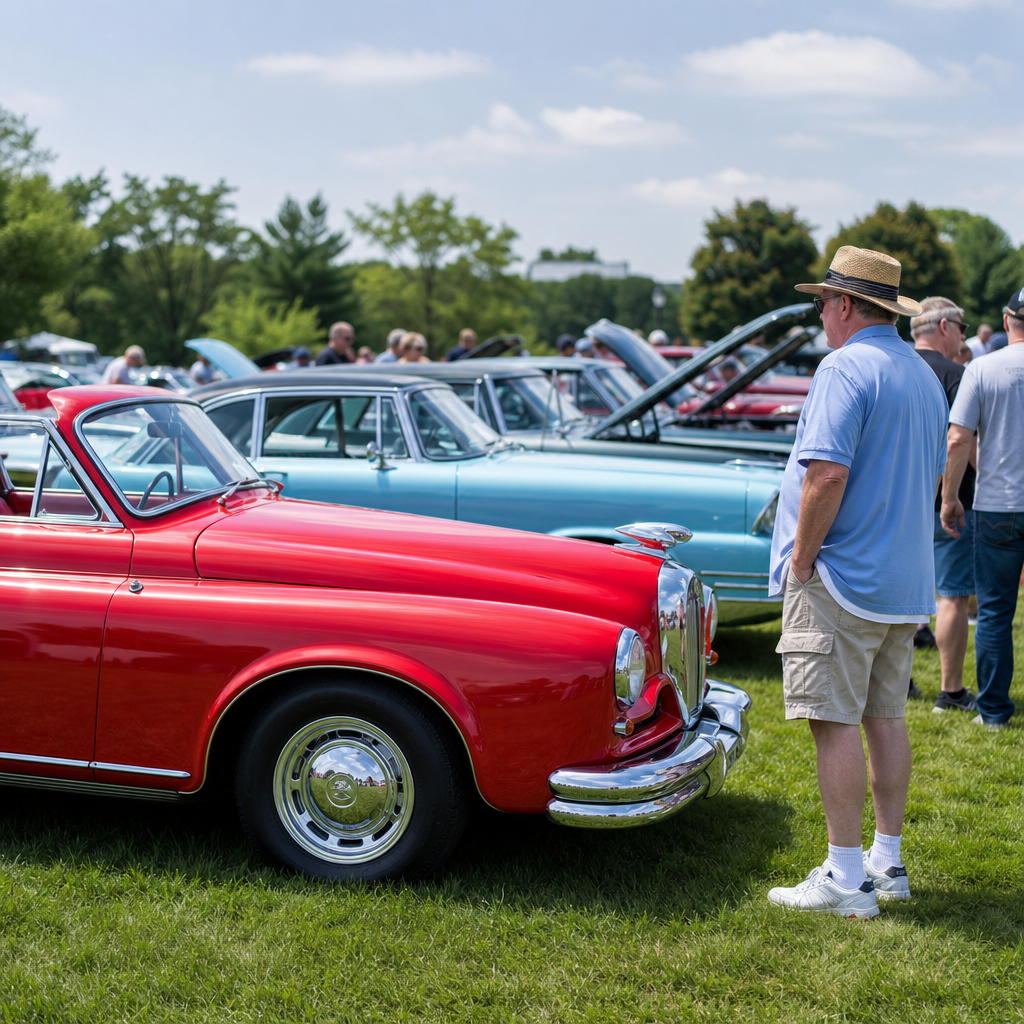
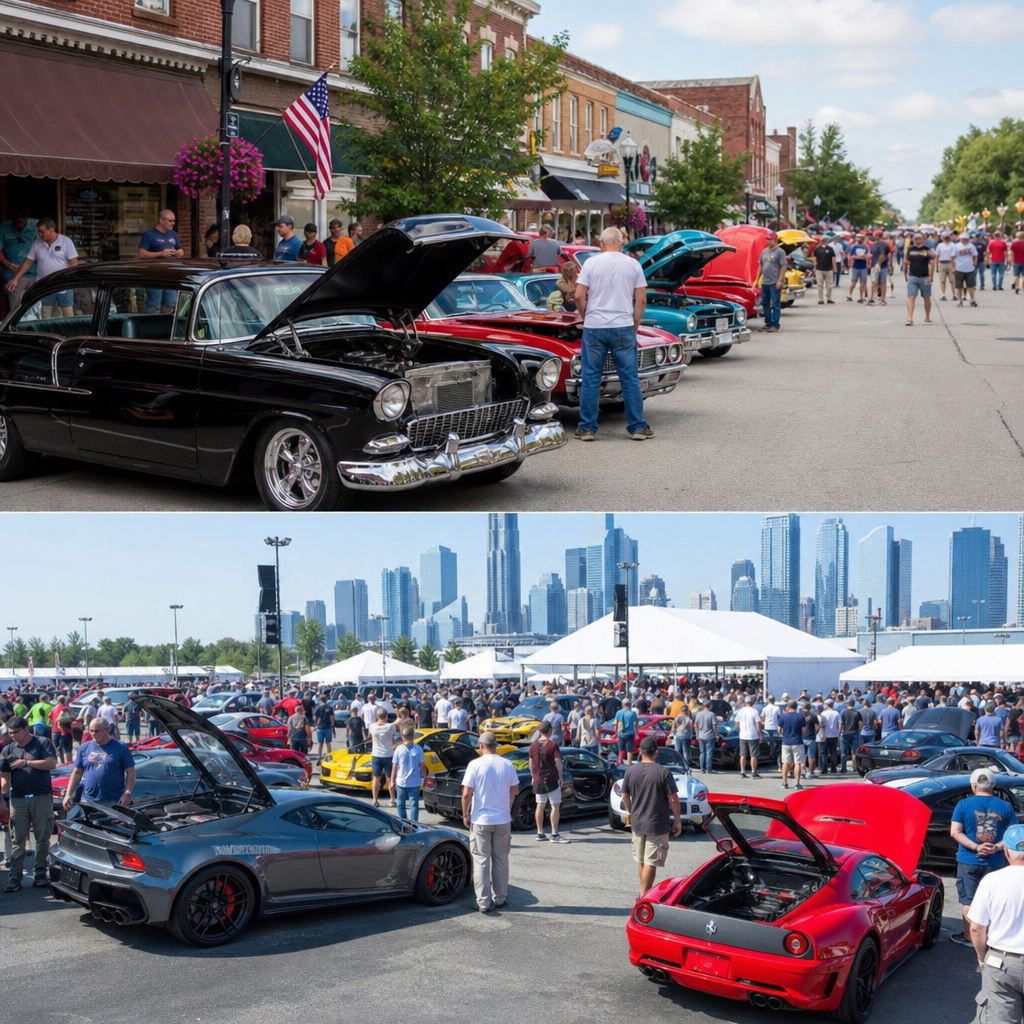
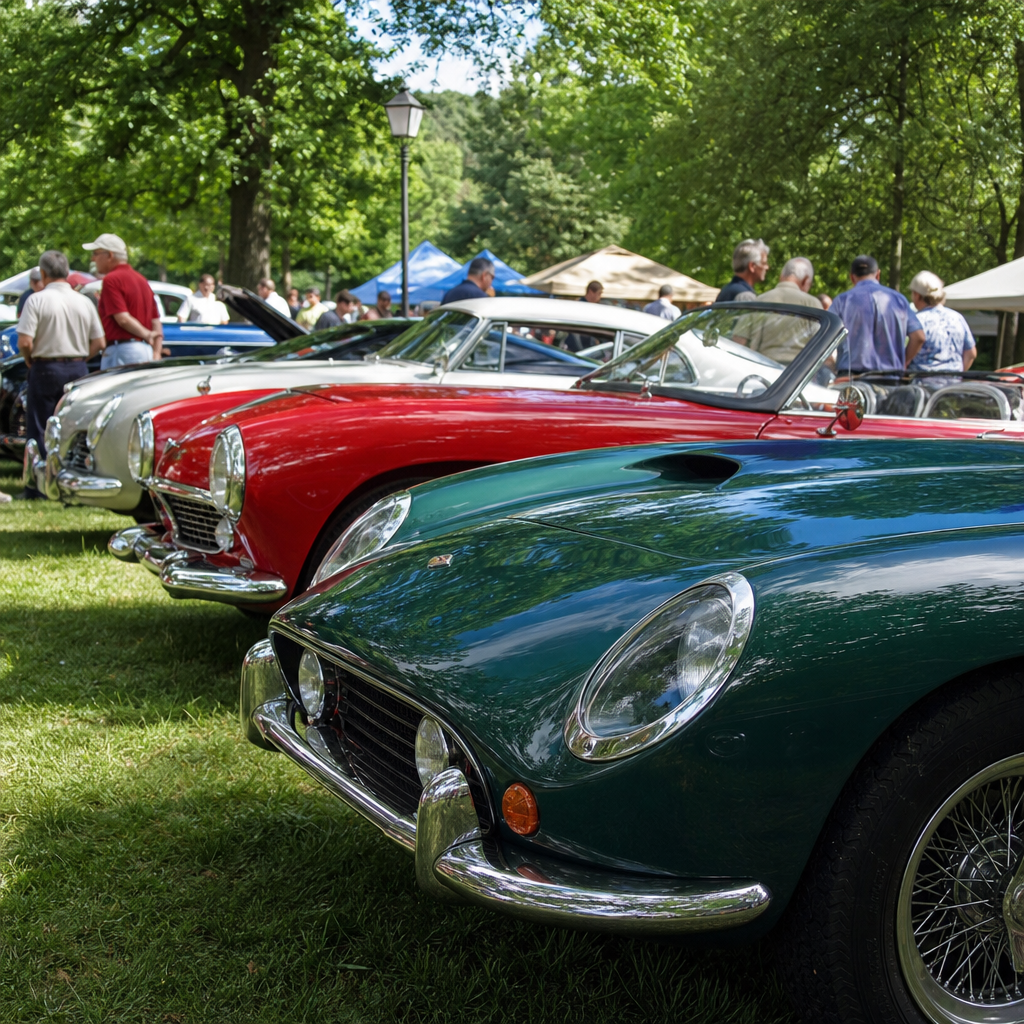
Most classic car clubs build annual calendars around a few proven event categories. The most visible is the car show, ranging from informal cars-and-coffee style gatherings to structured judged events. Informal shows are accessible entry points because owners can arrive, park, talk, and leave without preparing score sheets or cleaning wheel wells with cotton swabs. Judged shows, including concours events, appeal to members who care deeply about originality, documentation, and presentation. Neither format is inherently better; they simply reward different motivations.
Driving events are equally important and often more meaningful than static display. Road rallies, poker runs, reliability tours, and weekend overnights test both preparation and endurance. I have seen reluctant owners gain real confidence after completing a well-supported hundred-mile loop with a sweep vehicle, route book, and mid-route tech stop. Driving events teach what garage time cannot: cooling system limits, brake feel under repeated use, real fuel consumption, and the comfort modifications that matter on the road.
Technical activities form another essential category. Garage tours, workshop demonstrations, tool seminars, paint correction clinics, and winter maintenance sessions give members direct skill transfer. A one-hour demonstration on setting ignition timing with a timing light or balancing dual carburetors can save a beginner from weeks of frustration. Clubs that document these sessions in newsletters or private video libraries become especially valuable because members can revisit procedures later.
Social and civic events round out the calendar. Holiday banquets, guest speaker nights, museum visits, charity cruises, school appearances, veterans parades, and local festival displays strengthen member retention by giving spouses, children, and nontechnical participants a role. Clubs endure when they are more than parking lots full of cars; they need recurring human connection.
| Event Type | Main Purpose | Typical Benefits | Best Fit For |
|---|---|---|---|
| Monthly meets | Regular contact and updates | Networking, planning, easy participation | New and established members |
| Car shows and concours | Display and judging | Recognition, authenticity learning, public visibility | Detail-oriented owners |
| Road tours and rallies | Exercise vehicles on real roads | Driving confidence, reliability testing, shared adventure | Owners who want to use their cars |
| Technical workshops | Hands-on education | Maintenance skills, cost savings, safer repairs | DIY restorers and new owners |
| Swap meets | Buy, sell, and trade parts | Rare components, price discovery, sourcing contacts | Restorers and project owners |
| Charity and outreach events | Public engagement | Positive image, fundraising, youth interest | Community-minded clubs |
Meetings, Tours, and Driving Activities That Keep Cars Active
Monthly meetings remain the operational backbone of most classic car clubs. The format sounds simple, but the best meetings are tightly run. They cover upcoming events, recent member purchases, technical problems, venue logistics, and regulatory changes such as emissions exemptions, antique registration rules, or leaded-fuel substitute questions. Good clubs publish minutes and route members toward follow-up resources instead of letting useful advice vanish after conversation.
Driving activities deserve special attention because they often determine whether a club feels alive. A breakfast run of forty miles may seem modest, yet it is ideal for older vehicles with narrow cooling margins or uncertain charging systems. Longer tours require route planning with fuel availability, shoulder width, construction updates, and rest stops in mind. Responsible organizers establish departure spacing, radio or phone protocols, emergency contacts, and a sweep plan. The Touring Committee of many established clubs uses principles similar to modern event risk management: pre-drive inspections, waivers where appropriate, and clear pacing instructions to prevent scattered convoys.
Road rallies come in different forms. A gimmick rally emphasizes clues and navigation. A time-speed-distance rally relies on precision calculations and is better suited to members comfortable with odometers and route instructions. Casual scenic tours prioritize scenery and hospitality stops. Each style serves a purpose. Scenic tours are ideal for broad participation, while TSD rallies appeal to members who enjoy motorsport discipline without the expense of racing. In practice, the strongest clubs rotate formats so owners of stock cruisers, high-level restorations, and driver-quality cars all have reasons to show up.
Shows, Judging, and Public Display Standards
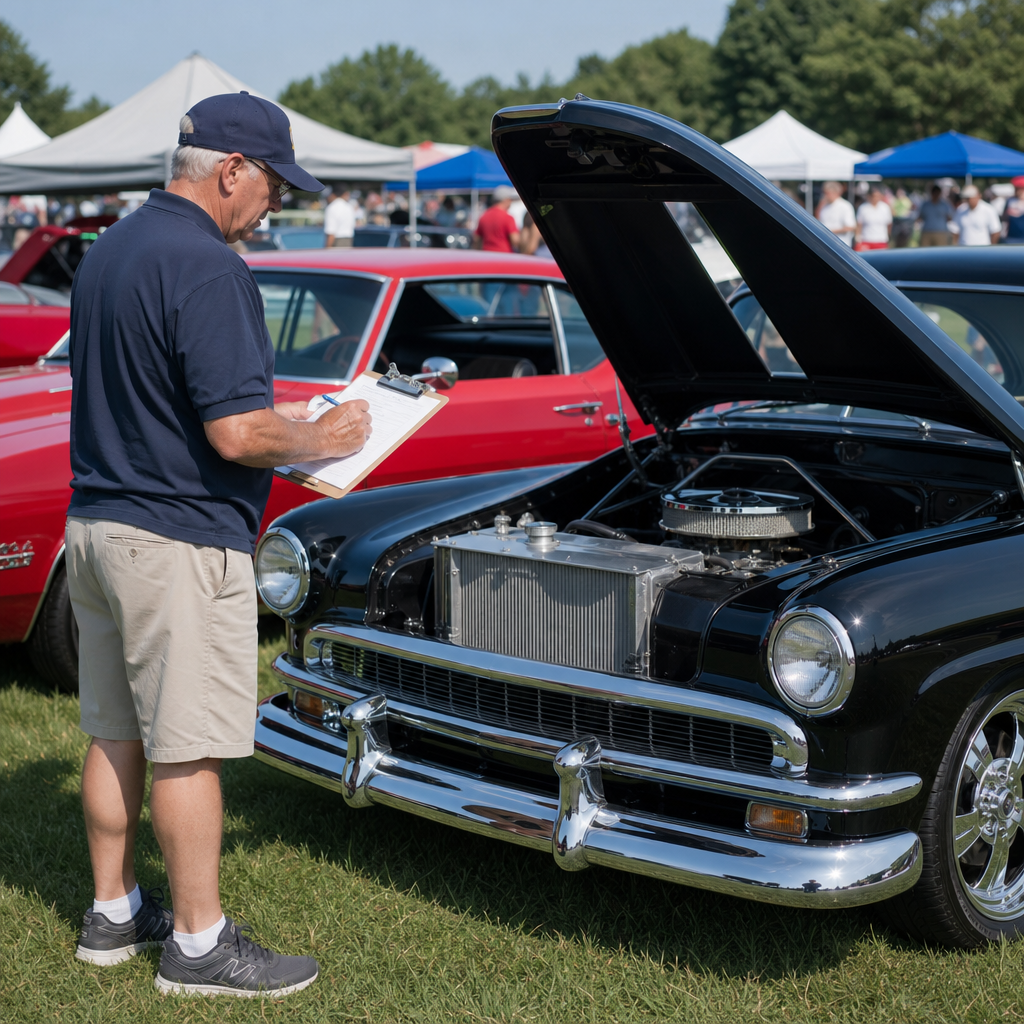
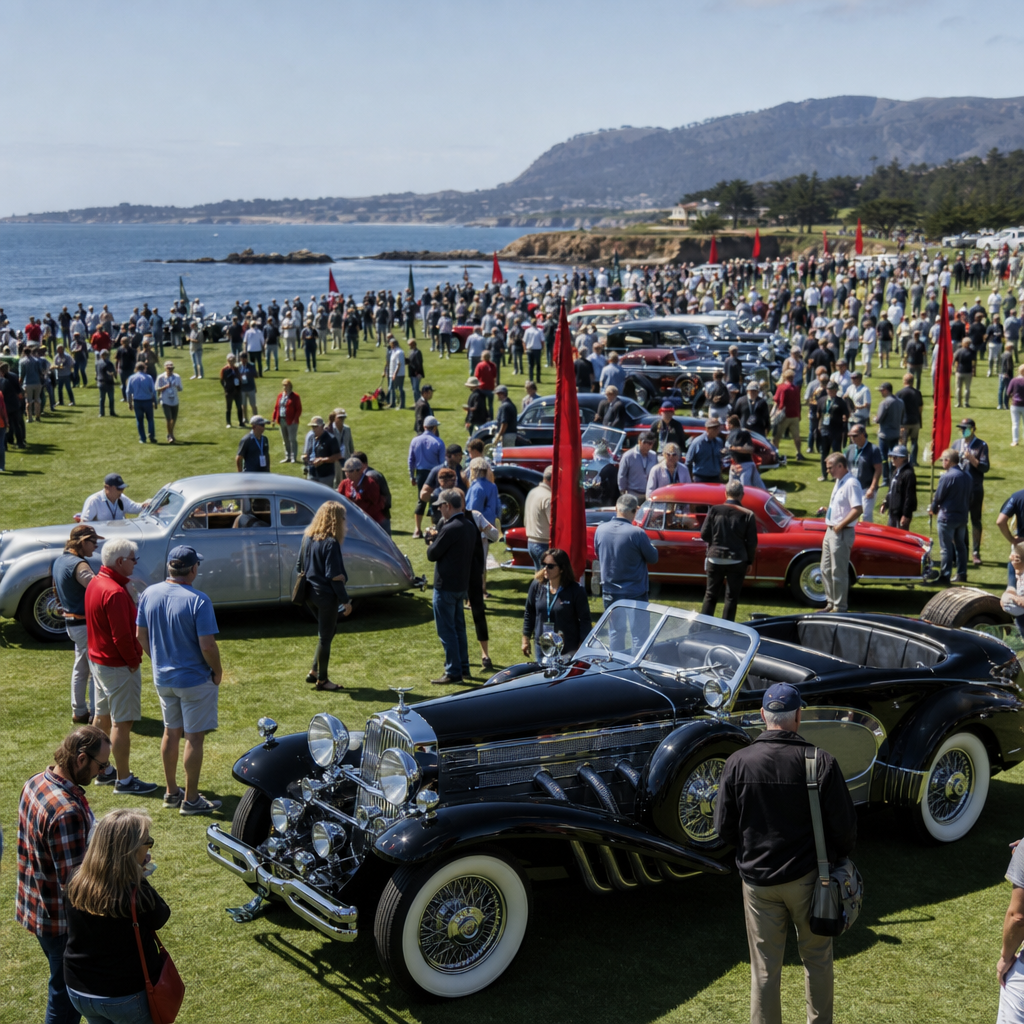
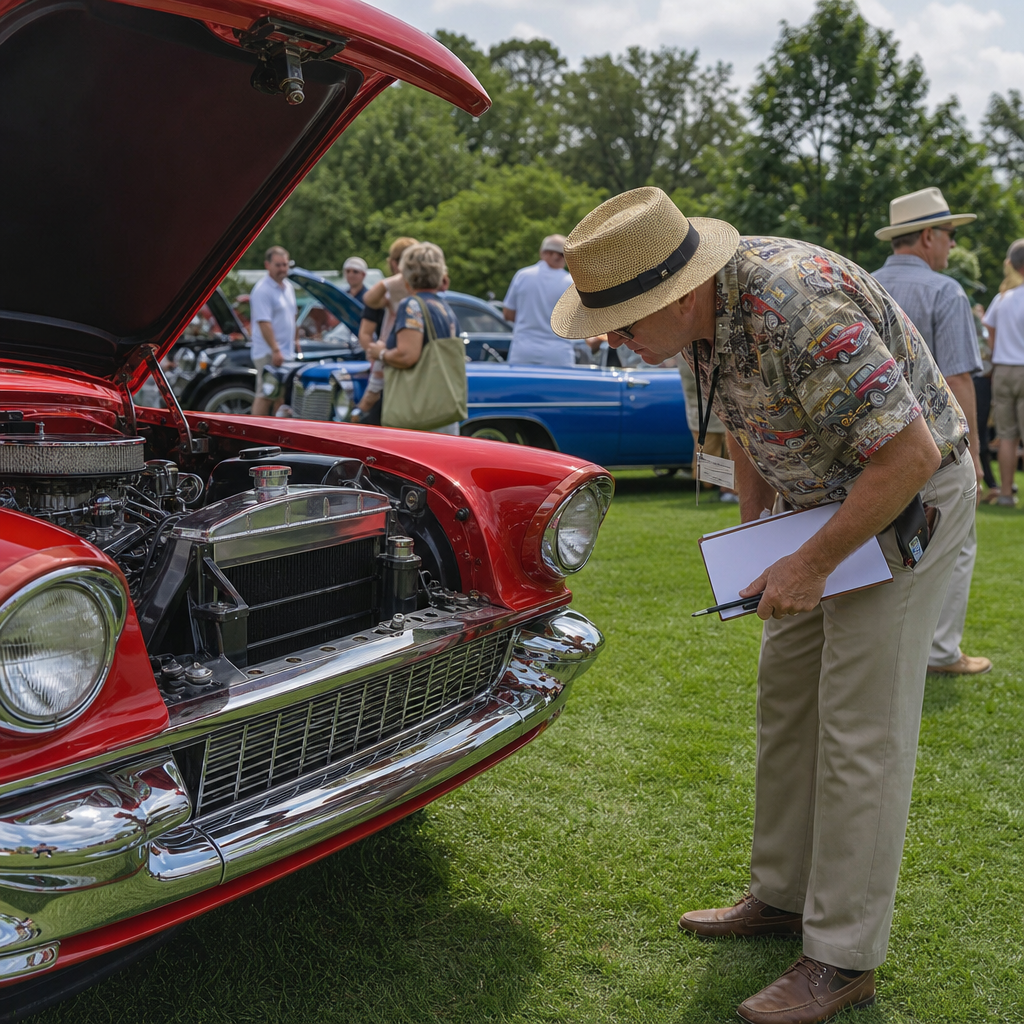
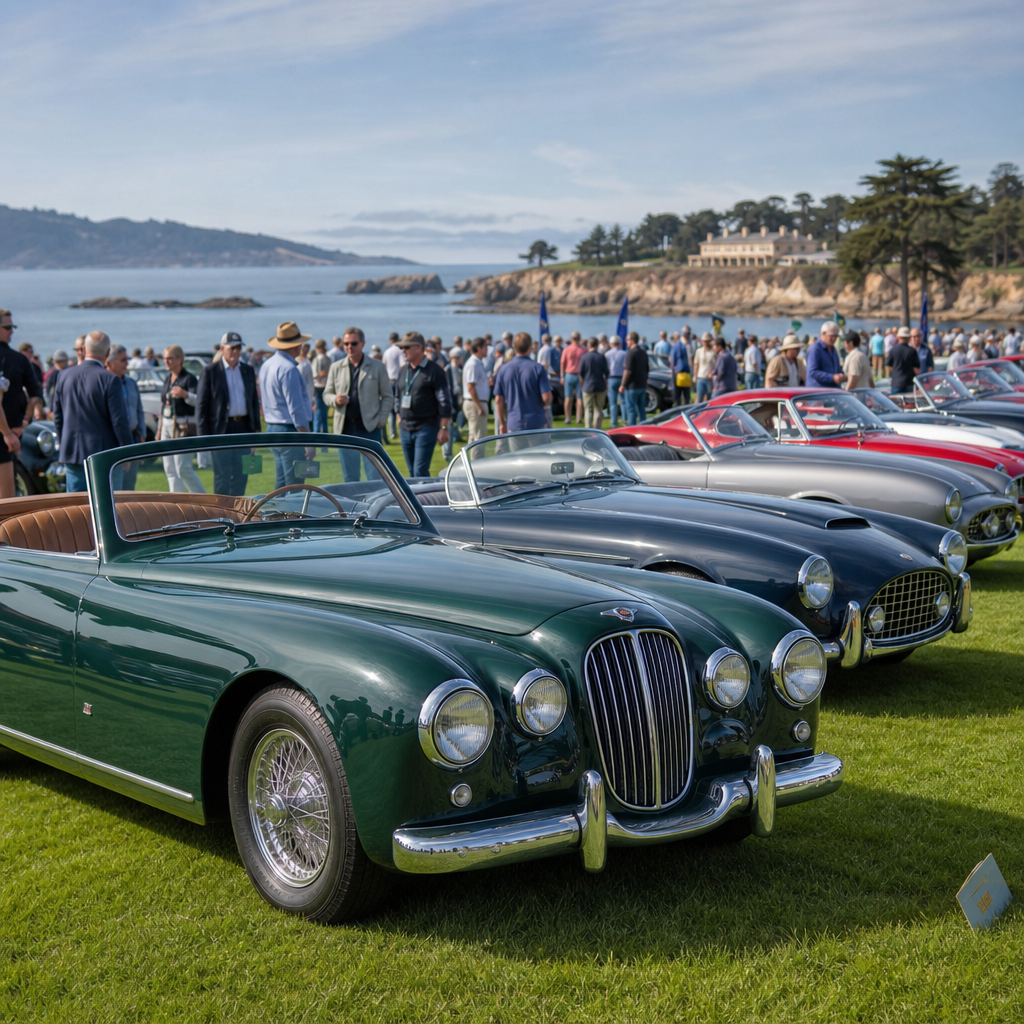
Car shows are often the first thing outsiders associate with classic car clubs, but the category is broader than polished rows on grass. Informal cruise-ins emphasize social interaction and public visibility. Judged shows evaluate condition, authenticity, cleanliness, and presentation according to published criteria. Concours events push this further, sometimes separating preservation classes from restored classes so survivor cars are not unfairly compared with freshly completed restorations. That distinction matters. Preserving original finishes, hoses, and hardware can be historically valuable even when those components are less visually perfect than replacements.
Experienced clubs make judging transparent. Entrants should know whether deductions apply for non-original battery caps, radial tires on factory bias-ply applications, modern hose clamps, or undocumented accessories. The Antique Automobile Club of America and marque clubs often provide scoring philosophies that local organizations adapt. Transparency reduces conflict and teaches members what standards actually mean. It also helps owners decide whether they want to compete or simply display.
Public display events carry responsibilities beyond trophies. Organizers need fire extinguisher access, spacing between cars, weather contingency plans, and crowd management around fragile trim or open engine bays. Interpretation matters too. The best events place ownership stories next to the vehicles: production numbers, restoration timeline, notable engineering features, and how the owner uses the car today. A 1967 Alfa Romeo Duetto shown with a note about its twin-cam engine and five-speed gearbox teaches more than a generic sign saying restored classic.
Technical Workshops, Mentoring, and Restoration Support
If you want to understand the real value of classic car clubs, look at their technical culture. Parts catalogs and video tutorials help, but nothing replaces a seasoned owner pointing to a component in person and explaining what fails, what substitutes work, and what shortcuts to avoid. In workshop settings, members can learn valve adjustment procedures, drum brake setup, electrical diagnosis with a multimeter, rust assessment, and safe lifting points for unibody versus body-on-frame cars. These are not trivial details. Incorrect jacking can damage floors. Poor fuel line routing can create a fire risk. Misadjusted steering boxes can make a car unsafe.
Mentoring is especially important for younger members and first-time buyers. I have seen clubs save people from expensive mistakes by organizing pre-purchase inspection teams. One member checks body filler and corrosion, another reads engine numbers and date codes, and another evaluates paperwork. That process is often worth more than a year of dues. Clubs also support restoration planning by connecting members with machine shops, trim specialists, upholstery firms, glass installers, and transport services. The practical benchmark is simple: a good club shortens the learning curve and reduces avoidable errors.
Technical archives increasingly matter as older print knowledge disappears. Strong clubs digitize service bulletins, parts cross-reference lists, wiring diagrams, and event presentations. Some maintain private forums indexed by model year and drivetrain. This kind of documentation becomes a living library that supports every other club activity.
Swap Meets, Charity Work, and the Social Side of Membership
Swap meets are one of the most efficient classic car club activities because they combine commerce, education, and relationship-building in one place. A table full of gauges, trim pieces, literature, and hard-to-identify brackets becomes a classroom when experienced members explain what fits which year and why one reproduction part is inferior to another. Price discovery happens in real time. Members learn when a new-old-stock item is worth a premium and when a refurbished original part offers better value than a modern reproduction.
Charity events and community outreach expand the purpose of a club beyond its membership. Hospital fundraisers, scholarship drives, food bank cruises, and educational appearances at schools or technical colleges give clubs public legitimacy. They also answer a persistent challenge facing the hobby: relevance. When students can see a flathead engine, manual choke, or mechanical fuel pump demonstrated by an owner, the car becomes a teaching tool for engineering history. Many clubs now pair show days with youth judging classes or apprentice awards to encourage participation beyond spectatorship.
The social dimension should not be underestimated. Dinners, partner-friendly outings, and annual banquets keep members engaged even when their cars are off the road. That continuity is crucial in climates with long winters or for owners in multi-year restorations. People stay in clubs because they trust the community, not just because they need a source for parts.
How to Choose the Right Club and Get the Most from It
Not every classic car club fits every owner, so selection should be deliberate. Start by deciding whether you want a marque club, a regional general-interest club, or both. Marque clubs usually provide deeper technical data and stronger parts knowledge. Regional clubs offer broader social calendars and easier local participation. Next, review the event calendar, not just the mission statement. A healthy club should show recurring activity across meetings, driving, technical sessions, and at least some public engagement.
Assess governance and communication too. Look for published dues, insurance practices for major events, code-of-conduct expectations, and clear volunteer roles. Clubs that rely on one or two exhausted organizers often decline quickly. Clubs with rotating leadership, documented procedures, and consistent newsletters or email updates tend to last. Digital presence matters, but a flashy website is less important than useful information, active planning, and members who respond to questions.
To get the most from membership, attend regularly, volunteer early, and share what you know. Bring your car even if it is imperfect. Offer photos from a restoration, document a repair, help with parking at a show, or assist on tour logistics. Participation builds credibility faster than polish. For many enthusiasts, classic car club events and activities become the framework that turns ownership into a durable lifestyle. Join a club that matches your goals, then show up consistently. The cars matter, but the long-term value comes from the people, the accumulated knowledge, and the opportunities to keep automotive history active on the road.
Frequently Asked Questions
What kinds of events do classic car clubs usually organize?
Classic car clubs typically organize a wide mix of events designed to keep members engaged, informed, and connected throughout the year. The most common activities include local meetups, weekend drives, car shows, concours-style judging events, technical workshops, swap meets, restoration clinics, member presentations, and social dinners. Many clubs also plan longer touring events, museum visits, holiday gatherings, charity fundraisers, and regional or national rallies that bring together enthusiasts from a wider geographic area.
What makes these events especially valuable is that they serve more than one purpose at the same time. A scenic drive gives members the chance to exercise their vehicles properly, compare mechanical performance, and enjoy the experience of driving older cars in a group setting. A workshop may focus on carburetor tuning, paint preservation, period-correct interiors, or sourcing hard-to-find parts, which helps members gain practical skills that directly support long-term ownership. Even informal coffee meetups often become important opportunities for troubleshooting, mentoring, and sharing firsthand experience that cannot always be found in manuals or online forums.
Clubs also tend to tailor their calendars around the identity of the membership. A marque-specific club may emphasize factory-correct restorations and model history, while a broader regional club may host open cruise nights and family-friendly social gatherings. In well-run clubs, the event schedule reflects the full culture of classic motoring: preservation, education, driving, fellowship, and public appreciation.
Why are classic car club events important for owners and enthusiasts?
Classic car club events are important because they turn ownership into participation. Owning a vintage vehicle can be rewarding, but it can also be isolating if an enthusiast has limited access to technical guidance, reputable parts sources, or people who understand the unique challenges of maintaining older machinery. Club activities bridge that gap by creating a structured community where experience is shared openly and regularly.
For owners, one of the biggest benefits is access to collective knowledge. A member who has solved a recurring overheating issue, identified the correct trim for a specific production year, or found a trusted machine shop can save another owner countless hours and expense. Events create the setting for these conversations to happen naturally. In many clubs, a casual parking-lot discussion is just as valuable as a formal seminar because it is grounded in real ownership experience.
These events also play a major role in preservation. Classic cars survive best when they are exercised, maintained properly, and understood historically. Club drives encourage members to keep their vehicles roadworthy. Judged events and restoration talks help owners learn what is authentic, what is acceptable, and what details matter for historical accuracy. Public-facing activities such as shows and parades introduce new generations to vintage motoring, which helps sustain interest in preservation over the long term.
Just as important, club events build lasting social bonds. Enthusiasts often join for the cars but stay for the friendships. The sense of community that develops through repeated drives, repairs, and shared experiences is what gives classic car culture its staying power.
How do classic car club drives, tours, and rallies differ from one another?
Although these terms are sometimes used interchangeably, club drives, tours, and rallies usually describe different types of activities. A club drive is typically the simplest format. It might be a half-day or full-day outing on scenic roads, often with a start point, a planned route, rest stops, and a destination such as a restaurant, historic site, or local event. The emphasis is on enjoying the cars in motion, building confidence behind the wheel, and spending relaxed time with fellow members.
A tour is usually more structured and may last one or several days. Tours often include overnight accommodations, coordinated meals, route books, support planning, and scheduled stops at museums, landmarks, vineyards, or motoring attractions. Because they require more preparation, tours are often considered highlight events on a club calendar. They test the readiness of both cars and drivers, but they also provide some of the most memorable experiences because members spend extended time together and use their vehicles in the way they were intended to be enjoyed.
A rally can mean different things depending on the club, but in traditional terms it often includes navigational elements, timing challenges, checkpoint stops, or route-following instructions rather than simple convoy driving. Some rallies are purely social and non-competitive, while others involve scoring based on precision, navigation, or consistency. In classic car circles, rallies can be especially appealing because they combine driving skill, teamwork, and historical atmosphere.
In practical terms, the main difference is purpose. Drives focus on enjoyment, tours focus on extended motoring experiences, and rallies add a structured challenge. Together, they form an essential part of club life because they keep classic cars active and connect members through shared time on the road.
What can new members expect when attending their first classic car club event?
New members can usually expect a welcoming environment, especially in clubs that understand the importance of encouraging participation from owners at different experience levels. A first event is often much less intimidating than people imagine. Most gatherings begin with simple introductions, casual conversation around the cars, and a lot of practical discussion about vehicles, maintenance, history, and upcoming activities. Whether someone arrives in a fully restored show car, a driver-quality project, or even without a car at all, many clubs are happy to include anyone with genuine enthusiasm.
At a social meetup or cars-and-coffee-style event, a new member can expect members to ask about their vehicle, offer tips, and explain the club’s culture. At a technical session, they may see hands-on demonstrations related to maintenance, detailing, electrical systems, brakes, or authenticity checks. On a drive, they can usually expect a driver briefing that covers route details, safety expectations, fuel planning, and group etiquette. Well-organized clubs make an effort to provide enough structure that new attendees feel informed without feeling overwhelmed.
It is also common for first-time attendees to discover that club participation is about much more than showing a perfect car. Members often value enthusiasm, curiosity, and willingness to learn just as much as the condition of a vehicle. In fact, owners of ongoing projects can benefit enormously from attending early, because they gain access to advice, parts recommendations, and encouragement that can shape the restoration in the right direction. For many people, the first event confirms that classic car clubs are not just about machines; they are about belonging to a knowledgeable and supportive community.
How do classic car club activities help with restoration, maintenance, and preservation?
Classic car club activities are one of the most effective tools an owner can use for successful restoration and long-term preservation. Unlike generic automotive communities, club members often bring model-specific or era-specific expertise that is difficult to replace. Through workshops, judging events, restoration seminars, garage visits, and member conversations, owners learn what parts are correct, what repairs are reversible, what upgrades are sensible, and what mistakes commonly reduce originality or reliability.
Technical sessions are especially valuable because they turn complex subjects into shared learning. A club may host demonstrations on ignition timing, suspension setup, rust prevention, upholstery care, period paint finishes, or safe storage practices. These sessions help owners avoid trial-and-error maintenance and make more informed decisions about whether to tackle work themselves or hire a specialist. In many cases, members also exchange trusted vendor lists, rare parts leads, and recommendations for machinists, painters, chrome platers, trim experts, and transport services.
Judged events and show preparation activities contribute to preservation in a different way. They teach owners to look closely at historical details, documentation, factory specifications, and craftsmanship. Even members who are not interested in competition benefit from learning how authenticity is evaluated, because it improves the quality of restoration decisions and helps preserve the historical character of the vehicle.
Perhaps most importantly, club activities reinforce the idea that preservation is ongoing, not a one-time achievement. Regular driving, preventive maintenance, proper storage, and informed stewardship are what keep classic cars alive for future generations. A strong club gives owners the knowledge, accountability, and encouragement needed to care for these vehicles well over time.