Are 1990s cars considered classics yet? In many cases, yes, but the honest answer depends on which definition of classic you use, who is asking, and why the label matters. I have worked with owners registering weekend cars, insuring limited-use collectibles, and valuing modern classics for sale, and the same confusion appears every time: age alone does not settle the question. A 1994 Toyota Supra Turbo, a 1990 Mazda MX-5 Miata, and a 1997 Ford Taurus are all from the same decade, yet they are not treated the same by collectors, insurers, or licensing agencies.
To understand whether 1990s cars are classics, you first need to define the term. In everyday conversation, a classic car is an older vehicle with collector appeal, recognizable design, cultural significance, or historical importance. In formal use, the term can mean something narrower. Insurance companies often set minimum age thresholds, commonly 20 to 25 years, then add conditions involving storage, mileage, and vehicle condition. State motor vehicle agencies may offer classic, antique, historic, or collector registrations, but each category uses different rules. Car clubs and auction markets apply their own standards based on rarity, originality, drivability, and demand.
This matters because the label affects cost, legality, and long-term value. A car considered classic may qualify for agreed value insurance, specialized financing, tax treatment in some jurisdictions, club concours eligibility, or historic registration plates. It may also face usage restrictions, emissions exemptions, or stricter originality expectations. For buyers, understanding the definition helps avoid overpaying for a merely old car. For owners, it shapes restoration choices, maintenance planning, and resale strategy. As 1990s vehicles move deeper into collector territory, the decade sits at an important transition point between analog classics and software-dependent modern machines, making careful definition more important than nostalgia alone.
What Is a Classic Car?
A classic car is best understood as a vehicle old enough to represent a distinct period of automotive history and desirable enough to be preserved, collected, or used in a special-interest way. That definition combines age with significance. The Classic Car Club of America uses a much stricter benchmark for its own Full Classics, generally limited to high-end American and European cars built between 1915 and 1948. That club definition is influential but not broad enough for most owners asking about a 1990s vehicle. In the wider market, classic usually means a car with collector recognition rather than a car from one exact era.
Age thresholds are the simplest starting point. Twenty years is the point where many enthusiasts begin calling a car a classic. Twenty-five years is even more common because insurers and import rules often use it. In the United States, the federal 25-year import exemption under National Highway Traffic Safety Administration rules makes 1990s Japanese performance cars especially visible once they cross that age line. That regulatory milestone helped turn models like the Nissan Skyline GT-R R33 and Honda Beat from niche imports into highly discussed collectibles. Still, turning 25 does not automatically make every car desirable. It only makes every car old enough to be considered.
The difference between old, antique, vintage, and classic causes much of the confusion. Old simply describes age. Antique usually refers to vehicles at least 25 years old in registration systems, though some states use older cutoffs. Vintage often refers to a pre-World War II era in enthusiast language, but many people use it loosely for anything nostalgic. Classic sits between formal history and popular culture. A classic car is not necessarily rare, expensive, or prewar. It is a vehicle that has earned recognition as worth preserving beyond basic transportation utility.
How Different Organizations Define Classic Status
No single authority controls the term, so owners should compare definitions before making decisions. State DMVs use registration categories created for compliance, not necessarily for collector prestige. One state may issue classic plates at 20 years old, another may use antique at 25 years old, and a third may require that the vehicle be maintained as a collector item and not used for daily commuting. Insurance carriers such as Hagerty, Grundy, and American Collectors Insurance focus less on a romantic definition and more on underwriting risk. They typically look for secure storage, limited annual mileage, another car for daily use, and evidence that the insured vehicle is enthusiast-owned.
Auction houses and valuation guides shape market perception. Hagerty Price Guide, Bring a Trailer sales history, Mecum, and Barrett-Jackson results often determine whether a model is considered collectible in practice. If multiple clean examples sell at premium prices, parts suppliers start supporting them, clubs become more active, and the market begins treating the vehicle as a true classic. I have seen this happen with the Acura Integra Type R and Toyota Land Cruiser 80 Series. Once strong sales and active communities appear, the classic label stops sounding speculative and starts reflecting real demand.
| Definition Source | Typical Age Threshold | What Else Matters | 1990s Car Impact |
|---|---|---|---|
| State registration agency | 20 to 30 years | Limited use, historic status, local rules | May qualify for special plates but with restrictions |
| Collector insurance company | Usually 20 to 25 years | Storage, mileage, condition, driver profile | Many 1990s cars qualify if not daily driven |
| Auction and valuation market | No fixed rule | Demand, rarity, originality, sale results | Halo cars gain classic status faster than ordinary sedans |
| Enthusiast clubs | Varies widely | Historical significance, model reputation, community support | Cult 1990s models are widely accepted as classics |
The key takeaway is direct: classic status is contextual. Ask whether you need a legal definition, an insurance definition, or a collector-market definition. They overlap, but they are not identical.
Are 1990s Cars Classics Now?
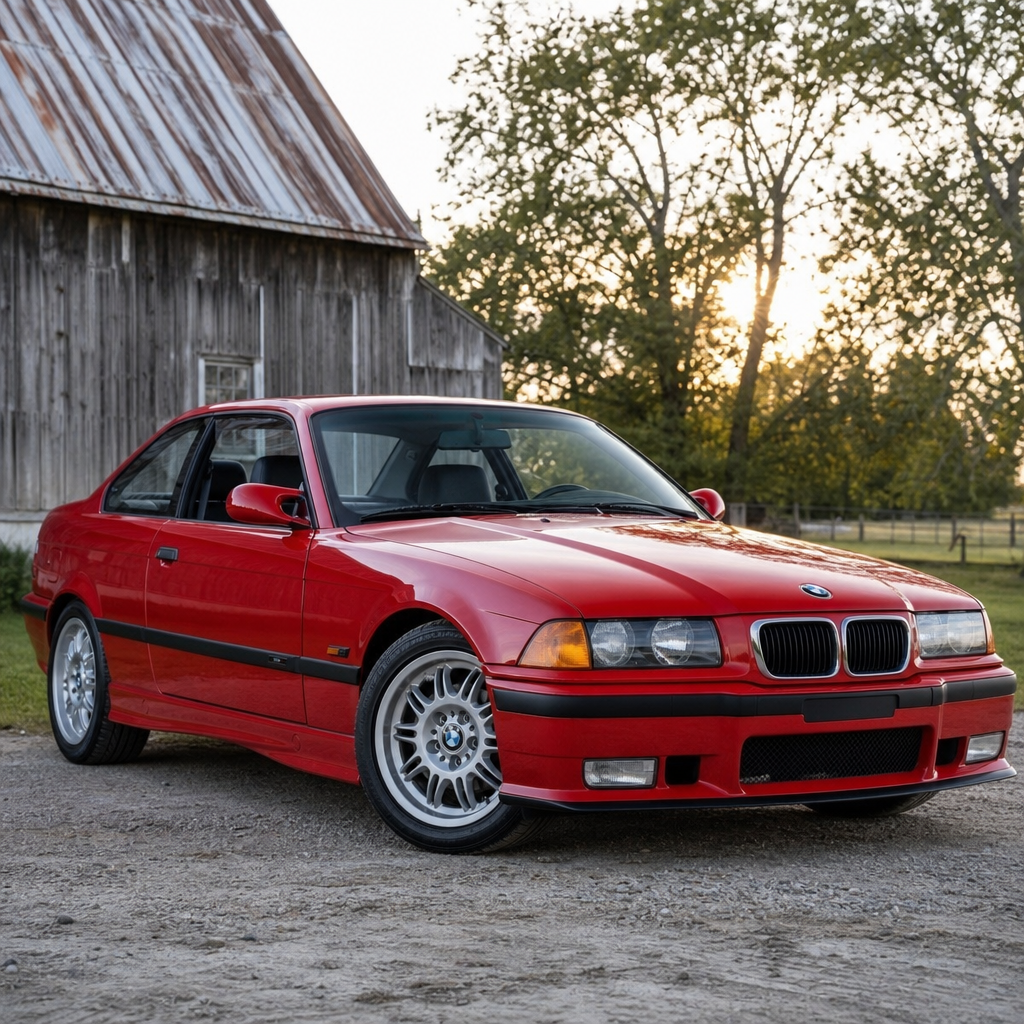
Most 1990s cars are now old enough to enter classic territory, because even the newest 1999 models are more than 25 years old. That means the decade has crossed the age threshold used by many insurers, import rules, and registration programs. However, the market divides 1990s cars into three groups. First are established classics: vehicles with proven collector demand, such as the Supra Turbo, Mazda RX-7 FD, BMW E30 and E36 M3, Porsche 993, Dodge Viper RT/10, and Mercedes-Benz 500E. Second are emerging classics: cars with growing appreciation and strong nostalgia, including the Lexus LS400, Jeep Cherokee XJ, Volvo 850 R, and Saab 900 Turbo. Third are ordinary survivors: cars that are old but not widely collectible, though exceptional originality can still create interest.
What pushed the decade into classic status is not age alone. The 1990s represent the last broad era of comparatively simple, mechanical driver involvement before heavy digitization, advanced driver aids, and deeply integrated infotainment systems changed ownership and repair patterns. Enthusiasts value hydraulic steering, manual gearboxes, lighter curb weights, and cleaner sightlines. Buyers who grew up with Gran Turismo, import tuning culture, touring-car racing, and 1990s SUVs now have the income to buy the cars they admired. That generational demand is a powerful market force, and I have watched it move values faster than many traditional appraisers expected.
At the same time, not every 1990s car belongs in the same conversation. A high-production family sedan with weak parts support and no enthusiast following may remain simply an old car. Yet even that can change. The best-preserved examples of mundane models often become historically interesting because they show what ordinary transportation looked like in a specific period. Museums and local shows increasingly appreciate untouched, low-mileage examples of everyday vehicles. So yes, 1990s cars can be classics, but model significance, condition, and community support determine how strong that status really is.
What Makes a Car Truly Collectible
Collector value rests on a clear set of factors. Rarity matters, but not in isolation. A rare car nobody wants is not especially collectible. Desirability matters more, and it comes from design, performance, engineering firsts, motorsport history, cultural presence, and ownership experience. Originality is critical. Matching numbers, factory paint colors, original drivetrains, stock wheels, documented service, and unmodified interiors all support stronger values. Condition follows closely behind. Cars are often graded from concours to fair, and the difference between excellent and good can represent thousands or tens of thousands of dollars.
Documentation separates serious classics from vague claims. Service records, window stickers, build sheets, manuals, clean title history, and provenance from notable ownership all improve buyer confidence. Parts availability also matters more for 1990s cars than many first-time collectors expect. Electronics, trim pieces, ECUs, and model-specific sensors can be harder to source than basic mechanical items. I always tell buyers to research the supply chain before purchase. A cheap car with unobtainable modules can become more expensive than a pricier example supported by an active aftermarket and strong owners’ club network.
Cultural significance is often underestimated. The first-generation Miata is not rare, yet it is unquestionably a classic because it revived the affordable roadster formula and remains one of the most influential sports cars of the late twentieth century. The same logic applies to the Ford Explorer, which helped define the SUV boom, and the Lexus LS400, which reset expectations for luxury reliability and refinement. When a model changed the market, introduced a lasting design language, or shaped enthusiast culture, it earns a stronger claim to classic status than age alone can provide.
Ownership, Insurance, and Registration Realities
Calling a car a classic has practical consequences. Collector insurance can save money and provide agreed value coverage, which pays a pre-established amount instead of depreciated market value after a total loss. That is especially important for 1990s performance cars whose market prices have outpaced standard valuation databases. But these policies usually require limited use, secure indoor storage, and another vehicle for daily driving. If you plan to commute regularly in your 1997 Land Cruiser or 1993 Mustang Cobra, a standard policy may be necessary even if the car qualifies by age.
Registration rules vary sharply by location. Some states allow historic plates that reduce fees and inspection burdens, but many also restrict use to exhibitions, maintenance drives, parades, and club events. Owners need to read the actual statute, not rely on forum summaries. Emissions rules can also matter. Certain older vehicles are exempt in some jurisdictions, while others must still pass testing based on model year or county. I have seen buyers assume a 1990s car would be simple to title or exempt to test, only to learn their state treated it differently.
Maintenance strategy is another dividing line between enjoying a modern classic and regretting one. Rubber seals, plastic cooling components, bushings, capacitors in electronic modules, and wiring insulation age even when mileage is low. A 1990s classic can feel newer than a 1960s car, but deferred maintenance can be just as expensive. Buy the best documented example you can afford, inspect for rust thoroughly, and favor complete ownership history over cosmetic shine. Those habits matter whether you are buying your first collector car or evaluating what is a classic car in practical ownership terms.
How to Decide Whether Your 1990s Car Is a Classic
Use a simple framework. First, confirm age. If the car is 20 to 25 years old or older, it is at least eligible for consideration. Second, check collector recognition. Search recent sale results, club activity, parts support, and insurer willingness to write a collector policy. Third, assess significance. Was the model influential, unusually well engineered, performance oriented, limited in production, or culturally important? Fourth, evaluate condition and originality. A desirable model with major modifications or poor repairs may have weaker classic standing than a cleaner, less famous car. Fifth, match the label to your purpose. You may need the answer for insurance, resale, registration, or personal pride, and each use case changes the threshold.
For most owners, the practical answer is straightforward. If your 1990s car has strong enthusiast demand, documented upkeep, and age-based eligibility, it is reasonable to treat it as a classic now. If it is an ordinary model, think of it as a potential future classic or a preserved survivor rather than force the label. Either way, understanding definitions protects your money and improves your decisions. As you explore classic car basics and education, compare legal rules, market signals, and ownership costs before you buy, insure, modify, or restore. The better you define classic status, the better you will choose the right car and care for it properly.
Frequently Asked Questions
Are 1990s cars officially considered classics now?
In many cases, yes, but there is no single universal rule that makes every 1990s car a classic the moment it reaches a certain birthday. The term “classic” changes meaning depending on whether you are talking about registration, insurance, market value, enthusiast interest, or simple cultural reputation. Some states and agencies use age-based thresholds, often around 20 to 25 years, for antique, historic, or classic-style registration categories. Insurance companies may also recognize older, limited-use cars as collector vehicles once they meet age, storage, and usage requirements. That said, official recognition for paperwork does not automatically mean a car is widely viewed as a true classic by collectors.
That is why two cars from the same decade can be treated very differently. A 1994 Toyota Supra Turbo or a 1990 Mazda MX-5 Miata may already be accepted as modern classics because they have strong enthusiast demand, a clear identity, and lasting influence. A more ordinary 1997 family sedan may qualify by age for certain programs, but still not carry the same classic status in the marketplace. So the short answer is that many 1990s cars are old enough to be considered classics in practical terms, but whether they are regarded as classics in a meaningful sense depends on rarity, desirability, condition, originality, and the purpose behind the label.
What age does a car have to be before it is considered a classic?
Age is the starting point, not the final answer. Many people use 20 years as the point where a vehicle starts being discussed as a modern classic, while 25 years is a very common threshold for registration categories, import eligibility, and collector insurance consideration. In some places, 30 years is the benchmark for historic status. Because of these varying standards, a 1990s car can easily qualify under one definition while falling short under another.
More importantly, age alone does not create collector significance. A car becomes more likely to be called a classic when age is combined with factors such as limited production, strong design, performance reputation, cultural relevance, motorsport history, or a loyal owner community. That is why a well-kept 1990s performance car, luxury flagship, special edition truck, or landmark sports car often reaches classic status faster than a mass-produced commuter model. In other words, age gets a 1990s vehicle into the conversation, but enthusiasm, scarcity, and historical importance usually decide whether it stays there.
Why are some 1990s cars seen as classics while others from the same decade are not?
The biggest reason is that “1990s car” describes an era, not a level of significance. The decade produced everything from highly collectible Japanese performance icons to basic economy cars built in huge numbers. Vehicles that tend to earn classic recognition usually have one or more standout qualities: memorable styling, exceptional engineering, low production numbers, strong performance, a major role in pop culture, or a reputation that has improved with time. These are the cars enthusiasts seek out, preserve, and pay premiums for.
By contrast, many ordinary 1990s vehicles were designed for practical transportation, sold in large volumes, and replaced without much nostalgia at the time. Some may eventually gain appreciation because of rarity through attrition, unusual specifications, or generational nostalgia, but they do not automatically become classics just because they survived. Condition also matters. A desirable model with original paint, matching components, service records, and limited modifications will usually be viewed much more favorably than the same car in rough or heavily altered condition. In short, the decade matters less than the car’s specific story, reputation, and surviving quality.
Does classic car insurance or registration mean a 1990s car is truly a classic?
Not necessarily. Insurance and registration categories are practical tools, and they often use definitions that are broader than enthusiast or market-based ideas of what a classic is. A state may allow an older vehicle to be registered under antique or historic rules once it passes a certain age, but that designation is often about limited road use, emissions exemptions, or administrative convenience. Likewise, collector car insurance may be available because the vehicle is older, stored properly, driven sparingly, and maintained as a hobby car. Those are useful signs that a 1990s car has entered collectible territory, but they are not the same as a declaration that it holds major classic status.
This distinction matters because owners sometimes assume that qualifying for a specialty plate or policy automatically increases value. In reality, the market still looks at desirability, buyer demand, originality, and comparable sales. A clean, garage-kept 1990s sports car may benefit from both collector insurance and rising classic appeal. A common sedan may qualify for the same style of registration but remain relatively inexpensive. So while specialty insurance and registration can support the argument that a 1990s car is now old enough to be treated as a collectible, they should be viewed as supporting factors, not the final verdict.
Which 1990s cars are most likely to be recognized as true classics?
The strongest candidates are usually cars that were special when new and still feel special today. That includes halo performance models, influential sports cars, limited-production trims, homologation-inspired cars, notable luxury flagships, and vehicles that defined an enthusiast movement. Examples often mentioned include the Toyota Supra Turbo, Acura NSX, Mazda RX-7, Mazda MX-5 Miata, Nissan 300ZX Twin Turbo, Mitsubishi 3000GT VR-4, BMW E36 M3, Porsche 993-generation 911, and certain Mercedes-Benz and Lexus models from the period. Some trucks and SUVs from the decade are also gaining recognition as buyers look for durable, analog-era vehicles with character and nostalgia.
What makes these stand out is not just age, but enduring relevance. They have communities behind them, parts support, media attention, and a reputation that continues to attract new buyers. They are also increasingly hard to find in unmodified, well-preserved condition, which strengthens their classic standing. That said, there is room for broader appreciation as the market matures. Cars that once seemed too ordinary may gain attention as examples disappear and buyers pursue vehicles tied to their youth. Still, if you are asking which 1990s cars are most likely to be treated as true classics today, start with models that combined originality, influence, and enthusiast demand from the very beginning.