Classic, antique, and vintage cars are often used as if they mean the same thing, but in the collector car world each term has a distinct meaning tied to age, era, design, registration rules, and market expectations. If you are buying your first collector vehicle, comparing insurance options, applying for historic plates, or simply trying to understand what qualifies as a classic car, getting those definitions right matters. I have helped owners title weekend cruisers, appraise restored coupes, and sort out club eligibility, and the confusion usually starts with one basic question: what is a classic car? The short answer is that a classic car is generally an older vehicle with recognized historical, cultural, styling, or enthusiast value, but the exact cutoff depends on who is defining it. State motor vehicle agencies, insurers, car clubs, auction houses, and valuation guides do not always use the same standards.
That difference is more than semantics. A 1994 Toyota Supra, a 1967 Ford Mustang, and a 1929 Ford Model A can all be collectible, yet they sit in very different categories. The category affects how a vehicle is stored, driven, valued, insured, and judged at events. It can also shape maintenance decisions. Parts sourcing for a brass-era antique is not the same as maintaining a postwar classic or preserving an original 1980s vintage import. Buyers who misunderstand the labels can overpay, underinsure, or end up with a car that does not fit their goals. Sellers can also mislabel cars in listings, either innocently or to make a newer car sound more prestigious.
Understanding these labels helps you ask better questions. Is the car old enough for antique plates in your state? Does the insurer require limited annual mileage? Is the vehicle prized because it is rare, because it represents a design era, or because it has motorsport significance? Has it been restored, restomodded, or preserved in original condition? Those details all feed into the answer. This guide explains the differences among classic, antique, and vintage cars, then goes deeper on the central question of what defines a classic car in practical terms. By the end, you will know how the major categories are commonly used, why the definitions vary, and how to classify a specific vehicle with confidence.
What Is a Classic Car?
A classic car is best understood as a vehicle old enough to have collector interest, yet modern enough to be recognized as part of the postwar enthusiast landscape rather than the earliest motoring eras. In general consumer use, many people call any older desirable car a classic. In more formal use, the term usually applies to vehicles that are at least 20 to 25 years old and have lasting enthusiast appeal because of design, engineering, rarity, luxury status, performance, or historical importance. That means age alone is not enough. A 25-year-old economy sedan built in huge numbers may simply be an old used car, while a 25-year-old Porsche 911, Acura NSX, or BMW M3 is widely treated as a classic by insurers, specialty dealers, and collectors.
The term also changes depending on authority. Many states use their own age thresholds for “classic,” “historic,” or “collector” registration. Hagerty, one of the most widely recognized collector-car insurers, often considers vehicles collectible when they are not daily drivers, are stored properly, and have enthusiast value regardless of whether they fit a rigid one-size-fits-all age rule. The Classic Car Club of America uses a much narrower definition for “Full Classic,” reserving it for high-end American and European vehicles built between 1915 and 1948. That club definition is influential, but it does not mean a 1965 Chevrolet Corvette is not a classic in the broader marketplace. It simply means it is not a CCCA Full Classic.
In practice, a classic car usually combines five traits: age, desirability, identity, survivability, and use pattern. It has enough years behind it to represent a prior automotive era. It is desirable to enthusiasts or collectors. It has a recognizable identity, whether tied to styling, engineering, performance, or cultural impact. It survives in enough numbers to support ownership, yet not so many that it feels ordinary. And it is typically used differently from an everyday commuter, with limited mileage, hobby storage, and event participation. That practical definition is the most useful starting point for buyers and owners.
Classic vs Antique vs Vintage: The Core Differences
The simplest way to separate the terms is by era. Antique cars are usually the oldest. Vintage cars generally come from a specific early twentieth-century period. Classic cars are often newer than antiques and cover a wider range of collectible vehicles, especially postwar models. However, overlap exists because common language, club standards, and legal definitions are not perfectly aligned.
| Term | Typical Age or Era | Common Meaning | Example |
|---|---|---|---|
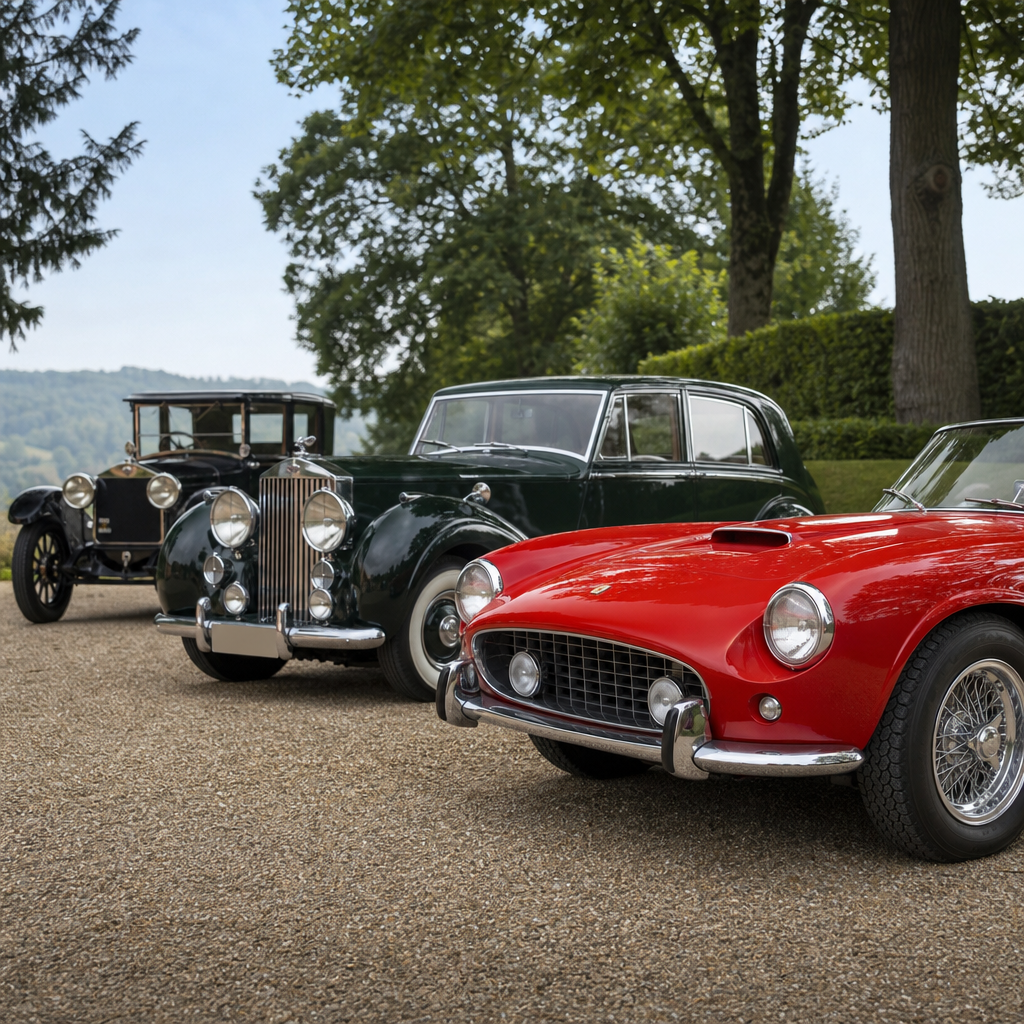
| Antique | Usually 25 to 45+ years old, depending on state or organization | A very old vehicle, often prewar, recognized mainly by age and historical character | 1929 Ford Model A |
| Vintage | Strictly the 1919 to 1930 era in many collector circles | A vehicle from the period between the world wars, especially the 1920s | 1928 Bentley 4½ Litre |
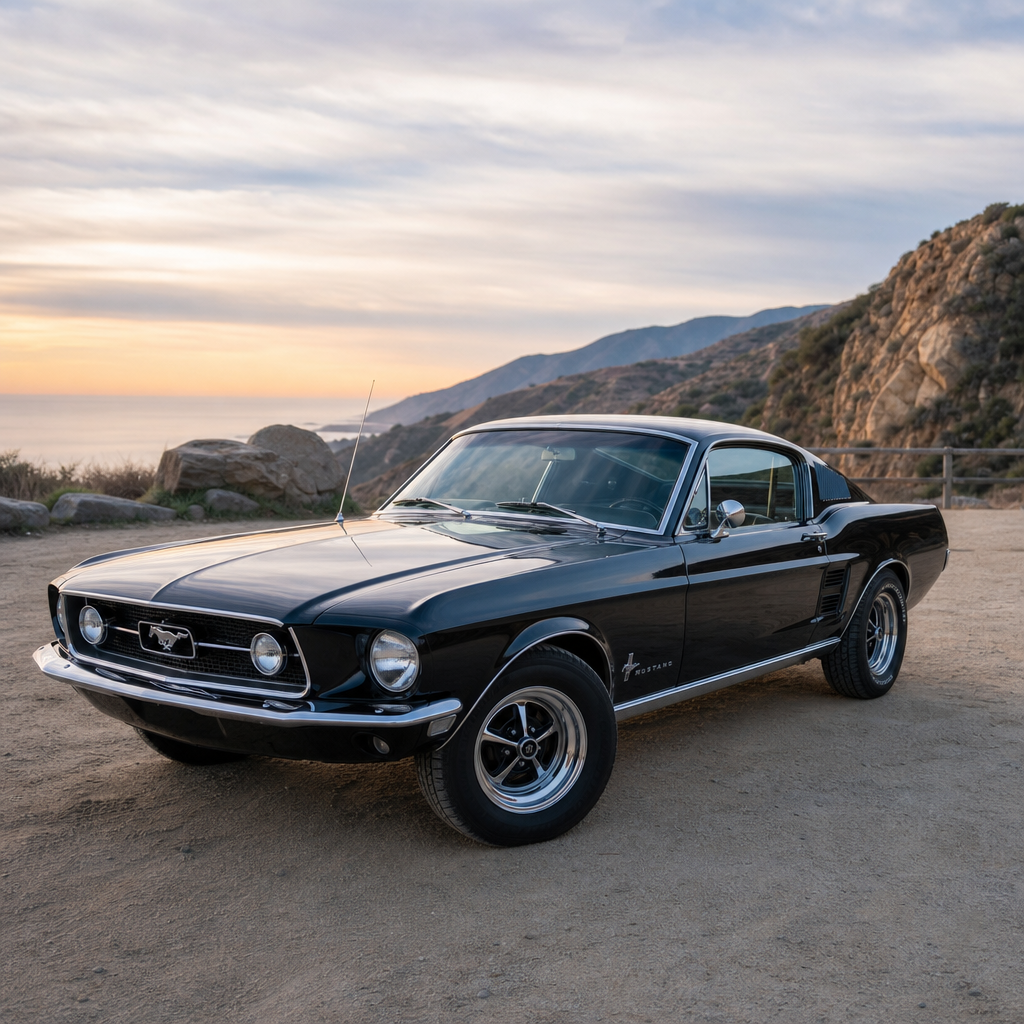
| Classic | Usually 20 to 25+ years old, with collector appeal | An older collectible vehicle valued for style, performance, luxury, rarity, or cultural significance | 1967 Ford Mustang fastback |
Antique is the broadest age-based label. Many state DMVs define an antique vehicle by age alone, often 25 years or older, though some set the threshold at 30 or 45 years. Those statutes are created for registration purposes, not necessarily for hobby taxonomy. Vintage is narrower. Serious collectors often use it to describe vehicles built from 1919 through 1930, though casual enthusiasts may wrongly apply it to any old car. Classic, meanwhile, is the broadest enthusiast term. It captures many postwar coupes, convertibles, sports cars, muscle cars, luxury sedans, and even select Japanese performance cars from the 1980s and 1990s.
If you remember one point, make it this: every vintage car is old, many antique cars are old, but not every old car is a classic. Collector value comes from significance, not just age. That is why a well-kept 1987 Buick GNX, 1993 Mazda RX-7, or 1970 Mercedes-Benz 280SL commands collector attention, while countless similarly aged ordinary cars do not.
How “Classic Car” Is Defined by Clubs, Insurers, and States
Because there is no single universal definition, the smartest approach is to identify the context. Car clubs define categories for judging and membership. Insurers define categories for underwriting risk. States define categories for registration and road use. Auction houses and price guides define categories for the market. Each context answers a different question, so each uses different criteria.
The Classic Car Club of America is the best-known source of a strict classic definition. Its Full Classic list includes select fine or distinctive automobiles built from 1915 to 1948, generally luxury marques such as Packard, Duesenberg, Cadillac, and Rolls-Royce. That standard is respected, but it is intentionally exclusive. It was never meant to cover every collectible vehicle on the road. Most people who say classic car are using the broader hobby meaning, not the club’s formal designation.
Insurance companies take a more practical view. Specialty insurers such as Hagerty, Grundy, and American Collectors Insurance look at age, rarity, condition, storage, usage, and driver profile. They often insure newer enthusiast vehicles once they show collector behavior, even if those cars are not old enough for historic plates everywhere. Agreed value coverage, mileage limits, secure storage, and no daily commuting are common factors. I have seen insurers accept a 2002 Chevrolet Camaro SS 35th Anniversary as a collector car because the owner garaged it, maintained low annual mileage, and used it for events rather than routine commuting.
State definitions can be the most confusing. One state may issue antique plates at 25 years, another may use historic at 30 years, and another may add restrictions on night driving, commuting, or commercial use. Some states do not use the term classic at all in statutes. Others separate street rods, custom vehicles, horseless carriages, and historic vehicles into different buckets. For owners, the lesson is simple: never assume a collector term in conversation matches what your state motor vehicle code says.
What Makes a Car Deserve Classic Status?
Enthusiasts do not elevate a car to classic status by birthday alone. Certain characteristics consistently separate true classics from merely old cars. The first is design significance. Cars become classics when they capture a shape, proportion, or styling language that remains recognizable decades later. The 1957 Chevrolet Bel Air, 1963 Corvette Sting Ray, and Jaguar E-Type are enduring examples because their design still signals a specific era of automotive ambition.
The second is engineering or performance significance. Some cars are classic because they changed expectations. The original Mini rethought packaging. The Porsche 911 established a long-running sports-car formula. The Ford Mustang launched the pony car segment. The Acura NSX proved a supercar could be reliable and usable. A model that introduced a new technology, body style, drivetrain layout, or market segment often gains classic recognition faster than its less influential peers.
The third factor is rarity, but rarity alone is not enough. A low-production model with no enthusiast support can remain obscure. Desirable rarity matters more than accidental rarity. The Buick GNX, Shelby GT350, and BMW E30 M3 are rare enough to be sought after, but they also carry performance credentials, cultural meaning, and strong owner communities. That combination sustains value and parts support.
Condition and originality also matter. In most segments, original, well-documented cars and correctly restored examples bring the strongest premiums. A numbers-matching engine, original trim, factory colors, service records, and documented provenance all strengthen classic status in the market. Restomods can be wonderful drivers, but modifications may reduce appeal for buyers who prioritize authenticity.
Examples Across Eras: Where Cars Typically Fit
Pre-World War II vehicles are most often described as antique, and many from the 1919 to 1930 span also fit the vintage category. Think Ford Model T, Auburn Speedster, or Cadillac V-16. These cars require specialized maintenance, lower-speed driving expectations, and a stronger commitment to preservation. They are often shown, toured, and discussed within marque clubs rather than treated as casual weekend cruisers.
Postwar American and European cars from the late 1940s through the 1970s are the center of the broad classic market. This is where you find Thunderbird convertibles, Tri-Five Chevrolets, Mercedes SL roadsters, first-generation Mustangs, Camaros, MGBs, Corvettes, and full-size luxury sedans. These vehicles are old enough to feel historic but modern enough to enjoy on present-day roads with proper maintenance. For many people, this era defines the phrase classic car.
The 1980s, 1990s, and early 2000s complicate things in a good way. Vehicles from these decades are increasingly accepted as classics because collector culture has expanded. Air-cooled Porsche 911s, Toyota Supra Turbo models, Fox-body Mustangs, Land Rover Defenders, and early Dodge Vipers have all moved from used performance cars to established collectibles. Some are also called modern classics, a useful term for cars old enough to have nostalgia and market demand but new enough to include fuel injection, onboard diagnostics, and higher highway capability.
Practical Ownership: Registration, Insurance, Maintenance, and Value
Once a car falls into a collector category, ownership changes. Registration may become cheaper, but usage can become more restricted. Insurance can offer agreed value coverage, yet it often requires another daily-use vehicle, enclosed storage, and mileage limits. Maintenance usually becomes more preventive and more specialized. Parts may be easy for a small-block Chevrolet but difficult for a rare coachbuilt European car. Valuation also depends on condition grading standards used by guides such as Hagerty Price Guide and auction firms like RM Sotheby’s and Mecum.
Buyers should inspect collector cars differently from ordinary used cars. Rust, prior accident repair, trim completeness, date-coded components, and documentation matter more than on a commuter. I always tell first-time buyers to research parts availability before falling in love with styling. A beautiful orphan model can become frustrating if glass, interior pieces, or model-specific mechanical parts are scarce. Storage costs, carburetor tuning, bias-ply versus radial tire choices, and ethanol fuel compatibility can all affect ownership satisfaction.
The payoff is real. A true classic offers an experience modern cars rarely match: analog steering feel, period styling, mechanical simplicity, and strong enthusiast communities. When you classify a car correctly, you can buy smarter, insure it properly, and enjoy it in the right setting.
The difference between classic, antique, and vintage cars comes down to more than age. Antique usually points to the oldest vehicles, often defined by registration rules or broad historical status. Vintage properly refers to a narrower early-era group, especially cars built from 1919 to 1930. Classic is the broad enthusiast category for older collectible vehicles with lasting significance, usually at least 20 to 25 years old and valued for design, performance, rarity, luxury, or cultural impact.
If you are asking what is a classic car, the most accurate answer is this: it is a vehicle old enough to represent a past automotive era and important enough that enthusiasts still care about owning, preserving, and driving it. Age starts the conversation, but desirability finishes it. Club rules, insurer guidelines, state statutes, and market behavior all shape the final label, which is why context always matters.
Use this page as your starting point for every classic car basics question. When evaluating a vehicle, check the production era, collector demand, originality, intended use, insurance requirements, and your state’s registration rules. That approach will tell you far more than a seller’s headline. If you are shopping for your first collector vehicle, compare definitions before you compare prices, and build from there.
Frequently Asked Questions
What is the difference between a classic, antique, and vintage car?
The main difference is that each term refers to a different age range or historical period, and in many cases the definitions also depend on who is using them. In everyday conversation, people often use classic, antique, and vintage as if they all mean “old and collectible.” In the collector car world, though, those labels can carry more specific meanings tied to production era, historical significance, styling, and even legal registration rules.
A vintage car usually refers to a vehicle built during the “vintage era,” which is commonly understood to be from roughly 1919 through 1930. These cars come from a very specific period in automotive history, after the earliest pioneer years but before the more modern prewar designs took over. Antique car generally refers to a vehicle that is at least 25 years old, although some states, clubs, and insurers use a 30-year or 45-year benchmark instead. Classic car is the broadest and most debated category. In casual use, it may mean any older collector vehicle. In stricter collector circles, it often refers to a car recognized for its style, engineering, rarity, or historical value, and not simply its age.
That distinction matters because age alone does not always make a vehicle a classic in the market sense. A 1980s or 1990s car might qualify as an antique or historic vehicle under a state registration system, yet not command the same collector respect or value as a recognized classic. Likewise, some vehicles are called classics because of cultural importance, design influence, or enthusiast demand even if they are newer than what some people expect. In short, vintage points to a specific era, antique usually points to age, and classic often points to collectibility and status within the hobby.
How old does a car have to be to qualify as a classic or antique?
There is no single universal rule, which is why this question causes so much confusion for first-time buyers and owners. Different states, insurance companies, licensing offices, car clubs, and valuation guides all use their own standards. As a general rule, a car often enters the antique category once it reaches 25 years of age, but some jurisdictions use 30 years or another threshold. For classic status, the answer is even less fixed because “classic” may be defined by age, rarity, design, or club recognition rather than a simple number.
For legal purposes, what matters most is your local state or provincial motor vehicle authority. Historic, antique, and classic registration categories often come with age minimums and restrictions on use. For example, one state may issue antique plates to cars 25 years old and older, while another may reserve that classification for vehicles 45 years old and older. Some states have a separate “classic” category for older vehicles that are maintained for exhibition or occasional pleasure use. Others do not distinguish clearly between the two at all.
For insurance purposes, specialty insurers may have their own eligibility standards. A company might insure a 20-year-old limited-production sports car as a collector vehicle because of market value and limited-use intentions, while another insurer may require the car to be at least 25 years old. The takeaway is simple: if you are trying to register, insure, appraise, or purchase a collector vehicle, do not rely only on hobby slang. Check the exact age rules used by your state, your insurer, and any relevant collector organization before assuming the car qualifies.
Can a car be old without being considered a classic?
Yes, absolutely. Age and classic status are not the same thing. A car can be old enough to qualify for antique or historic registration in some places and still not be considered a true classic by collectors, appraisers, or the broader enthusiast market. That is because “classic” usually suggests more than just survival over time. It often implies desirability, strong design identity, historical importance, limited production, notable engineering, or lasting enthusiast interest.
For example, an older economy sedan that was mass-produced in huge numbers and has little collector demand may be legally old enough for historic plates, but that does not automatically make it a classic in the marketplace. On the other hand, a sports coupe, muscle car, luxury model, or culturally iconic vehicle may be recognized as a classic because collectors actively seek it out, restore it, and assign it meaningful value. Condition also matters. A neglected car that has simply aged is not viewed the same way as a well-preserved or correctly restored example with documentation and provenance.
This is one of the most important points for buyers. If you are shopping for your first collector vehicle, do not assume that “old” guarantees appreciation or prestige. Research the model’s enthusiast following, parts support, originality, auction history, and ownership costs. A car can be charming, enjoyable, and historically interesting without reaching classic status in the strict collector sense. Understanding that difference helps set more realistic expectations about value, insurance, restoration budgets, and resale potential.
Why do the definitions matter for registration, insurance, and value?
The definitions matter because the label attached to a car can affect how it is titled, registered, insured, used, and valued. In practical terms, calling a vehicle classic, antique, vintage, or historic is not just a matter of style. Those categories can influence whether you qualify for specialty license plates, whether your insurer offers agreed value coverage, what restrictions apply to driving, and how buyers or appraisers interpret the car’s place in the market.
With registration, many states offer special plates for antique or historic vehicles. Those plates may reduce annual fees, but they often come with limits. You may be allowed to drive the car only for exhibitions, club events, maintenance runs, parades, or occasional pleasure use. If you plan to use the vehicle more regularly, those restrictions matter. A buyer who misunderstands the classification may discover too late that the registration type does not fit how they actually want to use the car.
With insurance, collector-car policies typically differ from standard auto coverage. Insurers often look at the car’s age, condition, storage, mileage, and intended use. A properly classified collector vehicle may qualify for agreed value coverage, which can be much more favorable than ordinary actual cash value treatment if the car is damaged or totaled. However, eligibility usually depends on more than age alone. The insurer may want evidence that the vehicle is maintained as a collectible, stored securely, and not used as a daily driver.
Value is also shaped by terminology. A true vintage-era car, a recognized classic, and a merely old used car may all be decades old, but the market can price them very differently. Buyers pay for rarity, provenance, restoration quality, original features, club recognition, and documented demand. Using the right terminology helps owners describe the car accurately, price it realistically, and avoid misunderstandings in sales, underwriting, and appraisal reports.
How can I tell what category my car falls into?
The best approach is to evaluate your car from three angles at once: age, historical era, and collector-market standing. Start with the build year. If the car comes from the commonly recognized 1919 to 1930 period, it will often fit the vintage label. If it has simply passed your state’s age threshold for historic or antique registration, it may qualify legally as an antique or historic vehicle. That gives you a regulatory answer, but not necessarily a market answer.
Next, look at how the car is recognized in the hobby. Check whether major collector clubs, marque-specific organizations, auction houses, and appraisal resources treat the model as a classic. Review auction results, enthusiast forums, club judging standards, and specialty price guides. If the model has a dedicated following, documented restoration standards, and a stable collector market, that is a strong sign it is viewed as a classic in the enthusiast sense. If it is rarely restored, has weak demand, or is valued mainly as transportation nostalgia, it may be old or historic without being a market-recognized classic.
Finally, confirm the official definitions that matter for your situation. If you are applying for plates, check your state DMV. If you want specialty coverage, ask your insurer what collector criteria they use. If you need a value for sale, estate planning, or financing, consult a qualified appraiser familiar with collector vehicles. In many cases, a car can fit more than one category depending on the context. A vehicle might be antique for registration purposes, collectible for insurance purposes, and only selectively considered classic by the market. That is normal. The key is using the right definition for the decision in front of you.