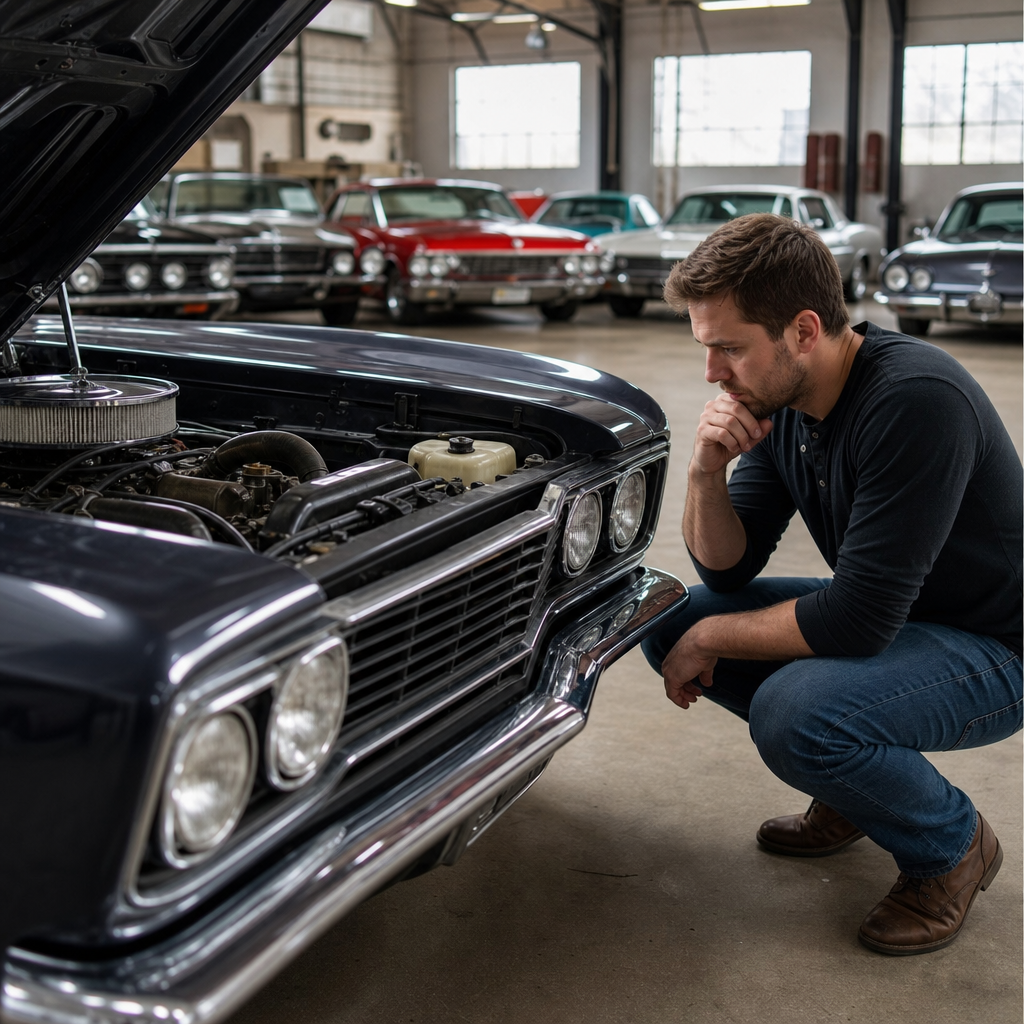

Classic car terminology can feel like a private language, especially when you are trying to buy, restore, insure, or simply enjoy an older vehicle for the first time. In the classic car world, common words often carry narrow technical meanings, and the same car may be described in completely different ways depending on whether the speaker is a collector, restorer, appraiser, auction house, insurer, or mechanic. That gap creates confusion, costs money, and leads to avoidable mistakes. I have seen buyers pay too much for cars labeled “fully restored” when they were merely repainted, and I have seen solid drivers overlooked because sellers used the wrong terms in their listings.
At a basic level, classic car terminology includes words that define age, authenticity, condition, body style, mechanical configuration, and market status. A “classic car” itself is not one universal category. Insurance companies often set one threshold, state registration agencies another, and collectors another. Terms like antique, vintage, survivor, numbers-matching, resto-mod, patina, and concours are used constantly, but not always consistently. Understanding what each term usually means in practice helps you ask better questions, compare cars more accurately, and spot vague or misleading descriptions.
This matters because old cars are emotional purchases wrapped around technical realities. A buyer may care about styling and nostalgia, but value depends on verifiable details: original drivetrain components, correct trim, documented restoration work, factory paint codes, body integrity, and production rarity. The terminology is the shorthand for all of that. If you know the language, you can decode listings, auction descriptions, repair estimates, and club conversations without feeling lost.
This guide simplifies the most confusing classic car terms and explains how they are used in real situations. It is designed as a hub for classic car terminology, so it covers the words you will encounter most often across buying, selling, restoring, judging, and ownership. Think of it as a practical glossary with context rather than a rigid dictionary. The exact definitions can vary by region and organization, but the principles below are the ones that consistently matter in garages, auctions, inspections, and title offices.
What Counts as a Classic, Antique, Vintage, or Historic Car?
The first source of confusion is classification. Many people use classic car as a catchall phrase for any old vehicle, but in practice several labels exist. “Antique car” often refers to a vehicle more than twenty five years old for registration or insurance purposes, though some jurisdictions set the age at twenty years and others at thirty. “Historic vehicle” is usually an administrative term used by states or provinces for limited-use registration. “Vintage car” is narrower in enthusiast circles and often refers to vehicles built in a specific early era, commonly from 1919 through 1930, though casual use is broader.
“Classic car” is the most flexible term. In the United States, organizations such as the Classic Car Club of America historically used a very specific definition for “Full Classic,” applying it only to select high-end models built between 1915 and 1948. That is a club standard, not a universal market rule. Today, insurers like Hagerty, licensing agencies, auction companies, and everyday enthusiasts may all call a 1980s or 1990s car a classic if it has age, collectibility, and enthusiast interest. That is why the right follow-up question is always, “What definition are you using?”
If you are researching a car, classification affects more than vocabulary. It can influence eligibility for agreed value insurance, emissions exemptions, registration restrictions, and event judging classes. I always advise owners to separate legal category from hobby category. A car can be legally historic but not especially collectible, and it can be highly collectible before a motor vehicle office considers it antique.
Condition Terms: Survivor, Restored, Original, Driver, and Concours
Condition language is where misunderstandings become expensive. “Original” should mean the car largely retains the components, finishes, materials, and configuration it left the factory with, but sellers sometimes use it to mean only “not modified much.” A true original car may still have maintenance replacements such as hoses, belts, tires, batteries, and service parts. “Survivor” generally means an unrestored vehicle that remains substantially intact and authentic, showing age but not having been fully taken apart and redone. Top judging standards often require high percentages of original finishes and materials for survivor classes.
“Restored” means the car has undergone repair and refurbishment, but the quality and depth vary dramatically. A cosmetic restoration may include paint, seat covers, and chrome work, while a frame-off restoration means the body was separated from the frame and the entire vehicle was rebuilt in detail. That term is more common on body-on-frame American cars than on unibody cars, where the equivalent work is still extensive but structurally different. Never assume “restored” means mechanically sorted, factory-correct, or documented.
“Driver” usually refers to a car that can be enjoyed regularly without being perfect. A good driver may have chips, older upholstery, minor seepage, and noncritical deviations from factory specification. “Concours” describes show-level condition prepared to exacting standards, often with correct finishes, date-coded parts, and meticulous detailing. At major events such as Pebble Beach Concours d’Elegance or marque-specific national meets, tiny deviations matter. For most owners, a driver-quality car is more usable and less stressful than a concours example.
| Term | Simple meaning | What to verify |
|---|---|---|
| Original | Largely as built, with normal service replacements | Paint, interior, engine bay, trim, documentation |
| Survivor | Unrestored and substantially intact | Evidence of age, factory materials, limited refinishing |
| Restored | Refurbished to some degree | Scope, receipts, photos, correctness, workmanship |
| Driver | Usable and presentable, not show perfect | Roadworthiness, safety, leaks, cosmetics |
| Concours | Top-level show condition | Authenticity, detailing, judging standards, provenance |
Authenticity Terms: Numbers-Matching, Period-Correct, Clone, and Tribute
Few phrases influence value more than “numbers-matching,” and few are misunderstood more often. In general, it means the car retains the engine, transmission, and sometimes other major components that correspond to its factory identification records. The exact standard depends on marque and era. For some muscle cars, buyers expect the engine pad stamp, transmission code, rear axle date, and trim tag details to align with build dates and factory records. For many European classics, matching numbers may refer to chassis, engine, gearbox, body, and factory certificate data. Matching numbers is never a vibe; it is evidence.
“Period-correct” means a part, accessory, finish, or modification is appropriate to the era, even if it is not original to that exact car. For example, a 1967 roadster wearing aftermarket wheels sold in 1968 can be period-correct but not factory-original. “Date-coded” is even narrower and refers to parts bearing manufacturing dates that fit the vehicle’s production timeline. Restorers chase date-coded components because they support authenticity claims.
“Clone” and “tribute” describe cars built to resemble rarer or more valuable versions. A six-cylinder coupe converted to look like a V8 performance model is a clone or tribute. Neither term automatically means poor quality or deception. In fact, some tributes are expertly built and make practical sense because genuine examples are unaffordable. The issue is disclosure. A legitimate tribute is openly represented as such. Fraud begins when a seller presents a converted car as a factory-built one.
Body and Style Terms That Often Get Mixed Up
Classic car body terminology can be surprisingly slippery because manufacturers, coachbuilders, and regions used different labels for similar shapes. “Coupe” traditionally means a two-door closed car with a fixed roof, but roofline, seating, and proportions vary. “Sedan” is typically a closed car with four doors and a full-height cabin. “Hardtop” refers to a pillarless design that mimics a convertible with the windows down, not simply a car with a hard roof. Many newcomers wrongly use hardtop as the opposite of convertible.
Convertible, cabriolet, and roadster also get blurred together. A convertible or cabriolet usually has a folding top and side windows; the distinction between the two is often brand or era specific. A roadster is generally a simpler open car, often two-seat, focused more on sport than luxury. Then there is the “targa,” a semi-open body with a removable roof panel and fixed rollover structure, popularized by Porsche.
Wagon, estate, and shooting brake describe rear cargo-oriented body styles, but they are not identical in history. “Estate” is common in British usage. “Shooting brake” originally referred to a sporting estate-style vehicle associated with carrying hunting equipment, and today it is often used for stylish two-door or low-roof specialty wagons. When identifying a body style, factory brochures, build sheets, and marque registries are better sources than memory or online listing titles.
Mechanical Terms: Flathead, OHV, Carbureted, Fuel Injected, and Drivetrain Basics
Mechanical language sounds intimidating until you reduce it to function. “Flathead” is an engine design with valves in the block rather than the cylinder head, used on many early American engines including the famous Ford flathead V8. “OHV” means overhead valve, where valves are in the head and operated by pushrods. “OHC” means overhead camshaft, a design common in many European and later Japanese engines. These terms matter because they affect power characteristics, service complexity, and parts availability.
Fuel system terms are equally important. “Carbureted” means fuel is mixed with air by a carburetor using vacuum and jets; “fuel injected” means fuel is metered more directly by an injection system. Early mechanical injection systems on cars from Bosch, Lucas, and Kugelfischer can be excellent but expensive to restore. Carburetors are simpler in concept yet can still require careful tuning, choke adjustment, and attention to vapor lock or stale fuel issues after storage.
“Drivetrain” includes the engine, transmission, driveshaft, differential, axle assemblies, and the components that deliver power to the wheels. “Powertrain” usually means engine plus transmission. “Rear end” is informal shorthand for the differential and axle assembly on rear-wheel-drive cars. When a seller says a car has a rebuilt drivetrain, ask who did the work, what machine-shop services were performed, whether tolerances were measured, and whether break-in procedures were documented.
Restoration and Modification Terms: Frame-Off, Resto-Mod, Patina, and Backdated
Restoration language can describe philosophy as much as workmanship. A “frame-off restoration” indicates a body-on-frame car was completely disassembled with the body removed from the chassis for comprehensive refurbishment. It suggests access and thoroughness, not guaranteed quality. I have inspected frame-off cars with beautiful undercarriages and poor panel fit, and untouched survivors with far better integrity.
“Resto-mod” means a restored car modified with modern or upgraded components, such as electronic ignition, disc brakes, air conditioning, overdrive transmission, or fuel injection. Some resto-mods are subtle and reversible; others involve major chassis engineering, custom wiring, and late-model drivetrains. They can deliver better usability, but they usually appeal to a different buyer than originality-focused collectors. “Pro touring” is a more specific style of modified American classic built for improved handling, braking, and road performance.
“Patina” refers to visible age and wear that owners choose to preserve rather than erase. Honest patina can be attractive, but it should not excuse structural rust, failing paint adhesion, or neglected maintenance. “Backdated” usually means a newer car modified to resemble an earlier version, such as later Porsche 911s converted with long-hood styling details. That can be desirable if represented honestly. The recurring lesson is simple: terminology describes intent, while inspection reveals execution.
Market Terms: Provenance, Title Status, Appraisal, and Reserve
Market language determines whether a car is merely interesting or legitimately valuable. “Provenance” is the documented history of ownership, events, celebrity connection, competition participation, or factory significance. A car with paperwork showing it was owned by a known racer, displayed at a major salon, or delivered new with rare factory options gains credibility and often value. Provenance is strongest when supported by original invoices, registration records, period photographs, factory correspondence, and recognized registry entries.
“Title status” is critical and often overlooked. A clean title generally means no branding such as salvage, rebuilt, flood, or junk, but title laws vary by state. Older cars may also be sold with transferable registrations, bonded titles, or no title at all, depending on jurisdiction. That does not automatically make the car illegitimate, but it increases due diligence. Always confirm chassis and VIN numbers match documents and physical stampings.
“Appraisal” is a professional estimate of value based on condition, authenticity, market comparables, and documentation. For insurance, agreed value policies are usually better suited to classics than standard actual cash value coverage. At auction, “reserve” means the confidential minimum price the seller will accept. “No reserve” means the car will sell to the highest bidder regardless of price, which often increases bidder confidence and attention.
The simplest way to use classic car terminology well is to treat every term as the start of a question, not the end of one. Ask what the seller means by original, restored, matching numbers, or rare. Request photos, castings, stampings, receipts, ownership records, and independent inspections. Compare the language in listings with factory literature, club resources, judging manuals, and marque experts. That habit turns confusing classic car terms into practical decision tools.
As a hub for classic car terminology, this guide gives you the vocabulary needed to understand the rest of classic car basics: condition grading, authentication, restoration planning, insurance, and buying strategy. Once the language becomes familiar, the hobby becomes far less intimidating and far more enjoyable. You do not need to memorize every phrase at once. Start with the terms that affect value and honesty most: classification, condition, authenticity, body style, mechanical layout, modification level, and paperwork.
If you are shopping for a classic car or organizing one you already own, build your own terminology checklist and use it on every listing, inspection, and conversation. Clear language protects your budget, improves your choices, and helps you participate in the hobby with confidence.
Frequently Asked Questions
What does “numbers matching” really mean on a classic car?
“Numbers matching” is one of the most misunderstood phrases in the hobby because people often use it as if it has one universal definition. In simple terms, it usually means the car still has the major components it was built with at the factory, especially the engine and sometimes the transmission, rear axle, or other drivetrain parts. The confusion starts because the meaning varies by make, model, year, and by who is using the term. A seller may say a car is numbers matching because the engine code is correct for that model, while a serious collector may only accept that description if the engine is the exact original unit installed when the car was new.
On some cars, the engine block, transmission, and chassis can be verified through stamped serial numbers, partial VINs, casting dates, and factory documentation. On others, records are incomplete or the factory never marked parts in a way that allows a perfect match. That means a “correct date-code engine” is not always the same thing as the “original engine,” even though both may sound impressive in a listing. A car can have a replacement engine from the same year and still be mechanically appropriate, but from a value standpoint it may not carry the same weight as a documented original-drivetrain car.
For buyers, the safest approach is to ask exactly which numbers match and what documentation supports the claim. Ask whether the engine is original to the car, whether the transmission is original, whether the stampings are visible and authentic, and whether there are build sheets, window stickers, protect-o-plates, factory records, or marque-expert verification. “Numbers matching” can significantly affect value, originality, and collectability, but only when it is clearly defined. If the term is being used vaguely, assume it needs more investigation.
What is the difference between a restored car, a survivor, and an original car?
These three terms sound similar, but they describe very different kinds of classic cars. A restored car has been repaired, refinished, rebuilt, or refurbished to bring it back to a desired condition. That restoration may be factory-correct, mildly updated, or heavily modified, depending on the owner’s goals. Some restorations are cosmetic only, while others involve full disassembly down to a bare shell or frame. Because of that, “restored” tells you a car has had work done, but not necessarily how correct, complete, or high-quality that work was.
A survivor is usually a car that has avoided major restoration and still retains a large amount of its original finishes, materials, trim, drivetrain, and character. That does not mean it is perfect. In fact, survivors often show age, wear, paint fading, seat patina, minor repairs, and mechanical updating done over time to keep the car on the road. The appeal of a survivor is authenticity. Collectors often value the fact that the car tells a more honest story about how it has lived, even if it has small flaws that a restored car would not have.
An original car generally means the car still retains original factory components and finishes, but this term is often used loosely. A car may be largely original but have had a repaint, replacement carpet, rebuilt engine, or changed interior pieces. That is why it is important to ask what exactly remains original. Original paint, original interior, original drivetrain, and original sheet metal are all separate claims. In practice, a car can be original without being a perfect survivor, and it can be restored while still retaining some original major components. The key is to separate untouched authenticity from repaired condition. If you are shopping, ask for specifics rather than relying on the label alone.
What do people mean by “patina,” and when is it good versus a problem?
Patina refers to the visible signs of age and use that develop over time on a classic car. That can include faded paint, worn chrome, surface rust, thinning upholstery, small scratches, and the general weathered look that comes from decades of real life rather than recent restoration. In the right context, patina is considered attractive because it suggests the car has not been over-restored or stripped of its history. Many enthusiasts appreciate a car that wears its age honestly instead of looking artificially perfect.
But patina is not automatically a positive. This is where a lot of first-time buyers get tripped up. Honest cosmetic aging and structural deterioration are not the same thing. Light surface rust on paint or bare metal may be part of the car’s character. Rust through the floor, frame, rocker panels, lower fenders, trunk, or suspension mounting points is a serious problem. Likewise, a cracked steering wheel or worn seat bolster may add charm, but neglected brakes, dried fuel lines, unsafe wiring, and rotten tires are not “patina.” They are repair issues.
The smartest way to think about patina is that it should be limited to appearance, not safety or structural integrity. Good patina can preserve originality and save a car from needless refinishing. Bad patina is often a sales-friendly word used to soften the reality of corrosion, deferred maintenance, or poor storage. If a seller highlights patina, look closely underneath the car, inspect common rust areas, and determine whether the aging is cosmetic, historical, and stable, or whether it signals expensive metalwork and mechanical rehabilitation. Patina can add charm and value, but only when the car underneath is still solid.
What is the difference between OEM, NOS, reproduction, and aftermarket parts?
These terms matter a lot during restoration and maintenance because they affect authenticity, fit, reliability, and value. OEM stands for Original Equipment Manufacturer. In classic car conversations, it usually means a part made to the original factory specification, either by the company that supplied the automaker or by a modern source producing the same type of replacement. Depending on context, people also use OEM more loosely to mean a genuine factory-style part. That is why it helps to ask whether the part is truly period-made, officially branded, or simply equivalent in design.
NOS means New Old Stock. This refers to an original part made in the period, never used, and left over from old dealer inventory, warehouse stock, or discontinued parts supplies. NOS parts are often prized because they are genuinely from the era and may offer the best fit, finish, and correctness for concours-level restorations. However, old stock is not always perfect. Rubber, seals, adhesives, and some plastics can degrade with age, even if the part was never installed. So NOS can be highly desirable, but it should still be inspected carefully.
Reproduction parts are newly manufactured replacements made to resemble original parts. Some are excellent and nearly indistinguishable from factory pieces; others fit poorly or differ in details such as texture, stitching, plating, dimensions, or markings. Aftermarket parts is the broadest category and usually refers to parts made by companies outside the original factory supply chain, often for replacement, performance, customization, or upgrade purposes. A modern aluminum radiator, electronic ignition conversion, custom wheels, or upgraded suspension kit would usually be called aftermarket.
None of these categories is automatically better in every situation. If you are building a judged restoration, originality and correct details may point you toward NOS or highly accurate reproduction parts. If you want reliability and drivability, a well-made aftermarket component may be the better choice. The important thing is understanding what you are buying, how it affects authenticity, and whether it matches your goal for the car. When someone says a car has “all original parts,” “factory parts,” or “correct parts,” ask for examples and receipts. Those distinctions matter more than they first appear.
What does “frame-off restoration” mean, and why doesn’t it always guarantee quality?
“Frame-off restoration” is one of the most powerful phrases in the classic car market, but it is often used too casually. Properly speaking, it means the body was separated from the frame so the car could be restored in a thorough and comprehensive way. On body-on-frame vehicles, this allows access to the chassis, suspension, brake lines, fuel lines, underbody, mounts, and hidden rust-prone areas that are difficult to reach otherwise. In theory, it suggests an extensive restoration rather than a quick cosmetic refresh.
The problem is that the phrase describes a process, not a standard of workmanship. A frame-off restoration can be meticulous, correctly documented, and beautifully executed. It can also be sloppy, over-restored, inaccurate, or largely cosmetic despite the body having been removed. Fresh undercoating can hide poor metal repairs. Glossy paint on the frame can distract from incorrect fasteners, bad panel alignment, cheap replacement parts, or poorly rebuilt mechanical systems. Some sellers also misuse the term for cars that were simply disassembled heavily, or for unibody cars where “frame-off” is technically inaccurate to begin with.
That is why you should treat “frame-off” as the beginning of the conversation, not the conclusion. Ask when the restoration was done, who performed it, whether photo documentation exists, what metal was replaced, whether the engine and transmission were rebuilt, whether the suspension and brakes were renewed, and whether the finishes and parts are factory-correct or customized. Receipts, build photos, and restoration records matter far more than the phrase alone. A high-quality restoration should show consistency in the details, not just shine