The history of classic cars begins long before the phrase “classic car” existed, in an era when self-propelled vehicles were experimental machines built by inventors, machinists, and ambitious industrialists. Today, enthusiasts use the term classic car to describe older vehicles valued for design, engineering, cultural significance, and collectibility, though exact definitions vary by insurer, club, and country. In the United States, organizations such as the Classic Car Club of America distinguish “Full Classics” from broader antique, vintage, and collector categories, while auction houses and state registration agencies often apply age-based rules. In practice, the history of classic cars is the story of how automobiles evolved from fragile curiosities into symbols of freedom, status, performance, and craftsmanship.
This history matters because every major shift in automotive development still shapes how collectors buy, restore, insure, and drive vintage vehicles now. When I have helped owners identify cars at shows or evaluate restoration candidates, the most common mistake has been treating all old cars as if they came from the same era. They did not. A brass-era runabout, a prewar luxury sedan, a 1950s tailfin coupe, and a 1970s muscle car reflect different manufacturing methods, safety expectations, fuel quality, road conditions, and buyer priorities. Understanding those contexts explains why certain models are rare, why some restoration parts are hard to source, and why one car becomes an icon while another fades into obscurity.
Classic cars also sit at the intersection of technology and culture. Henry Ford’s assembly line changed affordability. General Motors refined annual styling updates and brand segmentation. Postwar prosperity fueled chrome-heavy design and V8 performance. Emissions rules, oil shocks, and safety standards transformed engineering in the 1970s. Motorsport success elevated marques such as Ferrari, Jaguar, Porsche, and Mercedes-Benz from respected manufacturers to legends. Film, television, and music embedded vehicles like the Ford Mustang, Chevrolet Corvette, Volkswagen Beetle, and Porsche 911 in public memory. To understand classic cars fully, you need both the mechanical timeline and the social forces that made people care about these machines in the first place.
As a hub topic within classic car education, this article maps the major eras, technologies, and market forces that define the history of classic cars. It explains where early automobiles came from, how different decades produced distinct design languages, why certain brands became iconic, and what events turned ordinary transportation into collectible heritage. If you want a clear foundation before diving into specific body styles, restoration methods, valuation guides, or model histories, start here.
The earliest automobiles and the birth of motoring culture
The first chapter of classic car history starts in the late nineteenth century, when engineers in Europe and the United States experimented with steam, electric, and gasoline propulsion. Karl Benz’s 1886 Patent-Motorwagen is widely recognized as the first practical automobile powered by an internal combustion engine, while Gottlieb Daimler and Wilhelm Maybach advanced compact high-speed engines that made road vehicles more usable. Early buyers were not shopping for classics, of course. They were purchasing a new technology with uncertain reliability, limited infrastructure, and little standardization. Cars were coachbuilt, expensive, and often assembled in tiny numbers, which is one reason surviving examples are now historically significant.
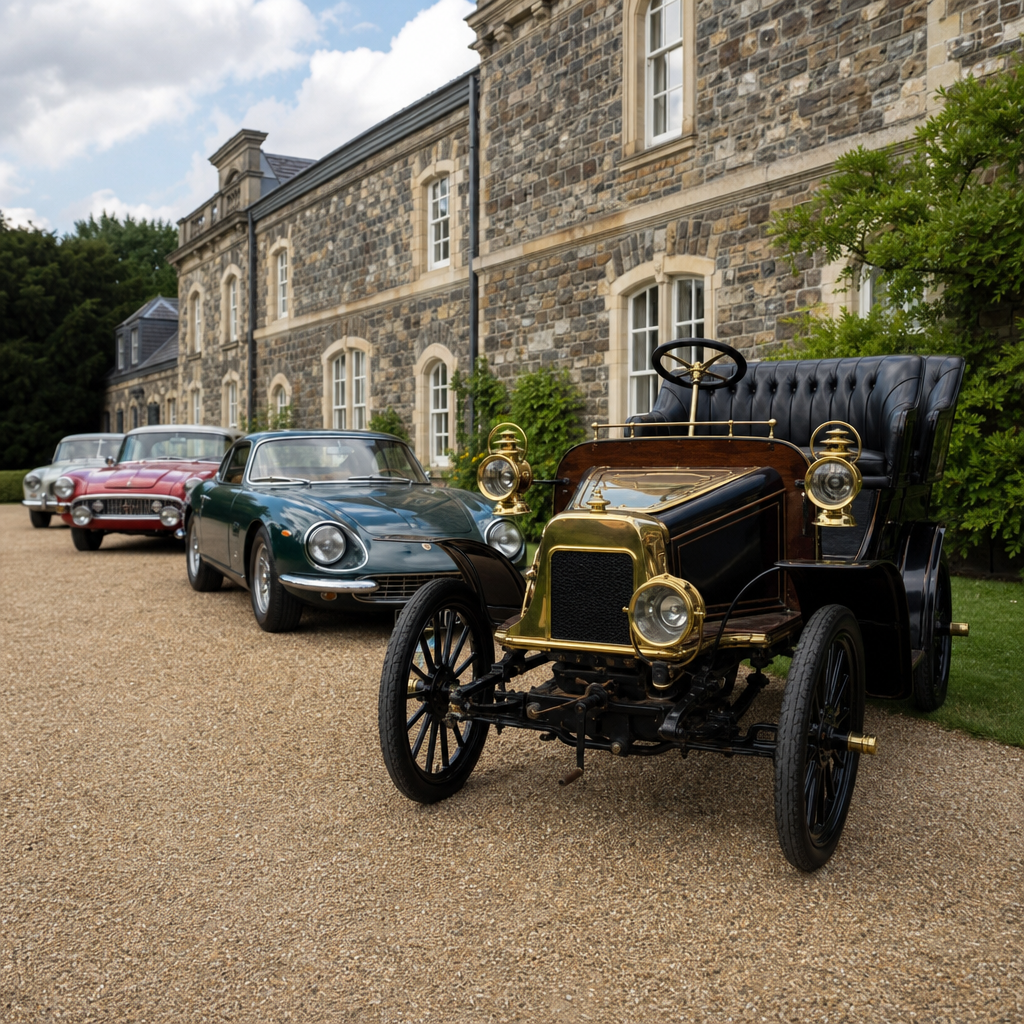
The period from roughly 1890 to World War I is often called the brass era because many vehicles used brass fittings for lamps, radiators, and trim. Cars from this period varied dramatically in layout: tiller steering was still common, engines were mounted in different positions, and controls lacked standard arrangements. Buyers could choose electric cars for quiet urban use, steam cars for smooth torque, or gasoline cars for increasing range and practicality. Brands such as Packard, Cadillac, Peerless, and Pierce-Arrow established reputations for quality, while Oldsmobile and Ford pushed toward broader production. Road conditions were poor, breakdowns were expected, and ownership required mechanical patience. Those realities shaped early motoring clubs, endurance runs, and service culture.
One of the most important developments was the gradual standardization of the automobile itself. By the 1910s, the front-engine, rear-wheel-drive layout with steering wheel, clutch, brake, gear lever, and accelerator had become dominant. Interchangeable parts improved maintenance, and expanding fuel distribution made gasoline vehicles more practical than steam or electric competitors. Brass-era cars are crucial to classic car history because they show the automobile before conventions hardened. They also explain why collectors value originality so highly: surviving cars preserve engineering solutions that later disappeared completely.
Mass production changed everything
If one model transformed the automobile from luxury object into social force, it was the Ford Model T, introduced in 1908. Ford did not invent the car, but he revolutionized production. The moving assembly line, implemented at Highland Park in 1913, sharply reduced manufacturing time and lowered cost. By simplifying design, standardizing parts, and building at scale, Ford made car ownership possible for millions of middle-class families. The Model T’s rugged suspension and ground clearance suited rough rural roads, while its simple mechanics made field repairs realistic. More than 15 million were built, an astonishing number for the era.
Mass production also created the first true divide between ordinary old cars and collectible historic vehicles. When a model is produced in enormous volume, rarity alone does not create desirability; significance does. The Model T matters because it changed labor systems, mobility, agriculture, commerce, and leisure travel. It also accelerated road construction, service stations, roadside businesses, and suburban growth. In collector circles, the Model T and later Model A remain important because they are teachable machines: visible mechanical linkages, basic ignition systems, and straightforward chassis layouts help enthusiasts understand how the automobile matured.
Other manufacturers responded differently. General Motors expanded through a multi-brand structure that offered consumers a ladder from Chevrolet to Cadillac. Alfred P. Sloan’s strategy of “a car for every purse and purpose” established market segmentation that still defines the industry. Annual styling changes encouraged repeat purchases and made design itself a selling point. That shift mattered enormously for classic car history because collectibility often follows distinction in styling, trim, and model-year identity. A 1932 Ford, 1957 Chevrolet, or 1963 Buick Riviera stands out partly because manufacturers had learned to market visual character, not just transportation.
Prewar classics and the age of craftsmanship
The 1920s and 1930s produced many of the vehicles that serious collectors still regard as foundational classics. In the United States and Europe, luxury manufacturers competed on engineering refinement, bespoke coachwork, and prestige. Duesenberg, Cadillac, Packard, Lincoln, Hispano-Suiza, Bentley, Bugatti, Delahaye, and Rolls-Royce built cars that represented the highest standards of their day. Long wheelbases, powerful straight-eight, V12, and V16 engines, and custom bodies from firms such as LeBaron, Murphy, and Fleetwood reflected a world where wealthy buyers ordered automobiles much like tailored suits.
The term “Full Classic” later emerged to describe many of these prewar luxury cars, especially models built from the 1915–1948 period that demonstrate exceptional design or engineering. That category matters because it separates historically elite automobiles from the broader public use of “classic,” which can include everything from postwar convertibles to 1980s sports cars. The prewar era also introduced important technical advances: hydraulic brakes became more common, independent front suspension improved ride quality, synchromesh transmissions eased shifting, and all-steel bodies increased durability. Styling evolved from upright carriage-influenced forms to streamlined Art Deco shapes, influenced by aerodynamics and industrial design.
The Great Depression narrowed demand for ultra-luxury cars, which partly explains why surviving prewar prestige models are scarce. Yet hardship also created ingenuity. Auburn, Cord, and Duesenberg, under E.L. Cord, produced some of the era’s most striking designs, including the front-wheel-drive Cord 810 and 812 with hidden headlights. These cars were not just beautiful; they previewed future automotive ideas. When collectors prize prewar automobiles today, they are preserving the period when craftsmanship, mechanical ambition, and coachbuilt individuality reached a peak before wartime industrial priorities changed everything.
Postwar optimism and the golden age of design
After World War II, pent-up consumer demand and expanding prosperity ignited a new chapter in classic car history. Factories that had built military equipment returned to civilian production, and buyers who had delayed purchases during the war flooded dealerships. Early postwar models often carried prewar engineering, but by the 1950s the industry was rapidly innovating. In the United States, designers embraced lower bodies, wraparound windshields, hardtop rooflines, and increasing amounts of chrome. Tailfins, inspired partly by aviation, became a defining styling statement on models from Cadillac, Chrysler, and Chevrolet.
This period is often remembered as the golden age of American classics because cars became more expressive, more powerful, and more closely tied to identity. The small-block Chevrolet V8, introduced in 1955, was compact, durable, and hugely influential. Automatic transmissions became widespread, power steering and power brakes improved ease of use, and air conditioning began moving from luxury option to broader aspiration. In Europe, manufacturers rebuilt with different priorities: smaller dimensions, fuel efficiency, and nimble handling. The Volkswagen Beetle, Citroën 2CV, Mercedes-Benz 300SL, Jaguar XK120, and Porsche 356 each represent a distinct postwar answer to mobility and performance.
Car culture expanded alongside the vehicles themselves. Drive-ins, suburban cruising, drag strips, dealer showrooms, and enthusiast magazines gave cars social meaning beyond transportation. Real-world icons emerged because they combined design, engineering, and timing. The 1953 Chevrolet Corvette launched America’s fiberglass sports car tradition. The 1955–1957 Chevrolet Bel Air became a symbol of 1950s optimism. The 300SL Gullwing turned advanced engineering, including fuel injection and a spaceframe chassis, into instant mythology. These models endure because they capture a specific moment when industrial confidence, consumer demand, and visual drama aligned.
Performance wars, global icons, and the collector market
By the 1960s, classic car history shifted toward performance, youth culture, and international brand rivalry. American manufacturers discovered that speed sold. Pontiac’s 1964 GTO helped define the muscle car formula by placing a large-displacement engine in a midsize body. Ford answered with increasingly powerful Fairlanes, Mustangs, and Torinos. Chevrolet developed the Chevelle SS, Camaro Z/28, and big-block Corvette. Chrysler fielded Hemi-powered Dodges and Plymouths. Insurance classifications, axle ratios, carburetion, horsepower ratings, and quarter-mile times became part of mainstream conversation. These were not niche enthusiast details; they were central selling points.
At the same time, Europe and Japan expanded the definition of the classic car icon. The Jaguar E-Type, launched in 1961, combined advanced independent rear suspension, disc brakes, and stunning proportions at a price far below exotic Italian rivals. Porsche refined the 911 into one of the longest-lived sports car templates in history. Ferrari built competition-bred road cars whose values now reflect both racing pedigree and extreme scarcity. Mercedes-Benz balanced engineering durability with prestige in cars such as the 230SL and 280SL Pagoda. In Japan, the Toyota 2000GT and Datsun 240Z demonstrated that Japanese performance cars could be technically credible and globally desirable.
| Era | Defining traits | Representative models | Why collectors care |
|---|---|---|---|
| Brass Era | Experimental engineering, coachbuilt bodies, limited infrastructure | Ford Model N, Packard Model 18, Cadillac Model Thirty | Extreme rarity and foundational technology |
| Prewar | Luxury craftsmanship, straight-eight and V12 engines, custom coachwork | Duesenberg Model J, Cord 810, Packard Twelve | Design prestige and historical importance |
| Postwar 1950s | Chrome styling, V8 growth, rising consumer prosperity | Chevrolet Bel Air, Cadillac Series 62, Mercedes-Benz 300SL | Cultural symbolism and visual appeal |
| 1960s–1970s performance | Muscle cars, sports cars, racing influence, youth marketing | Pontiac GTO, Jaguar E-Type, Porsche 911, Datsun 240Z | Performance heritage and strong enthusiast demand |
The 1970s complicated the market. Emissions regulations, federal safety requirements, rising insurance premiums, and the 1973 oil crisis reduced performance and changed design priorities. Horsepower fell, bumpers grew, and some once-dominant models lost edge. Yet this decade still produced future classics, including the Lamborghini Countach, Ferrari 308, BMW 2002, Mercedes-Benz W123, and Pontiac Firebird Trans Am. I have seen buyers overlook 1970s cars because of broad assumptions about the malaise era, but the best examples show how manufacturers adapted under pressure. Collectibility often grows when a car captures transition, not just perfection.
The collector market matured as enthusiasts began preserving, restoring, and documenting older vehicles systematically. Clubs, concours events, marque registries, factory archives, and auction houses gave classic cars traceable histories and recognized standards. Tools such as the Hagerty Price Guide and auction results from RM Sotheby’s, Gooding, and Mecum now help owners benchmark value, but provenance still matters as much as price data. Matching numbers, original colors, production documentation, ownership history, and restoration quality can transform value dramatically. A classic car becomes an icon not only because it was admired when new, but because later generations continue to verify its significance through use, scholarship, and preservation.
Why certain classic cars became enduring icons
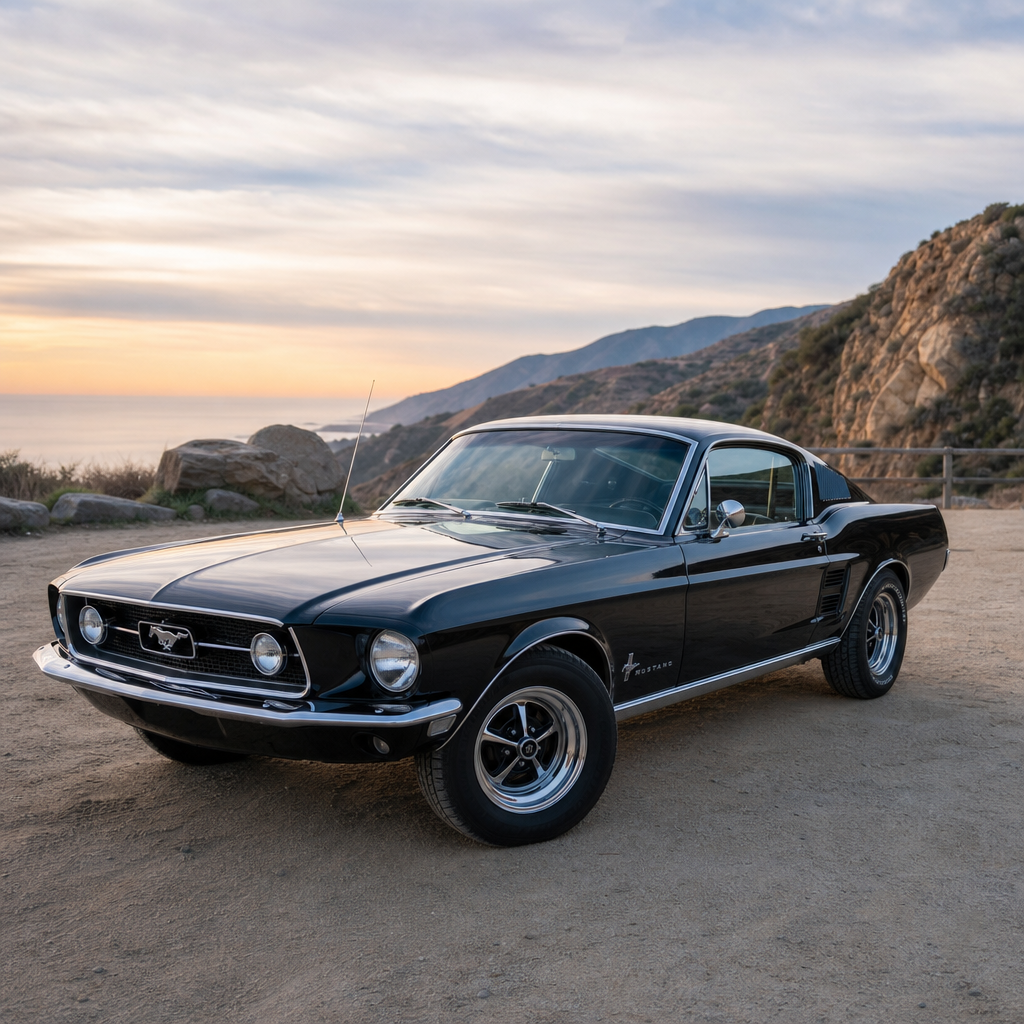
Not every old car becomes a classic, and not every classic becomes an icon. Enduring icons usually combine five elements: distinctive design, technical importance, cultural visibility, scarcity or survival appeal, and a strong enthusiast network. The Ford Mustang is the clearest example of accessible icon status. Introduced in 1964, it created the pony car segment by offering sporty styling and broad customization at an attainable price. The Chevrolet Corvette became an American performance symbol because it evolved continuously while staying recognizable. The Porsche 911 achieved iconic status through disciplined engineering evolution rather than radical reinvention. The Volkswagen Beetle became beloved because millions owned one, yet its shape and simplicity remained unforgettable.
Media exposure amplifies these qualities. Film and television made the Aston Martin DB5, DeLorean DMC-12, 1977 Pontiac Trans Am, and Mini Cooper familiar even to people who do not follow automotive history closely. Motorsport has similar power. Victories at Le Mans, Monte Carlo, Daytona, and Formula One elevate road cars by association. That is why names like Ferrari 250 GTO, Shelby Cobra, and Ford GT40 carry unusual authority. Their appeal is not based on styling alone; it rests on documented competitive achievement. When a model connects road use, engineering credibility, and public imagination, its place in classic car history becomes durable.
For anyone building knowledge in classic car basics, the main lesson is simple: context gives cars meaning. Learn the era, understand the engineering, study the market, and pay attention to why people cared when the car was new. Then explore model-specific guides, restoration resources, and valuation tools with that foundation in mind. The history of classic cars is not nostalgia for its own sake. It is a record of design ambition, industrial change, and human attachment to machines that still move us. Start with the timeline, follow the icons, and you will read every classic car more accurately.
Frequently Asked Questions
What is considered a classic car, and does the definition change depending on who is using the term?
The term “classic car” is widely used, but it does not have one universal definition. In everyday conversation, people often use it to describe any older vehicle that stands out for its design, craftsmanship, historical importance, or nostalgic appeal. However, insurers, car clubs, collectors, auction houses, and government agencies may all apply different standards. In the United States, for example, some organizations separate “classic,” “antique,” and “vintage” vehicles into distinct categories based on age, rarity, and significance. The Classic Car Club of America is especially influential because it uses a more selective definition, generally focusing on high-end American and European automobiles built during a specific era rather than simply any old car.
That means a vehicle can be called a classic in one context but not in another. An insurance company may label a 20- or 25-year-old enthusiast vehicle as a classic for policy purposes, while a collector club might reserve the label for cars with exceptional engineering or historical prestige. In practice, the meaning of “classic car” usually combines age with desirability. A car becomes truly classic not just because it survives, but because it represents something important—whether that is a breakthrough in manufacturing, a distinctive body style, motorsport success, luxury craftsmanship, or a strong place in popular culture.
How far back does the history of classic cars really go?
The history of classic cars begins well before the label itself was ever used. Its roots lie in the late 19th century, when inventors in Europe and the United States were experimenting with steam, electric, and gasoline-powered vehicles. These first automobiles were essentially mechanical experiments, often built in small numbers by engineers and machinists who were trying to solve a new problem: how to create reliable self-propelled transportation. Karl Benz, Gottlieb Daimler, Wilhelm Maybach, and other pioneers played central roles in moving the automobile from concept to reality, and their work laid the foundation for everything that followed.
As the early 20th century progressed, the automobile evolved from novelty to industry. Manufacturers began refining engines, transmissions, brakes, steering systems, and coachbuilding techniques. By the 1910s and 1920s, cars were no longer merely inventions; they had become symbols of mobility, status, and industrial progress. Some of the earliest vehicles now regarded as classic were built during this period, especially those that introduced major technical innovations or represented the craftsmanship of luxury marques. So while the “classic car” label is modern, the historical story behind classic cars reaches all the way back to the birth of motoring itself.
Why are certain automobiles remembered as icons while others are forgotten?
Iconic status usually comes from a combination of design, engineering, timing, and cultural impact. Some cars are remembered because they changed the industry. The Ford Model T, for example, became legendary not simply because it was popular, but because it transformed automobile production and ownership through large-scale manufacturing. Other vehicles became icons because they represented the pinnacle of luxury, performance, or style in their time. Brands such as Duesenberg, Packard, Rolls-Royce, Mercedes-Benz, Jaguar, and Ferrari built cars that came to symbolize prestige, innovation, and aspiration.
Cultural memory also plays a major role. A car may become iconic through films, racing success, celebrity ownership, wartime relevance, or its association with a particular decade. The shape of a 1950s American tailfin sedan, a streamlined prewar grand tourer, or a 1960s sports car can capture the spirit of an era in a way that goes beyond transportation. In contrast, many cars that were once common daily drivers fade from public attention because they lacked distinctive styling, breakthrough technology, or a strong emotional following. In the collector world, the automobiles that endure are often the ones that tell a larger story about how people lived, what they admired, and where the industry was heading at the time.
What eras are most important in the development of classic cars?
Several periods are especially important in understanding how classic cars evolved. The pioneer era of the late 1800s and early 1900s was defined by experimentation, when inventors were still determining what the automobile would become. The brass era, generally associated with the early 20th century, produced vehicles with exposed mechanical character, handcrafted construction, and rapidly advancing engineering. Then came the interwar years, when automakers made enormous strides in reliability, comfort, styling, and luxury. This was also a golden age for coachbuilt automobiles, when wealthy buyers could commission highly individualized bodies on premium chassis.
The postwar period is equally significant because it brought mass-market design identity and a new emotional appeal to motoring. In the 1950s, American cars embraced chrome, tailfins, and V8 power, while European manufacturers refined sports cars and grand touring machines that would become collector favorites. The 1960s and early 1970s are often seen as another major high point thanks to muscle cars, iconic sports cars, improved performance engineering, and globally recognizable styling. Each era contributed something different—innovation, elegance, accessibility, speed, or cultural symbolism—which is why classic car history is best understood as a series of overlapping milestones rather than a single golden age.
Why do classic cars still matter today to collectors, historians, and enthusiasts?
Classic cars matter because they preserve the technological and cultural history of the automobile in a way that books and photographs alone cannot. Each surviving vehicle reflects the engineering priorities, materials, design tastes, and social values of the period in which it was built. A prewar luxury sedan, a postwar roadster, or a mid-century muscle car each tells a different story about industry, transportation, and identity. For historians, these cars are moving artifacts that help explain industrial development, consumer culture, and changing ideas about style and status.
For enthusiasts and collectors, the appeal is also deeply emotional. Classic cars offer a driving experience that feels mechanical, tactile, and distinctive compared with modern vehicles. They connect owners with craftsmanship, restoration traditions, and communities built around preservation and appreciation. In addition, many classic cars continue to hold financial value because rarity, provenance, originality, and demand can make them highly collectible. Most importantly, they endure because they are more than old machines—they are symbols of invention, freedom, ambition, and memory. That combination of history and human attachment is what keeps classic cars relevant across generations.