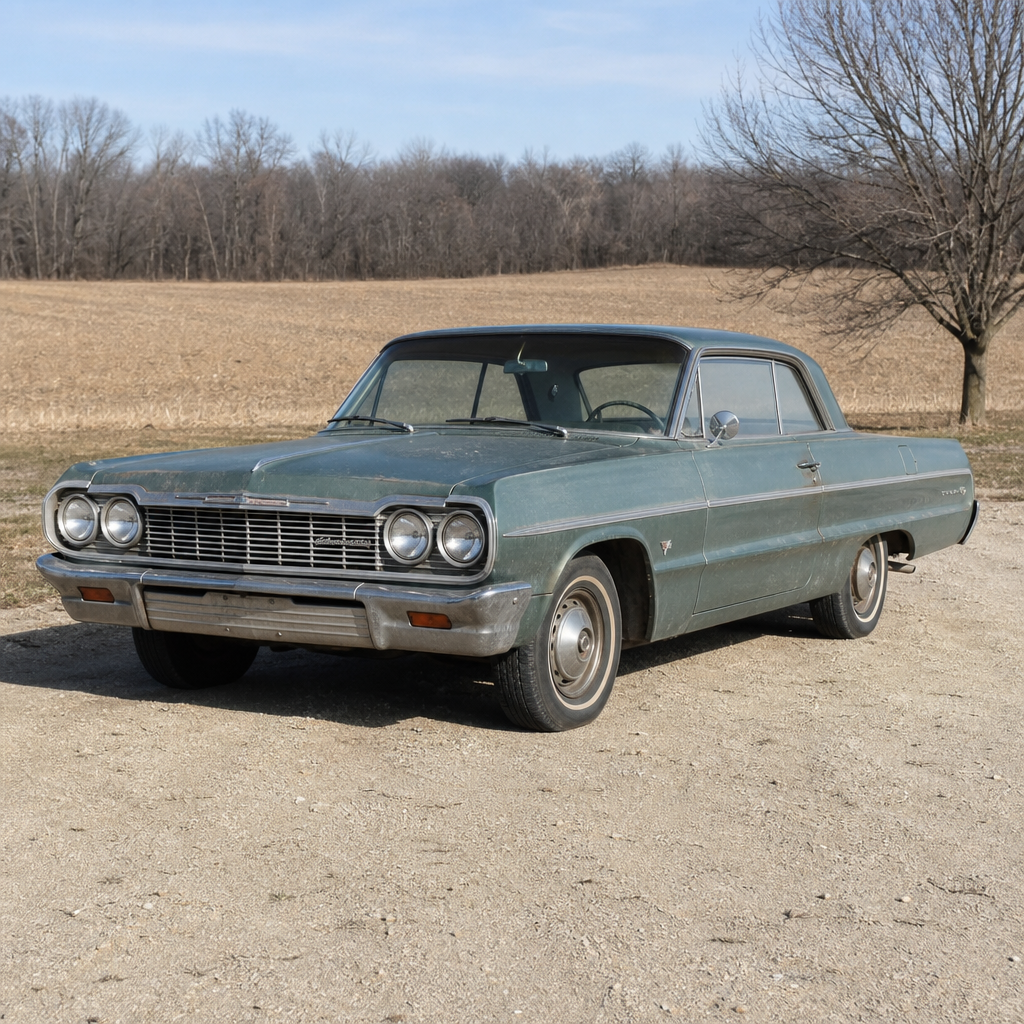
A survivor car is an older vehicle that remains largely as it left the factory, retaining original paint, upholstery, drivetrain components, trim, and finishes rather than being fully restored or heavily modified. In classic car terminology, “survivor” does not simply mean old, rare, or preserved indoors. It refers to authenticity expressed through use, age, and continuity. The car has survived decades with its essential character intact. That distinction matters because collectors, judges, insurers, and first-time enthusiasts often use the term loosely, creating confusion in pricing, judging, and buying decisions.
In practice, I have seen many cars advertised as survivors when they were actually repaints, partial restorations, or cosmetic freshen-ups. A true survivor usually shows evidence of time: thin paint on high-contact edges, minor checking, aged rubber, factory spot welds, assembly markings, and wear consistent with mileage and storage history. Those details are not flaws to erase. They are part of the car’s documentary value. For anyone learning classic car terminology, this is one of the most important concepts to understand because it affects condition grading, market value, restoration strategy, and even how a vehicle should be maintained.
The term also sits at the center of a broader language used in the hobby: original, unrestored, preserved, patina, numbers-matching, period-correct, driver-quality, concours, and restomod. People often overlap these words, but they are not interchangeable. A survivor can be numbers-matching, but not every numbers-matching car is a survivor. A preserved car may qualify as a survivor, but a restored car with period-correct parts does not. If you want to evaluate old cars intelligently, this vocabulary is foundational. Understanding it helps you ask better questions, read listings critically, and recognize when originality is more valuable than perfection.
Defining a survivor car in classic car terminology
The clearest definition is this: a survivor car retains the majority of its factory-installed materials, finishes, and configuration, despite normal aging and careful maintenance. Different clubs and judging bodies set different thresholds, but the core idea is consistent. The car should not have undergone a full restoration. Consumables such as tires, belts, hoses, batteries, and brake components may have been replaced for safety. Mechanical repairs are also acceptable when necessary to keep the vehicle operational. What matters is that the car still presents primarily as an authentic, unrestored artifact rather than a reconstructed version of itself.
Organizations such as Bloomington Gold, known for Corvette judging, and the Survivor Car judging movement helped formalize the term. Their standards emphasize original finishes, original major components, and the preservation of assembly-line details that restoration shops often miss or intentionally “improve.” That includes things like factory overspray, chalk marks, seam sealer application, date-coded glass, and fastener finishes. These standards changed the market by teaching collectors that untouched evidence can carry more significance than flawless cosmetics. In other words, originality became its own premium category.
For beginners, the easiest way to think about a survivor car is to compare it with an old house. A restored house may be beautiful, but a house with original millwork, hardware, floors, and layout tells a more direct historical story. The same principle applies to cars. The appeal lies in documented continuity. You are seeing the manufacturing methods, materials, and design decisions of the period in a mostly unaltered state. That makes survivor cars especially useful for restorers, historians, appraisers, and marque experts who rely on original examples as reference points.
How survivor differs from original, unrestored, preserved, and patina
Classic car terminology becomes clearer when related terms are separated carefully. “Original” usually means a component, finish, or feature remains factory-installed. A car may have original paint but a rebuilt engine. “Unrestored” means the vehicle has not been comprehensively redone, but it might still have received repairs, repainting, or replacement interior sections over time. “Preserved” suggests the owner intentionally maintained and protected existing materials rather than replacing them. “Patina” refers to visible age and wear, such as faded paint, dulled chrome, cracked leather, or sun-softened plastics. Patina is a look; survivor status is a condition history.
These distinctions matter because sellers often use attractive language strategically. A pickup with a bare-metal hood, replacement seat covers, and a modern crate engine may have patina, but it is not a survivor. A sedan stored for forty years with original paint, dealer decals, and factory upholstery may be both preserved and a survivor, even if it needs mechanical recommissioning. An unrestored car can fail survivor standards if too much original material has been lost. Likewise, an older repaint alone can move a car out of survivor territory, depending on the judging standard being applied.
| Term | What it means | What it does not guarantee |
|---|---|---|
| Survivor | Largely factory-original car with no full restoration | Perfect condition or low mileage |
| Original | Specific parts or finishes remain factory-installed | Entire car is untouched |
| Unrestored | Not comprehensively restored | No repaint, repairs, or replacement parts |
| Preserved | Maintained to protect existing materials | Eligibility under formal survivor judging rules |
| Patina | Visible age and surface wear | Authenticity or originality of major components |
When I inspect candidate survivor cars, I look for consistency across the whole vehicle. The paint wear should match the trim wear. The pedal pads, steering wheel texture, seat bolsters, and door hinges should make sense with the mileage claim. Date codes on glass, hoses, wheels, and major castings should align reasonably with build timing. A single replaced fender or service engine does not automatically destroy interest, but the more departures from factory condition you find, the less accurate the survivor label becomes.
What qualifies a car as a true survivor
There is no single legal definition, but serious collectors usually apply several tests. First is originality of finish. Original paint is one of the strongest indicators, especially if measured with a paint meter and supported by factory orange peel, edge wear, and age-consistent checking. Second is originality of interior materials, including seat upholstery, door panels, dash pad, carpeting, and headliner. Third is retention of major driveline components such as engine block, transmission case, rear axle housing, carburetor, and intake, ideally with matching or date-correct numbers. Fourth is factory configuration: correct color, trim, ride height, wheels, and equipment.
Documentation strengthens the case. Window stickers, dealer invoices, warranty booklets, Protect-O-Plate records, service receipts, registrations, and old photographs can establish continuity. Provenance matters because even a highly original car can be misrepresented if the story is incomplete. Storage history is also important. Cars kept in dry garages, used periodically, and serviced without cosmetic overhauls tend to survive best. By contrast, vehicles exposed to UV, moisture, rodents, and repeated amateur repairs often lose the details that make survivor status credible.
Condition still matters, but not in the same way it does for concours restoration. A true survivor does not need glossy perfection. It needs integrity. A cracked seat seam may be acceptable if the material is original. Thin chrome may be preferable to replating if it confirms authenticity. Even dealership add-ons from the car’s early life, such as bumper guards, tissue dispensers, or cassette stereos from the 1970s, can become part of the story when they are period and documented. The key question is always whether the car remains a genuine time capsule rather than a selectively refurbished imitation.
Why survivor cars matter to collectors, judges, and buyers
Survivor cars matter because they are rolling primary sources. Restorers use them to verify finishes, decals, hose routing, fasteners, upholstery grain, trunk spatter paint, and underbody treatment. Judges rely on original examples to refine standards when factory documentation is incomplete or contradictory. Buyers value survivor cars because they offer a more trustworthy baseline than overrestored vehicles, where fresh paint and reproduction parts can hide accident damage, rust repairs, or incorrect assembly. In many segments of the market, an honest survivor is more desirable than a shiny restoration with uncertain details.
This preference has grown over the last two decades. Auctions by Mecum, RM Sotheby’s, Gooding, and Barrett-Jackson have repeatedly highlighted unrestored benchmark cars, especially low-mileage muscle cars, sports cars, and luxury models with strong documentation. Air-cooled Porsche, C2 and midyear Corvette, Mercedes-Benz SL, early Ford Bronco, and first-generation Camaro buyers increasingly pay attention to original finishes and known histories. That does not mean all survivors command top dollar. The market still weighs rarity, color, options, body style, and mechanical needs. But originality has become a durable value driver rather than a niche concern.
For new enthusiasts, survivor cars also teach restraint. Not every old car should be restored immediately. Cleaning, stabilizing, and documenting may preserve value better than stripping and repainting. I have watched owners erase rare assembly marks and irreplaceable lacquer simply because they assumed “newer-looking” meant better. Once originality is removed, it cannot be recreated honestly. A skilled shop can approximate factory appearance, but approximation is not continuity. That is why understanding survivor status before making cosmetic decisions is one of the smartest habits a collector can build.
How to inspect and verify a survivor car
Start with the basics: identity, structure, finish, and paperwork. Confirm the VIN, cowl tag, body numbers, engine stampings, transmission codes, and axle dates. Compare those with known production references from marque clubs, shop manuals, and model-year guides. Inspect panel fit, spot welds, seam sealer, and undercoating for signs of replacement metal. Use a paint thickness gauge where appropriate, but do not rely on it alone; leaded seams, factory variation, and old single-stage paint can produce misleading readings. You are looking for a coherent pattern, not a single magic number.
Next, inspect wear consistency. A claimed 18,000-mile survivor should not have deeply worn pedal pads, sagging hinges, polished-through seat bolsters, and replacement steering wheel trim. Look under weatherstrips and behind trim for original paint edges. Check glass logos and date codes. Examine fasteners for tool marks that suggest major disassembly. Review the underside carefully. Factory finishes on frames, suspension components, fuel lines, and floor pans often reveal more truth than the glossy top side. Smell matters too. Old interiors, trunk liners, and engine bays often carry a distinct scent impossible to fake convincingly.
Finally, verify the story with documents and independent expertise. Order a build sheet or heritage certificate where available. Consult registries, marque forums, and judging manuals. Hire an appraiser or specialist familiar with that exact model. A Chevrolet expert will catch details that a general inspector may miss, and the same is true for Jaguar, Porsche, Mopar, or Mercedes-Benz. The goal is not to prove absolute untouched purity, which is rare, but to establish that the car remains predominantly authentic and honestly represented. That is the standard that protects both value and trust.
Common myths, tradeoffs, and ownership decisions
The biggest myth is that survivor means better in every case. It does not. Some survivor cars are too deteriorated to use safely without substantial intervention. Others are so original that regular driving accelerates wear on irreplaceable materials. Original lacquer, baked plastics, and brittle upholstery do not respond kindly to hard use, heat, or careless detailing. There is also a practical tradeoff in maintenance. If you preserve original hoses, clamps, belts, and ignition parts too long, reliability and safety suffer. Thoughtful owners separate preservation from neglect.
Another myth is that every old car with faded paint deserves the survivor label. Many worn cars are simply used cars. Survivor status depends on retained factory substance, not aesthetic roughness. Likewise, not all restoration is bad. A rare model with severe rust, collision damage, or sun-destroyed interior may need restoration to remain viable. The key is choosing the right path for the specific car. If a highly original, well-documented example exists, preservation is usually the best strategy. If originality is already lost, a correct restoration may be the smarter route.
For ownership, the best approach is light intervention, strong documentation, and reversible maintenance. Clean gently, avoid overpolishing, preserve labels and chalk marks, store the car in a stable environment, and photograph everything before repairs. Replace safety-critical items as needed, but save removed originals. Use knowledgeable shops that understand old finishes and factory hardware. If you are shopping within classic car terminology categories, ask one simple question before anything else: is this car valuable because it has been remade, or because it has truly survived? That answer will guide price, care, and long-term satisfaction.
A survivor car is important because it preserves authenticity in a hobby that often rewards cosmetic perfection. The term describes a vehicle that remains substantially as built, with original materials, finishes, and configuration still present after decades of use and care. That makes survivor cars different from merely old, unrestored, or patina-covered vehicles. The distinction shapes valuation, judging, maintenance, and restoration choices. Once you understand how survivor relates to original, preserved, numbers-matching, and driver-quality, the broader language of classic car terminology becomes far easier to navigate.
The practical takeaway is simple. Look for continuity, not shine. Verify claims with documentation, date codes, wear patterns, and model-specific expertise. Respect honest aging when it reflects factory substance. Preserve before you restore, especially when a car still carries irreplaceable evidence of how it was built and used. In my experience, the best survivor cars reward patience: they reveal more the closer you study them, and they often teach more than fully restored examples ever can.
If you are building your knowledge under Classic Car Basics & Education, use survivor as a reference concept for every other term in the category. It connects directly to originality, patina, condition grading, numbers-matching status, concours standards, and buying strategy. Learn the language, inspect carefully, and ask precise questions before you commit to a purchase or a restoration plan. That discipline will help you protect your budget, make smarter decisions, and appreciate classic cars on a deeper level.
Frequently Asked Questions
What exactly qualifies a car as a “survivor”?
A survivor car is typically an older vehicle that still presents much as it did when it left the factory, with a high degree of its original materials, finishes, and components intact. That usually includes original paint, interior upholstery, trim, glass, engine bay details, and major drivetrain elements, even if those parts show normal age and wear. The key idea is not perfection. In fact, visible use, patina, and minor deterioration often support survivor status because they show the car has lived an authentic life rather than being cosmetically reset through restoration.
In classic car language, “survivor” is not just a synonym for old, rare, or well-stored. A car can be extremely valuable and still not be a survivor if it has been repainted, reupholstered, re-chromed, or significantly rebuilt to look new again. Likewise, a car that has been parked indoors for decades is not automatically a survivor unless it still retains its original character in meaningful ways. What makes a survivor special is continuity: the car has endured the passage of time without losing the physical evidence of how it was originally built and finished.
Is a survivor car the same thing as an unrestored car?
Not always, though the terms are closely related. An unrestored car simply means it has not undergone a full restoration. A survivor car is usually unrestored, but it also carries an implied standard of authenticity and preservation. In other words, a car can be unrestored yet too altered, too deteriorated, or too incomplete to be considered a true survivor. If major original surfaces are gone, the interior has been replaced, or the engine and other important components have been swapped, the vehicle may still be unrestored, but it no longer tells a fully authentic story of its factory-built identity.
By contrast, a survivor car generally remains substantially original in the areas collectors and judges care about most. It may have received routine maintenance, safety repairs, replacement tires, hoses, belts, or other wear items, and that does not normally disqualify it. The distinction is that maintenance keeps the car functional, while restoration renews or replaces what time has worn away. A survivor can have scars, faded finishes, and imperfections, but those flaws are part of its value because they document age honestly rather than conceal it.
Can a survivor car have repairs, replacement parts, or repaint work and still be considered a survivor?
Yes, in many cases it can. Very few decades-old vehicles remain completely untouched, and most respected definitions of survivor status allow for sensible maintenance and limited repairs. Items that wear out in normal use, such as batteries, brake components, exhaust parts, hoses, and tires, are commonly replaced without harming the car’s standing. Mechanical rebuilding may also be accepted if it was necessary to keep the vehicle roadworthy and if the work did not erase the car’s original appearance and character. The standard is usually whether the car remains substantially original, not whether every nut and bolt is exactly as delivered.
Where things become more complicated is with cosmetic renewal and major replacement. A full repaint, replacement upholstery, modernized trim, non-original engine, or heavily refinished undercarriage can move a car out of survivor territory because those changes remove the original surfaces that define authenticity. Small spot repairs, localized paintwork, or sympathetic preservation efforts may still be acceptable depending on the extent of the work and the standards of a particular club, show, or judging body. In practice, survivor status often exists on a spectrum, but the more original material a car retains, the stronger and more credible its claim becomes.
Why are survivor cars so desirable to collectors and judges?
Survivor cars are prized because they provide something a restored car can never fully recreate: original evidence. Factory paint texture, assembly methods, upholstery materials, finishes, markings, fasteners, and fitment details all offer a direct look at how a car was actually built in its era. For collectors, that authenticity has emotional and historical power. For judges, restorers, and researchers, it has practical value because survivor cars serve as reference points for what is correct. They help answer questions about colors, finishes, decals, hardware, and production variations that are often lost once a car has been refinished or rebuilt.
There is also a growing appreciation for honesty over perfection. A restored car may be beautiful, but it often reflects modern interpretation as much as original factory practice. A survivor car, even with worn paint or creased seats, shows genuine continuity through time. That sense of having “made it through” with its identity intact gives survivor cars a distinct appeal. In many corners of the hobby, originality now carries significant market and cultural value because it is increasingly rare, and once original finishes and materials are replaced, they can never truly be recovered.
How can you tell whether a car is a true survivor or just an older car that looks original?
Determining survivor status requires close, informed inspection. Start by looking for consistency across the car’s paint, interior, trim, glass, engine compartment, and chassis details. Original cars tend to show age in a uniform, believable way. Paint may be thin on edges, chrome may have mild pitting, upholstery may show natural wear in high-contact areas, and underhood finishes may appear aged but not freshly restored. Mismatched textures, overly glossy surfaces, incorrect materials, reproduction tags, and suspiciously new finishes on isolated parts can all suggest later restoration work rather than true preservation.
Documentation and provenance also matter. Service records, long-term ownership history, factory paperwork, original manuals, old photographs, and period registrations can support claims that a car has remained largely untouched. Expert evaluation is often essential, especially for valuable or rare models. Marque specialists and experienced judges know what original finishes and components should look like and can spot subtle signs of replacement or refinishing. Ultimately, a true survivor is not simply a car that appears old. It is a car whose originality can be observed, explained, and defended through physical evidence, history, and overall authenticity.