The oil crisis reshaped the automotive world, and its effect on classic cars remains one of the clearest examples of how global economics can alter design, consumer behavior, regulation, and collector values at the same time. In classic car history, the term “oil crisis” usually refers to the 1973 Arab oil embargo and the 1979 energy shock linked to the Iranian Revolution, two events that sharply reduced fuel supply, raised gasoline prices, and forced governments, manufacturers, and drivers to rethink what a desirable car looked like. For enthusiasts studying the history of classic cars, these years mark a dividing line between the high-displacement, chrome-heavy confidence of the 1950s and 1960s and the efficiency-driven, regulation-conscious market that defined much of the late 1970s and 1980s. I have spent years tracing production changes, option sheets, emissions equipment, and auction results from this period, and the pattern is consistent: the oil crisis did not kill the classic car hobby, but it permanently changed which cars were built, how they were used, and why certain models became collectible. Understanding this shift matters because many of the most discussed classics—muscle cars, grand tourers, personal luxury coupes, compact imports, and early fuel-efficient hatchbacks—either rose or fell in significance because of these disruptions.
To understand the oil crisis and its effect on classic cars, it helps to define a few key ideas. A classic car is broadly an older vehicle valued for historical interest, design, engineering, rarity, or cultural meaning, though insurers and clubs often use age thresholds such as 20 to 25 years. Fuel economy is the distance a car travels per unit of fuel, and during the 1970s it shifted from a minor sales consideration to a central buying factor. Emissions controls include systems such as exhaust gas recirculation, catalytic converters, and air injection pumps, all of which became more prominent alongside fuel concerns. The result was a rapid transition in automotive priorities. Big-block V8 power, once a selling point, became a liability for many buyers. Lightweight construction, smaller engines, diesel experiments, overdrive gearing, and imported efficiency suddenly looked practical rather than niche. That transition sits at the center of classic car history because it explains why pre-1973 performance cars became icons, why many 1974–1982 cars developed a weaker reputation, and why some overlooked survivors from the era are now drawing serious attention from collectors.
Before the crisis: the high-fuel era that built many favorites
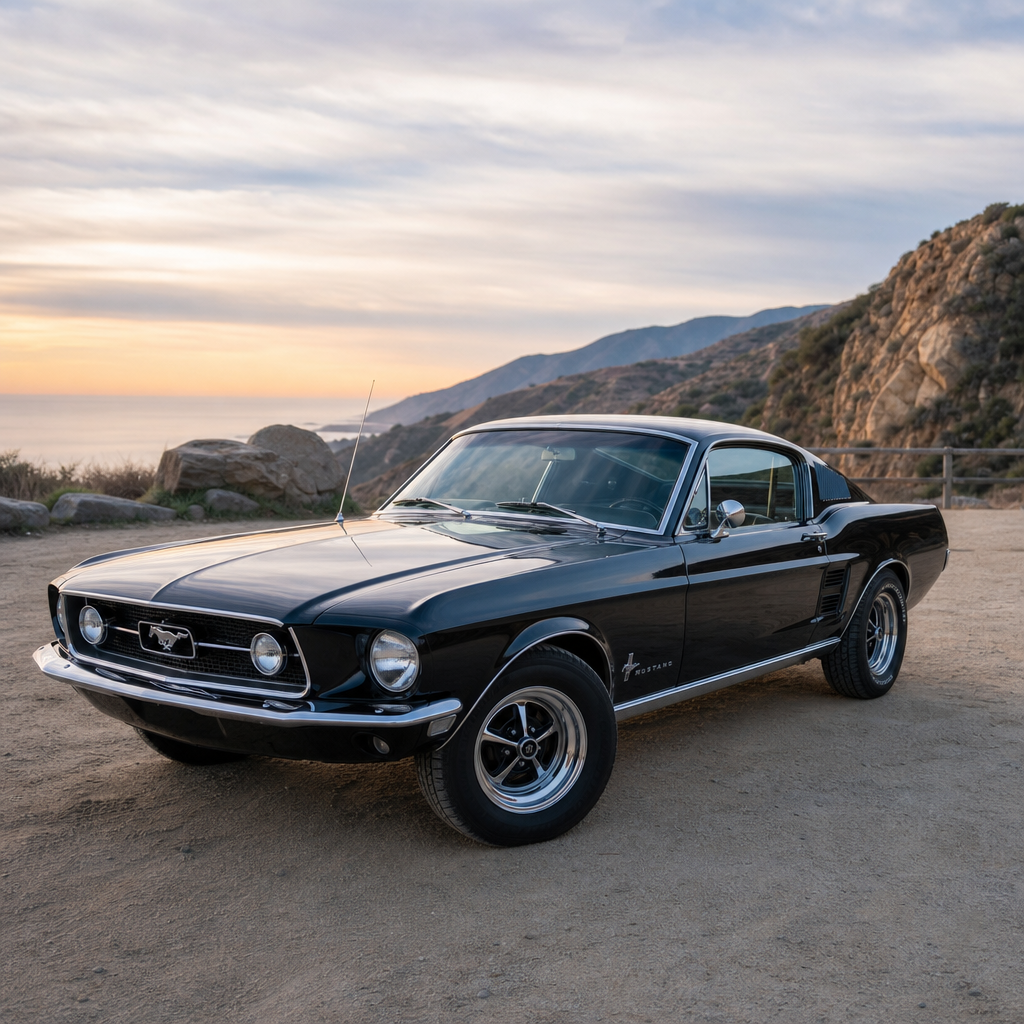
In the years leading up to 1973, especially in the United States, gasoline was comparatively cheap and plentiful, and automakers built cars around comfort, size, styling, and acceleration more than operating efficiency. This was the age of the Pontiac GTO, Chevrolet Chevelle SS 454, Plymouth Road Runner, Dodge Charger R/T, Buick Riviera, Cadillac Eldorado, and Ford Mustang Mach 1. European makers also sold powerful grand tourers and sports cars with less concern about fuel cost, while in Australia and elsewhere large-displacement performance sedans gained loyal followings. Buyers expected smooth highway cruising, generous dimensions, and engines with ample torque. Even when compact cars existed, they often occupied the lower end of the market rather than the aspirational center.
This context matters because it explains why so many pre-crisis vehicles are celebrated today. They represent the last broad wave of mass-market performance before fuel scarcity and stricter regulation intervened. Horsepower ratings in the late 1960s were often advertised using gross figures measured without full accessories or exhaust systems, which could flatter outputs, but the underlying reality still favored powerful drivetrains. Cars like the 1970 LS6 Chevelle or 1971 Hemi ’Cuda became collector blue chips partly because they arrived at the end of an era. Once gasoline lines formed and fuel prices rose, the public perception of these cars changed from modern transportation to symbols of a vanished age. That change is central to the history of classic cars and to the way collectors rank significance.
The 1973 and 1979 shocks: what actually changed for drivers and manufacturers
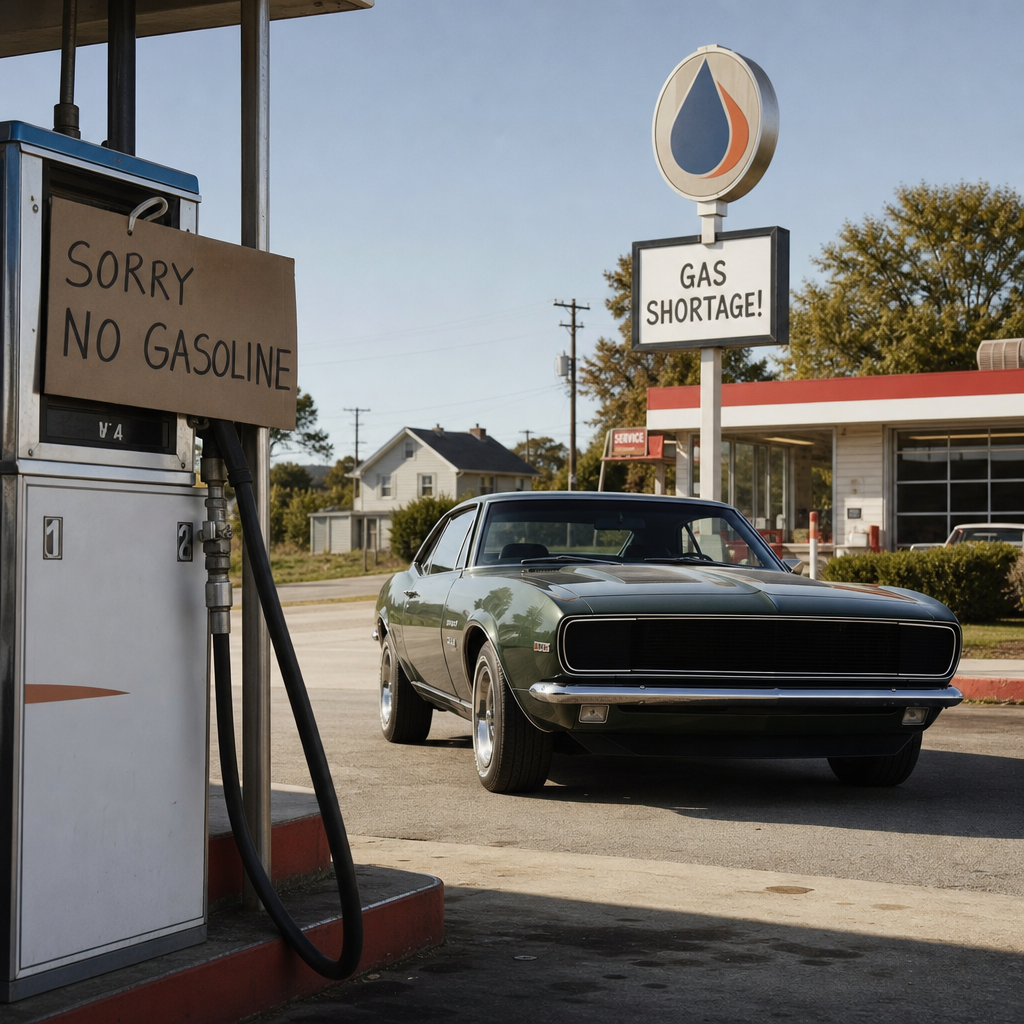
The 1973 oil embargo followed geopolitical conflict in the Middle East and led members of OAPEC to restrict exports to nations seen as supporting Israel. The result was supply disruption, rationing in some regions, long lines at gas stations, and a sharp public awareness that fuel availability was not guaranteed. A second major shock arrived in 1979, when the Iranian Revolution disrupted production and triggered another surge in prices. Consumers responded quickly. Sales of large, thirsty cars dropped, while interest rose in smaller domestic models and imports from brands such as Toyota, Honda, Datsun, Volkswagen, and Volvo. Manufacturers that had treated fuel economy as secondary now faced a direct demand shift.
In practical terms, the crisis changed product planning, showroom messaging, and engineering schedules. Automakers accelerated development of smaller engines, lighter platforms, and more aerodynamic shapes, even if true aerodynamic optimization was still in its early stages. The U.S. Corporate Average Fuel Economy rules, enacted in 1975, formalized the push by requiring manufacturers to meet fleet-wide efficiency targets. At the same time, emissions regulations were tightening, especially after the Clean Air Act amendments, so engineers were trying to reduce fuel use and exhaust pollutants while preserving drivability and durability. That was not easy with the carburetion and ignition technologies commonly used in the mid-1970s. The result was a transitional generation of cars that often looked substantial but delivered less power than their predecessors. For classic car history, this explains the common phrase “malaise era,” though that label can oversimplify a period that also produced important technical progress.
How the crisis changed classic car design, performance, and reputation
The immediate design response to the oil crisis was not simply “make everything small.” Carmakers took several paths at once. Some downsized entire model ranges, as General Motors famously did for its full-size cars in 1977, reducing weight and improving efficiency without abandoning mainstream comfort. Others kept large bodies but installed smaller engines, taller rear axle ratios, and transmission calibrations aimed at economy. Performance models survived, but often in diminished form. Compression ratios fell to accommodate unleaded fuel and emissions requirements, horsepower dropped, and quarter-mile bragging rights became harder to advertise. The shift from gross to net horsepower ratings beginning in the early 1970s also made the decline look even steeper to buyers reading brochures.
From a collector’s perspective, this period created a sharp reputational divide. Pre-1973 cars acquired a halo as the “last real” examples of unrestricted performance, while many 1974–1982 models were dismissed as compromised. Yet that broad judgment misses key distinctions. Some crisis-era cars were genuinely innovative: the original Volkswagen Golf GTI abroad proved that efficiency and driving fun could coexist; the BMW 2002 and later 3 Series kept enthusiast values alive; the Porsche 911 adapted rather than disappeared; and Mercedes-Benz diesels gained a reputation for durability and real-world economy. Even in the American market, cars such as the Pontiac Trans Am maintained cultural importance despite reduced output. I regularly advise newer enthusiasts to study spec sheets, curb weight, gearing, and market context instead of repeating blanket assumptions. The oil crisis hurt some classic cars, but it also elevated engineering efficiency from afterthought to competitive advantage.
Winners, losers, and the models that became collectible because of the crisis
One of the most useful ways to understand the oil crisis and its effect on classic cars is to look at which vehicles gained long-term value and which lost relevance. The crisis did not affect every segment equally. Some cars became coveted because they represented the end of the pre-crisis mindset. Others became collectible because they introduced the post-crisis future.
| Category | Typical Impact of the Oil Crisis | Representative Classic Cars | Collector Result |
|---|---|---|---|
| High-displacement muscle cars | Demand fell when new; later prized as final pre-crisis performance icons | 1970 Chevelle SS 454, 1971 Hemi ’Cuda, 1970 Buick GSX | Strong long-term appreciation, especially numbers-matching examples |
| Personal luxury coupes | Large engines and heavy bodies became harder to justify | Ford Thunderbird, Chrysler Cordoba, Cadillac Eldorado | Selective collector interest; top trims and rare options matter most |
| Downsized domestic cars | Marketed as practical answers to fuel anxiety | 1977 Chevrolet Caprice, Ford Fairmont | Growing historical interest, modest values except exceptional survivors |
| Efficient imports | Sales rose as buyers sought economy and reliability | Honda Civic, Toyota Corolla, Datsun 510, VW Rabbit | Increasing collector attention, especially original unmodified cars |
| Sports cars that adapted | Maintained identity through engineering refinement, not raw displacement | Porsche 911, BMW 2002, Mazda RX-7 | Stable or rising demand due to balanced performance and historical role |
The biggest winners in cultural memory were often the cars suddenly rendered obsolete by the crisis. Big-block muscle cars became artifacts of abundance, and scarcity amplified their appeal. At the same time, efficient imports won a different kind of significance. Early Civics, Corollas, and Rabbits are now important in classic car history because they reflect the moment when consumer priorities shifted decisively. Collectors who once ignored them are starting to value originality, low mileage, and documented ownership, especially as survivor numbers shrink.
Regulation, technology, and why many 1970s cars felt slower
Fuel scarcity was only part of the story. The oil crisis overlapped with major emissions and safety changes, and enthusiasts often blend these together when judging 1970s cars. In reality, several technical factors reduced performance. Lower compression ratios limited thermal efficiency and power. Retarded ignition timing and lean carburetor calibration helped emissions compliance but could hurt throttle response. Catalytic converters, introduced widely in the mid-1970s, were necessary for cleaner exhaust but initially added complexity and heat management challenges. Heavier safety structures, impact bumpers, and comfort equipment added mass. All of these changes arrived while engineers were still working with mostly analog controls.
This is why many crisis-era classics feel less urgent than earlier cars with similar badges. A 1976 Corvette, for example, remained desirable in shape and brand identity, but its performance no longer matched the peak numbers associated with late-1960s big-cube machines. The same pattern affected Camaros, Mustangs, and luxury coupes across Detroit. However, the period also laid groundwork for later recovery. Electronic fuel injection, engine management computers, overdrive automatic transmissions, and improved combustion design emerged because manufacturers had to solve efficiency and emissions problems permanently. By the 1980s, those investments began restoring usable performance. From a historical standpoint, the oil crisis was painful, but it accelerated the technologies that made modern classics more livable and reliable.
How the oil crisis still affects today’s classic car market and ownership
Today’s market still reflects distinctions created in the 1970s. At auctions, pre-embargo muscle cars routinely command premiums because buyers see them as the purest expression of an unrestricted era. Documentation, original drivetrains, factory colors, and rare options can create huge price gaps. In contrast, many late-1970s cars remain affordable entry points, which is one reason they are increasingly relevant in a classic car basics and education hub. New collectors can buy into the history of classic cars through a clean second-generation Honda Civic, a Mercedes diesel sedan, a downsized domestic coupe, or a well-preserved personal luxury car without paying six-figure prices.
Ownership patterns also show the crisis legacy. Fuel economy still influences how often some classics are driven, especially where gasoline costs are high. Insurance providers such as Hagerty and specialist valuation guides consistently separate top-tier pre-crisis performance models from later variants because market demand remains stronger. At the same time, younger enthusiasts are broadening the field. Cars once mocked for low horsepower now attract interest for design, nostalgia, and historical importance. I see this especially with original economy cars, early hot hatches, and analog European sedans that tell the story of adaptation. If this page serves as a hub for the history of classic cars, that is the key lesson: the oil crisis did more than interrupt one chapter. It created the framework that defines how many classics are categorized, valued, restored, and understood today.
The oil crisis and its effect on classic cars can be summed up in one clear idea: energy shocks turned the automobile from a symbol of cheap-power optimism into a machine shaped by scarcity, regulation, and technical compromise, and collectors still measure cars against that turning point. Before 1973, large engines, bold styling, and effortless fuel consumption fit the market. After the embargoes and price spikes, efficiency, downsizing, and engineering discipline became unavoidable. That shift changed model lineups, weakened some famous nameplates, elevated imports, accelerated emissions technology, and gave pre-crisis performance cars a lasting mythology. It also produced an overlooked generation of historically important vehicles that deserve more respect than they often receive.
For anyone learning the history of classic cars, this era is essential because it explains both what disappeared and what emerged. It clarifies why early muscle cars became investment-grade collectibles, why many 1970s models stayed affordable for decades, and why compact imports and adaptable sports cars gained historical weight. It also shows that collector value is not only about speed. Context matters. A low-horsepower survivor from the late 1970s can be significant if it captures the moment when the market changed direction. Use that perspective when exploring related topics in classic car basics and education, from muscle car history to emissions-era engineering and the rise of Japanese classics. Study production changes, compare pre- and post-crisis specifications, and look at how buyers responded. The better you understand the oil crisis, the better you understand classic cars themselves.
Frequently Asked Questions
How did the 1973 and 1979 oil crises change the classic car market?
The 1973 Arab oil embargo and the 1979 energy shock transformed the car market almost overnight, and many of the effects are still visible in the classic car world today. Before those events, large-displacement V8-powered cars, full-size sedans, personal luxury coupes, and heavy muscle-era models fit the expectations of many buyers, especially in the United States. Fuel was relatively cheap, and manufacturers built vehicles around performance, size, comfort, and styling more than fuel economy. When gasoline suddenly became expensive, scarce, and politically sensitive, consumer priorities shifted fast. Buyers who had once wanted more power began looking for efficiency, smaller engines, lighter vehicles, and practical transportation.
That sudden change hurt the resale values of many thirsty cars in the short term. Big-block muscle cars, full-size station wagons, and large luxury models that had been desirable only a few years earlier were often seen as costly to operate and out of step with the times. At the same time, smaller imports and domestic compact cars gained attention because they seemed more sensible during periods of fuel shortages and long gas lines. This was not just a temporary mood swing; it helped reshape dealership inventory, manufacturing strategy, and public perception of what made a car desirable.
In the longer view, the oil crises created a split in the collector market. Some cars that became unpopular in the 1970s later returned as highly valued classics because enthusiasts recognized their historical importance, styling, rarity, or performance pedigree. Others remained less sought after because they represented the low-power, emissions-choked, transitional years that followed. In that sense, the oil crisis did not simply lower values across the board. It rearranged the hierarchy of desirability and helped define which vehicles would later be celebrated as pre-crisis icons, which would be remembered as symbols of adaptation, and which would be overlooked for decades.
Why did automakers redesign cars so dramatically after the oil crisis?
Automakers redesigned cars because the oil crisis exposed how vulnerable the industry was to fuel price spikes and supply interruptions. Manufacturers could no longer assume that buyers would accept large, heavy vehicles with poor fuel economy. As consumer demand changed, car companies had to rethink size, weight, aerodynamics, engine tuning, and even model lineups. This period accelerated the shift away from the traditional formula of bigger engines and heavier bodies toward smaller cars, downsized platforms, and more efficient powertrains.
The redesigns were also driven by regulation. The 1970s brought a combination of fuel economy standards, tightening emissions rules, and safety requirements, all of which affected engineering decisions. In the United States, Corporate Average Fuel Economy standards pushed automakers to improve fleet efficiency. That often meant reducing vehicle weight, shrinking engine displacement, adding overdrive transmissions, and tuning engines more conservatively. At the same time, emissions controls reduced horsepower, especially on American performance cars, which made the contrast between pre-crisis and post-crisis models even more noticeable.
For classic cars, this redesign era matters because it marks a major turning point in automotive history. The oil crisis helped bring an end to one age and begin another. Cars from the late 1960s and early 1970s are often seen as the last expressions of an era defined by relatively unrestricted performance and abundant fuel. Cars from the mid-to-late 1970s and early 1980s often show the industry in transition, experimenting with downsizing, new technologies, and changing priorities. That is why collectors, historians, and enthusiasts often use the oil crisis as a reference point when comparing generations of classic vehicles.
What effect did the oil crisis have on muscle cars and other high-performance classics?
The oil crisis had a profound effect on muscle cars because those vehicles were closely tied to the very conditions that the crisis disrupted. The muscle car formula depended on affordable fuel, strong consumer demand for horsepower, and relatively few constraints on engine size and tuning. Once fuel shortages hit and gasoline prices rose sharply, the appeal of high-consumption performance cars weakened for mainstream buyers. Insurance rates had already begun climbing for high-performance models, and new emissions regulations were reducing power output, so the oil crisis added another major blow at exactly the wrong moment.
As a result, the golden age of muscle cars effectively came to an end in the early 1970s. Manufacturers scaled back performance offerings, reduced compression ratios, detuned engines, and shifted marketing away from raw power. Some nameplates survived, but often as shadows of their former selves. Cars that once advertised quarter-mile times and street dominance were suddenly being sold in a world focused on fuel range, efficiency, and practicality. For enthusiasts at the time, this felt like a dramatic cultural shift, not just a product adjustment.
Ironically, the long-term collector effect was the opposite of what many people expected in the 1970s. Because the oil crisis and related regulatory changes marked the end of the original muscle era, surviving pre-crisis performance cars eventually became even more significant. They came to represent the last unrestricted chapter of American factory performance. That historical importance helped drive up collector interest in genuine high-horsepower, pre-1973 models. Meanwhile, many later 1970s “performance” cars remained less valuable for years because they looked aggressive but delivered less power. Today, the oil crisis is one of the key reasons enthusiasts draw such a sharp line between early muscle cars and the performance models that followed.
Did the oil crisis only affect American classic cars, or did it influence European and Japanese models too?
The oil crisis had global consequences, so it absolutely influenced European and Japanese models as well as American ones. In the United States, the impact is especially visible because the market had been dominated by large cars with big engines, making the shift more dramatic. But Europe and Japan were also forced to respond to changing fuel costs, supply uncertainty, and evolving consumer expectations. The crisis highlighted the value of efficient design, smaller-displacement engines, and practical packaging, areas where many European and Japanese manufacturers were already comparatively strong.
For Japanese automakers, the crisis became a major opportunity. Brands that offered compact, fuel-efficient, reliable cars gained market share and credibility, particularly in export markets. Vehicles that may once have been seen as economy-minded alternatives suddenly looked smart and forward-thinking. This changed buying habits in lasting ways and helped elevate many Japanese models from basic transportation to historically important classics. Cars that symbolized the shift toward efficiency and quality now occupy an important place in collector discussions because they reflect a major market realignment.
European manufacturers felt the effects too, though in different ways depending on the segment. Smaller European cars fit the new environment relatively well, while luxury and performance marques still had to contend with changing fuel prices and emissions expectations, especially when selling into the American market. Some European sports and GT cars survived by adapting through smaller engines, revised tuning, or more efficient engineering. In the classic car world, this means the oil crisis is not just an American story about the fall of big V8s. It is a global turning point that influenced design philosophy, export success, consumer identity, and collector interest across multiple automotive traditions.
How does the oil crisis still affect classic car values and collector interest today?
The oil crisis still affects classic car values because collectors do not evaluate old cars only by style or performance; they also judge them by historical context. Cars built before the crisis are often prized as representatives of an era of abundant fuel, larger engines, and less constrained performance. That gives many pre-1973 models a kind of symbolic importance that goes beyond their specifications. They represent the end of a particular automotive mindset, and that historical role can strengthen demand among collectors.
At the same time, the crisis changed which later cars became noteworthy. Some vehicles from the mid-1970s through early 1980s are increasingly appreciated not despite the oil crisis, but because of how clearly they reflect it. Downsized domestic cars, early fuel-conscious imports, and transitional models shaped by efficiency concerns tell the story of an industry under pressure. As collector tastes broaden, these cars are receiving more attention from enthusiasts interested in social history, design evolution, and the realities of regulation and energy economics. In other words, the oil crisis gave collectors a new framework for understanding significance.
There is also a practical side to the issue. Operating costs, fuel availability, and owner preferences still influence the appeal of certain classics. Very large, carbureted, low-efficiency cars can be expensive and less convenient to drive regularly, which may limit the buyer pool compared with smaller or more efficient classics. However, rarity, styling, originality, and historical importance often outweigh those concerns in the upper end of the collector market. The lasting effect of the oil crisis is that it taught enthusiasts to see classic cars not just as machines, but as artifacts shaped by world events. That perspective continues to influence valuation, restoration choices, and the stories collectors want their cars to tell.