Classic car restoration succeeds or fails on the quality of the tools behind the work. A beautiful paint job, a reliable engine rebuild, and factory-correct trim alignment all depend on having the right equipment for diagnosis, disassembly, repair, fabrication, and reassembly. In the restoration shops where I have spent time, the biggest difference between a stalled project and steady progress was rarely enthusiasm. It was tool selection, tool condition, and knowing which jobs demanded specialized equipment instead of improvisation. For anyone building a practical restoration workspace, understanding must-have tools for classic car restoration is the foundation of better results.
Classic car restoration means returning an older vehicle to sound mechanical condition, safe operation, and, depending on the goal, factory-correct or tastefully improved appearance. Tools and equipment cover everything from hand ratchets and torque wrenches to welders, paint systems, measuring devices, and lifting gear. This matters because older cars present challenges modern vehicles often do not: seized fasteners, corroded panels, obsolete hardware, carbureted fuel systems, drum brakes, body-on-frame construction, and inconsistent prior repairs. The right tools reduce damage, improve accuracy, save time, and protect both the car and the person restoring it. They also create a logical hub for deeper maintenance and restoration articles, because every subtopic, from sheet metal repair to electrical troubleshooting, begins with equipment.
A well-planned tool strategy also controls costs. New restorers often overspend on niche items before securing the fundamentals, then struggle with basic jobs like pressing bushings, measuring bearing clearances, or safely lifting a chassis. The smarter approach is to build in layers: core hand tools first, precision and diagnostic tools next, then fabrication, finishing, and specialty equipment as project scope expands. That approach mirrors how professional restorers organize a shop. It also makes decision-making easier when comparing brands, deciding what to buy used, and identifying which tools are worth borrowing, renting, or outsourcing.
Core hand tools every classic car restoration needs
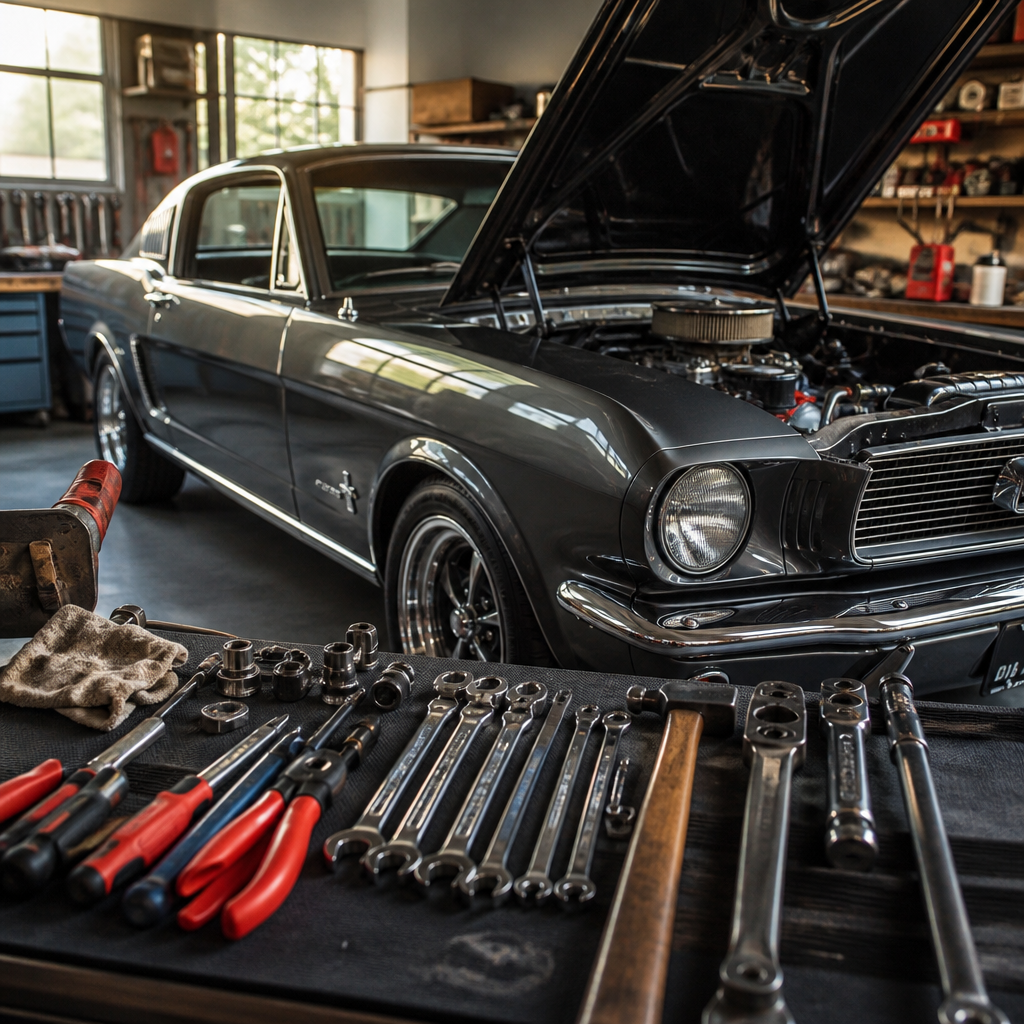
The first must-have tools for classic car restoration are not glamorous, but they get used every day. Start with a complete socket and wrench set in both SAE and metric sizes, because many classic cars have mixed fasteners after decades of repairs. Six-point sockets are essential for rusty hardware because they grip flats better than twelve-point versions and reduce rounding. Add breaker bars, extensions, universal joints, line wrenches for brake and fuel fittings, screwdrivers in multiple lengths, locking pliers, snap-ring pliers, pry bars, hammers, punches, chisels, picks, and trim tools. I would also classify a quality bench vise as a core hand-tool station, because so many restoration tasks, from pressing U-joints to holding brackets for cleanup, happen there.
Torque control is equally important. A click-type torque wrench handles most chassis and engine fasteners, but beam or digital torque tools help verify lower settings with more confidence. Older service manuals specify torque values for main caps, cylinder heads, suspension bolts, and wheel bearings, and guessing here causes expensive failures. Thread repair gear belongs in the same category. A tap-and-die set, thread chasers, helicoil or thread insert kits, and good anti-seize compound solve countless problems on cars with worn castings and abused bolts. Consumables matter too: penetrating oil, assembly lube, gasket scrapers, razor blades, parts trays, zip bags, paint markers, and labeling tape make reassembly far easier than relying on memory.
Storage and organization are often overlooked, yet they directly affect restoration quality. A rolling tool chest, magnetic trays, hardware bins, and dedicated shelves for removed parts prevent loss and mixing. When I have seen restorations go sideways, it often starts with unlabeled fasteners and fragile trim piled into random boxes. Good organization saves original components that may be difficult or impossible to replace. For a hub-level understanding of tools and equipment, core hand tools remain the universal starting point because every specialized process depends on them.
Lifting, safety, and shop support equipment
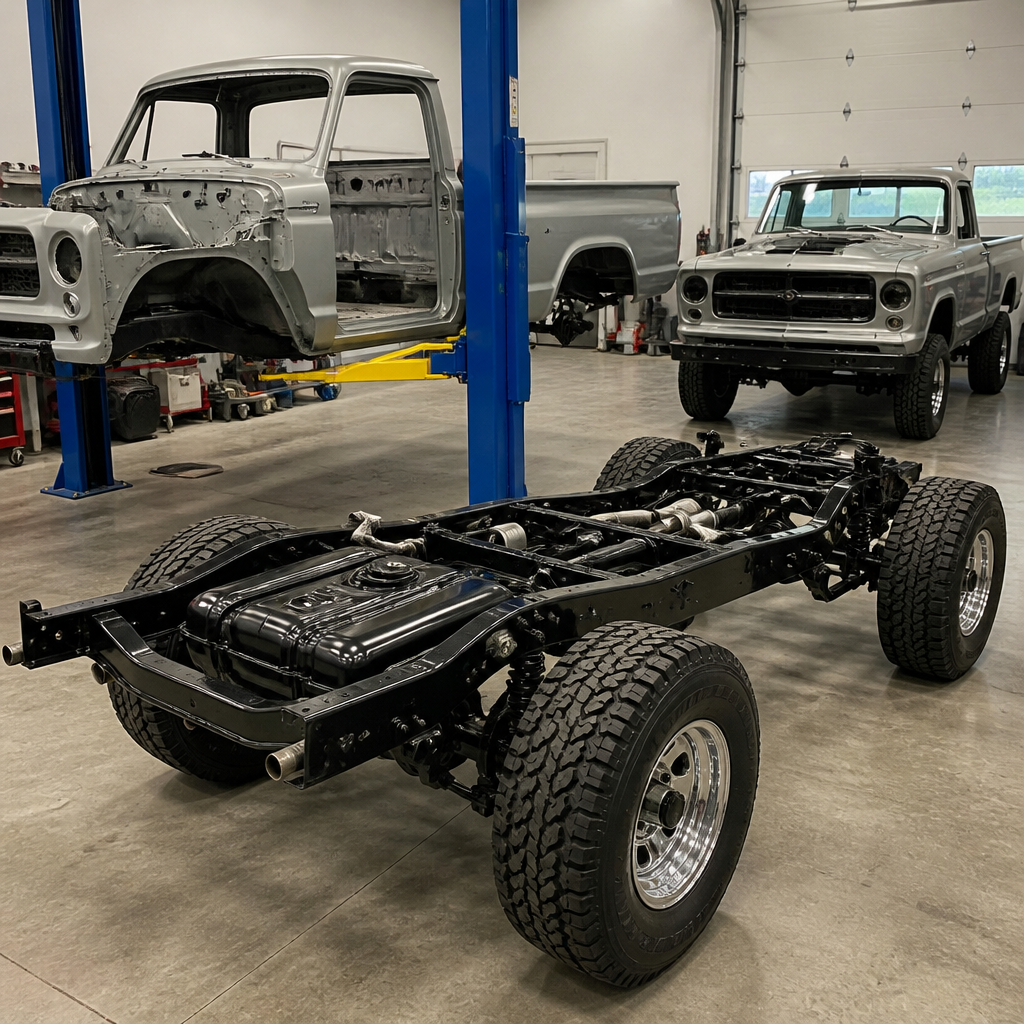
No restoration workspace is complete without safe lifting and support equipment. A hydraulic floor jack with adequate capacity, jack stands rated above vehicle weight, wheel chocks, and creepers are minimum requirements. For body-on-frame cars and full-size American classics, stability matters more than speed. Positioning the vehicle at correct lift points protects frame rails, rocker pinch welds, suspension pickup points, and underbody coatings. When a car will remain elevated for long periods, high-quality jack stands from established manufacturers are not optional. A two-post or four-post lift is ideal if space and budget allow, but many excellent restorations happen on stands when setup is methodical.
Safety equipment belongs in the same conversation because restoration combines chemicals, dust, sparks, heavy loads, and sharp metal. Use ANSI-rated eye protection, hearing protection, leather gloves for fabrication, nitrile gloves for solvents, welding helmets, respirators with appropriate cartridges, and fire extinguishers rated for shop use. An oil drain setup, absorbent pads, spill containment, and proper ventilation are basic risk controls. Dust extraction is especially important during sanding, undercoating removal, and rust cleanup, because old finishes may contain lead or other hazardous materials. Professional-grade work is not just about finish quality; it starts with preventing avoidable injuries and contamination.
Electrical support equipment also helps a dormant classic come back to life safely. Battery maintainers, booster packs, heavy-gauge jumper cables, extension cord reels, work lights, and portable LED inspection lamps improve diagnosis and reduce mistakes. Many classic cars arrive with brittle wiring, weak grounds, or unknown battery condition. Good lighting and steady power reveal leaks, casting numbers, wire colors, and fastener damage that poor shop conditions hide.
Measuring and diagnostic tools for accurate restoration
Precision separates cosmetic refurbishment from true restoration. Measuring and diagnostic tools answer basic questions before parts get replaced or machined. A quality digital multimeter is indispensable for tracing charging faults, continuity issues, poor grounds, starter draw problems, and accessory failures. Add a test light, battery load tester, timing light, dwell meter for points ignition systems, vacuum gauge, compression tester, leak-down tester, and fuel pressure gauge. On carbureted classics, a vacuum gauge remains one of the fastest ways to spot ignition issues, intake leaks, and valve train problems. On older V8s, compression and leak-down readings give far better guidance than assumptions based on how the engine sounds.
Mechanical measurement tools are just as important. Vernier or digital calipers, micrometers, feeler gauges, straightedges, dial indicators, bore gauges, and plastigage support engine and chassis work where tolerances matter. During one engine refresh, I found that a crankshaft journal that looked acceptable was out of specification once measured properly; catching that before assembly prevented low oil pressure and bearing failure. Brake drum gauges, rotor micrometers, and wheel alignment tools can also be valuable depending on the project. For body restoration, contour gauges, panel gap tools, and tram gauges help verify symmetry after metal repair or collision correction.
| Tool category | Main use in restoration | Best example tasks | Why it matters |
|---|---|---|---|
| Electrical diagnostics | Find faults in wiring and charging systems | Testing grounds, checking alternator output, tracing shorts | Prevents unnecessary parts replacement |
| Engine condition testing | Assess internal health before teardown | Compression and leak-down testing, vacuum analysis | Guides rebuild scope and budget |
| Dimensional measurement | Verify tolerances during machining and assembly | Measuring journals, bores, end play, clearances | Ensures reliability and service-manual compliance |
| Body and chassis measurement | Check fit, alignment, and structural accuracy | Panel gap checks, frame reference measurements | Improves fit and reduces rework |
Documentation tools belong here too. A notebook, camera, tablet, and access to factory service manuals, parts books, and wiring diagrams turn scattered observations into repeatable process. The best restorers measure first, record findings, and then decide whether to repair, replace, or machine. That discipline protects originality and keeps the project grounded in evidence.
Power tools, fabrication gear, and rust repair equipment
Rust repair and metal fabrication are central to classic car restoration, so power tools deserve careful prioritization. An air compressor anchors many traditional shops because it runs die grinders, impact guns, cutoff tools, paint guns, and blow guns. If compressor capacity is limited, choose CFM output based on the most demanding tool, not the cheapest unit available. Electric tools have improved dramatically, and many restorers now rely on cordless impact wrenches, ratchets, drills, and angle grinders for flexibility. Core metalworking tools include a drill press, angle grinder, cutoff wheels, flap discs, wire wheels, dual-action sander, reciprocating saw, body saw, and sheet metal shears.
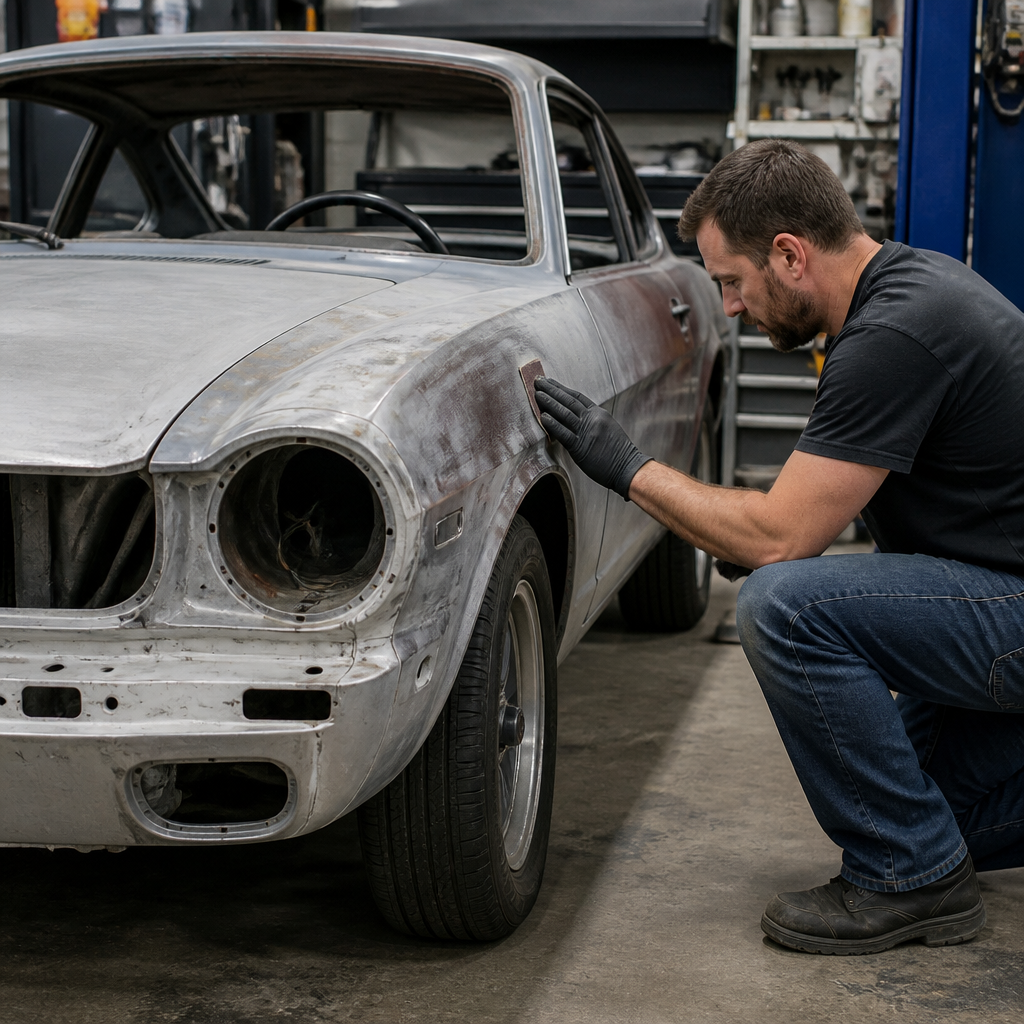
For panel replacement and patch fabrication, welding equipment is essential. A MIG welder with shielding gas is the practical standard for floor pans, patch panels, brackets, and many structural repairs. TIG welding offers cleaner control for thin metal, stainless work, and higher-end fabrication, but it demands more skill and setup time. Spot weld cutters, weld-through primer, panel clamps, shrinker-stretcher tools, hammers and dollies, body files, and metal brake equipment become increasingly important as repair quality rises. Rust removal may also require media blasting equipment, needle scalers, phosphoric-acid treatments, and cavity wax applicators.
These tools matter because corrosion rarely stops at visible paint bubbles. Under sound deadener, behind wheel arches, inside rockers, and around windshield channels, hidden rust often dictates the real scope of a project. Shops that rely only on filler and sanding tools can make a car look good briefly, but structural rust returns. Proper cutting, fitting, welding, and sealing equipment allows permanent repairs. If this hub supports related articles, fabrication and rust repair tools are where subtopics like welding methods, rust prevention, and panel alignment naturally branch out.
Paint, finishing, and detailing equipment
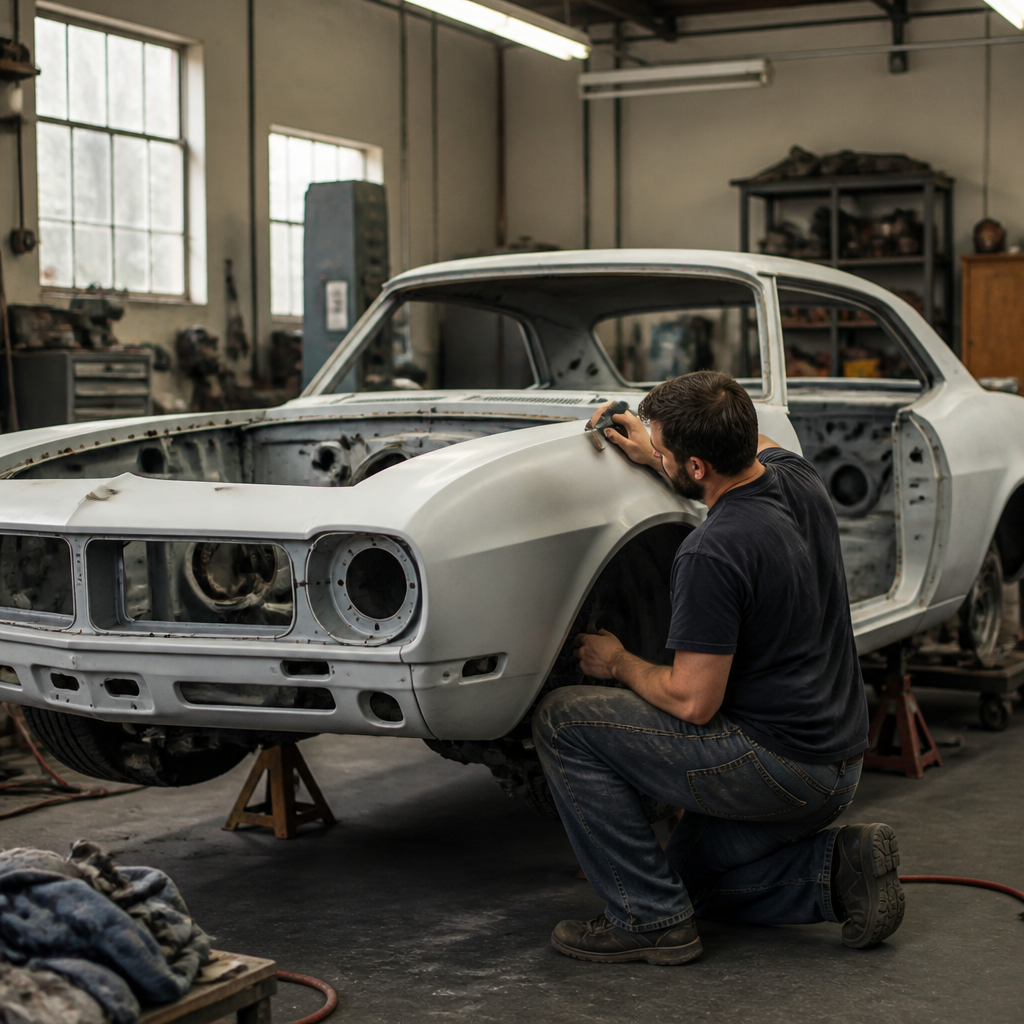
Paint and finishing tools determine how the restored car is perceived, even though finish quality starts long before color goes on. Essential prep equipment includes sanding blocks, long boards, DA sanders, mixing cups, strainers, masking paper, fine-line tape, guide coat, spray-out cards, and paint stands. For spraying, most restorers use HVLP spray guns for primer, sealer, basecoat, and clearcoat, often with dedicated gun sizes for different materials. Moisture control is critical, so the compressed-air system should include filters, regulators, and dryers. Contaminated air causes fisheyes, adhesion problems, and inconsistent texture.
Finishing after paint requires polishers, backing plates, microfiber towels, compounds, finishing polishes, paint depth gauges where appropriate, and strong color-corrected lighting. The same care applies to trim and interior restoration. Steamers, upholstery tools, adhesive spreaders, hog ring pliers, and plastic-safe cleaners help preserve original materials when replacement parts are inferior or unavailable. Glass installation tools, weatherstrip adhesive tools, and clip assortments also save frustration during final assembly. In practice, many restorers outsource final paint to dedicated booths, but even then, strong prep and finishing tools inside the home shop improve results and reduce labor costs.
Specialty tools worth buying, borrowing, or outsourcing
Some must-have tools for classic car restoration are project-specific enough that ownership depends on frequency of use. Engine hoists, load levelers, engine stands, transmission jacks, spring compressors, bearing pullers, hydraulic presses, brake flaring tools, tubing benders, ball-joint presses, and bushing drivers all become essential at the right stage. For driveline and axle work, dial torque wrenches, pinion depth tools, and setup bearings may justify outsourcing unless you rebuild differentials regularly. The same logic applies to machine shop tools such as valve seat cutters, surfacing equipment, and cylinder hones sized for specific bores.
The best buying rule is simple: own the tools used repeatedly, rent the tools needed briefly, and outsource processes where equipment cost, safety risk, or skill requirements are disproportionate. A hydraulic press, for example, earns its keep quickly in suspension and bearing work. A rotisserie can transform access during a full shell restoration, but on a single modest project, renting or borrowing may be smarter. Good restoration management is not about owning every tool. It is about matching equipment investment to project volume, complexity, and storage capacity.
Building a capable classic car restoration shop starts with fundamentals and expands with the work. Core hand tools, safe lifting equipment, precise measuring devices, diagnostic gear, fabrication tools, paint prep systems, and carefully chosen specialty equipment all serve one purpose: helping you restore a vehicle accurately, safely, and efficiently. The right tools prevent broken parts, reveal hidden problems, improve fit and finish, and make every related task in restoration and maintenance more manageable. If you are creating or upgrading your workspace, begin with the essentials, buy quality where failure would be costly, and add specialized equipment only when the project justifies it. Then use this hub as your roadmap for deeper tools and equipment decisions across every stage of restoration.
Frequently Asked Questions
What are the most essential tools to buy first for a classic car restoration project?
If you are building a restoration toolkit from scratch, start with the tools that support safe disassembly, accurate inspection, and clean reassembly. A high-quality socket and wrench set, screwdrivers, pliers, locking pliers, hammers, pry tools, and a dependable torque wrench should be at the top of the list. These are the tools you will reach for constantly whether you are removing trim, pulling an engine accessory, rebuilding suspension components, or reinstalling interior hardware. For classic cars especially, fit matters. Older fasteners are often softer, rusted, or odd-sized, so well-made hand tools that grip correctly can save original hardware and prevent unnecessary damage.
Next, invest in lifting and support equipment. A hydraulic floor jack, sturdy jack stands, wheel chocks, and good lighting are not glamorous purchases, but they are critical. Restoration work often involves long hours underneath the vehicle, and safe support is non-negotiable. Add a creeper, magnetic trays, and labeled storage bins to stay organized during teardown. The ability to keep bolts, clips, and brackets sorted by assembly can dramatically reduce frustration months later when reassembly begins.
Beyond the basics, measuring and diagnostic tools should come early. A digital multimeter, compression tester, timing light, feeler gauges, calipers, and a straightedge help you evaluate what can be reused, what needs repair, and what must be replaced. These tools prevent guesswork, which is one of the biggest budget-killers in restoration. If you can only buy a few things at first, prioritize tools that improve accuracy and protect original parts. Specialty tools can come later, but a solid foundation of hand, lifting, and measuring equipment will keep the project moving forward.
Which specialty tools are truly worth owning for classic car restoration?
Specialty tools earn their place when they save rare parts, improve precision, or turn a difficult job into a repeatable one. For classic car restoration, a quality puller set, ball joint separator, brake line flaring tool, bearing driver set, tap-and-die set, and rivet nut tool are all highly useful. These are the kinds of tools that help you disassemble components without bending, cracking, or gouging parts that may be expensive or impossible to replace. A steering wheel puller, harmonic balancer puller, and seal installer set are also commonly worth owning if you plan to do your own driveline or engine work.
If you are restoring body and trim, specialty sheet metal and alignment tools become extremely valuable. Body hammers and dollies, panel clamps, hole punches, a shrinking disc, contour gauges, and trim removal tools can make the difference between a repair that looks handmade and one that looks factory-correct. Likewise, a spot weld cutter is one of those tools that often pays for itself on the first major rust repair. It lets you separate panels more cleanly and preserve surrounding metal, which matters when trying to maintain original structure and fit.
For assembly and final detailing, specialty tools continue to matter. A torque angle gauge, thread chasers, clip installation tools, and small upholstery tools can improve fit, finish, and reliability. That said, the best rule is to buy specialty tools when they support the type of restoration work you actually plan to do repeatedly. If you are rebuilding engines and suspensions regularly, mechanical specialty tools are a smart investment. If your project is heavy on rust repair and body alignment, fabrication and panel tools will deliver more value. The right specialty tools are not just conveniences; they protect parts, save time, and raise the quality of the finished restoration.
How important are diagnostic and measuring tools in a classic car restoration?
They are absolutely essential, and they are often underestimated by first-time restorers. A restoration project is not just about taking parts off and putting parts back on. It is about understanding condition, tolerances, wear patterns, electrical behavior, and alignment before money and labor are committed. Diagnostic and measuring tools give you objective information, which is what separates methodical restoration from expensive trial and error. A compression tester, leak-down tester, vacuum gauge, fuel pressure gauge, and digital multimeter can quickly tell you whether a component needs rebuilding, adjustment, or simple maintenance.
On the measurement side, calipers, micrometers, dial indicators, straightedges, feeler gauges, and torque wrenches are fundamental. These tools help you confirm dimensions, endplay, runout, clearances, and fastener load. In engine and drivetrain work, those numbers matter tremendously. In body restoration, measurement tools are just as important for panel gaps, symmetry, ride height, and chassis reference points. You cannot restore a car to a high standard by eye alone, especially if your goal is reliability and factory-correct fit.
There is also a hidden benefit to good measuring tools: they improve decision-making. Instead of replacing parts based on assumptions, you can compare actual wear against service specifications. Instead of wondering why a charging system is weak or why a car idles poorly, you can test and isolate the cause. This saves money, reduces rework, and builds confidence. In many restoration shops, the projects that progress steadily are not necessarily the ones with the biggest budget. They are the ones where problems are diagnosed correctly before the wrenching begins.
Should I choose power tools, air tools, or hand tools for restoration work?
The honest answer is that a good restoration setup uses all three, but each category has a different role. Hand tools are the foundation because they offer control, feel, and precision. On old vehicles, that matters a great deal. Rusted fasteners, brittle trim, aging castings, and delicate interior pieces often respond better to a careful hand than to raw speed. Hand tools also help you sense resistance, thread engagement, and the point where a part is about to bind or break. For disassembly and reassembly, especially on valuable or original components, that tactile feedback is extremely important.
Power tools are ideal where efficiency matters. An electric impact gun, drill, angle grinder, cutoff tool, polisher, and dual-action sander can dramatically speed up repetitive work. They are especially useful in body preparation, bracket cleanup, panel finishing, and general shop productivity. Modern cordless tools have become strong enough for much of this work, and they offer excellent portability. For many home restorers, a well-chosen cordless system covers a large percentage of common needs without requiring a full air setup.
Air tools still shine in professional or heavy-use environments. Die grinders, air hammers, paint spray equipment, and certain sanders often perform exceptionally well when backed by the right compressor. If you do extensive metal fabrication, painting, or repeated high-demand tasks, pneumatic tools can be a smart long-term investment. The real decision comes down to project scope, budget, and workspace. For most restorers, the best strategy is to build around strong hand tools first, add cordless power tools for speed and versatility, and then add air tools where they provide a clear advantage. Restoration is not about owning every tool on the market; it is about choosing the tool type that gives you the best balance of control, efficiency, and finish quality.
How do I know whether to buy premium tools or budget tools for a classic car restoration?
Think in terms of risk, frequency of use, and the cost of failure. Premium tools make the most sense where precision, durability, and fit directly affect the work. Torque wrenches, measuring instruments, jack stands, pullers, electrical test equipment, and the hand tools you use constantly are all worth buying at a higher quality level. In classic car restoration, a poor-fitting wrench can round off an original fastener, an inaccurate torque wrench can ruin an engine build, and a low-quality measuring tool can send you in the wrong direction entirely. In those cases, the “cheaper” tool often ends up being the expensive choice.
Budget tools can still have a place, especially for one-time jobs, light-duty work, or tools you may modify for a specific purpose. Some restorers keep low-cost pry bars, picks, or duplicate wrenches specifically so they can grind, bend, or reshape them to access unusual fasteners or confined spaces. That is a practical and common shop strategy. The key is being selective. Save money where tool precision and safety are not heavily compromised, but do not cut corners on anything that supports lifting, torque, measurement, cutting, or component protection.
It is also smart to think long-term. A restoration project often expands. What starts as a brake refresh turns into suspension work, then wiring repair, then engine resealing, then body correction. Tools that seemed expensive at first can become cost-effective when used across multiple systems or multiple cars. Premium tools generally last longer, feel better in use, and reduce frustration, especially during difficult work. If your budget is tight, buy fewer tools but buy better in the categories that matter most. That approach usually produces better results than filling the shop with inexpensive tools that wear out, fit poorly, or create problems on irreplaceable classic parts.