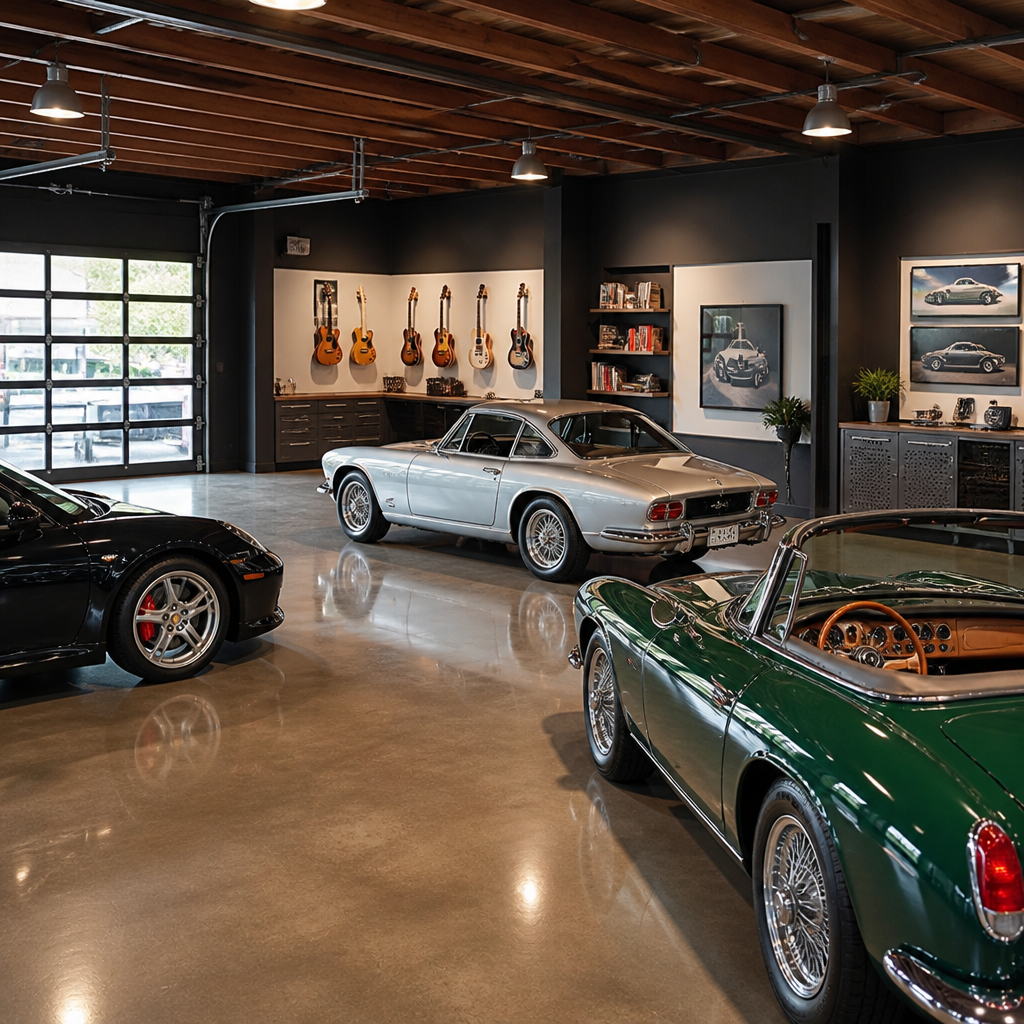
Your garage can become a showroom when you treat it as a curated environment instead of a storage overflow zone. In classic car culture, a showroom garage is more than a place to park. It is a controlled, clean, well-lit space that protects valuable vehicles, elevates how they look, and creates a setting where friends, buyers, or club members immediately understand your standards. When I help enthusiasts plan these spaces, the first lesson is always the same: a showroom garage is built around presentation, preservation, and usability at the same time.
For classic car owners, garage and man cave ideas often start with décor, but the smartest transformations begin with infrastructure. Flooring, lighting, wall systems, climate control, electrical capacity, and layout determine whether the room feels like a premium display area or just a tidier workshop. That distinction matters because classic cars react to moisture, dust, UV exposure, and temperature swings. The environment around the vehicle directly affects paint, chrome, upholstery, rubber seals, batteries, and even fuel stability. A garage showroom also increases enjoyment. You are more likely to clean, inspect, maintain, photograph, and share a car when the space around it supports the hobby.
This hub article explains how to turn your garage into a showroom with practical guidance that works for single-car spaces, detached buildings, and larger collector garages. It covers planning, finishes, lighting, storage, lounge design, security, and budget choices in plain terms. If you are building a classic car garage, upgrading a man cave garage, or creating a display space that can host gatherings, this guide gives you the framework. Think of it as the central roadmap for every garage and man cave project that supports classic car culture and lifestyle.
Start with a showroom plan, not shopping
The biggest mistake I see is buying cabinets, signs, stools, and neon before the owner has measured the room and defined how it will actually function. A showroom garage needs zones. At minimum, create a vehicle display zone, a walking zone, a storage zone, and a seating or social zone. If you perform detailing or light maintenance, add a work zone with task lighting and dedicated outlets. Mapping those zones first prevents clutter and protects sight lines around the car. In a one-car garage, even 30 inches of clear perimeter walkway can transform how spacious the room feels.
Measure wall length, ceiling height, door swing, opener clearance, and the footprint of the car with doors open. Then decide the primary goal. Is this a photo-ready display garage, a hybrid workshop, a social man cave, or a secure storage bay for a rare classic? The answer controls nearly every material choice. For example, a pure display garage can use more open wall space and decorative finishes, while a working garage needs chemical-resistant surfaces, more utility storage, and brighter task lighting. This hub works best when you use it as a planning checklist before spending money.
Build the foundation with floors, walls, and ceilings
If you want a garage to feel like a showroom, start from the surfaces that occupy the most visual space. Floors matter first. Bare concrete sheds dust, stains easily, and reflects little light. The two most common upgrades are epoxy systems and polyaspartic or polyurea coatings. In my experience, hot-tire resistance, proper concrete prep, and UV stability matter more than brand marketing. A professionally prepared floor with crack repair, grinding, and moisture testing consistently outperforms quick weekend kits. Interlocking floor tiles are another option, especially for collectors who want reversible installation or a motorsport look, but they can trap debris underneath if not maintained.
Walls should be bright, durable, and easy to clean. Semi-gloss or satin finishes in white, soft gray, or warm neutral tones increase reflected light and make paintwork pop in photos. Slatwall, metal panel systems, or modular rail systems help hide clutter while displaying tools or memorabilia neatly. Ceilings are often ignored, yet painting them a clean reflective color and replacing exposed, dingy fixtures instantly makes the room feel taller and more finished. If the garage door interior is battered, a new insulated door or a clean panel liner can improve both appearance and temperature control.
Use lighting to make the car look expensive
Lighting is the difference between a garage that looks premium and one that merely looks organized. Good showroom lighting layers ambient, accent, and task illumination. For ambient light, high-output LED fixtures in the 4000K to 5000K range reveal true paint color and reduce the yellow cast common in older bulbs. Color rendering matters too. Choose fixtures with a CRI of 90 or higher so reds, blacks, chrome, and interior materials read accurately. Hex lighting became popular on social media, but evenly spaced linear fixtures often do a better job exposing body lines without creating distracting reflections.
Place lights to reduce shadows on the sides of the car, not just overhead. Vertical wall-mounted light bars or side-mounted strips help during detailing and also create that crisp dealership-style reveal. Accent lighting belongs under cabinets, inside display cases, or behind signs rather than blasting directly into the room. Dimmers are useful if the space doubles as a lounge during events. If you photograph your car often, test lighting angles with your actual vehicle before final installation. Black paint, bright chrome, and curved fenders all react differently to glare.
| Upgrade Area | Best Choice for Showroom Effect | Why It Works |
|---|---|---|
| Flooring | Professionally prepped polyaspartic or epoxy system | Creates a glossy, durable, dust-reducing base that reflects light |
| Walls | Light neutral paint with slatwall sections | Brightens the room and keeps accessories organized |
| Ambient Lighting | LED linear fixtures, 4000K–5000K, CRI 90+ | Shows true paint color and highlights body lines clearly |
| Climate Control | Mini-split plus insulation and dehumidification | Protects cars, improves comfort, and stabilizes the environment |
| Storage | Closed cabinets with labeled zones | Preserves the clean visual effect and reduces visible clutter |
Control climate, air quality, and noise
A true showroom garage protects the car, not just displays it. Moisture is one of the biggest threats to classic vehicles because it promotes corrosion, mildew, and musty interiors. If your region has humid summers or damp winters, add a dehumidifier or integrate humidity control into the HVAC plan. Many collectors aim to keep relative humidity near 45 to 55 percent because it balances comfort and corrosion prevention without overdrying leather or wood trim. Insulation in exterior walls, ceilings, and doors reduces condensation risk and makes heating and cooling far more efficient.
For conditioned spaces, a ductless mini-split is often the most practical option. It is quiet, efficient, and avoids the dust issues associated with some older forced-air systems. Air sealing around service doors, windows, sill plates, and garage door edges matters just as much as equipment size. If the garage is attached to the house, acoustic insulation and upgraded door seals can also cut noise from compressors, stereos, and late-night arrivals. Good air quality matters if you run engines indoors briefly, detail with chemicals, or host people in the space. Use dedicated exhaust where appropriate and store flammables in code-compliant cabinets.
Choose storage that disappears into the design
The best garage storage does not look like storage at first glance. A showroom feel comes from visual discipline. That means fewer exposed bins, fewer random hooks, and a clear rule for what stays in the room. Closed cabinetry gives the cleanest result, especially in matte black, graphite, silver, or painted finishes that coordinate with the vehicle. Tall cabinets are useful for detailing supplies, jacks, chargers, and seasonal accessories, while base cabinets create a clean counter for tools, trophies, framed photos, or a coffee setup. If you use open shelving, treat it like retail merchandising and avoid overfilling it.
Ceiling racks can help in family garages, but use them carefully. Overhead storage above a collector car can create dust and visual heaviness. Better options include side-wall tire racks, hidden compressor closets, and dedicated zones for battery maintainers, extension cords, and cleaning chemicals. Labeling is underrated. Once every item has a designated place, the showroom standard becomes easier to maintain. This hub connects naturally with related topics such as garage storage systems, detailing station design, and wall organization because those details determine whether the final space stays as polished as it looks on day one.
Create a man cave without competing with the car
A garage man cave should support the vehicle as the focal point, not overwhelm it. The strongest designs borrow cues from private clubs, vintage dealerships, race paddocks, and automotive museums. Seating should be low-profile and durable: leather club chairs, metal-frame bar stools, café tables, or a compact sofa placed outside door swing zones. Refrigerators, coffee bars, and media screens work well when built into cabinet runs rather than scattered around the room. If you add a television, position it so reflections do not wash out the screen and the screen does not dominate the vehicle sightline.
Memorabilia deserves editing. A few enamel signs, framed racing posters, period photos, dealership items, or marque-specific displays usually look better than covering every wall. Use collections to tell a story about the car in the room. A 1967 Corvette showroom garage might feature NCRS judging documents, vintage fuel branding, and road-trip photography, while a British sports car space might lean on wood accents, framed rally maps, and subtle green tones. If you entertain often, add Bluetooth audio, a small sink, and easy-clean surfaces. The key is hospitality without clutter.
Protect the investment with security and maintenance-ready details
A showroom garage should feel relaxed, but it must be secure. Start with the basics: solid service doors, quality deadbolts, reinforced strike plates, garage door shielding, motion lighting, and monitored cameras covering entry points and the driveway. Smart openers with activity alerts add convenience, but they are not a substitute for physical hardening. If the collection is high value, talk with your insurer about appraisal records, photographic documentation, and any policy requirements for alarm monitoring or detached structures. Fire protection matters too. Use the correct extinguisher ratings, maintain clear access, and verify local code for electrical upgrades or fuel storage.
Maintenance-ready design keeps the showroom from becoming fragile. Include enough outlets for battery tenders, polishers, vacuums, and diagnostic tools. GFCI protection, dedicated circuits for compressors or lifts, and bright task lighting over a workbench make routine care easier and safer. If you wash indoors, slope and drainage must be addressed properly. Even simple additions such as a wall-mounted hose reel, microfiber storage, and a fold-down step stool reduce friction. The easier the room is to clean and maintain, the more often it will actually look like a showroom instead of a room that was once staged for photos.
Budget wisely and phase the transformation
You do not need a six-figure build to create a convincing showroom garage, but you do need priorities. The highest visual return usually comes from decluttering, wall repair, paint, lighting, floor coating, and coordinated storage. Climate control and insulation deliver major long-term value for collectors because they protect the car and make the space usable year-round. Decorative extras come later. I usually suggest building in phases: first structure and electrical, then surfaces and lighting, then storage, then lounge features, then specialty upgrades such as lifts, display cases, or branded design elements.
Costs vary by region, but a modest one-car transformation can range from a few thousand dollars for paint, lights, and organization to much more for coatings, cabinetry, HVAC, and premium doors. A larger detached garage can escalate quickly once insulation, subpanels, plumbing, or structural repairs are involved. Spend where failure would be expensive: moisture control, electrical work, concrete prep, and secure doors. Save on replaceable décor. The goal is a garage that presents your car beautifully every day, not just during reveal week.
Turning your garage into a showroom is really about aligning the room with the value of the vehicle inside it. When you combine smart planning, durable finishes, balanced lighting, climate control, hidden storage, and selective lounge features, the result feels intentional and effortless. More importantly, it protects the car while making ownership more satisfying. You enjoy the vehicle more because access is easier, maintenance is cleaner, and the setting finally matches the pride you take in the machine.
As the hub for garage and man cave ideas within classic car culture and lifestyle, this guide gives you the big-picture structure behind every successful project. Start with measurement and purpose, then improve surfaces, lighting, storage, and environmental control before adding decorative personality. That sequence prevents wasted spending and produces a space that still works after the novelty fades. If you want your classic car garage to look sharper, function better, and support gatherings, begin with one zone this month and build from there.
Frequently Asked Questions
1. What is the first step in turning a garage into a showroom?
The first step is to stop thinking of the garage as overflow storage and start treating it like a curated environment. That shift in mindset changes every decision that follows. Before you buy cabinets, lighting, flooring, or display pieces, clear the space completely and evaluate how it will function. A showroom garage should be built around presentation, protection, and flow. That means deciding what the room is really for: displaying a classic car, storing a collector vehicle in ideal conditions, hosting friends, or creating a polished space that reflects your standards as an enthusiast.
Once the garage is empty, assess the basics. Look at wall condition, ceiling height, lighting quality, electrical capacity, moisture issues, and how much room you need around the vehicle for walking, viewing, and maintenance. One of the most common mistakes is designing around storage first and the car second. In a true showroom layout, the vehicle is the focal point. Everything else should support it rather than compete with it. That includes where cabinets go, where wall décor is placed, and how people naturally move through the room.
It also helps to create zones. For example, you may want one clean display zone for the vehicle, one concealed storage zone for tools and supplies, and one small social area with stools, signage, or memorabilia. Planning these zones early prevents clutter from creeping back in. If you begin with a clear purpose and a disciplined layout, the rest of the transformation becomes much easier and far more successful.
2. How do I make my garage look clean, polished, and worthy of a classic or collector car?
A showroom look comes from control, consistency, and restraint. The goal is not simply to make the garage look expensive. The goal is to make it look intentional. Start with the surfaces people notice immediately: the floor, walls, ceiling, and doors. A stained, cracked concrete floor can undermine the entire effect, which is why many owners choose an epoxy or polyaspartic coating. These finishes create a cleaner visual foundation, reflect light well, and make the space easier to maintain. They also communicate that the garage is a protected environment, not a rough utility area.
Walls should be bright, smooth, and uncluttered. Light neutral tones often work best because they reflect illumination and help the car stand out. Slatwall systems, finished drywall, and clean trim details can all elevate the look. If you use wall storage, make sure it feels integrated rather than improvised. Open shelves full of random bottles, cords, and boxes instantly break the showroom effect. Closed cabinetry is usually the better choice because it hides necessities while preserving a clean visual line.
Another major factor is visual discipline. Limit what stays in view to items that support the theme of the space. That might include framed automotive art, a few carefully selected signs, branded storage, or detailing equipment arranged neatly. Avoid filling every wall just because you have room. In a good showroom garage, empty space is not wasted space. It gives the car presence. Finally, commit to ongoing maintenance. Even a beautifully designed garage loses its impact if dust builds up, tools are left out, or storage creeps back into display areas. Cleanliness is not just part of the look; it is part of the identity of the room.
3. What kind of lighting works best in a showroom garage?
Lighting is one of the most important elements in a showroom garage because it affects both appearance and function. A valuable vehicle can look flat, dull, or even neglected under poor lighting, while the right lighting setup can highlight body lines, paint depth, chrome, wheels, and interior details. The best approach is layered lighting. Instead of relying on a single overhead fixture, combine ambient lighting, task lighting, and accent lighting to create a balanced, professional effect.
Ambient lighting provides overall brightness and should be uniform enough to eliminate dark corners. High-quality LED fixtures are usually the best choice because they are efficient, bright, long-lasting, and available in color temperatures that make vehicles look crisp and true. Many enthusiasts prefer a daylight-style color temperature because it reveals paint condition well and gives the space a clean, premium feel. Task lighting is useful near workbenches, storage areas, or detailing stations where you need more focused visibility. Accent lighting can then be used to create drama, such as highlighting a wall display, illuminating signage, or giving the vehicle a subtle featured look.
Placement matters just as much as fixture quality. Light should fall evenly across the vehicle from multiple angles to reduce harsh shadows. Side lighting can be especially useful if you want to show paint reflections and body contours. If your garage includes windows, think about how natural light changes during the day and whether UV exposure could affect interiors or finishes. In many cases, controlled artificial lighting offers the most consistent result. A well-lit showroom garage should feel bright, refined, and photographic at almost any hour. When lighting is planned properly, the entire space feels more finished and the vehicle immediately becomes the star.
4. How can I keep a showroom garage organized without losing practical storage?
The key is to separate storage from display rather than letting storage define the room. A showroom garage still needs to function, especially if you keep tools, cleaning products, spare parts, seasonal items, or club materials on site. The difference is that those items should be stored with intention. In a well-designed showroom, practical storage is present but visually quiet. That usually means using cabinets, overhead systems, dedicated drawers, and wall-mounted solutions that keep the floor open and the sight lines clean.
Closed cabinetry is often the foundation of this approach. It allows you to store all the necessities without exposing visual clutter. Tall cabinets can hold larger items, while drawer systems work well for tools, detailing products, and smaller accessories. Labeling the contents and assigning every item a permanent place makes the system sustainable. If items do not have a defined home, they will eventually migrate back into the open and compromise the look of the space.
It is also smart to audit what really belongs in the garage. A showroom garage should not be the default home for old paint cans, holiday decorations, unused sports equipment, or household overflow. Those items may need to be relocated to a shed, attic, basement, or off-site storage if you want the garage to maintain a high-end presentation. For enthusiasts with memorabilia, display only the best pieces and rotate them periodically rather than crowding the room. Good organization is not about hiding everything. It is about making sure every visible element contributes to the story you want the space to tell.
5. Do I need climate control or special protection features for a true showroom garage?
If you are serious about protecting a classic, collector, or specialty vehicle, climate control and environmental protection are extremely valuable. A showroom garage is not just about appearance. It is also about preserving the condition of what is inside it. Temperature swings, excessive humidity, poor ventilation, dust, and direct sunlight can all affect paint, chrome, leather, rubber, electronics, and mechanical systems over time. The more valuable or sensitive the vehicle, the more important it becomes to manage the environment intentionally.
At a minimum, pay attention to insulation, air sealing, and moisture control. A garage that is too damp can encourage rust, mildew, and musty odors, while one that gets excessively hot or cold can stress materials and make the space less comfortable to use. Depending on your climate, adding a mini-split HVAC system, dehumidifier, upgraded insulation, or improved weather sealing around the garage door can make a major difference. Ventilation is also important, especially if the vehicle is started indoors or if you do any detailing or light mechanical work in the space.
Other protection features can elevate the garage even further. Quality door seals help keep out dust and pests. UV-filtering window treatments can protect interiors and finishes. Security upgrades such as cameras, smart locks, and monitored alarms are worth considering if the vehicle has significant value. Fire safety matters too, particularly if you store fuels, battery chargers, or electrical equipment in the space. In the end, a true showroom garage balances beauty with preservation. It should impress visitors the moment the door opens, but it should also quietly protect the vehicle day after day, season after season.