A great car-themed man cave starts with furniture that does more than fill space; it should support the way enthusiasts watch races, talk shop, display memorabilia, and enjoy the atmosphere of automotive culture. In this context, the best furniture for a car-themed man cave balances comfort, durability, storage, and visual cues drawn from garages, showrooms, workshops, and iconic vehicles. A man cave is simply a dedicated personal room for hobbies and relaxation, but when the theme is classic car culture, every furnishing choice becomes part of the story. Seating can echo bucket seats, tables can reference shop equipment, and cabinets can protect collectibles while reinforcing a motorsport aesthetic. This matters because the room is not just decorative. It needs to function as a viewing lounge, a conversation area, a display space, and often a small workshop-adjacent retreat. After designing enthusiast spaces for collectors and restorers, I have found that the strongest rooms feel intentional from the floor plan outward. The furniture creates that structure, determines traffic flow, and influences whether the room feels like a cluttered garage corner or a polished automotive sanctuary.
Choosing the right pieces also helps this hub page connect the wider world of garage and man cave ideas. Furniture sits at the center of decisions about lighting, wall art, storage systems, bar setups, flooring, and memorabilia displays. If you start with the wrong sofa, oversized bar, or fragile tabletop, every later choice becomes harder. If you start with the right foundation, the rest of the room falls into place. The goal is not to turn the space into a theme park version of a garage. The goal is to create a room that respects classic car culture while still being comfortable enough for everyday use. That means understanding materials like powder-coated steel, top-grain leather, engineered wood, tempered glass, and commercial-grade vinyl. It means knowing where novelty works and where it quickly becomes impractical. It also means planning for maintenance, especially in spaces attached to active garages where dust, humidity, tire residue, and temperature swings can affect furnishings. The sections below break down the best furniture categories, what to buy, what to avoid, and how to build a cohesive automotive room that looks sharp for years.
Start with a layout that supports how the room will actually be used
The best furniture plan begins with a realistic use case, not a shopping list. Ask whether the room is primarily for watching races, hosting friends, gaming, displaying collectibles, or relaxing after time in the garage. In most car-themed man caves, there are usually four zones: lounge seating, display storage, a tabletop surface, and at least one statement piece. I recommend mapping these zones before choosing finishes. For example, in a 12-by-18-foot room, a three-seat sofa and two club chairs usually work better than a large sectional because they preserve circulation and leave wall space for cabinets or framed signs. If the room opens directly into a garage, leave a clear path of at least 36 inches so people can move comfortably without brushing against displays.
Scale matters more than novelty. I have seen beautiful rooms ruined by a massive hood-shaped bar that dominated the floor and left nowhere to sit comfortably. Conversely, a compact seating group, low media console, and two upright display cabinets can make even a narrow converted garage bay feel refined. Think like an interior planner and a shop owner at the same time. Every piece should earn its footprint. Practical man cave furniture supports power access for chargers, hidden storage for remotes and manuals, and surfaces strong enough for drinks, parts catalogs, and model cars. A room based on classic car culture should feel curated, not crowded. That principle should guide every category below.
Best seating: sofas, recliners, and chairs with automotive character
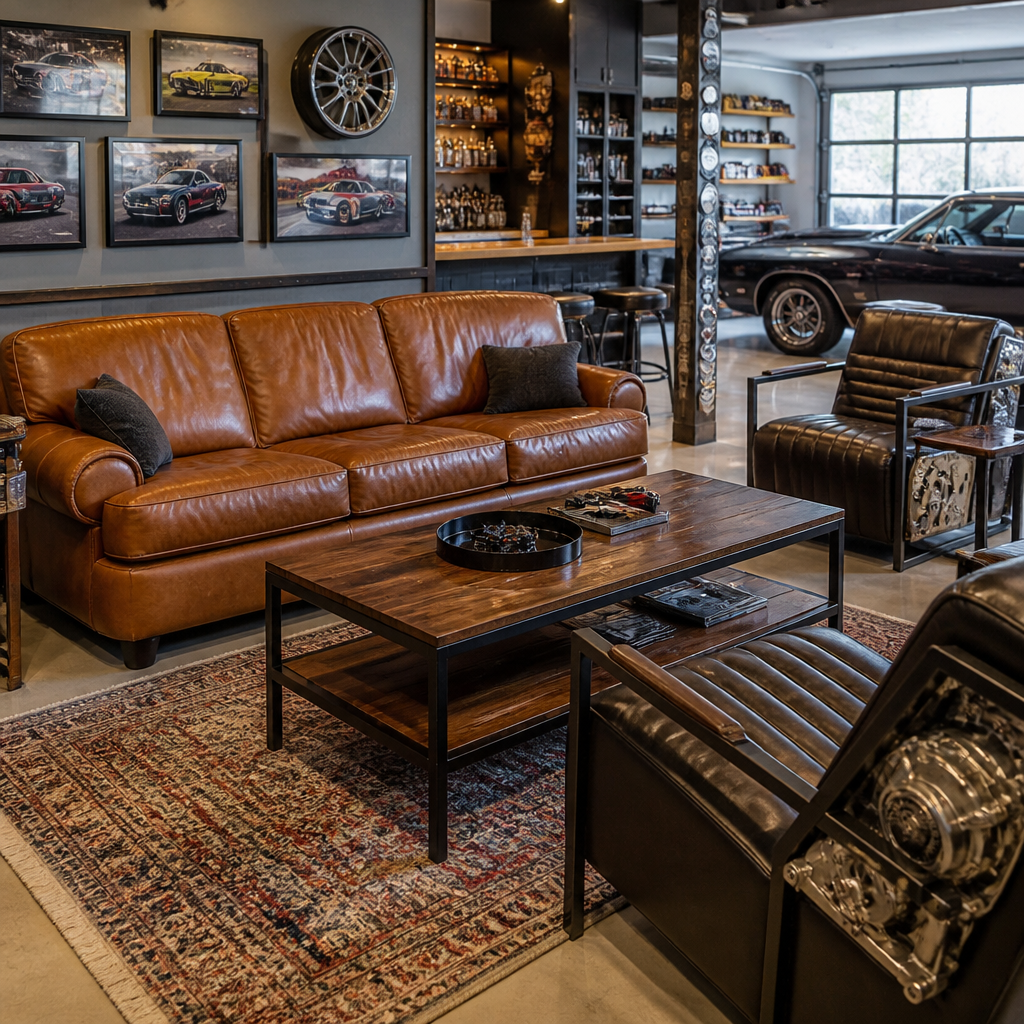
Seating is the most important investment because it determines whether the room is inviting or merely interesting to look at. The best sofas for a car-themed man cave are usually leather or high-performance faux leather in black, oxblood, saddle, charcoal, or cream. These colors reference vintage interiors without forcing the theme. Top-grain leather ages well and develops patina, which fits classic car culture especially well. Performance vinyl is often the smarter choice for attached garages because it tolerates temperature changes and is easier to wipe clean. Look for tufting, contrast stitching, channel backs, or metal legs that recall period automotive trim.
Recliners and club chairs can add stronger automotive cues. Bucket-seat-inspired chairs are popular, but quality varies dramatically. Many novelty racing chairs look good online and feel terrible after thirty minutes. Better options come from commercial lounge brands or theater seating manufacturers that use denser foam, reinforced frames, and stain-resistant upholstery. Swivel chairs in distressed leather can suggest a workshop-office crossover without looking gimmicky. Benches made from actual tailgates or repurposed truck beds can work as accent seating, but they should not be the primary place guests sit for a full evening. Comfort still wins. If you want one unmistakable automotive seating piece, use it as a focal accent and keep the main seating classic, durable, and proportionate.
Tables, bars, and surfaces that combine style with durability
Every car-themed man cave needs hard-working surfaces. A coffee table anchors the seating area, side tables support daily use, and a bar or pub table often becomes the social center. The best coffee tables usually mix steel frames with reclaimed wood, tempered glass, or polished metal. This industrial vocabulary echoes tool chests, shop benches, and vintage filling stations without becoming costume furniture. If you want overt automotive styling, choose subtle references such as wheel-inspired bases, riveted metal edging, or branded signage under glass rather than full novelty forms that sacrifice stability.
Bars deserve extra caution because they are often overbuilt visually and underbuilt structurally. A quality home bar for a garage or man cave should have protected shelving, foot rails, moisture-resistant surfaces, and stools with backs. Actual repurposed gas pumps, oil drums, and car front ends can make strong statement pieces, but they work best in larger rooms where they do not obstruct movement. For most spaces, a compact back bar cabinet with lockable storage for glassware and collectibles is more useful. Pub-height tables can be excellent near a simulator, dartboard, or memorabilia wall because they create standing-room flexibility. Materials matter here: powder-coated steel resists scuffs, hardwood tops can be refinished, and laminate can be acceptable if it is commercial grade and edge-banded properly.
| Furniture type | Best materials | Why it works in a car-themed man cave | Common mistake |
|---|---|---|---|
| Sofa | Top-grain leather, performance vinyl, kiln-dried hardwood frame | Comfort, easy cleaning, vintage interior look | Choosing flashy racing styling over support |
| Accent chair | Leather, steel base, dense foam cushioning | Adds automotive attitude without dominating the room | Buying low-quality novelty bucket seats |
| Coffee table | Powder-coated steel, tempered glass, reclaimed wood | Industrial character with practical durability | Picking unstable tire-stack designs |
| Bar stool | Metal frame, swivel base, wipeable upholstery | Supports entertaining and fits workshop-inspired décor | Using backless stools that become uncomfortable fast |
| Display cabinet | Tempered glass, metal frame, adjustable shelves | Protects die-cast cars, signs, and helmets from dust | Open shelving in a dusty garage-connected room |
Storage furniture for memorabilia, tools, and daily clutter
Storage is what separates a polished automotive lounge from a room that always feels halfway finished. The best storage furniture for this theme borrows from shop environments while staying refined enough for indoor living. Metal storage cabinets with clean lines, soft-close doors, and adjustable shelves are excellent for model cars, car-care products, magazines, and event programs. Tool-chest-style drawer units can work particularly well under televisions or along side walls. Brands like Husky, Gladiator, and NewAge Products have influenced many residential garage spaces because their powder-coated systems are durable and visually aligned with workshop culture. Inside a conditioned room, these pieces can look sophisticated when paired with warmer elements like leather and wood.
Closed storage should do most of the heavy lifting. Open shelving looks attractive in photos, but in real garage-adjacent spaces it gathers dust fast. Glass-front cabinets are the best compromise because they display trophies, helmets, die-cast collections, dealership brochures, and oil cans while offering protection. I also recommend at least one hidden storage ottoman or bench. It is a simple way to stash blankets, racing headsets, controllers, or cleaning cloths without breaking the room’s visual order. If the man cave doubles as a place to review parts orders or maintain records for a classic car collection, a credenza with file drawers is surprisingly useful. Good storage is not glamorous, but it protects the investment you make in every other furnishing.
Statement furniture that brings in automotive identity without looking kitschy
A car-themed man cave should include one or two unmistakable conversation pieces, but restraint is what makes them effective. The strongest statement furniture usually references automotive history rather than copying it literally. For example, a bench upholstered in quilted leather with polished aluminum arms can nod to grand touring interiors. A console made from reclaimed garage cabinetry can evoke restoration culture. A wall-mounted parts shelf built from vintage license plates can support the theme while staying functional. These details feel more authentic than mass-produced novelty pieces covered in logos.
There is a place for bold items, including front-end desks made from actual vehicles, tire-based ottomans, and fuel-drum cabinets. They work best when sourced from skilled fabricators who understand weight distribution, edge finishing, and safe wiring for integrated lighting. I have seen custom pieces built from Porsche, Mustang, and Chevrolet truck parts become incredible centerpieces because they were executed with craftsmanship, not just enthusiasm. The problem is that many low-cost versions are unstable, sharp-edged, or uncomfortable. If a piece comes from real automotive parts, inspect how it was cleaned, sealed, and mounted. Lead paint, rust transfer, and exposed metal burrs are real concerns. A statement item should enhance the room’s credibility, not create a safety issue or make everyday use awkward.
Materials, maintenance, and buying strategy for long-term value
Furniture in a car-themed man cave often lives in harsher conditions than furniture in a formal living room. Even a finished bonus room above a garage may experience wider temperature swings. A converted garage lounge may deal with humidity, dust, and occasional odors from fuel, rubber, or detailing products. That is why material selection is not cosmetic; it is operational. Leather, marine-grade vinyl, powder-coated steel, sealed hardwood, and tempered glass consistently perform well. MDF wrapped in thin veneer, low-density foam, and cheap chrome plating do not. They chip, sag, and corrode faster than most buyers expect.
Buying strategy matters too. Prioritize the pieces that receive daily contact: sofa, chairs, coffee table, and storage. Save custom automotive art furniture for later, after the room’s circulation and practical needs are solved. Measure doorways, turning radii, and stair access before ordering anything oversized, especially one-piece bars or custom benches. Check weight ratings on stools and shelving. If you are buying reclaimed or fabricated items from independent makers, ask what finish system was used and whether the surfaces are clear-coated against oil and moisture. A good room evolves over time. Start with durable core furniture, then layer in specialized pieces, memorabilia, and lighting as the space proves how it is actually used. That approach leads to better value and a room that stays useful, comfortable, and true to classic car culture.
The best furniture for a car-themed man cave is the furniture that makes the room livable first and memorable second. Begin with a clear plan for seating, traffic flow, and storage. Choose sofas and chairs that deliver real comfort, not just race-inspired styling. Use tables and bars that can handle everyday wear, and invest in cabinets that protect collectibles from dust and damage. Then add one or two statement pieces that express automotive passion with craftsmanship and restraint. When these layers work together, the space feels less like a decorated spare room and more like a genuine extension of the enthusiast lifestyle.
As the hub for garage and man cave ideas within classic car culture and lifestyle, this topic connects naturally to related decisions about flooring, lighting, wall décor, display strategy, and workshop organization. Furniture is the foundation that makes those later choices easier and more coherent. If you are planning your own space, start by measuring the room, listing your must-have functions, and selecting durable anchor pieces before chasing novelty. That simple process will help you build a car-themed man cave that looks sharp, hosts comfortably, and reflects the culture you actually live.
Frequently Asked Questions
What furniture pieces are essential in a car-themed man cave?
The most important furniture in a car-themed man cave is seating, because the room needs to function well for relaxing, watching races, talking with friends, and enjoying the overall automotive atmosphere. Comfortable recliners, a sectional sofa, or a set of lounge chairs usually form the foundation of the space. From there, a sturdy coffee table and side tables help support everyday use, while bar stools or a pub-style table can make the room feel more like a garage lounge or showroom hangout. If the room is used for sports, gaming, or movie nights, a media console with hidden storage is another practical essential.
Storage furniture also matters more than many people expect. Cabinets, shelving units, display cases, and trunks can hold tools, model cars, racing books, signs, and collectible parts without making the room feel cluttered. In a car-themed setting, the best furniture often borrows cues from garages and workshops, so metal shelving, industrial cabinets, workbench-inspired consoles, and leather-upholstered seating all fit naturally. The key is to choose pieces that support both comfort and function while reinforcing the visual identity of the room. A great car-themed man cave should feel intentional, not like a random collection of automotive decorations placed around standard living room furniture.
What materials work best for furniture in a car-themed man cave?
The best materials are usually the ones that echo the look and feel of automotive spaces while standing up to regular use. Leather and faux leather are popular for sofas, recliners, and bar stools because they resemble car interiors and are easy to wipe down after everyday use. Distressed leather can add a vintage garage or classic car feel, while smoother black, red, or charcoal finishes can lean toward a more modern performance-inspired look. Metal is another strong choice, especially for table frames, shelving, cabinets, and accent furniture, because it connects visually to tools, engine parts, workshop storage, and industrial design.
Wood also plays an important role, particularly when you want the room to feel warm and inviting instead of cold or overly commercial. Reclaimed wood, darker stained wood, and butcher-block-style tops pair especially well with metal bases or riveted details. This combination gives furniture a durable, workshop-inspired personality without sacrificing comfort. For surfaces that will see frequent use, scratch-resistant finishes, easy-clean upholstery, and solid construction are worth prioritizing. In practical terms, the ideal materials should handle spills, foot traffic, and shifting temperatures if the man cave is in a basement, detached garage, or converted outbuilding. The best choices always blend durability with style, creating a room that looks automotive but still feels livable.
How can I make the furniture feel automotive without making the room look overdone?
The smartest approach is to use automotive influence as a design language rather than turning every piece into a novelty item. Instead of filling the room with furniture made from literal car parts, start with strong, functional pieces in colors and materials associated with car culture. Black leather seating, brushed steel table legs, racing-inspired stitching, industrial shelving, and cabinet hardware that resembles workshop storage can all suggest an automotive theme in a more polished and timeless way. A few statement pieces, such as a coffee table inspired by a vintage trunk, a bar made from a reclaimed front grille, or stools modeled after garage shop seating, can add personality without overwhelming the room.
Balance is what keeps the space from looking gimmicky. If every item references tires, hoods, or license plates, the room can quickly feel more like a themed restaurant than a refined personal retreat. Instead, let the furniture provide the structure and let memorabilia, wall art, neon signs, framed photos, and model displays add the stronger visual storytelling. This layered approach gives the room depth and authenticity. It feels like the space belongs to a real enthusiast who appreciates automotive design, craftsmanship, and history, rather than someone who simply bought every car-shaped piece they could find. Subtle consistency always creates a stronger and more sophisticated result.
What kind of seating is best for comfort and style in a car-themed man cave?
The best seating depends on how the room will be used, but in most cases, deep, supportive seating with durable upholstery is the right place to start. If the man cave is mainly for watching races, sports, or movies, recliners and sectionals are excellent because they maximize comfort for long periods. If the room is more about conversation, showing off memorabilia, or sharing drinks with friends, a combination of club chairs, a compact sofa, and bar seating may create a better flow. In a car-themed man cave, seats that borrow details from performance interiors, such as bucket-seat contours, contrast stitching, quilted panels, or racing-inspired color accents, can work extremely well as long as they still feel comfortable enough for daily use.
Height, spacing, and flexibility are also important. Swivel stools, modular sectionals, and movable accent chairs allow the room to adapt for gatherings, game nights, or solo downtime. Genuine leather, high-quality faux leather, and performance fabrics are usually the most practical upholstery choices because they are durable and easy to maintain. It is also wise to think about the scale of the furniture. Oversized seats may look appealing, but if the room is crowded, the space can lose the open, display-friendly feel that helps automotive decor stand out. The ideal seating setup combines visual attitude with everyday comfort, making the room feel equally suited for relaxing, entertaining, and appreciating the theme.
How do I choose furniture that adds storage and display space for automotive collectibles?
Storage and display furniture should be selected with both organization and presentation in mind. A car-themed man cave often includes die-cast models, helmets, signs, framed photos, trophies, vintage gas station items, books, and parts from favorite vehicles, so furniture needs to help showcase those items without creating clutter. Open shelving is useful for larger display pieces and items you want visible at all times, while glass-front cabinets protect more delicate collectibles from dust. Low credenzas, console cabinets, and storage benches are excellent for hiding less decorative essentials such as remotes, cables, blankets, and extra accessories.
For the strongest visual effect, choose storage pieces that match the room’s automotive character. Metal lockers, rolling tool chest-style cabinets, industrial bookcases, and workbench-inspired media units can all provide practical function while reinforcing the theme. It is helpful to create a mix of concealed storage and curated display zones so the room does not become visually chaotic. Grouping collectibles by era, brand, racing series, or color can make the display feel more intentional and museum-like. Lighting also makes a major difference; shelves or cabinets with built-in LED lighting can elevate model cars, signed memorabilia, and vintage automotive pieces dramatically. When furniture is chosen carefully, it does more than hold objects—it helps tell the story of the owner’s automotive interests in a clean, stylish, and highly personal way.