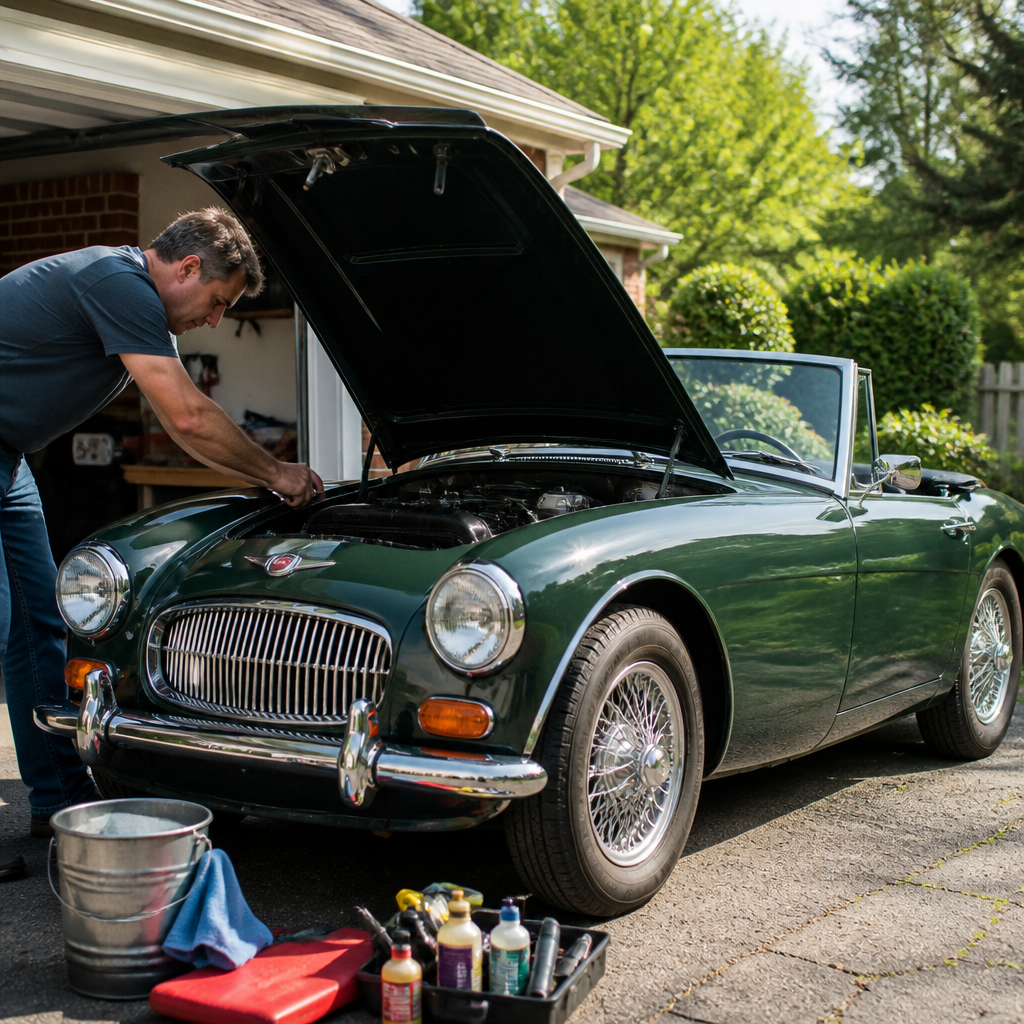
Summer driving reveals everything a classic car does well and everything neglect has hidden. Heat loads the cooling system, long daylight hours tempt owners into extended trips, and modern traffic demands reliability from machines designed in a different era. Preparing a classic car for summer driving means more than washing it, topping off fluids, and hoping for the best. It is a structured maintenance process that reduces breakdown risk, protects hard-to-find parts, and preserves the character of the vehicle while making it safer and more enjoyable to use.
In restoration and maintenance work, summer preparation sits at the point where preservation meets real-world usability. A classic car is generally understood as an older vehicle kept largely for historical interest, enthusiast enjoyment, or collectible value, while maintenance tips are the recurring inspection, service, and adjustment practices that keep that vehicle roadworthy. Unlike modern cars with extensive electronic safeguards, classics depend heavily on preventive checks. Rubber hardens, fuel evaporates differently with ethanol blends, drum brakes react to adjustment, and old wiring often fails only after heat and vibration combine.
This matters because warm weather changes operating conditions across the entire car. Engine coolant temperature rises faster in traffic. Tire pressures increase as ambient temperatures climb. Batteries lose water more quickly. Carbureted engines can suffer vapor lock, while older automatic transmissions may run hot if fluid condition is marginal. A car that starts fine in a cool garage can become troublesome after an hour on sun-baked asphalt. Owners who inspect systematically before summer avoid the most common failures: overheating, fuel delivery issues, brake fade, charging problems, and tire-related trouble.
This hub article covers the essential maintenance tips that support reliable summer use, from fluids and belts to electrical health, cabin comfort, paint protection, and emergency planning. If you maintain a concours-level original, a regularly driven survivor, or a lightly modified restomod, the principles remain the same: inspect thoroughly, service proactively, test under realistic conditions, and document what you do. That approach saves money, prevents roadside repairs, and gives you confidence to drive the car as intended.
Start with a complete baseline inspection
The best summer preparation begins with a baseline inspection, not with random part replacement. I always start by reviewing the car’s recent service history, noting coolant age, brake fluid age, tire date codes, battery age, and the mileage since the last tune-up. If there is no clear record, assume nothing and inspect everything. Walk around the car in daylight and look for fluid stains under the engine, transmission, differential, and fuel tank. Check whether the car sits level, whether the tires show uneven wear, and whether any trim, weatherstripping, or glass seals are shrinking or lifting.
Then move methodically under the hood. Squeeze radiator and heater hoses to feel for hardness, cracking near clamps, or soft spots that collapse under suction. Inspect belts for glazing and frayed edges. Look for green or white residue around the radiator neck, water pump, intake manifold coolant passages, and freeze plugs, because dried residue often reveals slow leaks before drips appear. On carbureted cars, verify that throttle return springs are secure and that fuel lines are routed away from exhaust heat. On any classic with points ignition, examine cap terminals, rotor condition, dwell setting, and plug wire age.
Inside the car, test every gauge and warning light. A summer cruiser without a trustworthy temperature gauge is asking for trouble. Confirm that the blower motor works on all speeds, because even if the car lacks air conditioning, defogging and cabin airflow matter in humid weather. Finally, road test the car long enough to reach full operating temperature. Listen for detonation on acceleration, watch for charging voltage drop at idle with lights on, and verify that hot restarting is as reliable as a cold start.
Protect the cooling system before heat exposes weaknesses
Cooling system service is the centerpiece of classic car summer maintenance. Overheating is the most common seasonal complaint, and it usually stems from several small problems rather than one dramatic failure. A radiator partly blocked with scale, an aging thermostat, retarded ignition timing, and a weak fan clutch can combine to push coolant past its safe operating range. Start by pressure-testing the system and the radiator cap. Cap failure is inexpensive and common, yet many owners overlook it. A cap that cannot hold rated pressure lowers the coolant boiling point and encourages overflow.
Flush old coolant if its service life is unknown or if it appears rusty, brown, or contaminated. Use the correct coolant type for the engine materials and make sure the mixture is appropriate for corrosion protection, not just freeze protection. Inspect the radiator externally as well; fins bent flat or packed with bugs and debris sharply reduce airflow. Confirm that the fan shroud is present and correctly positioned, because shrouds matter enormously at low speeds. For mechanical fans, check clutch resistance or fixed-blade condition. For electric fans, verify relay operation, thermostat trigger points, fuse quality, and wiring gauge.
Timing and mixture also influence engine temperature. A lean carburetor setting or incorrect ignition advance raises combustion heat. I have seen otherwise healthy small-block V8s run hot simply because the initial timing had drifted several degrees retarded. If your car consistently heats up in traffic but cools on the highway, suspect airflow, fan performance, or idle mixture. If it overheats at speed, look harder at radiator efficiency, coolant circulation, and possible scale buildup in the block. Summer is the season to solve those issues before a parade route or mountain grade turns them into a tow truck call.
Service engine oil, fuel, and ignition systems as a matched set
Reliable summer driving depends on three systems working together: lubrication, fuel delivery, and ignition. Change engine oil and the filter if service is due or if the car has sat for months. Classic engines with flat-tappet camshafts may require oil with appropriate zinc and phosphorus content, commonly discussed as ZDDP protection. Follow the engine builder’s recommendation or the manufacturer guidance for your application. Oil that is correct for bearing clearances and ambient temperature helps maintain pressure at hot idle, where many old engines show their true condition.
Fuel systems deserve equal attention because modern gasoline is less forgiving to vintage components. Ethanol-blended fuel can attack older rubber hoses, accelerate varnish in neglected tanks, and increase vapor formation in hot underhood conditions. Replace questionable hose with ethanol-resistant line, inspect the fuel pump diaphragm for seepage, and check fuel filter placement. Glass bowl filters and original steel lines can work well when clean and properly routed, but any line passing too close to headers or exhaust manifolds should be shielded or repositioned. If your car suffers vapor lock, insulating spacers under the carburetor and confirming pump pressure can help significantly.
Ignition maintenance rounds out the trio. Replace spark plugs if fouled or aged, confirm proper gap, and inspect wires for heat damage. On breaker-point systems, set dwell before setting timing; changing dwell changes timing. Check mechanical advance operation in the distributor and verify that vacuum advance holds vacuum. Many summer drivability complaints, including sluggish acceleration and hot-start struggles, come down to weak spark energy once components heat-soak. A car that starts crisply, idles steadily, and pulls cleanly under load is usually telling you these systems are in balance.
Make brakes, tires, and suspension ready for modern roads
Summer driving often means higher speeds, longer trips, and denser traffic than classic cars faced when new, so chassis preparation is not optional. Begin with the brake system. Brake fluid is hygroscopic, meaning it absorbs moisture over time. In a classic with drum brakes or older calipers, moisture lowers the fluid boiling point and promotes internal corrosion. If the fluid is dark or its age is unknown, flush it. Inspect rubber flex hoses for cracking or swelling, verify steel lines are not rust-pitted, and check wheel cylinders or calipers for seepage. Drum brakes need proper adjustment to deliver consistent pedal feel and balanced stopping.
Tires require more than tread depth inspection. Many classics wear tires that look excellent yet are unsafe because of age. Check the DOT date code; once tires move beyond roughly six to ten years, depending on storage and condition, replacement becomes a serious safety discussion even if sidewalls still shine. Heat amplifies the risk. Set pressures to the specification that matches the tire type and vehicle setup rather than guessing from modern door-sticker habits. Bias-ply and radial tires behave differently, and suspension alignment may need to reflect that. Uneven wear patterns can point to worn kingpins, ball joints, tie-rod ends, or bushings.
Suspension and steering inspection improves both safety and comfort. Grease all serviceable joints if the chassis uses fittings. Check shock absorbers for leaks and weak rebound control. Confirm wheel bearings are adjusted correctly and packed with fresh grease where applicable. A classic that wanders, shimmies, or nose-dives under braking becomes tiring in hot weather and dangerous in emergency maneuvers. The goal is simple: the car should stop straight, track predictably, and stay composed on imperfect roads.
| System | What to Check | Why It Matters in Summer |
|---|---|---|
| Cooling | Hoses, radiator cap, thermostat, fan, coolant condition | Prevents overheating in traffic and during long drives |
| Fuel | Hoses, filter, pump, carburetor spacer, line routing | Reduces vapor lock, leaks, and hot-start issues |
| Brakes | Fluid age, hose condition, pad or shoe wear, adjustment | Maintains stopping power as temperatures rise |
| Tires | Date code, pressure, tread wear, sidewall cracks | Limits blowout risk and improves road stability |
| Electrical | Battery water, charging output, grounds, lights | Supports hot restarts and accessory use |
Check the charging system, wiring, and summer-use accessories
Electrical faults become more visible in summer because heat increases resistance and because owners use cars longer, often with headlights, radios, cooling fans, and phone chargers running together. Start with the battery. If it is a serviceable flooded unit, check electrolyte level and top up only with distilled water. Clean the posts and verify the hold-down is secure. Then test charging output at idle and at cruising rpm. Many generator-equipped classics produce limited output at idle, which means a car can slowly discharge in traffic if electric fans or aftermarket accessories have been added without planning.
Ground paths are especially important on older cars. Corroded engine-to-chassis grounds cause hard starting, dim lights, and inconsistent gauge readings. Inspect primary battery cables as well; many no-start complaints trace back to cables that look acceptable outside but are corroded internally. Check fuse holders, bulkhead connectors, and any previous owner splices. If the car has been modified with auxiliary gauges, electric fuel pumps, or stereo equipment, make sure those circuits are fused correctly and not piggybacked unsafely onto original wiring.
Summer comfort equipment also deserves attention. Air conditioning systems, whether original R12-era hardware converted to R134a or fully updated systems, should be evaluated for belt condition, compressor cycling, blower performance, and vent temperature. Convertibles need functioning top latches, weather seals, and drains, because sudden summer storms expose weak seals quickly. Wipers and washers matter too. Dry windshield rubber and empty washer bottles do not seem urgent until a dusty road or thunderstorm reduces visibility in minutes.
Preserve paint, interior, and trim while preparing for road trips
Maintenance tips for summer driving should protect the car cosmetically as well as mechanically. Ultraviolet exposure, heat, road grit, and bug residue all accelerate deterioration. Wash the car thoroughly, including wheel wells and the underside if it has picked up spring dust or storage debris. Apply a quality wax, sealant, or ceramic-compatible topper appropriate to the finish. Chrome benefits from gentle polishing and a protective layer to resist pitting from moisture and contaminants. Rubber weatherstripping should be cleaned and conditioned so doors, trunk lids, and vent windows seal without tearing.
Interior preservation matters because summer cabin temperatures can climb dramatically, especially with dark upholstery and large glass areas. Use a windshield sunshade when parked and condition leather or vinyl with products suitable for vintage materials. Check seat mounts and belts before any trip; original lap belts or early retractors should be inspected carefully for webbing stiffness and hardware corrosion. Trunk preparation is part of the equation too. Secure the jack, lug wrench, spare, and any tool roll so they do not shift. I also recommend carrying basic spares tailored to the car: a fan belt, upper radiator hose, ignition parts, fuses, and a small fuel-safe repair kit.
Before the first major outing, take a shakedown drive close to home. Run the car at city speeds, highway speeds, and stop-and-go conditions. Recheck fluid levels afterward and inspect for fresh leaks. This final step separates a garage-fresh car from a road-ready one. Prepare carefully, document what you service, and schedule the next checks now. If you want your classic car to deliver confident summer driving, start with these maintenance tips and turn them into a repeatable seasonal routine every year.
Frequently Asked Questions
What should I inspect first when preparing a classic car for summer driving?
The best place to start is with the systems most affected by heat and extended use: cooling, fuel delivery, ignition, belts, hoses, tires, brakes, and charging. Begin with a full visual inspection under the hood and under the car. Look for dried, cracked, swollen, or oil-soaked hoses; frayed belts; loose clamps; coolant stains; damp spots around the water pump; and any signs of fuel seepage around rubber lines, carburetor fittings, or the fuel pump. On a classic car, age matters just as much as mileage, so even a part that looks acceptable at a glance may be overdue for replacement if it has been in service for years.
Next, check all fluid levels and condition, not just whether they are “full.” Engine oil should be clean and at the proper level, coolant should be the correct type and concentration, brake fluid should not be dark or contaminated, and transmission and differential fluids should be inspected according to the vehicle’s service needs. Tires deserve close attention as well. Check tread depth, air pressure, age, and sidewall condition, because old tires can fail even if they still look usable. Finally, verify the battery, charging system, and lights, since summer driving often means longer trips, stop-and-go traffic, and night returns. Starting with a methodical inspection gives you a realistic picture of the car’s readiness and helps you fix small issues before summer heat turns them into breakdowns.
Why is the cooling system so important in summer, and what maintenance does it need?
The cooling system is one of the most critical areas to address because summer heat exposes every weakness in an older engine’s ability to manage temperature. A classic car may run acceptably in cool weather while hiding partial blockages, an aging radiator core, a weak fan clutch, a slipping belt, or a thermostat that no longer opens consistently. Once ambient temperatures rise and the car sits in modern traffic, those minor faults can quickly lead to overheating, boil-over, warped components, or accelerated engine wear.
Proper cooling-system preparation starts with confirming that the radiator is clean inside and out. Externally, the fins should be free of dirt, bugs, and debris that reduce airflow. Internally, the coolant should be clean, and the system should be flushed if there is rust, scale, or unknown service history. Inspect all hoses for softness, cracking, swelling, or age hardening, and replace any suspect clamps. Check the radiator cap, since the correct cap helps maintain system pressure and raises the boiling point of the coolant. Make sure the thermostat is functioning correctly and that the water pump shows no signs of leakage, wobble, or bearing noise.
It is also important to verify that the fan and shroud are doing their job. Mechanical fans, electric fans, and fan clutches all need to work properly for low-speed cooling, which is where many classics struggle. If the car has ever shown signs of running hot, now is the time to address the root cause rather than simply adding coolant and hoping for the best. A well-maintained cooling system protects the engine, supports reliable summer driving, and reduces the chance of being stranded in traffic with a car that suddenly cannot cope with the heat.
How do fuel and ignition systems affect warm-weather reliability in a classic car?
Fuel and ignition systems have a major impact on summer reliability because heat can expose weaknesses that may go unnoticed during shorter or cooler drives. Older fuel systems are especially vulnerable to vapor lock, deteriorated rubber lines, weak pumps, dirty filters, and carburetor issues. Modern gasoline formulations can also create challenges for classic vehicles that were designed for different fuel characteristics. If a fuel hose is old, cracked, or not rated for modern fuel blends, it should be replaced before summer use. Any sign of fuel odor, dampness, or seepage needs immediate attention, not only for reliability but for safety.
On carbureted cars, check for proper adjustment, smooth idle, clean operation, and secure mounting. Heat soak after shutdown can make hot restarts difficult, so it is worth inspecting insulators, routing, and overall under-hood fuel-line condition. Replace fuel filters if service history is unclear, and verify that the fuel pump delivers steady flow. On the ignition side, inspect spark plugs, plug wires, cap, rotor, points if equipped, condenser, and coil. Heat tends to reveal marginal ignition components quickly, often through hard starting, stumbling under load, or misfires once the engine reaches operating temperature.
Timing and dwell should also be checked on older systems, since a classic that is slightly out of tune may still run, but not efficiently or consistently in summer conditions. A proper tune-up restores smooth performance, improves fuel economy, and reduces stress on the engine. In practical terms, a well-sorted fuel and ignition system means the car starts more easily, idles more steadily in traffic, and responds more confidently on longer drives when temperatures are high and reliability matters most.
What tires, brakes, and suspension checks should be done before taking a classic car on summer trips?
Tires, brakes, and suspension are essential to both safety and comfort, and they deserve just as much attention as the engine. For tires, do not focus only on tread. Check the date codes, sidewalls, and overall condition carefully. Many classic cars are driven infrequently, which means the tires may age out long before they wear out. Cracking, flat spotting, sidewall bulges, or hardened rubber are all warning signs. Set pressures to the correct specification for the vehicle and intended load, and do not forget the spare. A roadside tire issue is much easier to handle when the spare is actually usable.
Brake inspection should include pad or shoe thickness, drum or rotor condition, flexible brake hoses, wheel cylinders or calipers, and the master cylinder. Brake fluid is especially important because it absorbs moisture over time, which lowers boiling resistance and encourages internal corrosion. In hot weather and on longer drives, contaminated brake fluid can contribute to fade and inconsistent pedal feel. If the fluid is old or service history is unknown, a flush is a smart preventive step. Also check that the parking brake works properly, especially if the car will be parked on inclines during outings or events.
Suspension and steering checks help the car feel stable and predictable at modern road speeds. Inspect shocks, bushings, ball joints, tie-rod ends, wheel bearings, and steering linkage for wear or looseness. Alignment should be verified if the car pulls, wanders, or shows uneven tire wear. These systems are easy to overlook because deterioration can happen gradually, but summer driving often means longer distances, rougher pavement, and more time behind the wheel. Fresh, properly inspected tires and responsive brakes and steering make a classic car safer, less tiring to drive, and far better suited to real-world summer travel.
Should I bring spare parts or tools when driving a classic car in summer?
Yes, carrying a small, thoughtful emergency kit is one of the smartest things a classic car owner can do, especially in summer. Even a well-prepared vintage vehicle can develop issues on the road, and the parts it needs may not be readily available at a local parts store. A few carefully chosen spares can turn a trip-ending problem into a short roadside repair. Good items to consider include belts, upper and lower radiator hoses if practical, hose clamps, ignition components appropriate to the car, a fuel filter, basic fuses, bulbs, a small selection of hand tools, electrical tape, wire, zip ties, fluids, gloves, and a flashlight.
It is also wise to carry a fire extinguisher, especially in any classic car with older fuel-system components. A portable battery jump pack, tire inflator, and pressure gauge can be useful as well. If your car uses points ignition, bringing a spare set of points and a condenser can save a lot of trouble. If it uses a specific electronic ignition module or uncommon belt size, a backup may be worth packing for longer trips. The goal is not to turn the trunk into a rolling workshop, but to anticipate the common failure points of an older vehicle.
Beyond parts, bring the right information. Keep important phone numbers, insurance and roadside-assistance details, and a simple list of part numbers or maintenance notes with the car. Summer trips are more enjoyable when you know you are prepared for the most likely problems. That confidence matters. It encourages you to use the car as intended while still respecting that a classic vehicle requires more forethought than a modern daily driver. Preparedness supports reliability, protects rare components, and helps preserve the relaxed, enjoyable character that makes classic summer driving worth the effort.