Preparing for long drives in a classic car starts long before the key turns. A well-planned trip protects the car, reduces breakdown risk, and makes the drive safer and more enjoyable. In classic car ownership, “long drive” usually means any trip long enough to expose age-related weaknesses: extended highway speeds, heat soak, repeated fuel stops, night driving, mountain grades, heavy rain, or hours of vibration. “Driving and safety tips” covers more than careful steering. It includes mechanical inspection, route planning, tool selection, weather assessment, emergency readiness, secure loading, driver stamina, and realistic speed management.
I have prepared older carbureted cars, vintage trucks, and British roadsters for daylong and multi-state trips, and the same lesson repeats every time: old cars rarely fail without warning. They overheat a little, idle rough after a hot stop, develop a slight vibration, dim their lights, or leave a fresh drip on the floor. Long-distance preparation is the process of finding those clues before they strand you. That matters because classic cars operate with narrower margins than modern vehicles. Their cooling systems are simpler, braking distances are often longer, parts availability on the road is unpredictable, and occupant protection can be limited by design.
This hub article explains how to prepare for long drives in a classic car by focusing on the practical systems that determine whether the trip succeeds. It also serves as a central guide to driving and safety decisions every owner eventually faces: how to inspect the car, what spares to carry, how to manage fuel and temperature, how to adapt to traffic, and when not to push onward. If you treat preparation as part of the hobby rather than a chore, your classic becomes more dependable, and your confidence behind the wheel rises with every mile.
Inspect the car as a system, not a checklist
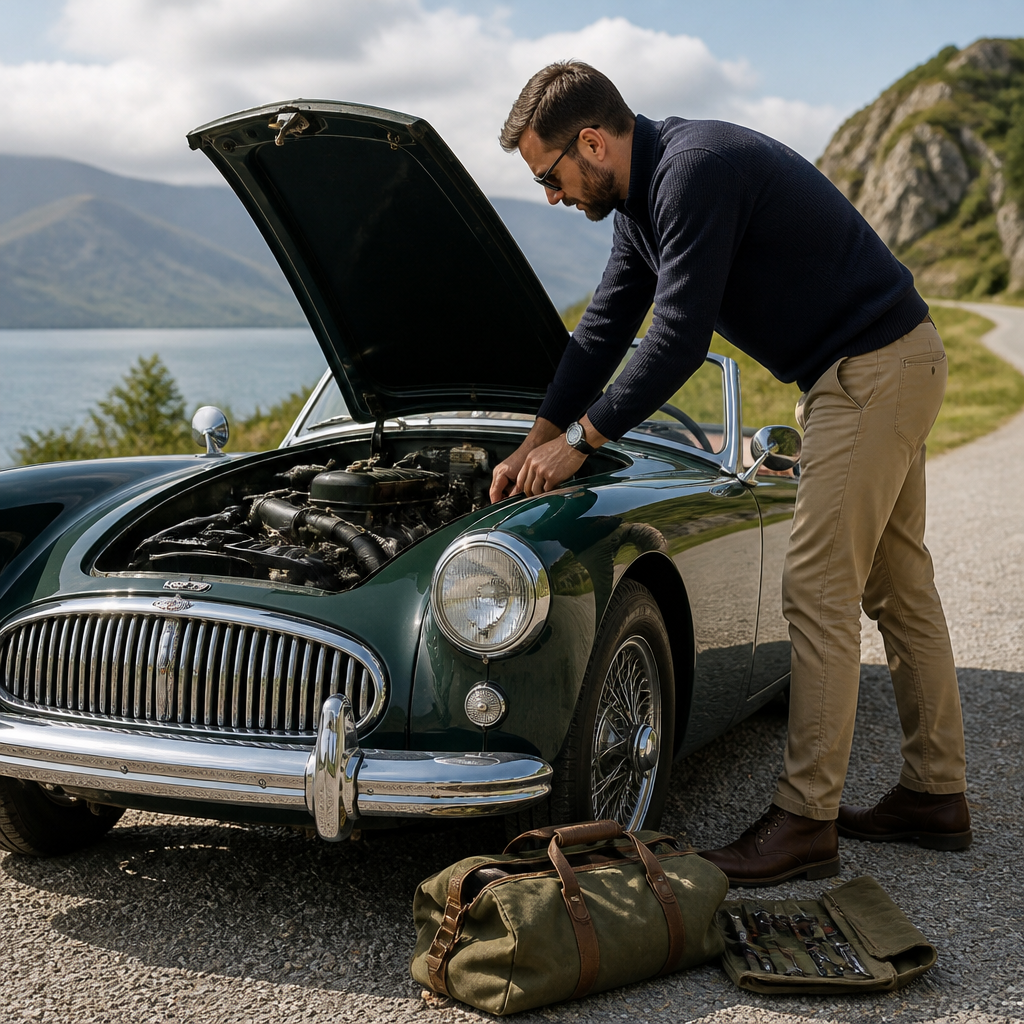
The most effective pre-trip inspection is systematic. Instead of simply checking fluids and tire pressure, examine how the car’s major systems interact under sustained load. Start with the cooling system because overheating is one of the most common long-drive problems in older vehicles. Inspect the radiator core for blocked fins, verify the cap holds the correct pressure, confirm hoses are pliable rather than brittle, and check for staining around clamps, the water pump weep hole, and the heater valve. A fan belt that survives local cruising can still slip at highway rpm or after a hot restart. If your car uses a mechanical fan, inspect blade condition and clutch operation where applicable. If it uses an electric fan retrofit, verify switch-on temperature, fuse protection, and relay wiring.
Move next to ignition and charging. Points ignition needs correct dwell, solid condenser connections, and a healthy coil. Electronic conversions are often more reliable, but only when grounded properly and paired with a charging system that maintains voltage. Use a multimeter: roughly 12.6 volts engine off indicates a fully charged battery, while a running alternator-equipped car will often show about 13.8 to 14.4 volts. Generator cars may behave differently, especially at idle, so learn the normal range for your model. Corroded battery cables, weak grounds, and aged ignition wires cause many “mystery” road failures that appear only when the engine bay gets hot.
Brakes deserve special caution. Many classic cars have drum brakes, single-circuit master cylinders, or non-assisted pedal effort that modern drivers underestimate. Inspect flexible hoses for cracks, wheel cylinders and calipers for seepage, lining thickness, shoe adjustment, pedal travel, and parking brake function. Brake fluid should be clean and at the right level; if its service history is unknown, flushing before a major trip is cheap insurance. Steering and suspension should also be checked under load-bearing points: tie-rod ends, ball joints, kingpins, bushings, shocks, wheel bearings, and leaf-spring mounts. A car that feels merely “vintage” around town can become tiring or unsafe after three hours if it wanders, tramlines, or bounces excessively.
Build a realistic pre-trip service plan
Long-drive preparation works best when divided into time horizons. Two to four weeks before departure, complete any maintenance that could reveal follow-up work. That means oil and filter service, gearbox and differential fluid checks, chassis lubrication where grease fittings are present, air filter inspection, fuel filter replacement, and a road test long enough to fully heat-soak the car. Avoid major untested modifications right before a trip. A brand-new carburetor, aftermarket ignition box, or aluminum radiator may be excellent parts, but if installed the night before departure, they become variables. Reliability comes from proven combinations, not novelty.
One week before leaving, torque wheel nuts to specification, inspect tire date codes and tread condition, verify spare tire pressure, and test every light. Vintage wiring can pass a quick garage test and still fail under vibration, so physically move harness sections while lights and accessories are on. If a bulb flickers, investigate. Wipers and washers matter more than many owners admit. Old vacuum wipers, weak motors, and dry blades turn light rain into a serious visibility problem. Replace blades, clear the windshield inside and out, and apply glass cleaner rather than dressing products that smear at night.
The day before the trip, fill the tank, confirm fluid levels, and do a final under-car scan for fresh leaks. Then take a short drive and recheck. This second look often catches small but meaningful issues: fuel seepage after a full tank, an axle seal misting after motion, or a thermostat housing weeping only at pressure. Preparation also means paperwork. Bring registration, insurance, roadside assistance details, and a list of part numbers specific to the car. For older vehicles, that list is invaluable because local parts counters may need cross-references for belts, hoses, points, plugs, or wheel bearings.
Pack tools, spares, and safety gear that match the car
A classic car travel kit should be compact, model-specific, and based on failure patterns. Generic emergency kits often miss what older cars actually need. At minimum, carry screwdrivers, combination wrenches in the correct measurement system, pliers, locking pliers, electrical tape, crimp connectors, wire, spare fuses, test light or multimeter, flashlight, gloves, rags, zip ties, hose clamps, and fluids the car may consume. If your car uses points, carry points, condenser, rotor, cap, and a feeler gauge. If it uses an external voltage regulator, know the symptoms of failure and bring a spare if the unit is small and proven.
Fuel-system spares are especially useful. Older rubber lines can soften with modern ethanol-blended fuel, and carbureted engines are sensitive to debris. A spare fuel filter, short length of hose, and proper clamps solve many roadside issues. Belts and upper radiator hoses are worth carrying if replacements are compact. So is a throttle return spring. I also recommend a printed wiring diagram, because mobile signal is never guaranteed where old cars like to break down. For safety, include a fire extinguisher rated for automotive use, reflective triangles, a basic first-aid kit, and a battery jump pack if your charging system allows one.
| Category | What to Carry | Why It Matters on a Long Drive |
|---|---|---|
| Ignition | Points, condenser, rotor, cap, spark plugs, plug wrench | Heat and vibration often expose weak ignition components first |
| Cooling | Coolant, hose clamps, upper hose, belt | Small leaks and belt failures are common, fixable roadside issues |
| Electrical | Fuses, wire, terminals, tape, test light, multimeter | Older wiring faults can disable lights, charging, or ignition |
| Fuel | Fuel filter, hose, clamps, carb tools | Debris, vapor issues, and degraded hose material can stop the car |
| Safety | Extinguisher, triangles, first-aid kit, flashlight | Protects occupants during breakdowns or minor emergencies |
Plan around the limits of a classic car, not a modern daily driver
Route planning is a genuine safety measure. Older cars may cruise happily at 55 to 65 mph but feel stressed above that, especially with short gearing, drum brakes, or marginal cooling. Choose roads that suit the vehicle. Interstates can be efficient, yet secondary highways are often safer and less fatiguing if your car accelerates slowly or needs more stopping distance. Study elevation changes, fuel availability, construction zones, and weather bands. Mountain grades magnify cooling and brake weaknesses; urban congestion magnifies clutch effort and hot-idle issues. If your fuel gauge is optimistic or your tank is small, plan conservative fill intervals rather than running deep into reserve.
Time of day matters too. Summer heat can push borderline cooling systems over the edge, while dusk and night driving reveal weak headlights, poor instrument illumination, and windshield glare. If the car has sealed-beam lamps and an original charging system, cleaning grounds and aiming the lights correctly can improve usable visibility more than installing brighter bulbs. In heavy rain, some classic tires hydroplane sooner than modern designs, and demisting systems may be modest. That means your route should include stop options. There is no virtue in pressing through a thunderstorm just because the map says the destination is close.
Tell someone your route, expected stops, and arrival window. If traveling with another classic car, discuss communications, pace, and what happens if one vehicle drops out. Convoys fail when drivers assume everyone has the same range, braking confidence, or tolerance for traffic. A good plan sets regroup points and keeps the slowest, hottest, or least-proven car at the center of the decision-making.
Drive with mechanical sympathy and defensive awareness
How you drive determines whether the preparation pays off. Mechanical sympathy means using the car within its design envelope. Warm the engine fully before sustained high rpm. Avoid lugging in too high a gear on grades, because that raises load and temperature. Watch the gauges, but also learn the car’s sensory language: a change in exhaust note, a fuel smell after a stop, steering that suddenly goes light, or brake pedal travel that increases by a small amount. In a classic car, subtle changes are data. Respond early. Pull over before a minor issue becomes a tow.
Defensive driving matters even more because many classic cars lack anti-lock brakes, stability control, collapsible steering columns, side-impact protection, or modern seat belt geometry. Increase following distance beyond what you use in a modern car. Leave an escape path in traffic. Signal earlier. Brake earlier. Expect other drivers to misjudge your stopping ability and acceleration. Convertibles and small roadsters are particularly easy for SUV drivers to overlook, so lane positioning becomes a visibility tool, not just a comfort choice.
Driver fatigue is also a safety issue. Vintage cabins are louder, hotter, and more physically demanding. Manual steering at low speed, firm pedals, wind buffeting, and higher cabin vibration all increase workload. Rotate drivers if possible, hydrate, eat lightly, and stop before you feel depleted. A classic car often rewards a slower rhythm: fuel every 150 to 200 miles, inspect at each stop, and use breaks to check oil, coolant overflow level, tire sidewalls, and lug nut security by sight. Those five-minute checks prevent hours of trouble.
Know the common failure points and your decision thresholds
Every long drive in a classic car should include pre-made decisions about when to continue and when to stop. If oil pressure drops below the car’s normal hot reading, if charging voltage falls steadily, if coolant repeatedly pushes out, or if the brake pedal changes feel, the trip pauses. Owners get stranded when they reinterpret warning signs as personality. Some quirks are harmless; trends are not. Keep a small notebook or phone log of normal readings for coolant temperature, oil pressure, and charging behavior. That baseline helps you distinguish a gauge sender quirk from a real mechanical problem.
Common roadside issues are predictable. Vapor lock can affect carbureted cars in hot conditions, especially with modern fuel blends and underhood heat soak. Percolation after shutdown may cause hard hot restarts. Heat shields, proper fuel routing, carburetor spacers, and a correctly functioning cooling system reduce the risk. Charging problems often trace to loose belts, poor grounds, worn brushes, or failing regulators. Intermittent cutting out usually points toward ignition breakdown or fuel starvation. Wheel bearing noise, brake pull, or increasing vibration should never be ignored on a long run, because they tend to worsen quickly with speed and heat.
The smartest classic car owners are not the ones who never have issues. They are the ones who recognize the issue early, have the right spares, and know when a hotel and flatbed are better choices than roadside improvisation. Preserving the car is part of safe ownership.
Long drives in a classic car are most rewarding when preparation is disciplined and specific. Inspect the vehicle as a set of connected systems, not a collection of isolated parts. Service it early enough to test repairs, pack spares that match the model, and plan routes around realistic cruising speed, fuel range, braking limits, and weather exposure. On the road, drive with mechanical sympathy, leave generous space, monitor trends rather than hoping they disappear, and stop at the first clear sign that the car is no longer happy.
As a hub for classic car driving and safety tips, the central lesson is simple: reliability is built before departure. The more intentionally you prepare, the more freedom you gain once the trip starts. A classic car will rarely behave exactly like a modern vehicle, but that does not make it unsuitable for distance. It means the owner must be more observant, more methodical, and more honest about limits. That mindset turns long trips from anxious gambles into repeatable, enjoyable tours.
Before your next drive, create a written pre-trip checklist tailored to your car, test it on a half-day outing, and refine it after every stop. That one habit will improve safety, protect the vehicle, and make every mile more relaxed.
Frequently Asked Questions
What should I inspect on a classic car before taking it on a long drive?
Start with the systems most likely to fail from age, heat, and sustained use rather than just looking for obvious problems. Check all fluid levels and condition, including engine oil, coolant, brake fluid, transmission fluid, power steering fluid if equipped, and differential oil if service is due. Look for wet spots, seeping gaskets, cracked hoses, soft coolant lines, loose clamps, and fuel smells that could point to leaks. Inspect belts for glazing, fraying, or cracking, and make sure the charging system is working properly because an older car with a weak battery or marginal alternator can quickly become unreliable on a long trip.
Pay close attention to the cooling system, since extended highway speeds, traffic, and hot weather expose weaknesses fast. Make sure the radiator is clean, the fan and fan clutch are operating correctly if applicable, and the thermostat is not sticking. Confirm that the car runs at a stable temperature during normal driving before you leave. Tires also deserve a careful inspection. Check tread depth, sidewall cracking, age, correct inflation, and the condition of the spare. Old tires may look fine but still be unsafe at highway speed. Then inspect the brakes, suspension, steering linkage, wheel bearings, and lights. A classic car can tolerate occasional local use with minor issues, but a long drive magnifies every weak point, so the goal is to catch small problems before they become trip-ending failures.
What tools, spare parts, and emergency supplies should I carry in a classic car?
A classic car road kit should reflect the kinds of failures older vehicles commonly experience: ignition issues, overheating, fuel delivery problems, electrical faults, and loose hardware. At minimum, carry basic hand tools, screwdrivers, pliers, adjustable wrenches, a socket set, electrical tape, zip ties, a flashlight, work gloves, shop rags, and a tire pressure gauge. Add jumper cables or a jump pack, spare fuses, extra bulbs, wire, hose clamps, and a compact multimeter or test light if you are comfortable using one. If your car uses points, condenser, rotor, cap, or specific ignition components, bringing known-good spares can save a trip. The same goes for fan belts, upper and lower radiator hoses if practical, fuel hose, and a small assortment of fasteners.
Also think beyond tools. Pack engine oil, premixed coolant if the car uses it, brake fluid if appropriate, drinking water, a fire extinguisher rated for automotive use, reflective triangles or flares, a first-aid kit, and a phone charger or backup battery. If the car has a known weak spot, carry what supports that system. For example, vapor-lock-prone cars may benefit from planning fuel stops carefully and carrying insulating materials or replacement fuel filters. None of this replaces proper maintenance, but it greatly improves your chances of handling a manageable roadside issue safely. In a classic car, the right spare part can matter more than a trunk full of generic gear.
How should I plan the route and driving schedule for a long trip in a classic car?
The best route for a classic car is not always the fastest one. A good plan balances distance, speed, traffic, terrain, fuel availability, and weather. Start by being realistic about the car’s comfort zone. Some classics cruise happily at modern highway speeds, while others are better on secondary roads where engine temperature, noise, and mechanical strain stay lower. Consider mountain grades, long traffic delays, construction zones, and remote stretches with limited fuel or repair options. If the vehicle has a small tank, carburetor, or temperature-sensitive cooling system, fuel and rest stops should be planned more frequently than they would be in a modern car.
Build extra time into the schedule so you are not pushing the car or yourself. Daylight driving is usually easier because it reduces strain from older lighting systems and makes it simpler to spot leaks, smells, or changes in gauge readings during stops. Watch the weather closely, especially if the car has old weather seals, limited defroster performance, or marginal wipers. It is also wise to share your route and expected arrival times with someone, keep roadside assistance information handy, and identify backup towns or service points along the way. Long-distance classic car travel is much safer when the trip is paced around the vehicle’s limits instead of forcing the vehicle to match modern travel expectations.
How can I reduce the risk of overheating, breakdowns, and other common classic car problems on the road?
The most effective way to reduce breakdown risk is to test the car under conditions similar to the trip before the actual departure. Take it on progressively longer drives at sustained speed, in warm weather if possible, and in stop-and-go traffic to see how it behaves when fully heat-soaked. Watch temperature, oil pressure, charging, and any signs of fuel starvation, misfire, vibration, or brake fade. A classic car often gives warning before a failure, but only if you have spent enough time learning its normal behavior. Address anything questionable early. Small coolant leaks, hard hot starts, intermittent charging, and inconsistent idle quality are exactly the sort of issues that tend to become bigger problems on long drives.
Once on the road, drive with mechanical sympathy. Avoid lugging the engine, prolonged high-rpm cruising if the car is not geared for it, and sudden heavy braking that adds heat to already old components. Check gauges regularly, pay attention to new smells or noises, and inspect the car at every fuel stop. Look under the engine bay and under the car for drips, feel for excessive wheel heat that could indicate a dragging brake or bearing issue, and confirm that fluid levels remain stable. Keep fuel in the tank rather than running it very low, especially in hot conditions where vapor lock or debris from an old tank can become more likely. Preventive attention during the trip is one of the biggest differences between a relaxed classic car journey and a roadside repair.
What driving and safety habits matter most when taking a classic car on a long drive?
Safe long-distance classic car driving starts with understanding that the vehicle may not brake, steer, accelerate, illuminate the road, or protect occupants like a modern car. Increase your following distance, leave more room for merging and lane changes, and anticipate traffic patterns earlier. Older drum brakes, manual steering, narrow tires, and softer suspension all affect emergency response. If the car has no head restraints, limited mirrors, lap belts only, or dim headlights, those limitations should shape how and when you drive. Night driving, heavy rain, and dense urban traffic are not automatically off-limits, but they require more caution and may justify shorter stages or different routing.
Driver condition matters too. Fatigue is a bigger factor in a classic car because cabin heat, noise, vibration, and concentration demands are often higher. Stay hydrated, take regular breaks, and do not ignore signs that you are getting tired or rushed. Secure loose items in the cabin and trunk, confirm that the jack and spare are accessible, and make sure everyone knows how to exit the vehicle and what to do if you need to stop on the shoulder. Before each leg of the trip, do a quick walk-around for tire condition, leaks, lights, and anything that may have loosened. Good classic car safety is a combination of careful driving, mechanical awareness, realistic planning, and respect for the car’s age and design.