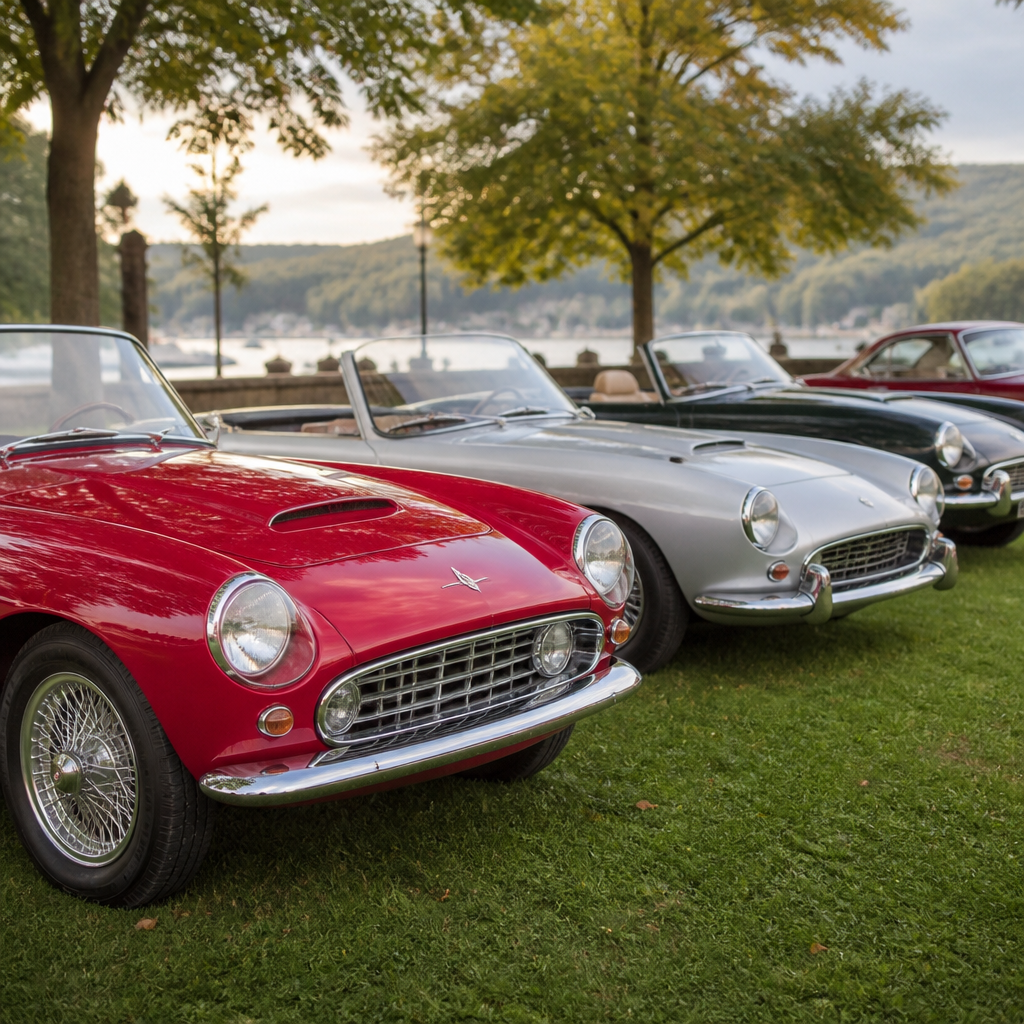
Learning how to drive a manual classic car starts with understanding that you are operating a machine built in a different era, with different tolerances, controls, and safety expectations than a modern vehicle. A classic car with a manual transmission is not simply an older version of today’s hatchback or sedan. It often has heavier steering, a longer clutch throw, less forgiving brakes, weaker cabin insulation, and mechanical feedback that modern drivers rarely experience. Those differences are exactly why enthusiasts love them, but they also explain why new owners can stall, grind gears, or misjudge stopping distances within the first few miles.
When I coach first-time owners, I begin with a simple definition. A manual classic car uses a clutch pedal and gear lever to connect and disconnect engine power from the drivetrain, allowing the driver to choose gears based on speed, load, and road conditions. In older cars, that process may involve unsynchronized first gear, vague shifter gates, carburetor warm-up behavior, and a narrow friction point. “Classic” usually refers to vehicles several decades old, but from a driving perspective the important factor is not the registration category. It is the technology: mechanical linkage, analog gauges, limited driver aids, and systems that demand more anticipation from the person behind the wheel.
This matters because safe, enjoyable classic car ownership depends on technique as much as maintenance. A beautifully restored MG, Mustang, Beetle, Alfa Romeo, or Triumph can still be difficult to drive poorly adjusted, and even a well-sorted car will reward smooth inputs over hurried ones. Manual classics also require a safety mindset that goes beyond shifting. Tire age, drum brake fade, seat belt fitment, mirror coverage, and cold-start drivability all affect road behavior. If you learn the car methodically, you reduce wear on hard-to-source parts, build confidence in traffic, and make every drive more relaxed. That is why this guide serves as a hub for driving and safety tips: it gives you the core habits that support every trip, from a short neighborhood loop to a weekend touring event.
Know the car before the key turns
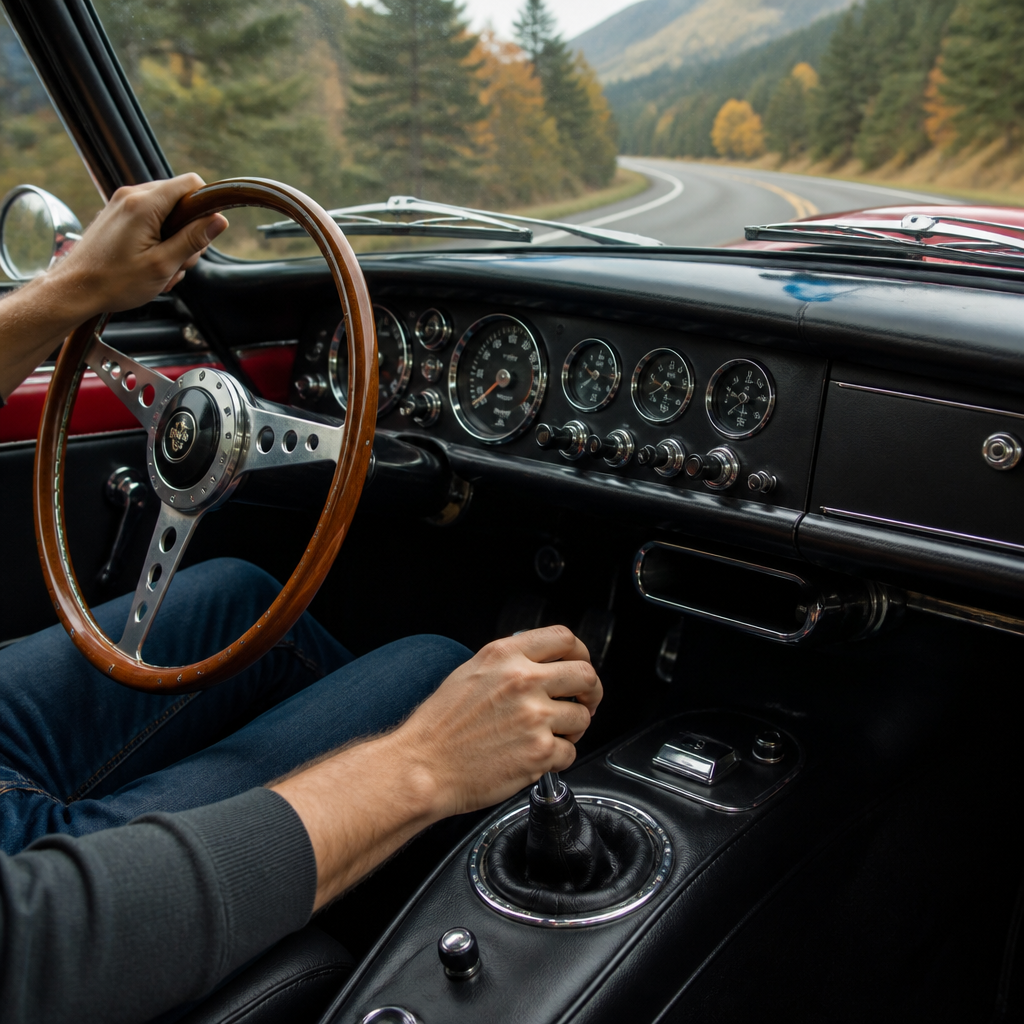
Before you drive a manual classic car, confirm how its systems actually work. Do not assume the pedal layout, shift pattern, or starter procedure matches a modern car. Many classics have floor-hinged pedals, manual chokes, heel-operated dimmer switches, or reverse positions that require pushing down or lifting the lever. Some older British and European cars place controls in unfamiliar locations, and many trucks and prewar designs use nonstandard ergonomics entirely. Spend five minutes parked identifying indicators, lights, wipers, horn, choke, heater controls, parking brake, and the exact path from neutral into each gear.
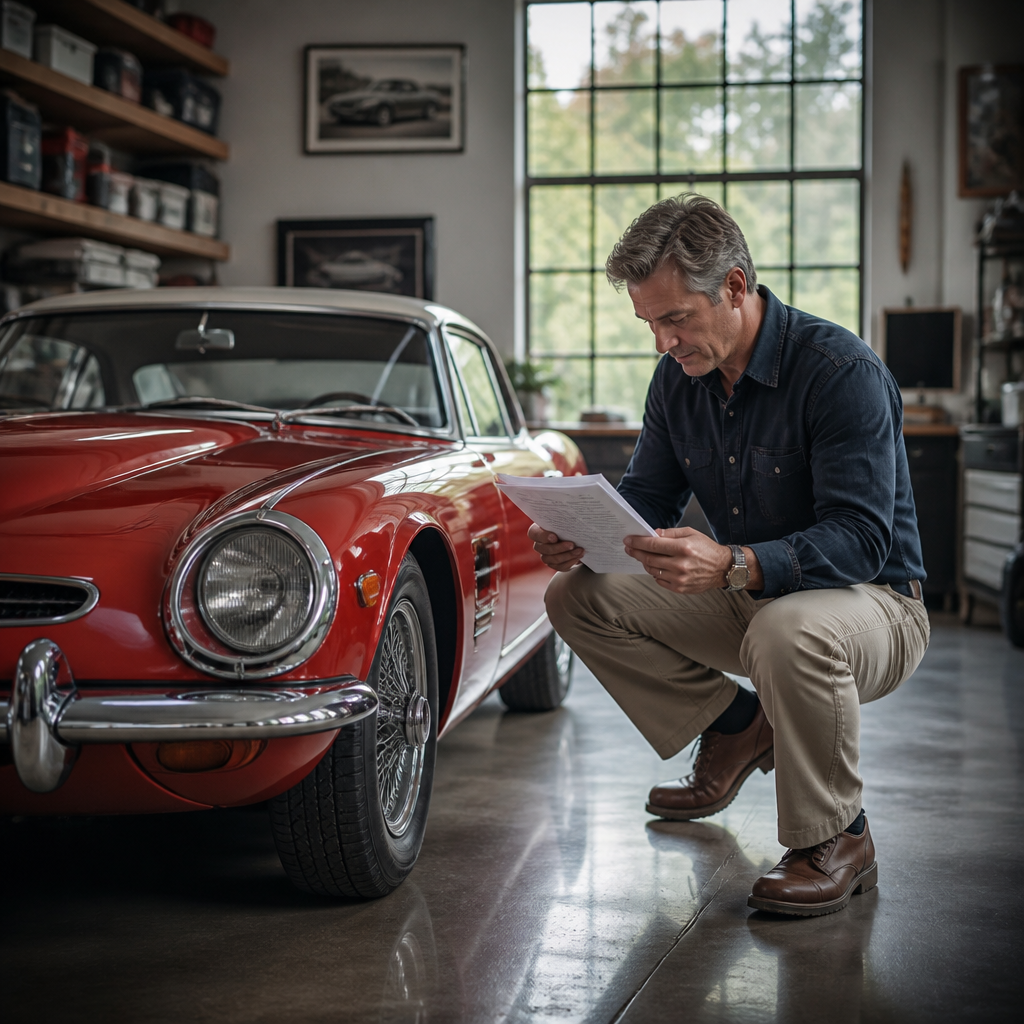
Next, perform a short pre-drive inspection. Check engine oil, coolant level where appropriate, brake fluid, clutch fluid if hydraulic, and fuel smell around the carburetor or lines. Inspect tires for cracking and confirm pressures with a gauge, not a visual guess. Tire age matters as much as tread depth; many specialists treat six to ten years as the range where caution becomes essential, depending on storage and condition. Verify that the brake pedal feels firm, the clutch returns properly, and the parking brake holds. On cars with points ignition or carburetors, rough running after long storage is common, so let the engine settle into idle before moving.
The first start teaches you a lot. A healthy classic should crank with intent, idle consistently once warmed, and respond to light throttle without major hesitation. If it surges, stalls repeatedly, or emits heavy fuel odor, stop and diagnose before driving in traffic. The safest classic is not the rarest or most expensive one; it is the one with predictable controls and sorted mechanicals.
Master the clutch, throttle, and shift rhythm
The core skill in driving a manual classic car is coordinating clutch release and throttle input without rushing. Most classics have less torque management than modern cars, so they will not mask sloppy inputs. To move off smoothly, press the clutch fully, select first gear, apply a light and steady throttle, then release the clutch slowly until you feel the bite point. Hold your foot momentarily as the car begins to roll, then continue releasing. Beginners often dump the pedal after the first movement, which causes bucking or a stall. Think in terms of one smooth transfer of load rather than separate steps.
Classic manuals frequently require more deliberate shifts. Synchromesh on older gearboxes may be weak, absent in first gear, or simply slower than what younger drivers expect. Pause briefly in neutral during upshifts, especially from first to second, and avoid forcing the lever through resistance. If the gearbox protests, your timing is wrong or the clutch is not fully disengaging. In many cars from the 1950s and 1960s, a patient hand is faster in real-world driving than an aggressive one because it preserves momentum and avoids a missed gate.
Downshifting deserves special care. Matching engine speed to road speed reduces driveline shock and helps maintain balance, especially before a corner or descent. In plain terms, that means adding a small throttle blip while the clutch is disengaged so the engine speed rises to meet the lower gear. In non-synchronized or worn transmissions, double-clutching can transform the shift quality. Clutch in, move to neutral, clutch out, blip throttle, clutch in again, select the lower gear, then clutch out. It sounds old-fashioned because it is, but in a vintage gearbox it is often the difference between a clean shift and a crunch.
Use techniques that protect older mechanicals
Driving well in a classic is partly about sympathy for the machinery. Cold engines need time before high revs. Carbureted engines may need a little choke, then progressive reduction as temperature rises. Gearbox oil is thicker when cold, so the first few shifts can feel heavy. Wheel bearings, bushings, and differential gears also benefit from gradual loading. For the first ten minutes, keep revs moderate and avoid hard acceleration. This is especially important in engines with flat-tappet camshafts, older seals, or long periods between use.
Do not rest your hand on the shifter or your foot on the clutch pedal. Those habits create unnecessary wear on selector components and release bearings. At stops longer than a brief pause, select neutral and release the clutch rather than holding the pedal down. When parking, use the handbrake and leave the car in gear, but consider terrain and drivetrain layout. On steep grades, turn the wheels appropriately and never rely on the transmission alone.
Mechanical sympathy also means listening. A faint whine on overrun, a notch into second, or a vibration under load is information. I have avoided expensive failures more than once by ending a drive early when a new sound appeared. In a classic, small changes are often early warnings, not background noise.
Brake earlier, steer smoother, and leave more space
Classic car safety begins with accepting that most older vehicles need more time and distance to stop, turn, and recover from mistakes. Drum brakes, narrow tires, manual steering boxes, and soft suspension tune the car for another era. Even classics with front discs usually lack ABS, stability control, brake assist, and modern crash structures. That means your safest strategy is anticipation. Look farther ahead than you do in a modern car, start braking earlier, and leave a larger following distance, particularly in wet weather.
Steering input should be progressive. Older cars roll more, communicate more through the wheel, and can become unsettled if you make abrupt mid-corner corrections. Enter turns at a speed that lets you hold a steady line and accelerate gently only when the car is composed. Sudden throttle lift in a rear-wheel-drive classic can shift weight forward and unsettle the rear, while powering too early can break traction on old tire compounds or wet painted lines.
Visibility is another real limitation. Mirrors are smaller, pillar shapes can create blind spots, and dim six-volt lighting on some vehicles makes night driving harder. If your classic still runs sealed beams or period-correct bulbs, verify alignment and output. You do not need to turn every car into a restomod, but you do need an honest assessment of how visible you are and how much you can see.
| Driving situation | Best practice in a manual classic car | Why it matters |
|---|---|---|
| Starting from a stop | Use light throttle and release the clutch slowly through the bite point | Reduces stalling, jerking, and clutch shock |
| Cold morning drive | Warm the engine briefly and keep revs moderate for ten minutes | Protects engine, gearbox, and seals |
| Downshifting before a corner | Rev-match or double-clutch if needed | Prevents driveline shock and improves balance |
| Descending a hill | Select a lower gear early and use engine braking | Reduces brake fade, especially with drums |
| Heavy traffic | Increase following distance and plan stops early | Compensates for longer stopping distances and heavy controls |
| Parking on an incline | Apply the handbrake, leave the car in gear, and turn the wheels | Adds redundancy if brake hold is imperfect |
Handle hills, traffic, and weather with planning
Hill starts intimidate many drivers, but the fix is method, not bravery. Engage the handbrake, select first gear, bring the clutch to the bite point with a little throttle, then release the handbrake as the car takes load. This prevents rollback and saves the clutch from excess slipping. Some owners prefer a heel-and-toe style transition between brake and throttle, but on many classics the pedal spacing, seat position, or floor-hinged pedals make that impractical. Use the handbrake method if it is consistent.
In traffic, avoid creeping continuously on the clutch. Either move with purpose or stop cleanly in neutral. Riding the clutch overheats friction material and wears linkage components. If the engine tends to run hot, watch the temperature gauge and understand your cooling system. Many classics are comfortable on open roads but dislike prolonged idle in summer traffic, especially with old radiators, retarded ignition timing, or lean carb settings.
Rain changes everything. Older wipers are slower, demisters weaker, and tire technology often dated unless you have fitted modern reproductions. Brake performance can drop sharply in standing water, and rear-wheel-drive classics can step out suddenly under throttle. In wet conditions, slow down earlier than feels necessary, smooth every input, and test the brakes lightly after driving through deep water. Wind also affects lightweight classics more than many drivers expect. A high-sided van, short-wheelbase roadster, or narrow-track saloon can wander in crosswinds, so relax your grip and make small corrections rather than sawing at the wheel.
Build skills through safe practice and sensible upgrades
The fastest way to become comfortable is structured practice in a low-pressure setting. Start in an empty lot or quiet industrial area and repeat first-gear launches, upshifts to second, smooth stops, reverse selection, and hill starts. Then move to calm local roads before attempting dense urban traffic or highway merges. I also recommend practicing emergency habits mentally: if the throttle sticks, clutch in and switch off when safe; if a brake circuit weakens, pump the pedal and use engine braking; if the car overheats, stop before steam becomes a breakdown.
Driver position matters more than many people realize. Adjust the seat so the clutch can be fully depressed without stretching, and keep both hands positioned for leverage on larger steering wheels. If belts are absent, consider professionally installed period-appropriate restraints where feasible. Safety upgrades do not have to undermine originality. Radial tires, fresh brake hoses, halogen conversions in correct housings, inertia-reel belts, dual-circuit master cylinders, and discreet electronic ignition are common improvements because they increase reliability and control without changing the character of the car. Purists may debate details, but a classic that starts predictably, stops straight, and is visible at night gets driven more often and more safely.
Joining a marque club or local classic community helps too. Experienced owners know which gearboxes dislike rushed second-gear shifts, which engines vapor-lock in summer, and which replacement parts actually fit. Their advice is often more useful than generic forum speculation because it comes from time behind the wheel of the same platform.
Driving a manual classic car well is a blend of technique, mechanical awareness, and patience. You need to understand the controls, inspect the car before use, and warm it up with sympathy. You need to launch smoothly, shift deliberately, and downshift with rev awareness instead of force. You need to brake earlier, leave more space, and respect the limits of older tires, lights, and chassis design. Most of all, you need to plan ahead. Classic cars reward anticipation because they give you fewer electronic safety nets and much richer feedback.
That is also the joy of classic car ownership. When you learn the clutch take-up, the gearbox timing, the steering weight, and the engine’s preferred rhythm, the car stops feeling old and starts feeling fluent. Every safe mile builds trust between driver and machine, and that trust is what turns occasional drives into confident ownership. Use this guide as your foundation for every driving and safety topic under the wider classic car ownership journey, then keep practicing the basics until they become automatic. Take your classic out on a quiet road, focus on smoothness, and let skill—not speed—set the pace.
Frequently Asked Questions
Is driving a manual classic car harder than driving a modern manual?
Yes, in most cases it is harder, but not because classic cars are impossible to drive. It is harder because they demand more attention, more patience, and better mechanical sympathy. A manual classic car often has a heavier clutch pedal, a longer gear throw, slower steering response, and brakes that require much firmer input than a modern car. Many classics also have vague shifter feel, less sound insulation, and fewer systems working in the background to smooth out mistakes. In a newer manual car, the drivetrain is usually more forgiving if you release the clutch a little too quickly or choose the wrong amount of throttle. In a classic, the car is much more likely to shudder, stall, or let you know immediately that your timing was off.
That said, the challenge is also what makes the experience rewarding. A classic manual teaches you to feel the engagement point of the clutch, listen to engine speed, and coordinate your hands and feet with more precision. Once you stop treating it like a modern car and start adapting to its rhythm, it becomes much more approachable. The key is to slow everything down: press the clutch fully, guide the shifter deliberately, apply the throttle smoothly, and release the clutch with control rather than speed. Drivers who struggle most are usually the ones trying to rush. Drivers who do well are the ones who let the car tell them what it wants.
What is the best way to start moving smoothly in a manual classic car without stalling?
The best approach is to focus on smooth coordination, not speed. Begin by making sure the car is in neutral before starting it, then depress the clutch fully and select first gear with a firm but gentle motion. Because many classic cars have a longer clutch travel and lower idle torque than modern vehicles, you usually need to be more patient at the bite point. Start releasing the clutch slowly until you feel the front of the car lift slightly or sense the engine begin to load. That is the engagement point. At that moment, add a small, steady amount of throttle rather than a quick stab of the accelerator, then continue releasing the clutch gradually until the car is fully moving.
If you stall, it usually means one of three things happened: you released the clutch too quickly, you did not add enough throttle, or you tried to move off in a gear that the car did not like for the situation. In a classic, the margin for error can be smaller, especially on an incline or in a car with a particularly heavy flywheel or low-revving engine. Practice in a flat, open area where you can repeat the takeoff process without pressure from traffic. Learn the sound of the engine and the feel of the pedal through your left foot. Once you can consistently move off cleanly in first gear, hill starts and slow traffic become much less intimidating. The goal is not to be fast off the line. The goal is to be controlled, predictable, and mechanically gentle.
Do you need to shift differently in a classic car with a manual transmission?
Very often, yes. Classic manual gearboxes typically reward deliberate inputs instead of quick, aggressive shifts. In many older cars, the synchronizers are not as strong or as fast as those in modern transmissions, and some very early vehicles may even require techniques such as double-clutching to downshift smoothly. Even when double-clutching is not strictly necessary, pausing slightly between gears can help the transmission settle and reduce graunching or resistance. Instead of forcing the lever through the gate, guide it with measured pressure and let the gearbox accept the gear. If it does not want to go in, that is usually a sign to slow down your shift timing or better match engine speed.
Downshifting deserves special care. In a classic car, selecting a lower gear at the wrong road speed or with poor rev matching can upset the balance of the car and place unnecessary strain on the drivetrain. A smooth downshift means braking in a straight line, depressing the clutch, selecting the lower gear, and raising engine speed appropriately before re-engaging the clutch. Some drivers use a throttle blip to match revs, which can make the shift smoother and reduce wear. Upshifts also benefit from rhythm. Let the engine rev into the range where it pulls comfortably, then make the shift without rushing. Every classic has its own preferred timing, so the best method is to learn that specific car’s personality rather than assume one universal technique applies to all of them.
What should you check before driving a manual classic car for the first time?
Before your first drive, do a proper pre-drive inspection, because classic cars are more likely than modern vehicles to have age-related issues, quirks, or mechanical needs. Start with the basics: confirm fluid levels such as engine oil, coolant, brake fluid, and clutch fluid if the car uses a hydraulic clutch. Check for visible leaks underneath the vehicle, inspect the tires for age cracking and correct pressure, and make sure the battery is secure and charged. Test the brake pedal for firmness, confirm that the clutch pedal feels normal, and verify that the handbrake works. If the car has a choke, unfamiliar ignition procedure, fuel pump switch, or non-standard starting routine, understand it before you turn the key.
It is also important to familiarize yourself with the cabin controls, because many classics place switches, stalks, and pedals differently than modern cars. Learn the shift pattern, including whether reverse requires a special movement such as pushing down or lifting a collar. Know how the lights, wipers, heater, and hazard lights operate. Check mirrors, seating position, and steering wheel clearance so you can fully depress the clutch without stretching. If the car has no power steering or power brakes, prepare for heavier control effort at low speeds. Finally, choose a quiet route for your first drive. A classic car should never be treated as something you simply jump into and figure out in traffic. A few careful minutes before setting off can prevent stalling, gear crunching, overheating, or a much larger mechanical problem.
How can you drive a manual classic car safely and avoid damaging it?
The safest and least damaging way to drive a manual classic car is to be smooth, observant, and mechanically respectful. Avoid high revs when the engine is cold, and give the car time to warm up before asking for strong acceleration. Use the clutch as a tool for engagement, not as something to ride constantly. Resting your foot on the pedal can cause unnecessary wear, and slipping the clutch excessively to compensate for poor throttle control can shorten its life. Shift with patience, never force the lever into gear, and do not treat missed shifts as something to overpower. Older transmissions, linkages, and synchros are usually far less tolerant of abuse than modern units.
Safety also means adjusting your expectations to older braking and handling limits. A classic car may need significantly more stopping distance, especially if it has drum brakes or narrow tires. Leave more room to the vehicle ahead, brake earlier, and anticipate traffic conditions well in advance. Steering may feel slower or heavier, so plan turns and low-speed maneuvers sooner than you would in a modern car. Because many classics lack modern crash protection, ABS, traction control, and stability systems, your best protection is defensive driving and restraint. Keep speeds sensible, avoid sudden inputs, and listen constantly for changes in sound, smell, or feel. If the clutch engagement suddenly changes, the brakes feel soft, the temperature rises, or the gearbox becomes difficult, stop and investigate. Driving a manual classic car well is not about pushing it hard. It is about understanding its limits, preserving its components, and working with the machine instead of against it.