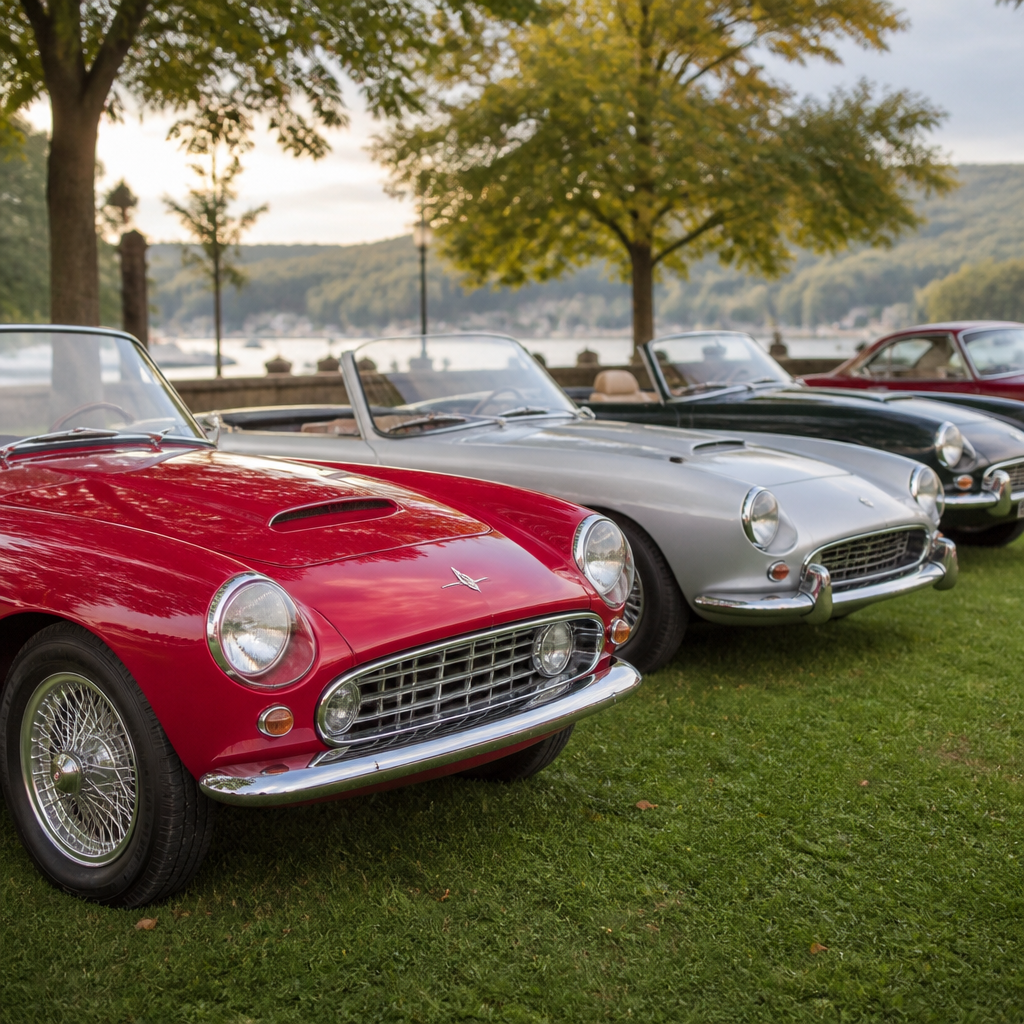

How to choose between agreed value and stated value starts with understanding a simple truth: standard auto insurance is built for daily drivers, while classic car insurance is built for vehicles whose worth depends on rarity, condition, originality, provenance, and market demand. In the classic car world, a 1967 Corvette Sting Ray, a first-generation Ford Bronco, or an air-cooled Porsche 911 can appreciate over time, making ordinary actual cash value coverage a poor fit. I have reviewed policies for collector cars, negotiated with specialty carriers, and seen owners discover too late that the wrong valuation method can cut a claim by tens of thousands of dollars. This guide explains the two valuation models, how they affect claim payments, and how to choose the right structure for your car and your risk tolerance.
Agreed value and stated value are often confused because both let you put a number on the vehicle, but they work very differently at claim time. Agreed value means you and the insurer accept a specific amount before a loss, subject to policy terms, and that amount is generally what the carrier pays if the car is totaled. Stated value, sometimes called stated amount, allows you to state a value for underwriting, but the claim settlement can still be limited by the car’s actual cash value at the time of loss or another policy cap. That distinction matters because classic car insurance exists to protect collectible value, not just transportation value. For owners building an insurance plan under the broader classic car ownership umbrella, this page is the hub: it covers valuation, eligibility, appraisals, usage limits, storage requirements, and the practical tradeoffs that shape insurance decisions.
Insurance for classic cars also differs from mainstream coverage in eligibility rules. Specialty carriers such as Hagerty, American Collectors Insurance, Grundy, and Heacock commonly require secure storage, limited annual mileage, a clean driving record, and a separate everyday-use vehicle. Some policies are written for antique cars, some for modified classics, some for exotics, and some for emerging collectibles from the 1980s and 1990s. The central question is not only what premium you pay, but what standard will be used to value the car when a major claim happens. Once owners understand that point, choosing between agreed value and stated value becomes far less confusing and much more practical.
What agreed value means for classic car insurance
Agreed value is usually the gold standard for insurance for classic cars because it removes most of the uncertainty around a total-loss payout. Before the policy starts, you and the insurer agree on a specific dollar amount based on photos, condition reports, auction comparables, receipts, and sometimes a professional appraisal. If the vehicle is stolen and not recovered, or damaged beyond economical repair, the insurer pays that agreed amount, minus any deductible if the policy has one. On well-written collector policies, depreciation does not reduce the settlement. That is exactly why serious owners prefer it for cars whose market value cannot be captured by generic valuation databases.
In practice, agreed value works best when documentation is strong. If you insure a restored 1969 Camaro SS for $85,000, the carrier will want evidence supporting that figure: restoration invoices, engine and trim details, high-quality photos, and recent comparable sales. I recommend updating those records annually because collector markets move. During the pandemic-era collector boom, values for many analog sports cars and vintage trucks changed quickly; owners who never revisited their policy limits were left underinsured. Agreed value is not a one-time decision you make and forget. It is an active part of responsible ownership, just like maintaining service records or climate-controlled storage.
There are limits, and they are worth noting. Agreed value premiums are often higher than standard policies because the insurer is accepting a defined payout obligation. Carriers may also be selective about usage, driver age, modifications, and storage. If your car is a restomod with a modern drivetrain, custom paint, or non-original chassis work, some carriers will embrace it while others will want more underwriting scrutiny. Even so, when the goal is certainty, agreed value is usually the cleanest solution.
What stated value means and where owners get tripped up
Stated value sounds reassuring because it suggests the insured amount is the amount you will receive, but that is often not how the contract works. In many stated value policies, the number you provide helps set the premium and establishes an upper limit, yet the insurer can still pay the lesser of that amount, the cost to repair, or the vehicle’s actual cash value at the time of loss. Actual cash value generally means replacement cost minus depreciation, a method that can badly undervalue collector vehicles. This is where many owners get tripped up: they think they bought collector-level protection when they actually bought a policy that preserves more insurer discretion.
A typical example involves a driver who insures a 1987 Buick Grand National under a stated value policy for $40,000 because that figure matches current enthusiast-market listings. After a severe accident, the insurer evaluates the car using broader market data, condition assumptions, and depreciation logic more common to conventional auto insurance. The owner expects $40,000; the insurer argues actual cash value is $29,000. That gap is exactly why stated value is often less desirable for classic cars. The stated amount may help if the car is hard to classify, but it does not guarantee a full collector-market payout.
That does not mean stated value is always wrong. It can make sense when a car is in transition, when documentation is thin, when an owner needs interim coverage before a full specialty policy is arranged, or when the insurer will not offer agreed value on a particular vehicle. It can also be useful for modified or unusual vehicles where underwriting is still being worked out. The key is to read the loss settlement language closely. If the policy says the carrier pays the lesser of stated amount or actual cash value, you should assume the lower figure could control the claim.
Agreed value vs stated value: the practical comparison
The difference between agreed value vs stated value is not academic; it determines whether your policy behaves like collector protection or conventional auto coverage with a custom ceiling. If your primary concern is payout certainty after a total loss, agreed value is stronger. If your priority is flexibility, temporary placement, or lower upfront premium, stated value may be acceptable, but only if you understand the downside. In every policy review I have done, the most important page is the one describing loss settlement. Marketing language on the declaration page matters less than the legal wording in the form.
| Feature | Agreed Value | Stated Value |
|---|---|---|
| Total-loss payout basis | Pre-agreed amount, subject to policy terms | Often the lesser of stated amount or actual cash value |
| Depreciation risk | Usually minimized | Often still present |
| Best for | Well-documented collector cars | Interim, unusual, or less-documented vehicles |
| Premium level | Often higher | May be lower |
| Claim certainty | High | Moderate to low, depending on wording |
One nuance matters here: insurers do not all define terms identically. Some specialty carriers use agreed value and guaranteed value in slightly different ways, while some mainstream carriers use stated amount forms designed for commercial or specialty risks rather than pure collector use. Because wording varies, you should verify whether depreciation can apply, whether spare parts are covered, whether modifications are separately scheduled, and whether automatic value increases are available at renewal. These details are part of comprehensive insurance for classic cars, and they often matter as much as the headline valuation method.
How to decide which option fits your classic car
Choose agreed value when your vehicle has stable or rising collector value, strong documentation, and limited-use ownership patterns that fit a specialty insurer’s underwriting box. That includes restored muscle cars, preserved originals, rare European sports cars, antique trucks, and many modern classics. If you would struggle financially or emotionally to accept a disputed value after a theft or total loss, agreed value is usually the right answer. The premium difference is often modest relative to the size of the potential shortfall in a claim.
Choose stated value only after asking a direct question: “If this car is totaled tomorrow, can the insurer pay less than the amount shown on the declarations page?” If the answer is yes, make sure there is a good reason to accept that risk. Sometimes there is. A project car under restoration may not yet qualify for agreed value because its condition is incomplete and changing. A modified vehicle with undocumented build quality may need a temporary stated value policy while receipts and photos are organized. A newly acquired car may need immediate binding before a formal appraisal can be completed. Those are practical scenarios, but they should lead toward a better long-term structure, not replace one.
Also consider how you use the vehicle. If you attend shows, tours, and occasional club events, specialty collector coverage is usually straightforward. If you commute regularly, park on urban streets, or lend the vehicle casually, eligibility narrows and risk rises. In those cases, the cheapest premium is rarely the best guide. The better approach is to match valuation method, usage pattern, and storage reality. Insurance for classic cars works best when the policy mirrors how the car is actually owned.
Documentation, appraisals, and policy details that affect claims
The strongest classic car insurance claims are built before any loss happens. Start with a complete photo set: exterior from all angles, interior, engine bay, trunk, VIN, odometer, and close-ups of rare features. Keep restoration invoices, parts receipts, dyno sheets for performance builds, and any provenance documents such as build sheets, concours judging sheets, or marque expert letters. If the car is highly valuable or difficult to price, obtain a professional appraisal from someone experienced with collector vehicles, not a general used-car appraiser. Appraisals are especially helpful for prewar cars, limited-production homologation models, and significant restorations.
Then examine policy details beyond valuation. Confirm mileage limits, storage requirements, driver exclusions, roadside assistance, spare parts coverage, inflation guard endorsements, and whether tools or automobilia are covered. Ask how partial losses are handled and whether original equipment manufacturer, aftermarket, or reproduction parts will be used. Clarify diminished value issues for high-end classics after major repairs. If you trailer the car, check whether the policy extends to loading and unloading incidents. These questions may seem technical, but they separate a collector-grade policy from a generic one.
Finally, review values at least once a year. Use auction results from Mecum, Barrett-Jackson, RM Sotheby’s, Gooding, and Bring a Trailer listings as directional evidence, while remembering that condition, originality, and region influence results. A number on a screen is not your value unless it aligns with your car’s actual specification. Good insurance follows the real market, not wishful thinking.
Building a complete insurance plan under classic car ownership
As the hub page for insurance for classic cars, this topic reaches beyond agreed value vs stated value. Owners should also think about liability limits, uninsured and underinsured motorist coverage, medical payments, comprehensive deductibles, and transport coverage when a car is shipped for restoration or sale. If you store multiple vehicles, ask about collection policies and blanket options. If you belong to marque clubs or participate in sanctioned events, verify whether tour, parade, exhibition, or track-related exclusions apply. Most collector policies exclude timed competition, and many exclude damage on a race track even during noncompetitive sessions.
The main takeaway is straightforward. Agreed value is usually the better choice for a genuine collector vehicle because it aligns insurance with collectible market reality and reduces claim uncertainty. Stated value can serve a purpose, but only when you understand that the stated figure may not be the final payout. Read the policy form, document the car thoroughly, and update values as the market changes. If you are reviewing your classic car ownership plan now, pull your declarations page and loss settlement clause today. One careful policy review can prevent an expensive surprise later.
Frequently Asked Questions
What is the difference between agreed value and stated value coverage?
Agreed value and stated value may sound similar, but they work very differently at claim time. With agreed value coverage, you and the insurer establish the car’s insured value upfront, and that amount is typically what is paid if the vehicle is declared a total loss, assuming the policy terms have been met and there is no deductible or other limitation that applies. This approach is popular for classic, collector, antique, and specialty vehicles because it avoids the depreciation-based settlement method used in standard auto insurance. It gives the owner much more certainty, which matters when a car’s worth is tied to rarity, restoration quality, originality, documentation, and current collector demand.
Stated value coverage, by contrast, generally allows you to declare a value for the vehicle, but that number is not always a guaranteed payout. In many policies, the insurer may pay the stated amount or the vehicle’s actual cash value, whichever is less, depending on the contract language. That means an owner could list a higher value on the policy, pay a premium based on that figure, and still receive less after a loss if the insurer determines the market value was lower. Because of that gap between what is listed and what may actually be paid, stated value often creates confusion. When deciding between the two, the key issue is not just what value appears on the declarations page, but how the settlement provision is written in the policy itself.
When is agreed value usually the better choice for a classic or collector car?
Agreed value is usually the stronger choice when the vehicle has collectible characteristics that make ordinary valuation methods unreliable or unfair. If the car is rare, appreciates over time, has a documented restoration, retains original components, carries important provenance, or trades in a niche enthusiast market, agreed value coverage is often the most appropriate option. Vehicles such as a 1967 Corvette Sting Ray, an early Ford Bronco, or an air-cooled Porsche 911 can move significantly in value based on condition, trim, originality, auction results, and buyer demand. In those situations, relying on standard actual cash value methods can leave an owner underinsured because conventional insurance tends to treat vehicles as depreciating transportation rather than appreciating collectibles.
Agreed value also makes sense for owners who want predictability. If you have invested heavily in restoration work, sourced hard-to-find parts, or maintained detailed records that support a specific market value, locking in that amount can provide peace of mind. It is especially useful when the car is not a daily driver and instead is stored carefully, driven on a limited basis, and insured under a collector policy designed around hobby use. In short, agreed value is often better when the car’s worth is too specialized to be captured by general market depreciation models and when you want to minimize disputes over value after a major claim.
Are there situations where stated value coverage makes sense?
Yes, stated value coverage can make sense in certain circumstances, but it is important to understand exactly what problem it is solving. In some cases, stated value is used when a vehicle does not fit neatly into a standard auto policy but also may not qualify for a full collector policy with agreed value terms. For example, a modified vehicle, a specialty-use vehicle, or a car with unusual equipment might need some acknowledgment of added worth beyond a basic book value. Stated value can also be used when the owner wants to alert the insurer that the vehicle has qualities that affect its value, even if the carrier is unwilling to guarantee that number through an agreed value endorsement.
That said, stated value is often better viewed as a middle-ground option rather than the gold standard for collector cars. It may provide more flexibility than plain actual cash value coverage, but it still may not deliver the certainty many classic car owners expect. If you are considering stated value, you should read the loss settlement section carefully and ask direct questions: Will the insurer pay the stated amount in a total loss, or only up to that amount? Can the company still rely on actual cash value? How are modifications, receipts, and appraisals treated? If the answers are vague, the policy may not offer the protection you assume it does. For owners of vehicles with meaningful collectible value, stated value can work, but only when its limitations are clearly understood and accepted.
How do you determine the right insured value for a collector vehicle?
Choosing the right insured value starts with evidence, not guesswork. A solid valuation should consider the car’s current condition, originality, mileage, restoration quality, ownership history, trim level, drivetrain, factory options, and recent market activity for comparable vehicles. Documentation matters. Appraisals, purchase records, restoration invoices, photographs, auction results, marque-specific price guides, and sales listings for comparable examples can all help support a realistic number. A numbers-matching car with documented provenance may justify a much different value than a visually similar example with replacement parts, rust history, or incomplete records.
The best approach is to be accurate rather than optimistic. If you insure the car for too little, you may not be able to repair or replace it properly after a loss. If you insure it for too much, you may simply pay more premium than necessary, and in some policy structures that still does not guarantee a larger claim payment. Review the value regularly, especially in fast-moving collector markets where certain models can rise or fall quickly. If the car has undergone a major restoration, won awards, or benefited from a surge in demand, the insured value may need updating. Owners should also confirm whether the insurer requires periodic reviews, fresh photos, or a professional appraisal to maintain the selected value. The goal is to insure the vehicle at a supportable current market figure that reflects what it would realistically cost to replace a similar example.
What questions should you ask an insurer before choosing between agreed value and stated value?
Before you buy either type of coverage, ask the insurer to explain the settlement process in plain language. The most important question is simple: If the car is a total loss, exactly how is the payout calculated? Do not stop at the label “agreed value” or “stated value.” Ask whether the policy pays the full agreed amount, whether depreciation applies, whether actual cash value can still be used, and whether any deductibles or exclusions could reduce the payment. You should also ask how partial losses are handled, whether original equipment manufacturer parts are considered, and whether the company will pay for specialized repair shops familiar with collector vehicles.
Additional questions should focus on eligibility and policy fit. Ask about mileage limits, storage requirements, driver qualifications, usage restrictions, and whether modifications need to be separately documented. Confirm what evidence the insurer wants to support value, such as appraisals, photos, receipts, or market comps. It is also wise to ask how often the vehicle’s insured value can be updated and whether the policy includes extras that matter to collectors, such as spare parts coverage, automobilia coverage, towing with flatbed service, or coverage for vehicles under restoration. The more precise your questions, the easier it becomes to compare policies on substance rather than marketing language. That is especially important when protecting a vehicle whose value depends on far more than age alone.