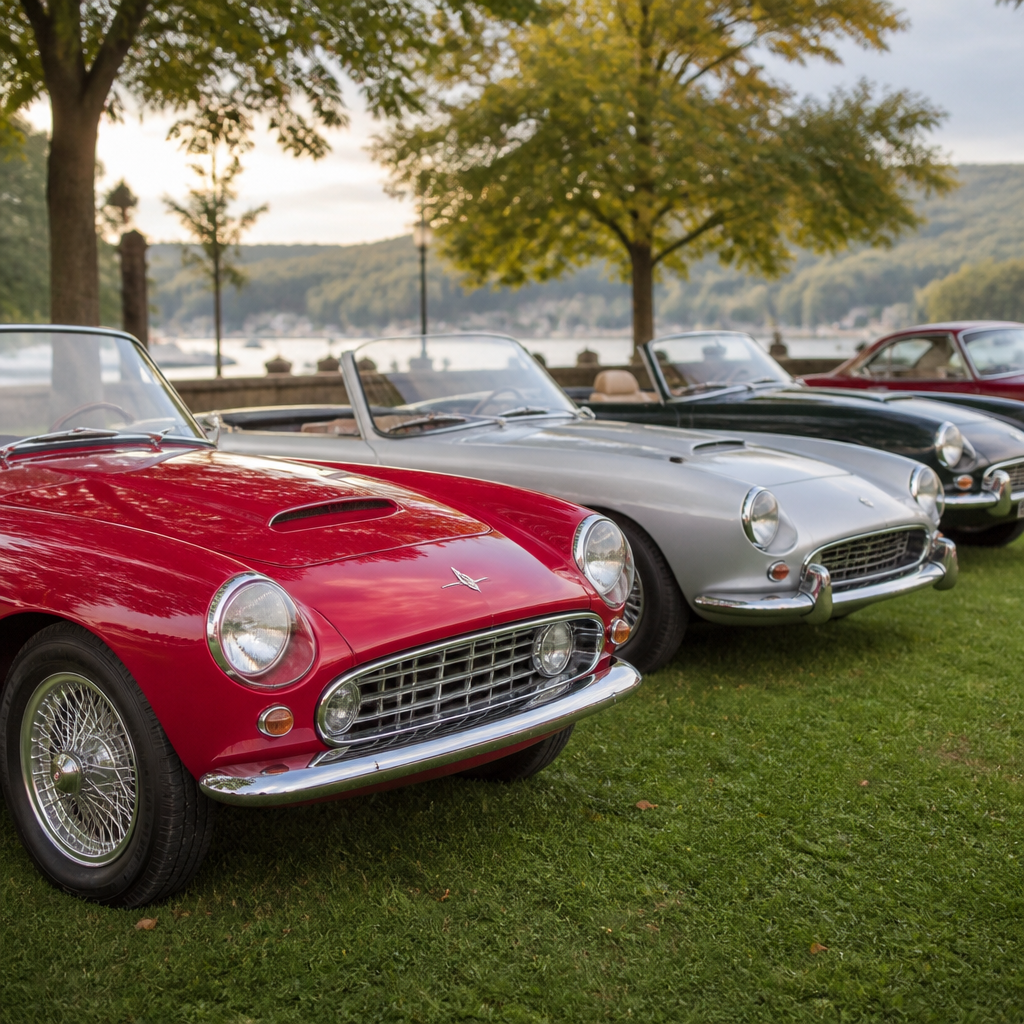
Classic car insurance claims work differently from ordinary auto claims because the policy, the vehicle, and the valuation method are all specialized. If you own a restored Mustang, a numbers-matching Corvette, an air-cooled Porsche, or a prewar Packard, you are not insuring simple transportation. You are protecting rarity, provenance, restoration labor, and a market value that can move faster than standard depreciation tables. That difference shapes what to expect when damage, theft, fire, or liability triggers a claim.
In practical terms, classic car insurance usually refers to coverage written for collector vehicles that are driven less, stored more carefully, and valued under an agreed value or guaranteed value structure rather than actual cash value. Agreed value means you and the insurer set the vehicle’s insured amount in advance, typically based on photos, appraisals, receipts, and market comparables. If a covered total loss occurs, that valuation framework becomes the center of the claim. Standard auto insurance, by contrast, often pays actual cash value, which can understate the worth of a collector vehicle dramatically.
This matters because claim outcomes are shaped long before a loss happens. I have seen two owners file nearly identical claims after garage fires, yet receive very different settlements because one had current documentation, restoration invoices, and a clear policy endorsement for spare parts, while the other relied on memory and an old bill of sale. Understanding the process now helps you choose the right policy, organize records, and avoid expensive surprises later. As a hub for insurance for classic cars, this guide explains how claims are handled, what adjusters review, how payouts are determined, and where owners most often run into trouble.
How classic car insurance claims differ from standard auto claims
The first difference is valuation. Most collector policies use agreed value, stated value, or less commonly actual cash value. Agreed value is usually the strongest option for a serious collector because the insured amount is documented when the policy is written. Stated value can sound similar but may allow the insurer to pay either the stated amount or the lower actual cash value, depending on policy language. That distinction becomes critical during a total loss claim. Owners should read the declarations page and the valuation clause carefully, not just the premium summary.
The second difference is usage. Collector policies often require limited annual mileage, secure storage, no daily commuting, and access to a separate regular-use vehicle. If a loss occurs while the car is being used outside those terms, coverage questions can arise. A claim after a Sunday show drive is usually straightforward if the use fits the policy. A claim while commuting to work every day in a collector-insured vehicle may trigger deeper scrutiny. Insurers are not looking for technicalities in every file, but they will verify whether the risk matches what was underwritten.
The third difference is repair expectations. With a modern car, insurers often rely on broad repair networks, aftermarket parts, and standard labor times. Classic vehicles may require marque specialists, discontinued components, fabrication, paint blending across hand-finished panels, and transport to a restoration facility several states away. Good collector policies recognize that reality and may offer specialist repair options, original parts coverage, automobilia coverage, spare parts endorsements, and flexible shop selection. Those features directly affect the claim experience after even a minor accident.
What happens when you file a claim
The claims process usually begins with immediate loss reporting. The owner contacts the insurer, provides the policy number, date and location of the incident, a description of what happened, photos if available, and police or fire reports when relevant. If the car was stolen, recovered, damaged in transit, or harmed during a show event, those details matter because different coverage parts and sublimits may apply. Report the claim promptly. Delays can complicate inspections, evidence preservation, and subrogation against another party.
After the first notice of loss, the insurer assigns an adjuster. In a well-run classic car claim, the adjuster reviews the policy form, endorsements, valuation documents, storage details, and pre-loss condition. They may request restoration receipts, appraisals, recent photos, mileage records, and correspondence with a transport company or repair shop. If another driver was involved, liability facts are developed in parallel. If the vehicle can be repaired, the adjuster works with the shop on labor scope, parts sourcing, hidden damage, and refinishing standards. If the damage appears severe, the file moves toward total-loss valuation review.
Owners often ask how long a classic car claim takes. Straightforward glass or weather-related claims can move quickly. Structural damage, fire, theft recovery, or disputes over authenticity can take much longer because parts availability and value verification slow the file. The timeline usually depends on documentation quality, shop expertise, and whether the adjuster understands collector vehicles. The best way to help the process is to keep communication organized, answer requests quickly, and avoid authorizing major tear-down work without insurer approval.
Common claim scenarios and what to expect from each
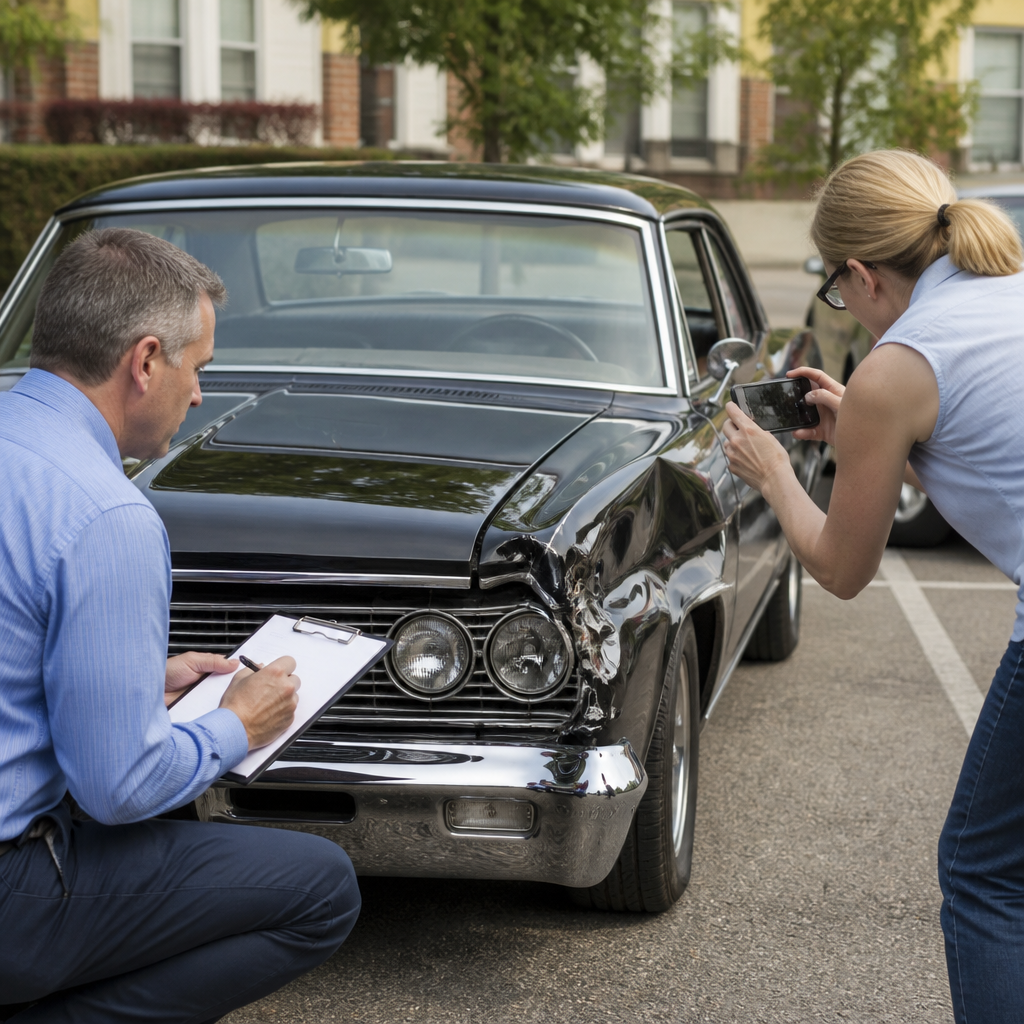
Collision claims are common, especially low-speed impacts during pleasure driving, transport loading, or parking at events. The key question is whether the damage can be repaired to pre-loss condition without compromising originality or market value. On a standard car, replacing a fender may be routine. On a 1967 Jaguar E-Type or a split-window Corvette, metal shaping, period-correct trim, and paint match quality can turn a minor hit into an expensive specialty repair. Expect the adjuster to examine whether original parts can be saved and whether diminished collector desirability is an issue, even if the policy does not separately cover diminished value.
Comprehensive claims include theft, vandalism, fire, hail, falling objects, and animal damage. Theft cases require police reports and careful inventory of parts, documentation, and accessories. Fire losses often trigger deeper investigation because insurers need to identify the cause, extent, and whether modifications contributed. Hail on a classic with hand-formed panels can be more difficult to correct than hail on a modern aluminum hood. Flood losses demand special caution because wiring, upholstery, rust risk, and contamination can render an apparently fixable car uneconomical to restore properly.
Liability claims follow if your classic car injures someone or damages property. These claims are less about the collector value of your own vehicle and more about bodily injury, legal defense, and property damage caused to others. If you attend tours, parades, charity events, or judged shows, confirm whether your policy addresses event participation. Some activities, especially timed competition, are often excluded. Medical payments, uninsured motorist, and umbrella coverage also deserve attention because serious liability losses can exceed the limits owners casually select.
Documentation that strengthens your claim
The strongest classic car claim file starts before the loss. Maintain current, high-resolution photos of the exterior, interior, engine bay, trunk, undercarriage, VIN tags, casting numbers, and unique accessories. Keep organized receipts for restoration work, paint, upholstery, driveline rebuilds, chrome, and rare parts. If the car has show awards, expert appraisals, or historical provenance, retain those records too. In practice, an owner who can produce dated evidence of condition and investment gives the adjuster a concrete basis to approve value and repair scope.
Storage and usage records can matter more than owners expect. If the policy required garaging, document the garage. If mileage was limited, annual odometer photos help. If the vehicle was transported on an enclosed carrier, save the bill of lading and pre-transport inspection images. I have seen transit claims turn on whether prior scratches were documented. Good records reduce friction because they answer questions before they become disputes.
| Document | Why it matters in a claim | Best practice |
|---|---|---|
| Agreed value paperwork | Supports total-loss settlement amount | Update when market value changes materially |
| Photos | Shows pre-loss condition and originality | Refresh at least yearly and after upgrades |
| Restoration receipts | Confirms investment and parts used | Store digitally and by project phase |
| Appraisals | Provides expert valuation context | Use qualified appraisers familiar with the marque |
| Storage and mileage records | Supports compliance with policy terms | Keep dated odometer and garage photos |
How insurers determine repairability, value, and total loss
A classic car can be declared a total loss even when it is physically repairable. The decision usually depends on repair cost, parts availability, salvage considerations, and whether the finished vehicle would still meet market expectations. On a collector car, labor dominates many estimates because handwork replaces assembly-line parts replacement. If repairing a rust-free original quarter panel requires dozens of hours from a metal specialist, the cost may exceed what a standard estimating platform suggests. That is why owners should not assume a generic estimate will control the outcome.
For total losses, the valuation clause governs. Under agreed value, the settlement should align with the insured amount, subject to deductible and policy conditions. Under actual cash value, the insurer may rely on comparable sales, auction data, expert opinions, and condition grading. Resources such as Hagerty Valuation Tools, collector auction results from Mecum and Barrett-Jackson, and marque-specific market reports can influence the discussion. However, headline auction prices do not automatically define your car’s value. Provenance, driveline originality, options, and restoration quality all matter.
Salvage retention is another issue owners should ask about in advance. Some collectors want to keep a totaled vehicle for parts, future restoration, or sentimental reasons. Policies and state rules differ on whether owner retention is allowed and how the salvage value deduction is calculated. Title branding can also affect future insurability and resale. If preserving the remains of a historically significant car matters to you, discuss salvage options before a loss, not after a settlement offer appears.
Choosing the right insurer and policy for smoother claims
Not every insurer handles collector claims equally well. The strongest providers in this niche understand limited-use underwriting, agreed value structures, specialty repair networks, and enthusiast expectations. When comparing insurers, ask direct questions: Can I choose my own restoration shop? Are OEM, NOS, or reproduction parts treated differently? Is spare parts inventory covered? What about tools, automobilia, or coverage during transport and while at a show? How are partial losses estimated when custom fabrication is required?
Look closely at exclusions and endorsements. Many collector policies exclude racing, timed events, commercial use, and routine commuting. Some have flexible pleasure-use wording; others are tighter. Inflation and market movement also matter. A policy set three years ago may now be underinsured if values in your segment have risen sharply, as happened in several air-cooled Porsche, early Bronco, and analog Ferrari markets. Review agreed value annually and after major work.
Claims service reputation should weigh as heavily as premium. Read policy forms, not just marketing summaries. Check complaint data, ask your restoration shop which carriers pay fairly, and learn whether adjusters have collector expertise. A low premium can become expensive if the claims process forces you into an unsuitable shop or a value dispute. The real test of classic car insurance is not the quote; it is the settlement.
Final takeaways for classic car owners
Classic car insurance claims are easier to manage when the policy matches the vehicle and the owner keeps disciplined records. The essentials are clear: choose agreed value when appropriate, understand usage restrictions, document condition thoroughly, confirm repair-shop flexibility, and review endorsements for spare parts, transport, and event exposure. When a loss happens, report it quickly, preserve evidence, and work from documentation rather than assumptions. That approach improves speed, accuracy, and settlement quality.
The biggest benefit of specialized insurance for classic cars is not simply a higher insured number. It is a claims framework built around collector realities: originality, rarity, specialist labor, and market-sensitive valuation. Owners who treat insurance as part of stewardship, not just compliance, consistently get better outcomes. They know what the policy says, what the car is worth, and what proof will be needed on the worst day.
Use this page as your starting point for every insurance decision tied to classic car ownership. Review your current policy this week, update your photos and receipts, and ask your insurer the hard claims questions before you need the answers in a hurry.
Frequently Asked Questions
1. How is a classic car insurance claim different from a standard auto insurance claim?
Classic car insurance claims are handled differently because the vehicle itself is not valued like an everyday commuter car. With a standard auto policy, insurers typically rely on actual cash value, which factors in age, mileage, and depreciation. With a classic car policy, the claim often starts from an agreed value or stated value structure, depending on the policy language. That means the insurer is not simply asking what an old car is worth on a generic pricing guide. Instead, the claim may involve documented restoration work, originality, parts rarity, maintenance records, photos, appraisals, and current collector-market conditions.
In practical terms, you can expect more attention to details that do not matter in ordinary claims. The insurer may look closely at whether the vehicle is numbers-matching, whether replacement parts are original, reproduction, or custom-fabricated, and whether prior restoration work affects authenticity and market value. A claim involving a restored Mustang, an air-cooled Porsche, or a prewar Packard may also involve specialist adjusters, collector-car underwriters, or appraisers who understand vintage vehicles. This usually makes the process more specialized and sometimes slower than a routine collision claim, but it is designed to account for the fact that a classic car represents more than transportation. It represents collector value, labor, provenance, and scarcity.
2. What should I do immediately after damage, theft, fire, or another loss involving my classic car?
The first step is to protect safety and prevent further damage, then notify your insurer as soon as possible. If there is an accident, fire, theft, vandalism, or weather-related loss, document everything right away. Take clear photos and video of the car, the surrounding scene, any damaged parts, debris, skid marks, storage conditions, and anything else that may help explain what happened. If the vehicle was stolen, file a police report immediately and provide the insurer with all identifying information, including VIN, serial numbers, distinguishing features, restoration details, and recent photographs. If there is fire or weather damage, obtain incident reports from the fire department or other responding authorities when available.
It is also important to preserve records that support the car’s value and condition before the loss. Gather your policy, appraisal documents, restoration invoices, parts receipts, service records, event participation records, and any pre-loss photos. If the car must be moved, ask the insurer where it should be towed and whether they have a preferred storage or restoration network familiar with collector vehicles. Avoid authorizing major repairs before the insurer inspects the vehicle unless emergency steps are needed to prevent further damage, such as covering broken glass or protecting the car from weather exposure. The more complete your documentation is from the beginning, the easier it is to show not just that damage occurred, but what the car was worth and what level of repair is appropriate.
3. How is the value of a classic car determined during a claim?
The answer depends heavily on the type of policy you purchased. Many classic car owners choose agreed value coverage, which means you and the insurer established a value for the vehicle when the policy was written. If the car is a total loss and the policy terms are satisfied, that agreed amount often becomes the baseline for settlement, subject to deductibles and policy conditions. This is one of the biggest advantages of specialized collector-car insurance, because it reduces the uncertainty that often comes with ordinary actual cash value policies. However, even with agreed value coverage, the insurer may still investigate the condition of the vehicle, recent changes, undisclosed modifications, storage compliance, and the facts of the loss.
For partial losses, valuation becomes more nuanced. The insurer may evaluate not only the cost to repair the visible damage, but also the availability and cost of period-correct parts, specialized labor rates, paint matching, custom trim work, and any effect on originality or collector desirability. If the vehicle is rare, recently restored, or supported by strong provenance, the claim may involve appraisals, auction comparables, marque experts, or market data specific to that model and condition level. In some cases, disputes arise because the owner believes the car’s rarity, documentation, or restoration quality places it above ordinary market examples. That is why thorough records matter so much. The stronger your documentation, the easier it is to support a valuation that reflects the real collector-market position of the vehicle.
4. Can I choose my own repair shop, and what happens if original or rare parts are hard to find?
In many classic car claims, owners prefer to use a restoration shop or marque specialist rather than a standard collision center, and for good reason. Vintage sheet metal, chrome, woodwork, carburetion systems, period upholstery, and hand-finished paint often require expertise that mainstream repair facilities do not have. Whether you can choose your own shop depends on your policy and state law, but specialized classic car insurers are often more familiar with the need for expert restoration work. It is wise to review your policy in advance and ask how repair shop selection is handled before a loss ever happens. During the claim, the insurer may inspect the proposed repair facility, review estimates, and compare labor rates, but a quality collector policy usually recognizes that specialty labor is part of the exposure being insured.
Parts availability can significantly affect both timeline and cost. Unlike modern vehicles, classic cars may require new old stock components, salvage parts, custom fabrication, reproduction pieces, or restoration of damaged original parts rather than replacement. That can delay repairs and create negotiation points in the claim. The insurer may ask whether a reproduction part is acceptable, whether a damaged original component can be restored, or whether an exact period-correct replacement is necessary to preserve value. For many collectors, especially owners of numbers-matching or highly original vehicles, that distinction matters a great deal. A well-handled claim should take into account authenticity, fit, finish, and impact on collector value, not just the cheapest way to make the car drivable again. Clear communication with the adjuster and the repair specialist is essential to keep the claim aligned with the car’s true status and purpose.
5. What if my classic car is declared a total loss, and should I expect issues like diminished value or salvage concerns?
If a classic car is declared a total loss, the outcome is usually shaped by the valuation method in the policy and the extent of the damage relative to repair cost, rarity, and post-repair market impact. With agreed value coverage, a total loss settlement is generally more predictable than with a standard auto policy, because the insured amount was established ahead of time. Even so, the insurer will still confirm that the loss falls within coverage and that policy conditions were met, such as proper storage, usage limitations, and any reporting obligations. Once the claim reaches total-loss status, you may also need to address title branding, salvage retention rights, and whether you want to keep the vehicle for restoration, parts, or sentimental reasons. In some cases, retaining the salvage reduces the payout by the salvage value amount.
Diminished value can be a major concern with collector vehicles because even expertly repaired damage may affect market perception, originality, or show-level desirability. A car with a documented collision or fire history may not command the same price it did before the loss, especially if it is a rare, highly original, or investment-grade example. Some policies address this issue more clearly than others, so it is important to understand whether diminished value is covered, excluded, or handled indirectly through agreed value terms. Salvage branding can also significantly affect future resale, financing, and insurability. If you are facing a possible total loss, ask detailed questions about settlement options, title consequences, documentation requirements, and whether an independent appraisal or specialist opinion is appropriate. For a true collector car, the financial result of a total loss claim can depend as much on the policy structure and documentation as on the physical damage itself.