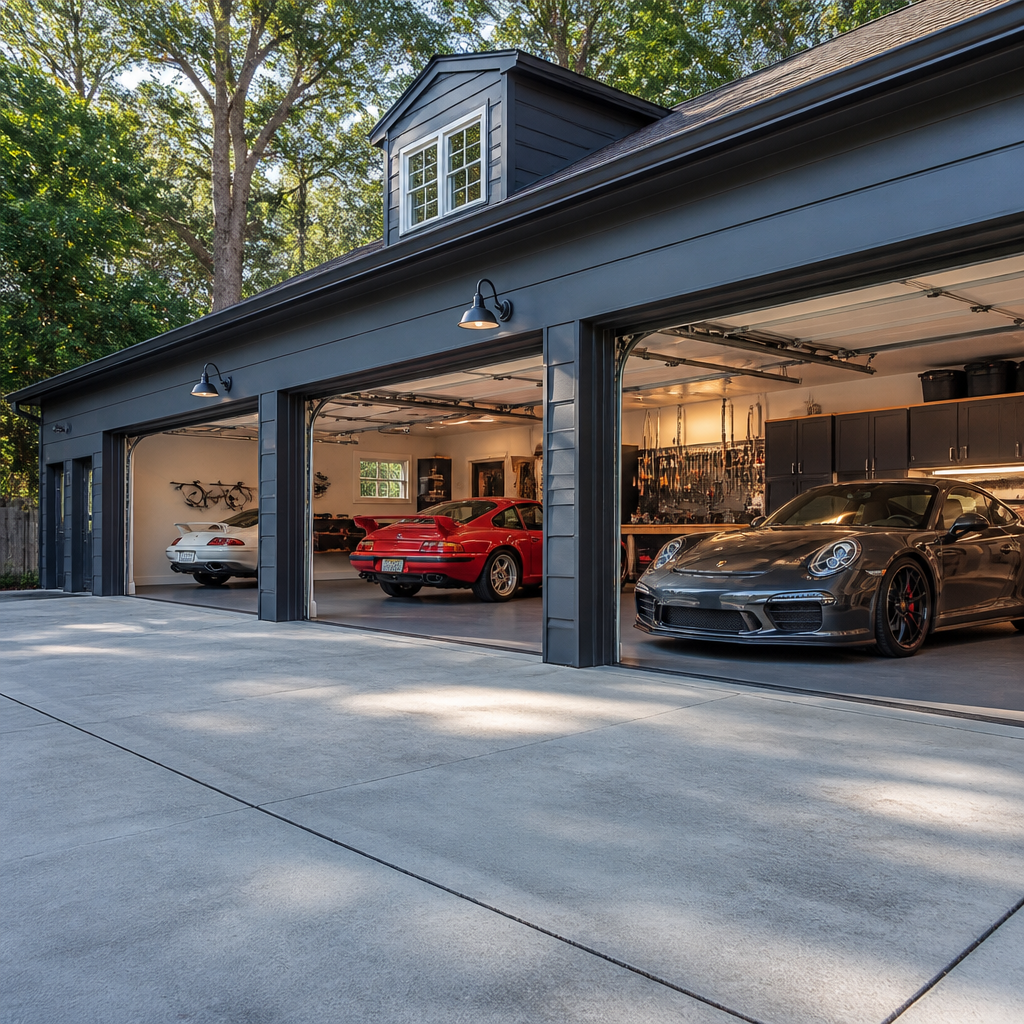
A well-planned multi-car garage setup does far more than store vehicles: it protects long-term value, improves maintenance access, supports detailing and restoration work, and turns unused square footage into the operational heart of a classic car lifestyle. In practice, “multi-car garage setup” means designing a space that safely houses two or more vehicles while balancing circulation, storage, environmental control, lighting, security, workshop capability, and comfort. Within classic car culture, the garage often doubles as a man cave, display room, parts depot, and social space, so the design must serve both preservation and enjoyment. I have helped enthusiasts rethink cramped garages that scratched door edges, trapped moisture, and buried tools behind stacked boxes; the best transformations started with measurement, traffic flow, and honest priorities. Before buying cabinets or decorating walls, define the mission. Is the space mainly for storage, weekend wrenching, concourse prep, or hosting friends during race weekends? The answer dictates floor layout, electrical capacity, seating, and climate decisions. This hub article covers the full picture of garage and man cave ideas for collectors, from dimensions and lifts to lighting, flooring, security, and lounge zones, so you can build a setup that works every day and still feels special.
Start with layout, dimensions, and traffic flow
The foundation of any multi-car garage setup is geometry. Most problems enthusiasts blame on “not enough space” actually come from poor circulation planning. Begin by measuring interior wall-to-wall dimensions, ceiling height, door opening width, obstruction points, and the actual footprint of each vehicle, including mirrors and door swing. A full-size classic coupe from the 1960s can be over 16 feet long and nearly 7 feet wide, while a modern truck may need even more depth and height. As a rule, you want room not only to park but to walk around the car, open doors without contact, roll jacks, and access shelves. In a two-car bay, comfortable use usually means more than the bare minimum builder spec.
Plan parking around primary use. If the garage is mostly storage, you can tighten side clearance and rely on staggered entry. If you detail or repair cars regularly, leave working aisles at the driver side and front corners where tools, creepers, and carts travel. Place the most frequently driven vehicle in the easiest exit position. For collectors, I recommend mapping the floor with painter’s tape before buying any fixtures. Tape out car footprints, toolbox depth, cabinet swing, and workbench width. This quick mockup reveals whether a chest freezer, golf cart, or wall-mounted hose reel will become a constant annoyance. It also helps determine if a lift is realistic.
Ceiling height is often the deciding factor in a serious multi-car garage setup. Many four-post storage lifts need roughly 10 to 12 feet depending on vehicle stack height, while some low-rise service lifts can function with standard residential ceilings. Door tracks matter too. A high-lift door conversion or jackshaft opener can free critical overhead space. These are not cosmetic upgrades; they change what the building can do. If you are still in the planning or construction phase, widen doors wherever possible. An 18-foot double door may look efficient, but two separate doors reduce risk when maneuvering and can simplify climate control in daily use.
Choose storage systems that protect cars and speed up work
Storage should reduce time spent hunting for supplies and lower the chance of accidental damage. In collector garages, random shelving often creates the worst hazards: sharp corners at fender height, overloaded racks above paintwork, and fluid bottles stored where temperature swings degrade them. Build storage in zones. Consumables such as microfiber towels, wash chemicals, oils, and tape belong near the workbench or detailing sink. Heavy tools, floor jacks, and impact equipment belong low and close to the service bay. Seasonal items like car covers, battery tenders, and show-field gear can go higher if labeled clearly.
Cabinet choice matters. Powder-coated steel cabinets from brands such as NewAge, Lista, and Gladiator hold weight, resist dents better than thin DIY metal units, and clean easily. Plywood shop cabinets cost less and can be customized around wheel tubs or awkward corners, but finish them properly so humidity and spills do not shorten their life. Slatwall and pegboard both have a place. Slatwall looks cleaner and supports modular accessories; pegboard is inexpensive and ideal behind benches. Closed cabinets are better near display areas because they reduce visual clutter and dust. Open shelving works in utility zones if bins are standardized and labeled.
A good hub garage also needs dedicated storage for wheels, parts, and paperwork. Tire racks should keep sets off the floor and away from heat sources. Rare trim, glass, and body panels need padded vertical storage, not piles against drywall. Manuals, receipts, and restoration photos should live in binders or waterproof document boxes because provenance directly affects resale value in many classic segments. If you buy duplicate parts “just in case,” inventory them. A simple spreadsheet or app such as Sortly prevents wasted reorders and helps when selling a car with spares included.
| Garage Zone | Primary Purpose | Best Storage Choice | Key Benefit |
|---|---|---|---|
| Service bay | Repairs and inspections | Rolling toolbox and low cabinets | Fast access to heavy tools |
| Detailing area | Washing, polishing, interior care | Chemical cabinet and towel bins | Keeps supplies organized and paint-safe |
| Parts wall | Spare components and labeled bins | Steel shelving with totes | Reduces lost parts during projects |
| Display/lounge edge | Clean visual presentation | Closed cabinets | Controls clutter and dust |
| Overhead space | Seasonal or low-use items | Ceiling racks | Preserves floor area for vehicles |
Control lighting, power, and climate like a workshop
Lighting is one of the highest-return upgrades in any garage and man cave. Dim garages hide fluid leaks, swirl marks, and hardware. For general illumination, high-output LED fixtures with a color temperature around 4000K to 5000K produce clear, neutral light suitable for both mechanical work and paint inspection. Aim for layered lighting: overhead ambient light, task lighting over benches, under-cabinet lights for close work, and vertical side lighting where you inspect body panels. Enthusiasts often install bright ceiling fixtures but ignore shadows along rocker panels and wheel arches, where defects are easiest to miss.
Electrical planning should anticipate future load, not just current needs. Dedicated 20-amp circuits for power tools, compressors, refrigerators, and heaters prevent nuisance trips. If an EV or plug-in hybrid shares the space, reserve capacity for Level 2 charging. Many collector garages also benefit from 240-volt service for larger air compressors or welders. Place outlets higher than bench surfaces in work areas and at regular intervals along walls so extension cords do not cross walk paths. Ceiling outlets are useful for retractable reels, door openers, and corded work lights. Good garages feel effortless because power is available where tasks actually happen.
Climate control is equally important for preserving classic cars. Moisture drives corrosion, mold, and upholstery degradation. In humid regions, a mini-split heat pump paired with a dehumidifier keeps temperatures stable and relative humidity manageable, often around the 45 to 55 percent range that many collectors target. In cold climates, avoid unvented combustion heaters that add moisture to the air. Insulation in walls and garage doors improves comfort and reduces condensation on metal surfaces. If the space is sealed tightly, think about ventilation during painting, fuel system work, or engine warm-up. Air quality matters as much as temperature, especially in attached garages.
Pick floors, lifts, and work surfaces that fit real use
Flooring decisions should be based on chemical resistance, cleaning needs, and how the garage is used, not just looks in photos. A properly prepared epoxy or polyaspartic coating can brighten the room, resist oil staining, and make cleanup easier. Surface preparation is the determining factor; if the slab is not ground, repaired, and moisture-tested correctly, even premium coatings can fail. Interlocking floor tiles are popular because they install quickly and can be replaced individually, but they may trap grit underneath and are not ideal under jack stands unless rated appropriately. Bare sealed concrete is the budget baseline and works well if kept clean.
Lifts are transformative when chosen carefully. A four-post lift is usually the best option for collectors who want extra parking and undercar access for light service. It is stable, friendly to hobbyists, and ideal when one car can live above another. A two-post lift offers superior wheel-off service access for brake, suspension, and exhaust work, but it demands correct slab thickness, anchor installation, and user discipline. Low-rise lifts are excellent in tighter garages where you need better ergonomic access without committing to full-height equipment. Always verify ceiling height, vehicle weight, center of gravity, and manufacturer specifications before purchase.
Work surfaces deserve the same thought. A solid bench with a hardwood or stainless top, bench vise, and easy access to compressed air becomes the command center for every project from carburetor rebuilds to trim restoration. If space permits, separate dirty mechanical work from clean detailing or electronics work. That separation prevents metal filings, grease, and solvents from contaminating polishing pads or interior parts. Wall-mounted fold-down benches can help in narrow garages, but fixed benches feel better for serious use. The rule is simple: if a task happens more than twice a season, give it a permanent home.
Build security, safety, and preservation into the design
Classic cars attract attention, and a multi-car garage often concentrates high value in one location. Security starts with the shell of the building. Reinforced service doors, quality deadbolts, impact-rated hardware, and covered windows reduce easy entry points. Smart cameras from brands like Ring, Arlo, and Ubiquiti add visibility, but their real value comes from correct placement at vehicle doors, side entries, and interior bays. Pair cameras with motion lighting and monitored alarms. If you store rare parts or valuable memorabilia, use lockable cabinets and avoid showcasing every asset from the street when the garage door opens.
Fire safety is just as important. Keep ABC extinguishers accessible at exits and near work zones, not buried in cabinets. Store gasoline, solvents, and oily rags in approved containers. A steel flammables cabinet is a smart addition for garages that support restoration or paint correction work. If you use battery chargers, welders, or space heaters, inspect cords and outlets routinely. I have seen more preventable garage incidents caused by overloaded power strips and careless fuel storage than by major equipment failure. Basic discipline beats expensive gear every time.
Preservation also means reducing long-term wear on cars. Use quality battery maintainers for infrequently driven vehicles, especially on older cars with parasitic draw or alarm systems. Wash bay drainage, absorbent mats under known leakers, and breathable car covers for fully clean vehicles all help. Avoid trapping moisture under non-breathable covers. Rodent prevention matters in rural and suburban garages alike; seal wall penetrations, remove food sources, and inspect engine bays and trunks during storage periods. A great garage setup protects against visible threats and subtle damage that accumulates quietly over years.
Create a man cave that supports the hobby without taking over the shop
The best garage and man cave ideas respect the cars first. Lounge space should enhance the hobby, not block movement or fill prime wall area with furniture you rarely use. Start by deciding how social the space needs to be. If you host two friends for coffee and bench racing, a compact seating cluster, small fridge, and wall-mounted television may be enough. If you run club meetups, race watch parties, or auction nights, plan for more flexible seating, stronger climate control, and durable finishes that tolerate foot traffic without compromising the work zone.
Design the lounge around boundaries. Keep upholstered seating away from grinding, sanding, and wet detailing areas. Use rugs sparingly, since they trap dust and can become slip hazards. Tall bar tables often work better than deep sofas in active garages because they preserve sightlines and floor area. Display pieces should have meaning: vintage signs, framed build sheets, race posters, dealer brochures, neon, or a shelf of trophies tell a better story than generic decor. Good garage man caves feel personal because they document ownership, repairs, road trips, and family history.
Technology can be integrated cleanly. Wall-mounted speakers, a streaming display for races or how-to videos, Wi-Fi coverage for diagnostic tools, and a small desk for ordering parts all add utility. Just keep cords managed and electronics protected from dust. If you want a premium feel, coordinate cabinet colors, seating materials, and wall finishes with the cars themselves. The objective is not to mimic a sports bar. It is to create a space where maintenance, display, and conversation coexist naturally. Walk through your plan once as a mechanic and once as a guest; if both routes make sense, the layout is working.
Building a multi-car garage setup is ultimately about aligning space with the way you actually live the hobby. Start with measurements, circulation, and vehicle priorities. Then add storage that reduces clutter, lighting that reveals details, power and climate systems that support year-round use, and floors and lifts that match maintenance goals. Protect the investment with security, fire safety, humidity control, and smart storage habits. Finally, add man cave elements that make the garage welcoming without compromising function. The strongest garage hubs in classic car culture are not the most expensive ones. They are the most intentional. Every cabinet, outlet, bench, and chair has a reason for being there. If you are planning upgrades, sketch the layout, list your must-haves, and build in phases. Done thoughtfully, your garage becomes more than parking. It becomes the place where cars stay safer, projects move faster, and the lifestyle around them becomes easier to enjoy. Use this guide as your starting point, then map the next improvements for your own collection and routine.
Frequently Asked Questions
What should I consider first when planning a multi-car garage setup?
The first priority is space planning. Before buying cabinets, lifts, lighting, or flooring, you need a clear understanding of how many vehicles the garage must hold, how often they will be moved, and what else the space needs to support. A true multi-car garage setup is not just about fitting two or more vehicles inside; it is about preserving comfortable circulation around each car, maintaining safe entry and exit paths, and leaving room for storage, tools, and maintenance access. Measure the full footprint of the garage, ceiling height, door width, wall depth, and any obstructions such as water heaters, support posts, electrical panels, or stairways. Then map the turning radius and parking position for each vehicle, especially if you own a mix of classic cars, modern trucks, or low-slung sports cars.
It also helps to define the garage’s role. Some owners only need clean, secure storage. Others want space for washing, detailing, mechanical work, seasonal rotation, battery maintenance, or long-term restoration. Those uses dramatically affect layout decisions. For example, if you plan to work on vehicles regularly, you will want wider side clearances, durable flooring, stronger task lighting, more outlets, and better ventilation than a storage-only garage would require. If preserving classic cars is the goal, environmental control becomes a top concern, including humidity management, insulation, and weather sealing.
Finally, think in zones. The most efficient multi-car garages divide the space into functional areas: vehicle storage, tool storage, parts shelving, a workbench area, cleaning supplies, and possibly a lounge or office corner. Zoning prevents the garage from becoming overcrowded and makes it much easier to keep the space usable over time. In short, the best first step is not purchasing equipment—it is creating a realistic plan that balances vehicle capacity, workflow, safety, and future growth.
How much space do I need to safely store and access multiple cars?
The answer depends on vehicle size, door opening clearance, and how the garage will be used day to day. On paper, many garages can technically fit multiple cars, but in practice they become frustrating if there is not enough room to walk around the vehicles, open doors carefully, or perform routine maintenance. A good multi-car garage setup should allow you to park without stress, access trunks and hoods, and move tools or jacks around without constantly repositioning vehicles. For classic car owners, extra clearance is especially important because bodywork, chrome trim, and long doors are more vulnerable to damage in tight spaces.
As a general planning principle, you should account for more than just the width and length of the cars themselves. You need clearance on both sides of each vehicle, room between front bumpers and walls, and enough aisle space behind parked vehicles if the garage is shallow. Ceiling height is another major factor. Even if you are not installing a lift now, planning for vertical storage or a future four-post or two-post lift can make the garage far more versatile later. Taller ceilings also improve lighting distribution and reduce the cramped feeling that many enclosed garages have.
If the garage will serve as a workshop, the required space increases again. Rolling toolboxes, workbenches, parts carts, floor jacks, air compressors, and detailing equipment all demand real operational room. One of the most common mistakes is designing for maximum parking density rather than practical use. A slightly less crowded arrangement often works much better because it protects the cars, reduces accidental contact, and makes the garage more enjoyable to use. In other words, the right amount of space is not defined by whether the doors can close—it is defined by whether you can safely park, maintain, and enjoy the vehicles without compromise.
What are the best storage solutions for a multi-car garage?
The best storage solutions are the ones that keep the floor clear, organize items by frequency of use, and protect automotive parts and supplies from dust, moisture, and accidental damage. In a multi-car garage, floor space is premium space, so wall-mounted and overhead systems usually deliver the most value. Heavy-duty cabinets are excellent for chemicals, detailing products, tools, and spare parts because they create a cleaner look and keep clutter hidden. Open shelving works well for frequently used items, but it should be reserved for neatly labeled bins rather than loose gear that can quickly create visual and physical disorder.
Slatwall and pegboard systems are especially effective for organizing hand tools, extension cords, wash equipment, funnels, and small accessories. They make frequently used items visible and easy to reach without consuming bench space. Overhead racks can hold seasonal items, empty containers, lightweight spares, and infrequently used gear, but they should be installed carefully and should never interfere with garage door travel or vehicle roof clearance. Tire racks are another smart addition if you rotate wheels seasonally or keep extra sets for different cars. Storing tires properly helps preserve them and frees up valuable wall and floor area.
For classic car owners, parts organization deserves special attention. Small components, trim pieces, bulbs, gaskets, filters, and fasteners should be stored in clearly labeled bins or drawer systems so they are easy to locate later. That matters even more during long-term projects, where missing hardware or unidentified parts can slow progress and create unnecessary expense. If the garage doubles as a restoration or maintenance area, dedicate one zone to active project storage and another to long-term archived parts. Good storage in a multi-car garage is not just about neatness—it improves efficiency, protects vehicle-related investments, and makes the entire space easier to maintain.
How important are lighting, ventilation, and climate control in a multi-car garage?
They are extremely important, especially if the garage houses classic cars, collectible vehicles, or serves as a workspace. Lighting affects everything from safety to detailing results. General overhead lighting should provide bright, even coverage across the full garage so there are no dark corners around parked cars. On top of that, task lighting should be added above workbenches, near storage walls, and anywhere mechanical or cosmetic work is done. High-quality LED fixtures are often the best choice because they are energy efficient, long lasting, and capable of producing strong, accurate illumination. Good lighting makes it easier to spot fluid leaks, inspect paint condition, organize tools, and work confidently around expensive vehicles.
Ventilation matters for both comfort and protection. A garage that traps heat, humidity, exhaust fumes, chemical odors, and dust will be less pleasant to use and potentially harder on the vehicles stored inside. Even if you are not painting or doing major fabrication work, normal garage activities such as warming up an engine, cleaning parts, charging batteries, or using solvents create a need for fresh air movement. Natural ventilation through windows and doors helps, but dedicated exhaust fans or a more intentional airflow strategy often produce better results. If the garage is attached to the home, proper sealing and ventilation are even more important to keep fumes and dust from migrating indoors.
Climate control is one of the biggest upgrades for long-term vehicle preservation. Temperature swings and high humidity can contribute to rust, mildew, corrosion, interior deterioration, and electrical issues, particularly in older vehicles. Insulation, weather-stripped doors, sealed concrete, a mini-split system, dehumidification, and moisture monitoring can dramatically improve storage conditions. For owners invested in classic car value and longevity, environmental control is not a luxury—it is part of responsible stewardship. A garage with stable conditions protects finishes, rubber, upholstery, and metal components while also making the space much more comfortable for year-round use.
What features make a multi-car garage more secure, functional, and future-proof?
A well-designed multi-car garage should do more than meet current needs; it should also adapt as your collection, tools, and projects evolve. Security starts with strong physical barriers and visibility. Reinforced doors, high-quality locks, secure windows, motion-activated exterior lighting, interior surveillance, and monitored alarm systems can all help protect valuable vehicles and equipment. Smart garage door openers with remote status monitoring add another useful layer, especially if the garage is detached or stores high-value collector cars. For classic car owners, documenting vehicle and parts inventory is also wise, both for organization and insurance purposes.
Functionality comes from infrastructure. A future-proof garage has enough electrical capacity for modern lighting, battery tenders, power tools, compressors, lift systems, and possibly EV charging if your mix of vehicles changes over time. Plenty of outlets at convenient wall heights make the garage much easier to use, and dedicated circuits can prevent overloads. Compressed air lines, integrated hose storage, a utility sink, floor drains where permitted, and durable work surfaces can all elevate the space from basic storage to a true operating hub. Flooring matters too. An easy-to-clean, chemical-resistant surface improves appearance, helps with spill management, and reduces concrete dust.
Future-proofing also means planning for flexibility. Modular cabinets, movable workstations, and open wall sections can be reconfigured as your needs change. If ceiling height allows, designing around a possible lift installation is one of the smartest long-term decisions you can make, even if you do not install one immediately. Leave enough clearance and structural readiness so you are not forced into a costly redesign later. The most successful multi-car garages are built with both present enjoyment and future expansion in mind. When security, infrastructure, and adaptability are addressed from the beginning, the garage becomes far more valuable as a storage space