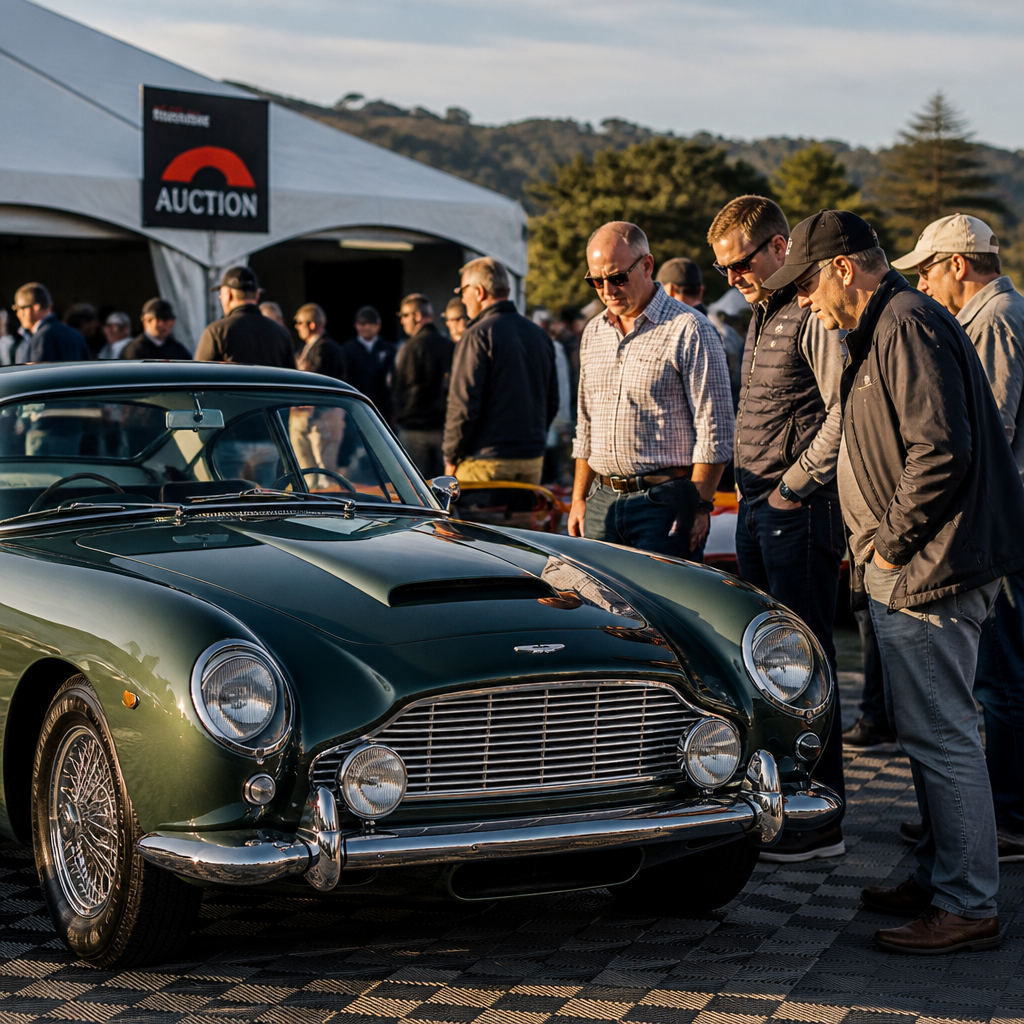
The classic car market forecast for the next 5 years points to a more selective, data-driven, and globally connected marketplace than the one many collectors knew in the 2010s. Prices are not rising uniformly, easy gains are gone, and buyers now reward originality, documentation, rarity, and usability more than broad nostalgia alone. In practical terms, that means some segments should appreciate steadily, others will flatten, and a few overhyped models may continue to correct. For collectors, dealers, and investors watching classic car market trends, the next phase will favor discipline over emotion.
A classic car is usually defined by age, historical interest, rarity, or cultural significance, but the market itself is broader than concours Ferraris and six-figure auction results. It includes postwar American cars, air-cooled Porsches, Japanese performance icons, British roadsters, homologation specials, analog supercars, and modern classics from the 1980s through early 2000s. The market is also split into tiers: blue-chip investment cars, enthusiast-grade drivers, restoration projects, and emerging collectibles. Each tier behaves differently under changing interest rates, wealth conditions, and generational demand, so any useful five-year forecast must separate them rather than treating the category as one asset class.
This matters because classic cars sit at the intersection of passion and capital. I have watched buyers overpay during momentum cycles, then hesitate when financing tightens, insurance costs rise, or auction sell-through rates weaken. Unlike stocks, cars carry storage, maintenance, transport, taxes, and liquidity risk. Yet unlike many financial assets, exceptional cars can preserve value through inflation, deliver personal enjoyment, and benefit from global demand. Understanding where the market is heading helps owners decide whether to buy, hold, restore, or sell. It also helps readers navigate related topics across this market trends and investment hub, from valuation methods to auction strategy and insurance planning.
Where the classic car market stands today
The classic car market entered the mid-2020s after a sharp pandemic-era surge followed by normalization. During 2020 through 2022, low interest rates, strong household balance sheets at the top end, and increased time for hobby spending pushed many collectible vehicles higher. Online platforms such as Bring a Trailer and Cars & Bids expanded participation, improved price transparency, and exposed regional inventory to national and international buyers. That created stronger bidding for well-photographed, accurately described cars with strong history files, especially in segments already building momentum, including 1990s and 2000s sports cars.
Since then, the market has become more rational. Broad indices from firms such as Hagerty have shown that top-tier examples often remain resilient while average-condition cars face longer selling times. Major auction houses, including RM Sotheby’s, Gooding Christie’s, Bonhams, and Barrett-Jackson, still produce headline results, but the real signal is sell-through rate and bid-to-estimate performance, not the occasional record. In my experience, reserve discipline has become critical. Sellers anchored to peak comparables struggle, while realistic pricing still attracts competitive bidding. That is the baseline for the next five years: healthier than a crash narrative suggests, but far less forgiving than the boom years.
Five-year price outlook by market segment
The most important forecast is that the market will keep fragmenting. Blue-chip cars with proven provenance, matching numbers, low production figures, and top-level restoration or preservation status should remain comparatively strong. Think Ferrari 250 variants, Mercedes-Benz 300SL Gullwings, significant Porsche competition cars, or landmark Aston Martins. These cars benefit from international buyer pools, institutional-quality documentation, and scarcity that cannot be replicated. Over five years, values in this tier are likely to grow modestly rather than explosively, with annual appreciation often in the low to mid single digits unless a specific model is re-rated by new scholarship or event eligibility.
Enthusiast-grade classics should show the widest range of outcomes. Good driver-quality air-cooled 911s, E30 M3s, Toyota Supras, Acura NSXs, and 1960s to 1970s American performance cars will continue to sell, but condition spread will matter more than badge alone. Buyers increasingly pay premiums for originality, rust-free bodies, unmodified drivetrains, and complete service records. Average cars with cosmetic needs or incomplete histories may lag inflation. Restoration candidates could remain soft because parts, labor, paint, and upholstery costs are still high. I routinely see buyers reject projects once they understand that a seemingly affordable purchase can become more expensive than a finished example.
Modern classics will likely be the strongest broad category over the next five years. Vehicles from roughly 1985 to 2005 align with the peak earning years of Gen X and older millennials, and that demand is no longer theoretical. Analog Ferraris, BMW M cars, Japanese homologation cars, early V10 and V12 exotics, and low-production manual-transmission performance models should remain supported. However, not every car from this period will become collectible. High survival numbers, expensive electronics, and deferred maintenance can cap values. The winners will be culturally important models with manageable ownership economics and a clear enthusiast base.
| Segment | Five-Year Outlook | Main Drivers | Main Risks |
|---|---|---|---|
| Blue-chip pre-1980 icons | Stable to moderate growth | Rarity, provenance, global demand | Thin buyer pool, macro shocks |
| Enthusiast-grade analog sports cars | Selective growth | Usability, originality, strong communities | Condition spread, overpricing |
| Restoration projects | Flat to weak | Low entry prices, parts availability | Labor inflation, cost overruns |
| Modern classics 1985–2005 | Strongest broad upside | Generational demand, nostalgia, manual gearboxes | Complex repairs, speculative buying |
Generational demand will reshape classic car market trends
Demographics are the clearest long-term force in this forecast. Baby Boomers helped drive demand for 1950s cruisers, 1960s muscle cars, and British sports cars because those vehicles matched formative memories. As wealth transfers and collecting tastes shift, Gen X and millennials are moving the center of gravity toward 1980s, 1990s, and early 2000s vehicles. This is already visible in auction catalogs, insurance quote activity, social media engagement, and enthusiast event attendance. Cars once dismissed as used performance vehicles are now entering established collectible status because the people who wanted them as teenagers can finally buy the best examples.
That does not mean older classics will collapse. Truly significant cars transcend generations because they represent engineering milestones, motorsport history, or design landmarks. A Jaguar E-Type, Mercedes 300SL, or Shelby Cobra has cross-generational appeal. But the middle of the market will likely rotate. I expect stronger liquidity for unmodified Mk4 Toyota Supras, Nissan Skyline GT-Rs, BMW E46 M3s, Porsche 964 and 993 variants, and Honda Integra Type Rs than for ordinary 1950s sedans or less distinguished luxury coupes. The implication is simple: cultural relevance plus ownership accessibility will matter more than age alone.
Economic forces that will influence values
Interest rates, equity market performance, and broader consumer confidence will continue to shape values. Classic cars are discretionary purchases for most buyers, even at the highest end. When financing costs rise, leveraged buyers step back, and dealers become more cautious with inventory. When stock portfolios and business valuations rise, confidence returns. Over the next five years, a moderate-rate environment should support steady transaction activity, but not the frothy acceleration seen when money was unusually cheap. That favors patient buyers and accurate pricing models over speculative flipping.
Inflation cuts two ways. On one hand, tangible assets can attract buyers seeking stores of value, especially if they distrust cash erosion. On the other hand, inflation raises restoration, shipping, storage, and maintenance costs. Insurance premiums have also moved higher in many markets, partly because agreed-value policies must reflect rising replacement values and specialist repair costs. Currency movement matters as well. A stronger dollar can make American-market cars more expensive for overseas buyers, while a weaker dollar can stimulate exports. Anyone building a forecast for classic car market trends should track these variables alongside auction headlines.
What buyers will pay more for, and what they will avoid
Buyers will continue paying meaningful premiums for originality, documentation, and specification. Matching-numbers engines and gearboxes, factory paint colors, original interior materials, stamped service books, ownership history, and verified mileage all reduce uncertainty. In my own market work, two seemingly identical cars can trade 20 to 40 percent apart once one has complete records, known ownership, and a clean inspection while the other has gaps, corrosion history, or non-original modifications. Factory options also matter. Limited-slip differentials, rare seats, competition packages, and desirable transmission choices can transform liquidity.
What will buyers avoid? Poor restorations, hidden rust, accident damage, title problems, and trendy modifications that age badly. Restomods have a market, but it is narrower than many sellers assume and very dependent on build quality. Emissions compliance and import legality can also affect values, especially for Japanese and European cars moving between countries. Cars with obsolete electronics or parts scarcity may face a value ceiling unless strong specialist support exists. The lesson for the next five years is that quality will keep compounding while compromised cars become harder to move at strong prices.
How auctions, online platforms, and private sales will evolve
Online sales have permanently changed price discovery. Bring a Trailer normalized detailed photo sets, cold-start videos, underbody documentation, paint-meter readings, and comment-driven due diligence. That format reduced information asymmetry and encouraged broader participation. Over the next five years, online platforms should keep gaining share in the middle and upper-middle segments because they are efficient, searchable, and transparent. Cars with honest presentation and strong documentation often do very well there. For hub readers exploring adjacent topics, this trend connects directly to articles on valuation, listing optimization, and pre-purchase inspection strategy.
Traditional live auctions will remain essential for trophy cars, estate collections, and major event-week consignments where atmosphere and client relationships still influence outcomes. Private sales will also stay important for ultra-high-value transactions because discretion matters. The likely change is not one channel replacing another, but segmentation by car type and seller objective. Online suits transparent enthusiast cars. Live auctions suit theater and urgency. Private brokerage suits confidentiality. Sellers who match the channel to the car will outperform sellers who assume every vehicle belongs on the biggest stage.
Risks, opportunities, and the smartest strategy for the next five years
The biggest risk in the next five years is assuming all collectibles rise together. They do not. The best opportunity is buying excellent cars with enduring enthusiast demand before the next wave of collectors pushes the top examples further out of reach. I would focus on originality, specialist inspection, and long-term ownership costs before headline appreciation potential. If a car is easy to maintain, parts support is strong, and the owner community is active, downside risk is lower. If a car only works as a speculative trade, risk is higher than many newcomers realize.
For most buyers, the smartest strategy is simple: buy the best example you can afford, verify everything, and hold long enough for quality to matter. Study production totals, auction comps, insurance valuations, model-year differences, and known mechanical weaknesses. Use marque experts, borescope inspections, compression tests, and paint-depth readings when appropriate. Keep complete records from day one. The classic car market forecast for the next 5 years is not a promise of easy profits. It is a case for informed collecting. If you want to benefit from classic car market trends, start by defining your target segment, following real transaction data, and making one disciplined move rather than chasing the crowd.
Frequently Asked Questions
What is the overall outlook for the classic car market over the next five years?
The next five years are likely to bring a more disciplined and selective classic car market rather than a broad-based boom. In the 2010s, many vehicles rose in value simply because interest in collector cars was expanding quickly and liquidity was strong. That environment has changed. Going forward, buyers are expected to focus much more heavily on quality, provenance, originality, rarity, and ease of ownership. In other words, the market is not disappearing, but it is becoming smarter.
That means the strongest performers will probably be cars with well-documented histories, original drivetrains, factory-correct specifications, and broad collector appeal. Blue-chip classics, limited-production sports cars, historically important models, and highly original examples are positioned to remain resilient, especially when they are supported by strong auction records and international demand. At the same time, average-condition cars, heavily modified examples, and once-hyped models without lasting significance may struggle to keep pace with inflation or may continue to soften.
Another major trend is segmentation. Instead of “classic cars” moving as one category, different niches will behave very differently. Air-cooled sports cars, analog driver-focused machines, homologation specials, and certain luxury grand tourers may hold firm or rise steadily. Meanwhile, cars that became expensive mainly because of trend-driven enthusiasm could flatten or correct further. Overall, the forecast is best described as stable to selectively positive, with better-informed buyers creating a market that rewards discernment rather than speculation.
Which types of classic cars are most likely to appreciate in value?
The models most likely to appreciate are generally those that combine rarity, authenticity, historical importance, and strong enthusiast demand. Cars with low production numbers, matching-numbers drivetrains, factory-original colors and options, and complete service and ownership records tend to command the most attention. Buyers increasingly want examples that can be verified, not just admired, so documentation has become a major part of value.
Vehicles with genuine motorsport heritage, milestone engineering, or a clear place in automotive history should remain especially attractive. That includes certain homologation cars, iconic sports cars from respected marques, first- or last-of-their-kind models, and analog-era performance cars that deliver a driving experience difficult to replicate in modern vehicles. There is also growing appreciation for cars that are usable as well as collectible. A classic that can be driven comfortably on modern roads, maintained without excessive difficulty, and enjoyed on tours or events may outperform a more fragile car with narrower appeal.
Importantly, appreciation is likely to be gradual rather than explosive. The market is less tolerant of flaws than it once was, so even desirable models may show a wide price spread between exceptional cars and merely decent ones. The best-positioned purchases are not just the “right model,” but the right example of the right model. In the coming years, condition, correctness, and credibility will matter as much as the badge on the hood.
Are some classic cars expected to lose value or underperform?
Yes, and this is one of the most important shifts in the market forecast. Not every classic car will rise, and some are likely to underperform noticeably. Cars that benefited primarily from speculation, social media hype, or temporary generational nostalgia may continue to correct if they lack deeper collector significance. This is particularly true for examples with poor restoration quality, missing history, non-original engines, heavy modifications, or questionable mileage claims.
There is also increasing separation between top-tier and middle-tier inventory. A rare model in concours condition may remain strong, while an average example of the same car may stagnate. In previous market cycles, broad enthusiasm could lift nearly all versions of a desirable nameplate. That is much less likely now. Buyers are more informed, auction platforms are more transparent, and price comparisons are easier than ever. As a result, flaws are exposed quickly and discounted accordingly.
Overhyped segments are especially vulnerable. If a model became expensive mainly because it was fashionable rather than fundamentally important, prices may soften further as buyers shift their attention toward long-term quality and real scarcity. Underperformance does not necessarily mean collapse, but it can mean years of flat prices, slower sales, and larger negotiation gaps. For collectors and investors, the key lesson is simple: avoid assuming that age alone creates value. In this market, selectivity is everything.
How are buyer preferences changing in the modern classic car market?
Buyer preferences are moving toward authenticity, transparency, and usability. Collectors today are generally less interested in buying a car solely because it reminds them of the past and more interested in buying a car that can stand up to scrutiny. That includes verified ownership history, original components, professional restoration records, and strong evidence that the car has been cared for correctly. A well-documented example often inspires more confidence than a superficially restored one with unanswered questions.
There is also greater demand for cars that can be enjoyed in the real world. Usability matters. Buyers increasingly value vehicles that start reliably, drive well, fit modern traffic conditions, and can participate in rallies, tours, and weekend events without constant mechanical drama. This does not mean every collector wants a fully modernized car, but it does mean the market often rewards classics that offer a balanced ownership experience.
Global connectivity is another major factor. Buyers now compare listings, auction results, and expert opinions across borders in real time. That has created a more informed marketplace and reduced pricing inefficiencies. It has also elevated the standards for presentation and proof. Strong photography, complete records, expert inspections, and transparency about flaws are no longer optional at the high end. Over the next five years, the classic car market will likely continue rewarding sellers and collectors who can back up a car’s story with evidence.
What should collectors do now to make smart decisions for the next five years?
Collectors should focus on quality, patience, and long-term ownership logic rather than short-term price chasing. The most effective strategy is to buy the best example you can afford of a model with proven demand, strong enthusiast support, and clear historical relevance. That means prioritizing originality, matching numbers where applicable, documented maintenance, known ownership history, and high-quality restoration work if the car is not preserved in original condition. Paying more upfront for a superior car is often safer than trying to save money on a compromised one.
It is also wise to think beyond the purchase price. Ownership costs, parts availability, specialist support, storage, insurance, and market liquidity all matter. A car can appear attractively priced yet become expensive if it is difficult to maintain or hard to resell. The next five years will likely reward collectors who buy with both passion and discipline. Choose cars you genuinely want to own and drive, but verify that the market has enough depth to support long-term value.
Finally, use data intelligently. Review auction histories, private-sale trends, marque-specific forums, and expert commentary before making a move. Be realistic about condition grades and avoid assuming that every “rare” car is actually desirable. In a selective market, informed buying is a competitive advantage. Collectors who stay patient, insist on documentation, and pursue truly high-quality examples should be best positioned to preserve value and benefit from steady appreciation where it exists.