A road trip in a classic car can be the purest expression of automotive culture, but avoiding breakdowns requires planning that respects the age, design, and limitations of older machines. Classic car travel means using vehicles built in a different engineering era for extended driving, often at highway speeds, in modern traffic, across changing climates and fuel quality. That sounds romantic because it is, yet anyone who has spent time touring in vintage iron knows the difference between a memorable trip and a recovery truck often comes down to the unglamorous details handled before departure.
I have prepared classics for multi-state drives, fixed vapor lock on hot shoulders, chased charging faults in motel parking lots, and learned that prevention always costs less than roadside diagnosis. A modern car can hide neglect for months. A carbureted V8, an early alternator system, drum brakes, bias-ply tires, or forty-year-old wiring will not. Age hardens rubber, corrosion increases resistance, old sealants fail, and parts that worked fine around town can collapse after six hours of continuous heat cycling. That is why classic car travel deserves its own approach rather than generic road-trip advice.
This hub article explains how to avoid breakdowns on road trips by treating reliability as a system. You will learn what to inspect before leaving, how to test a classic under real conditions, which spare parts and tools make sense, how fuel, cooling, ignition, brakes, tires, and electrical systems fail on long drives, and how to plan a route that supports the car instead of punishing it. It also frames the bigger classic car travel picture, so this page can anchor deeper articles on roadside repairs, packing lists, seasonal touring, trailer decisions, and long-distance maintenance strategy.
Start with a reliability baseline before you plan the trip
The first step in classic car travel is deciding whether the vehicle is road-trip ready, not whether you feel like going. Reliability baseline means a recent, documented assessment of the car’s essential systems under realistic load. If you do not know the age of the belts, hoses, ignition components, fluids, battery, tires, fuel pump, or wheel bearings, assume the trip will reveal those unknowns at the worst time. A car that idles smoothly at a weekend meet may still overheat climbing grades or misfire after an hour of engine bay heat soak.
Begin with maintenance records. Confirm the date and mileage for oil changes, coolant service, transmission and differential fluid, brake fluid, grease points, valve adjustment if applicable, and tune-up parts such as plugs, wires, points, condenser, cap, and rotor. On many classics, elapsed time matters more than mileage. A hose with low miles but ten years of age is still a risk. So is a spare tire from another decade. If the car has been recently restored, inspect even more carefully. Fresh restorations often fail from installation mistakes, loose clamps, poor grounds, or parts selected for appearance rather than durability.
Then perform a shake-down drive before any major trip. I prefer at least two local runs and one sustained highway drive of an hour or more. Watch coolant temperature, oil pressure, charging voltage, steering feel, and brake behavior. Check for fuel smell after hot shutdown, drips under the car, wheel heat that could indicate dragging brakes or bearings, and restart quality after a short stop. This test drive is not optional. It is the closest thing to a controlled rehearsal for the exact conditions that trigger classic breakdowns.
Inspect the systems that strand classic cars most often
Most roadside failures fall into predictable categories: fuel delivery, ignition, cooling, charging, tires, and belts or hoses. Prioritize those first. In fuel systems, inspect rubber lines for cracking, verify the fuel filter is clean, confirm the tank vent works, and make sure the pump delivers pressure appropriate to the carburetor. Ethanol-blended fuel can soften old hoses and expose varnish in tanks. If the car sits often, sediment can clog jets or filters once vibration and heat increase on a trip. Replace suspect lines with fuel-rated hose and secure them with proper clamps, not hardware-store substitutes.
Ignition systems are another classic weak point. If the car runs points, carry a known-good spare set, condenser, and the tools to install them. If it uses an HEI, Pertronix, MSD, or other electronic setup, inspect module connections and grounds, because heat-related failures are common. Coil breakdown can mimic fuel starvation after the engine warms. Spark plug wires should route cleanly, avoid exhaust heat, and show no arcing marks. A tuned ignition is not only about performance; it lowers exhaust heat, improves starting, and reduces stress on the cooling system during heavy driving.
Cooling systems deserve blunt honesty. If the radiator is marginal in local use, it will fail on a road trip. Test the cap, inspect fins for blockage, check fan clutch operation, shroud fitment, belt condition, thermostat function, and hose integrity including the lower hose spring if required. A recovered radiator from years ago may still have reduced flow from internal scale. On older engines, a slightly lean carburetor, retarded timing, or a dragging brake can also present as overheating. Treat high temperature as a system symptom, not only a radiator problem.
Use a disciplined pre-trip checklist and pack the right support gear
A pre-trip checklist turns good intentions into repeatable results. The point is not to carry a full workshop; it is to cover the common failures you can realistically prevent or repair. Keep the list in the glovebox and use it before every long drive, especially after winter storage or recent service.
| Area | What to check | What to pack |
|---|---|---|
| Fuel | Hoses, filter, pump output, tank vent, carb leaks | Fuel hose, clamps, filter, carb gasket |
| Ignition | Timing, plugs, wires, cap, rotor, points or module, coil | Points, condenser, rotor, coil wire, test light |
| Cooling | Coolant level, belts, hoses, cap, fan, thermostat behavior | Upper hose, belt, coolant, hose clamps |
| Electrical | Battery hold-down, grounds, alternator output, fuses, lights | Fuses, wire, terminals, tape, multimeter |
| Chassis | Tire age, pressure, lug torque, wheel bearings, brakes | Jack, lug wrench, tire gauge, grease, flashlight |
Add practical items that save hours: printed wiring diagram, membership towing card, nitrile gloves, shop towels, a fire extinguisher rated for fuel and electrical fires, and a phone charger that works with the car’s electrical system. If the trunk space allows, bring engine oil, brake fluid, power steering fluid if equipped, and distilled water. In my experience, the best travel tool is a digital multimeter. It quickly separates charging issues, bad grounds, weak batteries, and failed ignition feed problems that otherwise become guesswork.
Do not overload the car with random spares. Pack parts specific to your vehicle and known weak points. For example, GM HEI cars benefit from a module and thermal paste, Mopars often reward carrying ballast resistors, and many British classics should travel with extra fuses and a few bullet connectors. The goal is targeted redundancy, not cargo weight.
Prepare tires, brakes, and suspension for modern roads
Many classic road-trip failures are not engine related at all. Tires age out long before they wear out, and sidewall cracking, internal belt separation, and old tube failures can end a trip suddenly. Check the DOT date code on radials; if a tire is beyond six to ten years old, replacement is usually smarter than rationalization, especially for sustained summer highway use. Inflate to pressures appropriate for the actual tire and vehicle setup, not just the door sticker, which may reflect obsolete tire construction. Also inspect the spare, jack, and lug wrench. Owners neglect all three more often than they admit.
Brake systems also reveal neglect under touring conditions. Drum brakes that feel acceptable around town can fade on descents, pull when hot, or leak wheel cylinders after repeated use. If the pedal is soft, inconsistent, or slowly sinks, diagnose it before traveling. Flush old brake fluid because moisture lowers boiling point and corrodes internals. Inspect flex hoses, steel lines, wheel cylinders, calipers, master cylinder, and parking brake function. If the car wanders, shakes, or clunks, inspect ball joints, tie rods, shocks, bushings, and alignment. A tiring, unstable classic is more likely to be driven poorly, overheated, or damaged by avoidable pothole strikes.
For classic car travel, drivability is a safety system. The car should track straight, stop repeatedly, and tolerate crosswinds and rough pavement. You are not just preserving originality; you are protecting the trip.
Choose routes, speeds, and fuel stops that suit the car
The smartest route for a classic is not always the shortest. Plan with fuel range, grade severity, traffic density, weather, and service access in mind. Cars with small tanks, rich carburetion, or no overdrive may need fuel every 150 to 200 miles, and some older gauges are optimistic. Build conservative stops into the route. Use apps such as Google Maps, Waze, and GasBuddy, but verify station hours in remote areas. If your engine prefers premium, research availability ahead of time, especially in rural regions where octane choices can be limited.
Speed matters more than many owners realize. Aerodynamic drag rises rapidly at higher speeds, which increases coolant temperature, fuel consumption, and stress on an engine spinning near the upper end of its comfortable cruising range. A classic geared for 60 to 65 mph may feel busy at 75. Holding a slightly lower speed often drops temperatures, preserves oil pressure, reduces detonation risk, and improves range. The same principle applies to mountain roads and desert travel. Drive with mechanical sympathy, not with the flow of the fastest lane if that pace does not suit the car.
When possible, avoid stop-and-go congestion in extreme heat, because low airflow and repeated hot starts expose marginal cooling and charging systems. Morning departures, shoulder-season trips, and scenic secondary roads can be easier on both car and driver. That does not mean avoiding adventure. It means matching the route to the machine.
Know the warning signs and act before a minor issue becomes a breakdown
Classic cars rarely fail without giving clues first. Learn the early symptoms. A hot fuel smell after shutdown may signal percolation, seepage, or a line too close to exhaust heat. A slight stumble at cruise can point to ignition breakdown, debris in the carburetor, or a failing fuel pump. Dimming lights at idle that do not recover with rpm may indicate charging trouble or poor grounds. A new vibration can be tire separation, driveshaft imbalance, or a loose exhaust contacting the chassis. If the engine starts cranking slower during fuel stops, check charging voltage before the next leg.
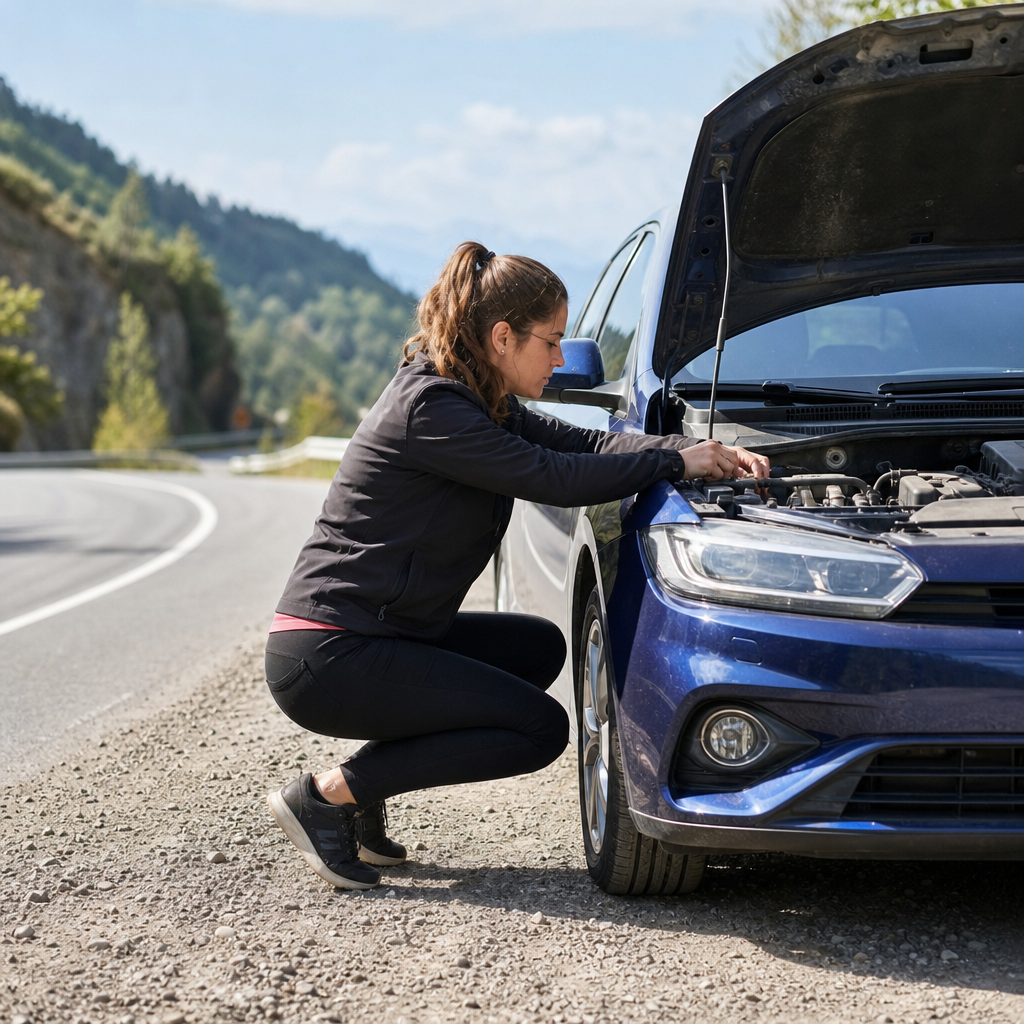
Pull over early when something changes. Continuing to drive an overheating engine, a low-oil-pressure engine, or a car with a fuel leak turns a manageable repair into severe damage. Open the hood carefully, inspect methodically, and document what you see. Did the problem appear only hot, only under load, only at idle, or only after refueling? Those details shorten diagnosis. If needed, let the car cool completely before touching the cooling system, and never remove a hot radiator cap casually. Patience prevents burns and expensive mistakes.
Roadside diagnosis should follow a simple sequence: spark, fuel, compression, cooling, charging. Confirm what is missing instead of changing random parts. This disciplined approach is why prepared owners often get moving again while unprepared ones wait for a tow.
Build a support network before you leave home
The best classic car travel strategy includes people, not just parts. Join a roadside assistance program that covers older vehicles and understands low ground clearance, nonstandard jacking points, and long-distance towing options. Keep contact details for marque clubs, specialist shops along the route, and friends in the hobby who know your platform. Organizations such as the Antique Automobile Club of America, marque registries, and regional Facebook groups can help locate mechanics, parts, or safe storage on short notice.
Internal links from this hub should branch into deeper topics every classic traveler eventually needs: packing checklists, how to prevent overheating, diagnosing vapor lock, choosing between trailer transport and driving, must-have spares by brand, and preparing for seasonal tours. That structure helps readers solve one problem at a time while keeping this page the central guide. It also mirrors how real road trips unfold. You start with broad planning, then you need focused answers when one system demands attention.
Avoiding breakdowns on road trips comes down to respect for the machine. Establish a reliability baseline, inspect the systems that commonly fail, test the car before departure, pack targeted spares, and choose routes and speeds that fit its design. Watch for warning signs and respond early. Classic car travel is rewarding because it asks more of the driver, but it also gives more back when prepared properly. Use this hub as your starting point, then build your own checklist, schedule a real shake-down drive, and make the next trip the one you remember for the road, not the tow truck.
Frequently Asked Questions
What should I inspect before taking a classic car on a long road trip?
Start with the systems most likely to end a trip early: cooling, ignition, fuel delivery, charging, belts, hoses, brakes, tires, and fluids. On an older car, a part does not have to be completely failed to become a problem at sustained highway speeds. Inspect radiator hoses for softness, cracking, swelling near clamps, and signs of seepage. Check the fan belt for glazing, fraying, or improper tension. Make sure the radiator is clean, the coolant is fresh, and the cap is correct for the system. If the car runs a mechanical fan, confirm the blades are solid and the mounting hardware is secure. If it uses an electric fan conversion, verify that it cycles properly and that any relay or fuse setup is sound.
Ignition deserves equal attention. Replace questionable spark plugs, wires, cap, rotor, points, or condenser before departure rather than hoping they survive. If the car has been converted to electronic ignition, confirm the wiring is secure and carry any special module information you would need on the road. For the fuel system, inspect rubber lines closely, especially near the tank, pump, and carburetor. Old fuel hose can look acceptable from the outside while cracking internally. Check for leaks, weak clamps, sediment in filters, and proper carburetor operation. A road trip exposes marginal fuel pumps, sticky floats, and heat-soak issues very quickly.
Do not overlook wheel bearings, tire age, brake fluid condition, and charging voltage. Even if the tread looks good, tires more than several years old can be risky, especially on a heavier classic car. Check the date codes, sidewalls, and air pressure, including the spare. Brake hoses, wheel cylinders, and master cylinders should be dry and reliable, not simply “working for now.” Finally, test-drive the car for a meaningful distance before the trip. A successful local shakedown is one of the best predictors of road-trip reliability because it reveals how the car behaves once fully hot, loaded, and driven continuously.
How can I reduce the chances of overheating during a road trip?
Overheating is one of the most common classic car road-trip problems because older cooling systems were designed for different traffic conditions, cruising speeds, and engine demands. Prevention starts with understanding that “it usually runs a little warm” is not a strategy. Make sure the radiator core is clean internally and externally, the coolant mixture is appropriate, and the thermostat is functioning correctly. Verify ignition timing and fuel mixture as well, because an engine that is too retarded, too lean, or otherwise out of tune can run hot even with a decent cooling system. Many classic-car overheating complaints are really tune-up issues presenting themselves as cooling failures.
Airflow matters as much as coolant flow. Confirm that the fan shroud is in place if the car was designed to use one, because a missing shroud can dramatically reduce cooling efficiency at idle and low speed. Check that the lower radiator hose has the proper spring if the design requires one, since a weak hose can collapse under load and restrict circulation. If your route includes mountain climbs, desert heat, or extended traffic, be realistic about the car’s limits. Sometimes avoiding the hottest hours of the day or choosing secondary roads with more consistent movement is smarter than forcing an older cooling system to endure stop-and-go congestion in extreme temperatures.
Driving technique also helps. Watch the temperature gauge before it becomes a crisis, and respond early. If temperatures begin to climb, reduce speed, turn off unnecessary accessories, and if safe, let the engine cool before it reaches the boiling point. On some cars, running the heater can help pull heat from the engine in an emergency. Most importantly, do not assume that adding an electric fan or aluminum radiator automatically solves everything. Reliable cooling comes from a complete, balanced system: sound radiator, correct cap, healthy pump, proper tune, good airflow, and realistic expectations about what a vintage machine can tolerate in modern road conditions.
What spare parts and tools should I carry to avoid getting stranded?
The best spare-parts kit is built around the items most likely to fail on your specific car and the components hardest to source quickly in a small town. For many classic cars, that means a fan belt, upper and lower radiator hoses, basic hose clamps, ignition parts, fuel hose, fuses, bulbs, and a fuel filter. If the car still uses points ignition, carry points, condenser, cap, rotor, and the tools needed to install and gap them. If it has electronic ignition, carry any proprietary module or at least know the exact part number and compatibility details. A spare coil is often worthwhile on older cars because coils can fail intermittently when hot, creating maddening on-again, off-again no-start conditions.
Include practical consumables such as engine oil, premixed coolant if appropriate for the vehicle, brake fluid, and a small amount of transmission fluid or gear oil if relevant. A roll of quality electrical tape, mechanics wire, zip ties, a test light or multimeter, spare wire, connectors, and a few relays can save a trip when a simple electrical issue appears. Add a tire-pressure gauge, portable inflator, jumper cables, flashlight, gloves, shop towels, and a fire extinguisher. On carbureted cars especially, carrying a small toolkit with screwdrivers, combination wrenches, sockets, pliers, and a few specialty tools for your model can turn a major delay into a quick roadside repair.
Just as important as what you carry is knowing how to use it. A spare part you cannot diagnose or install has limited value. Before leaving, practice simple procedures such as changing a belt, replacing ignition components, checking for spark, tightening a loose battery cable, or swapping a filter. Also keep a printed list of part numbers and maintenance specs in the glovebox. Cell service, battery life, and online parts databases are not things to depend on absolutely. A classic-car road trip becomes far less stressful when you are prepared not only with equipment, but with a clear plan for the small failures that most often interrupt old-car travel.
How should I plan my route and driving schedule to prevent mechanical trouble?
Good route planning is not just about scenery; it is a reliability strategy. A classic car is more likely to stay healthy when driven within its comfort zone, so build your trip around moderate daily distances, reasonable cruising speeds, and regular breaks. Long uninterrupted interstate runs at high speed can be punishing for older engines, drivetrains, cooling systems, and brakes, especially in cars designed for a slower era. In many cases, a two-lane route with less aggressive traffic and more service access is safer and more enjoyable than trying to keep up with modern highway flow for hours at a time.
Think carefully about fuel availability, elevation changes, ambient temperature, and the distance between towns. Older cars can be sensitive to modern fuel formulations, vapor lock, steep grades, and extreme heat. If the vehicle has a limited range or an inaccurate fuel gauge, plan fuel stops conservatively instead of stretching each tank. Build in time for morning inspections, cooldown stops, and unplanned maintenance. A quick walk-around at each stop can reveal loose clamps, fluid drips, hot wheel hubs, low tires, or frayed wires before they become real failures. This habit is especially valuable on multi-day trips, where small issues tend to grow gradually rather than all at once.
It is also wise to keep the itinerary flexible. Mechanical sympathy matters more than rigid scheduling in an older car. If the weather turns brutally hot, if traffic becomes gridlocked, or if the car starts signaling that something is off, adjust. Leaving earlier, stopping more often, or shortening a day’s drive may prevent the kind of breakdown that costs several days. Road-trip reliability in a classic car is rarely the result of luck alone. It comes from pacing the journey to fit the machine, not forcing the machine to fit a modern, time-compressed travel schedule.
What are the biggest mistakes people make that lead to classic car breakdowns on road trips?
The biggest mistake is treating a classic car like a modern car that simply happens to look older. Vintage vehicles often require more frequent checks, more mechanical sympathy, and more realistic limits. Owners commonly assume that because the car starts, idles, and handles short local drives, it is ready for a thousand-mile journey. That assumption causes many preventable breakdowns. A car can behave perfectly on 20-minute drives and still fail under sustained heat, speed, and vibration because the conditions of long-distance travel expose weaknesses that local use never reveals.
Another frequent mistake is postponing maintenance in favor of last-minute convenience. People leave with old belts, questionable hoses, marginal tires, seeping water pumps, weak charging systems, or stale ignition parts because “they’ve been fine so far.” On a road trip, “so far” stops being useful. So does replacing only the obvious failure point while ignoring surrounding aged components. For example, installing a new radiator hose onto a corroded fitting with an old clamp may not create reliable cooling. The same goes for brakes, fuel lines, and charging connections. Reliability usually comes from refreshing a system properly, not patching a single visible symptom.
A third major mistake is overloading the car physically and mechanically. Extra luggage, passengers, high cruising speeds, aggressive