Classic car service intervals are not fixed by model year alone; they depend on mileage, storage conditions, engine design, materials, and how the car is driven, which is why owners who ask how often should you service a classic car need a schedule built around both time and use.
In practical terms, a classic car is usually a vehicle old enough to have age-related maintenance needs that differ from modern cars, even if it has been restored. Rubber hardens, seals shrink, carburetors gum up, fuel degrades, and electrical connections corrode. A maintenance schedule is the planned cadence for inspections, lubrication, fluid changes, adjustments, and replacement of wear items before they fail. For classic vehicles, calendar time often matters as much as odometer mileage because many spend long periods parked. I have worked on collector cars that covered only 800 miles in a year yet still needed more service attention than a modern daily driver that traveled 12,000.
This matters because a neglected service routine shortens engine life, weakens reliability, and increases restoration costs. A missed brake fluid change can corrode wheel cylinders. Old coolant can pit an iron block and radiator. Grease that dries out in suspension joints accelerates wear that is expensive and sometimes difficult to reverse because original-spec parts may be scarce. Beyond cost, consistent maintenance protects originality and safety, two issues that directly affect drivability and market value. A service plan also gives owners a rational way to prioritize jobs, from quick monthly checks to annual fluid work and longer-interval tune-up tasks.
For most classic cars, the safest baseline is simple: inspect monthly, drive and evaluate the car every few weeks, change engine oil every 3,000 miles or at least once a year, replace brake fluid every two years, refresh coolant every two to five years depending on chemistry, and perform a detailed annual service even if mileage is low. Cars with flat-tappet cams, carburetors, drum brakes, mechanical ignition, or long storage periods usually need closer attention. The rest of this guide breaks that schedule into practical maintenance tips so you can build a service routine that fits a regularly driven survivor, a fully restored weekend cruiser, or a show car that spends most of its life in storage.
What determines classic car service frequency?
The biggest factors are usage pattern, age of components, and design of the car. A 1967 roadster driven weekly in dry weather needs a different maintenance rhythm than a 1950 sedan started only for local shows. Short trips create condensation in crankcases and exhaust systems, so cars used for occasional five-mile drives often need more frequent oil changes than classics that regularly reach full operating temperature. Storage matters too. Humid garages encourage corrosion in brake hydraulics, electrical terminals, and cooling systems. Ethanol-blended fuel adds another variable because it absorbs moisture and can attack older hoses, gaskets, and tank coatings not designed for it.
Mechanical specification changes the schedule as well. Cars with grease fittings on suspension and steering components need periodic chassis lubrication, something many modern-car owners never think about. Points ignition requires inspection of dwell and timing. Carbureted engines need mixture, idle speed, choke, and linkage checks. Older manual gearboxes and differentials may use mineral oils that should be inspected for leaks and contamination rather than forgotten for a decade. If the engine has a flat-tappet valvetrain, lubricant choice becomes critical because anti-wear additive levels matter. In my experience, service intervals become shorter as originality increases, especially on cars still using period-correct rubber, mechanical fuel pumps, and generators.
Documentation is the final determinant. If you have the factory workshop manual, follow its lubrication points and baseline intervals, then adjust for modern conditions. If history is unknown, start conservatively. Assume fluids are old, ignition settings have drifted, and hoses are suspect until verified. That approach prevents the common mistake of treating a newly purchased classic as road-ready because it starts and idles.
Monthly and pre-drive maintenance checks
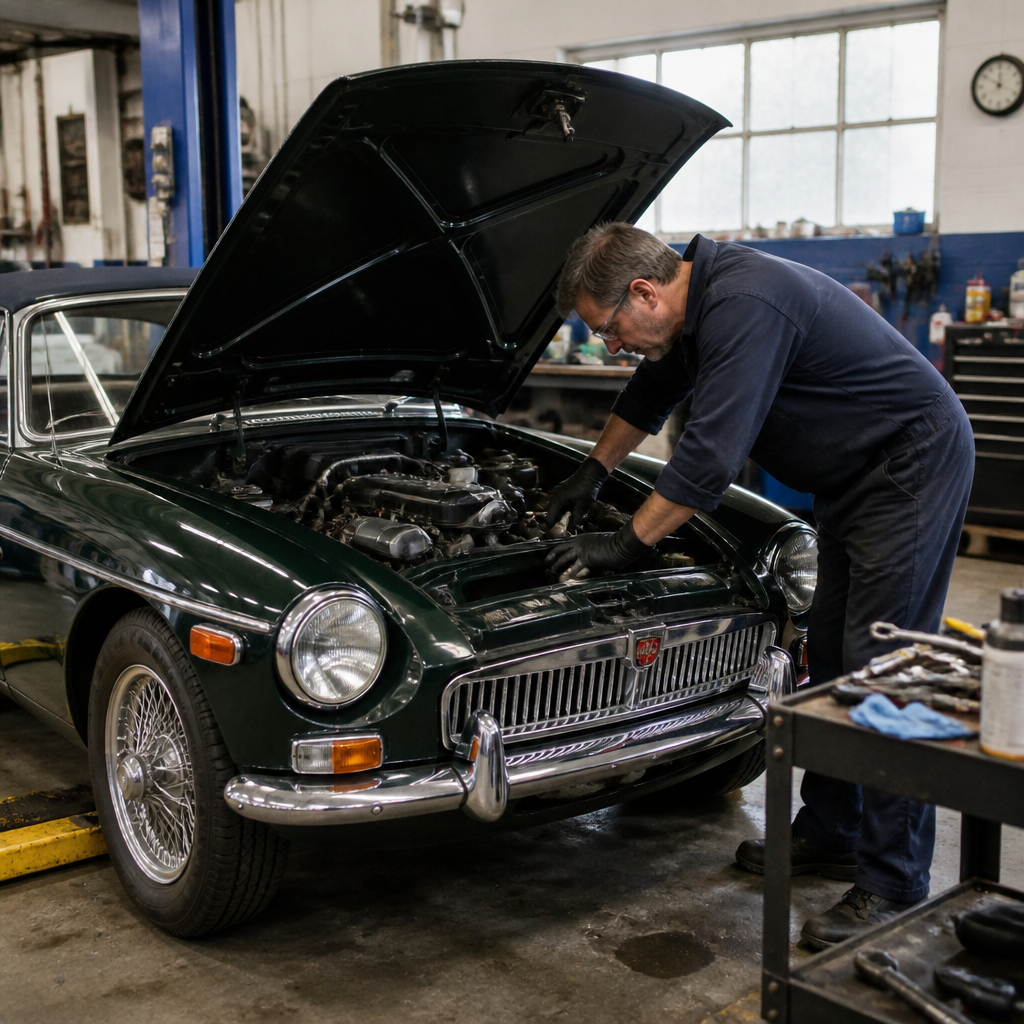
Monthly checks are the backbone of classic car maintenance tips because they catch deterioration before it becomes a roadside failure. Start with engine oil level and condition. If the oil smells strongly of fuel, appears milky, or has dropped unexpectedly, investigate before driving. Check coolant level only when cold. Inspect belts for cracking, glazing, or looseness. Squeeze radiator hoses gently to feel for hardening or soft spots. Look under the car for fresh leaks from the rear main area, gearbox, differential, brake backing plates, or wheel cylinders. A light film may be normal on some classics; drips are not.
Next, inspect the battery. Lead-acid batteries in collector cars often suffer from underuse. Check terminal tightness, corrosion, electrolyte level where applicable, and state of charge. A smart maintainer is one of the best investments for a car that sits. Tires deserve equal attention because many classics age out their tires long before they wear out. Read the DOT date code, look for sidewall cracking, and set pressures to the vehicle specification or a sensible modern equivalent if you have updated wheel and tire sizes. While there, check tread for uneven wear that may indicate worn kingpins, bushings, or poor alignment.
Before each drive, test brake pedal feel, lights, horn, wipers, and gauges. If the car has SU carburetors, Strombergs, Webers, or a Quadrajet, confirm throttle return is smooth and there are no fuel smells. On first startup, listen for tappet noise, exhaust leaks, and charging-system behavior. These five-minute checks prevent a surprising number of failures, especially after winter storage or long gaps between outings.
Fluid service intervals and lubrication points
Fluids age even when mileage stays low, so time-based maintenance is essential. Engine oil should generally be changed every 3,000 miles or 12 months, whichever comes first. For engines without full-flow filtration or for cars driven mainly on short trips, shorten that interval. Use an oil formulated for classics or at least one appropriate for the engine’s bearing clearances and valvetrain design. Many owners choose high-zinc oils for flat-tappet engines, but the exact formulation should match the engine builder’s recommendation and not be guessed from internet folklore.
Brake fluid should usually be replaced every two years. DOT 3 and DOT 4 glycol-based fluids absorb moisture, which lowers boiling point and corrodes internal parts. Silicone DOT 5 is different and has specific compatibility considerations, so do not switch without understanding the system. Coolant typically needs replacement every two to five years depending on whether the system uses traditional inorganic additives or a later formulation suitable for the metals and seals in the engine. Transmission and differential oils often last longer, but they still deserve inspection at least annually and replacement on a three- to five-year cycle unless the manual specifies otherwise. Power steering, clutch hydraulics, and shock absorber fluids, where applicable, should also be included in the plan.
Chassis lubrication is easy to ignore and expensive to skip. Many classic cars have grease points on tie-rod ends, idler arms, trunnions, U-joints, ball joints, and suspension pivots. Use a grease gun at the interval specified in the manual, often every 1,000 to 3,000 miles or annually for low-use cars. Fresh grease purges moisture and contaminants, extending part life dramatically.
| Item | Typical interval | Why it matters |
|---|---|---|
| Engine oil and filter | 3,000 miles or 12 months | Controls wear, removes contaminants, protects cam and bearings |
| Brake fluid | 24 months | Prevents corrosion and loss of boiling performance |
| Coolant | 2 to 5 years | Protects against overheating, corrosion, and cavitation |
| Gearbox and differential oil | 3 to 5 years | Maintains film strength and reveals wear through debris inspection |
| Chassis grease points | 1,000 to 3,000 miles or annually | Reduces joint wear and expels moisture |
Annual servicing, tune-ups, and wear items
An annual service is where you go beyond fluids and look at tune, adjustment, and consumables systematically. On carbureted engines, inspect spark plugs for color and deposits, verify ignition timing, check dwell if the car still uses points, and inspect cap, rotor, leads, and coil connections. Replace plugs, points, condenser, and air filter according to condition and usage rather than blindly following a modern long-life mindset. Valve lash on solid-lifter engines should be checked to the factory specification. Drive belts, heater hoses, vacuum hoses, and fuel hoses should be inspected closely every year because rubber degradation is driven by age, heat cycles, ozone, and fuel chemistry.
Brakes deserve a full annual review. Remove wheels, inspect pad or shoe thickness, check for seized caliper pistons or leaking wheel cylinders, assess flexible hoses, and examine hard lines for rust, especially where clips trap moisture. Wheel bearings should be checked for play and repacked when serviceable. Suspension inspection should include bushings, shock absorbers, springs, steering free play, and fastener security. Exhaust mounts, manifold hardware, and heat shields also fail with age and vibration. If the car has wooden structural elements, fabric wiring, or early hydraulic systems, inspections should be even more deliberate.
Owners often ask whether yearly professional servicing is necessary if they do their own maintenance. My answer is yes, at least periodically, because another set of experienced eyes catches developing problems. A specialist familiar with Triumphs, MGs, Mustangs, Pagodas, Beetles, or air-cooled 911s will know the weak points that general shops miss. That does not replace owner involvement; it complements it.
Low-mileage classics, stored cars, and seasonal schedules
Low-mileage classics create false confidence. A car that moves only a few hundred miles a year still needs service because seals dry out, fuel oxidizes, and moisture accumulates. If a classic is stored through winter, prepare it deliberately: stabilize fuel if it will sit for months, fill the tank to reduce condensation where appropriate, change contaminated oil before storage, inflate tires correctly, connect a battery maintainer, and protect against rodents. When recommissioning, do not just turn the key and go. Inspect hoses, belts, fluid levels, brakes, and tire condition first, then warm the car fully and verify charging, cooling, and braking performance.
Starting a stored car briefly without driving it is usually counterproductive. The engine may not reach full temperature, leaving moisture in the oil and exhaust. A better approach is either proper storage or a real drive long enough to evaporate condensation and circulate fluids. For seasonal use cars, I recommend a spring commissioning service and an autumn lay-up inspection. Convertibles also need top seals, drains, and weatherstrips checked because water ingress can quietly damage floors, wiring, and trim.
If you maintain multiple collector vehicles, create a calendar with monthly checks, annual services, and replacement dates for tires, batteries, and hoses. A spreadsheet or maintenance app works, but a simple binder with receipts, mileage, and notes is often better for resale and troubleshooting. Good records turn maintenance from guesswork into a controlled process.
How to build the right service schedule for your classic car
The best answer to how often should you service a classic car is to combine factory guidance with real-world observation. Start with three layers. First, do a monthly or pre-drive inspection covering fluids, battery, leaks, tires, and safety items. Second, perform annual service work including oil, tune-up review, brake inspection, lubrication, and hose and belt assessment. Third, schedule multi-year fluid and system tasks such as brake fluid replacement, coolant renewal, gearbox oil service, and deeper chassis work. Then adjust based on use. Cars driven weekly may need mileage-based oil and grease intervals sooner; cars in storage need stricter time-based checks.
The main benefit of a disciplined maintenance schedule is confidence. A well-serviced classic starts more reliably, runs cooler, stops straighter, and preserves its value better than one maintained reactively. It also makes restoration decisions clearer because you can distinguish routine aging from emerging faults. If you own a classic now, build your service checklist today, gather the workshop manual, and book the next inspection before small issues become major repairs.
Frequently Asked Questions
How often should you service a classic car?
There is no single service interval that fits every classic car, because age alone does not determine maintenance needs. In most cases, a classic car should be serviced based on both time and use, not just mileage. For a regularly driven classic, a good starting point is a basic inspection every few months, an oil and fluid check before longer drives, and a more complete annual service even if the car has covered very few miles. Cars that are driven frequently may need attention every 1,000 to 3,000 miles depending on engine design, oil type, operating temperatures, and the condition of internal components.
The reason service timing matters so much with classics is that many of their materials age differently than those in modern vehicles. Rubber hoses harden, seals shrink, ignition components wear, carburetors can varnish internally, and older fuel systems are more vulnerable to contamination and evaporation issues. A restored car is not exempt from this. Even if the paint, trim, and upholstery are excellent, age-related service needs still apply to gaskets, fluids, and mechanical parts.
The most practical approach is to build a custom schedule around how the car is actually used. A classic that sits in storage for long periods needs different attention than one used every weekend. A vehicle driven in hot weather, damp conditions, or stop-start traffic may require shorter intervals than one used gently on dry roads. The best answer to how often you should service a classic car is this: often enough to catch age, deterioration, and fluid-related problems before they become expensive mechanical failures.
Does a classic car still need servicing if it is rarely driven?
Yes, absolutely. In many cases, a rarely driven classic car needs just as much attention as one that is used regularly, and sometimes more. Low mileage can create a false sense of security, but inactivity introduces its own set of problems. Fluids absorb moisture, fuel degrades, seals dry out, batteries discharge, brakes can seize, and internal engine components may lose the protective oil film that regular operation helps maintain.
Storage conditions make a major difference. A car kept in a dry, temperature-stable garage will usually age more slowly than one stored in a damp outbuilding or under a cover outdoors. Humidity can corrode electrical contacts, brake components, and fuel system parts. Long periods of inactivity also encourage carburetor deposits, sticking floats, and fuel evaporation issues, especially in older systems not designed for modern fuel blends.
For a seldom-driven classic, it is smart to perform routine checks on a time-based schedule. That means inspecting fluid levels, battery condition, tyre pressures, hoses, belts, and brake operation at regular intervals even if the car has barely moved. An annual service is still a sensible minimum for most vehicles, with additional checks before the first drive after storage. In short, low use does not reduce the need for maintenance; it simply changes the kind of maintenance the car needs most.
What should be included in a classic car service?
A proper classic car service should go beyond a quick oil change. It should include a full inspection of the systems most affected by age, storage, and older engineering. At minimum, the service should cover engine oil and filter where applicable, coolant condition, brake fluid, gearbox and differential oils if due, ignition system checks, battery health, fuel lines, hoses, belts, and visible seals. On carbureted engines, it is also wise to inspect fuel delivery, carburetor operation, and idle quality.
Because classic cars often rely on mechanical systems that require adjustment, servicing may also include points inspection or replacement, spark plug checks, timing adjustment, valve clearance checks on engines that require them, and carburetor tuning. The braking system should be examined carefully for leaks, corrosion, sticking wheel cylinders or calipers, soft flex lines, and uneven wear. Steering and suspension components should also be inspected for play, perished bushes, and lubrication needs, especially on cars with grease points that are often overlooked.
Tyres deserve special attention as well. On a classic car, tyre age can matter more than tread depth. A car may have tyres that look fine but are no longer safe because of cracking, hardening, or age-related deterioration. Electrical connections, lights, charging output, and earth points should also be checked, since older wiring and connectors can create intermittent faults. A thorough classic car service is really about prevention: finding small issues early, before they become roadside breakdowns or cause damage to hard-to-source parts.
Do service intervals change depending on how the classic car is driven?
Yes, driving style and usage patterns have a direct impact on how often a classic car should be serviced. A car used for short trips, stop-start driving, or infrequent local runs will often need closer attention than one taken on regular longer drives. Short journeys may not allow the engine and exhaust to reach full operating temperature, which can lead to condensation buildup, oil contamination, and faster deterioration of internal components. That means even a low-mileage classic can need more frequent oil changes if most of its use is made up of brief drives.
By contrast, a well-sorted classic used for steady weekend drives may stay in better mechanical condition because fluids circulate fully, the battery gets properly charged, and seals remain lubricated. However, spirited driving, high ambient temperatures, steep terrain, or motorway use at sustained revs can increase stress on cooling, lubrication, ignition, and fuel systems. Older engines and drivetrains were built with different tolerances and materials, so service frequency should always reflect how hard the vehicle is actually working.
This is why the best maintenance schedule is based on real-world use rather than a fixed number copied from a handbook. Two cars of the same make, model, and year may need very different service intervals depending on whether they are used as occasional show cars, touring vehicles, or frequent local drivers. Tracking mileage, dates, weather exposure, and any changes in performance will help you adjust the schedule sensibly. A classic car that is driven regularly and monitored carefully will usually tell you what it needs long before a major problem appears.
What are the signs that a classic car needs servicing sooner than planned?
Classic cars often give early warning signs when service is overdue, and paying attention to those signs can prevent expensive repairs. Common clues include harder starting, rough idle, hesitation under acceleration, misfiring, fuel smells, overheating, reduced oil pressure, unusual smoke, weak braking, or changes in steering feel. Small fluid leaks are another important warning. While minor seepage is not unusual on older vehicles, any increase in drips, stains, or fluid loss should be investigated quickly.
You should also watch for non-mechanical symptoms such as dim lights, slow cranking, charging issues, erratic gauges, or intermittent electrical faults. On older cars, these can point to battery deterioration, poor earth connections, aging wiring, or charging system wear. Unusual noises matter too. Knocks, squeaks, rattles, belt noise, exhaust leaks, and wheel-bearing sounds may all indicate that service work is needed sooner than the normal schedule suggests.
Sometimes the warning signs are more subtle. A car that simply feels less eager, runs hotter than usual, smells richer, or becomes less smooth may be due for tune-up work even if it still seems roadworthy. Because classic cars use older materials and simpler but more adjustment-sensitive systems, small issues can become large ones quickly if ignored. If anything changes in how the car starts, drives, stops, idles, or sounds, it is wise to inspect it promptly rather than wait for the next planned service date.