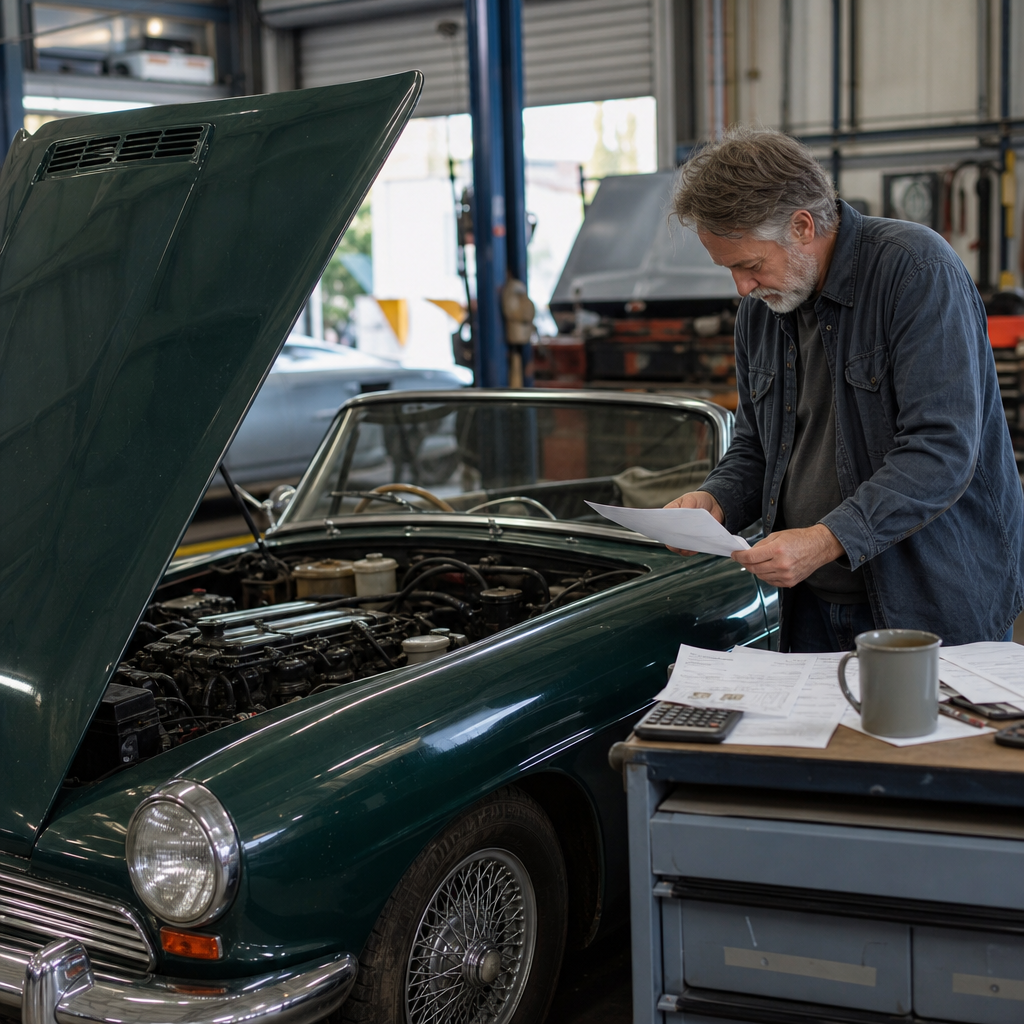

Classic car slang is the shorthand enthusiasts use to describe vehicle condition, body style, originality, performance parts, and buying risks, and learning it is one of the fastest ways to feel confident in the hobby. If you are new to classic cars, terms like numbers-matching, survivor, resto-mod, hardtop, tri-power, and Bondo can sound like a foreign language. I have spent years around auctions, club meets, restoration shops, and private sales, and I can say plainly that understanding classic car terminology helps you avoid expensive mistakes and communicate clearly with sellers, mechanics, insurers, and fellow owners. It also makes research easier, because many listings and forum discussions assume you already know the vocabulary.
In practical terms, classic car slang includes both technical language and informal expressions. Some terms describe what a car is, such as coupe, sedan, wagon, convertible, and fastback. Others describe condition, such as project car, driver, survivor, patina, and trailer queen. Another group focuses on originality and restoration quality: frame-off restoration, nut-and-bolt restoration, restomod, clone, tribute, and numbers-matching. Then there are performance and era-specific phrases such as flathead, big-block, small-block, four-on-the-floor, and posi. These words matter because they affect value, insurability, maintenance planning, and your expectations after purchase.
This guide serves as a hub for classic car terminology within the broader classic car basics and education category. It explains the most common slang in plain language, while also showing where meanings can blur depending on make, era, and region. For example, a survivor car to one judge may be an older restoration to another, and a barn find can range from a complete untouched original to a car simply stored for decades. By the end, you will know how to decode listings, ask better questions, and recognize which phrases are harmless shorthand and which ones should make you inspect more closely.
Body styles and design slang
Body style terminology is the foundation of classic car vocabulary because it describes the car before anyone discusses condition or value. A coupe generally means a two-door fixed-roof car, while a sedan usually means a four-door with a fixed roof. A hardtop is a pillarless design that gives the side profile an open look when the windows are down; many buyers love hardtops because they mimic the airy appearance of a convertible without the extra structural compromises. A convertible has a folding top, while a roadster typically refers to a more minimal open-top two-seater. A wagon, often called an estate in some markets, uses an extended roof and cargo area. A fastback has a roofline that slopes smoothly into the rear deck, while a notchback has a more defined trunk line.
Enthusiasts also use nicknames tied to styling cues. A tri-five refers specifically to Chevrolet models from 1955 through 1957, a hugely popular family that includes the Bel Air, 210, and 150. A shoebox often describes slab-sided late-1940s and early-1950s Fords. A bubbletop refers to certain General Motors hardtops with a large curved rear glass area, especially 1961 Chevrolet sport coupes. These terms are more than trivia; they help narrow searches fast. If someone says they found a 1957 Chevy hardtop project, you immediately know it differs in desirability and restoration complexity from a four-door sedan. When I review listings, body-style slang usually tells me more in five words than a seller’s long paragraph does.
Condition terms every buyer should know
Condition slang often determines whether a car is affordable, drivable, or financially dangerous. A project car is a vehicle needing substantial work, usually mechanical, cosmetic, structural, or all three. A driver is a car good enough to enjoy regularly, even if it is not show quality. A survivor is commonly understood as a largely original car that has not been fully restored and still retains factory finishes, materials, and components to a meaningful degree. Patina describes visible age such as faded paint, worn chrome, thin upholstery, and surface rust that owners preserve rather than erase. A barn find usually means a car discovered after long storage, though the term is overused in advertising and should never be taken as proof of rarity or authenticity.
Other terms deserve caution. A cream puff suggests an exceptionally clean, well-kept car, but the phrase has no formal standard. A beater is a rough, inexpensive vehicle used without concern for appearance. A rust bucket is exactly what it sounds like: a car with serious corrosion, often hidden in floors, rockers, frame rails, trunk pans, cowl sections, or lower fenders. A trailer queen is restored or preserved to such a high level that it is transported rather than driven to events. In judging circles, that can be a compliment. For a buyer seeking weekend use, it can mean high maintenance expectations and fear of stone chips. If a seller says a car only needs “TLC,” assume it needs inspection, not optimism.
Originality, restoration, and authenticity language
Originality terms are among the most important in classic car pricing because they directly affect collector value. Numbers-matching usually means the engine, and sometimes the transmission and rear axle, carry date codes, stampings, or partial VIN derivatives consistent with the car as built. The exact standard varies by marque. NCRS judging for Corvettes and marque experts for Mopars, Pontiacs, and Mustangs all evaluate originality differently, so buyers should verify what a seller means. A frame-off restoration means the body was separated from the chassis during restoration. It does not automatically guarantee quality. I have inspected frame-off cars with poor panel alignment and incorrect finishes, and well-restored body-on cars that were better overall.
A nut-and-bolt restoration implies extensive disassembly and refurbishment of nearly every component. A rotisserie restoration goes further by mounting the body or shell on a rotating jig so the underside can be repaired and refinished thoroughly. A concours restoration aims for top-level accuracy and presentation, often matching factory markings, finishes, hose clamps, and fasteners. A resto-mod or restomod blends classic styling with modern mechanicals such as fuel injection, overdrive transmissions, disc brakes, upgraded suspension, and air conditioning. A clone or tribute is built to resemble a rarer model, like converting a standard Chevelle into an SS-style car. There is nothing inherently wrong with a tribute car if represented honestly. Problems begin when tribute language disappears and originality claims appear.
Engine, drivetrain, and performance slang
Powertrain slang is everywhere in classic car culture, and much of it reflects decades when engine identity shaped a car’s reputation. A flathead has valves in the block rather than the cylinder head, famously used in early Ford V8s. Overhead-valve V8s later became dominant, and enthusiasts commonly separate them into small-block and big-block families. A small-block Chevrolet and a big-block Chevrolet are distinct engine architectures, not just different displacements. A straight-six or inline-six places six cylinders in a row. A four-banger is slang for a four-cylinder. Tri-power refers to three two-barrel carburetors, while a dual-quad setup uses two four-barrel carburetors. A mill is simply an engine. A crate engine is a new or remanufactured engine assembly supplied ready for installation, often from manufacturers such as Chevrolet Performance, Ford Performance, or Mopar Direct Connection.
Transmission slang matters too. Four-on-the-floor means a four-speed manual shifter mounted on the floor, not on the steering column. A three-on-the-tree describes a three-speed manual shifted from the column. Slushbox is informal and often dismissive slang for an automatic transmission, especially older units with softer shifts. Posi is short for Positraction, General Motors’ branding for a limited-slip differential, though many people use it generically. Mopar called similar systems Sure Grip, and Ford used Traction-Lok. Knowing these terms helps you understand what the car will feel like on the road. A big-block four-speed car with posi is not just faster in theory; it also carries a different market profile, maintenance cost, and buyer audience than a small-block automatic cruiser.
Shop talk, inspection words, and red flags
Some of the most useful classic car slang appears during inspections and restoration conversations. Bondo is a brand name that became generic slang for body filler. Used correctly, body filler is normal in collision and rust repair. Used excessively to hide bad metalwork, it signals trouble. Filler can be detected with a magnet, paint thickness gauge, or careful visual inspection for waviness and cracking. Bonded title means the ownership history required a surety bond before title issuance; that is not automatically a deal-breaker, but it deserves extra paperwork review. Sheet metal refers to body panels, while tin worm is old slang for rust. Metal work means cutting, welding, shaping, and finishing steel or aluminum to restore structure and appearance properly.
Buyers also hear terms like turnkey, sorted, and fresh. Turnkey suggests the car is ready to drive immediately. Sorted usually means recent issues have been fixed and the car behaves predictably. Fresh can mean newly restored, newly painted, or newly rebuilt, and that ambiguity is why receipts matter. A rebuilt engine without machine shop documentation is just a claim. The same is true for transmission rebuilds and differential service. Below is a practical decoding table I use when training first-time buyers to separate seller language from verified facts.
| Term | What sellers often mean | What you should verify |
|---|---|---|
| Barn find | Stored for years | Why it was stored, rust level, title status, completeness |
| Numbers-matching | Original drivetrain claim | Casting dates, stampings, VIN derivative, expert documentation |
| Frame-off restored | Major restoration | Photo records, underside quality, panel fit, receipts |
| Turnkey | Ready to enjoy now | Cold start, charging system, brakes, leaks, road test |
| Patina | Aged appearance | Surface wear versus hidden structural corrosion |
| Tribute | Replica of rare model | How accurately built, how honestly represented, VIN decode |
Marque-specific slang and why context matters
Classic car terminology becomes more nuanced when it is tied to specific brands. In Chevrolet circles, Tri-Five, Task Force, Stovebolt, and Mouse Motor have clear meanings. Stovebolt often refers to Chevrolet inline engines, while Mouse Motor is hot-rod slang for a small-block Chevy. In Ford circles, FE, Windsor, Cleveland, Y-block, and Blue Oval appear constantly. In Mopar communities, B-body, E-body, Slant Six, Max Wedge, and Six Pack are standard language. Pontiac owners talk about Ram Air, HO, and Judge. Buick fans use Nailhead. Oldsmobile people say Rocket. Cadillac restorers discuss Hydra-Matic, not just automatic transmission in general. Context matters because the same shorthand can imply very different parts availability, restoration costs, and authenticity standards.
This is why a terminology hub is useful. Once you recognize category language, you can go deeper into model-specific guides with better questions. If a seller advertises a “real GTO” or “real SS,” terminology alone is not enough; you need trim tag knowledge, VIN decoding, casting dates, and production data from recognized references. Resources such as the Hagerty Price Guide, Hemmings, marque club registries, GM Heritage Center archives, Ford build information, and factory service manuals provide the context slang cannot. The smartest approach is to treat terminology as a map, not as proof. Learn the words first, then confirm the facts with documentation, physical inspection, and if the car is valuable enough, a specialist who knows that exact model line.
How to use classic car terminology with confidence
The goal of learning slang is not to sound clever; it is to make better decisions. Start by separating description from verification. If a listing says “survivor driver with great patina and a fresh 350,” translate that into questions: What paint is original, what rust repairs exist, what machine work was done to the engine, and how long has the car been on the road since completion? When you visit a car, use the terms precisely. Ask whether it is a true hardtop or post car. Ask whether the rear end is an actual limited-slip unit. Ask whether the restoration was body-off, frame-off, or cosmetic only. Specific language often changes the seller’s answers immediately.
It also helps to build your own glossary as you research. Save examples from auction catalogs, factory brochures, shop manuals, and trusted club forums. Cross-check slang against parts books and service literature because colloquial terms can hide important distinctions. For instance, “rebuilt carb” may mean a gasket kit was installed, while a proper rebuild includes cleaning passages, checking throttle shaft wear, setting float height, and calibrating idle mixture. The more exact your vocabulary becomes, the easier it is to compare cars fairly. That is especially important in a market where two vehicles that look similar in photos can differ in value by tens of thousands of dollars because of authenticity, rust history, and workmanship.
Classic car slang is not just hobby chatter; it is a practical language that helps you read listings accurately, inspect vehicles intelligently, and participate in the community without confusion. The key terms fall into a few useful groups: body styles such as coupe, hardtop, fastback, and wagon; condition words such as project, driver, survivor, patina, and trailer queen; originality terms such as numbers-matching, frame-off, concours, tribute, and resto-mod; and mechanical slang such as flathead, big-block, four-on-the-floor, and posi. Once you understand those categories, most conversations at shows, auctions, and repair shops become much clearer.
The biggest takeaway is that slang should guide your questions, not replace proof. Descriptions like barn find, turnkey, fresh, or cream puff may be accurate, but they are not documentation. Verify claims with stampings, receipts, casting numbers, title records, expert inspections, and road tests. That balanced approach protects your budget and helps you buy a car that fits your goals, whether you want a weekend cruiser, a period-correct restoration, or a modernized restomod. Keep this hub handy as your starting point for classic car terminology, then continue into deeper guides on body styles, restoration types, engine codes, and buying checklists so every conversation around classic cars starts making sense.
Frequently Asked Questions
What does “numbers-matching” really mean in the classic car world?
“Numbers-matching” generally means a classic car still has the major factory-installed components it was born with, especially the engine and often the transmission. In the strictest sense, collectors use the term to describe a car whose VIN, engine stampings, transmission codes, and date codes all line up correctly with the vehicle’s original production records. That matters because originality is a major part of value in many segments of the hobby, particularly for muscle cars, rare performance models, and limited-production classics.
That said, the phrase is often used loosely in ads and conversations. Some sellers say “numbers-matching” when they only mean the engine is period-correct, not original to that exact car. Others may mean the block casting date is correct for the model year, but the transmission has been replaced. For a beginner, the safest approach is to ask exactly which components are original and what documentation supports the claim. Build sheets, window stickers, factory invoices, protect-o-plates, warranty booklets, and expert inspections all help verify whether the car truly retains its original drivetrain.
In practical terms, numbers-matching usually increases desirability, but it is not the only thing that matters. A beautifully restored or well-preserved car with a replacement engine can still be a fantastic car to own and enjoy. The key is understanding how the term affects price, collectability, and expectations. If a seller is charging a premium for numbers-matching status, the paperwork and stampings should back it up.
What is a “survivor” classic car, and how is it different from a restored car?
A “survivor” is a classic car that has remained largely original rather than being fully restored. That usually means it still wears most of its factory paint, upholstery, trim, glass, drivetrain, and finishes, even if those items show age. In the classic car hobby, a survivor is often admired because it represents a more authentic snapshot of how the car actually left the factory and lived through the decades. Small flaws, faded paint, worn pedals, and minor imperfections are often seen as part of the car’s story rather than defects to be erased.
A restored car, by contrast, has been taken apart to some degree and refurbished, repaired, or refinished. Restoration can range from a high-quality cosmetic freshening to a complete body-off rebuild. Restored cars can be stunning and often look better than new, but once major finishes and materials are replaced, the car no longer carries the same level of untouched originality. Some buyers prefer the polish and reliability of a restored car, while others place a premium on original finishes and factory details that can never truly be duplicated.
For newcomers, the important point is that survivor status does not automatically mean “better,” just different. A survivor may have more historical integrity, but it may also show wear, require careful preservation, and be less suitable for someone who wants a flawless showpiece. Likewise, a restored car may offer visual impact and improved usability, but quality varies widely. The best approach is to decide whether you value originality, presentation, drivability, or investment potential most, because each type of car speaks to a different kind of enthusiast.
What does “resto-mod” mean, and why do some enthusiasts love them while others do not?
A “resto-mod” is a classic car that has been restored and modified at the same time. The goal is usually to keep the vintage style and personality of the original car while upgrading key systems for better performance, comfort, safety, and reliability. Common resto-mod changes include modern crate engines, upgraded brakes, overdrive transmissions, fuel injection, improved suspension, power steering, air conditioning, and updated electrical systems. In many cases, a resto-mod looks mostly stock from the outside but drives much more like a modern car.
People love resto-mods because they make classic cars easier and more enjoyable to use in the real world. A car with front disc brakes, electronic ignition, radial tires, and a dependable cooling system is often far less stressful in traffic than a completely stock example. For owners who want to tour, cruise, or drive long distances, these upgrades can transform a classic from a weekend ornament into a genuinely usable machine. Resto-mods also give owners the freedom to personalize a car without pretending it is a museum piece.
The reason some enthusiasts push back is that originality still carries major weight in the hobby. Once a car is heavily modified, it may lose appeal to purists and collectors who value factory-correct equipment, finishes, and engineering. In some rare or historically important models, modifications can significantly reduce collector value. That is why context matters. A common model can make an excellent resto-mod candidate, while a low-production, highly documented, numbers-matching performance car is often better left close to original. Neither approach is universally right or wrong; it depends on the car, the owner’s goals, and whether the build respects the vehicle’s identity.
What do terms like “hardtop” and “tri-power” mean when describing a classic car?
“Hardtop” refers to a body style, while “tri-power” refers to an engine setup. A hardtop is typically a pillarless coupe or sedan design that lacks a fixed center post between the front and rear side windows. With all the windows down, the car has a clean, open look that many people find especially stylish. In the 1950s, 1960s, and early 1970s, hardtops were marketed as sporty and upscale because they gave some of the visual flair of a convertible without removing the roof. When someone says a car is a hardtop, they are talking about its roof and window configuration, not necessarily its performance.
“Tri-power,” on the other hand, usually describes an induction system using three two-barrel carburetors mounted on a single intake manifold. This setup was popular on certain American performance engines because it could deliver strong airflow and impressive power while still allowing reasonable drivability. In everyday driving, the center carburetor typically handled normal operation, while the outer carbs opened under heavier throttle. Brands and divisions had their own names and tuning details, but “tri-power” became one of those iconic phrases that instantly signals vintage performance.
Both terms matter because classic car slang often compresses a lot of meaning into a short phrase. If a seller says a car is a “two-door hardtop with tri-power,” an experienced buyer immediately understands both the body style and a key performance feature. For beginners, learning these phrases is useful because they shape value, desirability, and expectations. A hardtop may be more sought-after than a sedan in the same model line, and a genuine tri-power car may be more collectible than a standard single-carb version, especially if the setup is factory-installed and documented.
Why is “Bondo” such an important warning word when buying a classic car?
“Bondo” is a brand name that has become a catch-all term for body filler, and in the classic car world it is often used as shorthand for hidden bodywork. Body filler itself is not automatically bad. In proper restoration work, a thin skim coat can be a normal and acceptable way to smooth minor imperfections after metal repair. The problem is when filler is used heavily to hide rust, dents, poor welding, collision damage, or badly formed replacement panels. That is when “watch out for Bondo” becomes serious buying advice.
Excessive filler can signal expensive structural problems lurking under glossy paint. A car may look straight and attractive at first glance, but if the quarter panels, rocker panels, fenders, or lower doors are full of thick filler, you may be looking at rust or prior repairs that were disguised rather than corrected. This is especially risky because cosmetic issues can turn into major metalwork bills once the car is stripped or the filler starts cracking. In other words, shiny paint can hide a lot, and classic car buyers learn quickly that appearance alone means very little.
If you are shopping for a classic, inspect the body carefully with good lighting, a magnet where appropriate, and ideally a knowledgeable second set of eyes. Look for ripples, uneven panel gaps, bubbling paint, sanding marks, overspray, or suspiciously smooth areas on places that commonly rust. Ask for restoration photos and receipts. A reputable seller should be willing to discuss what metal was replaced and what filler, if any, was used. The lesson behind the slang is simple: Bondo is not the enemy by itself, but hidden rust and dishonest bodywork definitely are.