Choosing between budget and professional tools for your classic car is not a minor shopping decision; it shapes the speed, accuracy, safety, and long-term cost of every repair you make. In the restoration and maintenance world, tools and equipment are more than accessories. They determine whether a seized fastener comes out cleanly or snaps in the block, whether a panel fits correctly or needs rework, and whether routine service feels manageable or exhausting. For owners of vintage Mustangs, MGs, Camaros, Beetles, Jaguars, and similar cars, the right tool strategy matters because older vehicles bring unique challenges: aged hardware, obsolete fastener standards, fragile trim, unpredictable prior repairs, and materials that do not tolerate brute force.
When people ask whether budget tools are enough, the honest answer is nuanced. Some low-cost tools perform perfectly well for occasional use. Others fail precisely when a job demands accuracy or durability. Professional tools, by contrast, usually offer tighter tolerances, stronger alloys, better ergonomics, rebuildable mechanisms, and more reliable calibration. They also cost substantially more. The goal is not to fill your garage with premium badges. It is to know which tools can be bought economically, which deserve professional-grade investment, and how to build a toolkit that supports reliable classic car restoration and maintenance without wasting money.
In my own workshop, I have watched a cheap pickle fork destroy a reusable ball joint boot, seen bargain screwdrivers twist under dashboard work, and also used inexpensive trim tools for years without complaint. That pattern is common. Precision, safety, and repeated heavy load are where quality differences become obvious. Light-duty, low-risk, or consumable categories often leave room for savings. This hub article covers the full tools and equipment landscape for classic car owners, from hand tools and lifting gear to electrical diagnostics, bodywork equipment, storage, and planning. It is designed to help you decide what to buy first, what to upgrade later, and what standards should guide each purchase.
Start with the jobs your classic car actually needs
The smartest way to choose between budget and professional tools is to begin with the work, not the catalog. Classic car ownership usually breaks into five practical tool zones: routine maintenance, mechanical repair, electrical diagnosis, body and trim work, and major restoration. A weekend owner who mainly changes fluids, tunes carburetors, and adjusts drum brakes needs a different mix than someone replacing floor pans or rebuilding a differential. Before buying anything, list the work your car needs in the next twelve months. Include oil changes, brake service, ignition timing, cooling system repairs, bushing replacement, rust treatment, upholstery removal, and paint correction. That job list reveals where performance matters most.
For example, a 1967 Chevrolet C10 undergoing regular use needs strong jack stands, good sockets, torque control, a timing light, a multimeter, and flare-nut wrenches. A 1974 MGB restoration adds body hammers, dollies, cleco fasteners, a welder, a shrinker-stretcher, and panel clamps. A fuel-injected 1980s classic may require noid lights, test leads, and a more capable meter than a carbureted 1950s sedan. Matching the toolkit to the car prevents two common mistakes: overspending on specialized professional tools you rarely use, or underbuying critical items that lead to stripped hardware, inaccurate assembly, and unsafe lifting.
Where budget tools are usually enough
Budget tools make the most sense in lower-stress categories where absolute precision is not critical and failure carries limited risk. This often includes trim removal sets, plastic scrapers, magnetic trays, parts brushes, funnels, drain pans, pick sets for light use, pry bars for non-critical work, dead-blow hammers used occasionally, and basic storage items. Many owners also do fine with budget hex keys, inexpensive inspection mirrors, LED work lights, hose clamp pliers used a few times per year, and duplicate tools kept in the car for roadside needs.
Consumables and near-consumables are another good place to save. Wire wheels, sanding blocks, nitrile gloves, paint strainers, mixing cups, shop towels, seam scrapers, masking tools, and generic body spreaders do not always reward premium pricing. Even some power tools can be bought economically if they are used infrequently. A low-cost heat gun for shrinking wire loom, loosening undercoating, or removing decals may serve a home garage well. The same applies to a bench grinder used lightly for cleaning bolts and dressing brackets, assuming the unit runs true and is mounted securely.
The key test is simple: if a tool does not need exact calibration, does not routinely face extreme torque, and does not protect your safety, budget can be acceptable. Still, inspect budget items closely. Look for sloppy fit, weak pivots, flashing on molded plastic, and poor surface finish. A cheap tool that mars stainless trim or rounds Whitworth or SAE fasteners on an older British or American car is not saving money.
Where professional tools are worth the money
Professional tools earn their keep in three situations: when accuracy matters, when force loads are high, and when tool failure can damage parts or injure you. Torque wrenches are the clearest example. On a classic engine, correct torque affects head gasket sealing, bearing cap retention, wheel stud safety, and aluminum thread survival. A quality click, beam, or digital torque wrench from a recognized maker such as CDI, Snap-on, Norbar, or Tekton’s higher-tier calibrated line is a sound investment. Cheap, unverified torque tools are a gamble, especially if they are never checked against a standard.
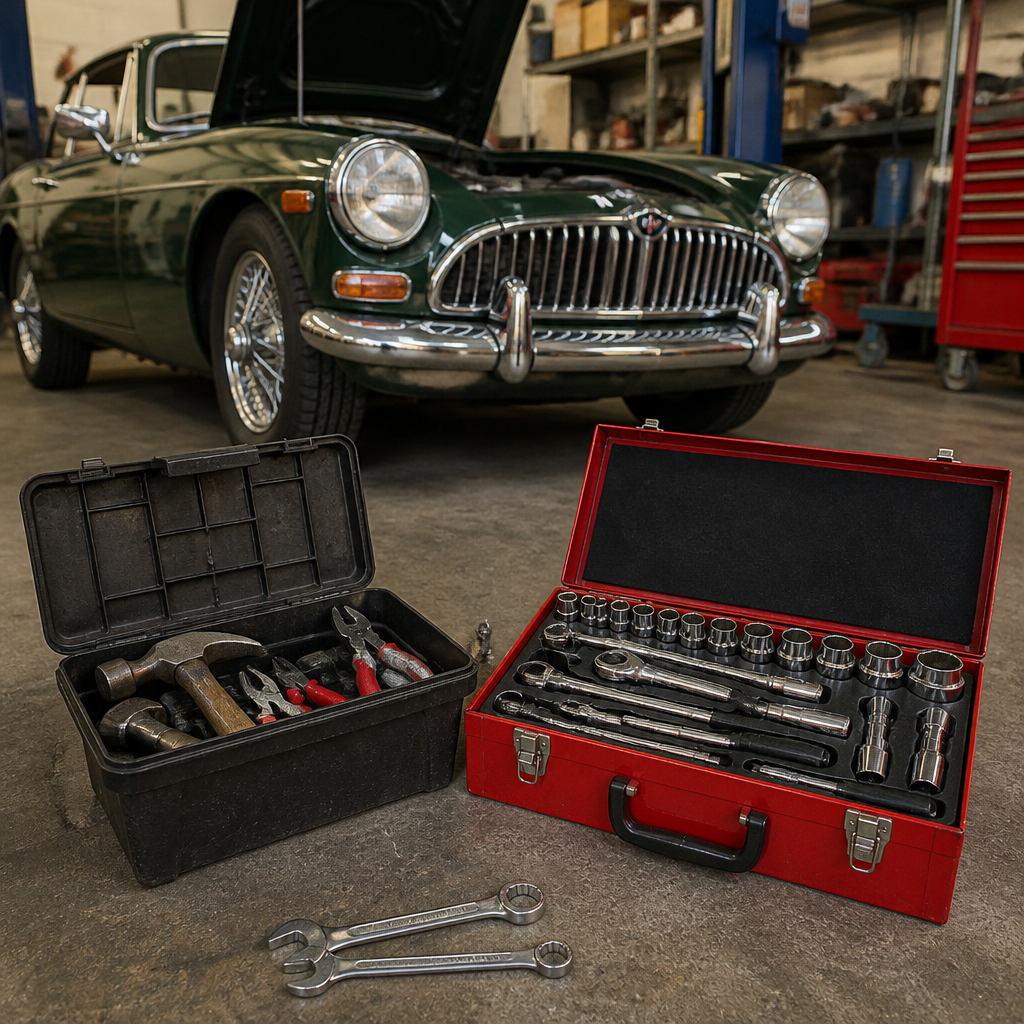
Sockets, ratchets, breaker bars, and combination wrenches also justify spending more when you regularly work on aged fasteners. Professional-grade broaching grips better, wall thickness is optimized, chrome resists corrosion, and ratchet mechanisms survive repeated load cycles. On classics with mixed hardware history, a well-machined six-point socket often prevents the nightmare of rounding a suspension bolt that has not moved in forty years. Flare-nut wrenches, impact sockets, pullers, bearing separators, and stud extractors belong in the same category because poor execution can destroy expensive or hard-to-source original parts.
Lifting equipment is non-negotiable. Buy professional or at least industrial-quality jack stands, hydraulic jacks, wheel cribs, and lifting slings from trusted manufacturers that publish rated capacities and locking designs. The same principle applies to spring compressors, engine hoists, transmission jacks, and welding helmets. Precision measuring tools matter too: dial indicators, micrometers, feeler gauges, calipers, straightedges, and test lights should be dependable because classic car diagnostics often rely on mechanical measurement rather than computer codes.
Essential tool categories for a classic car hub garage
A complete classic car tools and equipment plan is easier to understand by category. The table below shows where most owners should consider spending carefully and where budget purchases are usually acceptable.
| Category | Examples | Budget or Professional? | Reason |
|---|---|---|---|
| Hand tools | SAE sockets, ratchets, screwdrivers, pliers | Mixed, lean professional | Older fasteners strip easily; fit and durability matter |
| Torque and measuring | Torque wrench, calipers, feeler gauges, dial indicator | Professional | Accuracy affects assembly quality and engine reliability |
| Lifting and support | Floor jack, jack stands, wheel chocks | Professional | Direct safety risk; rated load and stability are essential |
| Electrical diagnostics | Multimeter, test light, battery tester | Mixed | Meter quality matters, but good mid-range options exist |
| Body and trim | Trim tools, dollies, hammers, sanding blocks | Mixed | Some tools can be budget; shaping tools benefit from quality |
| Power tools | Drill, impact wrench, die grinder, polisher | Mixed, use-based | Frequent use rewards better bearings, motors, and control |
| Specialty service tools | Bushing drivers, pullers, brake flaring kit | Professional | Cheap versions often misalign parts or damage components |
| Consumables and storage | Magnetic trays, gloves, bins, brushes | Budget | Low precision and easy replacement |
This framework helps owners prioritize. If your budget is limited, buy safe lifting gear, good hand tools, and accurate torque equipment first. Add specialty and premium body tools only when your project reaches that stage.
Hand tools, driveline tools, and fastener reality on old cars
Classic cars punish poor hand tools because old hardware behaves differently from new hardware. Corrosion, paint buildup, mixed thread standards, over-tightening by previous owners, and decades of heat cycles create stubborn fasteners that require excellent tool engagement. Six-point sockets are generally better than twelve-point for removal torque. Longer combination wrenches provide leverage without cheater bars. JIS screwdrivers matter on many imported classics because standard Phillips tips cam out and damage screw heads. British cars may require Whitworth, BSF, or BA tools depending on age and subsystem, while American and European classics often mix SAE and metric due to later repairs.
Professional ratchets also make a practical difference under dashboards, behind manifolds, and around heater boxes where swing arc is limited. Fine-tooth mechanisms help in cramped spaces, and stronger pawls survive when a rusted fastener suddenly gives way. If you rebuild steering, suspension, or axles, add bearing race drivers, seal installers, snap-ring pliers, brass drifts, and a solid bench vise. A vise is one of the most underrated shop tools in restoration. Mounted correctly, it stabilizes work, protects hands, and improves precision during pressing, filing, and assembly.
Electrical, tuning, and diagnostic equipment
Many classic car problems that look mechanical are actually electrical: voltage drop during cranking, poor grounds, weak ignition output, parasitic drain, dim lighting, charging faults, and resistance in old connectors. A dependable digital multimeter from Fluke, Klein, or an equivalent reputable brand is usually worth more than a drawer full of random cheap testers. You need stable readings, durable leads, and proper fuse protection. Pair that with a simple incandescent test light for quick circuit checks on older 12-volt systems, plus jumper leads, alligator clips, a battery load tester, and a good wiring diagram.
Tuning tools deserve careful selection as well. A timing light with advance function, dwell meter for points-equipped cars, vacuum gauge, compression tester, leak-down tester, and fuel pressure gauge can diagnose rough running more accurately than guesswork and parts swapping. I have seen owners replace carburetors, coils, and fuel pumps when a vacuum gauge would have revealed a valve sealing issue in minutes. On carbureted classics, synchronization tools for dual carbs, tachometers, and spark testers are often more useful than generic scan tools. For later classics with electronic fuel injection, add service manuals, breakout leads, and sensor test procedures rather than relying on assumptions.
Bodywork, paint prep, and restoration equipment
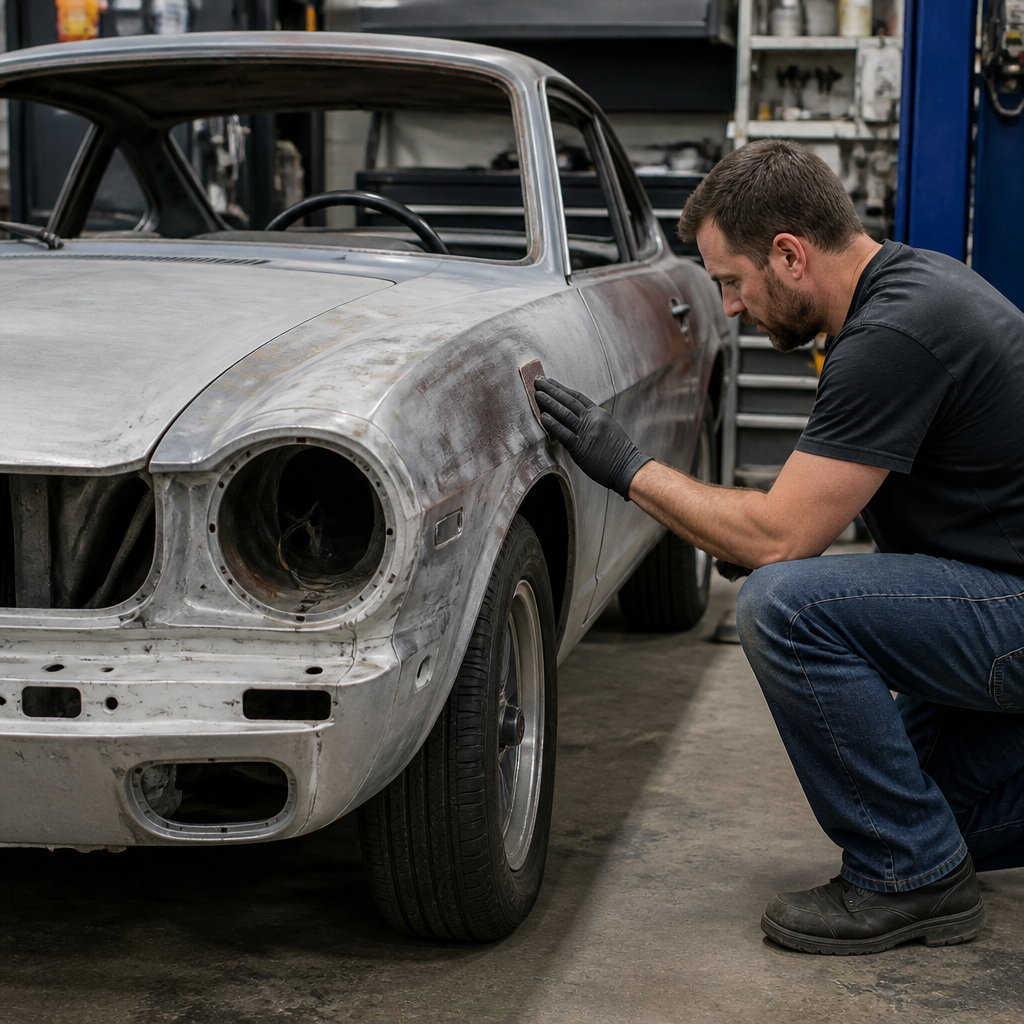
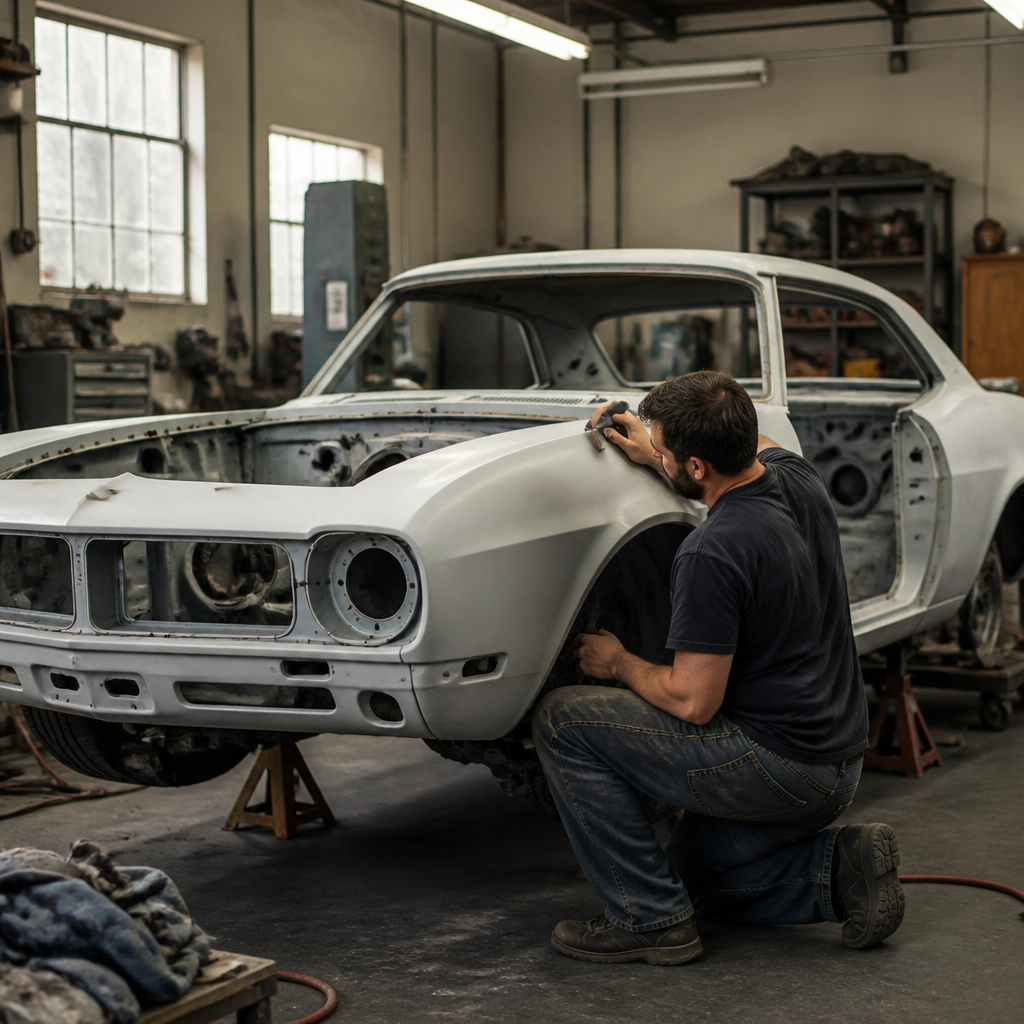
Body and paint work create the strongest temptation to buy cheap kits, yet this is where poor tools can multiply labor. Inexpensive sanding blocks, spreaders, and masking dispensers are usually fine, but panel shaping tools need quality faces and balance. Good body hammers and dollies transfer force cleanly. Better shears, nibblers, and hole punches leave more accurate edges. Panel clamps and clecos speed fitment dramatically when replacing rusted sections. If you weld, choose a reliable MIG welder with stable low-end control because thin classic car sheet metal punishes erratic output. Lincoln Electric, Miller, and Hobart are common benchmarks for hobby and pro shops alike.
Air tools remain useful in bodywork, especially dual-action sanders, die grinders, and spray equipment, but they depend on compressor capacity. Before buying pneumatic tools, confirm your compressor’s CFM output at working pressure. A cheap spray gun can lay primer acceptably, yet finish paint often benefits from better atomization and fan consistency. Paintless dent repair, lead work on older bodies, and panel alignment also demand practice. Sometimes renting, borrowing, or outsourcing a specialized step is smarter than buying a bargain tool that creates rework on irreplaceable metal or trim.
How to build your toolkit without overspending
Build in phases. Phase one is safety and maintenance: jack stands, floor jack, wheel chocks, socket and wrench sets, screwdrivers, pliers, torque wrench, drain tools, grease gun, battery charger, and multimeter. Phase two is diagnosis and mechanical repair: compression tester, timing light, pullers, flare-nut wrenches, brake tools, tap-and-die set, thread chaser set, and impact wrench. Phase three is restoration: body tools, welding gear, specialty measuring tools, engine stand, parts washer, and storage systems.
Used professional tools can be a better buy than new budget tools. Estate sales, retiring mechanics, industrial auctions, and local classifieds often produce durable American, Japanese, or European tools at sensible prices. Inspect for cracks, modified handles, mushroomed striking surfaces, ratchet backlash, and missing calibration records. Buy service manuals before specialty tools; the manual tells you what is truly required. Keep a tool log, label drawers by system, and store fasteners in tagged bins. Organization is equipment. On long restorations, it saves more time than another shiny tool purchase.
Conclusion: buy for risk, precision, and repetition
The budget versus professional tools question has a simple answer once you look at the job in front of you. Spend most on anything tied to safety, measurement, heavy force, and irreplaceable parts. Save money on low-risk accessories, consumables, and tools used rarely or lightly. For classic car restoration and maintenance, a thoughtful mixed toolkit beats an all-cheap or all-premium approach. It protects original hardware, improves workmanship, and keeps projects moving without needless expense.
If this page is your hub for tools and equipment, use it as a buying framework. Start with the work your car needs, map each task to a tool category, and upgrade where failure would cost you time, accuracy, or safety. Build deliberately, buy quality where it counts, and your classic car garage will support better repairs for years to come. Next, review your current kit, identify the weak links, and make your next purchase solve a real problem.
Frequently Asked Questions
1. When does it make sense to buy budget tools for a classic car, and when should you invest in professional-grade equipment?
Budget tools make sense when you are handling light-duty, occasional jobs and the risk of failure is low. For example, basic screwdrivers, trim tools, funnels, drain pans, magnetic trays, and some general-purpose sockets can be perfectly adequate if you are doing routine maintenance a few times a year. If you are a classic car owner who changes fluids, removes interior pieces, adjusts small fittings, or performs other non-critical tasks, a carefully chosen budget tool can help you build your garage without overspending. For many hobbyists, this is the practical starting point.
Professional-grade tools become the smarter investment when precision, durability, safety, and repeat use matter. Classic cars often have aged hardware, fragile threads, inconsistent tolerances, and parts that are difficult or expensive to replace. In those situations, better tools are not a luxury; they reduce the chance of damage. A high-quality torque wrench, for example, is essential when tightening cylinder head bolts, suspension components, wheel hardware, or other parts where correct torque directly affects reliability and safety. The same is true for pullers, flare nut wrenches, jack stands, bearing tools, tap-and-die sets, and measuring tools. If failure could mean stripped fasteners, broken castings, inaccurate assembly, or personal injury, professional quality is worth it.
A useful rule is to match the tool to the consequence of error. If a cheap tool slips, flexes, rounds a fastener, gives a false reading, or breaks under load, what happens next? On a classic Mustang, MG, or similar vintage car, the answer may involve hunting for rare parts, redoing labor-intensive work, or causing damage to original components that cannot be easily replaced. That is why many experienced restorers buy budget tools for convenience and organization, but they spend more on the tools that apply force, measure critical values, or support the vehicle. In the long run, that approach usually costs less than replacing broken tools, damaged parts, and wasted time.
2. Which tools should never be cheap when working on a classic car?
Some tools are simply too important to buy at the lowest possible price. The first category is safety equipment: jacks, jack stands, wheel chocks, fire extinguishers, welding protection, gloves, and eye protection. If you are underneath a classic car, or lifting one for brake work, suspension service, or exhaust repairs, dependable support equipment is non-negotiable. A failed stand or unstable jack is not just inconvenient; it is dangerous. Look for established brands, clearly rated capacities, solid construction, and proper certifications where applicable.
The second category is precision tools. Torque wrenches, feeler gauges, calipers, micrometers, dial indicators, compression testers, and timing tools need to be accurate and repeatable. Classic engines and drivetrains often require measured assembly and careful adjustment, especially on ignition systems, valve lash, bearing clearances, and wheel or suspension hardware. A cheap torque wrench that is inaccurate can lead to leaks, warped parts, stripped threads, or fasteners that loosen over time. On older British and American cars, where service procedures may rely heavily on mechanical adjustment rather than modern electronics, measurement quality matters even more.
The third category includes tools that deal with stuck, delicate, or high-torque fasteners. This covers impact sockets, breaker bars, ratchets, line wrenches, extractors, pullers, and specialty sockets. Old brake fittings, suspension bolts, and engine hardware are often seized from age, corrosion, and heat cycles. Inferior tools tend to round edges, twist under load, or break at the worst moment. A professional-quality six-point socket or flare nut wrench can be the difference between a clean removal and a major repair. Finally, electrical tools deserve attention as well. Reliable crimpers, multimeters, test lights, wire strippers, and soldering equipment are especially valuable on classic cars, where electrical systems are often modified, brittle, or poorly repaired by previous owners.
3. Can budget tools actually damage a vintage Mustang, MG, or other classic car?
Yes, they can, especially when used on original components, corroded hardware, or parts that require exact fit and controlled force. Many classic cars have fasteners that are softer, more worn, or more vulnerable than those found on newer vehicles. A loose-fitting socket, weak ratchet, or poorly machined open-end wrench can round corners quickly. Once that happens, a simple repair can turn into drilling, extracting, retapping, or replacing a hard-to-find part. On an MG with older brake fittings or a Mustang with aged suspension hardware, that kind of damage is common when low-quality tools slip or deform under pressure.
Damage also happens through inaccuracy, not just breakage. A low-quality torque wrench may under-tighten or over-tighten critical fasteners. A cheap measuring tool may give inconsistent readings during engine assembly. A poorly made puller can load a part unevenly and crack or bend something that should have come off cleanly. Body and trim work can suffer too. Inexpensive hammers, dollies, clamps, or alignment tools can create more rework if they are poorly finished, imprecise, or difficult to control. With restoration work, even small mistakes often multiply, because one flawed step affects every step that follows.
That said, the issue is not that every affordable tool is bad. It is that classic cars are less forgiving of bad tools. If you buy budget tools selectively and inspect them carefully, some will perform well for non-critical jobs. The real mistake is assuming every tool category carries the same risk. On a modern daily driver, replacing a damaged bracket or seized fastener may be annoying but manageable. On a classic car, it may mean tracking down rare original parts, paying for machine work, or compromising originality. Good tools protect the car as much as they help the mechanic.
4. What is the smartest way to build a tool collection for classic car maintenance without overspending?
The smartest approach is to build in stages based on the work you actually plan to do. Start with a strong foundation of essential hand tools and safety gear. That usually includes quality jack stands, a reliable floor jack, wheel chocks, a good socket set with six-point sockets, combination wrenches, screwdrivers, pliers, locking pliers, a breaker bar, a dead-blow hammer, torque wrench, drain tools, funnels, a multimeter, and a bright work light. For classic car ownership, a service manual is just as important as the tools themselves, because it helps you buy what you really need instead of guessing.
Next, add tools according to system: ignition, brakes, cooling, fuel, suspension, body, and electrical. If you are working on SU carburetors, drum brakes, points ignition, Whitworth or SAE fasteners, or classic trim pieces, buy the tools that match those jobs specifically. Owners of British classics may need specialty wrenches or thread tools, while muscle car owners may prioritize engine timing, suspension, and driveline tools. This staged method prevents waste and keeps you from filling your garage with low-value items that rarely get used.
It also helps to split purchases into three tiers. Buy premium for safety, precision, and heavy-use tools. Buy mid-range for your everyday hand tools. Buy budget for storage, organization, and low-risk accessories. Watch for estate sales, retired mechanic sales, swap meets, and reputable used-tool sources, because many older professional tools are better than new bargain versions. Finally, think in terms of cost per use and cost of failure. A more expensive tool that lasts for years and prevents one damaged part can easily be the cheaper option overall. For classic car owners, that mindset usually leads to better decisions than focusing only on sticker price.
5. Are professional tools worth it for a hobbyist who only works on a classic car occasionally?
In many cases, yes, but not across the board. A hobbyist does not need to outfit a home garage like a full-time restoration shop to benefit from professional tools. The real question is not how often you use the tool, but how important it is when you do use it. If you only torque cylinder head bolts once every few years, that one job is still too critical for a poor-quality torque wrench. If you only lift the car once a month, you still need dependable jack stands every time. If you only diagnose electrical issues occasionally, a trustworthy multimeter can save hours of frustration on an older wiring system.
Professional tools are often worth it because they make the work calmer, cleaner, and more predictable. They fit better, slip less, hold calibration longer, and survive difficult jobs without flexing or failing. On a classic car, that translates into fewer broken fasteners, less rework, and more confidence tackling repairs yourself. For a hobbyist, confidence matters. The difference between finishing a repair and giving up halfway is often the quality of the tools in your hands.
That said, you do not need the most expensive version of every tool. The best strategy for occasional use is selective upgrading. Buy good enough where the stakes are low, and buy very good where the stakes are high. Rent or borrow specialty tools you may only need