Best road trips for classic car enthusiasts combine scenery, mechanical sympathy, history, and the kind of driving pace that lets an older machine feel alive. In classic car travel, the route matters as much as the destination because carburetion, cooling, gearing, and cabin comfort all shape the experience differently than they do in a modern car. A rewarding trip for a 1967 Mustang fastback, Jaguar E-Type, Mercedes-Benz 280SL, Porsche 356, or Chevrolet Bel Air is not simply the fastest line between two points. It is a carefully chosen drive with reasonable grades, quality fuel access, repair options, weather awareness, and enough roadside character to match the personality of the car itself.
Classic car travel sits at the center of classic car culture and lifestyle because it turns ownership into use. Shows and concours events matter, but miles create stories, reveal strengths and weaknesses, and teach owners how their cars behave under heat, altitude, traffic, and long-distance fatigue. I have planned vintage driving routes for owners who wanted everything from relaxed weekend loops to thousand-mile tours, and the best trips always balanced romance with realism. A well-sorted classic can cover serious distance, but it needs the right road, the right pace, and the right preparation. That is why certain routes repeatedly rise to the top for enthusiasts.
For most owners, the main questions are straightforward: which roads suit older cars best, what makes a route memorable, how far should you drive in a day, and how do you reduce the risk of breakdowns without draining the adventure out of the trip. This hub answers those questions while highlighting standout road trips in North America and Europe that consistently deliver for classic car enthusiasts. It also serves as a foundation for deeper articles on route planning, packing, roadside repairs, insurance, navigation, and event-based touring, all core parts of classic car travel.
The best routes share four traits. First, they reward moderate speeds, since many classics are happiest between 45 and 65 mph. Second, they offer service infrastructure, including independent garages, fuel stops, and lodging with secure parking. Third, they provide sensory value: engine note in a canyon, ocean air through vent windows, village main streets, or mountain overlooks that justify stopping. Fourth, they respect the limitations of older vehicles. Drum brakes, narrow cooling margins, non-overdrive transmissions, manual steering, and dim night lighting all influence route choice. Once you understand those constraints, the ideal classic car road trip becomes much easier to identify and enjoy.
What makes a road trip ideal for a classic car
An ideal classic car road trip is built around mechanical suitability, not just postcard scenery. Cars from the 1950s through the 1980s vary widely in highway comfort. A big-block grand tourer may cruise effortlessly at interstate speed but struggle in city heat, while a small British roadster loves narrow two-lanes yet becomes tiring after hours of crosswind and truck traffic. Before naming the best routes, it helps to define the practical criteria. Road surface quality matters because older suspensions, steering boxes, and low-profile seats transmit harshness quickly. Grade and altitude matter because overheating and vapor lock become more likely in hot climbs, especially on carbureted cars.
Distance planning is equally important. A modern crossover can hide a 500-mile day; most classics should not try to. For many owners, 150 to 250 miles per day is the sweet spot, leaving margin for photography, fuel checks, cooling stops, and unexpected troubleshooting. Fuel quality can also shape success. High-compression engines may need premium gasoline, and ethanol content can affect older hoses, seals, and storage practices. Navigation should avoid blindly following the fastest route. Tools like Google Maps, Roadtrippers, AAA TripTik, and paper state maps work best when paired with enthusiast knowledge from marque clubs and regional forums.
Finally, the best road trips for classic car enthusiasts build in support. That can mean traveling with a second car, joining an organized tour, or choosing corridors with strong enthusiast communities. Routes near Monterey, the Blue Ridge, the Cotswolds, or the Alps often have better access to specialist shops and sympathetic accommodations than truly remote roads. The point is not to eliminate uncertainty. It is to keep uncertainty manageable so the trip remains memorable for the right reasons.
Top road trips in the United States for classic car travel
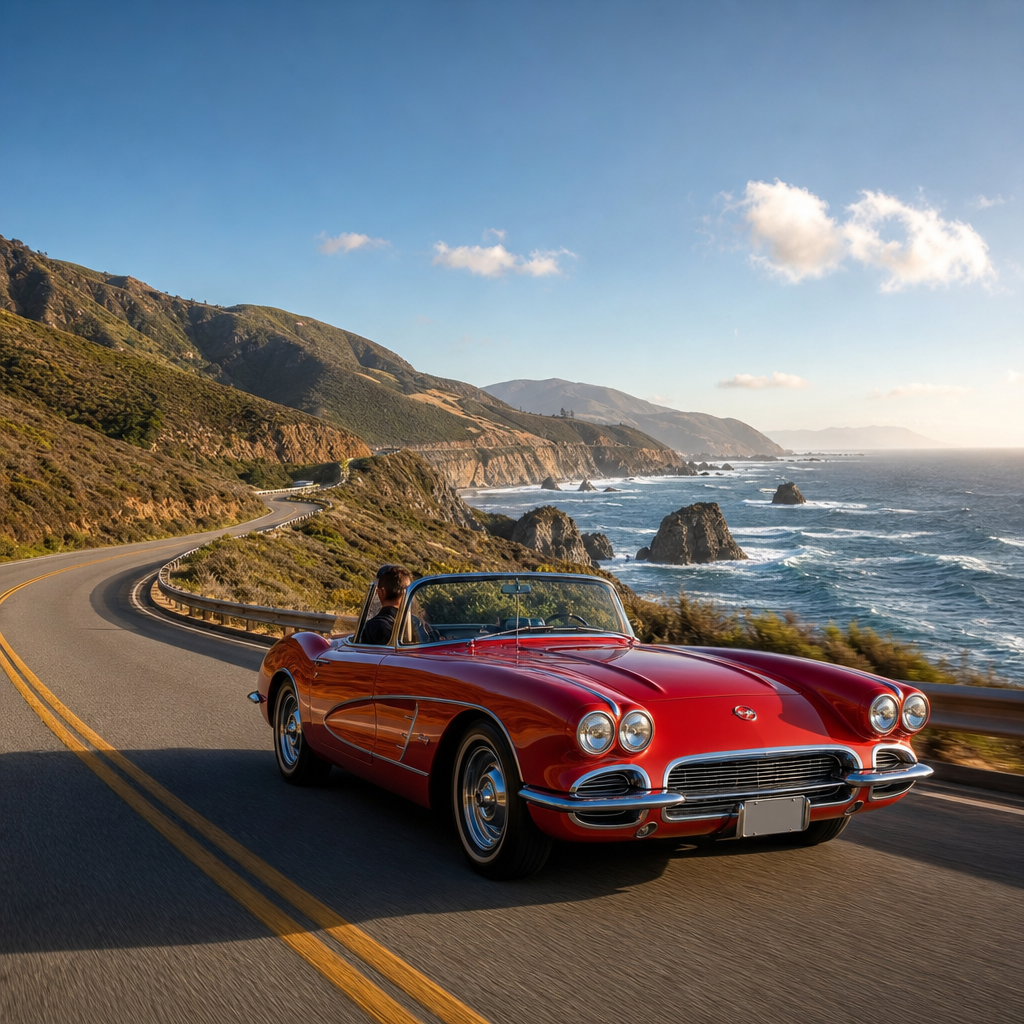
In the United States, several routes stand out because they combine scenery with realistic operating conditions for older vehicles. California Highway 1, especially sections between Monterey, Big Sur, and San Simeon, is a classic for a reason. The road favors rhythm over speed, and the pull-offs encourage cooling breaks and photos. It suits sports cars and elegant cruisers, though owners should watch temperatures during slow tourist traffic and verify road closures before departure because landslides occasionally interrupt the route.
The Blue Ridge Parkway is one of the best answers to the question, what is the safest scenic road trip for a classic car. Commercial traffic is limited, speeds are moderate, and the views are consistent. Stretching 469 miles through Virginia and North Carolina, it rewards older convertibles, air-cooled cars, and balanced coupes that enjoy flowing corners. Fog, deer activity, and seasonal closures need attention, but the parkway remains one of the easiest iconic drives for vintage touring.
Route 66 deserves inclusion not as a single uninterrupted drive, but as a cultural corridor. For owners of postwar American cars, no route delivers stronger period atmosphere. The best approach is to sample preserved segments in Illinois, Missouri, New Mexico, Arizona, and California rather than forcing a coast-to-coast endurance run. Motels, neon signs, diners, and small museums create context that makes a 1950s or 1960s car feel at home.
Other strong choices include the Natchez Trace Parkway for relaxed Southern touring, Vermont Route 100 for fall foliage and village stops, and the Hill Country roads around Fredericksburg, Texas, where German heritage towns and rolling terrain create an ideal weekend base. These routes work because they give the driver something modern interstates rarely do: a pace that flatters the car.
| Route | Why it suits classics | Best car types | Main caution |
|---|---|---|---|
| California Highway 1 | Moderate pace, frequent viewpoints, strong tourism infrastructure | Roadsters, GT cars, stylish cruisers | Traffic and occasional closures |
| Blue Ridge Parkway | Low speeds, limited trucks, continuous scenery | Convertibles, balanced coupes, air-cooled cars | Fog, wildlife, seasonal weather |
| Route 66 segments | Period-correct atmosphere and roadside culture | 1950s to 1970s American classics | Heat and long gaps between services in some areas |
| Natchez Trace Parkway | Smooth driving, calm traffic, historic stops | Large sedans, touring cars, comfortable automatics | Driver fatigue from long gentle stretches |
European routes that feel made for vintage motoring
Europe offers some of the finest classic car touring roads in the world because distances are manageable, villages are frequent, and many routes evolved before high-speed motorway design. The Cotswolds in England are nearly ideal for prewar cars, postwar saloons, and compact roadsters. Speeds are low, landscapes are gentle, and every short leg ends with a market town, country inn, or stone village. Narrow lanes require care, especially for wider American classics, but the social texture of the region is hard to beat.
The Scottish Highlands provide a different kind of reward. Routes through Glencoe, around Loch Ness, and along parts of the North Coast 500 offer dramatic scenery and long sight lines, but weather changes quickly and fuel stops should never be assumed. In my experience, well-prepared grand tourers do especially well here because they combine stamina with weather protection. Small open cars can be magical on the right day and punishing on the wrong one.
For continental touring, the Alps remain a benchmark. Passes such as Stelvio, Grossglockner, and sections of the Route des Grandes Alpes are unforgettable, but they are not automatically suitable for every classic. Steep hairpins, brake heat, clutch wear, and altitude expose weak cooling systems and marginal tune. Mid-century sports cars with healthy brakes and predictable low-speed torque shine here. Heavy cars with weak cooling or tall gearing may be happier on lower, less technical scenic roads through Bavaria, Lake Como, or Provence.
Tuscany also deserves attention because it balances scenery with livability. Cypress-lined roads, hill towns, and moderate distances create a relaxed rhythm that suits Alfa Romeos, Lancias, Mercedes SLs, and nearly any classic with decent hot-start behavior. Unlike a mountain pass attack, Tuscan touring leaves more room for lunches, vineyard detours, and the social side of classic car travel.
How to choose the right route for your specific classic
The right route depends on body style, drivetrain, cooling capacity, gearing, and cabin comfort. A 1930s car with mechanical brakes and limited lighting belongs on slower secondary roads, not late-night expressways. A 1960s American V8 with a three-speed automatic may loaf happily on broad parkways but consume fuel quickly in mountain work. An air-cooled Porsche or Volkswagen can be brilliant on flowing roads if the engine is tuned properly and the fan belt, ignition, and oil temperatures are monitored. British sports cars often thrive on narrow scenic routes where their compact size and communicative handling outweigh modest power.
Think in terms of use cases. If your car has no air conditioning and marginal insulation, desert summer routes are poor choices regardless of beauty. If your car has a low front valance or wire wheels that dislike potholes, rough rural roads should be minimized. If the gearbox lacks overdrive, a route with sustained 75 mph traffic will feel punishing. Owners often ask whether they should upgrade before touring. The answer is yes, selectively. Electronic ignition, modern tires in correct sizes, improved cooling fans, stainless brake lines, and a discreet USB charger can improve reliability without changing the character of the car.
Test drives before departure matter more than parts catalogs. I advise owners to complete several 50- to 100-mile local shakedowns after any service. Watch oil pressure, charging behavior, brake pull, hot restart performance, and fuel consumption. Confirm that the jack works, the spare holds air, and the lights function after dark. A road trip is not the place to discover that a radiator cap is incorrect or that the trunk seal leaks in heavy rain.
Preparation, packing, and support for reliable classic car travel
Preparation starts weeks before departure. Perform a full fluids inspection, torque wheel fasteners to specification, inspect belts and hoses, verify ignition timing, and check for fuel seepage around carburetors, pumps, and lines. Cooling systems deserve special attention because overheating ruins more tours than dramatic mechanical failures. Make sure the radiator is clean internally and externally, the thermostat opens correctly, and the fan clutch or electric fan cycles as designed. On cars with points, carry a spare condenser, rotor, cap, and properly gapped points. On fuel-injected classics, bring relays and any model-specific sensors known to fail.
Packing should focus on small items with high leverage. A compact tool roll, multimeter, test light, tire inflator, spare fuses, electrical tape, fuel hose, clamps, a flashlight, nitrile gloves, and fluids cover many roadside issues. Bring paper copies of insurance, registration, and roadside assistance numbers. Hagerty Drivers Club, AAA Premier, and marque-club support networks can be valuable, but verify towing limits and whether flatbed service is available. For rare cars, save contacts for specialists along your route before you leave.
Travel discipline matters on the road. Check oil at every fuel stop. Walk around the car after parking and look for drips, loose trim, or uneven tire wear. Listen for changes in valve noise, wheel bearings, or exhaust note. Let the car warm fully before hard use, and respect heat soak when restarting after short stops. The owners who enjoy classic car travel most are usually not the luckiest. They are the most observant.
Events, clubs, and themed drives that elevate the experience
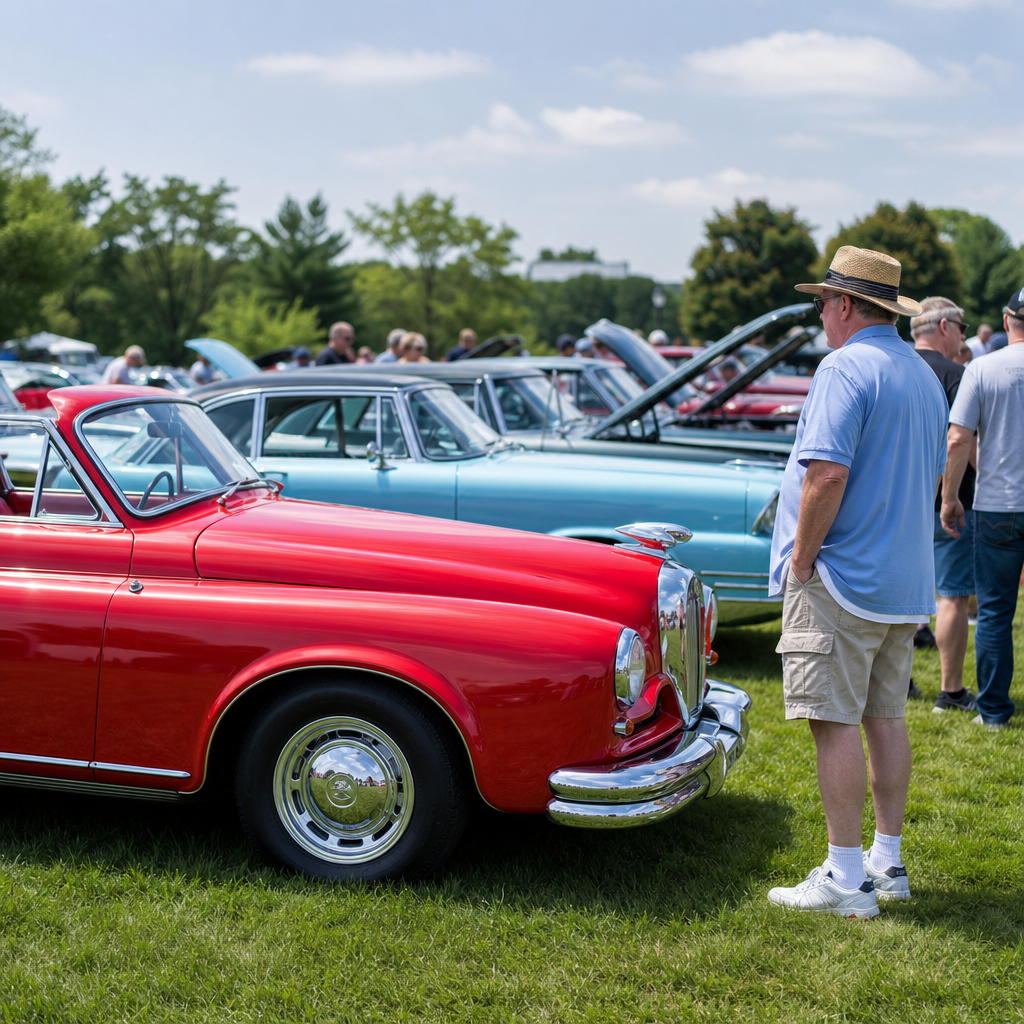
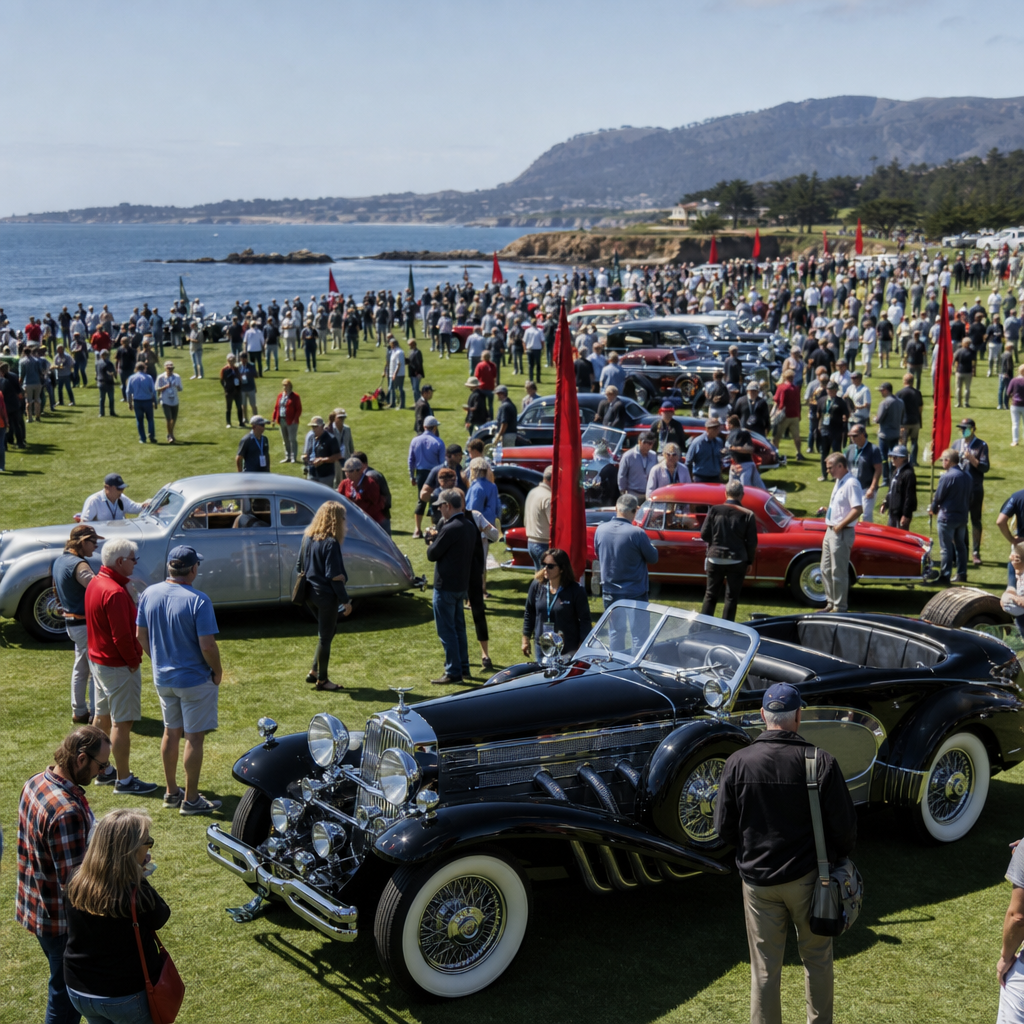
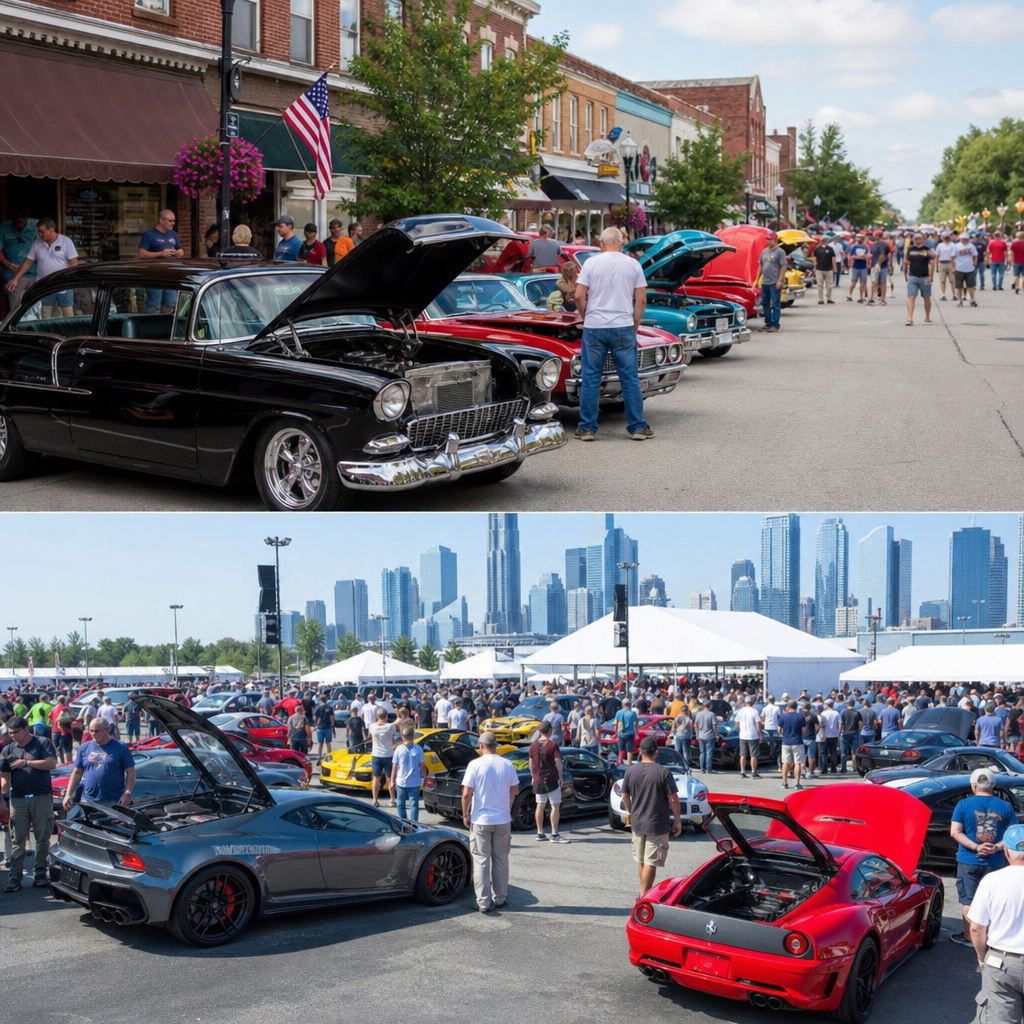
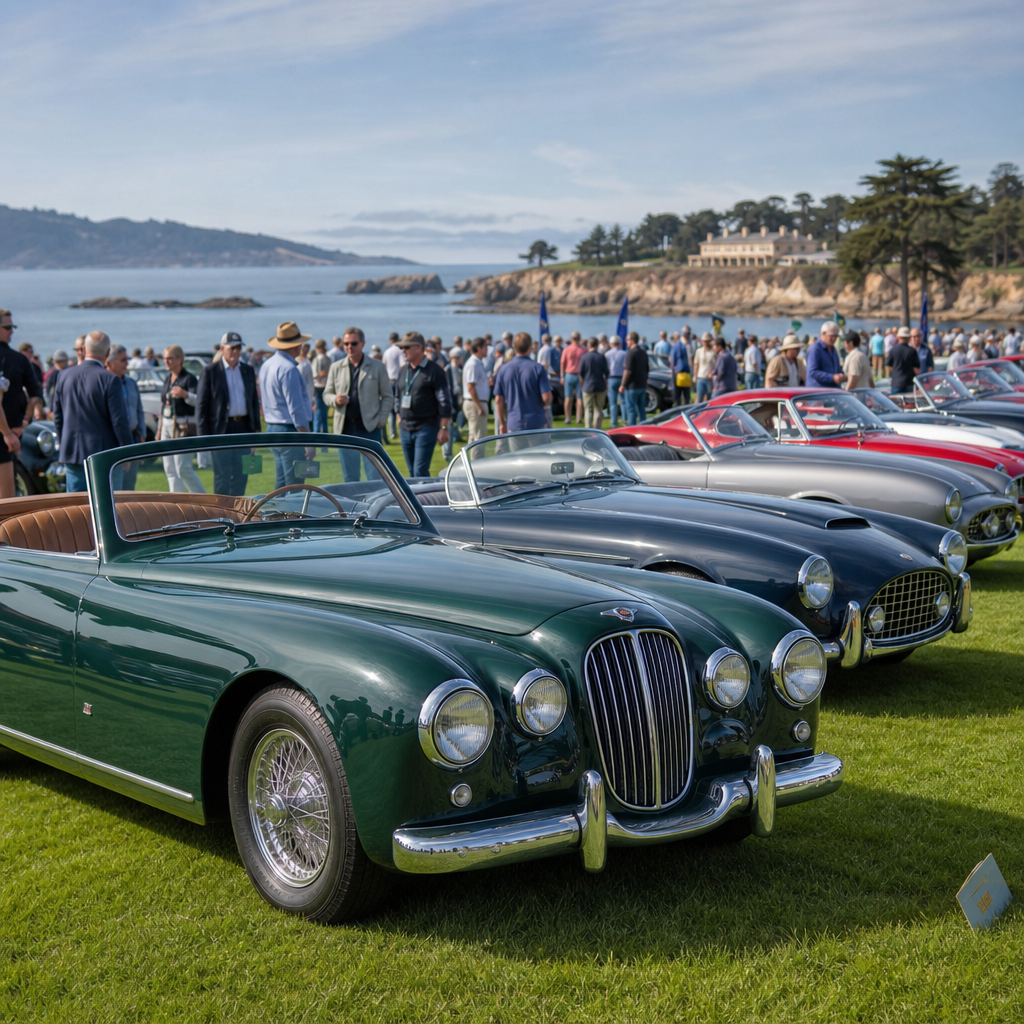
Some of the best road trips for classic car enthusiasts are built around events. Monterey Car Week in California, the Copperstate Overland in the American Southwest, the California Mille, the Colorado Grand, and Britain’s Goodwood Revival all anchor memorable drives before and after the main occasion. Event-centered touring solves several problems at once: it provides a target destination, increases the chance of seeing helpful fellow enthusiasts on the road, and often clusters specialist support nearby. It also enriches the cultural side of classic car travel, which is a major reason this subtopic matters inside the broader classic car lifestyle.
Marque clubs and regional driving groups are equally valuable for less formal trips. Porsche Club of America, the Antique Automobile Club of America, the Jaguar Drivers Club, local MG groups, and Mercedes-Benz clubs frequently publish favorite routes, hotel recommendations, and parts resources. Those details are more useful than generic travel advice because they come from owners who know how specific cars behave. If you are planning your first longer drive, join a one-day club run first. You will quickly learn your car’s true cruising speed, fuel range, and comfort limits.
Photography, journaling, and route logging can also transform a simple drive into a richer tradition. Record mileage, fuel stops, temperatures, and repairs. Over time, those notes become a practical database for future tours and a personal archive of your car’s life on the road.
The best road trips for classic car enthusiasts are the ones that align the character of the car with the character of the road. Scenic beauty matters, but mechanical fit matters more. A Jaguar E-Type on the Blue Ridge Parkway, a Tri-Five Chevy on Route 66, a Porsche 356 in the Alps, or an Alfa Romeo Spider in Tuscany each works because the environment flatters the machine rather than fighting it. That is the central lesson of classic car travel: choose routes that reward pace, engagement, and stopping often enough to enjoy both the car and the landscape.
As a hub for classic car travel, this guide points to the themes every owner should master next: route planning, pre-trip inspection, packing lists, weather strategy, event touring, and model-specific reliability upgrades. Those subjects determine whether a trip becomes a highlight of ownership or a stressful exercise in damage control. Fortunately, most problems can be avoided with realistic daily distances, careful shakedown testing, and roads that match your vehicle’s strengths.
If you want to get more from classic car culture and lifestyle, start with one well-planned drive instead of waiting for the perfect expedition. Pick a route with moderate speeds, strong scenery, and solid support, prepare your car thoroughly, and go build experience one mile at a time.
Frequently Asked Questions
What makes a road trip especially good for a classic car instead of just any scenic drive?
The best road trips for classic car enthusiasts are not chosen on scenery alone. A route that feels effortless and enjoyable in a modern vehicle can be tiring, inefficient, or even hard on an older car. Classic-friendly drives usually combine moderate speeds, smooth elevation changes, frequent fuel stops, access to shade or cool-down breaks, and road surfaces that do not punish older suspension, steering, and braking systems. Cars like a 1967 Mustang fastback, Jaguar E-Type, Mercedes-Benz 280SL, Porsche 356, or Chevrolet Bel Air each reward a driver differently, but they all benefit from roads that let the chassis settle into a natural rhythm rather than forcing nonstop high-speed cruising or stop-and-go congestion.
Mechanical sympathy matters just as much as scenery. Carbureted engines can be sensitive to heat soak, altitude, and repeated starts. Older cooling systems may tolerate a flowing two-lane highway better than long traffic jams on a hot afternoon. Shorter gearing, less insulation, manual steering, and vintage seats also affect fatigue over distance. That is why many experienced owners prefer routes with secondary highways, small towns, historical landmarks, and scenic overlooks rather than interstates. The ideal classic car road trip lets the engine stay in its happy range, gives the driver time to enjoy the sounds and sensations of the car, and offers enough support along the way to make the journey rewarding rather than stressful.
Which types of roads are usually best for classic cars like a Mustang, E-Type, 280SL, Porsche 356, or Bel Air?
In most cases, the best roads are well-maintained two-lane highways, parkways, rolling rural routes, and coastal or mountain roads with steady pacing and predictable corners. These roads suit classic cars because they allow a driver to enjoy throttle response, steering feel, and engine character without demanding sustained modern freeway speeds. A Porsche 356 often feels happiest on lighter, more technical roads where momentum and balance matter. A Mercedes-Benz 280SL shines on elegant touring routes with smooth pavement and comfortable cruising speeds. A big Chevrolet Bel Air or 1960s Mustang tends to suit broad, open roads with gentle curves and room to settle into a relaxed stride. An E-Type rewards roads that mix scenery with fluid cornering, provided traffic is light and the cooling system is healthy.
The roads that tend to work least well are heavily congested urban corridors, rough pavement with sharp expansion joints, and long interstate stretches where traffic flows at speeds far above what many vintage cars comfortably sustain. Very steep grades can also be demanding, especially in hot weather or at altitude, where cooling and carburetion can become more noticeable issues. That does not mean classic cars cannot handle challenging routes, but a smart itinerary respects the age and design of the vehicle. Many enthusiasts specifically seek roads where 45 to 65 mph feels natural, passing opportunities are sensible, and there are places to stop for fuel, photos, meals, and quick mechanical checks. Those conditions turn a nice drive into a genuinely satisfying classic car road trip.
How should I prepare a classic car before taking it on a longer road trip?
Preparation starts with reliability, not cosmetics. Before any serious trip, inspect the cooling system, ignition components, belts, hoses, fluids, battery, fuel delivery, tires, brakes, and charging system. On a classic car, small weaknesses that seem manageable at home often become larger problems after hours of heat, vibration, and steady use. Check for coolant seepage, old vacuum lines, brittle fuel hoses, worn points or plugs if applicable, wheel bearing play, brake pull, and any sign of overheating at idle. If the car has a known quirk, such as a hard hot start, a weak voltage regulator, or a tendency to vapor lock, address it before departure instead of hoping the route will be forgiving.
Beyond the mechanical baseline, bring a practical support kit. That usually includes basic hand tools, spare belts, fuses, bulbs, fluids, jumper cables, a tire inflator, gloves, rags, and model-specific spares that are difficult to source quickly. For some cars, that may mean ignition parts, fuel pump items, or an extra fan belt. It is also wise to map fuel stops more carefully than you would in a modern car, especially if the fuel gauge is not perfectly trustworthy or the engine prefers premium fuel. Finally, plan realistic daily mileage. In a classic, 200 to 300 rewarding miles can feel fuller and more memorable than a rushed 500. Good preparation is what allows you to enjoy the route, the sound, and the personality of the car instead of constantly monitoring the gauges in worry.
Are coastal, mountain, or desert routes better for classic car touring?
Each can be excellent, but the right choice depends on the specific car, season, and your tolerance for mechanical demands. Coastal routes are often favorites because temperatures tend to be more moderate, grades can be gentler, and the pace encourages relaxed touring. They pair especially well with convertibles and grand tourers such as the 280SL or E-Type, where the experience is as much about atmosphere as it is about driving. The downside is that some coastal roads can be crowded during peak travel periods, and salt air over time is not something owners ignore, particularly with older chrome and steel.
Mountain routes offer spectacular scenery and memorable driving, but they demand more from both driver and machine. Long climbs can expose weaknesses in cooling systems, fuel mixtures, and brakes, while high altitude can affect carbureted engines more noticeably than modern fuel-injected cars. For a well-sorted Porsche 356 or a balanced sports car, mountain roads can be incredibly rewarding, but they require planning around weather, traffic, and service availability. Desert routes have a different appeal: long sightlines, open space, and a nostalgic road-trip character that suits American classics beautifully. However, heat management becomes critical, especially for older cooling systems, cabin comfort, and tire condition. In practice, the best environment is the one that matches your car’s strengths, the season’s conditions, and a route profile that lets you enjoy the drive without pushing the vehicle beyond its comfort zone.
How do I balance enjoyment, preservation, and reliability when choosing a classic car road trip route?
The key is to remember that using a classic car properly is part of preserving it. These cars were built to move, and many actually perform better on regular, thoughtful drives than they do sitting unused. The goal is not to avoid mileage altogether, but to choose routes and schedules that respect the design of the car. That means favoring roads that complement the vehicle’s gearing, cooling capacity, braking performance, and cabin comfort. A preservation-minded trip is not necessarily a short one. It is one where the car operates within a healthy range, where maintenance has been handled in advance, and where the route allows for sensible stops and inspections.
In practical terms, that balance comes from choosing quality over sheer distance. Drive during cooler parts of the day if the car runs warm. Avoid dense city traffic if the clutch is heavy or the cooling system is marginal. Build in time for scenic overlooks, historic downtowns, museums, roadside diners, and overnight stays in places where secure parking is available. This approach protects the car, reduces driver fatigue, and usually creates a richer travel experience anyway. The best road trips for classic car enthusiasts are not endurance tests. They are thoughtfully paced journeys where the machine’s character shapes the route, the route rewards the machine, and the destination never overshadows the pleasure of getting there.