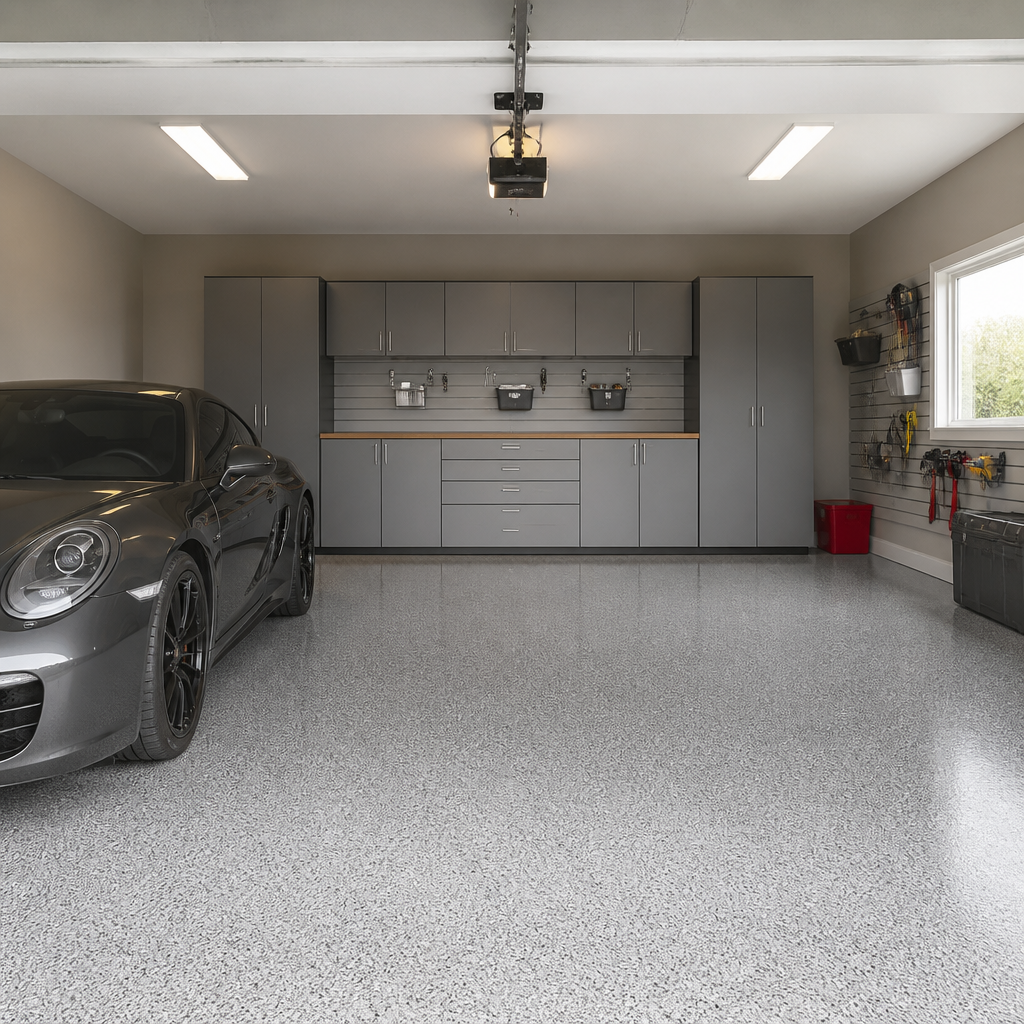
Your garage floor does more than hold a vehicle. It absorbs oil, brake fluid, road salt, hot tire pickup, jack stand pressure, and the daily wear that turns a basic parking space into a true workshop, storage zone, or enthusiast retreat. Choosing the best flooring options for car garages matters because the right surface protects concrete, improves safety, simplifies cleaning, and sets the tone for everything else in a classic car garage or man cave.
In practical terms, garage flooring means the finished surface you walk and drive on above or within the concrete slab. That can be a coating such as epoxy, a penetrating treatment such as sealer, a covering such as interlocking tiles, or a full resurfacing system like polyaspartic or polished concrete. Each option solves a different problem. Some are best for heavy wrenching, some for show-car presentation, some for moisture control, and some for homeowners who want a fast weekend upgrade without hiring a contractor.
I have worked on garage remodels where owners focused on cabinets, lighting, and wall décor first, then regretted ignoring the floor. Once oil stains set in and concrete starts dusting, every improvement around it looks less finished. The floor is the literal foundation of the space, and in a subtopic like Garage & Man Cave Ideas, it is the hub decision that influences storage layouts, detailing areas, seating zones, tool placement, and even sound and light reflection. A dark, porous slab makes a garage feel smaller. A bright, sealed floor can make the same footprint feel organized and premium.
The best garage flooring also depends on how the space is used. A classic car owner who drives only on dry weekends has different needs than a daily driver owner in a snowy climate. A collector displaying two muscle cars may care most about gloss, while a DIY mechanic needs impact resistance and stain management. Budget matters too. Basic sealers can cost a fraction of a professional polyurea installation, but they do not perform the same way under chemical exposure or hot tires. There is no single best flooring for every garage, only the best fit for your goals, climate, slab condition, and maintenance tolerance.
This guide covers the best flooring options for car garages in that real-world context. It explains how each system works, where it performs well, where it falls short, and how to choose a floor that supports the wider vision for a garage workshop, collector bay, or car-themed man cave. If you are building a hub for future upgrades, start here, because every cabinet, lift, creeper, stool, and neon sign sits on this decision.
How to Choose the Right Garage Flooring
The first rule is to assess the concrete before you shop flooring products. Hairline shrinkage cracks, moisture vapor transmission, existing paint failure, and surface contamination all affect adhesion and durability. In most garages, flooring failure is not caused by the topcoat itself but by poor slab preparation. Oil embedded in concrete, a smooth power-troweled finish, or rising moisture can make even a premium coating peel.
Start with five questions. Do you park wet or salted vehicles inside? Do you perform mechanical work with jacks, stands, and dropped tools? Is the garage heated and climate controlled? Do you want a showroom appearance or simply easier cleanup? Are you installing the floor yourself or paying for labor? The answers narrow the field quickly. For example, if you live in a freeze-thaw region and track in deicing chemicals, you need strong chemical resistance and a system that will not trap moisture in a failing slab. If the garage doubles as a lounge or entertaining space, comfort underfoot and appearance become much more important.
Surface texture is another often-missed factor. High-gloss floors look excellent under LED lighting, but if they are too slick when wet, they create a safety issue around sinks, detail bays, or entry doors. Broadcast vinyl flakes, aluminum oxide, or silica additives can improve traction. The tradeoff is that heavily textured floors are harder to mop and can make rolling stools slightly less smooth. The ideal balance is a finish with enough tooth for wet-shoe grip without becoming abrasive or dirt-trapping.
Finally, think in systems rather than products. A durable floor usually includes crack repair, grinding or shot blasting, primer, body coat, decorative layer if desired, and topcoat. When homeowners compare a bargain epoxy kit to a professional polyaspartic floor, they are often comparing incomplete and complete systems rather than equivalent solutions. The material matters, but installation quality matters just as much.
Coatings and Coverings That Work Best
For most car garages, the leading choices are epoxy coating, polyaspartic or polyurea coating, interlocking floor tiles, concrete sealer, polished concrete, and garage floor mats or roll-out vinyl. Each has a legitimate use case. The best option depends on whether you prioritize durability, cost, installation speed, design, or flexibility.
| Flooring option | Best for | Main strengths | Main limitations |
|---|---|---|---|
| Epoxy coating | DIY upgrades and moderate-use garages | Chemical resistance, attractive finish, broad price range | Prep-sensitive, longer cure time, lower UV stability |
| Polyaspartic or polyurea | High-performance residential garages | Fast cure, strong adhesion, good hot-tire resistance | Higher cost, narrow installation window for DIY users |
| Interlocking tiles | Man caves, display garages, reversible upgrades | Easy install, design flexibility, no curing downtime | Dirt can collect underneath, point loads vary by brand |
| Concrete sealer | Budget protection for sound slabs | Low cost, simple application, dust reduction | Limited visual impact, modest stain protection |
| Polished concrete | Modern garages and integrated home spaces | Long life, low maintenance, clean architectural look | Requires good slab, can be slippery without treatment |
| Mats or roll-out vinyl | Temporary coverage and targeted work zones | Fastest installation, portable, good for renters | Moisture can trap beneath, edges can shift |
If you want a broad recommendation, professionally installed polyaspartic or polyurea systems now lead the market for homeowners who want a premium, long-lasting garage floor. If you want strong value and can invest time in prep, epoxy remains viable. If you want the easiest path to a stylish garage man cave without curing chemistry, interlocking tiles are hard to beat.
Epoxy Flooring: Popular for a Reason
Epoxy garage flooring remains one of the most searched and installed options because it delivers a noticeable transformation at a manageable cost. True epoxy is a thermosetting resin system that cures into a hard, bonded surface over prepared concrete. It can be solid color, metallic, or flake broadcast. In a residential car garage, the flake system is usually the sweet spot because it hides dust, patching, and minor imperfections better than a mirror-smooth solid coat.
In garages I have seen hold up well for years, success came down to preparation. The slab was diamond ground, cracks were repaired with a suitable filler, and the installer checked moisture before coating. Big-box one-part “epoxy” paints generally do not perform like two-part industrial-grade systems. They may look good initially, but under hot tires and chemical spills they often soften, lift, or wear through early. A high-solids two-part epoxy performs much better, especially when topped with a urethane or polyaspartic clear coat.
Epoxy’s strengths are strong stain resistance, good abrasion resistance, and a finished look that instantly upgrades a garage workshop or classic car bay. It also reflects light well, which matters when you are reading spark plug color, checking paintwork, or hunting for dropped fasteners. The downsides are slower cure times and sensitivity to UV light. Sunlit garages can see ambering over time unless the epoxy is protected by a UV-stable topcoat. Installation also usually takes multiple days from prep to return-to-service.
For homeowners building a themed man cave around the garage, epoxy offers broad design options. You can match chip blends to wall colors, create cove bases, or use metallic effects in a display area. Just remember that high style should not outweigh function. A show finish without slip resistance or chemical resistance is not the best flooring for a garage that still sees real car use.
Polyaspartic and Polyurea: Fast, Durable, Premium
Polyaspartic and polyurea systems have become the benchmark for premium residential garage flooring because they cure quickly, bond aggressively to prepared concrete, and resist hot tire pickup better than many older coating packages. Although the terms are sometimes marketed loosely, both belong to high-performance coating families commonly used in commercial and industrial settings. In residential garages, they are often installed as a basecoat plus full flake broadcast plus UV-stable topcoat.
The biggest advantage is speed. Many professional installers can prep and coat a garage in one day, with foot traffic in hours and vehicle traffic often within twenty-four hours. That is a major benefit for homes that cannot leave cars outside for several days. These systems also remain more color stable in sunlight than standard epoxy top surfaces, making them attractive for garages with glass doors, south-facing openings, or frequent daytime display use.
The tradeoff is cost and application difficulty. Because cure windows are short, these materials are less forgiving for inexperienced installers. I generally recommend professional installation unless the user has experience with rapid-set coatings and proper surface preparation equipment. Done correctly, the result is one of the best flooring options for car garages that balance looks, chemical resistance, durability, and convenience. Done poorly, the fast cure that makes the product attractive can also lock in roller marks, contamination, or broadcast errors.
For a serious classic car enthusiast, this category often offers the best all-around return. It supports jack stands better than many tile systems, cleans easily after detailing sessions, and gives the polished appearance expected in a collector space. If your garage is both working bay and social zone, polyaspartic or polyurea is usually the benchmark to compare everything else against.
Tiles, Sealers, and Other Practical Alternatives
Interlocking garage floor tiles are an excellent option for owners who want visual impact, modularity, and minimal downtime. Rigid polypropylene tiles are common in display garages and motorsport-inspired spaces because they create patterns, borders, and drainage channels. Softer PVC tiles provide more cushion and can feel better underfoot during long wrenching sessions. The best versions handle vehicle loads well, but quality varies widely, so compressive strength, temperature rating, and chemical resistance should be checked before buying.
Tiles shine in man cave conversions. You can zone the room visually, such as checkerboard under a car, solid color under toolboxes, and accent strips leading to seating or memorabilia walls. They are also replaceable one piece at a time. The drawback is maintenance underneath. Dust, drips, and moisture can migrate below the surface, so periodic lifting and cleaning may be necessary, especially in wet climates. Rolling heavy equipment over some tile patterns can also feel less stable than a seamless coating.
Concrete sealers are the entry-level answer for homeowners who want protection without a full resurfacing budget. Penetrating silane, siloxane, or siliconate sealers reduce moisture intrusion and help limit dusting, while acrylic sealers add a light film and mild appearance enhancement. Sealers do not hide stains or create the dramatic finish of epoxy, but on a sound slab they can be a smart first step. They are especially useful in utility garages, storage bays, or historic properties where a simple, breathable treatment is preferable to a thick coating.
Polished concrete is another strong option when the slab is already in good shape. Mechanical polishing densifies and refines the surface, creating a clean, modern look with low ongoing maintenance. Many mixed-use garages attached to contemporary homes use polished concrete because it feels architecturally integrated. However, it is less forgiving cosmetically if the slab has patchwork, deep staining, or major repairs. Roll-out vinyl and mats remain the quickest fixes for renters, seasonal protection, or targeted work areas, but they are not complete long-term flooring systems for most active car garages.
Designing the Garage as a Hub Space
A garage floor should support the entire Garage & Man Cave Ideas plan, not stand apart from it. When I map out a functional enthusiast garage, I divide the room into zones: vehicle parking, maintenance, detailing, storage, and social space. Flooring choices can reinforce those zones. A seamless coated floor works well in work bays where creepers, jacks, and drain pans need smooth movement. Tile can define a lounge corner with bar stools, signs, or display cases. Mats can protect a workbench drop zone where metal shavings or welding sparks are common.
Color and reflectivity influence the experience more than many owners expect. Light gray, tan, and medium flake blends brighten the room and improve visibility. That matters if you are inspecting body lines on a classic coupe or cleaning chrome trim. Dark solid floors can look dramatic, but they show salt haze, lint, and scratches more easily. In garages that double as photo backdrops for vehicles, neutral floors usually age better than novelty colors.
Think about compatibility with everything else planned for the room. Wall-mounted cabinets, two-post lifts, rolling tool chests, mini-split HVAC systems, and sound systems all interact with the floor. Coated floors pair well with under-cabinet lighting because they bounce illumination upward. Tiles may need careful trimming around lift posts or built-ins. If you intend to install a golf simulator, home gym corner, or seating area beside the cars, comfort and acoustics may justify mixing durable flooring with rugs or anti-fatigue mats in selected zones.
The best garage flooring creates a clean platform for future upgrades. It makes detailing easier, supports safer movement, and gives every other investment a more finished context. If you are building out a classic car lifestyle space piece by piece, start with the floor, then link outward to storage, lighting, wall finishes, seating, and décor choices that suit how you actually use the garage.
The best flooring options for car garages are the ones that match real use, not just showroom photos. Epoxy remains a strong value choice when installed over properly prepared concrete. Polyaspartic and polyurea systems offer the best blend of speed, durability, and upscale appearance for many active garages. Interlocking tiles bring flexibility and style, especially for man cave layouts and display spaces. Sealers, polished concrete, mats, and roll-out products each have a place when budget, slab condition, or temporary needs point in that direction.
The key lesson is that garage flooring is a system decision. Climate, moisture, chemical exposure, traffic, traction, and maintenance all matter as much as color or gloss. In the broader world of Garage & Man Cave Ideas, the floor is the hub that supports every other improvement, from storage walls and workbenches to lounge seating and collector-car presentation. Get it right, and the whole space works better, lasts longer, and feels more intentional every time the door opens.
If you are planning a garage upgrade, evaluate your slab, define how the space will be used, and choose a flooring system built for that reality. Then use that foundation to shape the workshop, display bay, or car-themed retreat you actually want to spend time in.
Frequently Asked Questions
What is the best flooring option for a car garage that sees daily vehicle traffic?
For a garage that handles daily vehicle use, the best flooring option is usually one that combines durability, chemical resistance, ease of maintenance, and strong adhesion to the concrete below. In many cases, professionally installed epoxy or polyaspartic coating systems rise to the top because they create a dense, protective surface over the slab. These coatings help shield the concrete from oil, brake fluid, road salt, moisture, and abrasion from tires. They also make sweeping and mopping much easier than with bare concrete, which tends to trap dust and stains.
That said, the right answer depends on how the garage is used. If the space is mainly for parking family vehicles and dealing with wet tires, a high-quality coating system works extremely well. If the garage doubles as a workshop where heavy tools, rolling tool chests, floor jacks, and jack stands are common, the floor needs excellent impact resistance and enough thickness to stand up to point loads. In that scenario, coated concrete is still a strong choice, but surface prep and product quality matter tremendously. A poorly prepared coating can peel, while a properly installed system can last for years.
Interlocking garage floor tiles are another good option for daily traffic, especially if you want a faster installation or a more customizable look. They can handle vehicle weight well and are available in designs that improve drainage or provide a clean showroom appearance. However, tiles can sometimes allow liquids to seep underneath, so they may require occasional lifting and cleaning depending on the design and your climate.
For most homeowners, the best balance of performance and appearance comes from a professionally installed coating system over a properly repaired and ground concrete slab. It protects the floor, improves traction when the correct finish is selected, and gives the garage a finished, intentional look rather than the dusty, unfinished feel of plain concrete.
Is epoxy flooring the same as polyaspartic or polyurea garage floor coating?
No, epoxy, polyaspartic, and polyurea are not the same, even though many people use the terms interchangeably when discussing garage floors. All three are resin-based coating systems designed to protect concrete, but they differ in cure time, flexibility, UV stability, installation requirements, and overall performance. Understanding those differences is important if you want to choose the best flooring option for your garage rather than simply picking the most familiar name.
Epoxy is widely known because it has been used for years in residential and commercial garages. It forms a hard, durable surface and can offer excellent resistance to chemicals, abrasion, and staining when installed correctly. Epoxy systems can also include decorative flakes for texture and appearance. However, some epoxy products are more sensitive to UV exposure, which means they can yellow over time if exposed to sunlight through open garage doors or windows. Cure times are also generally longer, which can mean more downtime before you can use the garage again.
Polyaspartic coatings are often marketed as a premium upgrade. They usually cure faster than epoxy, allowing quicker return to service, and they tend to offer better UV stability. That makes them a strong choice for garages where color retention matters. Polyaspartic systems can also perform very well in a broad range of temperatures, but their quick cure can make installation less forgiving, which is why professional application is especially valuable.
Polyurea is another high-performance material known for flexibility, strong adhesion, and rapid curing. In many systems, polyurea or a related primer is used beneath a polyaspartic topcoat to create a durable, professional-grade installation. These systems are often preferred when homeowners want fast installation and long-term resilience against hot tire pickup and seasonal temperature swings.
The biggest takeaway is that product category alone does not guarantee quality. The long-term success of any garage floor coating depends on moisture testing, crack repair, diamond grinding or shot blasting, proper primer use, and the installer’s experience. A great epoxy system will outperform a poorly installed polyaspartic floor every time. If you are comparing options, ask about concrete preparation, coating thickness, slip resistance, UV stability, and warranty terms rather than focusing only on the label.
Are interlocking garage floor tiles a good alternative to coatings?
Yes, interlocking garage floor tiles can be an excellent alternative to coatings, especially for homeowners who want a modular, customizable surface without the permanent nature of a resin coating system. These tiles are designed to sit over the existing concrete and snap together to form a protective layer. They are popular in garages used for car storage, hobby work, detailing, and enthusiast spaces because they can create a polished, high-end appearance with minimal downtime.
One major advantage of garage floor tiles is installation convenience. In many cases, they can be installed more quickly than coatings and without the extensive surface preparation required for chemical bonding. That makes them appealing if your concrete is older, cosmetically rough, or not ideal for a coating without significant prep work. Tiles also come in a wide range of colors and patterns, making it easy to create a checkerboard look, define work zones, or match the style of a classic car garage or man cave.
Performance-wise, high-quality tiles can handle vehicle weight well and offer good resistance to many garage-related messes. Some styles are solid-top, while others are designed with open channels that allow water, snow, and debris to fall through. Open-grid styles are especially useful in climates where road salt, slush, and rain are common, since they help keep the visible surface drier. Solid-top tiles often provide a more finished indoor look and may be more comfortable for certain workshop activities.
There are trade-offs, though. Liquids can collect underneath tiles, particularly if spills are not cleaned promptly. Depending on the tile design, the garage may occasionally need deeper cleaning by lifting sections of the floor. Tiles can also shift slightly if low-quality products are used or if the perimeter is not finished correctly. In heavy-duty workshop settings with repeated jack stand use, dragging steel equipment, or frequent welding and fabrication, some tile systems may be less ideal than coated concrete.
In short, interlocking tiles are a very good garage flooring option when flexibility, style, and fast installation are priorities. They are especially attractive for people who want to upgrade the look of the space without committing to a permanent coating. If your garage serves as both a parking area and a showpiece, tiles can deliver impressive results, provided you choose a product rated for vehicle traffic and realistic garage use.
How important is concrete preparation before installing garage flooring?
Concrete preparation is one of the most important factors in the success of any garage flooring system. In fact, the preparation phase often matters more than the brand name of the coating or surface product. A garage floor may look solid from above, but hidden issues such as moisture vapor, surface contamination, old sealers, grease penetration, and micro-cracking can all interfere with adhesion and long-term performance. If those issues are ignored, even an expensive floor can fail prematurely.
For coating systems such as epoxy, polyurea, or polyaspartic, proper preparation usually includes cleaning, degreasing, repairing cracks and spalls, and mechanically profiling the surface through diamond grinding or shot blasting. This creates the texture needed for the coating to bond effectively. Simply acid etching or lightly cleaning the slab is often not enough for a durable professional result. If the floor has absorbed years of oil or has a weak top layer of concrete, extra remediation may be necessary before any coating is applied.
Moisture is another critical issue. Concrete can transmit vapor from the ground below, and that moisture can push against a coating system over time. If moisture testing is skipped, the floor may blister, peel, or delaminate. In garages located in humid climates or in homes with older slabs, this step is especially important. Reputable installers will evaluate these conditions before recommending a specific product.
Even tile and mat systems benefit from a properly prepared slab. While they may not rely on chemical adhesion the way coatings do, uneven concrete, large cracks, or persistent moisture problems can still affect performance, appearance, and comfort. A clean, level base helps modular flooring sit properly and last longer.
If you are investing in garage flooring, do not think of preparation as an optional extra. It is the foundation of the whole project. A beautiful topcoat or premium tile can only perform as well as the surface beneath it. Whether your goal is a hard-working shop floor or a clean, finished enthusiast garage, preparation is what turns a cosmetic upgrade into a lasting improvement.
What flooring option is best for a garage that doubles as a workshop, storage space, or car enthusiast retreat?
The best flooring option for a multi-use garage depends on which activities dominate the space, but in many cases the ideal choice is one that balances toughness, comfort, appearance, and ease of cleaning. When a garage serves not just as a place to park but also as a workshop, storage zone, detailing bay, or enthusiast hangout, the floor has to do more than resist tire wear. It needs to handle dropped tools, rolling equipment, occasional fluid spills, foot traffic, and the visual expectations that come with a more finished environment.
For a true all-around solution, professionally coated concrete is hard to beat. A quality epoxy, polyurea, or poly