Choosing between single-stage vs base coat paint is one of the most important decisions in automotive bodywork and paint, especially for restorations, collision repairs, and full resprays. In simple terms, single-stage paint combines color and gloss in one product, while a base coat and clear coat system separates color from the protective top layer. That difference affects appearance, durability, repairability, cost, labor time, and historical accuracy. I have worked with both systems on classics, daily drivers, and shop-quality refinishing jobs, and the right answer always depends on the vehicle, the finish you want, and how the car will be used.
Within restoration and maintenance, bodywork and paint is the discipline that turns metal, filler, primer, and panels into a finished exterior that resists weather and looks consistent under direct light. It includes rust repair, dent correction, panel alignment, surface prep, primer selection, seam sealing, paint application, polishing, and long-term maintenance. Paint choice sits at the center of that process because it influences every stage after body prep. If you choose the wrong system for your goals, you may spend more, compromise originality, or create a finish that is harder to maintain than necessary.
Searchers usually ask the same core questions: Which paint lasts longer? Which is easier to repair? Which looks better on a classic car? Which costs less? The direct answer is this: base coat and clear coat is usually better for durability, UV resistance, metallic control, and modern repair workflows, while single-stage is often better for originality, solid colors, lower material complexity, and some restoration projects where period-correct appearance matters. Neither system is universally best. The better choice is the one matched to your substrate condition, budget, color type, and expected use.
This hub article covers bodywork and paint from that decision outward. It explains how each paint system works, where each performs best, how prep affects results more than most people realize, and what restorers should consider before spraying. If you are planning a repaint, preserving a classic, or comparing shop estimates, this guide will give you the framework to evaluate products, labor, and finish quality with confidence.
What single-stage and base coat paint actually mean
Single-stage paint is a topcoat in which the resin, pigment, and gloss-producing chemistry are designed to cure into the final visible finish without a separate clear layer. In practical shop terms, you spray primer and sealer as needed, then apply the color coats, and the final coat is the finished surface. Modern single-stage urethane is very different from older lacquer and enamel systems, but the principle is the same: one paint layer provides both color and sheen.
Base coat and clear coat splits those functions into two products. The base coat carries the color, metallic, pearl, or effect pigment. The clear coat then provides gloss, film build, chemical resistance, and UV protection. This separation gives painters more control over orientation of metallic particles, blending into adjacent panels, and long-term weather resistance. Most modern production vehicles use this two-stage approach because it supports high-volume manufacturing and consistent cosmetic quality.
In restoration work, the distinction matters because factory-correct finish can be part of a vehicle’s value. Many muscle cars, trucks, and pre-1990 vehicles originally wore single-stage finishes, particularly in solid colors. Reproducing that look can matter just as much as matching the paint code. At the same time, many owners want a finish that survives sun, washing, and regular driving better than period paint ever did. That tension between authenticity and performance is at the heart of the single-stage vs base coat paint decision.
How appearance differs on the car
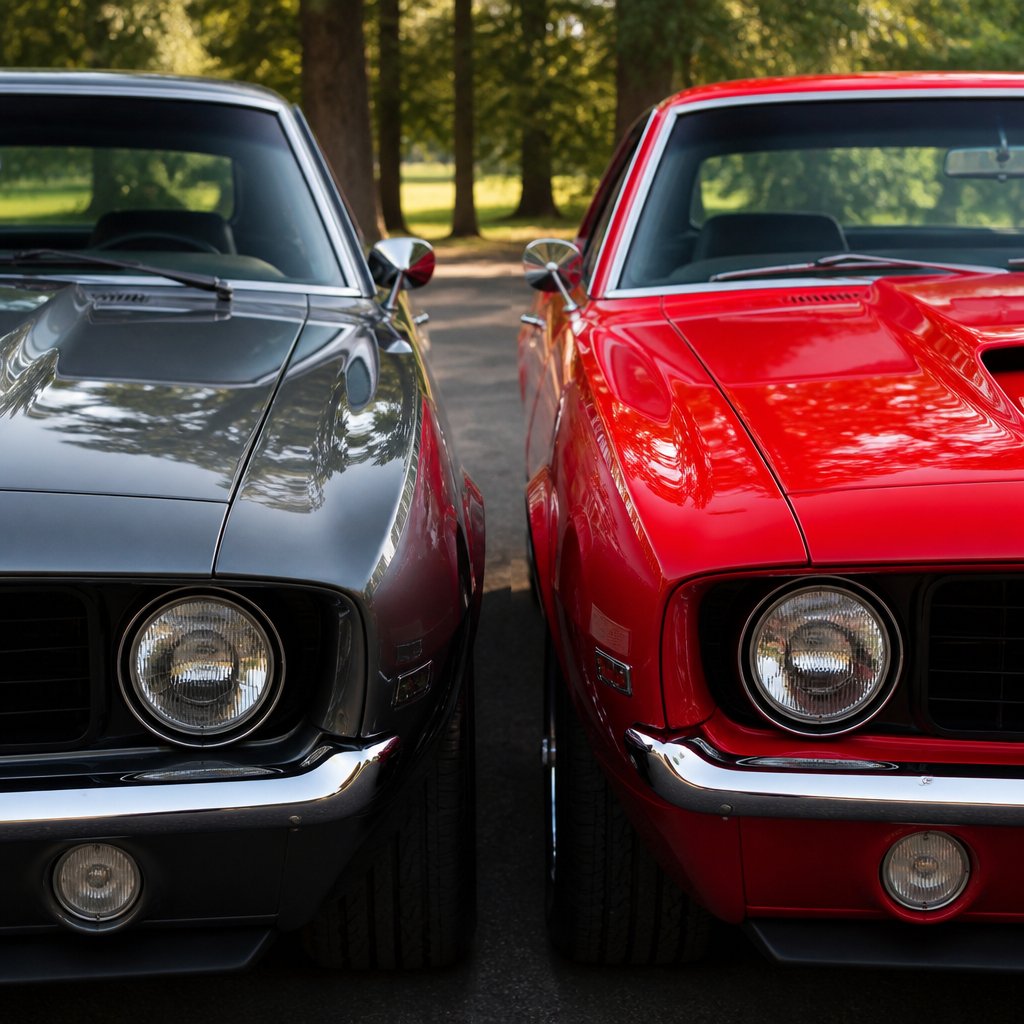
If you compare two well-sprayed solid black panels, one in single-stage urethane and one in base coat and clear coat, both can look excellent. The difference becomes clearer under harsh lighting, in edge transitions, and over time. Single-stage often has a warmer, more organic look because the pigment sits at the surface. Many restorers describe it as softer or more period-correct. On vintage vehicles, that character can look right in a way that ultra-deep clear sometimes does not.
Base coat and clear coat usually delivers more depth, sharper gloss, and stronger visual separation between the color layer and reflective surface. On modern cars, that is the expected look. Metallic and pearl colors almost always present better in a two-stage system because the base coat allows the flake to lay more evenly before clear locks it in. That is why silvers, tri-coats, and effect colors are generally easier to make attractive with base and clear.
There is also a polishing distinction. Single-stage can be cut and buffed, but the polishing pad will often pick up body color because you are abrading the pigmented surface itself. With clear coat, you are correcting the transparent top layer, which gives more room for refinement before disturbing color. That makes it easier to chase a show-level finish, especially on dark colors where sanding scratches and orange peel are more visible.
Durability, UV resistance, and long-term maintenance
For most daily driven vehicles, base coat and clear coat is the stronger choice for long-term environmental resistance. The clear layer is formulated to absorb UV exposure, resist oxidation, and protect the color beneath from fading. On cars parked outdoors, this matters. I have seen red and black single-stage finishes hold up well when maintained carefully, but I have also seen them chalk, fade, and lose gloss faster than comparable two-stage systems under the same sun exposure.
That does not mean single-stage is fragile. High-quality urethane single-stage products from established paint lines can last for years when the vehicle is garaged, washed correctly, and occasionally polished. They are often perfectly suitable for collector cars, weekend drivers, motorcycles, and restorations that are not exposed to constant weather. The limitation is not immediate failure; it is that the color-bearing surface is also the sacrificial surface. Every oxidation cycle, polishing session, and contaminant strike works directly on the finish you see.
Maintenance strategy should follow the paint system. Single-stage benefits from gentle washing, careful decontamination, and conservative machine polishing. Base and clear can usually tolerate more correction over time, though even clear coat has finite thickness. In both systems, paint life depends heavily on prep, gun setup, flash times, film build, and curing discipline. A poorly prepared base and clear job will fail sooner than a properly applied single-stage finish. Material choice matters, but process control matters more.
Repairability, blending, and shop workflow
When people ask what body shops prefer, the answer is usually base coat and clear coat because it fits modern repair procedures. Spot repairs and blends are generally easier with base coat because the painter can extend color into the adjacent panel, control orientation, and then clear for a uniform final gloss. This is especially important on metallics, where any mismatch in flake angle shows immediately. Insurance and collision environments favor systems that are predictable and repeatable across many repairs.
Single-stage can be repaired, but color matching and edge management are often less forgiving because gloss and color are created at the same time. If the repair area differs slightly in texture or film build, it can stand out. Solid colors are more manageable, but metallic single-stage is notoriously difficult to match invisibly. That is one reason many professional refinishers reserve single-stage for full panels, complete exteriors, jambs, underhood areas, chassis parts, or authenticity-focused projects rather than localized modern repairs.
Workflow also affects cost. Two-stage systems require more materials, more masking discipline, and another application phase, yet they often reduce headaches on complex colors and blends. In my experience, trying to save money by forcing single-stage into the wrong repair usually creates extra labor later in sanding, rework, or acceptance disputes. The easier system is not always the cheaper system when the full job is counted.
Cost, labor, and where the money really goes
Many owners assume single-stage is always much cheaper. Sometimes it is, but the difference is often smaller than expected because labor, not paint, dominates the invoice. Rust removal, filler work, block sanding, primer surfacing, guide coat checks, panel fit, masking, booth time, and post-paint finishing consume the budget. Material savings from eliminating clear coat can be real, yet they rarely offset poor prep or panel problems.
| Factor | Single-Stage Paint | Base Coat/Clear Coat |
|---|---|---|
| Material complexity | Lower | Higher |
| Best color types | Solid colors | Metallics, pearls, modern effect colors |
| UV protection | Moderate to good, product dependent | Generally better |
| Blend-friendly repairs | Less forgiving | More forgiving |
| Period-correct restorations | Often preferred | Sometimes too modern-looking |
| Cut and buff margin | Lower | Higher |
There are also hidden costs in consumables and risk. Base and clear may require additional reducers, activators, and more booth cycles. Single-stage may reduce those line items, but if the finish needs extra correction to achieve the gloss a customer expects, labor comes right back. On a classic truck in a non-metallic white, single-stage can be an efficient and correct choice. On a late-model metallic gray sedan with panel blending, base and clear is usually the economically sensible path because it lowers the chance of a visible mismatch.
Choosing the right system for restorations, classics, and drivers
For classic restoration, start with the vehicle’s purpose. If the car is judged, historically significant, or valued for factory-correct presentation, single-stage in the appropriate solid color is often the right answer. It preserves the visual character expected by knowledgeable buyers and judges. Some restorers even tune gloss level and orange peel to mimic production-era finishes rather than producing an unrealistically flat, over-cleared show surface.
For a driver restoration, the calculus shifts. If the owner wants easy upkeep, stronger resistance to sun exposure, and the ability to repair future damage cleanly, base coat and clear coat usually wins. This is common on restomods, trucks used on the road, and classics repainted in metallic or pearl colors that were not original to the vehicle. The finish may be less period-authentic, but it better fits modern use.
Bodywork condition also matters. Paint does not hide poor metal finishing. Waves, pinholes, sanding scratches, and shrinking filler will show through either system. A serious bodywork and paint plan should include epoxy primer over bare metal where appropriate, polyester filler over stable substrate, urethane primer-surfacer for blocking, seam sealer in joints, and sealer when uniform absorption is needed. Follow product data sheets from established systems such as PPG, BASF Glasurit, Axalta Cromax, or Sherwin-Williams Automotive Finishes. Mixing brands casually invites adhesion and solvent issues.
As a hub for bodywork and paint, this topic also connects to dent repair methods, rust prevention, panel replacement, primer selection, paint correction, and detailing maintenance. Those related decisions determine whether your chosen topcoat performs as promised. If you are selecting paint now, evaluate the whole refinishing stack, not just the final color coat.
Common mistakes and the best final recommendation
The biggest mistake is choosing by price alone. The second biggest is copying what looked good on someone else’s car without considering climate, storage, color, and use. Another common error is ignoring the technical data sheet. Recoat windows, tip size, air pressure, flash times, mixing ratios, and cure schedules are not suggestions. They determine gloss retention, solvent release, and adhesion. Poor procedure ruins premium materials quickly.
The best recommendation is straightforward. Choose single-stage paint when you are restoring a classic in a solid color, want a more authentic period look, and accept that maintenance and UV tolerance may require more care. Choose base coat and clear coat when durability, metallic control, repairability, and long-term appearance are the top priorities. For most modern vehicles and many driver-quality restorations, base and clear is better. For many authenticity-driven classics, single-stage is better.
Bodywork and paint succeeds when the system matches the job. Good metalwork, disciplined preparation, compatible materials, and skilled spraying matter more than internet opinions. Decide what you want the vehicle to be five years from now: judged original, clean weekend cruiser, or durable daily driver. Then choose the paint system that serves that outcome, speak with a reputable refinisher, and build the job around correct prep from bare substrate to final polish.
Frequently Asked Questions
What is the main difference between single-stage paint and base coat/clear coat paint?
The biggest difference is how the color and gloss are built into the finish. Single-stage paint combines pigment, binders, and gloss into one product, so the color coat is also the finished surface. Once it cures, what you see is both the color and the outer finish. In a base coat/clear coat system, the base coat provides the color, metallic, or pearl effect, while the clear coat sits on top as a separate protective and glossy layer. That extra layer changes how the paint looks, how it wears over time, and how it can be corrected or repaired later.
In practical terms, single-stage paint is often appreciated for its simplicity, classic appearance, and reduced material steps. It can be an excellent choice for solid colors, restorations, and projects where period correctness matters. Base coat/clear coat, on the other hand, is the modern standard for many collision repairs and full resprays because it usually delivers more depth, stronger UV protection, and better long-term gloss retention. It also tends to be the preferred system for metallic and pearl finishes, where consistent appearance and visual control are especially important during application.
Which paint system looks better on a finished vehicle?
That depends on the type of finish you want and the kind of vehicle you are painting. If you are after a deep, modern, highly reflective finish with strong gloss and a “wet look,” base coat/clear coat usually has the advantage. The clear layer adds visual depth and can make colors appear richer, especially on darker shades, metallics, and pearls. It also gives painters and detailers more room for color sanding and polishing without directly cutting into the color layer, which can help refine the final appearance.
Single-stage paint can still look outstanding, but its beauty is different. On many classic cars, muscle cars, vintage trucks, and factory-correct restorations, single-stage often delivers a more authentic, original-style appearance. Some enthusiasts prefer the warm, solid, less glassy character of a properly sprayed single-stage finish, especially on non-metallic colors. It can look very rich and elegant when applied well, but it generally does not create the same sense of layered depth that a clear-coated system does. So the better-looking option is really tied to your goal: modern show-car shine and effect, or more traditional and historically accurate character.
Is single-stage paint more durable than base coat/clear coat, or is it the other way around?
In most real-world automotive applications, base coat/clear coat tends to offer better long-term durability, especially when it comes to UV resistance, gloss retention, and environmental protection. The clear coat acts as a dedicated sacrificial layer that helps shield the color coat from sunlight, oxidation, chemicals, and weather exposure. That is one reason modern OEM finishes and many professional refinish jobs rely on it. Vehicles exposed to harsh sun, road salt, frequent washing, and daily use often benefit from the added protection of a quality clear-coated system.
That said, single-stage is not inherently weak. A high-quality single-stage urethane can be very durable and can perform extremely well when properly applied and maintained. However, because the color and the outer surface are the same layer, oxidation, fading, and wear affect the visible finish more directly. Polishing and correction also remove material from the actual color coat, not just from a clear layer above it. For garage-kept classics, weekend cars, and restorations where originality matters more than maximum weather resistance, single-stage can be a perfectly sound choice. For daily drivers and long-term exposure, base coat/clear coat usually offers a larger durability margin.
Which option is easier to repair if the paint gets scratched, chipped, or damaged later?
Repairability is one of the most important differences, and the answer depends on the type of damage and the color involved. Base coat/clear coat is often easier to manage in modern repair settings because painters can blend the base color and then clear over the repaired area or panel to restore gloss and protection. This is especially useful in collision repair, where color matching and edge blending are part of everyday work. Metallic and pearl colors are generally much more manageable in a base coat system because the painter has more control over how the color lays down before the clear is applied.
Single-stage paint can be simpler in theory because it is a one-product finish, but spot repairs can be trickier in practice, especially if the existing finish has aged or faded. Matching color and gloss in one layer can be difficult, and any polishing or correction work directly affects the pigmented surface. On the other hand, solid-color single-stage finishes can sometimes be easier to buff and revive overall, particularly on older restorations where the goal is to maintain the original look rather than create an invisible modern-style blend. If future repair convenience is a top priority, base coat/clear coat usually has the edge. If preserving a classic, solid-color, period-correct finish matters more, single-stage may still be the right fit.
How should I choose between single-stage and base coat/clear coat for my project?
The best choice comes down to the vehicle, the intended use, the desired appearance, and the level of authenticity you want. If you are painting a classic car, vintage truck, or restoration where originality matters, single-stage is often the better fit, especially for solid colors that were originally produced without a separate clear coat. It can deliver the right visual character and maintain historical accuracy in a way that matters to serious restorers and collectors. It may also reduce material complexity and, in some cases, labor steps, which can help with budget-conscious projects.
If you are refinishing a daily driver, a late-model vehicle, a collision repair, or any car where maximum gloss, durability, and easier long-term maintenance are priorities, base coat/clear coat is often the smarter choice. It is generally more forgiving for achieving a polished final look, more compatible with modern repair methods, and better suited to metallics and pearls. The clearest way to decide is to ask what matters most: factory-correct restoration, or modern finish performance. Once you define that goal, the right paint system usually becomes obvious. Neither system is universally better in every situation; the better option is the one that best matches the vehicle’s purpose, finish expectations, and long-term ownership plans.