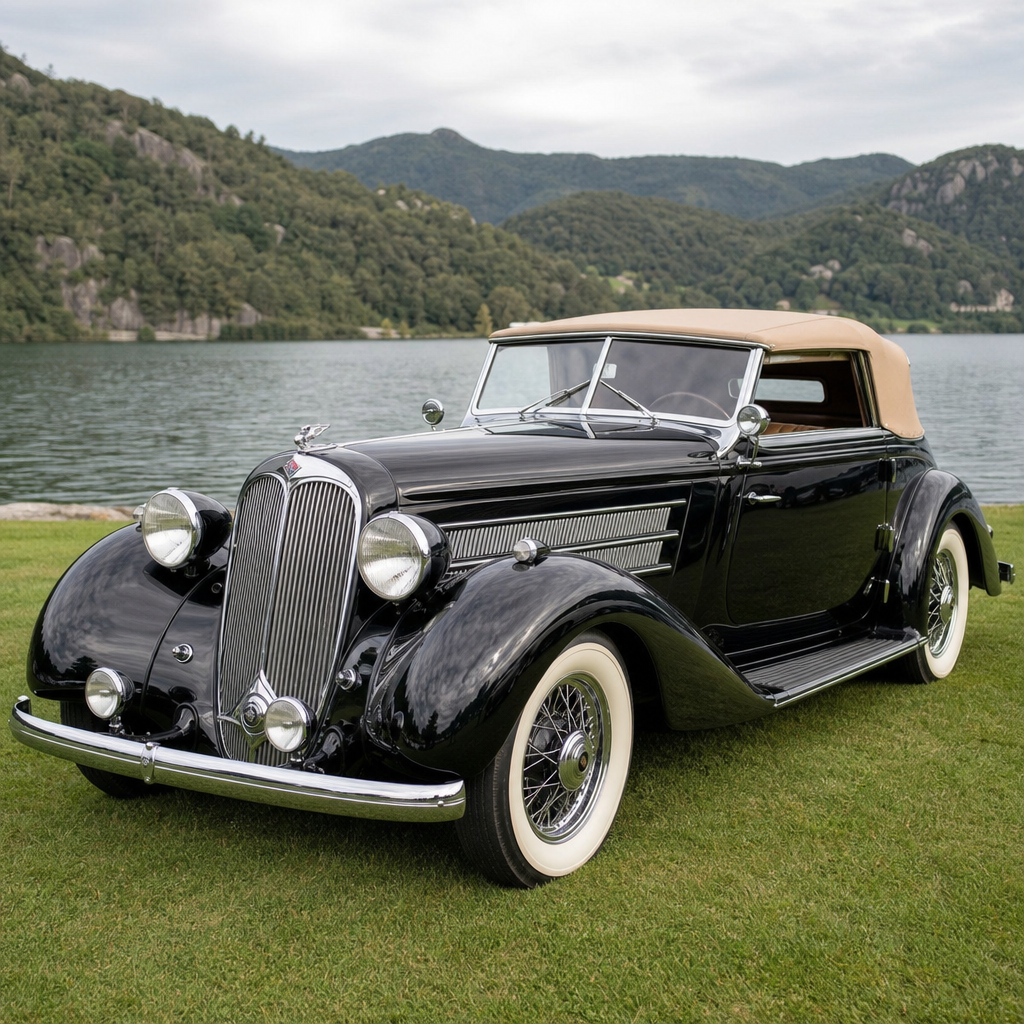
The best cars from the pre-war era still define what enthusiasts mean by craftsmanship, innovation, and mechanical character. In classic car history, the pre-war era generally refers to automobiles built before World War II, with most collectors focusing on the period from the brass age through the late 1930s. These machines were not simply old cars. They were rolling laboratories where manufacturers established the layouts, engineering standards, and luxury cues that shaped every major classic car era that followed.
As someone who has spent years around restored Packards, early Bentleys, and coachbuilt European tourers at auctions, museums, and private collections, I have learned that pre-war cars reward close study. Their appeal is not based on nostalgia alone. They matter because they introduced overhead-valve engines, hydraulic brakes, independent suspension, synchronized gearboxes, and aerodynamic bodywork long before those features became ordinary. If you want to understand later milestones in 1950s chrome-heavy cruisers, post-war sports cars, or muscle cars, this is where the story starts.
For readers exploring popular classic car eras, pre-war automobiles are the essential foundation. They sit at the beginning of the collector timeline and explain how the car evolved from a fragile novelty into a reliable road machine and then into a status symbol. This hub article covers the best pre-war cars, the innovations that made them important, the brands collectors watch most closely, and the practical reasons these models still command attention today. It also gives useful context for related articles on brass era cars, coachbuilt luxury models, early sports cars, and the transition into post-war design.
Several terms are worth defining before naming standout models. A brass era car usually describes vehicles built roughly before 1915, often identified by exposed brass lamps and fittings. Vintage cars commonly refer to the 1919 to 1930 period. Late pre-war cars are generally those from the 1930s through 1941 in the United States, when engineering maturity increased dramatically. Coachbuilt means a separate specialist created the body over a rolling chassis supplied by a manufacturer such as Rolls-Royce, Duesenberg, or Hispano-Suiza. Concours car refers to a meticulously restored or preserved example judged for authenticity and presentation.
Why does this era matter so much within classic car education? Because nearly every key question enthusiasts ask about old cars begins here: when did cars become dependable, when did performance become measurable, when did luxury become standardized, and when did styling begin to matter as much as engineering? The best pre-war cars answer all of those questions directly. They show the rise of mass production through Ford, the emergence of elite engineering through Mercedes-Benz and Bugatti, the American luxury peak through Packard and Duesenberg, and the sporting spirit that later influenced Jaguar, Alfa Romeo, and Ferrari. Understanding these cars gives structure to the entire classic car timeline.
What Makes a Pre-War Car One of the Best
The best pre-war cars were not always the fastest or most expensive. The strongest candidates combined engineering significance, design influence, production importance, and lasting collector relevance. In practical terms, a model stands out if it introduced a major technology, excelled in competition, defined luxury expectations, or changed how ordinary people used automobiles. A Ford Model T qualifies because it democratized motoring. A Mercedes-Benz 540K qualifies because it paired supercharged performance with elite craftsmanship. A Citroen Traction Avant qualifies because it previewed the future with front-wheel drive and unitary construction.
Reliability is another major factor. Many people imagine pre-war motoring as constant roadside repair, but the best examples were surprisingly capable when maintained correctly. Packard earned its reputation by building durable straight-eight engines and refined chassis tuning. Cadillac pushed advancements such as synchromesh and precision manufacturing. Bentley’s large-displacement tourers proved they could endure speed and distance in events like Le Mans. In the collector market today, these traits still matter because usability affects restoration decisions, touring eligibility, and long-term ownership costs.
Originality and coachwork also shape reputation. A standard saloon and a bespoke drophead coupe built on the same chassis can have dramatically different historical value. That is why body makers such as Murphy, LeBaron, Saoutchik, Figoni et Falaschi, and Park Ward remain central to pre-war discussions. The best car of the era is often a marriage of engineering and artistry, not just a factory model designation.
Landmark Pre-War Cars and Why They Matter
The Ford Model T remains the unavoidable starting point. Introduced in 1908, it used a simple, robust four-cylinder engine and a planetary transmission that ordinary owners could learn to operate. More importantly, Ford’s moving assembly line, introduced in 1913, transformed production efficiency and lowered costs. By making car ownership accessible to the middle class, the Model T changed society more than any luxury machine ever could. It is one of the best pre-war cars because it created the modern automotive market.
The Rolls-Royce Silver Ghost established the benchmark for silence, smoothness, and build quality. Debuting in 1906, it quickly gained fame for reliability trials that proved long-distance dependability at a time when that claim carried real weight. The phrase “the best car in the world” became attached to it for good reason. It showed wealthy buyers that a car could be both mechanically advanced and socially prestigious, setting a luxury standard copied by peers across Europe and America.
Duesenberg’s Model J, launched for 1928, represents the American high-water mark of pre-war prestige. Its 420 cubic inch straight-eight with double overhead cams and four valves per cylinder was exceptional for the time. Factory output was around 265 horsepower, with supercharged SJ versions producing even more. In plain terms, this was supercar performance before the term existed. Combined with dramatic coachbuilt bodies, the Model J became a symbol of wealth, speed, and technical ambition.
Mercedes-Benz offered several defining cars, but the 540K best captures late pre-war excellence. Built during the 1930s, it used a supercharged inline-eight and delivered remarkable pace in a refined grand touring package. The design remains one of the era’s most recognizable shapes, with long hood proportions, sweeping fenders, and an imposing grille. It was a car for autobahn speed, not just boulevard display, and that dual purpose explains its enduring stature.
Bugatti’s Type 35 deserves equal attention because it dominated racing in the 1920s and demonstrated that light weight, balance, and precision could outperform brute force. Ettore Bugatti’s engineering emphasized elegant castings, low mass, and responsive handling. The Type 35 won an estimated thousands of races and helped define what a sports car should feel like. For any article on popular classic car eras, it is a key bridge between early motoring and later performance legends.
| Model | Years | Why It Matters | Collector Appeal Today |
|---|---|---|---|
| Ford Model T | 1908–1927 | Mass production, affordable mobility, social impact | Accessible entry into brass and early vintage motoring |
| Rolls-Royce Silver Ghost | 1906–1926 | Luxury, refinement, proven reliability | Blue-chip prestige and concours relevance |
| Duesenberg Model J | 1928–1937 | Advanced engine design, elite coachwork, extreme performance | Top-tier American collectible |
| Mercedes-Benz 540K | 1936–1940 | Supercharged touring performance and iconic styling | Highly prized global landmark car |
| Citroen Traction Avant | 1934–1957 | Front-wheel drive, monocoque construction, road holding | Historically important engineering milestone |
Luxury Leaders, Sporting Icons, and Engineering Firsts
American luxury before the war was richer and more competitive than many newer enthusiasts realize. Packard, Cadillac, Lincoln, Pierce-Arrow, Auburn, Cord, and Duesenberg all fought for buyers who expected silence, craftsmanship, and road presence. Packard’s Twin Six and later straight-eight cars built a reputation for smoothness and quality that made them favorites among diplomats and industrialists. Cadillac, meanwhile, reinforced its standing through precision manufacturing and milestone engines, including the V16 introduced in 1930. Even when produced in limited numbers, these cars proved that the United States could match Europe for sophistication.
Auburn, Cord, and Duesenberg, all linked through E.L. Cord’s business empire, captured a different kind of glamour. The Cord 810 and 812 are especially important because they brought front-wheel drive, concealed headlights, and a striking coffin-nose design to the mid-1930s. Every time I have seen an 810 at a concours, it draws a crowd that includes people who know nothing else about pre-war cars. The reason is simple: it still looks futuristic. Design innovation matters, and Cord delivered it boldly.
Europe’s sporting side was equally transformative. Bentley’s 3 Litre and Speed Six established the marque as a force in endurance racing, especially through the Bentley Boys and Le Mans victories. Alfa Romeo’s 6C series blended sophisticated engines with racing pedigree and some of the most graceful coachwork of the era. Bugatti focused on brilliance through efficiency and delicacy. Delahaye and Talbot-Lago brought French elegance and competition credibility together. These names matter because pre-war performance was not a niche sideline. It was central to brand identity.
Then there were the engineering firsts that changed mainstream car design. Citroen’s Traction Avant introduced front-wheel drive, monocoque construction, and independent front suspension in a package sold at meaningful scale from 1934. Chrysler Airflow pushed aerodynamic thinking and weight distribution, even if the market resisted its styling. Lancia’s Lambda, introduced in 1922, pioneered unitary construction and independent front suspension years ahead of many rivals. If your goal is to identify the best pre-war cars by long-term influence, these models belong near the top.
How Pre-War Cars Connect to Other Classic Car Eras
This pre-war hub matters most when viewed within the broader classic car timeline. Brass era simplicity led into the more refined vintage period, where engines became stronger, brakes improved, and body styles diversified. The 1930s then introduced streamlining, fully enclosed cabins, better ride quality, and more confidence at sustained speeds. Those changes directly informed post-war family sedans, luxury saloons, and sports cars. In other words, the best cars from the pre-war era are not isolated relics. They are the templates later eras refined.
That is why this article should sit alongside deeper guides on brass era cars, 1920s vintage automobiles, 1930s luxury classics, and early European sports cars. Readers comparing classic car eras need to know that the post-war boom did not appear from nowhere. Jaguar’s saloons owed something to pre-war coachbuilt proportion and mechanical refinement. Ferrari inherited an Italian performance culture that Alfa Romeo had already established before the war. American post-war luxury carried forward lessons learned by Packard, Cadillac, and Lincoln in the 1930s.
Collectors also use pre-war categories as a practical organizing tool. Insurance policies, concours classes, touring events, and auction catalogs routinely separate brass, vintage, and classic pre-war segments. The Classic Car Club of America, for example, defines Full Classics through a specific period and list of eligible marques. That classification influences market visibility and event access. For buyers building a collection across popular classic car eras, pre-war cars often serve as the historical anchor.
Buying, Owning, and Preserving a Pre-War Automobile
Owning a pre-war car is rewarding, but it requires realism. Parts availability varies wildly by make and model. A Ford Model A or Model T has excellent support through clubs and specialist suppliers. A one-off coachbuilt Hispano-Suiza may require custom fabrication, archive research, and years of patient sourcing. Before buying, confirm chassis numbers, engine authenticity, body provenance, and restoration quality. Documentation matters more here than with many newer classics because replacement bodies, re-creations, and mismatched components can affect value significantly.
Driving experience is another factor buyers should understand clearly. Even the best pre-war cars demand more involvement than post-war vehicles. Non-synchronized gearboxes require technique. Mechanical brakes can work well when properly adjusted, but they do not behave like modern systems. Steering may be heavy at low speed. Electrical systems can be temperamental. None of that is a reason to avoid these cars. It is simply the reality of operating machinery from a formative period of automotive development.
The good news is that the community around these cars is strong. Organizations such as the Antique Automobile Club of America, the Classic Car Club of America, and marque-specific clubs provide technical support, judging standards, and event calendars. Restoration specialists maintain deep knowledge in wood framing, magnetos, Bijur lubrication systems, carburetor tuning, and period-correct trim. If you approach ownership with respect for authenticity and maintenance, a pre-war car can be far more usable than its age suggests.
The best cars from the pre-war era remain essential to anyone studying popular classic car eras because they established the automotive world’s core ideas. They taught manufacturers how to build at scale, how to engineer for speed and reliability, how to express status through design, and how to turn technical innovation into everyday transportation. From the Ford Model T to the Duesenberg Model J, from the Bugatti Type 35 to the Citroen Traction Avant, these cars are not just collectible objects. They are turning points in industrial history.
For enthusiasts, the main benefit of understanding pre-war cars is perspective. You can see how later classics inherited their engines, layouts, styling themes, and brand identities from this period. You also become better equipped to evaluate restorations, auction listings, concours winners, and museum collections. This hub should be your starting point for exploring brass era pioneers, 1920s vintage cars, 1930s luxury automobiles, and the bridge into post-war classics.
If you are building knowledge in classic car basics and education, keep pre-war automobiles at the center of your study plan. Learn the landmark models, follow the major marques, and pay attention to the engineering breakthroughs that still influence collector conversations today. Then continue to the related era guides and use this foundation to make smarter decisions as a reader, buyer, or enthusiast.
Frequently Asked Questions
What qualifies a car as “pre-war,” and why is that era so important in automotive history?
A pre-war car is generally any automobile built before the outbreak of World War II, though in collector and enthusiast circles the term most often refers to vehicles produced from the brass era through the late 1930s. That includes everything from early touring cars and luxury limousines to sporting roadsters and advanced grand tourers. The reason this period matters so much is that it represents the formative age of the automobile, when manufacturers were still experimenting with engine layouts, chassis construction, braking systems, coachbuilding, suspension design, and luxury features that would later become industry standards.
What makes the pre-war era especially significant is that these cars were not yet constrained by the kind of mass-market standardization seen after the war. Many were hand-built or semi-custom, with a level of craftsmanship that reflected carriage-making traditions as much as industrial manufacturing. Buyers could often choose custom bodies, interior materials, trim details, and even specialized mechanical configurations. As a result, the era produced some of the most visually distinctive and technically fascinating cars ever made. For historians, collectors, and drivers alike, pre-war cars matter because they capture the moment when the automobile evolved from experimental machine into cultural icon.
Which pre-war cars are most often considered among the best ever built?
Several pre-war cars consistently appear on any serious list of the best from the era, though the exact ranking depends on whether the focus is luxury, performance, engineering, rarity, or historical influence. Models from Duesenberg, Bugatti, Rolls-Royce, Mercedes-Benz, Alfa Romeo, Bentley, Packard, Auburn, Cord, and Delahaye are frequently at the top of the conversation. For example, the Duesenberg Model J is widely regarded as one of the greatest American luxury cars ever produced thanks to its immense straight-eight power, sophisticated engineering, and unmatched prestige. The Bugatti Type 57 stands out for its elegance, road manners, and motorsport lineage, while the Mercedes-Benz 540K remains an enduring symbol of pre-war supercharged performance and coachbuilt refinement.
On the British side, the Bentley 4 1/2 Litre and Speed Six are celebrated for endurance-racing pedigree and robust engineering, while Rolls-Royce models such as the Phantom II and Phantom III are remembered for extraordinary build quality and dignified presence. Italian marques contributed icons like the Alfa Romeo 8C, which blended racing success with breathtaking design. In the United States, the Cord 810 and 812 are also essential mentions because they introduced front-wheel drive, hidden headlamps, and streamlined styling far ahead of their time. In short, the “best” pre-war cars are usually those that combined beauty, innovation, craftsmanship, and influence in a way that still resonates nearly a century later.
Why do collectors and enthusiasts admire pre-war cars so much compared with later classics?
Collectors admire pre-war cars because they offer a level of craftsmanship, individuality, and mechanical honesty that is difficult to find in later automobiles. Many pre-war vehicles were built in relatively low numbers and often featured custom coachwork, meaning no two examples are exactly alike. That uniqueness gives them a strong sense of personality. Even beyond appearance, they communicate the engineering philosophy of their time in a very direct way. You can see the fender shapes, external spare wheels, exposed hinges, large steering wheels, analog instruments, and substantial engines working together in a form that feels both artistic and mechanical.
Another major reason for their appeal is the driving experience. Pre-war cars demand attention and involvement. Steering is heavier, braking requires more anticipation, gear changes are often slower and more deliberate, and the car’s behavior on the road feels vivid and unfiltered. For many enthusiasts, that level of engagement is the entire point. These cars are not just transportation devices; they are historical artifacts you can operate. They also connect owners to an era when automotive design had fewer limitations and far more regional character. French cars often emphasized style and elegance, German cars precision and advanced engineering, British cars sporting tradition, and American cars scale, comfort, and presence. That combination of beauty, rarity, and tactile authenticity explains why pre-war cars remain so deeply admired.
Were pre-war cars actually innovative, or are they valued mostly for age and styling?
Pre-war cars were genuinely innovative, and in many cases they laid the technical foundation for modern automotive design. While people are often drawn first to the styling, the engineering achievements of the period are just as important. Manufacturers experimented with overhead camshafts, superchargers, independent suspension, hydraulic brakes, synchromesh transmissions, front-wheel drive, advanced chassis lubrication systems, and increasingly refined multi-cylinder engines. Some marques pursued racing technology that later influenced road cars, while others focused on quietness, smoothness, and passenger comfort in ways that anticipated the modern luxury segment.
Examples make the point clearly. Cord’s front-wheel-drive system was groundbreaking for its time. Duesenberg used dual overhead camshaft straight-eight engines and four-wheel hydraulic brakes when many competitors were still catching up mechanically. Mercedes-Benz refined supercharged performance in a way that gave its grand touring cars immense presence on the road. Bugatti and Alfa Romeo developed machines that merged engineering excellence with competition success. Even mainstream improvements such as stronger frames, better braking, improved carburetion, and more dependable electrical systems were transformative in this era. So while age and styling certainly contribute to their appeal, the best pre-war cars are valued because they were ambitious, technically advanced machines that helped define what a serious automobile could be.
What should a buyer know before purchasing a pre-war car today?
Anyone considering a pre-war car should understand that ownership is very different from owning a post-war classic or modern collectible. The first priority is determining exactly what kind of ownership experience is desired. Some buyers want a blue-chip concours car from a major marque, while others want a usable tour car that can be enjoyed on vintage rallies and local events. Those are very different purchases. Condition, originality, coachbuilder history, documentation, and mechanical correctness all matter enormously, and values can vary dramatically depending on those factors. A well-documented, correctly restored example from a respected brand can command a premium far beyond a similar-looking car with uncertain history or incorrect components.
Maintenance and operation are equally important considerations. Pre-war cars often require specialized knowledge, patient warm-up procedures, careful driving technique, and access to skilled restorers or machinists. Parts availability depends heavily on the make and model. Some cars benefit from excellent club support and active specialist networks, while others can be difficult and expensive to maintain. Buyers should also consider storage, insurance, transportation, and whether the car is suitable for the roads and events they plan to use it on. A comprehensive pre-purchase inspection by a recognized expert is essential, especially for high-end models. The best approach is to buy the finest example you can afford, from a seller with strong records, and choose a car supported by an active enthusiast community. Done wisely, pre-war ownership can be one of the most rewarding experiences in the entire collector-car world.