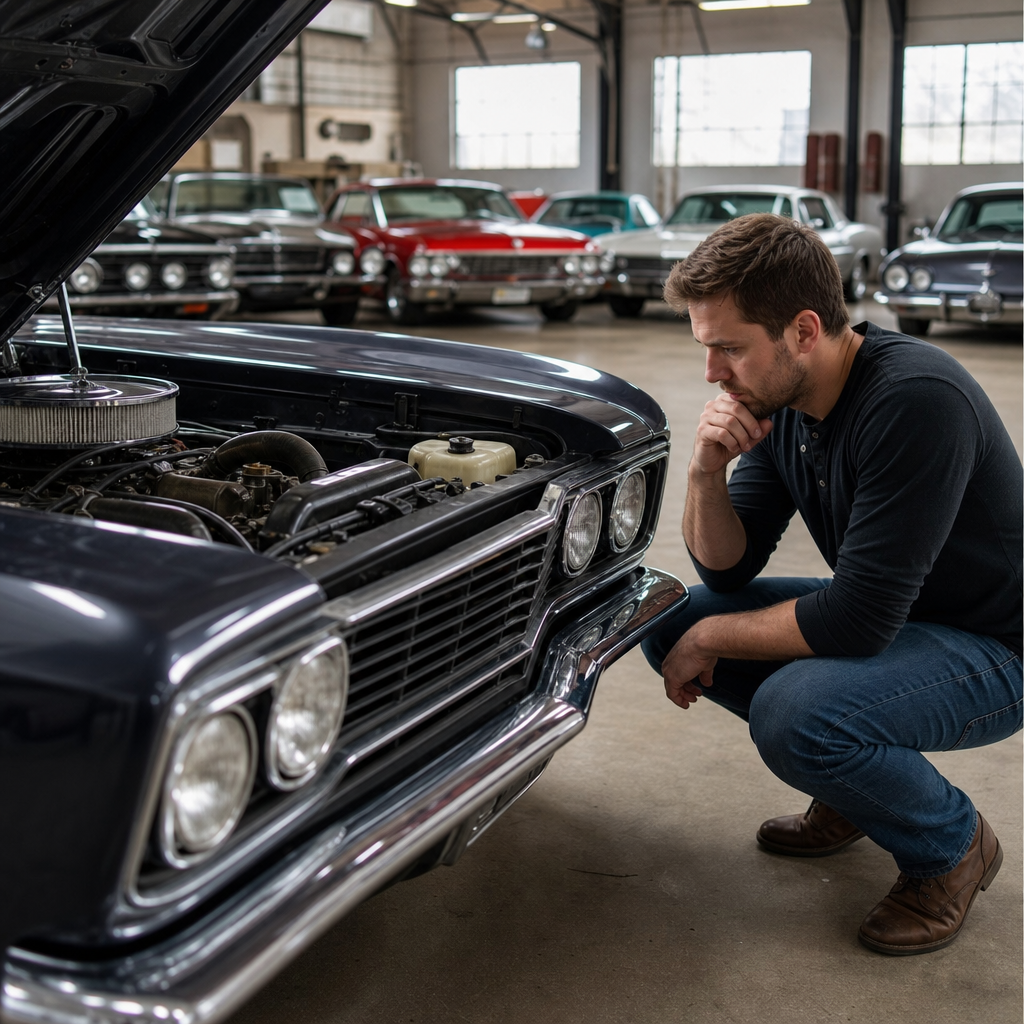
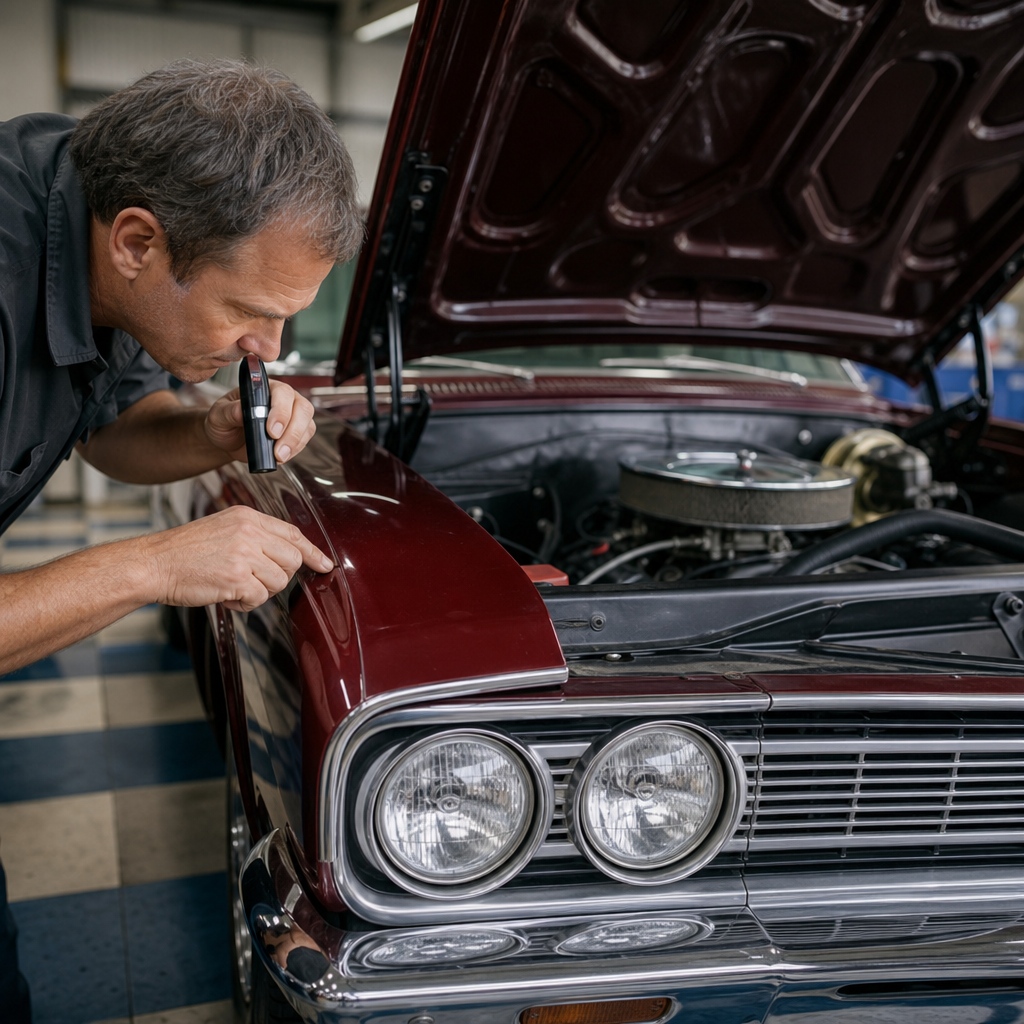
Buying, restoring, or selling a vintage vehicle starts with one critical skill: knowing how to verify the authenticity of a classic car. Authenticity means more than confirming that an old vehicle is real. It involves proving that the car’s identity, major components, trim, colors, documentation, and history match what the manufacturer originally built. In practical terms, that means checking VIN and chassis numbers, decoding trim tags, reviewing engine and transmission stampings, comparing factory specifications, and tracing ownership records. I have done this work on auction inspections, private purchases, and restoration planning, and the pattern is always the same: the cars that hold value best are the cars whose stories can be proven.
This matters because the classic car market rewards originality and penalizes uncertainty. A numbers-matching 1967 Chevrolet Corvette, a properly documented Porsche 911, or a factory-correct Mustang fastback can command a major premium over a visually similar car with replacement driveline parts, restamped tags, or incomplete paperwork. Authenticity also protects buyers from common problems such as cloned muscle cars, rebodied sports cars, counterfeit trim packages, and inflated restoration claims. Even honest sellers can misidentify a car if they rely on old titles, casual internet advice, or assumptions based on badges. That is why learning how to identify a classic car correctly is the foundation of every smart purchase, restoration, and appraisal decision.
At hub level, the process can be broken into a few core questions. Is the vehicle identification number consistent across the car and its paperwork? Do the body style, engine code, transmission, axle, paint, trim, and options align with factory records? Are wear patterns and construction details consistent with age and period manufacturing methods? Has the car been altered, rebodied, or recreated from a lesser model? The answers come from evidence, not optimism. When people ask how to identify a classic car, what they really need is a repeatable inspection method that blends documentation, physical verification, model-specific research, and healthy skepticism. That is what this guide provides.
Start with Identity: VIN, Chassis, Data Plates, and Title Records
The first step in classic car authentication is establishing identity. On most vehicles, that begins with the VIN, chassis number, or serial number, depending on era and manufacturer. Cars built before the standardized 17-character VIN system often use shorter serial formats and multiple identification plates. You should inspect every number directly on the vehicle, not just on the title. Common locations include the dashboard, A-pillar, firewall, cowl, door jamb, frame rail, inner fender, and manufacturer data plate. On British, German, Italian, and early American classics, plate placement varies widely, so model-specific references are essential.
Look for consistency in font, rivets, spacing, stamping depth, and attachment method. Factory-installed tags usually show uniform aging and proper fasteners. Fresh rivets, disturbed paint, scratched plate edges, mismatched fonts, or uneven character alignment can indicate tampering or replacement. Titles also deserve scrutiny. A legitimate title can still be attached to the wrong body if a car was reconstructed decades ago. Compare all identifying numbers to registration documents, prior sale listings, service invoices, and inspection sheets. Services such as state motor vehicle databases, marque registries, and collector insurance records can help confirm continuity. If any number appears altered, stop and investigate before discussing value.
Decode Factory Information Before You Judge Originality
Once identity is established, decode the factory information attached to that specific model. This is where many buyers make expensive mistakes. A trim tag, body plate, build sheet, warranty card, or production record can reveal the original body style, assembly plant, engine family, paint color, interior trim, axle ratio, and optional equipment. American muscle cars often have partial VIN stampings on engines and transmissions. German brands may provide a Kardex, certificate of authenticity, or archive production sheet. British heritage certificates can confirm body and engine numbers. These records are not decorations; they are the benchmark against which every claim should be tested.
Use factory assembly manuals, dealer ordering guides, parts books, and respected registries to decode the data accurately. For example, on a first-generation Camaro, the cowl tag can confirm body build details, but it will not by itself prove an SS package on all years. On Mopars, fender tags and broadcast sheets can be decisive if they survive. On air-cooled Porsches, engine type numbers, transmission numbers, and option codes matter as much as the chassis serial. I always compile a model file before inspection so I know what stampings should exist, where they should appear, and which claims require documentary support. Authentication gets easier when the factory record comes first and opinions come second.
Inspect the Powertrain for Numbers-Matching and Period Correctness
For many collectors, authenticity turns on whether a car is numbers-matching. Strictly used, that means the original engine, transmission, and sometimes rear axle installed by the factory remain with the car. In the market, the phrase is often stretched to mean date-correct or factory-type, so you must define it carefully. Verify casting numbers, stamping pads, date codes, suffix codes, and partial VINs. Then compare those numbers with the body build date. A plausible original engine will usually have casting and assembly dates that precede the vehicle’s production date by a reasonable period, often days to a few months depending on make and plant practices.
Beware of over-restamped components. Freshly machined stamp pads, inconsistent broach marks, incorrect font shapes, and stampings that cut through corrosion or paint in suspicious ways are common warning signs. On big-ticket American muscle cars, counterfeit stampings are a known issue. European classics present a different challenge: replacement cases, unstamped factory service blocks, and period dealer swaps can be legitimate, but they still affect value. A car can be authentic and desirable without its born-with engine, yet it should be represented accurately as non-matching, replacement, or period-correct. That distinction matters in auctions, insurance valuations, and resale negotiations because originality premiums can be substantial.
| Verification Area | What to Check | Why It Matters |
|---|---|---|
| VIN or chassis number | Plate location, stamping style, matching title | Confirms legal identity and helps detect retagging |
| Trim or body tag | Paint, interior, body style, plant codes | Shows whether current configuration matches factory build |
| Engine numbers | Casting numbers, date codes, partial VIN, suffix code | Determines numbers-matching or replacement status |
| Transmission and axle | Serial stampings, date sequence, correct type | Supports drivetrain originality and value |
| Documentation | Build sheet, invoices, title chain, heritage records | Provides traceable evidence beyond physical inspection |
| Body construction | Spot welds, seams, stampings, hidden corrosion repair | Helps identify rebody work, cloning, or major reconstruction |
Read the Body Shell Like a Forensic Record
Authenticating a classic car requires more than reading tags. The body shell often tells the truth when paperwork does not. Inspect factory spot weld patterns, seam sealer style, panel joints, undercoating texture, drain hole shapes, and stampings in hidden areas. Rebody jobs, front clips, rear clips, and replacement shells can disguise a lesser car as a high-value version. On unibody muscle cars, check aprons, radiator supports, trunk gutters, package trays, and torque boxes for evidence of major section replacement. On body-on-frame cars, compare frame stampings, weld quality, and mounting points to factory references. Inconsistent aging between panels often reveals more than fresh paint ever can.
Clones deserve special attention. A clone is typically a standard or lower-specification car modified to resemble a rarer model, such as converting a six-cylinder Mustang coupe into a GT-styled V8 tribute or turning a base Chevelle into an SS lookalike. Tribute cars can be enjoyable and honestly represented, but they become a problem when sellers imply factory authenticity without proof. Inspect bracketry, reinforcement plates, special suspension parts, gauge clusters, floor pan features, and option-specific holes or stampings. Factory high-performance variants usually include details beyond badges and stripes. If those structural clues are missing, the car may still be attractive, but it should not be priced or insured as an original example.
Use Documentation to Build a Chain of Evidence
Documents do not replace inspection, but they turn an opinion into a case. The most useful records include the original window sticker, build sheet, Protect-O-Plate, warranty booklet, dealership invoice, restoration photos, maintenance receipts, prior registrations, emissions records, old auction descriptions, and correspondence from marque archives. For some models, club registries and published chassis histories add another layer of confirmation. The goal is continuity. You want to see that the same serial number, engine details, colors, and ownership trail repeat across decades. Gaps are common in older cars, but contradictions are dangerous. A car represented as a one-owner survivor should not have unexplained title jumps and color changes with no supporting history.
I also recommend validating the story behind the documents. Reproductions exist, and some are convincing. Compare paper type, printing methods, dealer formats, handwriting patterns, and date logic. If a build sheet appears too perfect inside an otherwise rough interior, ask how it was preserved. If an invoice lists options that do not appear on the trim tag or on known factory records, investigate further. Third-party verification helps. The NCRS for Corvettes, the AACA, marque-specific clubs, Porsche archives, Jaguar Daimler Heritage Trust, the British Motor Industry Heritage Trust, and Shelby American records can all provide context or confirmation depending on the car. Strong documentation does not guarantee originality, but weak documentation should lower confidence and price.
Match Components, Finishes, and Features to the Correct Year and Model
A classic car can carry the correct VIN and still be inauthentic in presentation. Year-correct details matter. Wheels, carburetors, intake manifolds, distributors, upholstery grain, seat patterns, gauge faces, radio delete plates, glass date codes, hose clamps, decals, fasteners, and even trunk spatter paint can reveal whether a restoration respects factory specification or merely aims for visual appeal. This is especially important for concours judging and premium-market sales. For example, a 1969 Z/28 with the wrong smog equipment, service replacement block, later seat covers, and modern hardware may still be a good driver, but it should not be marketed as a fully authentic restored example.
Manufacturers changed parts mid-year more often than casual buyers realize. A Porsche 356 built in early production may differ from a later car of the same model year. Jaguar E-Type components vary by series transition. Corvette judging manuals document countless running changes in finishes and hardware. That is why broad internet lists are not enough. Use restoration guides from recognized experts, factory parts catalogs, and club judging resources. When I inspect a car, I separate three categories: original, correct replacement, and incorrect. That framework keeps the discussion clear. A correct replacement part can preserve period accuracy and drivability, but it should not be confused with untouched factory-installed material.
Know When to Bring in a Marque Expert or Professional Inspector
Some authentication work is straightforward, but high-value cars justify expert help. If you are evaluating a Hemi Mopar, COPO Camaro, alloy-bodied European sports car, Shelby Mustang, 300SL, or limited-production homologation model, a specialist can save you from a six-figure mistake. Marque experts know hidden stamp locations, production quirks, and serial number anomalies that general inspectors may miss. They also understand what is normal for specific factories. For instance, inconsistent hand-finishing can be legitimate on low-volume Italian cars, while the same irregularity would be suspicious on a mass-produced Detroit model. Expertise matters most where rarity, hand assembly, and strong market premiums intersect.
A professional pre-purchase inspection should include paint meter readings, underside photos, compression or leak-down testing where appropriate, close-up images of all stampings, and written notes on originality claims. Ask the inspector whether they have authenticated this exact model before, not just whether they inspect collector cars generally. If the seller refuses access to lifts, documents, or identification points, consider that a meaningful warning. The best buyers I work with are disciplined enough to pause a deal when evidence is incomplete. In classic cars, patience is cheaper than correction. A careful inspection fee is negligible compared with the cost of discovering a rebody, counterfeit tag, or non-original drivetrain after the transaction closes.
Conclusion
Verifying the authenticity of a classic car is ultimately a process of matching claims to evidence. Start with identity numbers and title records. Decode factory tags and production documents. Inspect the engine, transmission, axle, and body shell for consistency in numbers, dates, construction, and wear. Then use paperwork, model-specific references, and expert review to confirm what the car really is. If you remember one principle, make it this: authenticity is not established by badges, paint, or seller confidence. It is established by a chain of proof that holds together from the VIN plate to the smallest option code.
For anyone learning how to identify a classic car, this page should serve as the central framework. Every deeper topic under classic car basics and education flows from these checks: identity, documentation, originality, condition, and honest representation. The reward for doing the work is substantial. You buy more intelligently, restore with clearer goals, insure with better support, and sell with stronger credibility. Before you commit to any collector vehicle, build an evidence file, compare it with factory sources, and get a second set of expert eyes when the stakes are high. That habit will protect your budget and your reputation.
Frequently Asked Questions
What does “authenticity” mean when evaluating a classic car?
Authenticity in a classic car refers to how closely the vehicle matches the way it was originally built and delivered by the manufacturer. That includes the car’s identity, VIN or chassis number, body style, engine type, transmission, trim, paint color, interior materials, factory options, and production date. In many cases, buyers assume authenticity simply means the vehicle is old and not a replica, but true verification goes much deeper. A car can be genuine in the sense that it is not a clone or rebody, yet still be inaccurate because major components have been replaced, tags have been altered, or options have been added later and represented as factory-installed.
When verifying authenticity, the goal is to confirm that the numbers, tags, stampings, finishes, and documentation all support the same story. For example, the VIN should align with the manufacturer, year, plant, and model. The trim or data plate should match the body style, original paint, and interior combination. The engine and transmission codes should be correct for that model and production period. Even smaller details such as badging, wheels, upholstery patterns, and fasteners can help reveal whether the car is original, restored to factory specification, or modified. In the classic car market, these distinctions matter because authenticity can significantly affect value, collectability, judging eligibility, and buyer confidence.
How do you verify a classic car’s VIN, chassis number, and data plates?
The first step is locating every identification point on the vehicle and confirming that each one appears consistent, original, and appropriate for the make and year. Depending on the manufacturer, this may include a dashboard VIN plate, door jamb label, firewall tag, frame stamping, body serial plate, and hidden factory numbers placed in less obvious locations. You should compare each number to factory reference materials, marque guides, and known format standards. The sequence, font style, rivets, plate material, spacing, and mounting method all matter. A correct number on an incorrect-looking tag can be a warning sign that the plate was replaced or tampered with.
After confirming the physical tags, decode the information. The VIN or chassis number should identify the manufacturer, series, body type, engine designation where applicable, assembly plant, and production sequence. The trim plate should often provide paint codes, interior codes, body codes, and build dates. These details should align with the car you are inspecting. For example, if the trim tag indicates a particular color combination or body style, but the car presents differently and there is no supporting documentation of a factory-approved special order or an older restoration, that inconsistency deserves closer investigation. It is also wise to inspect surrounding metal for signs of disturbance, such as fresh welds, unusual grinding, repainting around a tag, non-original rivets, or mismatched aging. Those clues can indicate a swapped identity or reconstructed vehicle.
Which components and factory details should be checked to confirm originality?
The major mechanical components are the most important place to start, especially the engine, transmission, rear axle, and in some cases the carburetor, intake, heads, and distributor. Many classic cars have date codes and casting numbers that can be cross-referenced against factory records and model-year specifications. On higher-value vehicles, it is common to verify whether the engine is “numbers matching,” meaning the engine stamping or partial VIN corresponds to the car’s original identity and falls within the correct production timeline. The same approach applies to the transmission and other drivetrain components. A period-correct replacement may still be acceptable to some buyers, but it is not the same as original.
Beyond the drivetrain, authenticity often becomes a matter of pattern recognition and detail comparison. Check the trim level, badges, moldings, upholstery design, seat materials, dashboard layout, gauges, steering wheel, glass markings, wheel type, tire size, and finishes used under the hood and under the car. Factory spot weld patterns, seam sealer application, trunk spatter paint, hose clamps, decals, and hardware finishes can all help distinguish an accurate original or high-quality restoration from an incorrect build. If the car is represented as a special edition or rare performance model, these details become even more critical, because clones are often built by adding visible cosmetic parts while overlooking the underlying factory traits. The more valuable the model, the more closely every component should be scrutinized.
What documents help prove a classic car is authentic?
Documentation can provide critical support, especially when the car’s physical evidence is incomplete or when the vehicle is particularly rare. The most useful records include the original title, registration history, bill of sale, factory build sheet, window sticker, warranty booklet, Protect-O-Plate or manufacturer-issued identification card, dealer invoice, restoration records, ownership chain, service receipts, and historical photographs. For some brands, a factory heritage certificate or production report can confirm how the car was originally configured, including colors, options, engine type, and build date. Auction catalogs and previous listings can also be useful for tracing changes in condition, mileage claims, and equipment over time.
Good documentation should reinforce what the car is physically showing. If the paperwork states the car was built with a specific engine, transmission, or trim package, the stampings and components on the vehicle should support that claim. If an older restoration was performed, receipts and photos may explain why certain items were replaced. Be cautious, however, because paperwork alone should never override clear physical contradictions. Documents can be lost, misread, forged, or mistakenly associated with the wrong vehicle. The strongest authenticity case comes from a consistent combination of original identifiers, correct component dates, matching factory specifications, and a believable paper trail that connects the car’s history from production through current ownership.
Should you hire an expert or use marque-specific resources before buying or selling a classic car?
Yes, especially when the car is expensive, rare, heavily restored, or advertised as numbers matching or highly original. Even experienced enthusiasts can miss subtle discrepancies that a marque specialist will recognize immediately. An expert familiar with a specific brand or model knows where hidden stampings should be located, which production quirks are normal, what trim combinations are legitimate, and which parts are commonly reproduced or restamped. They can also spot red flags such as altered data plates, incorrect driveline dates, reproduction tags, or cosmetic upgrades used to imitate a more desirable version of the car.
In addition to hiring a professional appraiser, restorer, or model specialist, use club registries, factory literature, judging manuals, parts books, and dedicated enthusiast forums. Many marques have well-documented decoding guides and production references that can help confirm whether a car’s features are plausible for its year and assembly plant. For buyers, this due diligence can prevent overpaying for a clone, rebody, or inaccurately restored car. For sellers, independent verification can increase trust, justify asking price, and make the listing far more credible. In short, authenticity verification is not about suspicion for its own sake. It is about building confidence through evidence, and the more valuable the car, the more worthwhile expert confirmation becomes.