The history of classic cars is the history of how engineering, design, manufacturing, and culture came together to transform personal transportation into an enduring symbol of freedom and craftsmanship. When people ask what makes a vehicle a classic car, they usually mean more than age. A classic car is typically a vehicle recognized for historical importance, distinctive styling, mechanical character, and lasting collector interest, often from the early motoring era through the late twentieth century. In practical terms, insurers, clubs, and regulators define classics differently, but the shared idea is consistent: these cars represent milestones that changed the automobile itself. Understanding that evolution matters because every celebrated model, from brass-era runabouts to chrome-laden cruisers and early muscle cars, reflects a turning point in materials, safety, powertrains, or production methods.
I have found that newcomers to the hobby often jump straight to favorite models without understanding why certain cars became influential in the first place. That context is what turns a list of old vehicles into the history of classic cars. The development of the automobile did not move in a straight line. It advanced through breakthroughs such as the internal combustion engine, the moving assembly line, all-steel bodies, synchronized transmissions, hydraulic brakes, independent suspension, streamlined aerodynamics, overhead-valve V8 engines, and later emissions and safety regulation. Each milestone shaped how cars looked, drove, and aged into collectible machines. This hub article explains those milestones in plain terms, showing how technology and social change produced the classic cars enthusiasts restore, drive, and preserve today.
For anyone building a foundation in classic car basics and education, this overview provides the framework for deeper reading on brass-era cars, prewar luxury marques, postwar American styling, European sports cars, and the rise of the pony car. It also clarifies why some older vehicles feel radically different from modern cars. Early classics require hand-throttle management, manual spark control, and mechanical sympathy. Mid-century classics introduced stronger engines, better brakes, and mass-market comfort features. By the late 1960s and 1970s, classic cars carried the marks of regulatory pressure, fuel concerns, and changing buyer expectations. Knowing where these shifts happened helps owners evaluate originality, understand restoration choices, and recognize which features were genuinely innovative for their time.
From Experimental Machines to the First Recognizable Automobiles
The origins of classic cars begin in the nineteenth century, when inventors moved from steam and electric experiments toward reliable gasoline-powered vehicles. Karl Benz’s 1886 Patent-Motorwagen is widely recognized as the first practical automobile powered by an internal combustion engine. Gottlieb Daimler and Wilhelm Maybach soon developed their own fast-running engines, while pioneers in France and the United States adapted, refined, and commercialized similar concepts. These early machines established the layout that defined motoring for decades: engine, transmission, driven wheels, steering mechanism, and fuel supply integrated into a purpose-built chassis.
Brass-era automobiles, roughly spanning the 1890s through the 1910s, are essential to the history of classic cars because they set the baseline for all later development. Their exposed lamps, coachbuilt bodies, tiller or early wheel steering, chain drive in some cases, and minimal weather protection reflected their experimental character. They were not easy to operate. Drivers often had to retard ignition timing, adjust mixture, and physically crank the engine to start it. Yet these machines created the first automotive market and the first communities of enthusiasts. Brands such as Packard, Cadillac, Oldsmobile, Renault, and Pierce-Arrow earned reputations by improving reliability, power, and road manners. The shift from novelty to practical transportation happened when manufacturers realized that repeatable engineering mattered as much as invention.
Mass Production Turned Cars from Luxury Objects into Social Forces
No milestone shaped classic cars more profoundly than mass production. Henry Ford did not invent the automobile or the assembly line, but the Model T, introduced in 1908, and the moving assembly line, implemented in 1913, changed the industry permanently. By reducing build time dramatically and standardizing components, Ford lowered costs enough to make car ownership attainable for the middle class. That transformed the automobile from a luxury purchase into a daily necessity and cultural force.
The Model T’s importance goes beyond volume. Its simple controls, durable chassis, and high ground clearance suited rough American roads. Vanadium steel improved toughness. Interchangeable parts simplified repair. This was a car designed around use, not status. In restoration circles, I have seen how that philosophy still affects collector interest: the Model T is prized not because it is rare, but because it democratized motoring. It created the infrastructure classic car owners still depend on indirectly today, including service networks, parts distribution, road development, and state registration systems. General Motors responded with a different strategy, using annual model changes, multiple brands, and consumer financing. That approach established the styling cycles and market segmentation that later defined many beloved classic cars.
| Milestone | Approximate Period | Why It Mattered | Classic Car Impact |
|---|---|---|---|
| Practical gasoline automobile | 1880s–1890s | Created workable self-propelled road vehicles | Established the basic automotive layout |
| Moving assembly line | 1910s | Lowered costs and standardized production | Made car ownership widespread |
| All-steel closed bodies | 1920s–1930s | Improved strength, weather protection, and safety | Changed styling and year-round usability |
| Hydraulic brakes and synchromesh | 1920s–1930s | Made cars easier and safer to drive | Expanded appeal beyond expert motorists |
| Postwar V8 performance boom | 1940s–1960s | Delivered affordable power and speed | Led directly to muscle and performance classics |
| Safety and emissions regulation | 1960s–1970s | Reshaped design, engines, and engineering priorities | Defined the end of many classic eras |
Engineering Refinement Created the Prewar Classics Collectors Revere
As roads improved and buyers expected more comfort, automakers moved beyond basic mobility. The 1920s and 1930s produced many of the prewar classics that collectors now regard as high points of engineering and design. One major milestone was the transition from wood-framed coachwork to all-steel bodies. Budd Manufacturing helped pioneer pressed-steel body construction, which improved structural consistency, durability, and weather resistance. Closed cars became more practical, quieter, and more secure. That single shift changed ownership patterns by making automobiles useful in all seasons rather than primarily fair-weather machines.
Mechanical systems improved just as significantly. Cadillac’s 1912 electric starter had already removed the danger and inconvenience of hand cranking, but by the late 1920s and 1930s drivers also benefited from hydraulic brakes, introduced commercially by Duesenberg and popularized by Chrysler and others, and synchromesh gearboxes that reduced double-clutching. Independent front suspension improved ride quality and control. Better lubrication systems, stronger crankshafts, and improved carburetion increased reliability. Luxury marques such as Packard, Duesenberg, Hispano-Suiza, Mercedes-Benz, and Rolls-Royce became benchmarks because they combined these advances with exceptional craftsmanship.
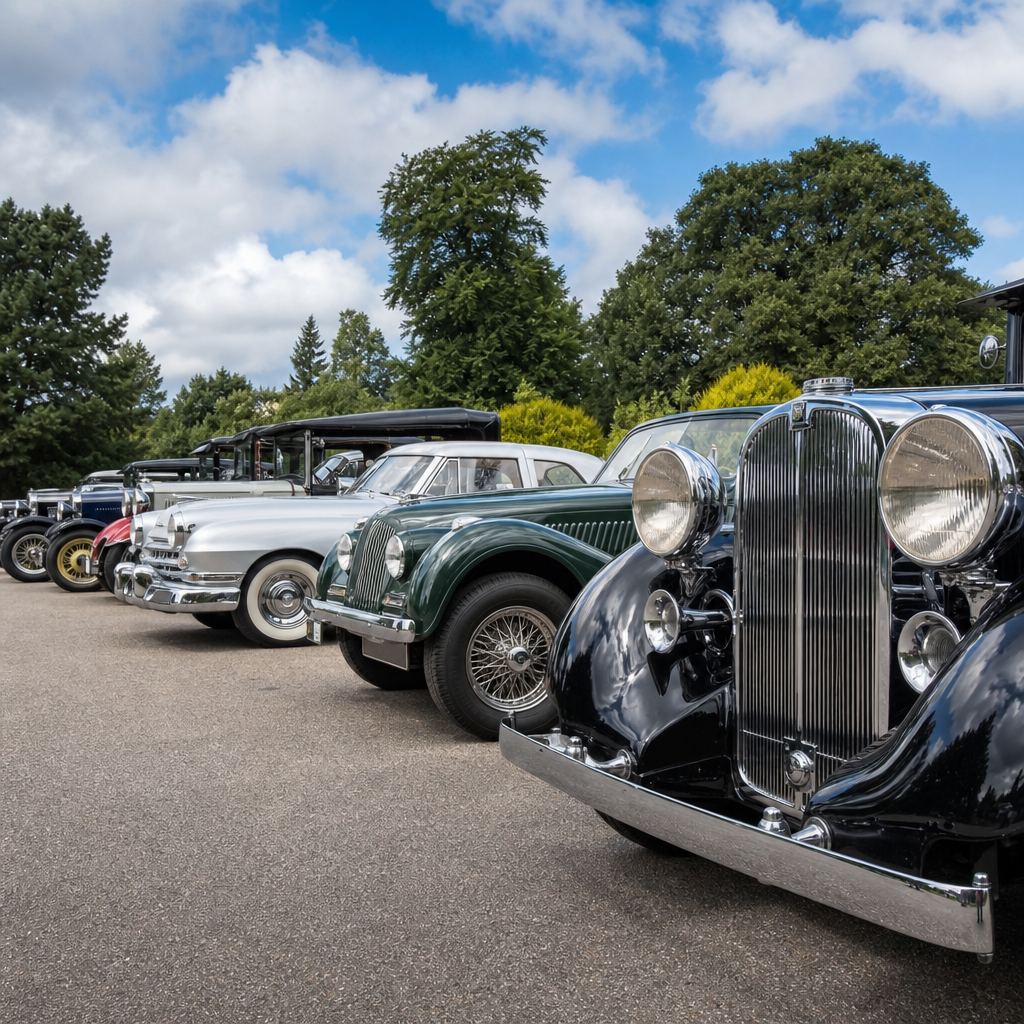
Styling also matured into a defining part of classic car identity. Long hoods, sweeping fenders, running boards, upright grilles, and carefully proportioned cabins gave prewar cars a visual authority modern vehicles rarely match. The influence of coachbuilders remained strong, especially in Europe, where firms like Figoni et Falaschi and Saoutchik created bodies that were part transportation, part sculpture. In the United States, Harley Earl’s work at General Motors professionalized automotive design. His use of clay modeling and his understanding of visual drama changed how automakers approached body styling. Prewar classics matter today because they represent the point when the automobile became both technically mature and aesthetically deliberate.
Streamlining, War, and Recovery Reshaped the Midcentury Automobile
The late 1930s and 1940s introduced another key chapter in the history of classic cars: streamlining and wartime interruption. Aerodynamic thinking influenced models such as the Chrysler Airflow, Tatra streamliners, and Lincoln Zephyr. Not every streamlined design succeeded commercially, but these cars proved that airflow, integrated fenders, and smoother silhouettes could improve efficiency and modernize appearance. Even when buyers resisted radical designs, the industry absorbed the lesson. Separate body elements gradually merged into unified forms, setting the stage for postwar styling.
World War II paused civilian production but accelerated manufacturing capability and materials knowledge. After the war, pent-up consumer demand drove enormous growth in the auto market. Carmakers updated prewar designs first, then introduced truly new postwar vehicles with lower bodies, pontoon styling, larger glass areas, and improved interiors. Cars became symbols of prosperity, suburbia, and national identity. In the United States, V8 engines, automatic transmissions, and power accessories spread quickly. In Europe, reconstruction and fuel economy concerns led to a different path, producing smaller, efficient classics such as the Volkswagen Beetle, Citroën 2CV, Fiat 500, and Morris Minor.
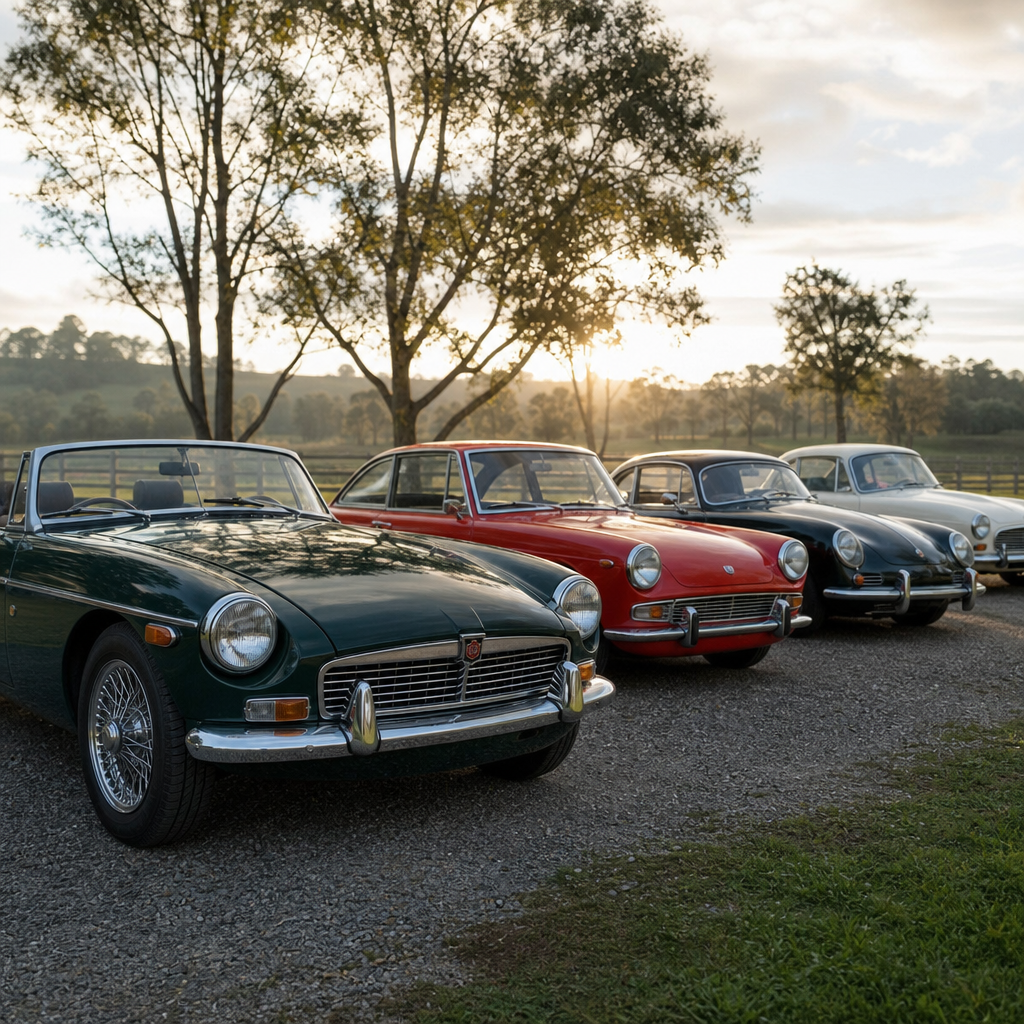
These contrasts matter because classic cars are not one story but several parallel histories. American postwar cars emphasized size, chrome, comfort, and straight-line power. European makers often prioritized agility, engineering efficiency, and packaging. British sports cars such as MGs, Triumphs, and Austin-Healeys offered affordable performance and helped define open-top motoring for a generation. Each reflected local economics, road conditions, and fuel prices. When enthusiasts compare classics today, those regional differences explain why a 1957 Chevrolet Bel Air, a Jaguar XK120, and a Volkswagen Beetle each occupy such different places in collector culture.
Performance, Styling, and Youth Culture Created the Golden Age of Many Classics
For many enthusiasts, the golden age of classic cars arrived in the 1950s and 1960s, when styling excess and engineering confidence combined. Overhead-valve V8 engines became central to American performance after Oldsmobile and Cadillac introduced influential high-compression V8s in 1949. Chevrolet’s small-block V8, launched in 1955, was especially transformative because it was compact, durable, affordable, and endlessly adaptable. It powered everything from family sedans to Corvettes and became one of the most significant engines in automotive history.
At the same time, styling became a competitive weapon. Tailfins, wraparound windshields, two-tone paint, and abundant chrome reflected jet-age optimism. Harley Earl and later Bill Mitchell shaped General Motors’ visual identity, while Ford and Chrysler pushed their own dramatic design languages. These were not cosmetic footnotes. Design sold cars, created brand loyalty, and gave future classics their unmistakable personalities. A 1959 Cadillac looks nothing like a 1961 Lincoln Continental because each embodied a distinct view of luxury and progress.
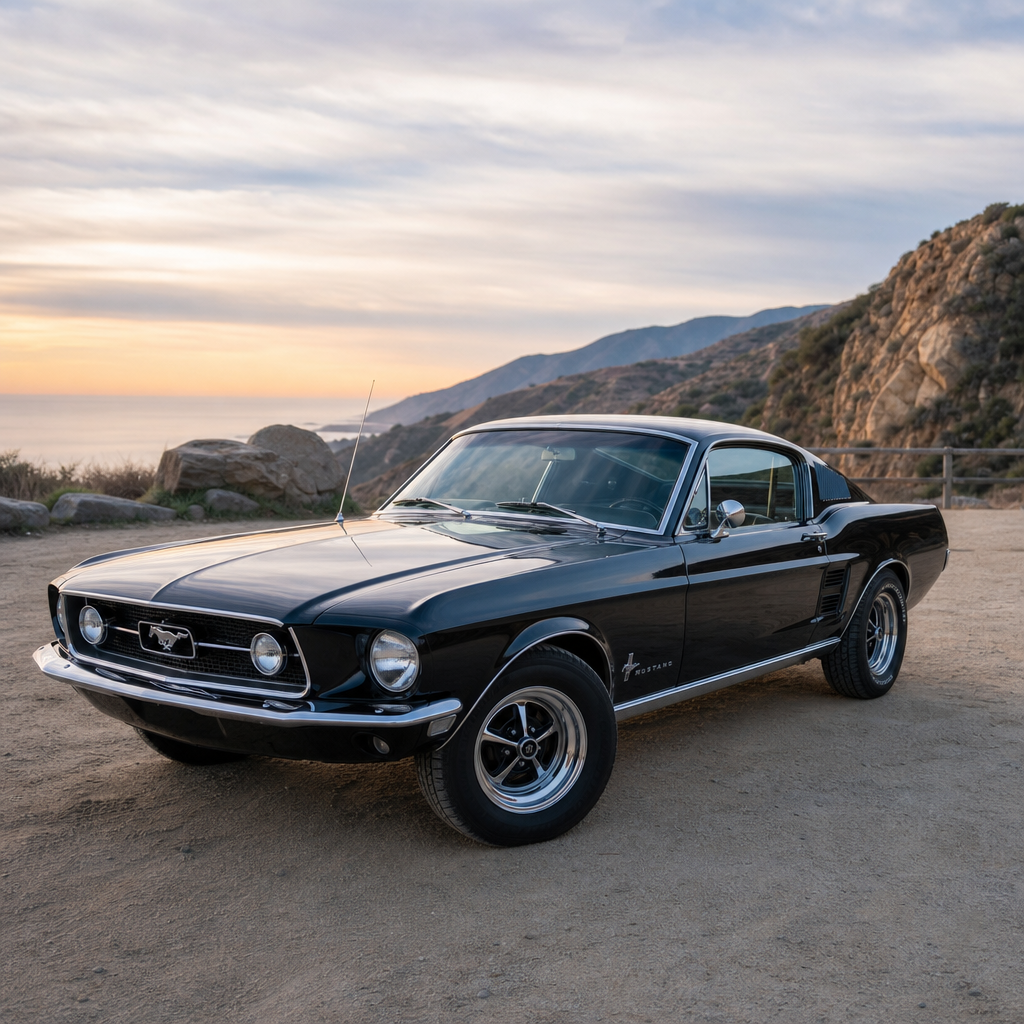
The 1960s added the youth market and affordable speed. The Ford Mustang’s 1964 debut created the pony car segment by offering sporty styling, multiple engine choices, and accessible pricing. Muscle cars followed, pairing midsize bodies with large-displacement V8s for maximum straight-line acceleration. Pontiac GTO, Chevrolet Chevelle SS, Plymouth Road Runner, Dodge Charger, and similar models became icons because they translated racing spirit into street cars. European manufacturers answered with technically sophisticated sports cars from Porsche, Alfa Romeo, Jaguar, Ferrari, and Mercedes-Benz. This era produced many of the classics buyers still seek most aggressively because it balanced mechanical simplicity with genuine performance and unforgettable design.
Safety Rules, Emissions Standards, and Oil Shocks Changed What Came Next
The final major turning point in classic car history came when regulation and economics forced a rethink of the automobile. In the late 1960s and 1970s, governments imposed stricter safety and emissions requirements. In the United States, the Clean Air Act, federal crash standards, and later fuel economy pressures changed engine tuning, body design, and manufacturing priorities. Leaded fuel disappeared, compression ratios fell, catalytic converters arrived, and large chrome bumpers gave way to impact-absorbing systems. Many performance cars lost horsepower on paper and in practice.
Enthusiasts sometimes describe this period too simply as decline, but that misses the real significance. These changes marked the end of one classic era and the beginning of another. Cars had to be cleaner, safer, and more efficient, even if early solutions were imperfect. The 1973 oil crisis and 1979 energy shock reinforced that shift by exposing the vulnerability of fuel-hungry designs. Japanese manufacturers gained ground with reliable, efficient models, while European brands refined smaller performance cars. Today, even vehicles from this transitional period are increasingly considered classics because they capture the industry adapting under pressure.
For collectors and restorers, this history has practical value. It explains why parts, drivability, and market demand vary so widely across eras. It also helps owners judge originality intelligently. A six-volt electrical system, mechanical brakes, carburetor tuning, bias-ply tires, or smog equipment are not annoyances detached from the story; they are part of the story. The evolution of the automobile is exactly what shaped classic cars into the machines people cherish now. If you want to understand any model deeply, start with the milestone it represents, then explore the broader era around it through the rest of this classic car history hub.
Frequently Asked Questions
What milestones were most important in the evolution of the automobile and the rise of classic cars?
The evolution of the automobile was shaped by a series of breakthroughs that changed how cars were built, used, and understood by the public. Early milestones include the development of practical internal combustion engines in the late nineteenth century, which made self-propelled personal transportation more reliable than steam-powered alternatives. From there, innovations such as the electric starter, standardized controls, improved carburetion, stronger steel frames, and pneumatic tires made driving safer and more accessible. One of the most transformative moments came with Henry Ford’s moving assembly line in 1913, which dramatically reduced production costs and helped shift the car from a luxury item to a product for a broader market.
As the decades progressed, additional advances left a lasting mark on what we now consider classic cars. The 1920s and 1930s introduced more refined styling, enclosed cabins, hydraulic brakes, synchronized transmissions, and streamlined bodywork. After World War II, engineering and design accelerated even further, with overhead-valve V8 engines, automatic transmissions, power steering, improved suspension systems, and more expressive styling becoming defining features of many beloved models. By the 1950s and 1960s, automobiles had become cultural objects as much as machines, with tailfins, chrome, muscle car performance, and European grand touring elegance helping establish many vehicles as future classics. These milestones matter because they did not just improve transportation; they created the mechanical personality, visual identity, and emotional appeal that define classic cars today.
What actually makes a car a classic rather than just old?
A car is generally considered a classic when it offers more than simple age. While age is often part of the equation, true classic status usually depends on a combination of historical importance, distinctive design, engineering significance, cultural influence, rarity, and sustained enthusiast interest. In other words, not every old vehicle becomes a classic. A classic car typically represents something meaningful about its era, whether that is a major technological step forward, an iconic body style, a celebrated performance reputation, or a lasting role in popular culture.
Collector communities, insurers, clubs, auction houses, and registries may define the term somewhat differently, but they often look for the same core traits. A classic car may have introduced a new feature, captured the spirit of a decade, or become known for craftsmanship and driving character that modern cars no longer replicate. Vehicles from the brass era, prewar luxury segment, postwar design boom, and mid-century performance years often qualify because they reflect turning points in automotive history. Condition, originality, and documentation also play a major role, especially in the collector market. Ultimately, a classic car stands out because people continue to value it for what it contributed to automotive heritage, not just because it survived long enough to become old.
How did manufacturing innovations influence the design and popularity of classic cars?
Manufacturing innovations were central to the development of classic cars because they changed both the scale and character of automobile production. In the earliest years, cars were largely hand-built, which meant limited output, high cost, and significant variation between vehicles. As manufacturing techniques improved, automakers were able to standardize parts, improve reliability, and produce cars more efficiently. The assembly line became the defining breakthrough, allowing companies to build large numbers of vehicles at lower prices while maintaining more consistent quality. This was essential in turning the automobile into a mainstream form of transportation.
At the same time, mass production did not eliminate creativity. In fact, once manufacturers had more control over chassis engineering and body construction, they could develop distinct model lines for different buyers. Advancements in stamping steel panels, improving paint processes, and integrating body and frame construction gave designers far more freedom. That is one reason the classic car era includes such recognizable silhouettes, from elegant prewar sedans to flamboyant 1950s coupes and aggressive 1960s muscle cars. Manufacturing also enabled automakers to experiment with trim packages, performance upgrades, and comfort features that expanded consumer choice. As a result, classic cars became popular not just because more people could afford them, but because buyers could connect with vehicles that reflected status, personality, speed, luxury, or style in a very personal way.
Why are design and styling so important when people talk about classic cars?
Design is one of the most important reasons certain automobiles become classics because styling often captures the spirit of an era more vividly than specifications alone. A classic car is not remembered only for horsepower, engine layout, or production totals. It is also remembered for the curve of its fenders, the shape of its grille, the proportions of its roofline, the detailing of its dashboard, and the way it made people feel when they saw it. Automotive design has always reflected larger cultural trends, including optimism, modernism, luxury, postwar confidence, jet-age fascination, and performance-driven individuality.
During different periods, styling served different purposes. Early automobiles borrowed visual cues from carriages, but by the 1930s many brands embraced streamlining and aerodynamic inspiration. The 1950s brought dramatic chrome accents, wraparound windshields, and tailfins, while the 1960s and 1970s introduced cleaner lines, sporty fastbacks, and more assertive stance. These visual signatures became part of each car’s identity and helped distinguish one manufacturer or model from another. For collectors and enthusiasts, design matters because it reflects craftsmanship, period taste, and the imagination of the people who created the vehicle. In many cases, a car becomes classic precisely because its styling remains instantly recognizable decades later, even to people who are not experts in automotive history.
How did culture and society help shape the legacy of classic cars?
Classic cars were shaped by culture just as much as by engineering. As automobiles became more common, they transformed daily life by expanding personal mobility, changing city layouts, supporting tourism, and reinforcing the idea of freedom on the open road. Over time, cars became symbols of aspiration, independence, and identity. This cultural role helped elevate certain models beyond mere transportation and into the realm of memory, storytelling, and status. A vehicle associated with youth culture, postwar prosperity, motorsport success, or Hollywood glamour often gained significance that outlasted its production years.
The legacy of classic cars was also reinforced by advertising, film, music, racing, and enthusiast communities. Some models became icons because they appeared in major films or on racetracks, while others earned their reputation through reliability, luxury, or innovative engineering. Car clubs, restoration communities, concours events, and collector auctions have continued to preserve and celebrate these vehicles, turning them into living artifacts of social history. That is why the history of classic cars is not just a timeline of machines. It is also a record of changing lifestyles, consumer dreams, technological ambition, and the emotional connection people formed with the automobile. When enthusiasts talk about classic cars today, they are often talking about a whole era of values and experiences that those vehicles still represent.