Some eras produce more collectible cars than others because the conditions that shape automobiles—technology, regulation, culture, motorsport, and manufacturing scale—do not stay constant for long. In the classic car world, an “era” usually means a recognizable period with shared design language, engineering priorities, and market behavior, such as the prewar years, the postwar boom, the chrome-heavy 1950s, the muscle car peak of the late 1960s, or the analog performance revival of the 1980s and 1990s. A “collectible car” is not simply an old vehicle. It is a car that attracts sustained enthusiast demand because it offers historical importance, distinctive design, memorable driving character, scarcity, cultural influence, or a combination of those traits. After years working around auctions, restorations, and valuation guides, I have seen the same pattern repeatedly: the eras that generate the most collectible cars are the eras when carmakers had room to experiment, buyers had passion and purchasing power, and the final products expressed a strong identity that later generations could recognize instantly.
This matters because collectors, first-time buyers, and enthusiasts often assume age alone creates value. It does not. Many old cars remain inexpensive because they were built in huge numbers, lack technical distinction, or never developed a following. Meanwhile, certain periods produce a deep bench of desirable models across price points, from blue-chip European grand tourers to attainable domestic coupes and Japanese sport compacts. Understanding why helps you judge current trends more intelligently. It also helps explain why some decades dominate concours lawns, collector-car insurance portfolios, museum exhibits, and online auction platforms such as Bring a Trailer. If you want a reliable guide to popular classic car eras, the key is to study the forces behind collectibility rather than just memorize model names.
Broadly, collectible eras emerge when five elements overlap: design originality, mechanical character, limited survival, emotional resonance, and a compelling historical story. Design originality gives an era visual shorthand, whether that means Art Deco fenders, tailfins, coke-bottle body sides, wedge profiles, or box-flared homologation styling. Mechanical character makes cars memorable to drive and own; think flathead V8 simplicity, big-block torque, carbureted throttle response, air-cooled sound, or early turbo lag. Limited survival matters because rarity created by attrition is often more meaningful than rarity created on paper. Emotional resonance comes from what people wanted in their youth and can afford later in life. The historical story ties everything together, linking a car to racing, social change, industrial innovation, or a turning point in regulation. When an era delivers all five, it tends to generate far more collectible cars than periods defined mainly by compromise or conformity.
What Makes One Automotive Era More Collectible Than Another
The strongest collectible eras are usually periods of transition. When technology changes quickly but manufacturers still retain freedom, memorable cars appear. The late 1940s and 1950s combined postwar optimism with rapid engineering progress: overhead-valve V8s, automatic transmissions, power steering, and bolder body design became mainstream. The late 1960s paired cheap fuel and relaxed safety expectations with youth culture and horsepower wars. The 1980s and 1990s introduced fuel injection, turbocharging, all-wheel drive, and advanced chassis tuning while preserving analog steering and relatively low curb weights. These are not random peaks. They are moments when the industry moved forward without losing personality.
By contrast, eras dominated by external constraint often produce fewer collectible cars overall. Tight emissions rules in the mid-1970s reduced output and drivability for many performance models. Economic downturns shifted buyers toward practical transportation. Safety and packaging demands sometimes forced visual uniformity. That does not mean no desirable cars emerged in those years. It means the ratio changed. A great collectible era is not one with a single icon; it is one that creates a broad field of significant cars from multiple brands and market segments.
Survival rates are equally important. A car built in large numbers can become collectible if many examples were later scrapped, modified, or rusted away. Early Ford Broncos, first-generation Mazda RX-7s, and air-cooled 911s benefited from this dynamic. Conversely, a technically interesting luxury sedan may remain less collectible if too many survive and ownership costs suppress demand. In practice, collectibility is always a balance between production volume, present-day survival, and the size of the enthusiast base willing to preserve the car correctly.
Prewar and Immediate Postwar Cars: Craftsmanship, Rarity, and Historical Weight
Prewar cars remain collectible because they represent the formative stage of the automobile. Brass Era and Classic Era vehicles from marques such as Duesenberg, Packard, Bugatti, Bentley, Cord, and Delahaye were often coachbuilt, mechanically distinctive, and tied to a period when elite manufacturers competed through engineering prestige. Collectors value them for craftsmanship, provenance, and historical significance more than outright performance. A supercharged Auburn or a straight-eight Packard communicates a world of hand-finished materials, separate fenders, and bespoke bodies that can never be repeated under modern manufacturing economics.
Yet prewar cars do not generate the broadest collector participation because they require specialized knowledge, storage, and maintenance. Driving one in modern traffic can be demanding, and authenticity standards are strict. The immediate postwar era, roughly 1946 to the early 1950s, widened the field. Cars such as the Jaguar XK120, Cadillac Series 62, and early Porsche 356 captured renewed optimism while introducing designs and engineering that still feel usable today. These cars are collectible because they sit at the bridge between antique motoring and modern enthusiast ownership. They look historic, but many can still tour reliably with proper preparation.
What this era proves is that historical weight alone is not enough. The most collectible prewar and postwar cars combine story with usability or visual drama. That is why a streamlined Cord 810/812 or a Porsche 356 Speedster resonates far beyond its production total. Each became a symbol, not just a machine.
The 1950s and Early 1960s: Prosperity, Styling Identity, and Sports Car Expansion
The 1950s produced many collectible cars because prosperity let manufacturers take aesthetic risks while mass production lowered entry barriers for buyers. In the United States, Harley Earl’s influence at General Motors helped define an age of dramatic chrome, wraparound glass, tailfins, and annual model changes. A 1957 Chevrolet Bel Air, 1959 Cadillac Eldorado, or 1961 Lincoln Continental is instantly legible to people who know little about cars. That immediate recognizability is a major ingredient in collectibility.
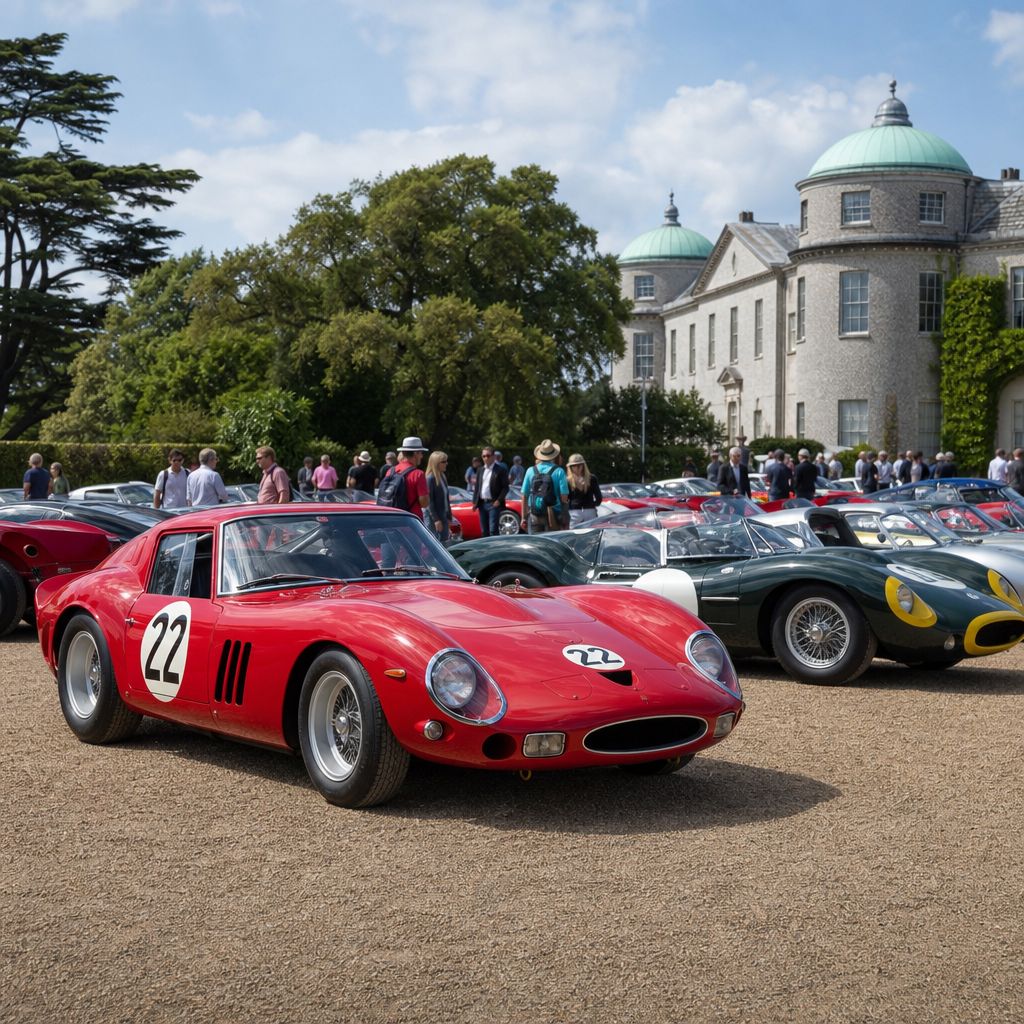
Europe and Britain added another dimension: sports cars and grand tourers that turned motoring into aspiration. The Mercedes-Benz 300SL, Austin-Healey 3000, Alfa Romeo Giulietta Sprint, and Ferrari 250 series all emerged from a climate where racing success, export demand, and design houses such as Pininfarina, Bertone, and Touring could shape public imagination. I have seen buyers stretch budgets for these cars because they offer elegant proportions, tactile controls, and direct links to motorsport or postwar design leadership.
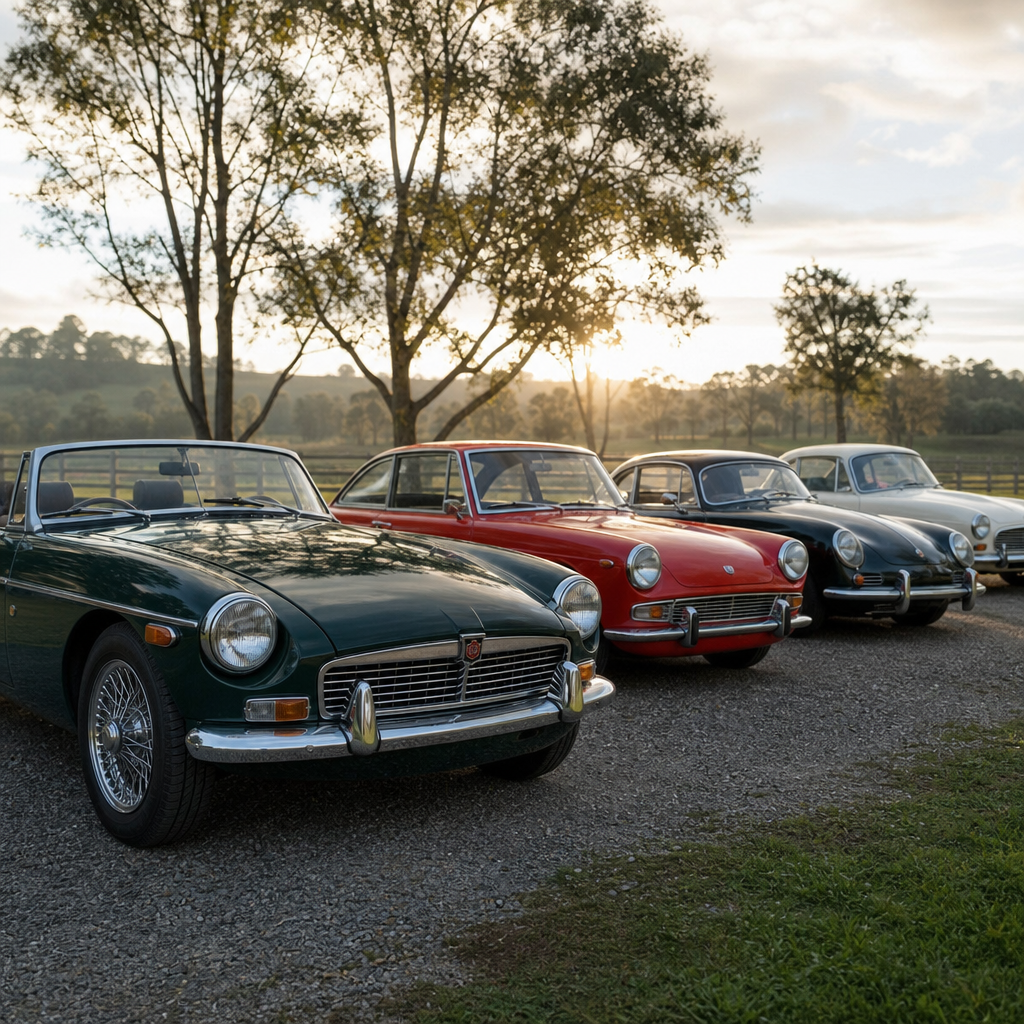
The era also matters because it created many attainable classics. Not every collectible needs six-figure status. Cars like the Triumph TR3, MGA, and first-generation Thunderbird built enthusiastic followings through club support, parts availability, and straightforward mechanicals. This is one reason the 1950s and early 1960s remain central within Classic Car Basics & Education and any guide to Popular Classic Car Eras: they produced both museum pieces and usable entry-level collectibles, which is exactly how a healthy collector ecosystem grows.
Mid-1960s to Early 1970s: The Muscle Car and Golden-Age Performance Surge
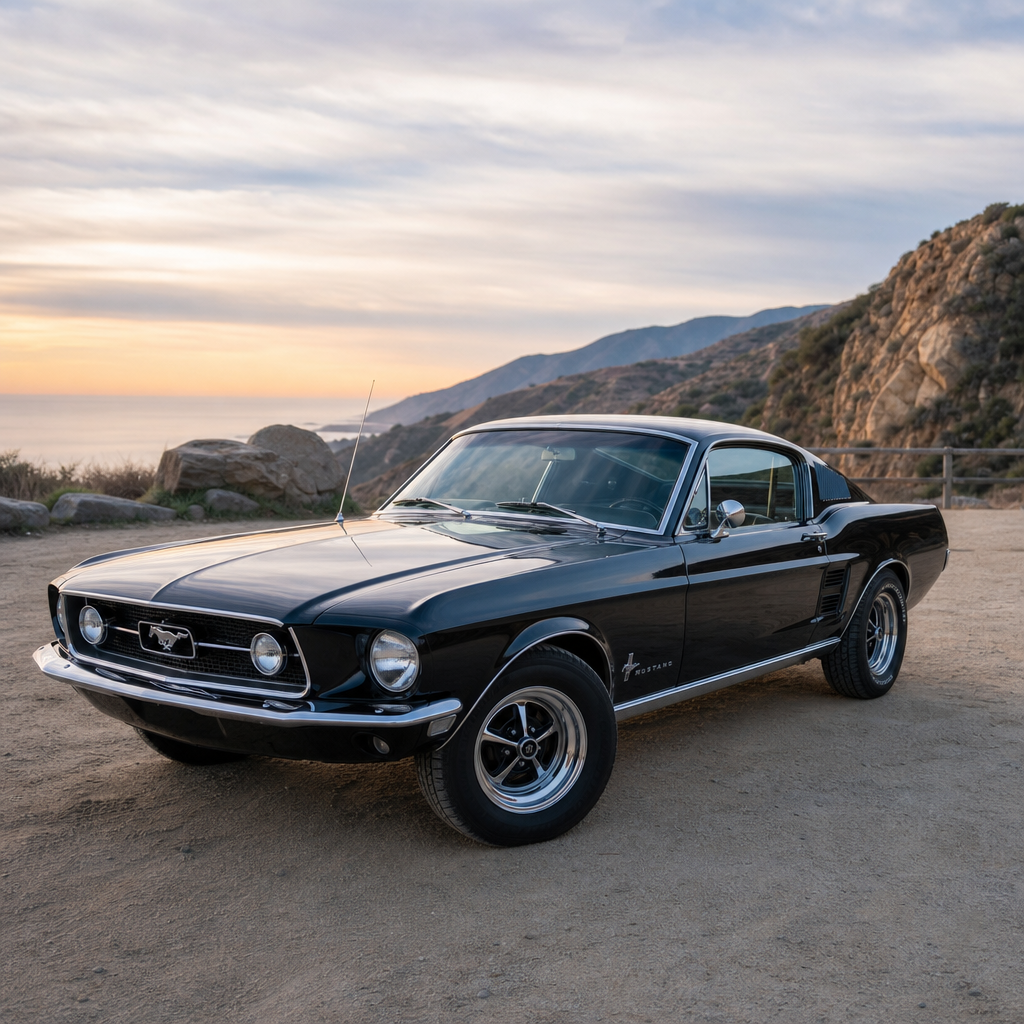
Few periods produced more instantly collectible cars than the mid-1960s through early 1970s. In the United States, inexpensive gasoline, the baby boom, dealer performance culture, and inter-brand rivalry created the muscle car era. Pontiac’s GTO formula—midsize body, large-displacement V8, aggressive marketing—was copied and evolved by Chevrolet, Plymouth, Dodge, Oldsmobile, Buick, AMC, and Ford. The result was a crowded field of memorable models: Chevelle SS 396, Hemi ’Cuda, Boss 429 Mustang, 442, GSX, AMX, and many more.
These cars became collectible because they were never just fast transportation. They embodied a social moment. They were affordable symbols of youth, rebellion, and mechanical abundance. They also offered variation: engine codes, factory colors, transmission options, axle ratios, special packages, and low-production homologation specials. That variety gives collectors endless depth. Documentation from resources such as Marti Reports, broadcast sheets, and trim tags adds another layer by making originality measurable.
Europe and Japan were also building future collectibles during this period. The Jaguar E-Type, BMW 2002, Porsche 911S, Datsun 240Z, and Alfa Romeo GTV all paired balanced proportions with engaging, relatively simple engineering. These models broadened the definition of performance collectible beyond straight-line speed. They remain sought after because they drive with precision and feel alive at legal speeds, something many later cars struggle to replicate.
| Era | Why It Produced Collectibles | Representative Models |
|---|---|---|
| Prewar/Postwar | Coachbuilt craftsmanship, low survival, historical importance | Cord 810, Jaguar XK120, Porsche 356 |
| 1950s–Early 1960s | Bold styling, rising prosperity, sports car growth | 1957 Bel Air, Mercedes 300SL, Austin-Healey 3000 |
| Mid-1960s–Early 1970s | Horsepower wars, youth market, motorsport influence | GTO, Hemi ’Cuda, BMW 2002, Datsun 240Z |
| 1980s–1990s | Analog feel plus modern engineering, turbo and AWD advances | BMW M3, Acura NSX, Porsche 964, Toyota Supra Turbo |
The Malaise Years: Why Some Weak Eras Still Create Niche Collectibles
The mid-1970s are often described as a thin period for collectible cars, and the label is broadly fair. Emissions equipment, lower compression ratios, insurance pressures, fuel crises, and changing buyer priorities reduced performance across much of the market. Large bumpers and transitional styling also hurt desirability for some models. On paper, this should have produced almost no collector interest.
But even weaker eras produce niche collectibles when they offer uniqueness, cultural memory, or represent the last of a lineage. The 1970-1973 peak-performance cars remained desirable while later versions of familiar nameplates became more selective collector buys. Pontiac Trans Ams, especially Special Edition cars linked to popular film culture, maintained emotional appeal. The Lamborghini Countach transformed exotic design despite practical flaws. Early hot hatches and sports coupes in Europe laid groundwork for later enthusiasm. Limited-production homologation specials and unusual survivors from this period attract buyers precisely because the era itself was difficult.
This is an important lesson for anyone studying popular classic car eras. A decade does not need universal excellence to matter. It only needs enough standout cars to create a coherent collector story. The malaise years produced fewer collectibles overall, but the cars that did break through often carry unusually strong nostalgia and a “survivor against the odds” narrative that today’s market values highly.
The 1980s and 1990s: The Modern Classic Sweet Spot
The 1980s and 1990s now produce a remarkable number of collectible cars because they hit a rare sweet spot between usability and character. Electronic fuel injection, better corrosion protection, improved build quality, and stronger chassis engineering made cars more dependable and easier to live with. At the same time, most still had hydraulic steering, manual gearboxes, visible sightlines, and manageable size. They feel modern enough to drive regularly, yet old enough to feel mechanical.
This period also benefited from global specialization. Germany gave us icons such as the BMW E30 M3, Mercedes-Benz 190E 2.3-16 and 2.5-16, and Porsche 964. Japan produced the Acura NSX, Mazda RX-7 FD, Toyota Supra Turbo, Nissan Skyline GT-R, and Honda Integra Type R. America delivered the Buick GNX, Fox-body Mustang variants, C4 ZR-1, and Viper. Many were shaped by motorsport homologation, bubble-era ambition, or engineering programs that would be hard to justify today.
In my experience, demand for these modern classics is driven by three forces. First, buyers who grew up with posters, magazines, Gran Turismo, and import tuning culture are now in prime earning years. Second, the cars have strong communities and excellent data trails through factory literature, VIN decoders, enthusiast registries, and auction archives. Third, they answer a practical question: what collectible can I enjoy without trailer logistics or constant restoration? That usability gives the era unusual depth, which is why it has become such an important hub topic for new collectors.
How Culture, Media, and Demographics Decide Which Eras Last
No era becomes collectible through engineering alone. Demographics and media decide which cars remain visible long enough to develop sustained demand. People usually chase the cars they admired between adolescence and early adulthood, then buy them when income rises. Economists sometimes call this the nostalgia curve. It helps explain why muscle cars surged decades ago, why air-cooled 911s climbed sharply, and why Japanese performance cars from the 1990s later accelerated in value.
Media exposure reinforces that cycle. Films, television, racing broadcasts, magazines, and now digital platforms can turn a good car into a generational symbol. The Mini gained cultural permanence through motorsport and screen appearances. The DeLorean owes much of its survival in public imagination to film. Auction coverage and online marketplaces have also standardized information, making once-obscure models easier to compare and trust.
For buyers, the takeaway is simple: collectible eras are built where emotional memory meets durable community support. Study clubs, parts supply, restoration knowledge, and sales transparency alongside styling and performance. Then explore related pages within this Classic Car Basics & Education hub to narrow the era that matches your budget, skills, and goals. The right collectible is not just old or famous; it comes from a period that gave cars a lasting identity, and that identity is what keeps demand alive.
Frequently Asked Questions
Why do some automotive eras create more collectible cars than others?
Some eras produce more collectible cars because the forces that shape automobiles do not remain stable from one decade to the next. Technology changes, safety and emissions rules tighten or loosen, consumer tastes shift, fuel prices rise and fall, and manufacturers move through cycles of experimentation, confidence, and consolidation. When several favorable conditions overlap at the same time, an era can generate a large number of cars that later enthusiasts view as important, desirable, and worth preserving.
Collectibility tends to flourish when cars from a period have a strong shared identity. That may come from bold styling, memorable performance, mechanical simplicity, racing success, or a sense that automakers were competing aggressively to outdo each other. The late 1960s, for example, are remembered for the muscle car boom because manufacturers built charismatic, high-powered models in large enough numbers to leave a lasting cultural imprint. By contrast, eras dominated by transitional engineering, cautious design, or heavily compromised performance may produce fewer standout models that collectors rally around decades later.
Another major factor is emotional memory. Cars often become collectible when the generation that admired them in youth reaches the point where it has the means to buy, restore, and maintain them. That is one reason some eras seem to surge in collector importance long after they ended. In short, certain periods create more collectible cars because they combine distinct style, meaningful innovation, cultural visibility, and emotional resonance in a way that later generations still recognize.
How do regulation and technology affect whether a car era becomes collectible?
Regulation and technology are two of the biggest reasons one era feels exciting to collectors while another feels uneven. New regulations can force sudden changes in engine tuning, body design, safety equipment, and overall packaging. Sometimes those changes improve cars in the long run, but during the transition they can create periods where performance drops, proportions become awkward, or engineering priorities shift away from driver appeal. That helps explain why some years within a broader era are prized while neighboring years are less celebrated.
Technology has a similar double effect. On one hand, breakthrough engineering can create landmark cars that define an era: overhead-cam engines, fuel injection, turbocharging, lightweight materials, advanced suspensions, or more precise manual gearboxes can all make a car feel historically significant. On the other hand, early versions of new technology may be expensive, fragile, hard to service, or poorly understood at the time, which can limit both production and long-term popularity. Collectors often gravitate toward periods where technology was advanced enough to be compelling but still mechanical and engaging enough to feel approachable.
This is why so many enthusiasts are drawn to “sweet spot” eras. These are periods when cars benefited from matured engineering but had not yet become fully filtered through electronic intervention, standardization, or regulatory compromise. The result is a group of vehicles that feel both historically important and deeply characterful. In many cases, collectibility grows strongest where regulation and innovation created distinct personalities rather than sameness.
Does rarity automatically make cars from a certain era more collectible?
Rarity matters, but it does not automatically create collectibility. A car can be scarce because it was expensive, limited-production, built for homologation, or simply not many survived. Those reasons can support collector interest, but rarity by itself is not enough. A forgotten car produced in tiny numbers may still attract little attention if it lacks performance, beauty, historical significance, brand prestige, or a passionate enthusiast base.
What tends to matter more is meaningful rarity. Collectors respond strongly when a car is rare for a reason that enhances its story. A special competition model, a final-year high-performance variant, a hand-built luxury coupe, or a short-run design icon carries a narrative that helps justify demand. In those cases, rarity amplifies desirability instead of trying to replace it. That is why some low-volume cars become blue-chip collectibles while others remain niche curiosities.
Survival rate is also important. Some eras produced cars in huge numbers, but relatively few remain in original condition because they were driven hard, rusted away, modified, or discarded when values were low. That can make surviving examples surprisingly collectible even if the original production run was large. So while rarity plays a role, the real driver is the combination of rarity, significance, condition, and emotional appeal. The most collectible eras tend to produce cars that are not just uncommon today, but memorable and meaningful as well.
Why are design and cultural impact so important in determining collectible eras?
Design and cultural impact are central because collectors rarely respond to mechanical specifications alone. They respond to what a car represents. When an era has a strong visual language—sweeping prewar coachwork, chrome-heavy 1950s optimism, late 1960s aggression, wedge-shaped 1980s futurism, or the clean analog performance look of later decades—it becomes easier for people to identify and celebrate cars from that period. A recognizable style gives the era coherence, and coherence makes it easier for collectors, historians, and the market to assign importance.
Cultural impact deepens that importance. Cars that appeared in films, on racetracks, in advertising, in music culture, or in the public imagination often become symbols of their time. They are remembered not just as transportation, but as statements about freedom, status, rebellion, innovation, or national identity. When a whole era is associated with a powerful cultural mood, more of its cars can become collectible because buyers are purchasing a piece of that story as much as the machine itself.
This is also why some technically excellent periods produce fewer collector favorites than expected. If the cars are competent but visually generic, or if they were never woven into broader cultural memory, they may struggle to inspire lasting enthusiasm. In the collector world, style and symbolism are not superficial extras. They are often the very reasons certain eras keep attracting attention, restoration effort, and rising values.
Can newer eras become collectible too, or is collectibility mostly about older cars?
Newer eras can absolutely become collectible, and in many parts of the market they already have. Collectibility is not limited to prewar classics, postwar cruisers, or 1960s muscle. It can emerge whenever a period marks the end of a certain way of building cars or captures a uniquely appealing balance of performance, design, and driver involvement. That is one reason interest has grown in analog performance cars from the 1980s, 1990s, and early 2000s. Many enthusiasts see them as the last examples of lighter, more mechanical, less digitally filtered driving experiences.
Modern collectibility often forms around transition points. Enthusiasts notice when naturally aspirated engines disappear, when manual transmissions become rare, when hydraulic steering gives way to more isolated systems, or when emissions and safety demands push cars toward greater complexity and weight. Vehicles from just before those changes can become highly desirable because they represent a closing chapter. In that sense, a collectible era is often defined not only by what it introduced, but by what it preserved before it vanished.
That said, newer cars usually need time before their long-term status becomes clear. Markets have to sort out which models were truly influential, which were overproduced, and which have strong enough enthusiast communities to support restoration and preservation. But the pattern remains the same across decades: eras become collectible when they offer a distinct identity, meaningful historical context, and an experience people feel they cannot easily get from current cars. Age helps, but identity is what really drives collectibility.