Japanese classics are gaining popularity because they combine mechanical honesty, rising historical significance, and a generation of buyers who now see the cars they once ignored as essential pieces of automotive culture. In the collector market, “Japanese classics” usually refers to enthusiast vehicles built mainly from the late 1960s through the early 2000s by brands such as Toyota, Nissan, Honda, Mazda, Subaru, Mitsubishi, Isuzu, and Suzuki. That range includes chrome-bumpered coupes, homologation specials, kei sports cars, luxury sedans, and early performance hatchbacks. The category matters because it has moved from niche enthusiasm to mainstream recognition: auction houses now feature Japanese classics prominently, restoration shops are expanding parts networks for them, and insurers, lenders, and event organizers increasingly treat them as established collectible assets rather than overlooked used cars.
I have watched this shift firsthand over the past decade at auctions, track days, and owner meets. Cars that once sat at the edge of a show field, like a first-generation Mazda RX-7 or a Toyota Celica Supra, now draw crowds three people deep. Buyers are not responding to nostalgia alone. They are responding to a rare combination of qualities: durable engineering, motorsport credibility, accessible maintenance, and design that has aged into confidence rather than caricature. A Japanese classic can be as simple as a carbureted Datsun 510 or as technically ambitious as a twin-turbo Nissan Skyline GT-R, but the common thread is that these cars reward use as much as display.
This hub explains why interest has accelerated, which models and segments define the category, how values are shaped, what ownership actually involves, and where Japanese classics fit within the broader classic car market. It also serves as a foundation for deeper articles on specific models, brands, engine types, and buying strategies. If you are comparing a Toyota 2000GT to a Fairlady Z, a Honda NSX to a Mazda RX-7, or an Evo VI to a Subaru Impreza 22B, the central question is the same: why have Japanese classics become so important so quickly? The answer starts with cultural legitimacy and ends with the simple fact that many of these cars are genuinely excellent machines.
The shift from overlooked used cars to respected collector vehicles
Japanese classics spent years in a strange middle ground. They were too new to be treated like prewar or 1960s European classics, yet too old to compete with modern performance cars on outright numbers. That gap has closed. Collectors now evaluate them by the same standards applied to any serious classic: historical relevance, production numbers, engineering distinction, competition pedigree, originality, and owner community support. Once those filters are applied fairly, many Japanese cars rank extremely well.
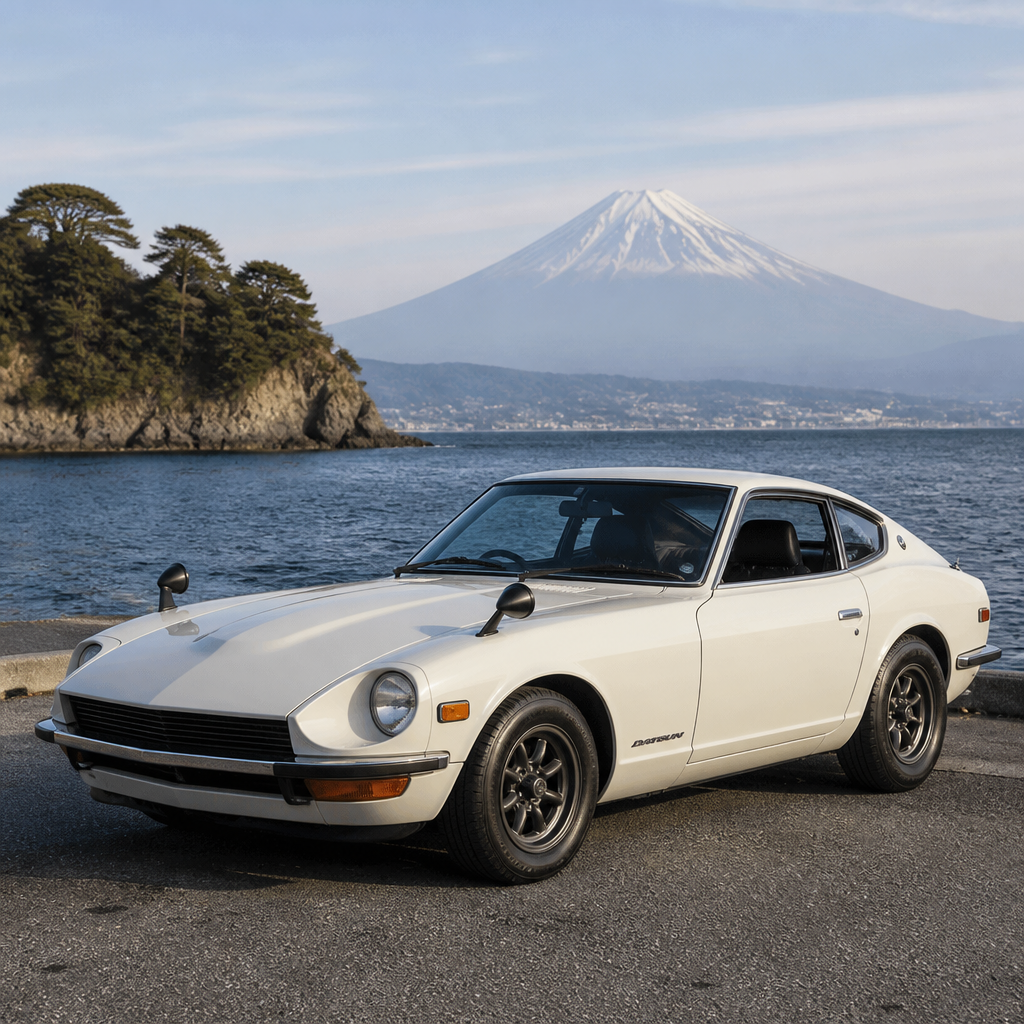
The Toyota 2000GT is the clearest proof. Built in tiny numbers between 1967 and 1970, it is no longer discussed as an alternative classic but as one of the most significant postwar sports cars from any country. The same pattern extends down the market. The Datsun 240Z changed perceptions of affordable sports cars globally. The Honda NSX forced Ferrari and others to rethink reliability, ergonomics, and usability. The Nissan Skyline GT-R redefined all-wheel-drive performance in touring car competition and on the street. These are not cult arguments anymore; they are accepted historical facts.
Another reason for the shift is maturity in the buyer base. People who grew up with Gran Turismo, Best Motoring, Option videos, and 1990s tuning magazines are now in peak earning years. They do not merely want the poster cars they loved as teenagers; they want the best surviving examples, factory-correct specifications, and documented provenance. That changes the market. Instead of buying modified cars for immediate use, more collectors now seek unmolested examples, original paint, matching chassis tags, and period literature. In practical terms, Japanese classics have graduated from enthusiast objects to curated collectibles.
Why design, engineering, and driving feel resonate today
Japanese classics are attractive because they deliver a type of driving experience that modern cars often cannot. Most are lighter, narrower, and more transparent in their controls. Steering is more communicative, visibility is better, and the relationship between driver input and vehicle response feels mechanical rather than mediated. Even modest cars benefit from that clarity. A rear-wheel-drive AE86 Corolla, for example, does not need huge power to feel alive because the chassis talks constantly through the seat and steering wheel.
Engineering philosophy also matters. Japanese manufacturers built reputations on precision, reliability, and production discipline, but they were never purely conservative. They experimented aggressively within practical frameworks: Mazda with rotary engines, Honda with VTEC and aluminum-intensive construction, Nissan with advanced all-wheel-drive and steering systems, Toyota with high-revving twin-cam engines, and Subaru with turbocharged boxer layouts. That blend of durability and innovation gives collectors a compelling ownership proposition. You can appreciate the technology without accepting the fragility often associated with exotic classics.
Design has aged well too. Many Japanese classics favor clean surfacing and functional proportions over decorative excess. Consider the first-generation Honda Civic, the FD3S RX-7, or the A70 Supra. Their forms reflect packaging and performance needs, which gives them longevity. Designers like Giorgetto Giugiaro also left a clear mark on Japanese cars, most famously with the Isuzu Piazza and first-generation Subaru SVX influences visible in later themes. As trends swing back toward crisp lines and honest proportions, these cars look more current than many period rivals.
The models and segments driving demand
Demand is not spread evenly across all Japanese classics. It clusters around vehicles with strong stories, distinct engineering, or proven enthusiast ecosystems. Sports cars remain the entry point for most buyers. The Fairlady Z lineage, especially the 240Z, 260Z, and 280Z, attracts collectors who want style, parts availability, and a huge knowledge base. Toyota’s performance coupes, from the 2000GT to the Celica, Supra, and MR2 families, serve buyers across multiple budgets. Mazda’s RX-7, particularly the FB, FC, and FD generations, appeals to drivers willing to embrace the rotary’s unique maintenance profile in exchange for exceptional balance and character.
Performance sedans and homologation specials have surged as well. The Nissan Skyline GT-R, Mitsubishi Lancer Evolution, and Subaru Impreza WRX STI sit at the center of this movement because they link road cars directly to motorsport success. In markets where import rules delayed availability, pent-up demand intensified prices when legal access finally arrived. Buyers who once modified these cars heavily are now restoring them to factory specification, which is reducing supply of original cars and supporting values.
Enthusiasm also reaches beyond the obvious icons. Early kei sports cars like the Honda Beat, Suzuki Cappuccino, and Autozam AZ-1 have become desirable because they offer low-speed excitement, tiny dimensions, and genuine technical interest. Luxury models such as the Lexus LS400 and Toyota Century now receive more attention for their engineering quality and understated significance. Even practical classics, including the Datsun 510, Toyota Land Cruiser FJ60, and first-generation 4Runner, have moved up because utility, durability, and style now matter as much as outright speed.
| Segment | Representative models | Main reason demand is rising |
|---|---|---|
| Sports cars | Datsun 240Z, Toyota Supra, Mazda RX-7, Honda NSX | Strong design, engaging driving feel, global recognition |
| Homologation and rally icons | Nissan Skyline GT-R, Lancer Evolution, Impreza WRX STI | Motorsport pedigree, limited supply, younger collector demand |
| Compact enthusiast cars | AE86 Corolla, Honda CR-X, Suzuki Swift GTi | Accessible ownership, analog dynamics, tuning heritage |
| Kei and niche performance | Honda Beat, Cappuccino, Autozam AZ-1 | Novelty, small size, increasing import interest |
| Luxury and utility classics | Lexus LS400, Toyota Century, Land Cruiser, 4Runner | Build quality, usability, durable long-term appeal |
Culture, media, and the global enthusiast feedback loop
Japanese classics are gaining popularity partly because their mythology traveled globally long before many of the cars did. Video games, anime, manga, films, and magazine culture exported specific models and driving identities to millions of people. Initial D made the AE86 a universal symbol. Gran Turismo gave players direct familiarity with Skyline GT-R variants, obscure kei cars, and limited-run homologation specials. The Fast and the Furious franchise amplified tuner-era demand, but the deeper effect came from media that taught people names, generations, engine codes, and trim distinctions.
That cultural literacy matters in collecting. A buyer who already knows the difference between a BNR32 and BCNR33, or between an FD3S Type R and a standard RX-7, enters the market with confidence. Communities then reinforce interest through forums, registries, YouTube restorations, and social platforms. Owners can find parts cross-references, service bulletins, period brochures, and factory paint codes with far less friction than collectors of many orphaned European or American models. In my experience, that information density lowers the psychological barrier to entry and keeps younger enthusiasts engaged after purchase.
Import policy also played a major role. In the United States, the 25-year rule created annual waves of attention around newly eligible models. Every time a sought-after car crossed that threshold, media coverage, auction activity, and forum discussion accelerated. Canada, the United Kingdom, Australia, and New Zealand developed their own import ecosystems, further normalizing right-hand-drive ownership and Japanese domestic market specifications. Once supply channels became reliable, demand became more sophisticated. Buyers stopped asking whether importing a Japanese classic was possible and started asking which grade, trim, and auction history they should pursue.
What makes ownership appealing and what buyers must watch
Ownership appeal rests on a practical truth: many Japanese classics are easier to live with than traditional collector cars. Cold starts tend to be drama-free, switchgear usually works as intended, and service procedures are often logical. Parts support varies by model, but it is frequently better than outsiders expect thanks to reproduction suppliers, shared components, specialist dismantlers, and strong aftermarket networks. Toyota Heritage Parts, Nissan NISMO Heritage, Mazda’s restoration initiatives, and independent suppliers have all helped extend the life of significant models.
That said, buyers should not mistake popularity for simplicity. Rust remains the primary threat across many Japanese classics, especially 1970s and 1980s cars. S30 Z cars rust in floors, frame rails, hatch areas, and battery trays. First-generation RX-7s and older Civics can hide corrosion in sills and shock towers. Skyline GT-Rs and Evos are vulnerable not because they are poorly built, but because many were driven hard, modified aggressively, or exposed to wet climates. A clean shell with mediocre cosmetics is usually a better purchase than a shiny car with structural corrosion.
Originality is another key issue. Period modification culture was intense, and many cars were altered with body kits, engine swaps, turbo upgrades, coilovers, and interior changes. Some modifications are historically interesting, especially when tied to known tuners such as Mine’s, NISMO, RE Amemiya, Spoon, or TOM’S. Most of the time, however, the market pays a premium for stock or reversibly modified cars with documentation. Buyers should verify chassis numbers, engine codes, import papers, service records, and auction sheets where relevant. A pre-purchase inspection by a marque specialist is not optional on high-value examples; it is basic risk management.
How values are evolving and where the market may go next
Values for Japanese classics rose sharply in the late 2010s and early 2020s, but the market is not moving as one block. Blue-chip models such as the Toyota 2000GT, Honda NSX-R, Mazda Cosmo Sport, and rare Skyline GT-R variants occupy a different tier from mass-produced enthusiast favorites like the 300ZX, Celica, or Prelude. The first group behaves like established collectibles with global competition for the best cars. The second group remains more sensitive to condition, originality, and local enthusiast trends.
Several forces support long-term demand. First, many important Japanese cars were used hard and survived in low numbers, especially in unmodified condition. Second, collectors increasingly value late twentieth-century cars that combine analog driving with meaningful engineering innovation. Third, the buyer pool is broad: Japanese classics attract traditional collectors, younger enthusiasts, motorsport fans, design-focused buyers, and people seeking usable classics for regular driving. That diversity makes the segment more resilient than markets built on status alone.
There are limits. Rising prices can push entry-level enthusiasts out, and certain models may cool after speculative spikes. Restoration costs are increasing, particularly for trim, electronics, and model-specific parts. Insurance agreed values need regular review, and storage standards matter more as cars appreciate. Even so, the overall direction is clear. Japanese classics have established themselves as a permanent and influential category within the classic car world, not a temporary fashion.
Japanese classics are gaining popularity because they satisfy both emotion and logic. They tell important stories about global manufacturing, motorsport, design, and youth culture, yet they also offer usability, robust engineering, and communities that make ownership realistic. From the Toyota 2000GT and Datsun 240Z to the Honda NSX, Mazda RX-7, Skyline GT-R, Evo, and kei sports cars, the category is broad enough to support beginners and serious collectors alike.
For readers exploring classic car models and brands, this hub provides the framework for understanding the entire Japanese classics landscape. The main lessons are straightforward: buy the best condition you can afford, prioritize originality and documentation, learn the model-specific rust and mechanical weak points, and respect the difference between hype and lasting significance. If you want a classic that can be historically important, deeply involving to drive, and increasingly recognized by the wider market, Japanese classics deserve a place at the top of your list.
Use this page as your starting point, then move deeper into model guides, brand histories, buying checklists, and restoration resources for the specific Japanese classic that fits your budget and goals.
Frequently Asked Questions
What qualifies as a Japanese classic in today’s collector market?
In most enthusiast and collector circles, a Japanese classic typically refers to a vehicle built from the late 1960s through the early 2000s by major Japanese manufacturers such as Toyota, Nissan, Honda, Mazda, Subaru, Mitsubishi, Isuzu, and Suzuki. That definition covers a surprisingly broad range of cars, from early chrome-bumpered coupes and lightweight sports cars to homologation specials, turbocharged performance icons, rally-bred machines, and highly influential everyday models that helped shape modern car culture. What connects them is not just age, but significance. These are cars that represent important engineering ideas, motorsport heritage, design movements, or cultural moments that continue to matter to enthusiasts today.
It is also important to understand that “classic” no longer means only rare, coachbuilt, or six-figure collectible. Many Japanese classics earned their status because they were honest, usable, mechanically engaging cars that developed passionate followings over time. Some were overlooked for years because they were seen as affordable used performance cars rather than blue-chip collector pieces. Now, buyers increasingly recognize their impact on tuning culture, import performance, endurance racing, drifting, rally competition, and everyday automotive design. As a result, the category includes both top-tier halo cars and once-humble enthusiast favorites that now carry real historical and emotional weight.
Why are Japanese classics becoming more popular right now?
Japanese classics are gaining popularity because several powerful trends have converged at the same time. First, there is a generational shift in collecting. Many buyers are now old enough to pursue the cars they admired in magazines, video games, motorsport broadcasts, and tuner culture during their youth. Vehicles that were once dismissed as used imports or niche enthusiast choices are now being re-evaluated as essential artifacts of late 20th-century automotive history. Nostalgia plays a major role, but it is not the only factor. These cars also deliver a kind of direct, analog driving experience that has become increasingly rare in the modern era of heavy platforms, automated systems, and digital interfaces.
Second, Japanese classics have developed stronger historical credibility. Enthusiasts and collectors now better appreciate the engineering discipline, reliability, lightweight design, rev-happy engines, and competition pedigree that many of these vehicles offered from the beginning. Cars from Japan helped redefine expectations for performance, usability, and mechanical durability, yet for a long time they did not receive the same collector respect as European or American classics. That gap is closing. As more auction results, restoration projects, specialist dealers, and enthusiast media focus on Japanese models, the market has matured. People are no longer asking whether these cars deserve recognition; they are asking which examples are the most important and how quickly the best ones are disappearing.
What makes Japanese classics different from traditional European or American classics?
One of the biggest differences is their blend of mechanical honesty and everyday usability. Many Japanese classics were engineered with a strong emphasis on efficiency, durability, serviceability, and driver involvement. Rather than relying solely on prestige branding or dramatic excess, they often earned loyalty through precise controls, balanced chassis tuning, high-revving engines, and the ability to perform consistently in real-world conditions. That gives them a distinctive appeal in the collector space. Owners are not just preserving beautiful old machines; they are often enjoying cars that still feel intuitive, reliable, and genuinely rewarding to drive.
Another difference is cultural context. European and American classics have long benefited from established collector narratives, while Japanese classics rose through a different path shaped by grassroots motorsport, import culture, aftermarket tuning, and global enthusiast communities. Their significance often comes from the way they influenced driving culture beyond the showroom. A Japanese classic might be prized because it dominated touring car racing, became a tuning legend, introduced innovative engine technology, or inspired generations of enthusiasts through cinema and gaming. That broader cultural footprint gives these cars a unique identity. They are not just collectible because they are old; they are collectible because they changed how people thought about performance, accessibility, and enthusiast identity.
Are Japanese classics still affordable, or has the market already peaked?
The market has risen substantially for many headline models, but that does not mean every worthwhile Japanese classic is out of reach. The most famous cars, especially limited-production performance models, homologation specials, low-mileage survivors, and highly original examples, have seen strong appreciation because demand is global and supply is fixed. Buyers who want the best versions of iconic nameplates often face serious competition. However, the broader category is still much deeper than many people realize. There are numerous lesser-known coupes, sedans, hatchbacks, and sports cars that remain relatively accessible, especially compared with equivalent European collector cars.
Rather than thinking in terms of whether the market has peaked, it is more useful to think in terms of selectivity and quality. As the market matures, originality, condition, documentation, and model significance matter more than ever. Poorly modified or neglected examples may not track the same way as clean, well-preserved cars. At the same time, values often rise first for the obvious stars and then later for adjacent models that share design language, engines, platforms, or cultural relevance. For buyers, that means there may still be opportunities, but they require research and discipline. The best approach is to focus on cars with strong enthusiast support, clear historical importance, and parts availability rather than chasing short-term hype.
What should buyers look for when choosing a Japanese classic?
Buyers should begin with authenticity, condition, and purpose. It is important to know whether you want a concours-quality collector car, a usable weekend driver, or a long-term restoration candidate, because that decision changes everything from budget to maintenance expectations. Original paint, factory specifications, matching components, service history, and rust-free structure generally matter more than cosmetic upgrades or trendy modifications. Rust is often a larger issue than many first-time buyers expect, especially on cars that were affordable for years and may have been driven hard, stored poorly, or repaired casually. A sound body shell and complete car are usually worth paying for, because mechanical problems are often easier to solve than structural corrosion or missing trim.
It is also wise to evaluate community and support around a model. The strongest Japanese classics tend to have active enthusiast networks, good specialist knowledge, available reproduction parts, and a clear market for well-kept examples. Cars with strong documentation and known ownership history are especially attractive, as they reduce uncertainty and improve long-term desirability. Buyers should also be realistic about modifications. Some period-correct upgrades can be acceptable or even desirable within enthusiast circles, but heavily altered cars may be harder to value and return to original condition. In general, the smartest purchases are cars that combine cultural relevance, mechanical simplicity, strong owner support, and a level of originality that future collectors will continue to respect.