Classic Japanese sports cars changed the global auto industry by proving that performance, reliability, and everyday usability could exist in the same machine. In the years I have spent studying classic car markets, restoration trends, homologation rules, and period road tests, one pattern appears again and again: Japanese manufacturers did not simply imitate European coupes or American muscle. They redefined what a sports car could be, who could afford one, and how often it could be driven. That is why Japanese classics now sit at the center of conversations about collector value, motorsport heritage, tuning culture, and automotive design.
When people say Japanese classics, they usually mean vehicles built from the late 1960s through the 1990s that earned lasting historical significance. In the sports car category, that includes lightweight coupes, grand tourers, homologation specials, and high-technology halo cars from brands such as Nissan, Toyota, Mazda, Honda, Mitsubishi, Subaru, and Isuzu. A classic Japanese sports car is not defined only by age. It is defined by influence. These models introduced overhead-cam performance to wider audiences, normalized turbocharging in accessible cars, refined rotary engineering, expanded all-wheel-drive performance, and brought advanced electronics to enthusiasts long before many competitors did.
This subject matters because these cars reshaped buying expectations worldwide. Before their rise, many buyers accepted a tradeoff: exciting cars were temperamental, expensive, or impractical. Japanese automakers attacked that assumption directly. They paired rev-happy engines with strong assembly quality, clear ergonomics, and pricing that opened the door to younger enthusiasts. As a result, classic Japanese sports cars helped create today’s global performance market, where a car is expected to start every morning, survive commuting, respond well on a back road, and still deliver speed. For readers exploring Japanese classics as a hub topic, the key story is not nostalgia alone. It is industrial change driven by engineering discipline, motorsport ambition, and a deep understanding of real drivers.
The foundation years: Datsun Z, Toyota 2000GT, and the birth of global credibility
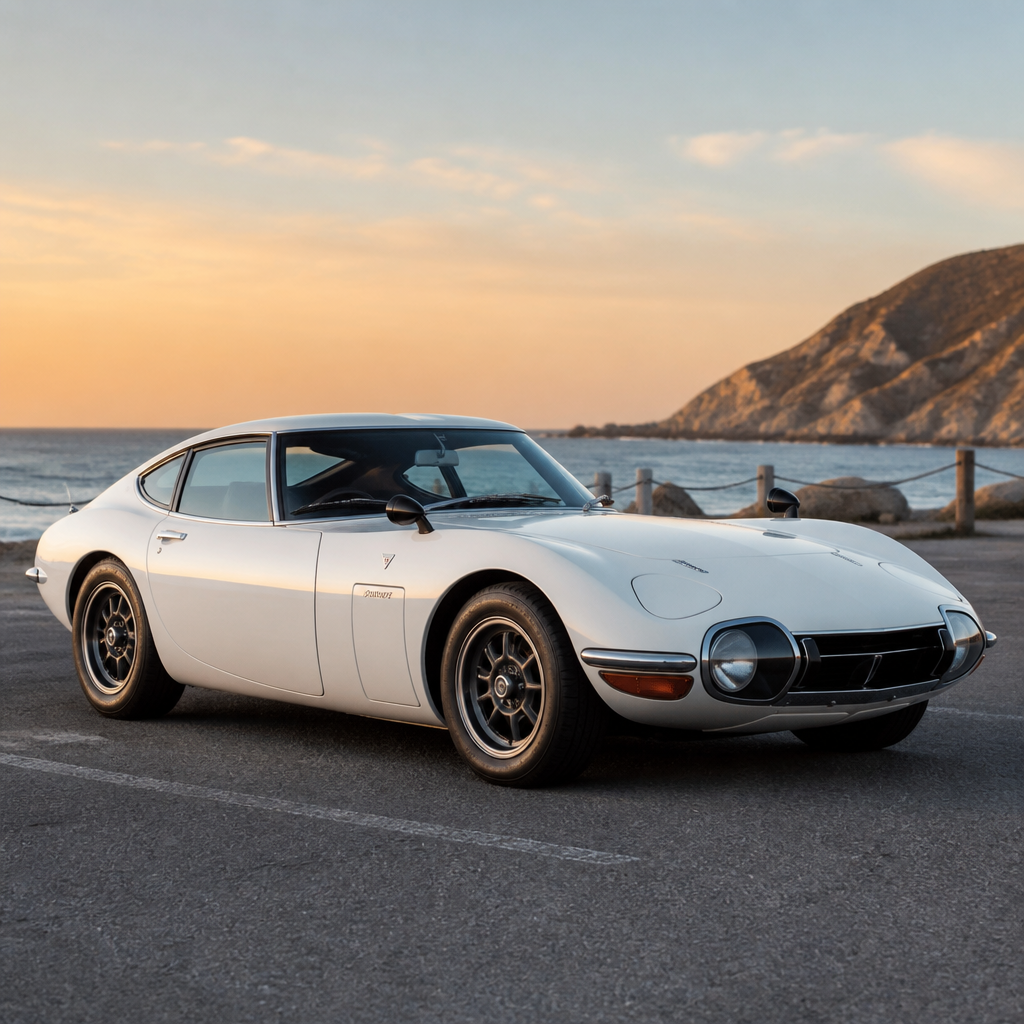
The modern reputation of Japanese sports cars begins with two very different machines: the Toyota 2000GT and the Datsun 240Z. The 2000GT, produced from 1967 to 1970, was a low-volume halo car developed with Yamaha. Its 2.0-liter DOHC inline-six, elegant long-hood proportions, and sophisticated suspension announced that Japan could build a world-class grand tourer. Only a few hundred were made, so its industry impact was not about volume. Its impact was symbolic. It challenged the idea that a Japanese performance car had to be basic, and it gave Toyota an early international prestige model. Today, it remains one of the most valuable Japanese collector cars ever built.
The Datsun 240Z, launched for the 1970 model year, changed the industry more directly. Nissan combined European-inspired styling with a 2.4-liter inline-six, independent rear suspension, and a price that undercut many rivals. In the United States, where the Z found enormous success, buyers got strong straight-line performance, balanced handling, and better reliability than several British sports cars competing in the same showroom conversation. That combination mattered. The Z was not merely a bargain; it was a complete car. It created a new template for Japanese exports: attainable performance without fragile ownership. Successive models such as the 260Z and 280Z broadened the platform’s reach, but the original 240Z remains the turning point because it proved scale and quality could coexist in a Japanese sports car.
These early cars also built the foundation for collector demand today. They established recognizable Japanese design identity, validated inline-six performance architecture, and showed that motorsport credibility and showroom value could reinforce each other. If you want to understand why Japanese classics are now treated as serious blue-chip enthusiast cars, the 2000GT and 240Z are the first chapter.
Lightweight balance and driver focus: Mazda RX-7, Honda S800, and pure handling cars
Not every industry-changing Japanese sports car relied on displacement. Some changed the market by making lightness and responsiveness the headline feature. Honda’s S500, S600, and especially the S800 in the 1960s introduced a small-capacity, motorcycle-influenced approach to sports car engineering. These cars were compact, mechanically ambitious, and eager to rev, reflecting Honda’s racing mindset. They demonstrated that excitement did not require a large engine, and they previewed the high-revving character that later became a Honda trademark.
Mazda pushed that philosophy further with the RX-7. First released in 1978, the RX-7 centered its identity on the rotary engine, a compact powerplant that let engineers place weight low and rearward for excellent balance. The first-generation SA22C and FB models were light, simple, and playful. The second-generation FC brought turbocharging and more maturity. The third-generation FD, launched in 1992, became a benchmark for chassis balance and styling, with sequential twin-turbocharging and a curb weight that remained impressively restrained for the era. In workshop conversations and track-day paddocks, I have heard the same verdict repeatedly: a sorted RX-7 feels special because the steering, rotation, and throttle response work together in a way heavier rivals rarely match.
There were tradeoffs. Rotary engines demand careful maintenance, frequent oil monitoring, and knowledgeable tuning. That reality is part of why the RX-7 matters historically. Mazda persisted with an unconventional engine and built a lasting enthusiast following around it. The result was not just a successful model line but proof that a Japanese manufacturer could sustain a distinct engineering identity in a conservative global market. The RX-7 changed expectations about handling precision and brand individuality.
Turbo power and technology leadership: Supra, Skyline GT-R, 300ZX, and the electronics revolution
By the 1980s and 1990s, Japanese performance cars moved from being value alternatives to becoming technology leaders. This was the era when turbocharging, intercooling, four-wheel steering, active aerodynamics, electronically controlled suspension, and increasingly sophisticated engine management entered mainstream enthusiast awareness. Several cars defined that shift, but four stand above the rest: the Toyota Supra, Nissan Skyline GT-R, Nissan 300ZX, and Mitsubishi 3000GT.
The Toyota Supra evolved from a Celica-derived grand tourer into a major global performance icon. The A70 introduced a more serious chassis and turbocharged options, but the A80 Supra, sold from 1993, became the legend. Its 2JZ-GTE 3.0-liter twin-turbo inline-six earned a reputation for extraordinary strength thanks to robust internals, effective cooling, and tuning headroom. In stock form, it was fast and refined. Modified, it became one of the most influential tuning platforms ever built. That mattered for the industry because it showed factory engineering could support enormous aftermarket growth without destroying the car’s core usability.
Nissan’s Skyline GT-R changed the performance conversation even more dramatically. The R32 GT-R, launched in 1989, combined the RB26DETT twin-turbo inline-six with ATTESA E-TS all-wheel drive and Super-HICAS rear steering. Its dominance in Group A touring car racing earned it the nickname Godzilla in Australian media, and not by accident. Nissan engineered a road car specifically to win, then sold the public a machine with direct motorsport DNA. Later R33 and R34 generations refined the formula, adding data displays, aerodynamic development, and increasing electronic sophistication. The GT-R’s legacy is simple: it made advanced drivetrain control and race-bred performance central to the Japanese sports car identity.
The Z32 Nissan 300ZX, introduced in 1989, showed that Japanese brands could build a technologically dense grand tourer with true international polish. Twin turbos, a wide stance, multi-link suspension, and a dramatically modern cabin made it feel expensive and advanced. The Mitsubishi 3000GT VR-4 took that ambition even further with twin turbos, all-wheel drive, four-wheel steering, active aerodynamics, and adaptive suspension. These cars were heavy, and complexity increased maintenance demands, but they reset expectations. Buyers no longer viewed Japanese sports cars as merely simple and affordable. They saw them as feature-rich engineering flagships.
| Model | Launch era | Key innovation | Industry impact |
|---|---|---|---|
| Datsun 240Z | 1970 | Affordable inline-six sports coupe | Made reliable performance accessible at scale |
| Mazda RX-7 | 1978 | Rotary engine packaging and low weight | Established handling purity as a mainstream selling point |
| Toyota Supra A80 | 1993 | Exceptionally durable twin-turbo 2JZ-GTE | Defined the modern tuning-platform ideal |
| Nissan Skyline GT-R R32 | 1989 | Advanced AWD and race-focused homologation | Linked electronics, traction, and motorsport success |
| Honda NSX | 1990 | All-aluminum construction and supercar usability | Forced exotic brands to improve refinement and reliability |
Homologation heroes and rally weapons: Celica GT-Four, Lancer Evolution, and Impreza WRX STI
Japanese classics did not transform the industry through road cars alone. They changed it through homologation. When manufacturers built street-legal versions of competition machines to satisfy rally or touring-car rules, enthusiasts gained access to genuine performance hardware, not just appearance packages. That process created some of the most influential Japanese sports cars ever made.
Toyota’s Celica GT-Four brought turbocharged all-wheel-drive performance to a broad audience and tied the showroom directly to World Rally Championship ambition. Later, Mitsubishi and Subaru turned this formula into a prolonged rivalry that defined the 1990s and early 2000s. The Lancer Evolution and Impreza WRX STI were compact sedans rather than traditional coupes, but in real enthusiast culture they functioned as sports cars because their purpose was speed, control, and competition. The Evo’s sharp turn-in, active differential strategies, and turbocharged 4G63 engine gave it a hard-edged, technical feel. The STI’s flat-four rumble, symmetrical all-wheel-drive layout, and rally-bred durability made it feel brutally effective in poor conditions and on rough roads.
Why did these cars change the industry? They normalized the idea that serious performance could come from practical body styles and sophisticated drivetrains. They also strengthened the aftermarket ecosystem. Suspension tuning, boost control, brake upgrades, and ECU recalibration became mainstream enthusiast topics because these cars invited modification while remaining usable. Today, any discussion of Japanese classics as a category has to include rally homologation cars, because they expanded the definition of a sports car beyond the two-door coupe.
The NSX effect: when Japan challenged the supercar establishment
No discussion of classic Japanese sports cars is complete without the Honda NSX. Released in 1990, the NSX was a watershed moment because it did not compete on value. It competed on excellence. Honda used an all-aluminum monocoque, titanium connecting rods in some versions, a mid-engine layout, and a rigid chassis tuned with input associated with Ayrton Senna during development. Yet the revolutionary part was not just its numbers or materials. It was the way the car behaved in daily life.
European exotics of the era often delivered speed with compromises in visibility, ergonomics, reliability, and assembly consistency. The NSX showed that a supercar could offer precise controls, clear sightlines, dependable starting behavior, and service standards closer to premium production cars than temperamental exotics. Ferrari, in particular, could not ignore it. Industry observers and engineers have long acknowledged that the NSX raised the standard for build quality and user-friendliness in the supercar segment. In practical terms, Honda forced established brands to modernize.
From an ownership perspective, the NSX also changed collector attitudes toward Japanese classics. It validated the idea that a Japanese sports car could be both technically advanced and emotionally prestigious. That influence continues in today’s market, where clean NSX examples command serious money and attract buyers who previously focused only on European halo cars.
Why these cars remain essential to collectors, restorers, and new enthusiasts
Classic Japanese sports cars remain important because they sit at the intersection of history, drivability, and cultural reach. Collectors value them for rarity, motorsport connection, and design significance. Restorers appreciate the strong parts networks available for many models, although some trim, electronics, and model-specific components have become difficult or expensive to source. New enthusiasts are drawn to them because the stories are easy to understand: the 240Z democratized performance, the RX-7 defended rotary innovation, the Supra defined tuning potential, the GT-R fused computers with speed, and the NSX rewrote supercar expectations.
If you are using this Japanese classics hub as a starting point, focus on three questions. First, what kind of driving experience matters most: lightweight balance, turbo power, grand touring comfort, or rally traction? Second, how much complexity are you willing to maintain? A carbureted early coupe and a twin-turbo 1990s flagship present very different ownership demands. Third, does originality or modification history matter more for your goals? The best classic Japanese sports car is not the loudest legend online. It is the model whose engineering story, parts reality, and driving character match your purpose.
The larger lesson is clear. Classic Japanese sports cars changed the industry because they consistently solved problems other automakers treated as unavoidable. They made performance more reliable, advanced technology more approachable, and motorsport credibility more relevant to everyday buyers. Explore the individual model guides in this Japanese classics subtopic, compare eras and brands carefully, and use this history to narrow your shortlist with confidence.
Frequently Asked Questions
What made classic Japanese sports cars so important to the auto industry?
Classic Japanese sports cars mattered because they changed the basic expectations of what a performance car could be. Before their rise, buyers often assumed that speed came with trade-offs: high maintenance costs, questionable reliability, cramped interiors, or limited everyday usefulness. Japanese manufacturers challenged that formula by building cars that were exciting to drive, mechanically dependable, easier to live with, and often far more affordable than their European rivals. That combination was not a small adjustment to the market; it was a major reset.
Cars such as the Nissan/Datsun Z, Toyota 2000GT, Mazda RX-7, Honda NSX, and later turbocharged and all-wheel-drive icons from Nissan, Toyota, and Mitsubishi showed that performance engineering did not have to be exclusive or fragile. These cars proved that precise handling, strong engines, thoughtful ergonomics, and durability could exist in the same package. In practical terms, they widened the sports car audience. Buyers who wanted something engaging but also trustworthy for daily use suddenly had compelling options.
They also pushed competitors to improve. European brands could no longer rely on heritage alone, and American manufacturers had to pay closer attention to build quality, chassis tuning, and fuel efficiency. In that sense, classic Japanese sports cars did more than sell well or win praise from enthusiasts. They forced the global industry to respond to a new standard where performance, value, and reliability were expected to coexist.
Which classic Japanese sports cars are most often credited with changing the industry?
Several models stand out because each influenced the industry in a different way. The Toyota 2000GT is often treated as an early statement car. It showed the world that Japan could build a refined, beautifully engineered grand touring machine with international credibility. While it was produced in small numbers, its symbolic importance was enormous because it helped establish Japan as a serious performance car nation.
The Datsun 240Z may be the most broadly influential of them all. It delivered sleek styling, genuine straight-line speed, balanced handling, and strong reliability at a price that undercut many rivals. This formula made the sports car market more democratic and forced established manufacturers to rethink how much value they were offering. The 240Z did not just sell well; it reshaped buyer expectations on a mass scale.
The Mazda RX-7 deserves recognition for proving that Japanese companies were willing to innovate rather than simply follow convention. Its lightweight design, sharp handling, and rotary engine gave it a distinctive identity that appealed to enthusiasts worldwide. The Honda NSX was another industry-shifting car because it brought supercar performance together with Honda engineering discipline, making exotic-level capability far less intimidating to own. Many historians and road testers have noted that it influenced even established European supercar makers to improve usability, ergonomics, and build quality.
Other important names include the Nissan Skyline GT-R, Toyota Supra, Mitsubishi 3000GT, and Mazda MX-5 Miata. Some changed racing and technology standards, while others redefined affordability and driver engagement. Together, these models represent the breadth of Japan’s impact: not just one breakthrough car, but a sustained era of innovation across multiple price points and performance categories.
How did classic Japanese sports cars balance performance with reliability and everyday usability?
That balance came from engineering philosophy as much as from hardware. Japanese manufacturers tended to approach performance with a systems mindset. Instead of chasing speed alone, they focused on creating complete cars with strong assembly quality, predictable handling, durable drivetrains, efficient packaging, and controls that felt intuitive in daily driving. The result was a type of sports car that could be driven hard on a back road and then comfortably used for commuting, errands, or long trips without feeling temperamental.
Many of these cars used proven mechanical foundations but applied them intelligently. Engines were often designed with durability in mind, cooling systems were robust, transmissions generally had a reputation for precision, and interior layouts favored visibility and comfort over drama for its own sake. Japanese brands also paid close attention to manufacturing consistency. That matters because a brilliant design is only as good as its real-world execution, and one reason these cars earned trust was that owners could depend on them year after year.
Usability also came from sensible dimensions and ownership costs. Cars like the Z-car and RX-7 delivered performance without the complexity or maintenance burden that sometimes discouraged buyers from European alternatives. Even higher-end cars such as the NSX built their reputation in part on being less intimidating to service and drive than many exotics of the era. This practical competence is one of the main reasons classic Japanese sports cars earned such loyalty. They were not exciting only in magazine tests; they were rewarding in ordinary life.
Did motorsport and homologation play a major role in the success of classic Japanese sports cars?
Yes, motorsport and homologation were central to the story. Racing gave manufacturers a proving ground for engines, chassis tuning, aerodynamics, and durability, while homologation rules often required road-going versions of competition-oriented technology. That connection between track and street added credibility and helped turn certain models into legends. When buyers saw a car or its close relative succeeding in touring car racing, rallying, endurance competition, or GT events, it strengthened the idea that the road car was more than a styling exercise.
The Nissan Skyline GT-R is one of the clearest examples. Its racing success became inseparable from its identity, and the road versions benefited from that aura of engineering seriousness. The same pattern can be seen with turbocharged all-wheel-drive performance cars that emerged from rally-influenced development thinking. Even when a model was not a direct homologation special in the strictest sense, motorsport often shaped its technical direction and public reputation.
Homologation also encouraged manufacturers to think strategically about innovation. Features such as advanced turbo systems, improved suspension geometry, lightweight materials, and more sophisticated drivetrains were not added only for showroom appeal. In many cases, they were part of a larger competitive framework. This mattered to the industry because it showed that Japanese automakers could compete at a high level not just through affordability, but through advanced engineering under pressure. Motorsport validated performance claims, while homologation helped transfer that credibility into road cars enthusiasts could actually buy.
Why are classic Japanese sports cars still so respected by collectors and enthusiasts today?
They remain respected because they combine historical importance, strong driving character, and a remarkably broad range of ownership appeal. Some collectors value them as milestones that shifted the global market, while others simply love how they feel on the road. Many classic Japanese sports cars offer a level of analog feedback that modern performance cars sometimes struggle to match: lighter weight, clearer steering responses, simpler controls, and a more direct connection between driver and machine. That purity has become increasingly desirable.
There is also growing appreciation for their originality and influence. Cars that were once treated as affordable enthusiast machines are now recognized as turning points in design, manufacturing, and performance culture. The Datsun 240Z, first-generation Mazda RX-7, Toyota 2000GT, Acura/Honda NSX, and various Skyline GT-R generations are not admired only for nostalgia. They are respected because their importance can be traced through later sports cars across the world. Many modern expectations around reliability, ergonomics, value, and real-world drivability were strengthened by these Japanese models.
From a market perspective, restoration trends and collector demand have also elevated their status. As surviving examples become harder to find in original condition, buyers increasingly recognize the significance of proper documentation, factory-correct parts, and period authenticity. Yet even with rising values, the enthusiasm around these cars remains deeply rooted in use rather than display. People admire them because they are historically meaningful and because they still deliver an engaging experience behind the wheel. That lasting dual appeal is a big reason classic Japanese sports cars continue to command such respect.